
You picked a bearing. It failed after one week. The wrong clearance was the hidden reason.
Choose Normal (CN) clearance for normal temperatures and steady loads. Choose C3 clearance for high heat, high speed, or tight shaft fits. Choose C4 clearance for very high temperatures, extreme shaft expansion, or heavy shock loads.
Let me walk you through what clearance actually means. I run a bearing factory. I see customers get this wrong all the time. They buy a bearing, press it onto a shaft, and then the bearing seizes up. Or they buy a bearing with too much clearance, and it rattles and wears out early. The good news is that the choice is simple once you know the rules.
What Does Bearing Internal Clearance Mean and Why Does It Matter?
A bearing looks solid. But inside, there are tiny gaps. Those gaps are the internal clearance. Get them wrong and your bearing will overheat or shake itself apart.
Bearing internal clearance1 is the total space between the balls and the raceways inside a bearing. It matters because heat, shaft fits, and housing fits change that space. If the clearance disappears, the bearing seizes2. If it is too big, the bearing gets noisy and wears faster.
How Clearance Works Inside a Bearing
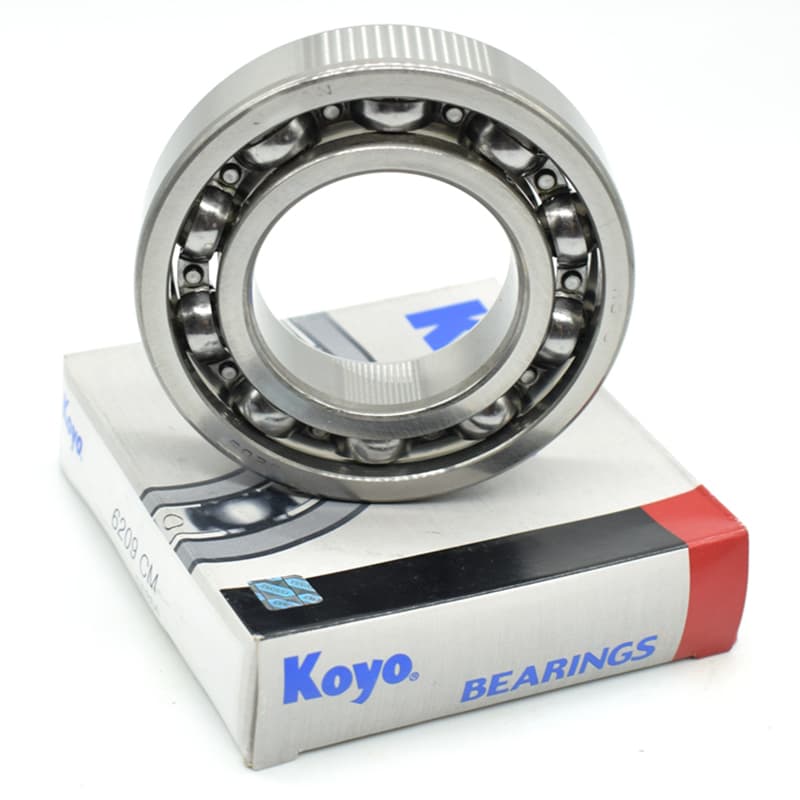
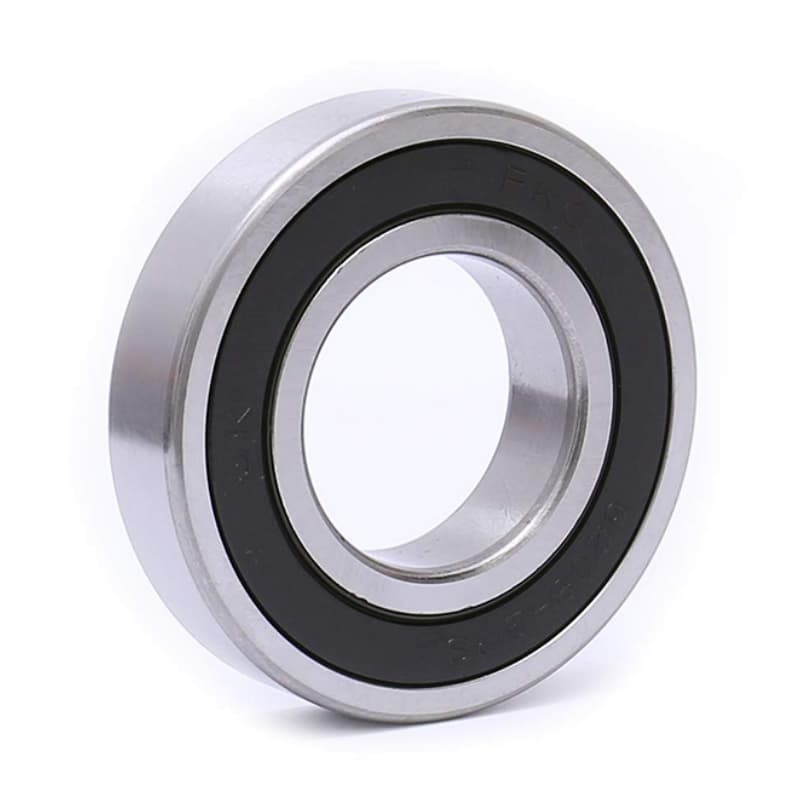
Let me explain this without complicated terms. A deep groove ball bearing has three main parts: the inner ring, the outer ring, and the balls in between. There is a small gap between the balls and the rings. That gap is the radial internal clearance3. The standard unit is micrometers (one thousandth of a millimeter).
What changes the clearance after installation? Two things. First, when you press the bearing onto a shaft, the inner ring stretches. That makes the clearance smaller. Second, when the bearing heats up during running, the inner ring expands more than the outer ring. That also makes the clearance smaller. So the clearance you buy is not the clearance you get. The final clearance is always less than the factory number.
What happens if clearance becomes zero or negative? The balls get squeezed between the rings. The bearing creates extra heat. More heat makes more expansion. That expansion makes the clearance even smaller. This is called thermal runaway4. The bearing can reach 150°C in minutes. Then the grease melts. Then the bearing seizes. I have seen this happen in less than one hour on a test rig.
What happens if clearance is too big? The balls have room to bounce around. The bearing makes a rattling noise. The balls hit the cage harder. That noise is annoying. But worse, the balls do not roll smoothly. They slide a little bit. Sliding creates wear. The bearing will still run, but its life will be shorter.
Here is a simple table showing the clearance classes5 for a common size (6204 bearing):
| Clearance Code | Radial Clearance Range (micrometers) | When To Use |
|---|---|---|
| CN (Normal) | 5 to 20 | Normal conditions, steady temperature |
| C2 (Smaller than Normal) | 0 to 15 | Very precise spindles, low heat |
| C3 (Larger than Normal) | 15 to 33 | High heat, high speed, tight fits |
| C4 (Even Larger) | 28 to 46 | Very high heat, heavy shock |
| C5 (Largest) | 40 to 58 | Extreme conditions, rarely used |
Most standard bearings come as CN. That is fine for 70% of applications. But for the other 30%, you need C3 or C4. [Personal story placeholder: A fan manufacturer in Turkey called me angry. His fans kept seizing in summer. The factory temperature was 45°C. He was using CN bearings. I sent him C3 bearings6. The problem went away completely.]
When Should You Choose Normal (CN) Clearance for Deep Groove Ball Bearings?
Normal clearance is the default for a reason. It works well in most machines. But you need to know when it is safe to use.
Choose Normal (CN) clearance1 when your operating temperature2 stays between 20°C and 60°C, your shaft and housing fits are standard (not too tight), and your speed is low to medium. Also use CN for small bearings under 30mm3 bore because they do not expand much.
The Safe Zone for CN Clearance
Let me give you the exact conditions where I tell my customers to stick with CN. I do not want you to over-buy clearance you do not need.
Condition 1: Normal room temperature. Your machine runs indoors or in a climate-controlled space. The bearing temperature stays below 60°C (140°F). You can touch the housing and keep your hand there. That means the temperature is fine. At 60°C, a steel bearing expands by about 0.01mm per 100mm of bore. For a 20mm bore bearing, that is only 2 micrometers. CN clearance has 5 to 20 micrometers of room. So you are safe.
Condition 2: Standard shaft and housing fits. Most engineers use "h6" for shafts and "H7" for housings. These are normal fits. They reduce the clearance by about 5 to 10 micrometers. That is within the CN range. If you use very tight fits (like p6 for shafts), then you need C3. But for normal fits, CN is fine.
Condition 3: Low to medium speed. Speed creates heat. Heat reduces clearance. For a bearing with a 20mm bore, speeds under 10,000 RPM usually work with CN. Above that, you should consider C3. For large bearings with 50mm bore, speeds over 5,000 RPM need C3.
Condition 4: Small bearings. Bearings under 30mm bore have less material. They expand less when heated. A 6202 bearing (15mm bore) expands only about 1.5 micrometers per 10°C temperature rise. That is tiny. So small bearings almost always work with CN unless the fit is very tight.
Here is a quick checklist for using CN clearance:
| Your Condition | CN Safe? | If Not, Try |
|---|---|---|
| Temperature under 60°C | Yes | C3 for 60-100°C |
| Shaft fit h6 or j6 | Yes | C3 for p6 or tighter |
| Housing fit H7 | Yes | C3 for P7 or tighter |
| Speed factor (bore mm x RPM) < 200,000 | Yes | C3 for >200,000 |
| Bearing bore under 30mm | Yes | C3 for bore over 50mm |
| Steady load, no shock | Yes | C3 or C4 for heavy shock |
One warning about CN clearance: Do not use CN for electric motors4. Motors run hot. The rotor shaft gets warm and expands. I have seen many motor failures from CN bearings. Most motor manufacturers use C3 as standard. Also, do not use CN for bearings that are pressed onto a shaft with an interference fit over 0.03mm. That tight fit eats up all the clearance. [Personal story placeholder: A pump repair shop in Egypt kept replacing bearings every three months. They were using CN bearings on pumps that ran hot water at 80°C. I told them to switch to C3. The bearings then lasted two years.]
What Problems Does C3 Clearance Solve in High-Temperature or High-Speed Applications?
Heat and speed are the two biggest enemies of bearing clearance1. C3 clearance2 gives you extra room so the bearing does not squeeze itself to death.
C3 clearance solves the problem of thermal expansion3 at high temperatures above 60°C. It also solves the problem of tight shaft fits4 that reduce clearance during installation. For high speeds5 above 10,000 RPM, C3 gives the balls more room to move and reduces heat buildup.
When C3 Becomes the Right Choice
Let me give you the specific cases where I always recommend C3. These come from years of seeing failures and fixing them.
Case 1: Electric motors. This is the most common C3 application. Motor rotors get hot. The shaft expands. The housing stays cooler. That difference creates a big reduction in clearance. Most motor manufacturers specify C3 as standard. If you buy a motor bearing replacement, always get C3 unless the motor is very small and runs cold.
Case 2: Machines in hot environments. Think about ovens, dryers, or outdoor equipment in summer. If the bearing housing temperature exceeds 70°C (158°F), you need C3. For every 10°C above 50°C, the clearance drops by about 2 to 3 micrometers. At 100°C, a CN bearing might have zero clearance left. C3 gives you a safety margin.
Case 3: Tight shaft fits. Some designs require a heavy press fit. For example, a shaft with a p6 fit. That fit reduces the bearing clearance by 10 to 15 micrometers. If you start with CN (5 to 20 micrometers), you might end up with negative clearance. So you start with C3 (15 to 33 micrometers). After installation, you still have 5 to 18 micrometers left. That is perfect.
Case 4: High speeds. Speed creates centrifugal force. That force pushes the inner ring outward. It also pushes the balls outward. Both effects reduce the internal clearance. For high-speed spindles or turbochargers, you need extra clearance. A good rule is: if your speed factor (bore in mm x RPM) is above 200,000, use C3. For example, a 20mm bore at 12,000 RPM gives 240,000. That needs C3.
Here is a temperature-based guide for choosing between CN and C3:
| Operating Temperature | Recommended Clearance | Reason |
|---|---|---|
| 20°C to 50°C (room temp) | CN | Normal expansion is within CN range |
| 50°C to 70°C | CN or C3 | Check fits; C3 safer |
| 70°C to 100°C | C3 | CN will likely lose all clearance |
| 100°C to 120°C | C3 or C4 | C3 may be tight; check calculations |
| Above 120°C | C4 or special | Standard grease may fail too |
What about noise? Some people think C3 bearings are noisier than CN. That is true at low speeds or when cold. The extra clearance lets the balls move more. You might hear a slight rattle. But once the bearing warms up and the clearance reduces, the noise goes away. Do not reject a C3 bearing because it sounds different at startup. That is normal.
A note on grease and C3: C3 bearings need grease that can handle higher temperatures. Standard lithium grease works up to 100°C. For hotter applications, use synthetic grease or polyurea grease. I always match the grease to the clearance class. [Personal story placeholder: A conveyor builder in Brazil used CN bearings on hot asphalt conveyors. The bearings seized every two months. I asked him to measure the housing temperature. It was 85°C. We switched to C3 bearings with high-temperature grease6. The bearings ran for 18 months without failure.]
Why Would You Need C4 Clearance Instead of C3 for Heavy or Shocking Loads?
C3 is enough for most hot or fast machines. But sometimes you need even more room. C4 gives you that extra space for extreme conditions.
You need C4 clearance1 when your operating temperature2 goes above 100°C, or when your shaft fit is extremely tight (like r6 or s6). You also need C4 for bearings that take heavy shock loads3, because the shock can temporarily deform the rings and eat up clearance. Some vibrating screens4 and hammer mills use C4 as standard.
The Extreme Cases Where C4 Is Necessary
Let me be clear. C4 is not for everyone. Most machines do not need it. But when you need it, you really need it. CN or C3 will fail fast.
Case 1: Very high temperatures above 100°C. At 120°C, a 50mm bore bearing expands by about 0.025mm (25 micrometers). A C3 bearing has 15 to 33 micrometers of clearance. After installation and heat expansion, you might have zero left. C4 gives you 28 to 46 micrometers. That extra 10 to 15 micrometers saves the bearing.
Case 2: Extremely tight shaft fits. Some heavy machinery uses r6 or s6 shaft fits. These fits reduce the inner ring diameter by 0.02mm to 0.04mm (20 to 40 micrometers). That reduction eats up almost all of a C3 clearance5. So you need C4. After installation, the remaining clearance might be 5 to 15 micrometers. That is still safe.
Case 3: Heavy shock loads. Think about a hammer mill crushing rocks. Or a vibrating screen shaking violently. During a shock, the shaft and housing deform slightly. That deformation is temporary. But it can reduce the clearance to zero for a split second. Over thousands of shocks, the bearing will wear and fail. A larger clearance like C4 gives the bearing room to survive those momentary deformations.
Case 4: Thin shafts or hollow shafts. A hollow shaft is weaker. It expands more under load. That extra expansion reduces clearance. For hollow shafts, I often recommend going up one clearance class. If CN is normal, use C3. If C3 is normal, use C4.
Here is a comparison table for CN, C3, and C4 across different conditions (using a 6204 bearing as an example):
| Condition | CN (5-20 µm) | C3 (15-33 µm) | C4 (28-46 µm) |
|---|---|---|---|
| Room temp, normal fits | Good | Also good, but may rattle | Too loose, not needed |
| 80°C, normal fits | Borderline (may seize) | Good | Good but noisy |
| 120°C, normal fits | Will seize | Borderline | Good |
| Tight fit (p6), room temp | May seize | Good | Good |
| Very tight fit (r6), room temp | Will seize | Borderline | Good |
| Heavy shock loads | Poor (wear fast) | Okay | Good |
| Vibrating screen | Poor | Acceptable | Recommended |
A warning about C4: C4 bearings are noisier than C3 or CN. They have more rattle at startup and at low speeds. That noise can make your machine sound cheap. So only use C4 when you truly need the extra clearance. For most buyers, C3 is the safer choice. C4 is for extreme cases only.
How to check if you need C4: Measure the housing temperature after two hours of running. If it is over 100°C, try C4. Also measure the shaft diameter and housing bore. If the interference fit is over 0.03mm for a 30mm shaft, try C4. Or just ask your bearing supplier. I can run a calculation for you in five minutes. [Personal story placeholder: A vibrating screen manufacturer in India had bearings failing every two weeks. He was using C3. I asked him about the operating conditions. The screen ran 24/7 with heavy rocks. The housing was 110°C. I sent him C4 bearings. They lasted six months. He now uses C4 as standard for all his screens.]
Conclusion
Match your clearance to your heat, speed, and fit. Use CN for normal, C3 for hot, and C4 for extreme.
-
Understanding C4 clearance is crucial for selecting the right bearings for extreme conditions, ensuring longevity and performance. ↩ ↩ ↩ ↩
-
Discover why operating temperature is critical in choosing the right bearing clearance for optimal performance. ↩ ↩ ↩ ↩
-
Explore how heavy shock loads impact bearings to make informed decisions for machinery that endures such conditions. ↩ ↩ ↩ ↩
-
Find out which bearings are best suited for vibrating screens to enhance durability and efficiency. ↩ ↩ ↩ ↩
-
Understanding when to use C3 clearance can help you avoid unnecessary costs while ensuring machine reliability. ↩ ↩ ↩
-
Find out about high-temperature grease to ensure your bearings operate effectively in extreme conditions. ↩ ↩
