
Your bearings keep failing every few months. That stops production. That eats your profits.
Yes, our premium tapered rollers last longer because we use better steel, tighter precision, and a special heat treatment. Standard bearings cut corners. We don’t. You get 2-3 times more life for a small price increase.

I run FYTZ Bearing, a factory in China. I see the same problem everywhere. Buyers pick the cheapest bearing. Then it fails. Then they blame the bearing type. But the real problem is quality. Let me show you how our premium tapered rollers give you better life. No tricks. Just facts.
Why Do Premium Tapered Rollers Last Longer Than Standard Bearings?
You see two bearings that look the same. One costs $5. One costs $8. You pick the cheap one. Three months later, it fails. You lose $500 in downtime. That is not smart.
Premium tapered rollers last longer because of three things: cleaner steel1, tighter tolerances2, and better heat treatment3. Standard bearings use lower grade steel with more impurities. Those impurities become tiny cracks. The cracks grow. Then the bearing breaks.
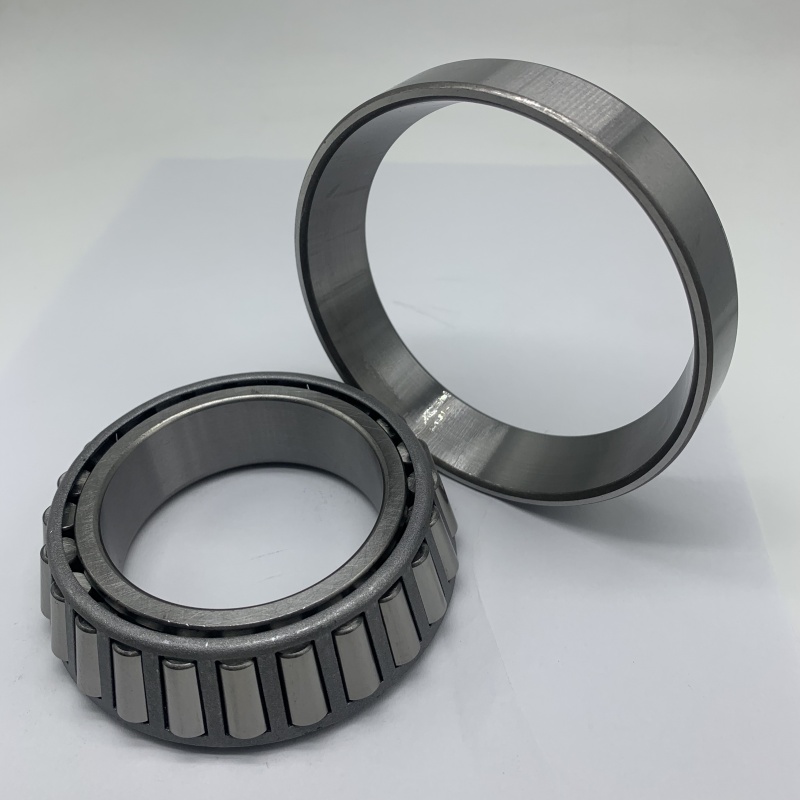
The steel makes the biggest difference
Let me explain. All bearing steel starts as molten metal. The cheap way is to pour it into a mold and let it cool. That creates bubbles and impurities (non-metallic inclusions). Those are weak spots. Under load, the weak spots turn into cracks.
The better way is called vacuum degassing. We remove the oxygen and hydrogen. We also use electric arc furnace melting followed by argon stirring. That pushes impurities to the top. Then we cut them off. The remaining steel is much cleaner.
Here is a simple comparison:
| Steel Property | Standard Bearing | Premium Bearing (FYTZ) |
|---|---|---|
| Oxygen content | 15-20 ppm | 8-10 ppm |
| Inclusion size | Up to 50 microns | Under 15 microns |
| Grain structure | Uneven | Uniform and fine |
| Fatigue life (relative) | 1x | 2.5-3x |
So the same load, the same speed, the same lubrication. But our steel lasts nearly three times longer. That is not magic. That is metallurgy.
Tighter tolerances mean less stress
Standard bearings are made to P0 (normal) precision. That is fine for a farm wagon. But for industrial machines, you want P6 or P5. Here is what tighter tolerances do for you.
The roundness of the raceway matters. If the raceway is not perfectly round, the rollers do not contact evenly. Some rollers take more load. Those rollers fail first. Then the whole bearing fails.
At FYTZ, we grind our raceways to within 2-3 microns of perfect roundness. Standard P0 bearings allow up to 10-12 microns. That difference means our rollers share the load equally. No single roller gets overloaded.
Also, the surface finish matters. A rough surface traps less oil. So the oil film breaks down faster. We grind and super-finish our raceways to Ra 0.1-0.2 microns. Standard bearings are Ra 0.4-0.6. That smoother surface keeps the oil film intact. Less metal-to-metal contact. Less wear.
Heat treatment – the hidden difference
This is where many cheap bearings fail. The steel needs to be hard on the surface (to resist wear) but tough inside (to absorb shock). That balance comes from heat treatment.
Standard process: heat to 840°C, quench in oil, then temper at 160°C. That gives a hardness of 60-62 HRC. But the microstructure has too much retained austenite (a soft phase). Under load, that austenite turns into hard martensite. That expansion creates internal stress. Then cracks form.
Our process: we use a controlled atmosphere furnace. We heat, quench, then cold treat at -70°C. That converts almost all austenite to martensite. Then we temper twice. The result is 60-62 HRC with very little retained austenite. So no expansion later. No internal stress. No cracks.
I have seen the difference in our lab. We run life tests under the same load. Standard bearings fail at 500 hours. Our premium bearings4 go to 1,500 hours. That is three times the life. So when you pay 30% more for our bearing, you get 200% more life. The math is simple.
What Kills Bearing Life? (And How Premium Tapered Rollers Fix It)
You think bearings just wear out. But most bearings die from something you can prevent. Let me tell you the real killers.
The top three killers of bearing life are: contamination1 (dirt and water), poor lubrication2, and false brinelling3 (vibration damage). Premium tapered rollers fight back with better seals, smoother surfaces, and tougher steel. But you still need to install and maintain them right.
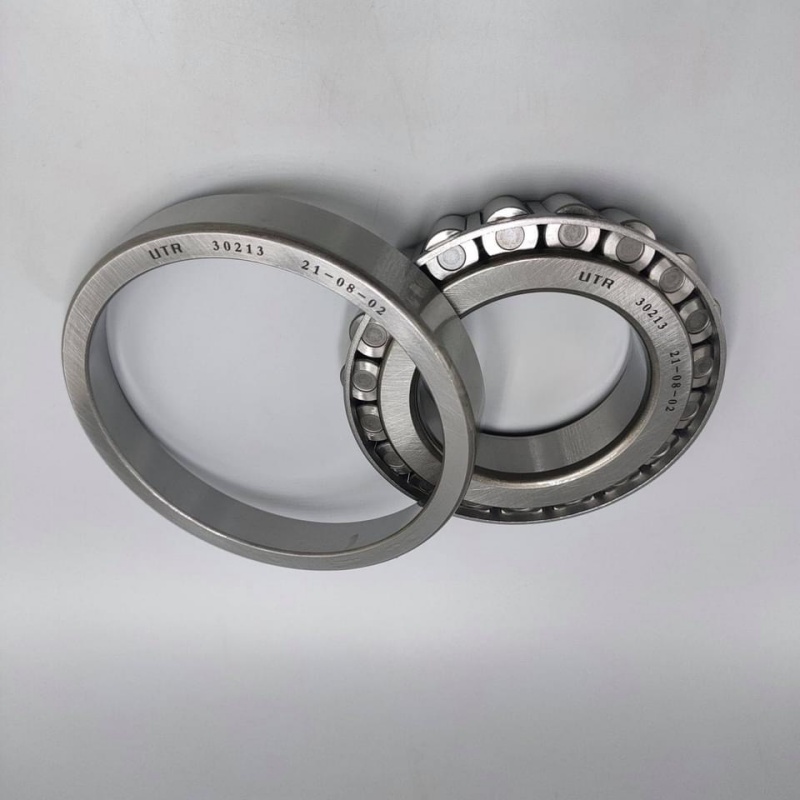
Killer #1 – Contamination
This is the biggest one. Dirt, dust, sand, water. They get into the bearing. The rollers roll over the hard particles. The particles scratch the raceway. The scratches become pits. The pits become spalls. Then the bearing fails.
How do contaminants get in? Bad seals. Poor storage. Dirty hands during installation. Or just a dusty environment.
Our premium tapered rollers4 help in two ways. First, we can supply bearings with better seals (rubber or steel shields). Second, our super-smooth surface finish (Ra 0.1) means that if a small particle does get in, it gets crushed rather than embedded. The particle turns into a fine powder. That powder does less damage than a sharp piece of sand.
But you also need to do your part. Store bearings in a clean, dry place. Keep them in their original packaging until you use them. Clean the shaft and housing before installation. Use fresh grease. Do not let water near the bearing.
Killer #2 – Poor lubrication
About 40% of bearing failures come from lubrication problems. Too little grease. Too much grease. Wrong type of grease. Old grease that has dried out.
Too little grease means metal touches metal. That creates heat. Then the grease breaks down even more. Then you get a seizure.
Too much grease is also bad. The grease churns and overheats. The oil separates from the thickener. Then you have no lubrication.
Our premium rollers help because our raceway finish holds a better oil film. Even with marginal lubrication, the smoother surface keeps a thin layer of oil. That buys you time. But you still need to follow the right lubrication schedule.
Here is a simple table for grease lubrication5:
| Bearing Size (bore mm) | Initial Grease Amount | Regrease Interval (normal duty) | Regrease Interval (heavy duty) |
|---|---|---|---|
| 15-25 | 1-2 grams | 6 months | 3 months |
| 25-40 | 2-4 grams | 6 months | 3 months |
| 40-60 | 4-8 grams | 12 months | 6 months |
| 60-90 | 8-15 grams | 12 months | 6 months |
Use a lithium-based grease with EP (extreme pressure) additives. That works for most industrial applications.
Killer #3 – False brinelling
This one surprises people. Your machine is turned off. The bearing is not moving. But the bearing still fails. How? Vibration.
When a machine is off but the environment shakes (like near a stamping press or on a truck during transport), the small vibrations make the rollers move back and forth in the same spot. They wear small dents into the raceway. Those dents look like brinell marks (from a hard impact), but they happen without heavy load. So it is "false" brinelling.
Our premium bearings resist false brinelling better because our steel is tougher and our surface is smoother. But the real solution is to isolate the bearing from vibration during storage and transport. Or keep the shaft rotating slowly. Or use a bearing with a thicker grease that dampens the vibration.
Other killers – electrical current and corrosion6
If your machine has a motor, stray electrical current can pass through the bearing. That creates tiny sparks. The sparks melt tiny pits in the raceway. That is electric pitting. Our premium bearings are not immune, but we can supply insulated bearings if you ask.
Corrosion happens when water or chemicals touch the bearing. Our premium bearings have a better anti-rust coating7. But again, you need to keep them dry.
So the bottom line: premium bearings give you more resistance to these killers. But they are not bulletproof. Take care of them, and they will take care of you.
How Our Factory Makes Tapered Rollers for Maximum Durability
You see a bearing. It looks simple. But making a good one is hard. I will show you our process. Then you will understand why our bearings last longer.
At FYTZ, we use five steps to make premium tapered rollers1: (1) premium steel from approved mills, (2) precision forging, (3) controlled heat treatment2, (4) super-finish grinding3, and (5) 100% inspection4. Every batch gets tested. No shortcuts.
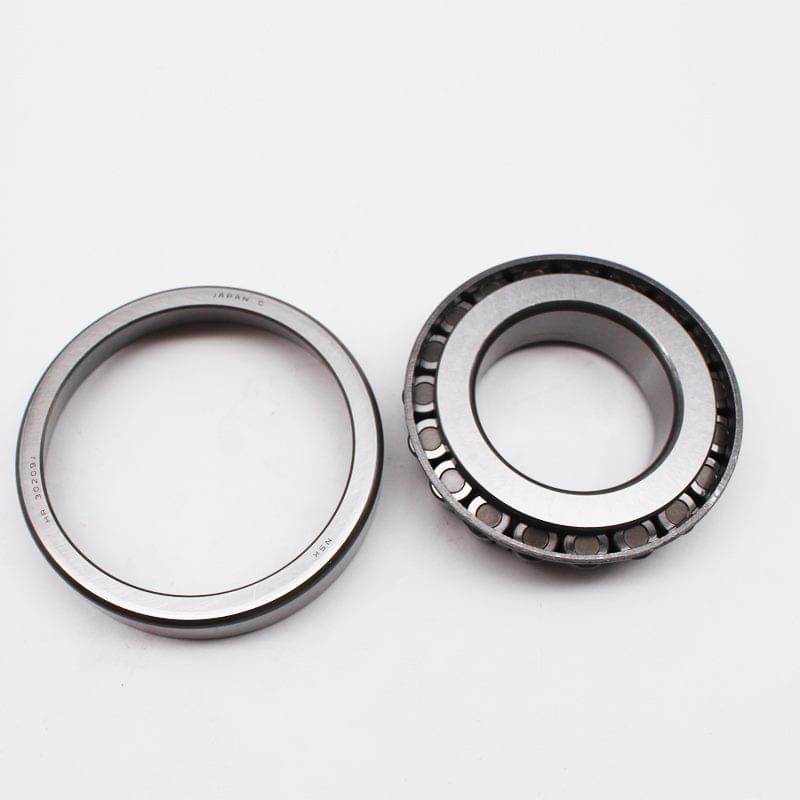
Step 1 – Steel selection
We do not buy steel from just anyone. We use GCr15 (equivalent to 52100) from mills that we have audited. The steel comes with a certificate. We check the certificate. Then we take samples and test them in our lab.
We look for:
- Oxygen content under 10 ppm
- Inclusion rating under 1.5 (ASTM standard)
- Grain size of 8 or finer
If the steel fails any test, we reject the whole batch. That happens about 5% of the time. Our suppliers know we are strict. So they send us their best.
Step 2 – Forging
We forge the rings, not just cut them from tube. Forging aligns the grain structure of the steel. That makes the ring stronger. Cutting from tube leaves the grain structure random. So forged rings handle shock loads better.
Our forging process5 uses induction heating. That heats the steel fast and evenly. Then we press it into shape. The rings cool slowly. That relieves internal stress.
Step 3 – Heat treatment
I explained this earlier. We use a controlled atmosphere furnace. No oxygen, so no scaling on the surface. Then we quench in warm oil (50-60°C). Then we deep freeze at -70°C. Then we temper twice at 160°C.
The result is a uniform hardness of 60-62 HRC across the whole ring. The microstructure has less than 5% retained austenite. That is excellent.
Step 4 – Grinding and super-finishing
We grind the raceways on CNC grinders6. The machines are from Germany and Japan. They hold tolerances within 2 microns. Then we super-finish the raceways with a fine stone. That removes the last grinding marks and gives a mirror-like surface.
We also grind the rollers and the cage pockets. The rollers are matched to within 1 micron of each other. So they all carry the same load.
Here is a table of our precision levels:
| Parameter | Our P6 Grade | Our P5 Grade | Standard P0 |
|---|---|---|---|
| Bore tolerance (d) | +0/-10 µm | +0/-7 µm | +0/-12 µm |
| OD tolerance (D) | 0/-13 µm | 0/-9 µm | 0/-15 µm |
| Width tolerance | ±100 µm | ±75 µm | ±120 µm |
| Raceway roundness | 3 µm | 2 µm | 10 µm |
| Surface finish Ra | 0.2 µm | 0.1 µm | 0.4 µm |
Step 5 – 100% inspection4
Every single bearing gets inspected. Not just one per batch. Every one.
We check:
- Dimensions (bore, OD, width, raceway geometry)
- Running noise (on a vibration tester)
- Radial play
- Torque
We also take random samples from each batch and run a life test on our test rig. That test runs 24/7 under a standard load. We track temperature and vibration. If a bearing fails early, we investigate the whole batch.
I remember a batch from last year. One bearing failed the noise test. We found a tiny scratch on one raceway. That scratch came from a piece of grinding wheel that broke off. We threw away that bearing. Then we checked the grinding wheel and changed it. Then we retested 10 more bearings from the same batch. All passed. But we still gave the customer a 5% extra as a courtesy. That is how we build trust.
Why our process gives you better life
Every step adds cost. But every step also adds life. The cleaner steel means no weak spots. The forging means no hidden cracks. The heat treatment means no internal stress. The grinding means smooth running. The inspection means no bad bearings slip through.
So when you buy from FYTZ, you are not buying a commodity. You are buying a process. A process that delivers 2-3 times the life of a standard bearing.
Real Customer Stories: From Frequent Failures to Years of Reliable Service
I do not like to brag. But results speak for themselves. Let me tell you about three customers. They had bearing problems. They switched to our premium tapered rollers1. Now they have peace of mind.
Customers who switched to FYTZ premium tapered rollers saw their bearing failures drop by 70-90%2. One truck fleet went from changing wheel bearings every 100,000 km to every 400,000 km. A gearbox maker3 cut warranty claims4 by half. A steel mill5 stopped having monthly breakdowns.
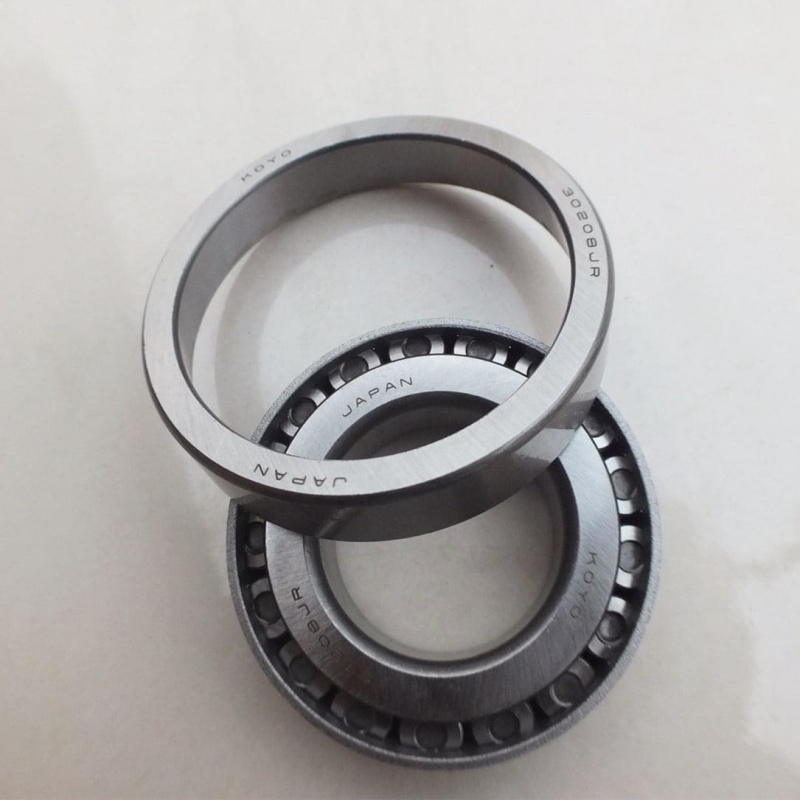
Story 1 – Rajesh from India (truck wheel ends)
Rajesh is my typical customer. He runs a distribution company in Mumbai. He supplies truck parts to workshops and fleets. For years, he bought the cheapest wheel bearings he could find. His customers complained. Bearings failed after 80,000-100,000 km. He had to replace them under warranty. That cost him money and reputation.
He called me. I sent him a sample of our premium 32215 tapered rollers. He installed them on one truck. That truck ran 200,000 km with no problem. He ordered more. Now all his customers use our bearings. The last time we talked, he told me one truck had gone 420,000 km on the original FYTZ bearings. That is more than four times the life of his old bearings.
His cost per bearing6 went up by 35%. But his warranty claims went down by 90%. He now makes more profit per bearing because he does not have to replace them. And his customers are happy.
Story 2 – A gearbox maker in Turkey
This customer makes gearboxes for construction equipment. His old bearings (a cheap brand) failed often. His gearboxes came back from the field with bearing noise and vibration. Warranty claims were eating his margin.
He tried our premium 30212 tapered rollers. The difference was clear. Our bearings ran quieter and cooler. After one year, his warranty claims for bearing failure dropped by 60%. He now specifies FYTZ bearings as standard on all his gearboxes.
He told me: "I used to think all bearings were the same. Now I know. Your bearings cost more, but they save me more."
Story 3 – A steel mill in Russia
Steel mills are tough. High loads, high shock, high dust. This mill had a conveyor for hot rolled steel. The conveyor rollers used spherical roller bearings. They failed every 4-5 weeks. The mill had to stop production for 4 hours each time. That cost them $50,000 per shutdown.
I suggested they try our premium tapered rollers with a special heat treatment and a larger contact angle. We made a custom bearing for them. The first set lasted 6 months. They replaced them after 6 months as preventive maintenance, not because they failed.
The mill manager sent me a photo of the old bearing after 6 months. It still looked good. He ordered 200 pieces. Now they change bearings every 6 months with no unexpected failures. They saved over $500,000 in the first year.
What these stories teach us
All three customers had the same pattern. They bought cheap. They paid twice (or three times). They switched to FYTZ premium. They saved money overall.
Here is a simple cost comparison for a typical truck fleet (50 trucks, each with 4 wheel ends):
| Item | Cheap Bearings | FYTZ Premium Bearings |
|---|---|---|
| Cost per bearing | $8 | $12 |
| Life (km) | 100,000 | 400,000 |
| Bearings needed for 400,000 km | 4 sets ($32 per wheel end) | 1 set ($12 per wheel end) |
| Labor cost for 4 changes | $160 | $40 |
| Downtime cost (lost revenue) | $800 | $200 |
| Total cost per wheel end | $992 | $252 |
That is not a typo. Cheap bearings cost nearly four times more over the same distance. Because you pay for the bearing, plus labor, plus downtime. The bearing price is the smallest part of the cost.
So when you ask "why should I pay more for premium bearings?" the answer is simple. You pay less in the long run. Much less.
Conclusion
Premium tapered rollers from FYTZ give you longer life, less downtime, and lower total cost. Better steel, better process, better results.
-
Learn about the superior performance and longevity of premium tapered rollers compared to standard options. ↩ ↩ ↩ ↩
-
Discover how significant reductions in bearing failures can enhance operational efficiency and save costs. ↩ ↩ ↩ ↩
-
Gain insights into the specific issues gearbox manufacturers encounter and how to address them. ↩ ↩ ↩ ↩
-
Explore strategies to minimize warranty claims and improve product reliability in your business. ↩ ↩ ↩ ↩ ↩
-
Investigate the unique challenges steel mills face with bearings and potential solutions. ↩ ↩ ↩
-
Understand the various elements that affect bearing costs and how to optimize your spending. ↩ ↩ ↩
-
Understand how anti-rust coatings can significantly enhance bearing longevity and performance. ↩