
If your machines keep failing under heavy loads, you are not alone. I see this every day with my clients.
Tapered roller bearings handle both radial and thrust forces at the same time. Their unique wedge shape spreads heavy loads evenly. That is why they are the top choice for trucks, mills, and heavy equipment.
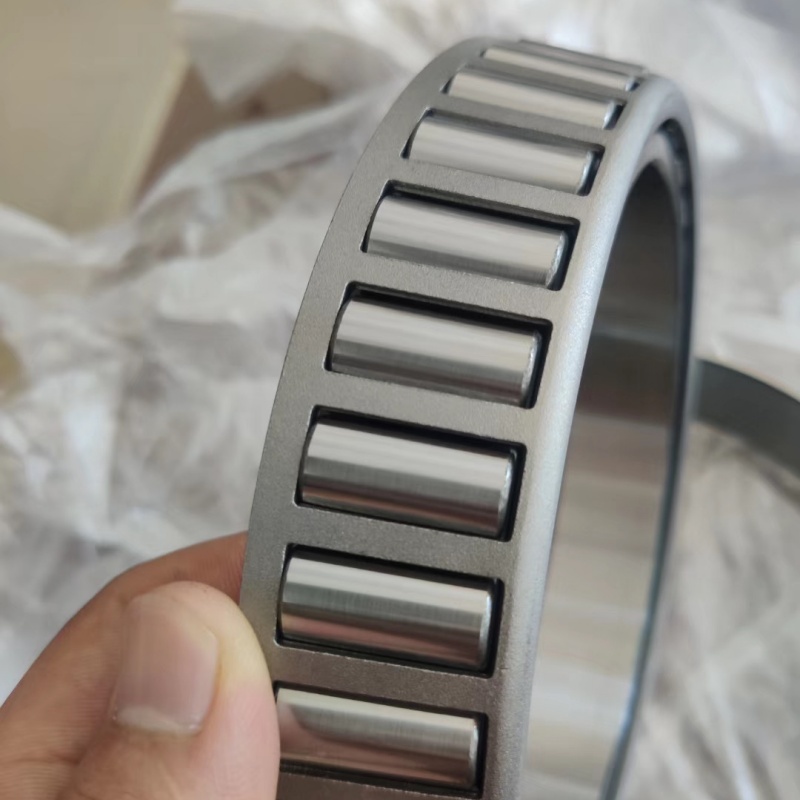
Let me explain how these bearings really work. And I will share what I have learned from running a bearing factory in China for over ten years. You will see why smart buyers like Rajesh (my client from India) always keep tapered roller bearings in stock.
Unique Geometry: The Wedge Effect for Load Distribution?
Do you know why ordinary bearings crack under sudden heavy pressure? It is because they cannot spread the force. That is a big problem.
The wedge effect1 means the rollers and raceways form a natural angle. When you push down, the roller gets squeezed into a tighter space. This creates more contact area and spreads the load.
[^2] under load](https://sdycbearing.com/wp-content/uploads/2025/12/Tapered-Roller-Bearings-64.jpg)
What exactly is the wedge effect?
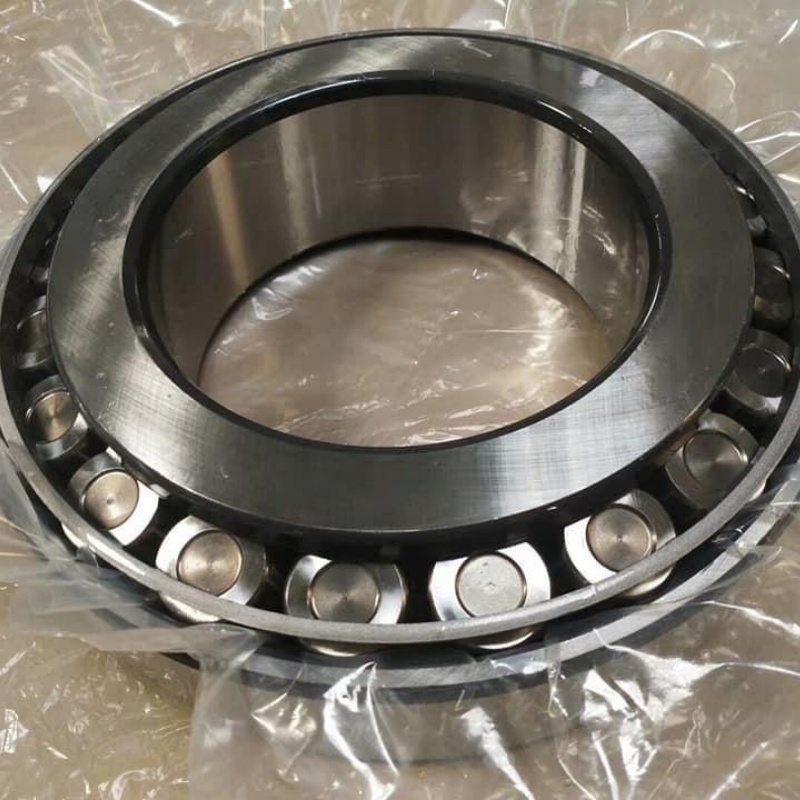
Let me break it down. A tapered roller bearing has an inner ring (cone) and an outer ring (cup). The rollers are shaped like small cones. They sit between these rings. The angles are very precise.
When you apply a heavy load, the roller tries to move outward. But the cup stops it. So the roller presses harder against both rings. The contact area grows. This is very different from a ball bearing.
| Feature | Ball Bearing | Tapered Roller Bearing |
|---|---|---|
| Contact type | Point contact | Line contact |
| Load spread | Small area | Long line area |
| Stress per mm² | Very high | Much lower |
| Risk of brinelling | High | Low |
Why does line contact matter for heavy loads?
Think about standing on snow. If you wear high heels, you sink. If you wear snowshoes, you float. The same idea works here. A ball bearing touches the raceway at just one tiny point. That point gets all the force. It dents easily.
A tapered roller bearing touches along a line. That line can be several millimeters long. So the force spreads out. No single spot gets overloaded. That is why these bearings can take 3 to 5 times more load than a ball bearing of the same size.
I once had a customer from Turkey. He made conveyor rollers for a mining company. He tried using deep groove ball bearings first. They failed every two months. The inner rings cracked. Then he switched to our tapered roller bearings. The same conveyors ran for 18 months without a single failure. The wedge effect saved him thousands of dollars.
Does the angle of the taper matter?
Yes, a lot. We make different angles for different jobs. A steep angle (like 25 to 30 degrees) handles more thrust force. A shallow angle (like 10 to 15 degrees) is better for high radial loads. You can even change the angle to match your exact machine. That is what OEM customization2 means at my factory.
So the wedge effect is not just a theory. It is a real, measurable advantage. And it is the main reason why heavy machines rely on tapered roller bearings.
Handling Combined Radial and Thrust Loads Simultaneously?
Have you ever seen a bearing get crushed because the force came from two directions at once? Most bearings cannot handle that.
A tapered roller bearing1 can take radial force (straight down) and thrust force (side push) at the same time. The angled rollers turn both forces into pressure inside the bearing.
[^2]](https://sdycbearing.com/wp-content/uploads/2025/12/Tapered-Roller-Bearings-60.jpg)
How does one bearing do two jobs?
Let me explain with a simple example. Imagine a car wheel. The weight of the car pushes straight down (radial load). But when you turn a corner, the wheel also gets a side push (thrust load). A normal bearing would need two separate bearings to handle this. Not with tapered rollers.
The roller’s angled shape splits the force. Part of the force goes into the radial direction. The other part goes into the axial direction. The bearing geometry is designed so that both forces stay inside the bearing. Nothing leaks out to damage other parts.
What happens if you use the wrong bearing?
I will tell you a real story. A buyer from Brazil once ordered cylindrical roller bearings2 for a gearbox. The gearbox had heavy side loads from the gears. Those cylindrical bearings failed in three weeks. The rollers skidded and wore flat spots.
He called me upset. I asked him about the loads. Then I told him to try our tapered roller bearings instead. The new bearings worked perfectly. The side loads were no longer a problem. Why? Because cylindrical rollers cannot take thrust. They only do radial. Tapered rollers do both.
Can you adjust how much thrust a bearing can take?
Yes. You can choose a single-row tapered bearing for moderate thrust. Or you can use two rows back-to-back for high thrust. You can even use four rows for extreme cases like rolling mill rolls. The industry calls these arrangements "matched sets3."
My factory produces many such sets for Russian steel plants. They need bearings that can handle tons of radial force from the steel weight and tons of thrust from the rolling action. Only tapered roller bearings can survive that environment.
So if your machine has forces coming from different directions, do not guess. Use a bearing that is made for the job.
High Rigidity and Shock Load Resistance Under Extreme Conditions?
Does your equipment sometimes get sudden hammer-like blows? Like rocks falling on a conveyor or a wheel hitting a pothole? Ordinary bearings can crack from just one bad shock.
Tapered roller bearings1 are very stiff. They do not bend much under pressure. And they can take sudden shocks without breaking. The line contact and the solid steel design absorb the energy.

What does rigidity4 mean for a bearing?
Rigidity is how much the bearing resists bending. A rigid bearing keeps the shaft exactly in place. A flexible bearing lets the shaft move a little. That little movement can ruin your machine’s precision.
Tapered roller bearings are among the most rigid rolling bearings you can buy. The large contact area between the roller and the raceway stops any tilting. For comparison, a deep groove ball bearing might let the shaft tilt by 0.01 mm under load. A tapered roller bearing of the same size might only tilt 0.002 mm. That is five times stiffer.
How do they survive shock loads2 without breaking?
Shock loads happen very fast. In milliseconds, the force can spike to 5 or 10 times the normal load. Many bearings fail because the steel surface gets tiny cracks (called brinelling). Those cracks grow until the bearing breaks.
Tapered roller bearings resist this in two ways. First, the line contact spreads the shock over a bigger area. Second, the rollers can tilt slightly inside the bearing. That tiny tilt acts like a cushion. It absorbs the shock instead of passing it to the steel.
I remember a customer from Indonesia. He runs a stone crushing plant. His crusher bearings kept failing every month. The dust and the heavy shocks were too much. He tried our heavy-duty tapered roller bearings with special heat treatment. Those bearings lasted over a year. He now orders from me every six months.
What about heat and dirt?
Extreme conditions often include heat and contamination3. Tapered roller bearings handle heat well because they have more steel mass. They do not overheat as fast as ball bearings. For dirty environments, you can add seals. My factory makes sealed tapered units for automotive hubs. They keep dirt out and grease in.
If your machines work in mines, quarries, or construction sites, you need this kind of toughness. Do not settle for weak bearings. They will cost you more in downtime than the price of a good bearing.
Adjustable Clearance and Preload for Optimized Performance?
Do you know that a bearing that is too loose or too tight will fail quickly? Most people do not check this. Then they blame the bearing.
Tapered roller bearings let you adjust the internal clearance1. You can set them loose for high speed. Or you can set them tight (preload4) for high precision. No other rolling bearing gives you this much control.
What is clearance and why does it matter?
Clearance is the small empty space inside the bearing. When you install a bearing, you decide how much space remains. Too much clearance: the shaft wobbles. Too little clearance: the bearing overheats and seizes.
With a ball bearing, you cannot change the clearance. What you buy is what you get. With a tapered roller bearing, you can move the cone in or out on the shaft. A lock nut holds it in place. You can adjust it after installation. That is a huge advantage.
How do you know the right amount of preload?
Preload means you remove all clearance and add a small squeezing force. This makes the bearing extremely rigid. But it also creates more heat. So you need to find the balance.
I use a simple rule from my factory floor. For high speed (over 3000 RPM), use a small clearance (0.01 to 0.05 mm). For heavy loads and low speed (under 1000 RPM), use a preload. For very high precision machines like CNC spindles, you need a precise preload measured in microns.
| Application | Recommended Setting | Reason |
|---|---|---|
| Truck wheel hub | Small clearance (0.02-0.05 mm) | Heat expansion needs space |
| Gearbox shaft | Light preload | Stops noise and vibration |
| Rolling mill | Heavy preload | Maximum rigidity needed |
| Conveyor roller | Normal clearance (0.05-0.1 mm) | Easy installation and dust tolerance |
Can you make a mistake in adjustment?
Yes. I have seen many mistakes. The most common is over-tightening. A buyer from Egypt once tightened a tapered bearing too much on a water pump. The bearing got so hot that the grease melted. The pump seized in two hours. He called me angry. I asked him how he adjusted it. He said "I just turned the nut until it was tight."
That was the problem. You need a torque wrench2. Or you need to measure the end play with a dial indicator. For our factory, we provide adjustment guides with every bearing order. A good supplier helps you avoid these mistakes.
So if you want the best performance from your machines, learn to adjust your bearings. It takes five extra minutes. It can double the bearing life.
Conclusion
Tapered roller bearings handle heavy loads because of their wedge shape, combined load capacity, high rigidity, and adjustable clearance. Choose them for tough jobs.
-
Understanding internal clearance is crucial for optimal bearing function and preventing failures. ↩ ↩ ↩ ↩
-
Discover how using a torque wrench can prevent costly mistakes in bearing adjustments. ↩ ↩ ↩ ↩
-
Find out how bearings can withstand heat and dirt, ensuring optimal performance in tough environments. ↩ ↩
-
Learn about preload to ensure your bearings operate efficiently and avoid overheating. ↩ ↩