
Your precision machines need bearings that match their accuracy. A cheap bearing ruins everything. I see it happen too often.
High-end tapered roller bearings give you tight tolerances, smooth operation, and long life in precision applications. They come in precision classes like P5, P4, and P2. Choose the right class for your spindle, gearbox, or measuring equipment.
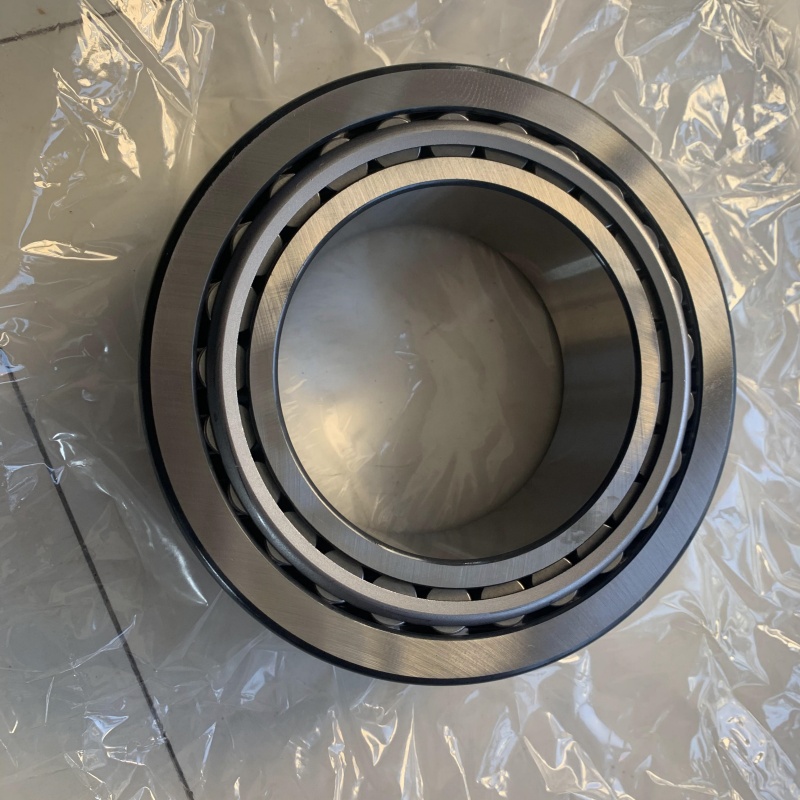
I run a bearing factory in China. I sell to customers who make CNC machines, printing presses, and high-speed gearboxes. They demand precision. I have learned what works and what does not. So let me share my real-world knowledge. No fluff. Just facts.
Who makes the best tapered roller bearings1?
Every buyer asks me this question. They want a name. But the answer is not that simple.
The best tapered roller bearings come from manufacturers who use high-quality steel, precise grinding, and strict quality control2. Big names like Timken, SKF, and NSK are well known. But smaller factories like mine (FYTZ) also make excellent precision bearings at a better price.
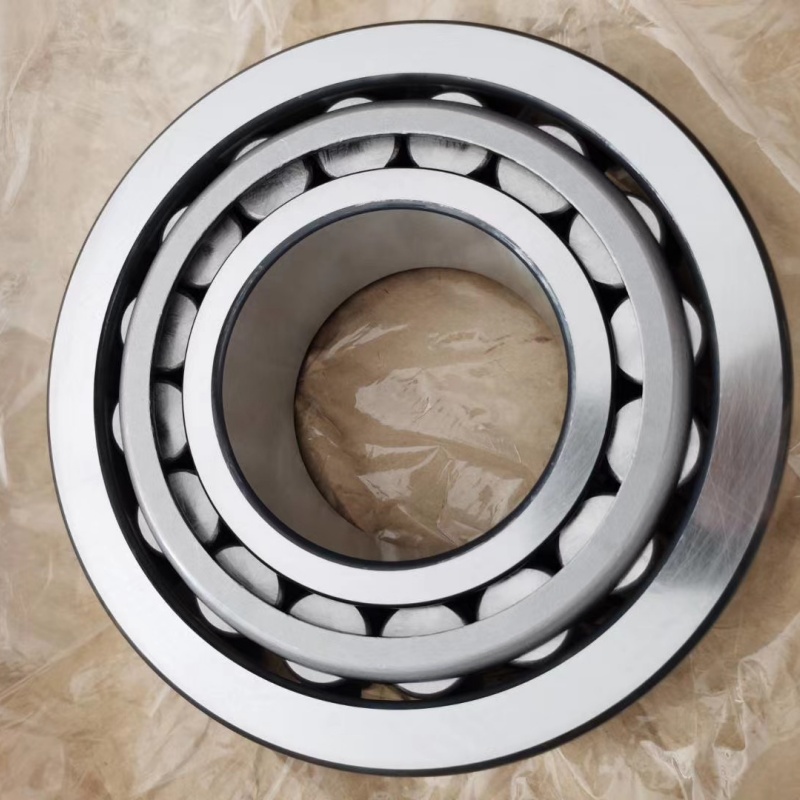
Let me be honest with you. I have tested bearings from many makers. I have also taken apart failed bearings from customers. Here is what I have learned.
What makes a bearing “the best”
-
Steel quality: Good bearings use clean, vacuum-degassed steel with uniform carbide size. Cheap bearings use recycled steel with inclusions. Those inclusions start cracks.
-
Grinding precision: The raceway surface finish must be under 0.1 microns for precision work. That needs expensive grinding machines and skilled operators.
-
Geometry accuracy: Roundness, taper, and wall thickness must stay within microns. Good factories measure every batch. Bad factories only measure one out of a hundred.
-
Heat treatment: The steel needs the right hardness (58-62 HRC for races, 60-64 HRC for rollers). Too soft, it wears fast. Too hard, it cracks.
-
Quality control: The best makers have 100% inspection for critical dimensions. They also test noise and vibration.
The big global brands
Timken (USA) invented the tapered roller bearing. They still make excellent products. SKF (Sweden) and FAG (Germany) also have strong lines. NSK and NTN (Japan) are top for precision. These brands are safe choices. But you pay a premium for the name.
The Chinese alternative
I am proud of what we make at FYTZ. We use Japanese and German grinding machines. We buy high-grade steel from Baosteel and other top mills. We have CMM inspection and vibration testers. Our precision class goes to P5 and P6. For 90% of industrial applications, our bearings perform the same as the big brands. But our price is 30-50% lower.
I have a customer in Turkey. He used to buy Timken for his gearboxes. He tried a sample of our P5 tapered rollers. After one year of testing, he switched completely. He said: “The performance is the same. The price is much better.”
When you should pay for top brands
- Very high speed (over 10,000 RPM) where any imbalance causes vibration
- Extreme precision (P4 or P2 class) for machine tool spindles
- When your customer specifically requires a brand name in the contract
When you can save money
- Normal industrial gearboxes and conveyors
- Agricultural and construction equipment
- Automotive wheel hubs and drivetrains
- Any application where P5 or P6 precision is enough
My honest advice
Do not chase brand names blindly. Define your needs first. Then find a supplier who meets those needs at a fair price. That might be Timken. Or it might be FYTZ. I have sold to buyers who switched from SKF to us and saved 40% without any quality loss. Test us. You will see.
What are the precision classes of Timken?
Timken sets the standard for tapered roller bearings. Many buyers ask about their classes. So let me explain.
Timken uses a system of precision classes: Class 0 (normal), Class 3, Class 001, and Class 0002. Class 000 is the highest precision for tapered roller bearings. It matches ISO P53 or better. For most precision work, Class 3 or Class 00 is enough.
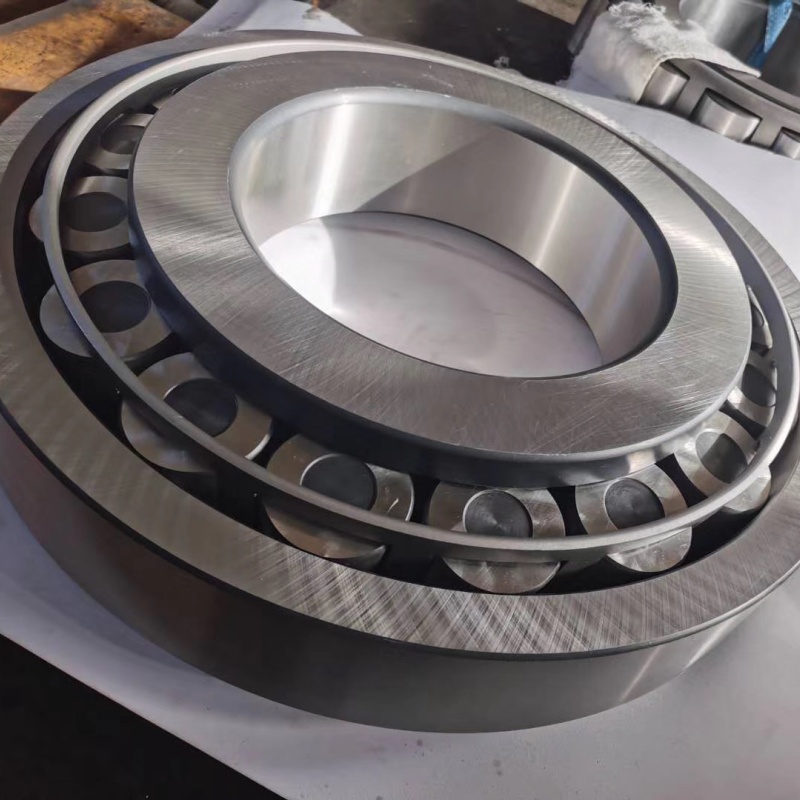
I want to clear up confusion. Many people think Timken uses the same ISO classes (P0, P6, P5, P4, P2). They do not. Timken has its own system. So you need to know the conversion.
Timken precision classes explained
-
Class 0 (normal): This is the standard industrial grade. It matches ISO P0. For normal conveyors, trucks, and farm equipment. Bore tolerance is about +0/-0.012 mm for a 50mm shaft.
-
Class 3 (precision): This is tighter than Class 0. It roughly matches ISO P6 or sometimes P5 depending on the size. Bore tolerance is about +0/-0.008 mm. Good for gearboxes and machine tool spindles with moderate speed.
-
Class 00 (high precision): This is close to ISO P5. Bore tolerance around +0/-0.005 mm. For high-speed spindles and precision machinery.
-
Class 000 (super precision): This is the best Timken makes. It is near ISO P4. Bore tolerance within +0/-0.003 mm. For aerospace, ultra-high-speed spindles, and measuring equipment.
Conversion table for common sizes (50mm bore)
| Timken Class | ISO Equivalent | Bore Tolerance (mm) | Running accuracy (runout) | Typical Use |
|---|---|---|---|---|
| Class 0 | P0 | +0/-0.012 | 0.015 | Normal industrial |
| Class 3 | P6 to P5 | +0/-0.008 | 0.010 | Precision gearboxes |
| Class 00 | P5 | +0/-0.005 | 0.006 | CNC spindles |
| Class 000 | P4 | +0/-0.003 | 0.004 | Aerospace, high speed |
How to read a Timken precision code
Timken prints the class on the bearing and the box. For example, a “30208” is Class 0 standard. A “30208-3” means Class 3 precision. A “30208-00” means Class 00. The extra numbers matter.
Do you need Timken’s highest class?
I ask my customers this question. For a normal lathe spindle running at 4000 RPM, Class 00 (P5) is plenty. Class 000 (P4) is overkill. You will pay double for a difference you cannot feel. For a grinding spindle at 20,000 RPM, yes, you need Class 000.
What about FYTZ precision classes?
We use the ISO system: P0, P6, P5, and we can do P4 on request. Our P5 matches Timken Class 00. Our P6 matches Timken Class 3. We do not make P2 yet – that is very specialized. For most precision engineering, our P5 is the sweet spot. Good accuracy. Fair price.
My advice
Check your machine manual. It will tell you the required ISO class. Then convert to Timken class if you buy Timken. Or just buy ISO class directly from a supplier like us. That is simpler and often cheaper.
What are super precision bearings1?
You hear this term in high-end machine shops. But what does it really mean? Let me break it down.
Super precision bearings are bearings with tolerances so tight that they can run at very high speeds with almost no vibration or heat. They are usually ISO P4, P2, or ABEC 7 and 9. For tapered roller bearings, super precision means Timken Class 000 or ISO P4 and above.
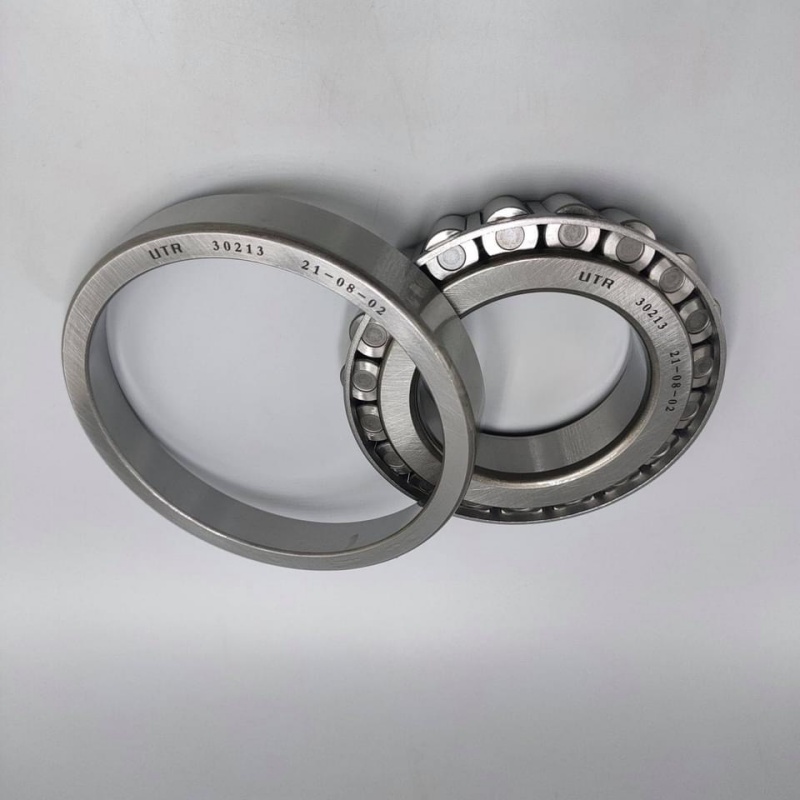
I remember a customer in India. He made CNC lathes. His spindles vibrated at high speed. He used standard P5 bearings. I recommended P4 super precision bearings. The vibration dropped by 70%. He could cut faster and get better surface finish2. That is the power of super precision.
What makes a bearing “super precision”
-
Tighter bore and OD tolerances: For a 50mm bore, P4 tolerance is +0/-0.003 mm. That is one third of P5 (0.005 mm) and one quarter of P0 (0.012 mm).
-
Lower runout: The inner ring runout (radial and axial) is under 0.002 mm for P4. That means the bearing spins almost perfectly true.
-
Better surface finish: The raceway is polished to a mirror finish. This reduces friction and heat.
-
Matched sets: Super precision bearings are often sold in matched pairs or sets. The manufacturer measures and pairs bearings so they work together perfectly.
-
Higher speed rating: Because of the precision and finish, the speed limit can be 30-50% higher than standard bearings.
ISO precision classes for bearings
| Class | ABEC Equivalent | Typical Runout | Typical Use | Cost Multiplier |
|---|---|---|---|---|
| P0 | ABEC 1 | 0.010-0.015 mm | Normal industrial | 1x |
| P6 | ABEC 3 | 0.008-0.010 mm | Better industrial | 1.5x |
| P5 | ABEC 5 | 0.005-0.008 mm | Precision gearboxes | 2-3x |
| P4 | ABEC 7 | 0.002-0.004 mm | CNC spindles | 4-6x |
| P2 | ABEC 9 | 0.001-0.002 mm | Ultra-high speed | 10x+ |
When you need super precision tapered roller bearings3
- Machine tool spindles (lathes, milling machines, grinders)
- High-speed gearboxes (turbines, compressors)
- Printing presses (need perfect registration)
- Measuring equipment (CMM machines, test stands)
- Aerospace actuators and flight controls
When you do NOT need super precision
- Normal conveyor or pump bearings
- Automotive wheels or axles
- Agricultural equipment
- Construction machinery
- Any slow-speed application (under 1000 RPM)
A warning about cost
Super precision bearings are expensive. A P4 tapered roller bearing can cost 5 times more than a P0 bearing. But for the right application, it is worth it. The better surface finish and lower heat let you run faster and longer. Also, super precision bearings require perfect installation. A small mistake in mounting ruins the precision. So you need skilled mechanics.
What FYTZ offers
We make P5 and P6 as standard. For P4, we do custom orders. Our lead time is longer because we need special inspection. But our price is still lower than the big European brands. Many of my customers in the machine tool industry have switched to our P4 bearings. They save 40-50% and get the same performance.
My honest opinion
Only buy super precision if your machine needs it. Do not overspecify. A P5 bearing is already very good. For most precision engineering, P5 is enough. P4 is for the top 5% of applications. Talk to your machine builder. Ask them what class they recommend. Then buy that class, not higher.
What are the different types of tapered roller bearings?
Not all tapered roller bearings are the same. I have many types in my catalog. Each one fits a different job.
The main types are: single row, double row, four row, metric, inch, flanged cup, and adjustable. Single row is the most common. Double row handles heavier loads. Four row is for rolling mills. Metric and inch follow different size standards.
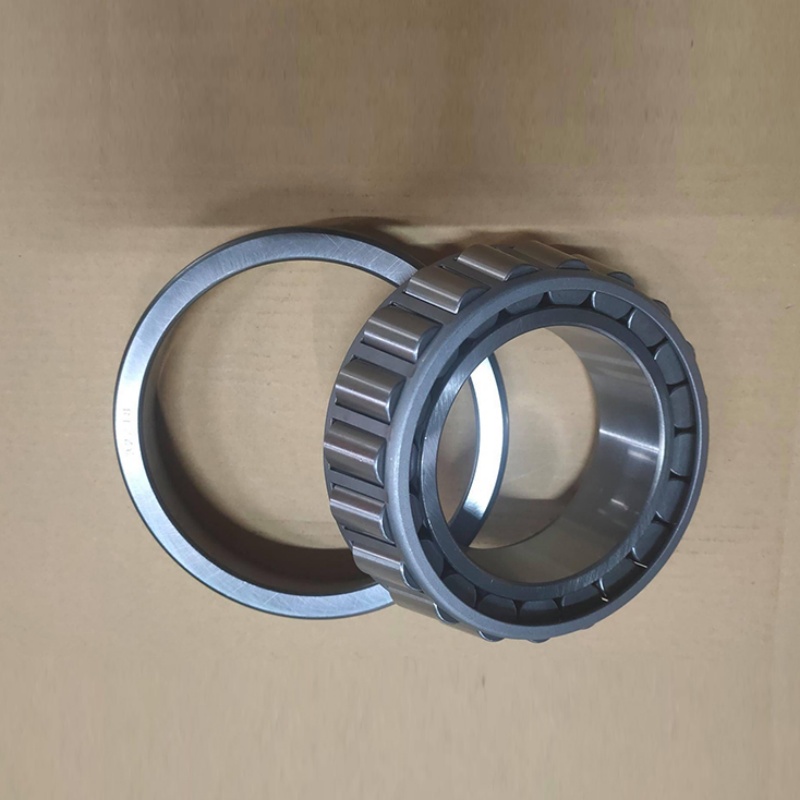
Let me walk you through each type. I use these every day in my factory.
1. Single row tapered roller bearing1
This is the standard type. One row of rollers between one cone and one cup. It takes radial load and thrust load in one direction. For thrust in both directions, you need two bearings mounted face-to-face or back-to-back. Sizes from small (30202, 15mm bore) to large (32330, 150mm bore). Use this for most industrial applications: gearboxes, conveyor rollers, truck wheel hubs.
2. Double row tapered roller bearing2
Two rows of rollers in one housing. It takes radial load and thrust load in both directions. You do not need two separate bearings. This saves space and simplifies assembly. Common types: 3520 series, 3522 series. Use for heavy-duty applications like rolling mill backup rolls, large gearboxes, and crane wheels.
3. Four row tapered roller bearing3
Four rows of rollers in one very wide bearing. It takes extreme radial loads. Used almost exclusively in metal rolling mills. The bearing is custom-made for each mill. Not something you buy off the shelf. Very expensive and heavy.
4. Metric vs. inch series4
Metric bearings have sizes in millimeters (like 30208 – 40mm bore). Inch bearings have sizes in inches (like HM88649 – 1.3125 inch bore). Most of the world uses metric. The USA still uses inch for many applications. Make sure you know which system your machine uses. They are not interchangeable.
5. Flanged cup type5
The outer ring (cup) has a flange. That flange acts like a built-in spacer. It simplifies mounting. Common in automotive differentials and some gearboxes.
6. Adjustable tapered roller bearing6
Some bearings are designed with extra adjustment features. You can change the end play by turning a nut or adding shims. This is useful for machines where temperature changes a lot. Most single row bearings are adjustable if you design the housing correctly.
Comparison table of types
| Type | Rows | Load Capacity7 | Thrust Direction | Typical Bore Range | Cost |
|---|---|---|---|---|---|
| Single row | 1 | Medium | One way | 10mm to 200mm | $ |
| Double row | 2 | High | Both ways | 30mm to 300mm | $$ |
| Four row | 4 | Very high | Both ways | 100mm to 500mm+ | $$$$ |
| Metric | varies | varies | varies | Standard sizes | varies |
| Inch | varies | varies | varies | Inch sizes | slightly higher |
How to choose the right type
-
Step 1: Determine how much space you have. Single row is smallest. Double row is wider. Four row is very wide.
-
Step 2: Calculate your load. Light to medium: single row. Heavy: double row. Extreme: four row.
-
Step 3: Check thrust direction. One direction only: one single row bearing. Both directions: two single rows facing each other, or one double row.
-
Step 4: Know your measurement system. If your shaft is in inches, buy inch bearings. If in millimeters, buy metric. Do not mix.
A story about picking the wrong type
A customer in Bangladesh bought single row bearings for a double row application. His gearbox had a heavy overhung load. The single row bearing failed in three months. He called me. I asked to see his drawing. The original design called for double row. He had saved $10 per bearing by buying single row. But he lost $1000 in downtime. He switched to double row. No more failures.
What FYTZ offers
We make all common types: single row metric and inch, double row metric, and flanged cup on request. We also do custom sizes for special orders. Our most popular is the single row metric series (30200, 30300, 32200, 32300). We stock these in P0, P6, and P5 precision.
My advice
Stick with single row for most jobs. Use double row only when you need both thrust directions or very high radial load. And always check your machine manual. The bearing type is not a place to guess.
Conclusion
High-end tapered roller bearings give you precision and reliability. Choose the right class, type, and brand for your application. FYTZ delivers quality at a fair price.
-
Explore this link to understand the most common type of tapered roller bearing and its applications. ↩ ↩ ↩ ↩
-
Learn about the advantages of double row tapered roller bearings for heavy-duty applications. ↩ ↩ ↩ ↩
-
Discover the specific uses and characteristics of four row tapered roller bearings in metal rolling mills. ↩ ↩ ↩
-
Understand the key differences between metric and inch series bearings to choose the right one for your needs. ↩
-
Find out how flanged cup bearings simplify mounting and their common applications in automotive differentials. ↩
-
Explore the features of adjustable tapered roller bearings and their benefits in temperature-variable environments. ↩
-
Learn how to calculate load capacity to ensure you select the right bearing for your application. ↩