
You are tired of replacing bearings every few months. I get it. Downtime eats your profits and frustrates your team.
Tapered roller bearings from FYTZ are built to last. They handle heavy radial and thrust loads, run for tens of thousands of hours, and keep your machines running daily. Upgrade now and stop changing bearings so often.
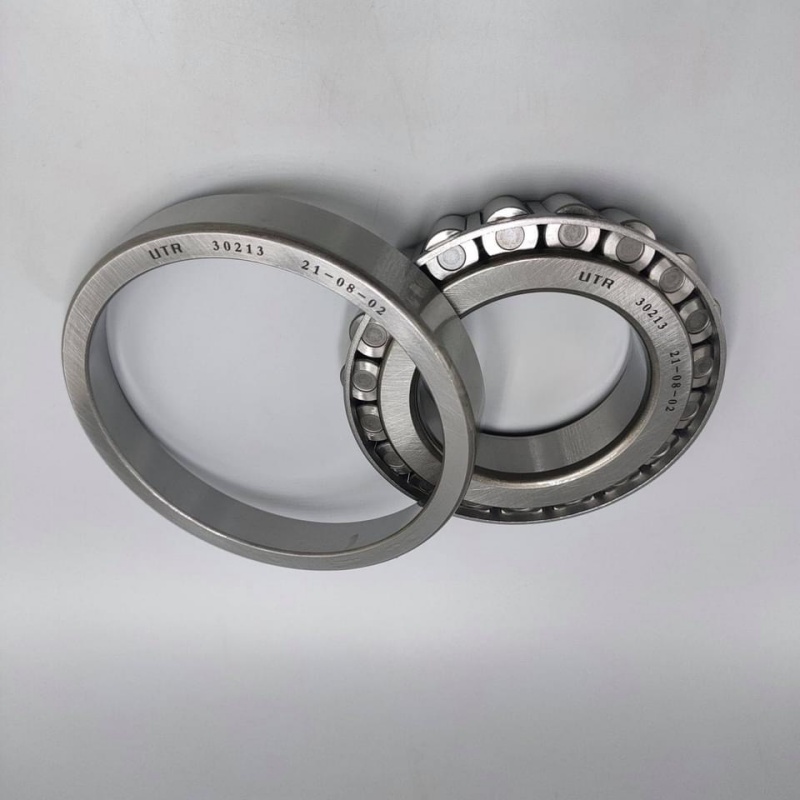
I run a bearing factory in China. My customers in India, Brazil, and Turkey come to me when they want bearings that simply do not quit. So let me show you what tapered rollers can do. No fancy words. Just real answers from my shop floor.
What is a roller bearing having tapered rollers?
Many people confuse ball bearings with roller bearings. That mistake leads to early failure. So let me clear it up.
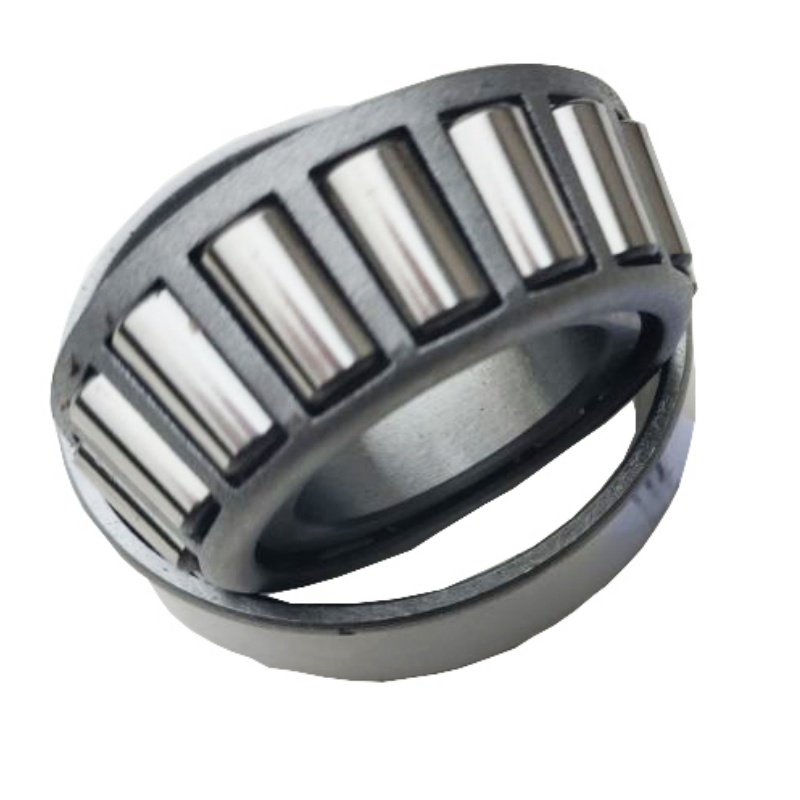
A roller bearing with tapered rollers uses cone-shaped rollers placed between an inner ring (cone) and an outer ring (cup). The tapered shape lets the bearing handle both radial loads1 (downward) and thrust loads2 (sideways) at the same time. That is different from a ball bearing, which mainly takes radial loads.
[^3] showing rollers](https://sdycbearing.com/wp-content/uploads/2025/12/Tapered-Roller-Bearings-19-1.jpg)
Let me explain this like I do to my new customers. A standard ball bearing has round balls. Those balls touch the raceway at a single point. That is fine for light loads. But when you put heavy weight or side force, the point contact becomes a weak spot.
A tapered roller bearing has rollers that look like small cones. Each roller touches the raceway along a full line, not just a point. That line contact spreads the force over a larger area. So the bearing can take much heavier loads.
The parts of a tapered roller bearing
- Cone (inner ring): This goes on the shaft. It has a tapered raceway.
- Cup (outer ring): This goes in the housing. It also has a tapered raceway.
- Rollers: These are the tapered elements between cone and cup.
- Cage: This keeps the rollers evenly spaced.
- Flange (on the cone): This guides the large end of the rollers.
How it works
When you put a load on the bearing, the rollers try to wedge between the cone and cup. The angle of the taper pushes the rollers against the flange. That creates a stable rolling motion. The bearing can take radial force (pushing down) and axial force (pushing sideways) at the same time.
Where you see them every day
- Car and truck wheel hubs
- Gearboxes in industrial machines
- Conveyor rollers in mines
- Agricultural equipment like tractors
- Printing presses and rolling mills
Comparison with other bearings
| Bearing Type | Contact Type | Radial Load | Thrust Load | Best For |
|---|---|---|---|---|
| Deep groove ball bearing | Point | Good | Fair | Light, clean, high speed |
| Cylindrical roller bearing | Line | Excellent | Poor | Heavy radial only |
| Tapered roller bearing | Line | Excellent | Excellent | Combined loads, heavy duty |
| Spherical roller bearing | Line | Excellent | Good | Misalignment, shock loads |
My advice
If your machine has heavy loads3 and you need long life, pick a tapered roller bearing. It will outlast a ball bearing by three to five times. I have seen it happen again and again in my customers’ factories.
What is the lifespan of a roller bearing?
You want a bearing that lasts. But how long is long enough? The answer depends on your machine and how you treat the bearing.
The lifespan of a tapered roller bearing1 is measured in hours. Under ideal conditions, it can run 30,000 to 50,000 hours. In real factories with normal maintenance, expect 15,000 to 25,000 hours. With poor maintenance, it might last only 5,000 hours or less.
[^2] vs [load](https://www.amroll.com/bearing-selection-load-life.html)[^3]](https://sdycbearing.com/wp-content/uploads/2025/12/Tapered-Roller-Bearings-17-1.jpg)
I want to share a story. A customer in Russia bought a container of our tapered bearings for his steel mill. He ran them 24/7 in high heat and heavy dust. He did no maintenance for two years. The bearings failed at 8,000 hours. He blamed me. I flew to his plant. I showed him the grease. It was black and full of metal. Then I showed him a similar mill in Turkey that used the same bearings but greased them every month. Their bearings lasted 35,000 hours. He understood. The bearing was fine. His maintenance was the problem.
What affects bearing life
-
Load – This is the biggest factor. A bearing running at 50% of its rated load will last eight times longer than one at 90% load. I am not exaggerating. The formula for rollers is L10 = (C/P)^(10/3). That exponent means load changes have a huge effect.
-
Speed – Higher speed creates more heat and wear. For the same load, a bearing at 3000 RPM lasts about half as long as one at 1500 RPM.
-
Lubrication – Good grease separates metal from metal. Bad grease or no grease kills bearings fast. I have seen bearings die in 200 hours from lack of grease.
-
Contamination – Dirt, dust, and water act like sandpaper inside the bearing. One teaspoon of fine dust can cut bearing life by 80%.
-
Temperature – Every 10°C above 70°C cuts grease life in half. The bearing steel can also soften above 150°C.
How to calculate your expected life
You do not need to be an engineer. Use this simple method:
- Find the bearing’s dynamic load rating (C) from the catalog. For a 30208 tapered bearing, C is about 63,000 N.
- Estimate your actual load (P). For a conveyor roller, that is the weight on the bearing plus belt tension. For example, 30,000 N.
- Divide C by P. 63,000 / 30,000 = 2.1
- For tapered rollers, life in hours = (C/P)^(10/3) x 500 (approximate formula for 33 RPM). For 2.1, that is about 2.1^3.33 x 500 = around 5,000 hours at full speed.
That is the basic L10 life. In real life, multiply by 0.5 to 0.8 for contamination3 and alignment issues.
Realistic lifespan table
| Operating Condition | Expected Life (hours) | Years of 8-hour days |
|---|---|---|
| Perfect lab conditions | 50,000+ | 17+ |
| Clean factory, good maintenance | 30,000 | 10 |
| Normal factory, average maintenance | 20,000 | 7 |
| Dusty or hot, basic maintenance | 10,000 | 3.5 |
| Heavy dust, poor maintenance | 5,000 | 1.5 |
| No lubrication4 or severe overload | <1,000 | <0.3 |
My promise
Our FYTZ tapered roller bearings are made with high-quality steel and precision grinding. They meet or exceed ISO standards. But even the best bearing needs care. Follow the maintenance tips in this article, and you will get the long life you need.
Are tapered rolling bearings serviceable1?
Some buyers throw away bearings at the first sign of trouble. That is wasteful and expensive. So let me tell you: tapered roller bearings2 are often serviceable.
Yes, most tapered roller bearings are serviceable. You can take them apart, clean them, inspect the parts, and replace worn components like rollers or the cage. The cone and cup are separate pieces. That makes disassembly easy. But you cannot mix parts from different bearings.
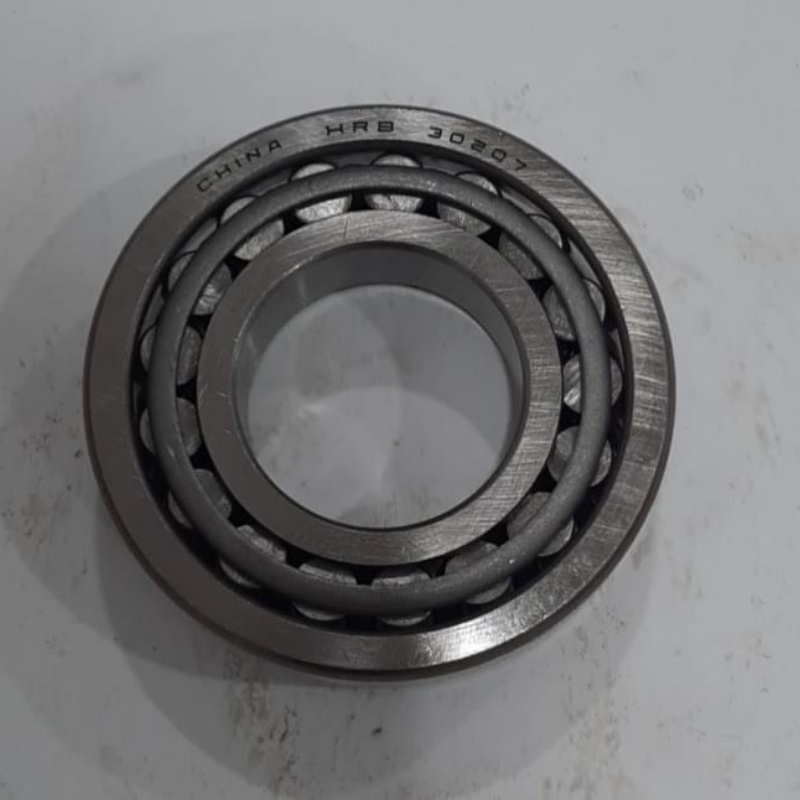
I learned this from a customer in Egypt. He ran a rock crushing plant. Every time a bearing made noise, he threw it away. I asked him: “Why not just clean and regrease5 it?” He did not know you could take tapered bearings apart. I showed him. Now he services his bearings twice a year. He has cut his bearing costs by 60%.
What “serviceable” means for tapered rollers
Unlike sealed ball bearings, most tapered roller bearings have an open design. You can remove the cone from the cup. The rollers come out as an assembly with the cage. This lets you:
- Clean out old, dirty grease completely
- Inspect each roller and raceway for damage
- Replace the cage if it is broken
- Re-grease with fresh grease
- Reassemble and reuse the bearing
When you should service a bearing
Do not wait for failure. Service on a schedule:
- Light duty (8 hours/day, clean): every 6 months
- Medium duty (16 hours/day, normal dust): every 3 months
- Heavy duty (24/7, dust or heat): every 1-2 months
Also service the bearing if you see any early signs of wear: higher temperature, new noise, or vibration.
Step-by-step service process
-
Remove the bearing from the shaft. Use a puller. Do not hammer it off.
-
Take it apart. The cone and cup separate by hand. The rollers stay in the cage.
-
Clean everything. Use diesel or a safe solvent. Do not use water or steam. Dry with compressed air. Do not spin the bearing with air – that can damage it.
-
Inspect each part:
- Raceways on cone and cup: look for pits, spalls, or scratches.
- Rollers: look for flat spots or rough surfaces.
- Cage: look for cracks or bent fingers.
- Flange on cone: look for wear or cracks.
-
Measure if you have tools. Check the roller diameter and raceway width. If worn beyond 0.001 inch, replace.
-
Replace damaged parts. You can buy just the cone assembly or just the cup. But do not mix cones and cups from different manufacturers. They are matched sets.
-
Re-grease and reassemble. Apply fresh grease to the cone raceway and rollers. Put the cone back into the cup. Then install the bearing on the shaft.
What parts can you replace?
| Part | Serviceable? | Notes |
|---|---|---|
| Cone (inner ring) | Yes, separately | Order by part number |
| Cup (outer ring) | Yes, separately | Must match cone |
| Rollers and cage assembly | Yes, as a set | Comes as one unit |
| Individual rollers | No | Replace whole cage set |
When NOT to service
Throw the bearing away if:
- The cone or cup has cracks
- Spalling covers more than 10% of the raceway
- The flange on the cone is broken
- The bearing has run dry and turned blue from heat
- The rollers have deep pits or flat spots
In those cases, a new bearing is cheaper than the downtime from a failed service.
My advice
Keep a few spare cones and cups on your shelf. They are cheaper than full bearings. When you service a bearing, measure everything. Write down the numbers. That helps you track wear over time. And always use fresh grease. Old grease that sits on a shelf for years loses its properties.
What are the benefits of tapered roller bearings?
You have options. Why choose tapered rollers? Let me give you the real reasons I recommend them to my customers every day.
The main benefits of tapered roller bearings are: high load capacity1 for both radial and thrust forces, long service life2, adjustable internal clearance5, easy servicing, and the ability to handle shock loads. They also run quieter than many other bearing types when properly set up.
I have sold bearings for ten years. I have seen customers switch from ball bearings to tapered rollers. They never go back. Here is why.
Benefit #1: Combined load handling
Most bearings take radial loads or thrust loads, not both. Tapered rollers take both at the same time. That means you can use one bearing where you might need two of another type. Fewer parts, simpler design, lower cost.
Benefit #2: High load capacity
Because of the line contact, a tapered roller bearing of the same size can handle 2-3 times more load than a deep groove ball bearing. For heavy machines like crushers or gearboxes, that is a game changer.
Benefit #3: Adjustable clearance
You can set the end play exactly where you want it. For high speed, set it tight (0.001 inch). For high heat, set it loose (0.005 inch). With ball bearings, you get what the factory gives you. No adjustment.
Benefit #4: Serviceable design
As I explained above, you can take them apart, clean them, and reuse them. That saves money. A sealed ball bearing goes in the trash when it gets dirty.
Benefit #5: Shock load resistance
When a machine jolts, the line contact of tapered rollers absorbs the shock better than a point contact. I have seen tapered rollers survive drops that would crack a ball bearing race.
Benefit #6: Long life
With proper maintenance, they outlast most other bearing types. The L10 life formula for rollers (exponent 10/3) is more favorable than for balls (exponent 3). That means for the same load ratio, rollers last about 30% longer.
Benefit #7: Precision available
We make tapered roller bearings in P5 and P6 precision classes. That means low runout and smooth operation. For high-speed spindles or precision gearboxes, that matters.
Comparison of benefits
| Feature | Tapered Roller | Deep Groove Ball | Cylindrical Roller |
|---|---|---|---|
| Handles radial + thrust together | Yes | No (poor thrust) | No |
| Adjustable end play | Yes | No | No |
| Serviceable | Yes | Only open type | Yes |
| Shock load resistance | High | Low | Medium |
| Maximum speed | Medium | High | Medium |
| Cost | Medium | Low | Medium |
| Typical life (same load) | Longest | Short | Medium |
A real example
I have a customer in India who makes gearboxes for textile machines. He used deep groove ball bearings. His gearboxes failed after 18 months. He switched to our tapered roller bearings. The first set is still running after 5 years. He pays 20% more per bearing but replaces them 70% less often. That is a huge saving.
My conclusion on benefits
If your machine has heavy loads, thrust forces, shock, or runs long hours, tapered roller bearings are the smart choice. They cost a bit more upfront but save you money in the long run. That is not marketing. That is math.
Conclusion
Our FYTZ tapered roller bearings last long because they handle heavy loads, you can service them, and they offer real benefits over cheaper options.
-
Understanding high load capacity can help you appreciate why tapered roller bearings are preferred for heavy machinery. ↩ ↩ ↩ ↩
-
Explore the factors that lead to the extended lifespan of tapered roller bearings, making them a cost-effective choice. ↩ ↩ ↩
-
Find out how contamination can drastically reduce bearing life and how to prevent it. ↩ ↩
-
Explore the critical role of lubrication in extending bearing life and preventing failures. ↩
-
Learn how adjustable internal clearance enhances performance and longevity in various applications. ↩ ↩
