
I once had a client who chose the wrong bearing for a conveyor system. It failed in six months. The downtime cost them more than the bearing itself. That is a mistake I want you to avoid.
For most industrial applications, a relubricable pillow block bearing gives you more control over maintenance and a longer service life. A sealed-for-life bearing is a better fit for hard-to-reach places or when you want a “fit and forget” solution. Your choice depends on your maintenance schedule and the operating environment.
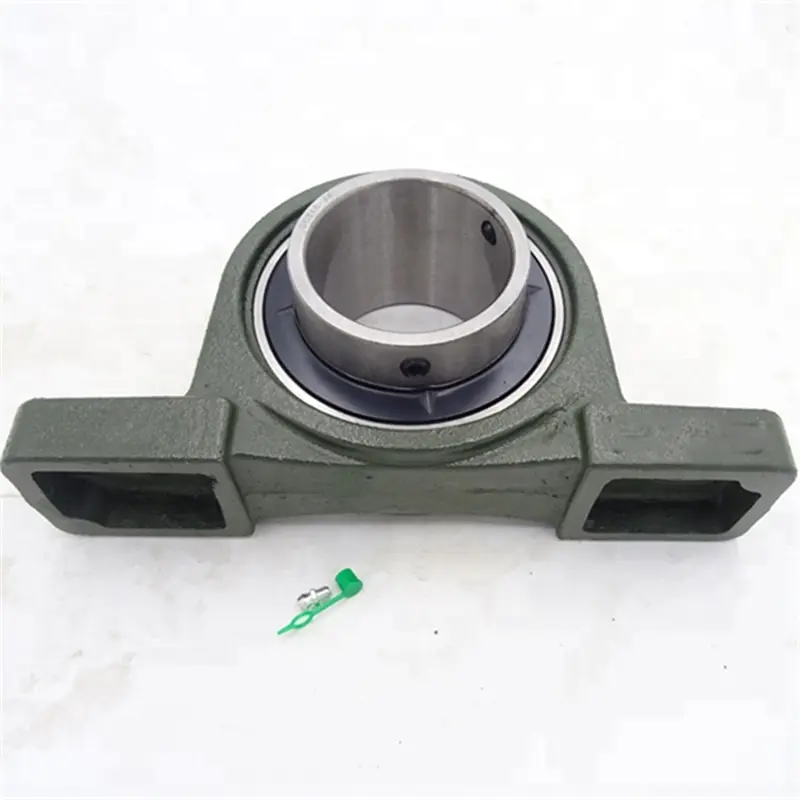
Choosing the right bearing is a small decision with a big impact on your production line. Let me walk you through the details. We will look at the core differences, the common problems, and the options you have. This way, you can pick the part that keeps your machines running.
Are pillow block bearings1 sealed?
I get this question from buyers all the time. They see a metal housing and assume it is a sealed unit. That is not always true. The confusion is understandable. Both types look similar from the outside.
Not all pillow block bearings are sealed. Some are designed for relubrication. Others come as sealed-for-life units2. The main difference is in the bearing insert. A sealed bearing has rubber shields on the insert itself. A relubricable bearing3 has a grease fitting on the housing or the insert to let you add fresh grease.

The Difference Is in the Insert
The housing is just the shell. The real story is the bearing insert inside it. I have worked with many procurement managers who did not know this. They thought the whole unit was sealed because the housing was solid.
Let me break it down for you.
| Feature | Relubricable Bearing | Sealed-for-Life Bearing |
|---|---|---|
| Grease Fitting | Has a zerk fitting or grease nipple on the housing or insert. | No grease fitting. The housing is solid. |
| Internal Seals | May have a seal on the insert, but it is designed to allow new grease to purge out old grease. | Has high-quality contact seals on both sides of the bearing insert. |
| Maintenance | Needs regular, planned maintenance to add grease. | No maintenance needed for the life of the bearing. |
| Ideal Environment | High-speed applications, heavy loads, wet or dirty conditions where grease needs to be replaced often. | Clean environments, hard-to-reach locations, or applications where maintenance is not possible. |
| Lifecycle Cost | Lower initial cost, but higher maintenance cost over time. | Higher initial cost, but lower or no maintenance cost. |
You need to check the bearing insert catalog4. Do not just look at the housing. I always tell my clients to look for the grease fitting. If you see a small metal nipple on the side or the end, it is a relubricable unit. If you do not see one, it is sealed-for-life.
A sealed-for-life bearing is not completely "sealed" in an airtight way. It uses rubber seals that touch the inner ring. These seals keep dirt out and grease in. The idea is that the factory puts in the right amount of grease for the bearing’s calculated life. When that grease runs out, the bearing fails.
For a relubricable unit, you control the grease. You can push out old, contaminated grease with fresh, clean grease. This is a big deal for harsh environments.
What is the difference between sealed and unsealed bearings?
This is a core question in my work. I talk about this with clients in Turkey and Brazil every week. The difference seems simple, but it changes how you run your whole factory.
Sealed bearings have rubber or metal shields attached to the outer ring to keep lubricant in and contaminants out. Unsealed, or open, bearings have no such shields. They rely on the housing or external components for protection and require a constant supply of lubricant from an external source.
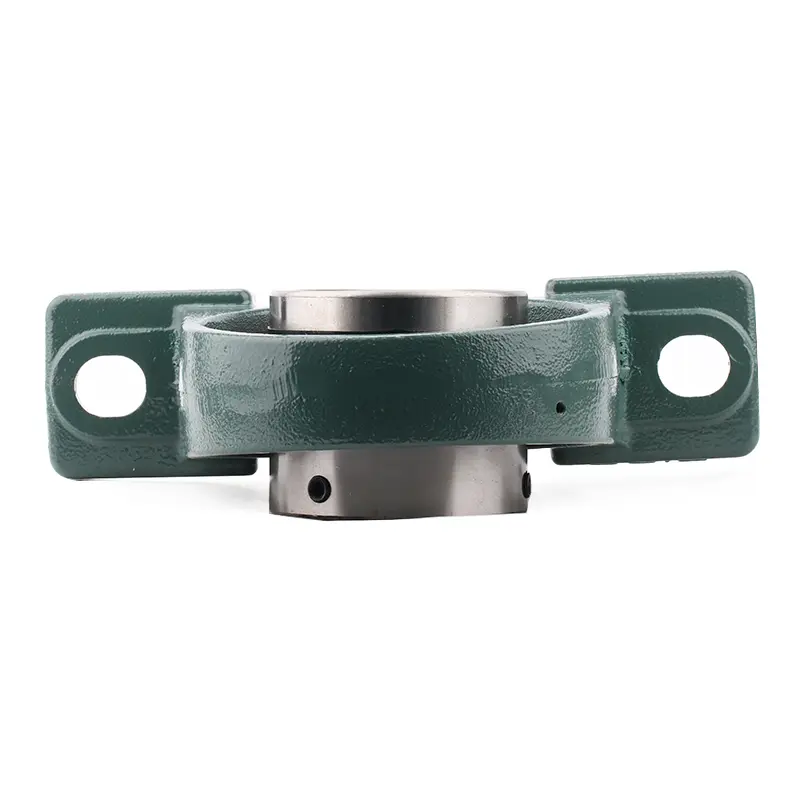
A Deep Dive into the Engineering and Application
The choice between sealed and unsealed (or open) bearings is not just about maintenance. It is about the physics of your machine. I have seen a paper mill ruin a set of open bearings in a week because they did not build the right lubrication system. I have also seen a sealed bearing overheat on a high-speed fan because it could not release the friction heat.
To help you think through this, let us look at three critical areas: friction, contamination, and speed.
1. Friction and Heat Generation1
This is the first trade-off you must consider.
- Sealed Bearings2: The rubber seal rubs against the inner ring. This creates friction. That friction creates heat. For a small motor, this heat is fine. For a large, high-speed machine, that extra heat can be a killer. The bearing might run hotter than it should. This shortens the grease life and the bearing life.
- Unsealed Bearings3: There is no seal rubbing. So they run cooler. This is why you see open bearings in high-speed spindles and electric motors. They are more efficient in terms of heat generation. But they need a perfect lubrication system.
So, ask yourself: Is my machine running at high speed? If yes, an open bearing with a good oil or grease system might be better. If it is running at moderate speeds, the sealed option is simpler.
2. Contamination Risk4
This is where sealed bearings shine.
- Sealed Bearings: They are like a small fortress. For a machine in a dusty cement plant or a wet food processing line, a sealed bearing is a life saver. The seal is the first line of defense. It keeps the bad stuff out.
- Unsealed Bearings: They are vulnerable. They rely on the housing to protect them. If the housing seal fails, the bearing is exposed. One grain of sand can cause a failure. I have seen this happen many times.
3. Lubrication Strategy5
This is about your people and your processes.
- Sealed Bearings: They use a “lubricate once” strategy. You do not need a lube technician. You do not need to buy grease in bulk. It is simple. But if the bearing is in a hot spot, the grease can harden. Then you have a problem.
- Unsealed Bearings: They need a strategy. You need to set up a schedule. You need to train your people to add the right amount of grease. Too much grease can blow the seals. Too little grease causes metal-to-metal contact. It is a system, not just a part.
A Quick Reference Table
| Factor | Sealed Bearing | Unsealed (Open) Bearing |
|---|---|---|
| Friction | Higher due to seal drag. | Lower. No seal contact. |
| Heat Generation | Higher. Can be a problem at high speeds. | Lower. Better for high-speed applications. |
| Contamination Protection | Excellent for general use. | Poor. Relies on external housing seals. |
| Maintenance6 | None required (sealed-for-life). | Regular relubrication is mandatory. |
| Speed Capability | Limited by seal material and design. | Very high. Limited only by the cage design. |
What are the common problems with pillow blocks?
I have seen pillow blocks fail in many ways. It is rarely a mystery. Most failures are due to one of three things: the wrong fit, the wrong lubrication, or the wrong seal. When a distributor in Indonesia calls me about a return, it is almost always one of these.
The most common problems with pillow blocks are premature bearing failure1 due to improper mounting2, misalignment3 between the shaft and the housing, contamination ingress4 through worn seals, and lubricant degradation or loss. Overheating and excessive noise are the first signs of these issues.
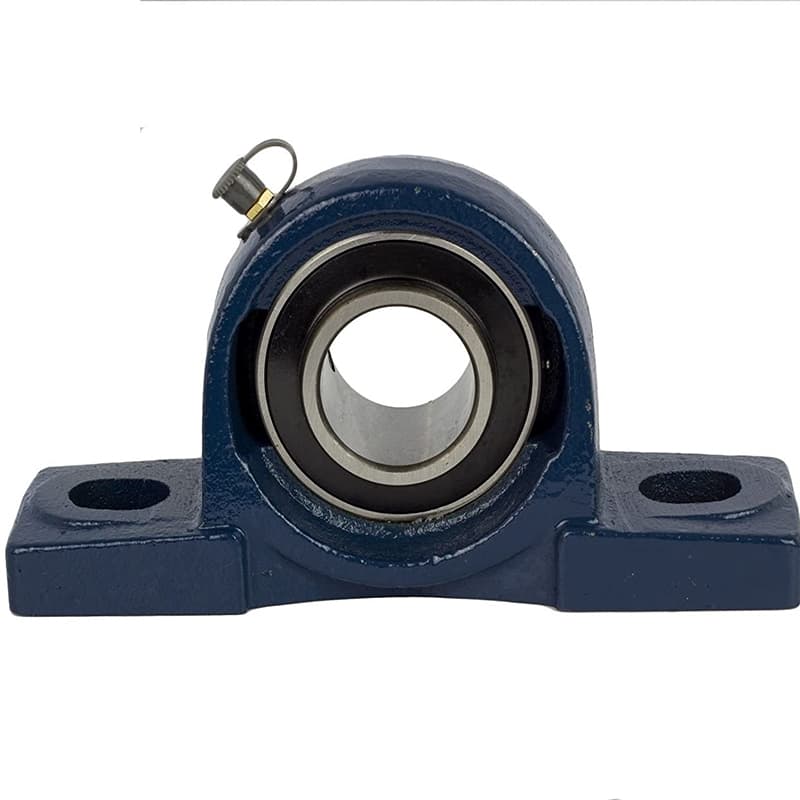
How to Spot and Solve These Issues
I want to help you be the expert who catches these problems early. Let me break down the four biggest problems I see in the field.
1. Misalignment
This is the number one killer. A pillow block is designed to sit flat on a mounting surface. But surfaces are not always perfect. If the two bearings holding a shaft are not lined up, it creates a binding force.
- The Problem: The inner ring gets forced to one side. The balls run in a crooked path. This creates uneven load. The bearing heats up. It fails quickly.
- The Solution: Use a self-aligning pillow block5. This is my standard recommendation. The spherical outer surface of the bearing insert lets it tilt inside the housing. It can handle small mounting errors. If you have a long shaft, you must use these.
2. Contamination
I see this in food plants and farms all the time. A pressure washer sprays water directly at a bearing. Or a conveyor carries fine dust that gets into the bearing.
- The Problem: Water washes out the grease. Rust forms. Dust acts like sandpaper. It grinds down the raceways and the balls. The bearing gets noisy first. Then it seizes.
- The Solution: Match the seal to the environment. For water spray, use a bearing with a triple lip seal. It looks like a rubber ring with multiple flaps. It keeps water out better than a standard seal. For dust, a sealed-for-life unit is good, but you must check the seals are intact.
3. Improper Mounting
I have seen mechanics hammer a bearing onto a shaft. This is a big mistake.
- The Problem: The force from the hammer travels through the balls and into the raceway. It creates dents called "brinelling." These dents cause vibration and noise from the start. The bearing life is cut in half before it even runs.
- The Solution: Always use the right tools. For a set screw bearing, you tighten the screws gradually. You alternate between screws. For an eccentric locking collar, you turn it in the direction of shaft rotation. You never hammer. You use a spanner or a punch to tap it lightly.
4. Lubrication Failure
This is not just about running out of grease. It is about using the wrong grease.
- The Problem: People mix greases. A lithium grease mixed with a polyurea grease can harden like clay. The bearing locks up. Or they use a grease that cannot handle the temperature. It melts and runs out.
- The Solution: Pick one grease type for your whole factory. Use a high-quality, NLGI #2 grease with a lithium complex or polyurea base. It works for most temperatures and speeds. Stick with it.
What are the different types of pillow block bearings?
I often send this list to new buyers. They see a catalog with hundreds of options and get overwhelmed. It is simpler than it looks. The different types are made for different ways of attaching to the shaft and to the machine.
Pillow block bearings1 are categorized by their housing style and the method used to lock the bearing onto the shaft. The main types are set screw locking, eccentric locking collar, and adapter sleeve locking. Each type offers a different level of holding power, ease of installation, and tolerance for shaft surface finish.
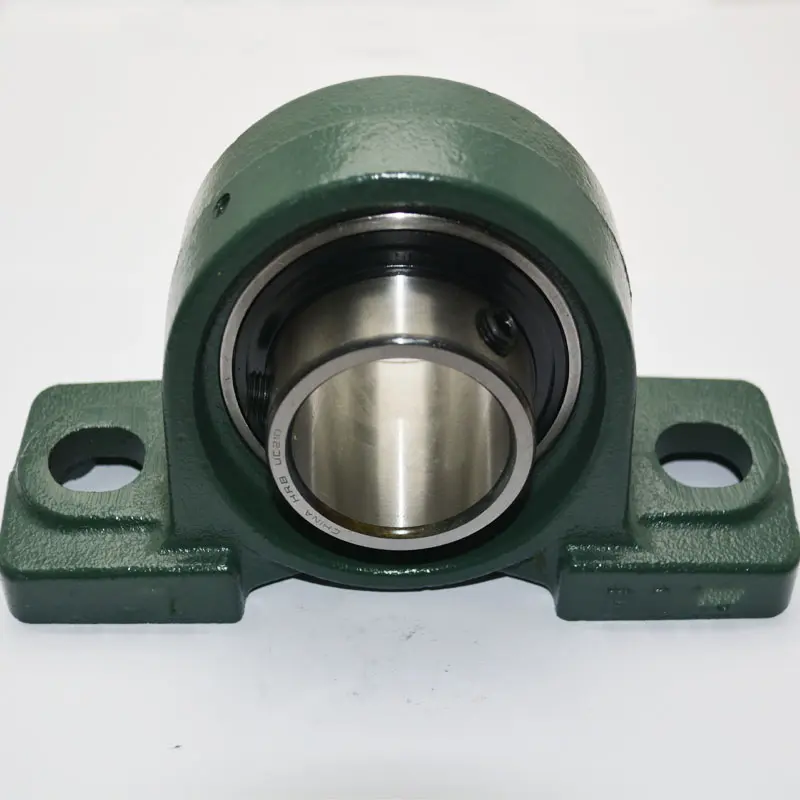
A Guide to the Three Main Locking Styles
The locking method is the most important feature to look at. It tells you how the bearing will perform under vibration and how easy it will be to install.
1. Set Screw Locking Bearings2
This is the most common type. You see it on fans, conveyors, and agricultural equipment.
- How it works: The bearing insert has a cylindrical bore. There are two set screws on the inner ring. You slide the bearing onto the shaft. Then you tighten the set screws with a hex key. The screws press into the shaft.
- Pros: It is cheap. It is easy to install. Any mechanic can do it.
- Cons: The set screws can damage the shaft. They leave marks. If the shaft is not very hard, the screws can dig in and cause a stress point. Under high vibration, the screws can loosen.
- Best for: General use where vibration is low to medium. It is a good choice for fans and light conveyors.
2. Eccentric Locking Collar Bearings3
This is a very common option. I sell many of these to clients in India and Vietnam for agricultural machinery.
- How it works: The inner ring has a small off-center shoulder. There is a separate collar with an off-center bore. You slide the bearing on. You turn the collar in the direction of shaft rotation. This locks the collar onto the inner ring. Then you tighten a set screw on the collar to hold it.
- Pros: It provides a stronger hold than set screws alone. It does not damage the shaft as much because the clamping force is spread out.
- Cons: It is more expensive than set screws. You have to be careful to turn the collar the right way. If you turn it the wrong way, it will loosen during operation.
- Best for: Applications with moderate vibration, like conveyors and harvesters.
3. Adapter Sleeve Locking Bearings4
This is the heavy-duty option. I recommend this for steel mills, mining equipment, and large industrial fans.
- How it works: The bearing insert has a tapered bore. A split sleeve goes between the shaft and the bearing. You push the bearing onto the sleeve. You tighten a lock nut. This pushes the sleeve between the shaft and the bearing. The fit is extremely tight.
- Pros: It gives you the strongest holding power. It works well on worn shafts. You can use it on shafts without a shoulder. It is perfect for high vibration.
- Cons: It is the most expensive option. Installation takes more time. You need the right tools, like a spanner wrench for the lock nut.
- Best for: Heavy-duty industrial applications with high loads and high vibration.
Comparison Table
| Feature | Set Screw | Eccentric Collar | Adapter Sleeve |
|---|---|---|---|
| Holding Power | Low to Medium | Medium to High | Very High |
| Installation Speed5 | Fast | Medium | Slow |
| Shaft Damage | High (marks the shaft) | Low | None |
| Cost | Low | Medium | High |
| Vibration Resistance6 | Low | Medium | High |
| Shaft Condition | Needs a good surface | Good for most surfaces | Works on worn or damaged shafts |
Conclusion
Choose a relubricable bearing for control and long life in harsh conditions. Choose a sealed-for-life bearing for simplicity in clean, hard-to-reach spots.
-
Explore this link to understand the fundamentals of pillow block bearings and their various applications. ↩ ↩ ↩ ↩
-
Learn about set screw locking bearings, their benefits, and where they are commonly used. ↩ ↩ ↩ ↩
-
Discover the mechanics and advantages of eccentric locking collar bearings for better application insights. ↩ ↩ ↩ ↩
-
Find out how adapter sleeve locking bearings provide strong holding power in heavy-duty applications. ↩ ↩ ↩ ↩
-
Understand the importance of installation speed in choosing the right pillow block bearing for your needs. ↩ ↩ ↩
-
Explore how vibration resistance affects the performance and longevity of pillow block bearings. ↩ ↩