
I remember a call with a customer in Mumbai. He had 200 pillow block bearings fail in just six months. The reason? He picked the wrong locking style for his application. That is a costly mistake. Let us make sure you avoid it.
The main difference between set screw and eccentric locking pillow block bearings is how they grip the shaft. Set screw bearings use a screw that digs into the shaft. Eccentric locking bearings use a collar that turns to clamp the shaft. The right choice depends on your shaft type, load direction, and vibration levels.
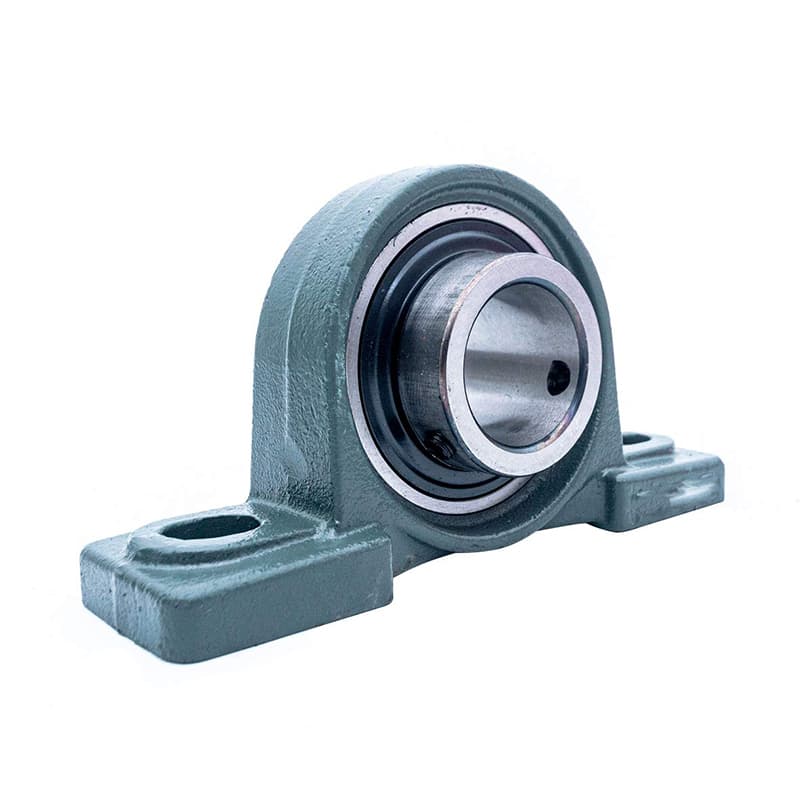
You have a project, and you want it to run without problems. I run a bearing factory in China. We make these parts every day. I have seen both types work well, and I have seen them fail. The trick is to match the bearing to your machine’s needs. Let us walk through the details together.
How do you select the right pillow block size?
I often see people guess the size. They look at the old bearing and order the same number. But sometimes, the old bearing was wrong from the start. Guessing leads to downtime and extra costs. Let us do this right.
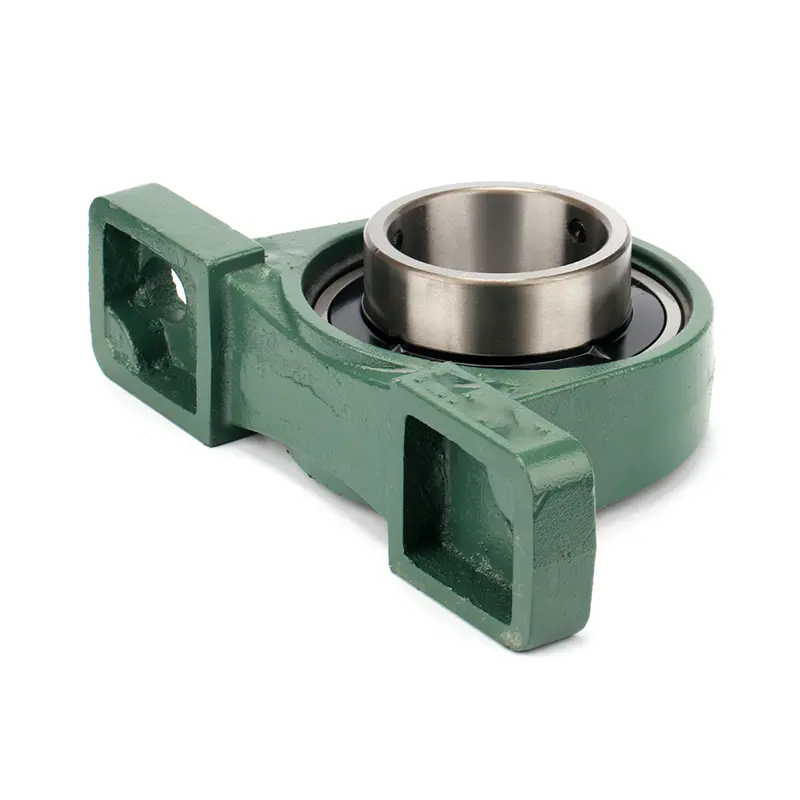
To select the right pillow block size, first measure your shaft diameter. That is your starting point. Then, check the load your machine puts on the bearing. Finally, look at the housing dimensions to ensure it fits your mounting space.
The Simple Truth About Sizing
Sizing a pillow block bearing is not just about matching numbers. It is about understanding three key things. I will break them down for you.
1. Shaft Diameter is Your Anchor1
The shaft is the foundation. If your shaft is 50 mm, you need a bearing with a 50 mm bore. This sounds simple, but here is the trap. Different manufacturers use different naming rules. For example, a UCP 210 bearing from one brand might have a different bore than a UCP 210 from another brand. Always check the technical drawing. Do not rely only on the part number.
2. Load Capacity is Your Safety Net2
A bearing can be the right size for the shaft but too small for the load. If you overload it, the bearing will fail quickly. You will hear noise first. Then heat. Then the machine stops.
To avoid this, calculate the total load. Think about the weight it carries. Think about the force from belts or gears. Add a safety margin. Our customers in heavy industries like steel or cement often use a safety factor of 1.5 to 23. This means they choose a bearing that can handle 50% to 100% more load than the calculation shows.
3. Housing Dimensions are Your Reality Check4
I have shipped bearings to Turkey and Brazil that were the perfect size for the shaft. But they did not fit the bolt holes on the machine. The customer had to drill new holes. That takes time and money.
So, before you order, measure the bolt hole spacing. Measure the height from the base to the shaft center. This is called the center height. These dimensions must match your machine’s existing mounting points. If you are building a new machine, you have more freedom. But for replacements, you must match the existing setup.
| Sizing Factor | What to Check | Common Mistake |
|---|---|---|
| Shaft Diameter | Measure with calipers. Confirm bore size in mm or inches. | Assuming the part number matches the bore size. |
| Load Rating | Calculate dynamic load (C) and static load (Co). | Choosing a bearing with a load rating that is too low. |
| Housing Dimensions | Bolt spacing, center height, base length. | Only checking the shaft size and ignoring the housing. |
What is an eccentric lock bearing1?
I was visiting a customer in Indonesia. He pointed to a broken bearing and said, "I hate these. They always come loose." He was using a set screw bearing in a high-vibration application. I explained to him that the problem was not the bearing type. It was the locking style2. He needed an eccentric lock bearing.
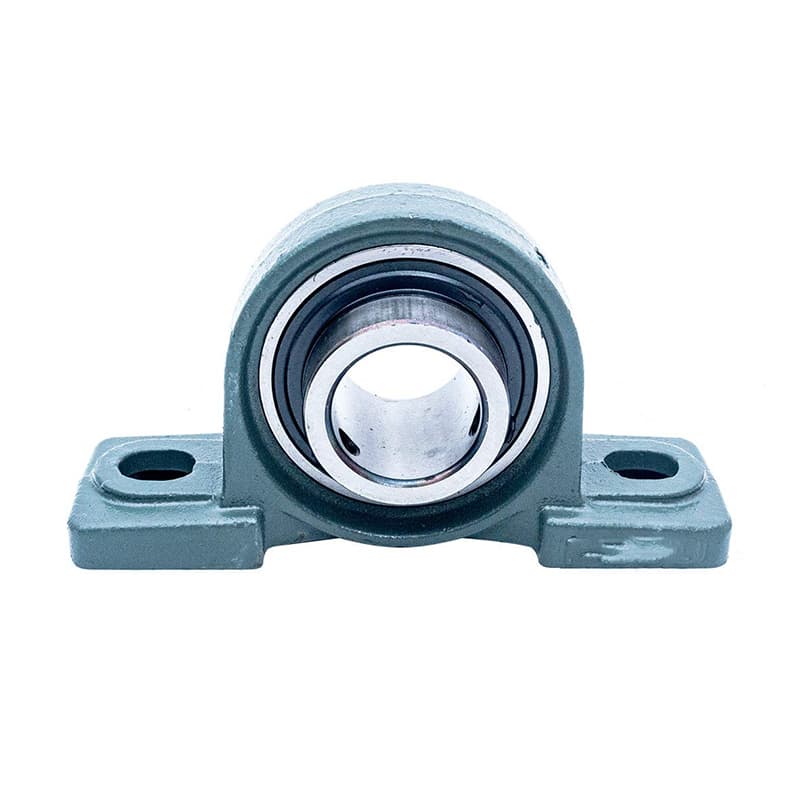
An eccentric lock bearing uses a collar with an off-center ring. You slide the collar onto the shaft and turn it. This tightens the collar onto the shaft. It creates a strong, balanced grip that is ideal for applications with vibration or reversing loads3.
Understanding How the Eccentric Lock Works
The name "eccentric" means "off-center." The inside of the locking collar is not perfectly round. It has a small offset. When you turn the collar, this offset creates a wedging action. The collar clamps down on the shaft. A small set screw on the collar then locks it in place.
This design has a clear benefit. The clamping force is spread evenly around the shaft. With a set screw bearing, the force is only at two points where the screws touch the shaft. This can create divots and shaft damage. The eccentric lock is kinder to your shaft.
Where Eccentric Lock Bearings Shine
From my experience, this locking style is the best choice for certain applications.
- High Vibration: Think of a vibrating screen in a quarry. The constant shaking can loosen a set screw. The eccentric lock stays tight.
- Reversing Loads: In a conveyor belt that starts and stops frequently, the shaft direction changes. The balanced grip of the eccentric lock handles this well.
- Fans and Blowers: The smooth rotation and balanced locking mechanism reduce runout. This keeps the fan blade balanced and quiet.
- Agricultural Equipment: Machines like harvesters and balers face dirt, dust, and constant shocks. The robust grip of the eccentric lock provides reliability.
The key takeaway here is that the eccentric lock is about grip and stability. It is a more sophisticated solution than the simple set screw. It costs a little more, but it pays for itself in longer life and less downtime.
How to choose the correct bearing?
I talk to procurement managers like Rajesh every week. He wants a bearing that works and a supplier he can trust. Choosing the "correct" bearing is about more than just the part number. It is about matching the bearing’s features to the machine’s operating conditions.
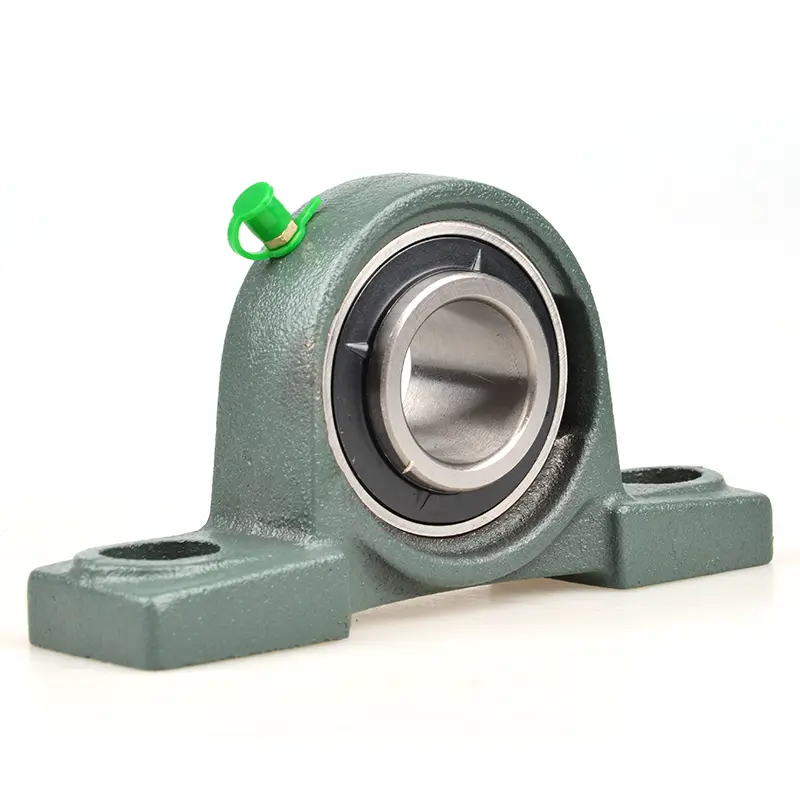
To choose the correct bearing, you must consider the load direction1, speed, operating temperature, and environmental factors like dust or moisture. Match these conditions with the bearing’s design, internal clearance, and sealing system.
Breaking Down the Selection Process
Choosing a bearing is like solving a puzzle. Each piece matters. I will guide you through the four main pieces.
1. Load Direction and Magnitude
First, ask yourself: where is the force coming from?
- Radial Load: The force is perpendicular to the shaft. A pulley system creates this. Most pillow block bearings handle radial loads well.
- Axial Load (Thrust): The force is parallel to the shaft. A conveyor pushing product against a stop creates this.
- Combined Load: The force comes from both directions.
Set screw bearings are generally good for moderate radial loads. Eccentric lock bearings, because of their strong clamping, can handle axial loads better. If you have a heavy combined load, you might need a different bearing series entirely, like a spherical roller bearing pillow block.
2. Speed Requirements
Speed changes everything.
Low-speed applications are forgiving. You can use grease with a higher viscosity. You can use a less precise bearing.
High-speed applications are demanding. You need a bearing with good balance. The eccentric lock bearing2, with its balanced collar, is often better for high speeds than a set screw bearing. The set screw can create an imbalance. We manufacture bearings with P5 and P6 precision for customers who run high-speed equipment. This precision reduces vibration and heat.
3. Temperature and Environment
Machines get hot. They get dirty. Your bearing must survive.
- High Temperature: Standard grease melts. Standard seals harden. For hot environments like in a steel mill, you need high-temperature grease3 and special seals. We often use Viton seals for these cases.
- Dust and Dirt: In a cement plant or a farm, dust is everywhere. The seal is your first line of defense. A good seal keeps contaminants out and grease in. Our triple-lip seals4 are designed for these harsh conditions.
- Moisture: Water can wash away grease and cause rust. For wet environments, you need a bearing with a good seal and a corrosion-resistant coating.
4. Shaft Condition
This is a critical factor. Is your shaft new and precise? Or is it older, with wear and tear?
- New, Hardened Shaft: A set screw bearing can work well. The screw will grip the hard surface without damaging it too much.
- Soft or Worn Shaft: An eccentric lock bearing is the safer choice. The clamping force is distributed. It will not dig into the soft shaft. It can also provide a tighter grip on a shaft that has some wear, helping to prevent it from spinning.
| Selection Factor | Set Screw Bearing | Eccentric Lock Bearing |
|---|---|---|
| Vibration | Can loosen over time. | Excellent resistance. |
| Reversing Loads | Moderate performance. | Excellent performance. |
| Shaft Condition | Best for hard, precise shafts. | Best for softer or worn shafts. |
| Speed | Good for low to moderate speeds. | Better for moderate to high speeds. |
| Ease of Installation | Simple. Tighten screws. | Requires a bit more skill to seat the collar. |
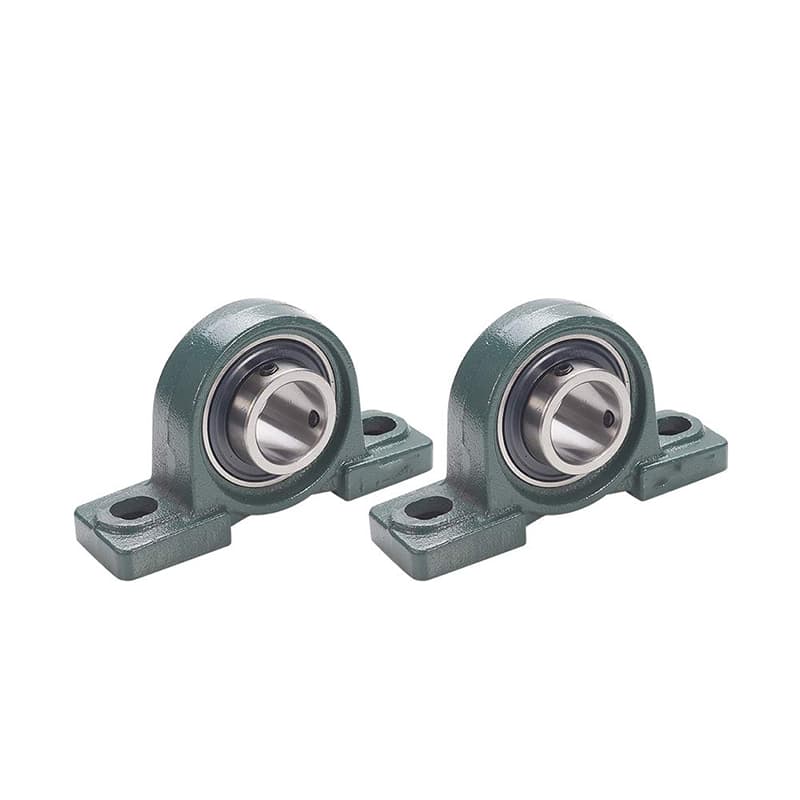
How to size pillow block bearing1s?
I have been in this business for years. One of the most common mistakes I see is mixing up "size" with "fit." People think if the bearing fits on the shaft, it is the right size. That is only half the story. The housing must fit the machine. The load rating must fit the application.
To size a pillow block bearing, you need the shaft diameter2, the center height of the housing, the bolt hole spacing, and the dynamic load rating3 (C) from the manufacturer’s catalog.
A Step-by-Step Sizing Guide
Let me give you a simple process to follow. I use this with our customers in Russia and Egypt. It works every time.
Step 1: Measure the Shaft Accurately
Use a caliper, not a tape measure. Measure the shaft diameter in millimeters. Write it down. This is your "bore size."
Step 2: Identify the Housing Series
Most pillow block housings are part of a series. The most common is the UCP series. The number after "UCP" tells you the size. For example, a UCP 208 is for a 40 mm shaft. A UCP 210 is for a 50 mm shaft. But be careful. A UCP 212 is for a 60 mm shaft. Knowing the series helps you look up the housing dimensions4 quickly.
Step 3: Verify the Housing Dimensions
Do not assume. Look up the housing dimensions for the series you have in mind. Check three things:
- Center Height (H): The distance from the base to the shaft center.
- Bolt Hole Spacing (J and L): The distance between the bolt holes, both lengthwise and widthwise.
- Bolt Hole Size (N): The diameter of the bolt hole.
If you are replacing a bearing, these numbers must match the holes on your machine.
Step 4: Calculate Your Load
This is the most technical step. You need to know the radial and axial loads on the bearing. You can calculate the equivalent dynamic load. Then, compare it to the bearing’s dynamic load rating (C) in the catalog. The bearing’s C rating should be higher than your calculated load. The higher the ratio, the longer the bearing life.
Step 5: Consider the Shaft Fit
This is where experience matters. The fit between the shaft and the bearing inner ring is crucial. For a set screw bearing, the fit is usually less tight because the screw provides the grip. For an eccentric lock bearing, a slightly tighter shaft fit can improve performance. For high loads or high speeds, you need a tighter fit. Our engineers can help you determine the correct fit based on your application’s details.
If you follow these steps, you will not just size a bearing. You will engineer a solution. That is what we help our customers do every day. We do not just sell parts. We provide solutions that keep your machines running.
Conclusion
Choosing between set screw and eccentric lock bearings comes down to your shaft and your application. Use set screw for simple, stable loads. Use eccentric lock for vibration and tough conditions.
-
Understanding pillow block bearings is essential for proper application and maintenance, ensuring optimal performance in machinery. ↩ ↩ ↩ ↩
-
Accurate measurement of shaft diameter is crucial for selecting the right bearing, preventing costly mistakes in machinery setup. ↩ ↩ ↩ ↩
-
Learning about dynamic load ratings helps you select the right bearing for your application, enhancing reliability and longevity. ↩ ↩ ↩ ↩
-
Knowing housing dimensions ensures compatibility and proper fit, which is vital for the effective operation of your machinery. ↩ ↩ ↩