
Your machine was designed ten years ago. Today you run it faster and harder. The bearings keep failing. Production stops. You need a solution that does not require buying a whole new machine.
Retrofitting with higher-capacity spherical roller bearings means you can increase load capability without changing the shaft or housing. You select bearings with optimized internal design, better materials, or higher precision class. This gives your old machine new life.
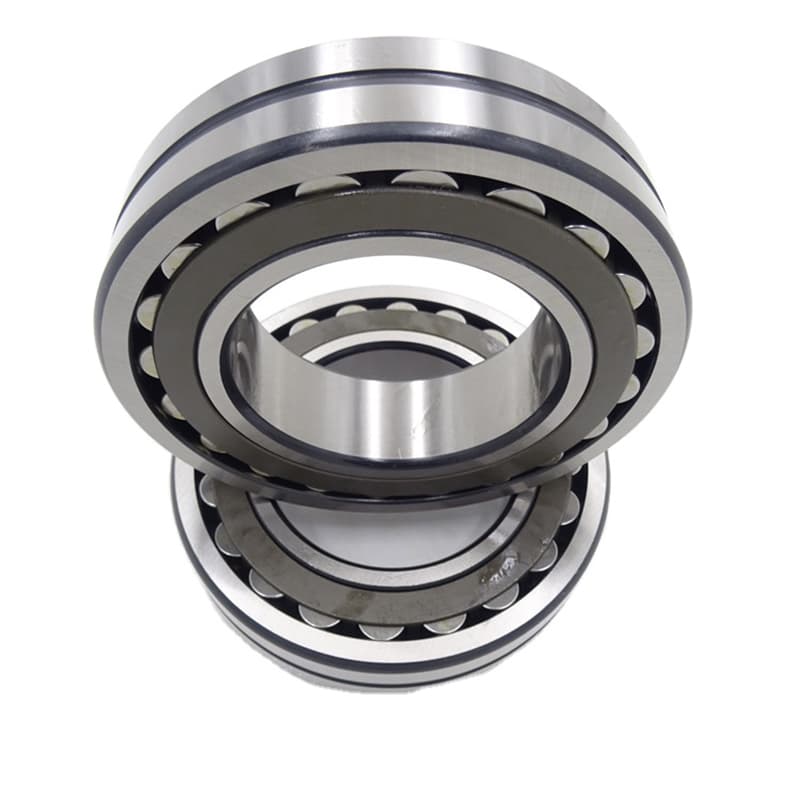
I have helped many customers upgrade their machines. They come to me with a problem. Their bearings fail too often. They think they need a new machine. I show them how a bearing retrofit can solve the problem for much less money. In this article, I will share what I have learned about retrofitting with higher-capacity spherical roller bearings.
How can the load capacity of a roller bearing1 be increased?
You have a machine that keeps breaking bearings. You look at the catalog and see a bearing with higher load rating. But will it fit? This is the first question.
The load capacity of a roller bearing can be increased by changing the internal design, using better materials2, improving heat treatment, or increasing the bearing size. For retrofits, you often cannot change the size. So you focus on internal design and materials.
Optimized Internal Design
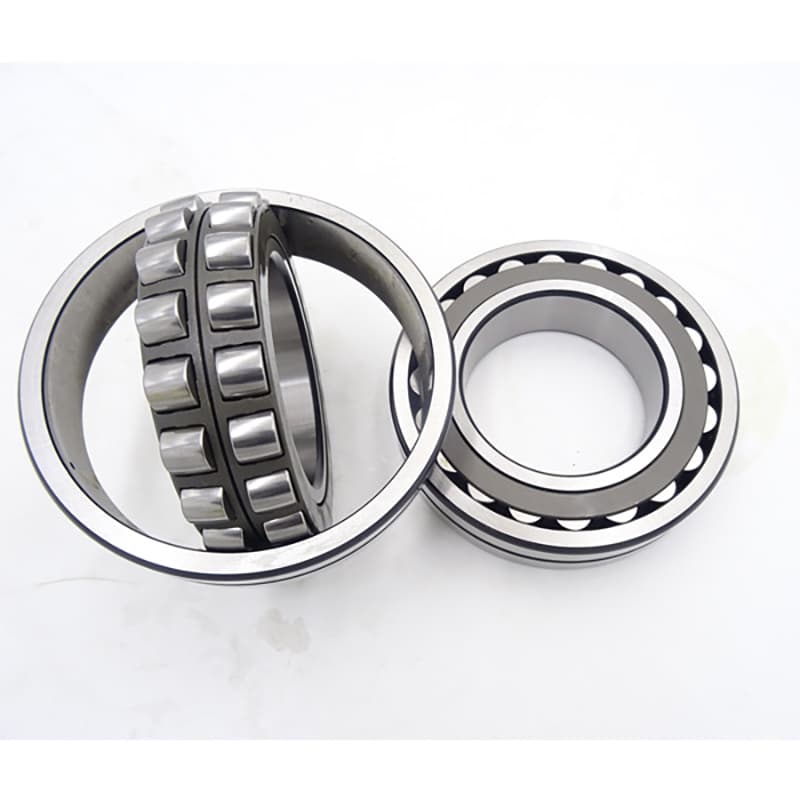
The most common way to increase load capacity without changing outside dimensions is through internal design. Bearing manufacturers do this in several ways.
First, they increase the number of rollers. In a standard bearing, there is space between rollers. By designing a thinner cage or a different cage shape, engineers can fit more rollers3 in the same space. More rollers mean more contact points. Load spreads out.
Second, they increase roller size. Larger rollers have more contact area. They carry more load. But you cannot just make rollers bigger. They must fit between the inner and outer rings. Designers optimize the roller diameter and length to get the most load capacity.
Third, they change the roller profile. Standard rollers have a straight profile with slight crowning. High-capacity designs may use an optimized profile that distributes stress more evenly. This reduces edge loading.
I remember a customer in Russia who had a conveyor system. The bearings failed every year. The original bearings were standard 22220 design. We replaced them with 22220 E design. The E design had more rollers and a better profile. The bearings lasted three years. The customer could not believe the same size bearing could make such a difference.
Better Materials
Material quality affects load capacity. Standard bearings use 52100 steel, also called GCr15. This is good steel. But there are better options.
Some manufacturers offer bearings with vacuum-degassed steel. This process removes impurities. Cleaner steel handles higher loads without failing. It also lasts longer in contaminated environments.
For very high loads, some bearings use case-hardened steel4. The core remains tough while the surface gets hard. These bearings resist cracking under shock loads.
In retrofits, you can often upgrade to better material without changing dimensions. The bearing outside looks the same. Inside, the steel is stronger.
Heat Treatment Improvements
Heat treatment changes the steel properties. Standard bearings are through-hardened. They have the same hardness throughout.
Some high-capacity bearings use special heat treatments. These create compressive stresses on the surface. Compressive stress makes it harder for cracks to start. The bearing can carry more load before failing.
For high-temperature applications, heat stabilization5 allows the bearing to keep its hardness at higher temperatures. This was important for a client in Egypt with a kiln. The standard bearings lost hardness and failed. Heat-stabilized bearings kept working.
Precision Class
Higher precision class6 also increases load capacity indirectly. P5 or P6 bearings have tighter tolerances. The load distributes more evenly across all rollers. In a standard bearing, some rollers carry more load than others. In a precision bearing, the load sharing is better. The calculated capacity may be the same, but the actual capacity in the machine goes up.
Summary Table: Ways to Increase Load Capacity
| Method | What It Does | Retrofit Feasibility |
|---|---|---|
| More Rollers (E design) | Increases number of contact points | Excellent, same dimensions |
| Larger Rollers | Increases contact area per roller | Good, within same envelope |
| Optimized Profile | Reduces edge stress | Excellent, internal change only |
| Better Material (clean steel) | Higher fatigue life | Excellent, same dimensions |
| Case Hardening | Better shock resistance | Good, may need different supply |
| Heat Treatment | Higher surface strength | Excellent, internal change |
| Higher Precision | Better load distribution | Good, may cost more |
For most retrofits, the E design upgrade is the best first step. It gives more capacity without changing anything else. If that is not enough, look at material upgrades.
What are the disadvantages of spherical roller bearings1?
No bearing is perfect. I tell my customers this all the time. You must understand the downsides to make a good choice.
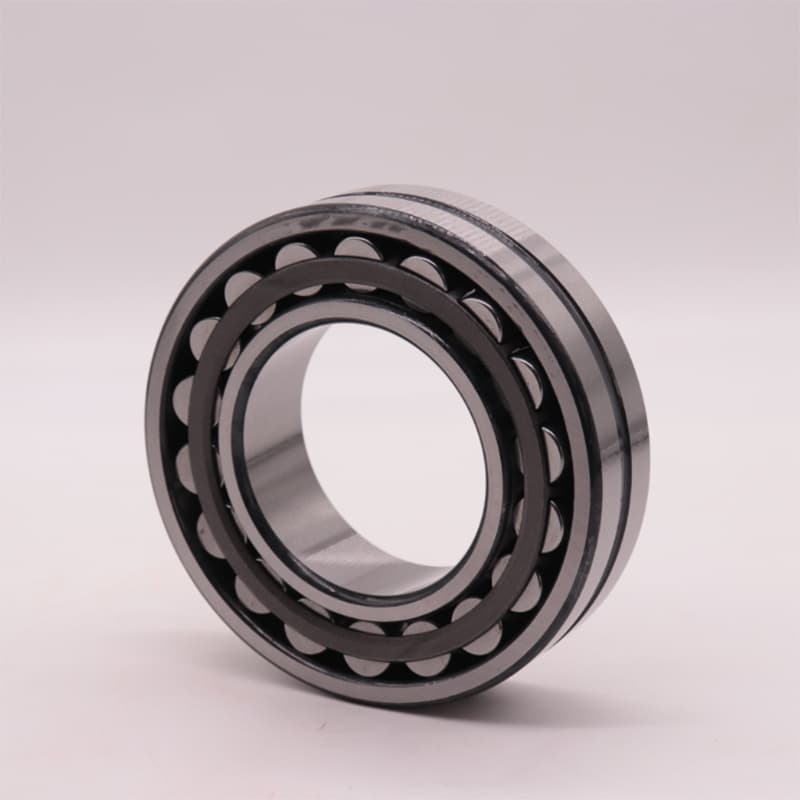
The main disadvantages of spherical roller bearings are their higher friction2, lower speed capability3, larger size4 for a given bore, and higher cost5 compared to other types. They also need good alignment in the housing, even though they self-align.
Friction and Heat
Spherical roller bearings have higher friction than ball bearings or cylindrical roller bearings. Why? Because the rollers are larger. They have more sliding contact in the guidance surfaces.
Higher friction means more heat. In high-speed applications, this heat can be a problem. You may need oil circulation6 to keep the bearing cool.
For retrofits7, you must check if your existing lubrication system can handle the extra heat. If you put a higher-capacity spherical bearing in a machine designed for a different type, you may need to upgrade lubrication too.
I had a customer in Brazil who replaced cylindrical bearings with spherical bearings. The machine ran hotter. They had to add a cooler to the oil system. They did not expect this. Now I always warn customers about the heat difference.
Speed Limitations
Spherical roller bearings have speed limits. The large rollers create centrifugal force. At high speed, this force pushes the rollers against the outer ring. This adds load and heat.
The speed limit for spherical bearings is lower than for cylindrical or ball bearings. If your machine runs at high RPM, spherical bearings may not work.
In retrofits, check the speed first. If your original bearings were cylindrical and you want more load capacity, spherical might not be the answer. You may need to look at cylindrical bearings with higher capacity instead.
Size and Weight
For a given bore size, spherical roller bearings are larger in outer diameter and width than some other types. They take up more space.
In a retrofit, space may be limited. The housing is already made for a certain bearing size. If you try to increase capacity by going to a larger series, it may not fit.
Sometimes you must stay with the same series and rely on internal design improvements. The 222 series is common. The 223 series is larger. You cannot put a 223 in a 222 housing.
Cost
Spherical roller bearings cost more than many other types. The manufacturing is more complex. The rollers need special grinding. The spherical raceway is harder to make.
Higher-capacity versions cost even more. The E design, better materials, and precision grades add to the price.
But you must look at total cost. If a more expensive bearing lasts three times longer, it saves money in downtime and labor. I always help customers calculate the real cost, not just the purchase price.
Alignment Requirements
Spherical bearings are self-aligning. This is an advantage. But they still need the housing to be aligned. The self-alignment compensates for shaft deflection, not for a crooked housing.
If the housing is badly misaligned, the bearing will tilt to its limit. Then it runs at an angle. This reduces life.
In retrofits, check the housing condition. If the old bearings wore unevenly, the housing may be damaged. You may need to machine the housing true before installing new bearings.
Comparison Table: Disadvantages
| Disadvantage | Effect | Mitigation in Retrofit |
|---|---|---|
| Higher Friction | More heat, may need better lubrication | Upgrade lubrication, monitor temperature |
| Lower Speed Limit | Cannot use in high RPM machines | Verify speed first, consider other types |
| Larger Size | May not fit existing housing | Stay with same series, use internal upgrades |
| Higher Cost | More expensive upfront | Calculate total life cycle cost |
| Housing Alignment | Still needs reasonably true housing | Inspect and repair housing if needed |
Understanding these disadvantages helps you avoid problems. I always discuss them with customers before they order.
Which of these bearings can take the maximum load bearing capacity?
Customers often ask me to compare bearing types. They want the strongest one. But "strongest" depends on the application.
Among rolling bearings, spherical roller bearings1 and full complement cylindrical roller bearings2 have the highest load capacity for a given size. Spherical bearings handle combined loads. Full complement cylindrical handle pure radial loads. For mixed loads and misalignment, spherical bearings win.
[^3] chart for bearing types](https://sdycbearing.com/wp-content/uploads/2025/12/Spherical-Roller-Bearings-37-1.jpg)
Spherical Roller Bearings
Spherical roller bearings have very high radial load capacity. The barrel-shaped rollers create a large contact area. The load spreads over many rollers.
For combined loads, spherical bearings handle moderate thrust in both directions. This makes them versatile.
In terms of pure numbers, a spherical roller bearing often has the highest dynamic load rating4 (Cr) in its size range compared to other self-aligning types.
Full Complement Cylindrical Roller Bearings
Full complement cylindrical bearings have no cage. They fill the space between inner and outer rings with as many rollers as possible. This gives them extremely high radial load capacity.
But they have limitations. They cannot handle thrust loads well. They also have higher friction because the rollers rub against each other. Speed capability is lower than caged designs.
In a pure radial load application with no misalignment, a full complement cylindrical bearing may have higher capacity than a spherical bearing of the same size.
Taper Roller Bearings
Taper roller bearings handle combined loads well. They can take very high thrust loads in one direction. For applications with dominant thrust, they may be the best choice.
But radial load capacity is generally lower than spherical bearings of similar size. They also require precise alignment.
Comparison Table: Load Capacity by Type
| Bearing Type | Radial Load Capacity | Thrust Load Capacity | Misalignment Tolerance |
|---|---|---|---|
| Spherical Roller | Excellent | Good (both directions) | Excellent |
| Full Complement Cylindrical | Excellent (highest radial) | Poor | None |
| Taper Roller | Good | Excellent (one direction) | None |
| Cylindrical with Cage | Good | Poor to Fair | None |
| Deep Groove Ball | Moderate | Moderate | Poor |
This table shows why spherical bearings are so popular for heavy machines. They give you a balance of properties. They may not be the absolute best in any one category, but they are good in all.
Real-World Example
I had a customer in Pakistan who ran a steel mill. They had a choice between spherical and cylindrical bearings for a roller. The load was pure radial. A full complement cylindrical bearing had a higher load rating on paper.
But the rollers in the mill had some misalignment from the housing settling over time. The cylindrical bearings failed from edge loading. We switched to spherical bearings with slightly lower catalog rating. They lasted longer because they handled the misalignment.
The lesson: catalog numbers are not everything. Real-world conditions matter.
What loads can a spherical roller bearing handle?
You need to know what your bearing will face. Is it just weight? Or are there pushing forces too? This drives your choice.
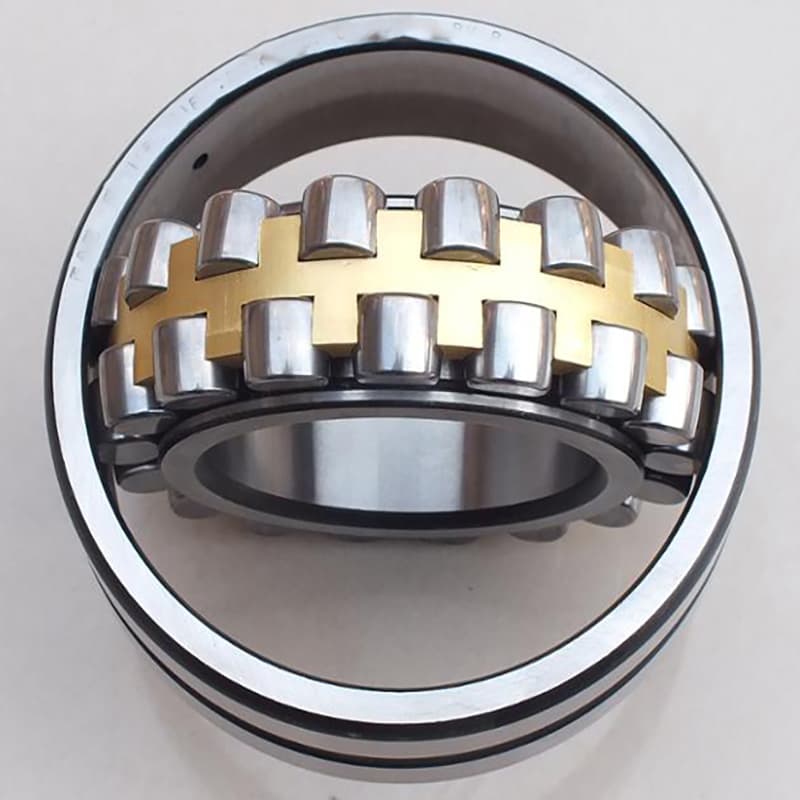
Spherical roller bearings handle radial loads1, axial loads2 in both directions, and combined loads3. They are designed for heavy radial loads with moderate axial loads. The axial load capacity is typically about 20% to 30% of the radial load capacity, depending on the design.
Radial Loads
Radial loads are forces perpendicular to the shaft. In a mixer, the weight of the shaft and the resistance of the product create radial loads. In a conveyor, the weight of the material does the same.
Spherical roller bearings excel at radial loads. The rollers are oriented so their axes are parallel to the shaft. They transfer radial forces directly from the inner ring to the outer ring through the rollers.
The dynamic load rating4 (Cr) tells you how much radial load the bearing can handle for a rated life of one million revolutions. Higher Cr means more capacity.
Axial Loads
Axial loads are forces along the shaft. In a mixer, the product may push up or down on the impeller. This creates axial load.
Spherical roller bearings handle axial loads because of the contact angle. The rollers contact the raceways at an angle. When axial load applies, the rollers ride up the raceway. This creates a component of force that balances the axial load.
But there is a limit. If axial load exceeds about 20% to 30% of radial load, the bearing may not perform well. The rollers may skew. The cage may see extra stress.
In some designs, the axial load capacity is higher. Special bearings with steep contact angles exist. But standard spherical bearings have moderate axial capacity.
Combined Loads
Most machines have combined loads. The shaft has weight (radial) and thrust from the product (axial). Spherical bearings handle this naturally.
The bearing converts the combined load into a resultant force. The rollers find an equilibrium position. As long as the axial load is within limits, the bearing runs smoothly.
In retrofits, you must know the actual loads. If the original machine had pure radial load but the new process adds axial load, a spherical bearing may be the solution. Or if you already have spherical bearings but axial load increased, you may need a different internal design.
Moment Loads
Moment loads are tilting forces. They try to tip the bearing. In some machines, the load is not centered. This creates a moment.
Spherical roller bearings handle moment loads5 better than many types. Because they are wide, they resist tilting. The two rows of rollers share the moment load. One row takes more load on one side. The other row takes more on the opposite side.
In a mixer with a long shaft, moment loads are common. The shaft bends. This creates a moment at the bearing. Spherical bearings tolerate this well.
Load Ratings Table
| Load Type | Spherical Bearing Capability | Notes |
|---|---|---|
| Pure Radial | Excellent | Primary design purpose |
| Pure Axial | Moderate (20-30% of radial) | Check specific bearing data |
| Combined Radial + Axial | Good | Most common real-world condition |
| Moment (Tilting) | Good | Two rows help resist tilting |
| Shock Loads | Good | Robust construction, but check limits |
Dynamic vs. Static Loads
Bearings have two load ratings: dynamic and static.
Dynamic load rating (Cr) applies when the bearing rotates. It is based on fatigue life. Higher dynamic rating means longer life under rotating conditions.
Static load rating (C0r) applies when the bearing does not rotate, or rotates very slowly. It is based on permanent deformation. If you exceed the static rating, the bearing develops flat spots on the rollers or raceways.
In retrofits, consider both. If your machine starts and stops under heavy load, static rating matters. If it runs continuously, dynamic rating matters more.
I had a customer in Vietnam with a crane. The bearing saw heavy load when stationary (lifting) and lighter load when rotating (swinging). We had to check both ratings. A bearing with high dynamic rating but low static rating would fail from brinelling (dents) during lifts.
Conclusion
Retrofitting with higher-capacity spherical roller bearings can extend machine life without major changes. Focus on internal design upgrades like E-type, better materials, and proper clearance. Understand the disadvantages and load types to make the right choice.
-
Learn about radial loads and their significance in bearing performance to optimize your machinery. ↩ ↩ ↩ ↩
-
Discover how axial loads impact bearing design and functionality, crucial for effective machinery operation. ↩ ↩ ↩ ↩
-
Understand combined loads and their implications for bearing selection to ensure optimal performance. ↩ ↩ ↩
-
Explore the concept of dynamic load rating to better understand bearing longevity and performance under load. ↩ ↩ ↩ ↩
-
Find out how moment loads influence bearing design and performance, especially in dynamic applications. ↩ ↩ ↩
-
Learn about the role of oil circulation in managing heat in spherical roller bearings. ↩ ↩
-
Get insights on key considerations for retrofitting with spherical roller bearings to avoid common pitfalls. ↩