Your chemical plant mixer starts making noise. The shaft wobbles. Production slows down. You need a replacement fast, but you are not sure which bearing to order.
Spherical roller bearings are the best choice for mixer and agitator drives in chemical plants. They handle heavy loads, misalignment from shaft deflection, and shock loads from start-up. Their self-aligning feature keeps the machine running even when the shaft bends under pressure.
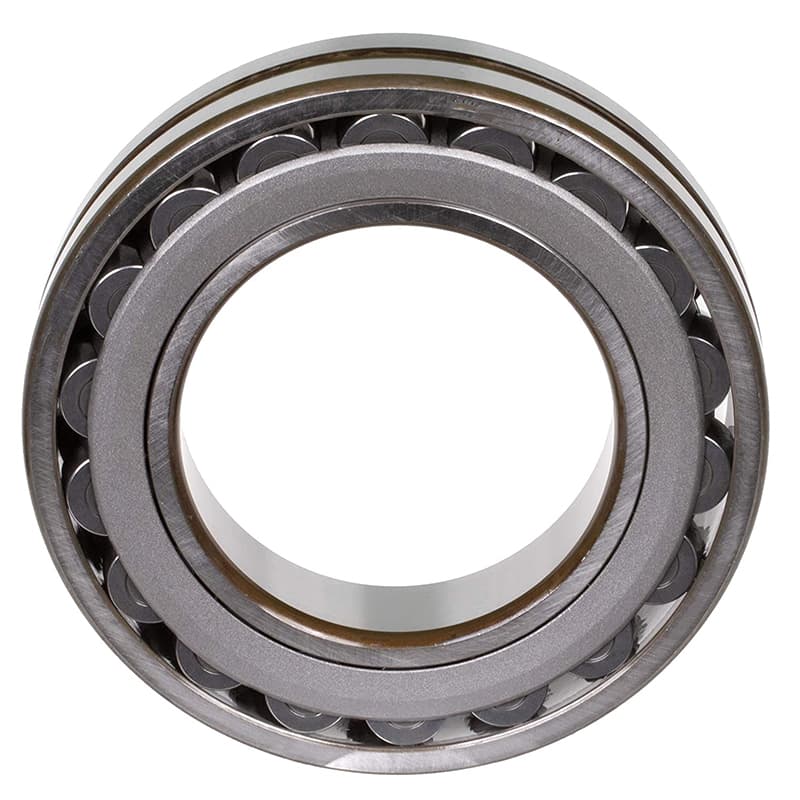
I have supplied bearings to chemical plants for many years. I have seen mixers fail because someone used the wrong bearing. The mixer shaft is long. It hangs down into the tank. When it spins, the shaft pushes against the product. This creates side loads and misalignment. A standard bearing cannot handle this. A spherical roller bearing can. In this article, I will explain why and answer the questions my customers ask most often.
What is spherical roller bearing1 22220 e?
A customer in India once called me. He said, "I need bearing 22220 E2. Do you have it?" I asked him what machine it was for. He said a chemical mixer. I knew exactly what he needed.
The 22220 E is a specific size and design of spherical roller bearing. The "22220" tells you the series and bore size. The "E" tells you it is a high-capacity design3 with more rollers or larger rollers. This bearing has a 100 mm bore and is built for heavy radial loads in applications like mixers.
Breaking Down the Bearing Number
Let me explain how bearing numbers work. It is like a language. Once you learn it, you can read any bearing.
The "222" part is the series code. This tells you the bearing type and size series. For spherical roller bearings, 222 is one of the most common series. It means the bearing has a moderate cross-section. It fits many standard applications.
The "20" part tells you the bore size. You multiply this number by 5 to get the bore in millimeters. So 20 x 5 = 100 mm. That is the inner diameter of the bearing.
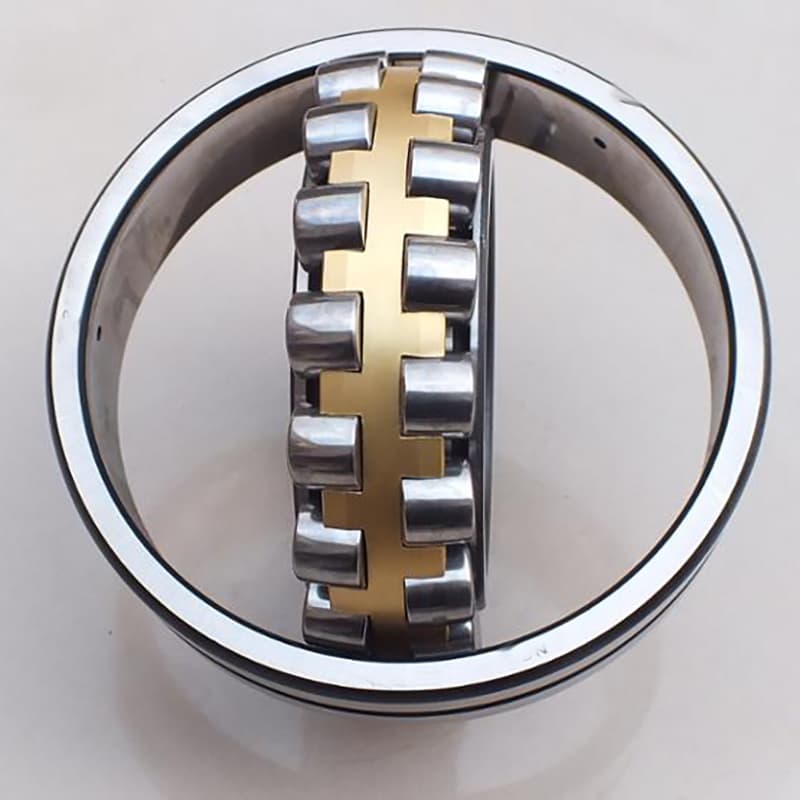
The "E" suffix is important. It stands for an optimized internal design. In a standard spherical roller bearing, there is a certain number of rollers. In an "E" design, the manufacturer has made the rollers larger or added more rollers. They did this by improving the cage design4 and internal geometry.
More rollers or larger rollers mean higher load capacity. For a mixer, this matters. Mixers have heavy loads. They also have shock loads when starting and stopping. The "E" design gives extra safety margin.
Why the "E" Design Matters for Mixers
I have seen mixers where standard bearings failed after six months. We replaced them with 22220 E bearings. They lasted years.
The reason is simple. Mixers create dynamic loads5. The product in the tank is not always uniform. Sometimes it is thick. Sometimes it is thin. When it is thick, the motor works harder. The shaft pushes against the product. This creates fluctuating loads.
The "E" design handles these fluctuations better. The rollers are bigger. They spread the load over a larger area. Contact stress goes down. The bearing runs cooler and lasts longer.
Another benefit is the cage design. In many "E" bearings, the cage is made of machined brass or a special polymer. These cages guide the rollers better. At mixer speeds, which are usually moderate, this reduces friction.
Dimensions and Specifications
Here are the typical specifications for a 22220 E bearing:
| Specification | Value |
|---|---|
| Bore Diameter (d) | 100 mm |
| Outer Diameter (D) | 180 mm |
| Width (B) | 46 mm |
| Dynamic Load Rating (Cr) | Approximately 350 – 400 kN |
| Static Load Rating (C0r) | Approximately 400 – 450 kN |
| Fatigue Load Limit | High, suitable for continuous operation |
| Limiting Speed | Moderate, depends on cage and lubrication |
These numbers show why this bearing works for mixers. The load ratings6 are high. The dimensions fit standard mixer housing designs.
Common Variations
You may also see bearings like 22220 CC or 22220 CA. These are similar but have different internal designs.
- 22220 CC: Two stamped steel cages, one for each row of rollers. Good for general use.
- 22220 CA: Machined brass cage, one-piece construction. Better for higher speeds or vibration.
- 22220 E: High-capacity design, usually with special cage.
For mixers, I often recommend the E or CA design. The extra cost pays back in longer life.
What are the three types of roller bearings?
When I talk to new customers, they often mix up bearing types. They say "roller bearing" but mean something specific. There are many kinds, but three main types cover most industrial uses.
The three main types of roller bearings are cylindrical roller bearings1, taper roller bearings2, and spherical roller bearings3. Each type has a different shape roller and handles loads differently. Cylindrical handles pure radial loads. Taper handles combined radial and thrust. Spherical handles heavy radial loads and misalignment.

Cylindrical Roller Bearings
Cylindrical roller bearings use rollers that are shaped like cylinders. They are long and straight. They contact the raceway in a line, not a point.
These bearings have high radial load capacity4. They can handle very heavy loads in the radial direction. But they cannot handle thrust loads5 well. Some designs allow a little thrust, but that is not their main job.
The rollers are guided by ribs on the inner or outer ring. This keeps them aligned. The bearings come in many designs. Some have a separable inner ring. Some have a separable outer ring. This makes installation easier in some machines.
In a chemical plant, you might find cylindrical roller bearings in electric motors or pumps. But for mixers, they are not the first choice. The problem is misalignment. Cylindrical bearings need perfect alignment. If the shaft bends, the rollers get edge loading. This causes failure.
Taper Roller Bearings
Taper roller bearings use rollers that are cone-shaped. The inner ring is called the cone. The outer ring is called the cup. The rollers sit between them at an angle.
Because of the angle, these bearings can handle both radial and thrust loads. The steeper the angle, the more thrust they handle. They are often used in pairs. One bearing takes thrust in one direction. The other takes thrust in the opposite direction.
In vehicles, taper roller bearings are common in wheel hubs. They hold the weight of the car and handle cornering forces.
For mixers, taper roller bearings can work. But they have a drawback. They do not allow misalignment. If the shaft bends, the load shifts to the edge of the rollers. This creates high stress. The bearing may fail quickly.
Spherical Roller Bearings
Spherical roller bearings use barrel-shaped rollers. They are thick in the middle and tapered at the ends. The outer ring has a spherical raceway. This is the key feature.
The spherical shape allows the bearing to self-align. If the shaft bends or the housing is not perfectly square, the bearing adjusts. The rollers find their own path. This prevents edge loading.
These bearings have very high radial load capacity. They also handle some thrust load. They are perfect for heavy, slow-to-medium speed applications with misalignment.
In a chemical plant, you find spherical roller bearings in mixers, agitators, conveyors, and heavy fans. They are the workhorses of heavy industry.
Comparison Table
| Feature | Cylindrical Roller | Taper Roller | Spherical Roller |
|---|---|---|---|
| Roller Shape | Straight cylinder | Cone (tapered) | Barrel (spherical) |
| Radial Load | Excellent | Good | Excellent |
| Thrust Load | Poor | Excellent | Good |
| Misalignment Tolerance | None | None | Excellent (self-aligning) |
| Speed Capability | High | Medium | Medium |
| Typical Applications | Motors, pumps | Wheels, gearboxes | Mixers, conveyors, heavy machinery |
This table shows why spherical roller bearings win for mixers. The misalignment tolerance6 is the deciding factor. Mixer shafts always bend a little under load. Spherical bearings live with that.
What are the advantages of spherical bearings?
I have sold many bearings over the years. When a customer tries spherical bearings for the first time, they often ask, "Why didn’t I use these before?"
The main advantages of spherical bearings are self-alignment1, high load capacity2, durability under shock loads3, and the ability to handle both radial and thrust loads. These features make them ideal for heavy machines where shafts bend or housings shift.
Self-Aligning Capability
Let me focus on the self-aligning feature first. This is the biggest advantage.
In any machine, parts move. Heat expands shafts. Loads bend components. Foundations settle. These things change the alignment between the bearing and the shaft.
With a non-aligning bearing, these changes cause problems. The bearing tries to force the shaft into alignment. This creates extra loads. The bearing gets hot. It wears faster.
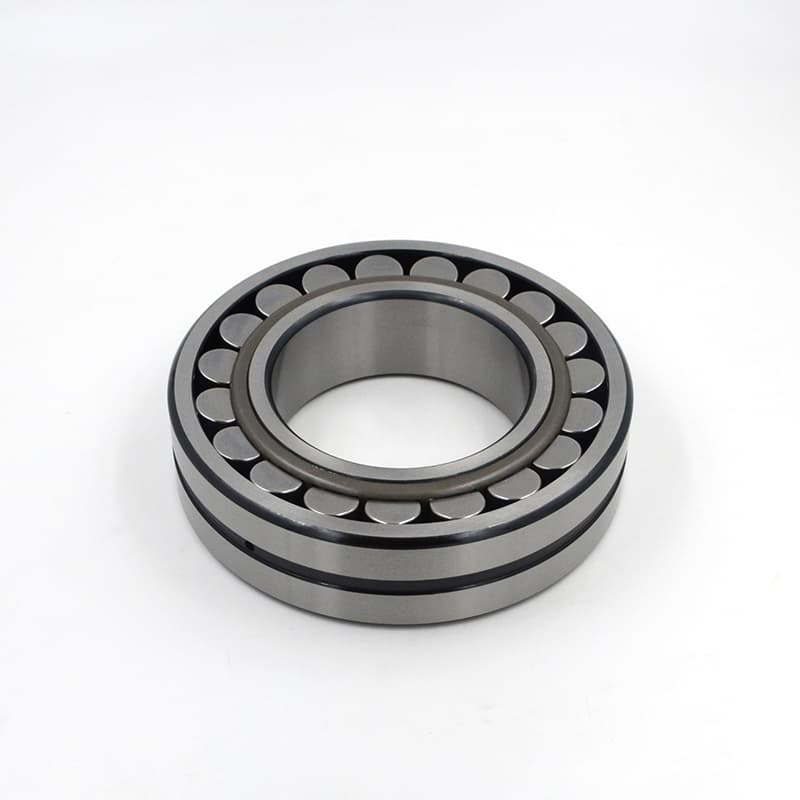
With a spherical bearing, the outer raceway is curved. The rollers and inner ring can tilt inside the outer ring. They find the position where loads are even. This happens automatically.
In a mixer, the shaft may be 3 meters long. When you add product, the shaft pushes against it. The bottom of the shaft bends away from center. A spherical bearing at the top allows this. It does not fight the bend. It just tilts a little and keeps rolling.
I recall a customer in Bangladesh with a large agitator. They had used cylindrical bearings. The bearings failed every few months. They thought it was a lubrication problem. We suggested spherical bearings. After installation, the bearings ran for two years. The self-alignment solved the issue.
High Load Capacity
Spherical roller bearings have more rollers than other types. The rollers are also larger. This gives them high load capacity for their size.
The load is spread over many contact points. Each roller carries a share. Because the rollers are curved, the contact area is larger than in a ball bearing. This reduces stress on the raceways.
For chemical plant mixers, the loads can be heavy. Some products are thick like paste. When the mixer starts, it has to break through this material. This creates peak loads. Spherical bearings handle these peaks without damage.
Durability Under Shock and Vibration
Mixers do not run smooth all the time. Sometimes the product has lumps. Sometimes it changes consistency. This creates vibration and shock.
Spherical bearings have a robust construction. The cages are strong. The rollers are guided well. They absorb shocks better than many other bearing types.
In one case, a client in Egypt had a mixer that processed salt. Salt is abrasive. It also creates vibration. Standard bearings wore out fast. We supplied spherical bearings with special seals and hardened steel. They lasted much longer.
Combined Load Handling
In a mixer, the main load is radial. The weight of the shaft and the resistance of the product push sideways. But there is also some thrust. The product may push up or down on the impeller.
Spherical bearings handle both. They have a contact angle that allows thrust load in both directions. You do not need a separate thrust bearing.
This simplifies the machine design. It reduces parts count. It makes maintenance easier. One bearing does the job of two.
Tolerance for Contamination
Chemical plants are dirty places. Dust, powder, and moisture get everywhere. Bearings must survive this.
Spherical roller bearings can be sealed effectively. Many designs offer heavy-duty seals. These keep contaminants out. They also keep grease in.
Even if some contamination gets in, spherical bearings tolerate it better than precision bearings. The rollers can push small particles into the grease without jamming. This is not ideal, but it buys time until maintenance.
Here is a summary table of advantages:
| Advantage | Why It Matters for Mixers |
|---|---|
| Self-Alignment | Handles shaft deflection from product resistance |
| High Radial Load | Supports heavy shaft and impeller weight |
| Shock Load Capacity | Survives start-up peaks and product lumps |
| Thrust Capability | Controls axial movement from fluid forces |
| Contamination Tolerance | Works in dusty chemical environments |
| Simplified Design | Replaces multiple bearings, easier maintenance |
What are the types of spherical bearings1?
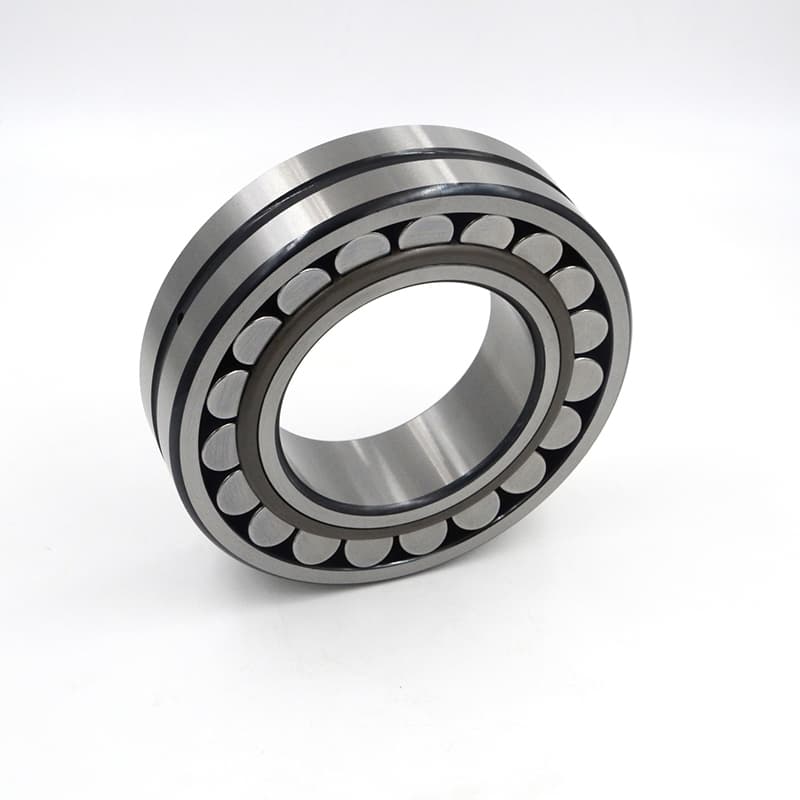
Customers often think all spherical bearings are the same. They look at a picture and say, "I need that one." But there are important differences.
Spherical bearings come in several types. The main types are based on design series2, internal clearance3, cage material4, and seal type. For mixers, you also need to consider whether you need an expansion bearing on one end.
Design Series
The design series tells you the size envelope and load capacity. Common series include:
- 213 Series: Lighter cross-section, smaller rollers. Used for lighter loads or space-constrained areas.
- 222 Series: Medium cross-section, most common for general industry. Good balance of size and capacity.
- 223 Series: Heavy cross-section, larger rollers. Used for very heavy loads. Requires more space.
- 230, 231, 232 Series: These are often used in larger machines like paper mills or heavy conveyors.
For chemical mixers, the 222 series is most common. It fits standard housings and handles typical loads. For very large mixers, the 223 series may be needed.
Internal Clearance
Internal clearance is the space between rollers and raceways. It affects how the bearing runs.
- C0 (Normal): For most applications with normal temperatures and fits.
- C3 (Increased): For applications where the inner ring gets hotter than the outer ring, or where interference fits reduce clearance.
- C4 (Greater): For high temperature differences or heavy interference fits.
In mixers, the shaft often gets warm. The product may be hot. The housing may be cooler. This means the inner ring expands more than the outer ring. I usually recommend C3 clearance for mixers. It gives room for expansion.
Cage Material
The cage holds the rollers in place. Different materials suit different conditions.
- Stamped Steel Cage: Strong, cheap, good for normal conditions. Two-piece design (one per row).
- Machined Brass Cage: Stronger, lighter, more precise. One-piece design. Handles higher speeds and vibration better.
- Polyamide Cage: Light, quiet, low friction. But temperature limited to about 120°C. Not for hot products.
For mixers in chemical plants, I often recommend machined brass cages5. They handle the vibration well. They also resist some chemicals better than steel.
Seal Types
Some spherical bearings come with seals or shields. This keeps grease in and dirt out.
- Open Bearings: No seals. Requires housing seals or frequent relubrication.
- Metal Shields: Keep out large particles. Do not contact the inner ring. Limited sealing.
- Rubber Seals: Contact seals. Keep out fine dust and moisture. Increase friction slightly.
- Heavy-Duty Seals: Double lip seals, often with metal reinforcement. Best for dirty environments.
Chemical plants have dust and sometimes splashes. I prefer bearings with good seals or housings with effective sealing.
Expansion vs. Non-Expansion Bearings
In a mixer, the shaft gets longer when it heats up. If you fix both bearings, the shaft cannot expand. It pushes against the bearings. This creates high thrust loads.
The solution is to have one bearing that is fixed and one that is floating. The floating bearing allows the shaft to slide inside the bearing or allows the bearing to move in the housing.
For spherical bearings, you can achieve this in two ways:
- Non-Locating Bearing: The bearing has a loose fit in the housing. The outer ring can slide axially.
- Locating Bearing: The bearing is clamped in the housing. It cannot move.
Some spherical bearings are designed specifically as non-locating bearing6s. They have a wider inner ring or special features to allow axial movement without damaging the rollers.
Comparison Table for Mixer Applications
| Feature | Options | Recommendation for Mixers |
|---|---|---|
| Series | 213, 222, 223, etc. | 222 or 223, depending on load |
| Clearance | C0, C3, C4 | C3 (for thermal expansion) |
| Cage | Stamped steel, machined brass, polyamide | Machined brass (for vibration and reliability) |
| Seals | Open, shielded, sealed | Sealed or with housing seals |
| Expansion Type | Locating, non-locating | One locating, one non-locating |
I once worked with a client in South Africa who had a mixer with two fixed bearings. Every time the machine heated up, the bearings made noise. They thought the bearings were bad. We explained thermal expansion. We changed one bearing to a non-locating design. The noise stopped.
Conclusion
For mixer and agitator drives in chemical plants, spherical roller bearings are the right choice. They handle misalignment, heavy loads, and shock. The 22220 E size is common. Choose C3 clearance, brass cages, and one floating bearing for best results.
-
Explore this link to understand the various applications and benefits of spherical bearings in different industries. ↩ ↩ ↩ ↩
-
Learn about the various design series of spherical bearings and how they impact load capacity and size. ↩ ↩ ↩ ↩
-
Discover the importance of internal clearance in spherical bearings and how it affects performance. ↩ ↩ ↩ ↩
-
Find out about different cage materials and their suitability for various operating conditions. ↩ ↩ ↩
-
Discover why machined brass cages are recommended for certain applications, especially in chemical environments. ↩ ↩ ↩
-
Learn about non-locating bearings and how they can prevent damage due to thermal expansion. ↩ ↩ ↩