
Choosing the wrong pillow block size is like buying the wrong size shoes. You can walk, but you’ll be in pain and won’t get far before a breakdown.
To size pillow block bearings correctly, you must determine the shaft diameter, calculate the radial and axial loads, consider the operating speed and environment, and then select a unit with a bearing insert whose dynamic load rating exceeds the calculated requirement for your desired service life, ensuring proper internal clearance and sealing.
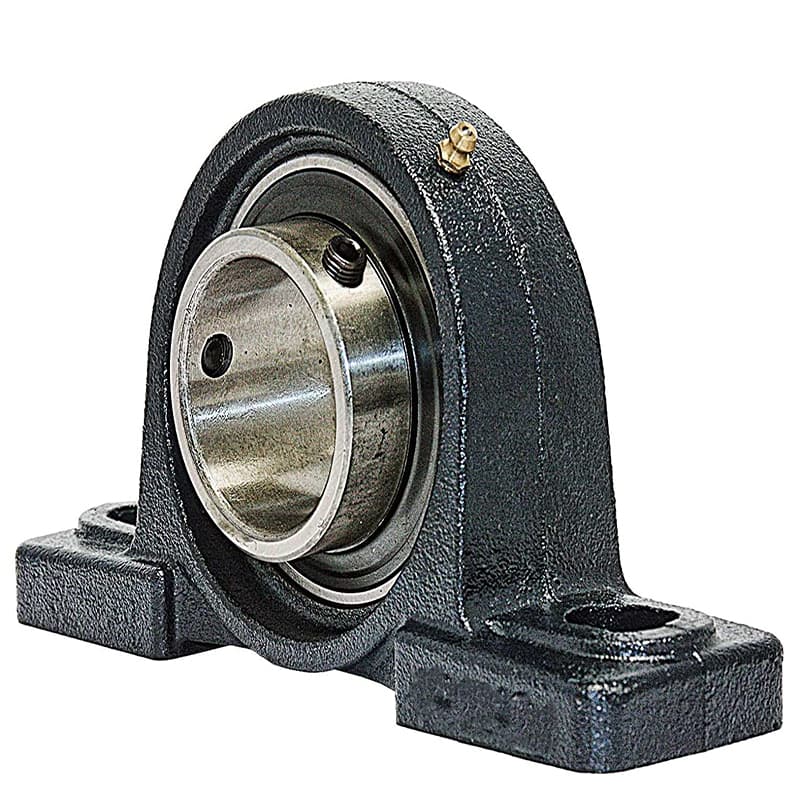
Premature bearing failure is expensive and frustrating. Often, the root cause isn’t a bad bearing, but the wrong bearing for the job. Sizing is not just about fitting the shaft; it’s about matching the bearing’s capacity to the application’s demands over thousands of hours of operation. A systematic approach to sizing eliminates guesswork and builds reliability into your machinery from the start. Let’s walk through the process and understand the failures it prevents.
How to size pillow block bearings?
Sizing is a two-part process: first, the mechanical fit to the shaft and housing; second, the engineering match to the load and life requirements.
You size pillow block bearings by first measuring the shaft diameter to determine the bore size (e.g., 25mm shaft = 25mm bore). Then, you calculate the radial and axial loads on the bearing to select a bearing insert type (deep groove ball or spherical roller) with a sufficient dynamic load rating (C) for your required service life, factoring in speed and operating conditions.
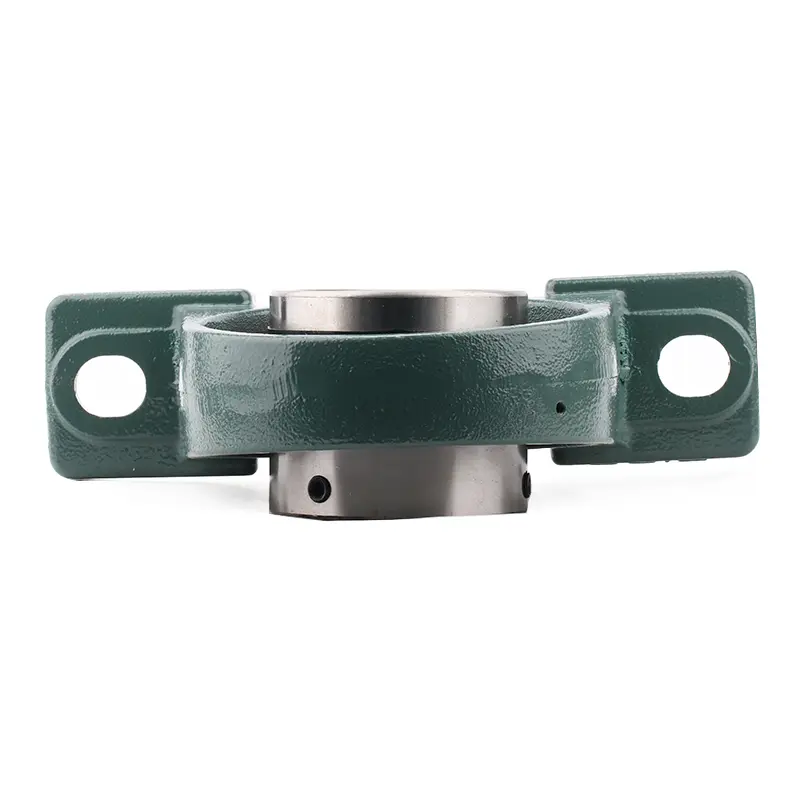
The process blends simple measurement with essential engineering calculations. Skipping either step risks failure.
A Detailed, Two-Stage Sizing Methodology
Let’s break down the sizing process into clear, actionable stages for both replacement and new design scenarios.
Stage 1: Determining the Physical Dimensions (The Fit)
This stage answers: "What bearing will physically fit my machine?"
- Identify the Shaft Diameter: Use a precision caliper to measure the shaft where the bearing sits. This is your bore size (e.g., 30mm).
- Decode or Determine the Housing Type: Pillow blocks have standard codes.
- UCP: Two-bolt pillow block, common for light/medium duty.
- SAF/SA: Four-bolt pillow block, for heavier loads and more stability.
- The number after the letters indicates the bearing size. For a 30mm shaft, a UCP 206 is typical (bore = 06 x 5 = 30mm).
Stage 2: Determining the Load Capacity (The Function)
This stage answers: "What bearing will survive the job?" This is where most mistakes happen.
- Define Application Parameters:
- Radial Load (Fr): The force perpendicular to the shaft (e.g., weight of a pulley, tension from a belt).
- Axial Load (Fa): The force parallel to the shaft (e.g., from a screw conveyor, gear thrust).
- Speed (n): Rotational speed in RPM.
- Desired Life (L10h): The required operating hours before a 10% probability of failure. For critical equipment, this might be 30,000-50,000 hours.
- Calculate the Equivalent Dynamic Load (P): For bearings that handle combined loads (like spherical rollers), you calculate a single equivalent radial load using factors from the bearing catalog.
- Calculate the Required Basic Dynamic Load Rating (C): Use the bearing life formula:
L10h = (10^6 / (60 * n)) * (C / P)^(10/3)
Rearranged to solve for C:
C = P * ( (L10h * 60 * n) / 10^6 )^(0.3) - Select the Bearing Insert: Look in a catalog for a bearing with your bore size and a C rating greater than your calculated C value.
- For light loads, high speed: Choose a deep groove ball bearing insert (standard in UCP units).
- For heavy radial loads, misalignment: Choose a spherical roller bearing insert (found in SAF series units).
Special Considerations for Sizing
- Internal Clearance: For high-temperature applications or heavy interference fits, specify C3 or C4 clearance, not standard CN.
- Sealing: Choose sealing appropriate for the environment (rubber seals for dust, labyrinth for water/washdown).
- Mounting: Ensure the selected pillow block fits your frame’s bolt pattern and space.
Practical Example for a Conveyor Roller
- Shaft: 25mm.
- Load: Radial load from belt and material = 0.5 kN per bearing.
- Speed: 100 RPM.
- Life Required: 40,000 hours.
- Calculation:
C = 0.5 kN * ((40,000 * 60 * 100)/1,000,000)^0.3 ≈ 0.5 * (240)^0.3 ≈ 0.5 * 4.8 = 2.4 kN. - Selection: A standard UCP 205 (25mm bore) with a deep groove ball bearing has a C rating of ~15 kN, which is far above 2.4 kN. It is more than adequate. The sizing confirms the intuitive choice is safe.
For a distributor like Rajesh, offering sizing guidance is a key service. When a customer asks for a UCP 205, Rajesh can ask: "What is it for?" If it’s for a heavily loaded agitator, he might suggest checking the load or even upgrading to a spherical roller block (SAP 205). This proactive advice prevents future failures and builds his reputation as a expert.
What causes pillow block bearing failure?
Failure is a symptom. The cause is usually one of a few common enemies. Identifying the cause from the failed bearing’s appearance tells you how to fix it permanently.
Pillow block bearing failure is primarily caused by contamination (dirt, water), lubrication failure (wrong grease, insufficient quantity), overloading (bearing too small for the load), misalignment, and improper installation (damage, incorrect fits). These factors lead to wear, fatigue, overheating, and eventual seizure.
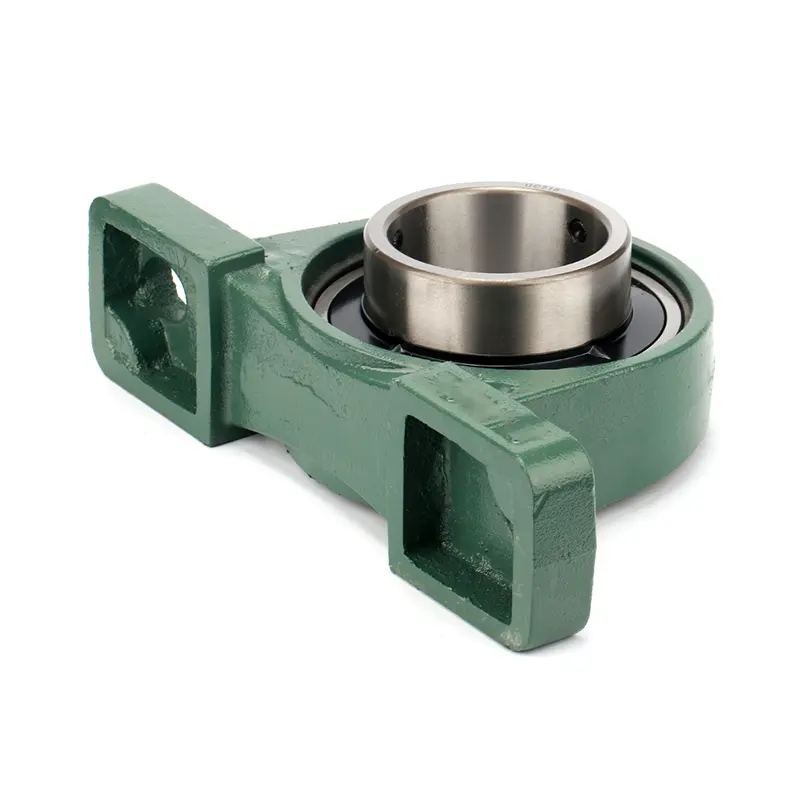
A bearing doesn’t just "wear out." It is killed by a specific stressor. Understanding the kill mechanism is the first step to choosing a longer-lived replacement.
Diagnosing the Root Cause of Failure
Let’s link common failure modes to their underlying causes. This is forensic analysis for machinery.
1. Contamination: The Abrasive Killer
This is the number one cause of premature failure in industrial environments.
- How it happens: Dust, dirt, sand, or water enters the bearing past ineffective seals.
- The result: Abrasive particles grind away at the finely finished raceways and rolling elements. The bearing becomes noisy, develops play, and fails from wear long before its fatigue life is reached.
- Visual clue: Grease is dirty or gritty. Raceways show scratching or wear patterns.
2. Lubrication Failure: The Friction Killer
Bearings need the right lubricant in the right amount.
- How it happens: Using the wrong grease type (e.g., incompatible thickener), grease washing out (in wet environments), grease degrading from high heat, or simply running dry.
- The result: Metal-to-metal contact creates extreme friction and heat. The bearing turns blue from overheating and can weld itself together (seize).
- Visual clue: Discolored (blue/brown) rings, melted cage, solidified or absent grease.
3. Overloading (Fatigue): The Stress Killer
This is a sizing error. The bearing is too small for the job.
- How it happens: The applied load exceeds the bearing’s capacity, or shock loads are not accounted for.
- The result: Material fatigue. Subsurface cracks form and propagate to the surface, causing flaking or spalling (pitting).
- Visual clue: Chunks of metal missing from raceways or rollers, localized pitting.
4. Misalignment: The Edge-Loading Killer
The shaft and housing are not perfectly aligned, forcing the bearing to operate at an angle.
- How it happens: Improper installation, frame deflection, thermal expansion.
- The result: The load concentrates on one edge of the rollers or balls. This creates excessive stress, heat, and wear on that edge.
- Visual clue: Asymmetric wear pattern. One side of the raceway is heavily worn, the other is not.
5. Improper Installation: The Instant Killer
Damage during mounting can doom a new bearing immediately.
- How it happens: Hammering the bearing onto the shaft (damaging rings and cage), pulling through misalignment (damaging seals), incorrect shaft or housing fits (too tight or too loose).
- The result: Brinelling (indentations on raceways), cracked rings, damaged seals, excessive internal clearance.
- Visual clue: Dent marks on raceways, cracked components, seal lip torn.
A Failure Analysis Guide for Maintenance Teams
| Symptom / Observation | Most Likely Root Cause | Corrective Action |
|---|---|---|
| Bearing is noisy, gritty feeling | Contamination ingress. | Upgrade to a pillow block with better seals (labyrinth, triple lip). Improve environmental protection. |
| Bearing is hot, discolored, seized | Lubrication failure or severe misalignment. | Check grease type and quantity. Ensure regreasing schedule. Check and correct alignment. |
| Raceways have flaking or pitting | Overloading (fatigue) or material defect. | Resize the bearing. Select a larger unit or one with higher load capacity (e.g., switch from ball to spherical roller). |
| Wear only on one side of raceway | Shaft misalignment. | Laser align the pillow blocks. Use a self-aligning bearing type if some misalignment is unavoidable. |
| Bearing has play, shaft is loose | Worn shaft, loose fit, or improper locking. | Repair or replace the shaft. Use the correct shaft tolerance. Tighten locking device to proper torque. |
For Rajesh, this diagnostic skill is invaluable. When a customer brings in a failed pillow block, Rajesh can examine it and ask insightful questions. Instead of just selling a replacement, he can say: "This failed from dirt ingress. The standard seal isn’t enough for your workshop. Let me get you the same size but with a triple-labyrinth seal." This solves the real problem and earns customer loyalty.
What are the common problems with pillow blocks?
Problems often stem from a mismatch between the pillow block’s capabilities and the application’s realities, or from neglect of basic maintenance practices.
Common problems with pillow block bearings include seal failure leading to contamination, lubrication washout in wet environments, loose locking devices causing fretting corrosion, housing corrosion (if not stainless in wet areas), and noise/vibration from misalignment or bearing wear.

These problems are persistent because they are often overlooked during selection and installation. They are the "chronic illnesses" of rotating equipment.
An Overview of Recurring Operational Issues
Let’s examine each common problem, its implications, and its standard solutions.
1. Seal Failure and Contamination
The seal is the first line of defense. When it fails, the bearing’s life is cut short.
- Problem: Standard lip seals wear out, harden with heat, or get damaged during installation. Dust, water, and chemicals then enter freely.
- Solution: Select the seal for the environment. Use V-ring seals or labyrinth seals for dusty conditions. Use triple-lip seals or PTFE seals for wet/washdown applications. Ensure seals are not pinched during installation.
2. Lubrication Washout and Degradation
In food processing, mining, or any wet application, grease doesn’t stay put.
- Problem: High-pressure water, solvents, or simply immersion wash the grease out of the bearing cavity. Water can also emulsify the grease, destroying its lubricity.
- Solution: Use grease with high water resistance (NLGI 2 with lithium complex or polyurea thickener). For severe cases, use purgable seals and implement frequent relubrication to push water out. Consider stainless steel pillow blocks to prevent housing corrosion that can trap water.
3. Loose Locking Devices (Fretting Corrosion)
The bearing must be tight on the shaft. If it is loose, it micro-moves.
- Problem: The setscrew or eccentric locking collar works loose from vibration. This allows the bearing inner ring to rotate slightly on the shaft. This micro-motion wears away metal, creating a fine red-brown powder (fretting corrosion).
- Solution: Always use a ground flat on the shaft for setscrews. Tighten locking devices to the manufacturer’s specified torque. Use eccentric locking collars with multiple set screws for more security. Check tightness during routine maintenance.
4. Housing Corrosion
The bearing might be fine, but the pillow block housing itself can fail.
- Problem: In humid, wet, or corrosive chemical environments, a standard cast iron or pressed steel housing will rust. This can weaken the housing, lock the bolts, and make disassembly impossible.
- Solution: Specify stainless steel pillow blocks (e.g., 304 or 316 SS) for corrosive environments. For less severe cases, plated or coated housings offer some protection.
5. Noise and Vibration
Excessive noise is a warning sign, not just a nuisance.
- Causes: Worn bearing (from any of the above problems), misalignment, unbalanced shaft, resonance.
- Solution: Identify the root cause. Use a stethoscope to isolate the sound. Check alignment and balance. If the bearing itself is worn, replace it and address the cause of wear to prevent recurrence.
Preventive Maintenance Checklist
To avoid these common problems, implement a simple PM routine:
- Monthly: Listen for unusual noise. Feel for excessive heat.
- Quarterly: Check locking device tightness. Inspect seals for damage.
- Annually/Bi-annually: Relubricate according to schedule (purge old grease). Check shaft alignment.
For Rajesh’s business, selling solutions to these common problems is a growth strategy. He can create product bundles: "Washdown Duty Pillow Block Kit" includes a stainless unit with food-grade seals and water-resistant grease. "Heavy-Duty Mining Kit" includes a spherical roller block with labyrinth seals and high-temperature grease. This moves him from selling parts to selling reliability packages.
How do I know what size bearings to get?
This is the practical question every maintainer faces when standing in front of a broken machine. You need a reliable method, not a guess.
You know what size bearings to get by accurately measuring the shaft diameter of the old bearing or the machine, reading the part number from the old bearing or housing, and cross-referencing with a bearing dimension table. For replacements, matching the existing size and type is usually correct, provided the original didn’t fail prematurely from under-sizing.
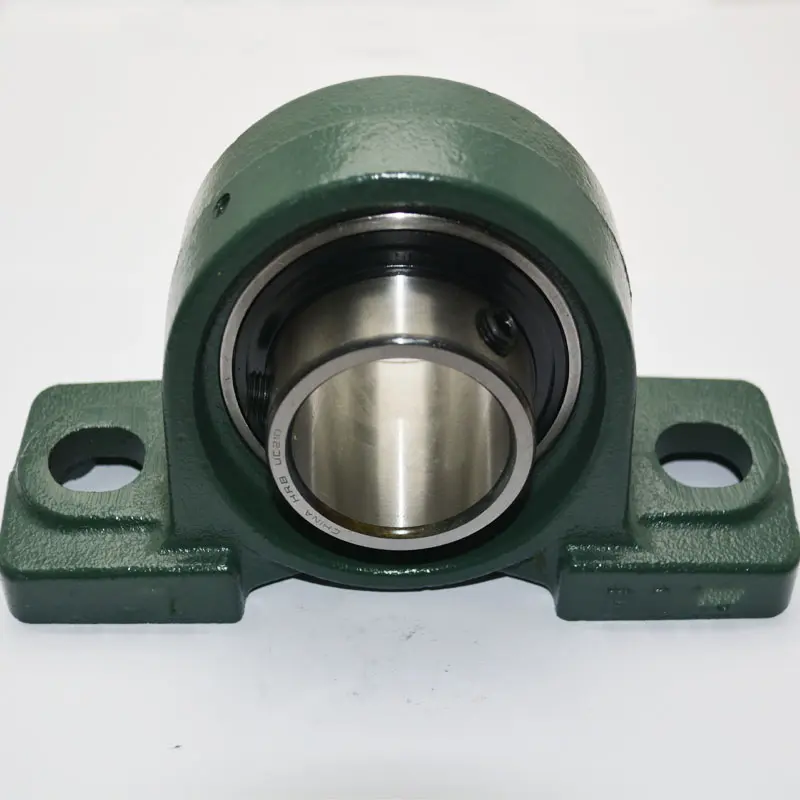
In the urgency of a breakdown, you need a fast, foolproof identification process. The goal is to get the exact same—or better—bearing back into service quickly.
A Field Guide to Bearing Identification for Replacement
Follow this sequence to virtually guarantee you get the right part.
Step 1: The First and Best Clue – The Part Number
Look on the face of the bearing ring or the side of the pillow block housing for stamped or engraved numbers and letters.
- Pillow Block Code: e.g., UCP 208. "UCP" is the housing type. "208" is the bearing insert code. A 208 bearing has a 40mm bore (08 x 5).
- Bearing Code (if removed): e.g., 6208-2RS. "6208" is a deep groove ball bearing, 40mm bore. "2RS" means two rubber seals.
- Write down everything you see. This code is your direct link to the correct part.
Step 2: If the Code is Unreadable – The Measurement Method
If the bearing is too damaged or dirty to read, become a detective with your calipers.
- Measure the Shaft Diameter (Bore): This is the most critical measurement. Measure the shaft where the bearing was seated. Get an accurate number in millimeters.
- Measure the Bearing’s Outer Diameter (OD): If the bearing is out, measure its outside diameter.
- Measure the Bearing Width (B): Measure the total thickness of the bearing.
- Use a Dimension Table: With your bore (e.g., 40mm) and series guess (e.g., 62 series for ball bearings, 22 series for spherical rollers), look up the standard dimensions. A 40mm bore in the 62 series is a 6208 (OD=80mm, B=18mm). If your OD and width match, you have confirmed the size.
Step 3: Consider the "Why" – Learning from Failure
Before you simply replace like-for-like, ask: "Why did this bearing fail?"
- If it ran for years and failed from normal wear, a like-for-like replacement is fine.
- If it failed prematurely (in months), a direct replacement will likely fail again. This is where you must diagnose (as in the previous section) and possibly upsize or upgrade.
- Example: A UCP 208 (ball bearing) failed from overload on a conveyor. The solution might be to upgrade to a SAP 208 (same 40mm shaft, but with a spherical roller bearing insert) for higher load capacity.
Step 4: Final Specification – Don’t Forget the Details
The size code is just the beginning. To ensure longevity, specify:
- Internal Clearance: For most industrial applications, C3 is a safe bet.
- Seal/Shield Type: 2RS (contact rubber seals) for general dust. 2Z (metal shields) for higher speed, less sealing. Special seals for food, washdown, or high temps.
- Brand/Quality: Stick with reputable manufacturers or distributors (like FYTZ via Rajesh) who provide consistent quality and accurate dimensions.
A Quick-Reference Size Guide for Common Shafts
| Shaft Diameter (mm) | Common Pillow Block (Ball Bearing) | Common Pillow Block (Spherical Roller) | Typical Use |
|---|---|---|---|
| 20mm | UCP 204 | SAP 204 | Light conveyors, fans. |
| 25mm | UCP 205 | SAP 205 | General industrial. |
| 30mm | UCP 206 | SAP 206 | Medium-duty conveyors. |
| 40mm | UCP 208 | SAP 208 | Pumps, heavier conveyors. |
| 50mm | UCP 210 | SAF 210 | Agitators, crushers. |
For Rajesh, creating a simple identification guide for his customers is a powerful tool. He can provide a PDF or a laminated card showing how to measure a shaft and cross-reference it with common codes. When a flustered maintenance manager calls, Rajesh can calmly guide them: "Measure the shaft and tell me the number. I’ll confirm the code and have it ready." This reduces their downtime and makes him the go-to expert for bearing procurement.
Conclusion
Correctly sizing pillow block bearings is a blend of precise measurement and calculated load analysis. By understanding the common causes of failure and problems, you can select not just a bearing that fits, but one that is engineered to last, turning reactive maintenance into proactive reliability.