
A poorly chosen pillow block bearing can bring a million-dollar conveyor system to a halt. The right selection ensures smooth operation and minimal downtime.
For conveyor systems, select pillow block bearings based on load capacity, environmental conditions, and shaft size. Use self-aligning spherical roller bearing inserts for heavy loads and misalignment, and ensure proper sealing for dust or moisture. Source from reliable suppliers who provide consistent quality and technical support for long-term reliability.
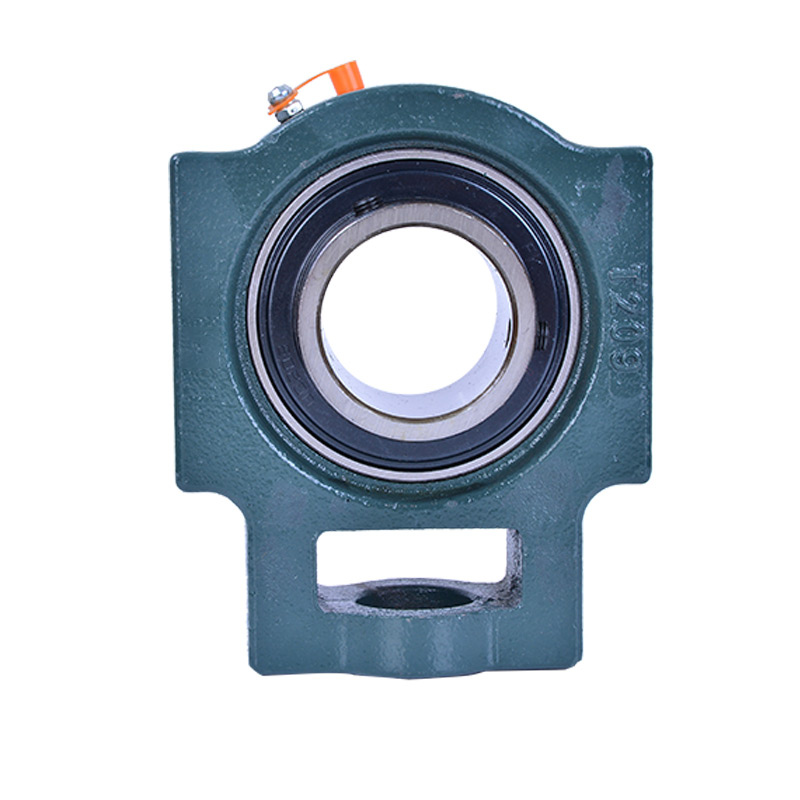
Conveyors are the arteries of material handling. Their bearings must endure constant load, vibration, and often harsh environments. The choice of a pillow block bearing is not just a parts selection; it’s a critical reliability decision. Getting the design and sourcing right from the start saves huge costs in maintenance and lost production. Let’s dive into the key technical and commercial factors that matter.
What is the 2 1 rule for linear bearings?
This rule often comes up in linear motion discussions, but its core principle is highly relevant for spacing bearings on a conveyor shaft.
The "2 1 rule" for linear bearings states that the distance between two bearing blocks should be at least twice the distance from each bearing to the nearest load point. This ensures stable support and prevents excessive cantilever forces, which also applies to spacing pillow blocks on a long conveyor shaft to minimize deflection and vibration.

While linear guides use this rule directly, the underlying mechanical principle is universal: proper support spacing is crucial for stability.
Applying Support Principles to Conveyor Shaft Design
The "2 1 rule" is about creating a stable, statically determinate support system. For a rotating conveyor shaft, we deal with similar concepts of span, load, and deflection.
Understanding the Rule’s Foundation
Imagine a shaft with a pulley in the middle. If you place a pillow block bearing very close to the pulley on each side, the shaft is rigidly supported right under the load. This is good. Now imagine moving those bearings far apart. The unsupported span of shaft between the bearings and the pulley ends becomes long and flexible. It can sag and vibrate. The "2 1 rule" gives a guideline to keep these unsupported sections (the "1") much shorter than the supported span between bearings (the "2").
Conveyor-Specific Application
On a conveyor, loads are often distributed (by the belt and material), but key load points exist at drive pulleys, snub pulleys, and tension points.
- Identify Critical Load Points: These are locations with high radial forces from belt tension or concentrated weight.
- Position Pillow Blocks: Ideally, place a pillow block close to each side of a critical load point. For example, a drive pulley should have a bearing on each side of it, not far away.
- Manage Long Spans: For long sections of idler rolls or tail pulleys, you need to support the shaft at regular intervals to prevent excessive deflection. The spacing depends on shaft diameter, weight, and load. A common rule of thumb is to space bearings at a distance no greater than 16 times the shaft diameter for steel shafts under moderate load. For a 50mm shaft, this means supports every 800mm.
Consequences of Ignoring Proper Spacing
- Excessive Shaft Deflection: The shaft bends too much. This causes misalignment at the bearings, leading to premature wear and failure.
- Vibration and Whip: At certain speeds, a long, unsupported shaft can enter resonant vibration, known as "shaft whip," which is dangerous.
- Bearing Overload: The bearings at the ends of a long, deflecting shaft experience higher edge loading because the shaft enters at an angle.
Practical Design Table for Conveyor Shaft Supports
| Conveyor Component | Load Characteristic | Pillow Block Spacing Guideline |
|---|---|---|
| Drive Pulley Shaft | Very high radial and axial loads. | Mandatory: One bearing on each side of the pulley. Use heavy-duty 4-bolt (SAF) blocks with spherical roller bearings. |
| Snub/Take-up Pulley | High tension, adjustable position. | Bearings should be mounted on the take-up frame itself, close to the pulley. |
| Return Idler Rolls | Light, distributed load. | Often a single bearing per roll end. Spacing is the roll length. |
| Long Tail Pulley Shaft | Moderate load, long span. | Apply the "16x shaft diameter" rule or calculate deflection. Often need an intermediate support bearing between the pulley and the frame. |
For a bearing distributor like Rajesh, this knowledge helps him consult with his customers. If a factory is experiencing repeated bearing failures on a long conveyor shaft, Rajesh can ask about the distance between supports. He might discover the spacing is too wide. His solution isn’t just a "stronger bearing," but advising the customer to add an intermediate pillow block support. This positions him as a problem-solver, not just a parts vendor.
What does CBR 80%1 mean?
This is a critical specification for spherical roller bearing inserts, which are the heart of many heavy-duty conveyor pillow blocks.
CBR 80%1 is a performance rating for spherical roller bearings2. It means the bearing’s basic dynamic load rating (C) is calculated based on rollers that contact the raceways across 80% of their theoretical length. This is a standard and reliable design that offers an excellent balance of high load capacity3 and tolerance for minor misalignment.
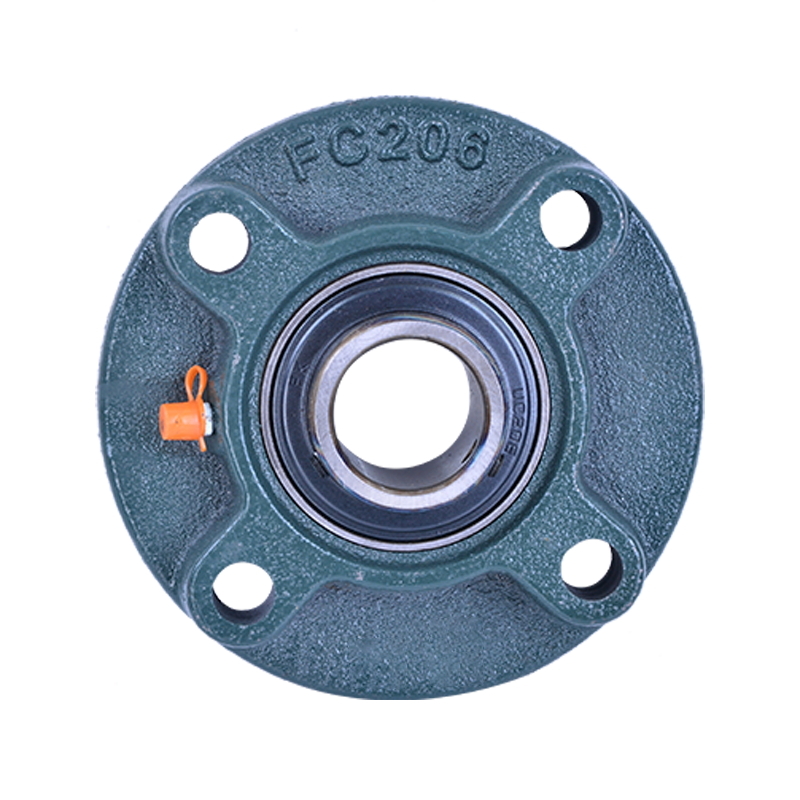
The CBR (Contact Boundary Range) percentage tells you about the internal geometry and load distribution of the bearing. It’s a mark of design optimization.
Decoding Bearing Geometry for Informed Sourcing
Understanding CBR helps you evaluate bearing quality4 and suitability, especially when comparing products from different factories.
The Concept of Roller Contact Length
In a spherical roller bearing, the barrel-shaped rollers contact the inner and outer raceways. The contact is not a single point, but a line (an ellipse under load). The length of this contact line affects load distribution.
- 100% Contact: Theoretically, the roller could contact the raceway across its entire length. This would give the maximum possible load capacity3. However, in reality, it is nearly impossible to achieve perfect alignment and machining. Aiming for 100% contact under no load often leads to edge stress concentration under real load and misalignment.
- 80% Contact (CBR 80%1): This is the industry standard for most spherical roller bearings2. The rollers are slightly crowned, and the raceways are profiled so that under no load, only about 80% of the roller length is in contact. When load is applied, the contact ellipse expands towards the ends. This design provides a "safety margin." It can accommodate small misalignments and shaft deflections without causing damaging edge loading. It offers a very high load rating that is reliable in real-world conditions.
- Lower Percentage Contact (e.g., CBR 70%): This sometimes indicates a bearing optimized for even greater misalignment tolerance5, but potentially at a slight sacrifice to the maximum load rating. It is less common.
Why CBR 80%1 is the Sweet Spot for Conveyors
Conveyor applications are perfect for CBR 80%1 bearings because:
- High Load Capacity: Conveyor pulleys carry heavy radial loads. The 80% design delivers the high C value needed for long life.
- Built-in Misalignment Tolerance: Conveyor frames can twist and settle. The 80% contact design, combined with the spherical outer ring, gives the bearing the ability to handle these alignment shifts without immediate failure.
- Proven Reliability: This is a mature, well-understood design. All major bearing manufacturers use it as their standard for a reason.
Sourcing Implications: A Quality Indicator
When sourcing pillow blocks with spherical roller inserts, the CBR is a technical talking point with your supplier.
- A reputable factory like FYTZ will know and specify that their standard spherical rollers are CBR 80%1 design. They can explain it.
- A low-cost, no-name supplier may not even understand the term. Their bearings might have uncontrolled contact patterns, leading to unpredictable performance and early failure.
- For a buyer: You should ask your supplier, "What is the roller contact design for your spherical roller bearings2?" A confident answer of "Standard CBR 80%1" indicates technical competence. It’s a proxy for overall manufacturing quality control.
Beyond CBR: Other Key Sourcing Specs
While CBR is important, it’s part of a bigger picture. When sourcing conveyor pillow blocks, also specify:
- Internal Clearance: Usually C3 for conveyor applications to handle heat and fit.
- Cage Material6: Steel stamping or machined brass cages are robust for heavy loads and shock.
- Sealing: Labyrinth seals with grease purging ports are excellent for dusty conveyor environments.
For Rajesh, this is powerful. When he sources pillow blocks from FYTZ for his mining customers, he can confidently state that the bearing inserts use the standard CBR 80%1 design for optimal load and alignment. This technical detail builds trust with engineers and maintenance managers who are tired of failed cheap bearings. It justifies a potentially higher price point with demonstrable engineering value.
What is the permissible misalignment of a bearing?
No conveyor is perfectly aligned. Frames bend, foundations settle, and shafts deflect. Knowing how much misalignment your bearing can handle is key to reliability.
The permissible misalignment for a bearing depends on its type. For standard pillow blocks with spherical roller bearing inserts, it is typically 1.5 to 2.5 degrees. For blocks with deep groove ball bearing inserts, it is much lower, often only 0.2 to 0.3 degrees, unless the block itself has a spherical seating.
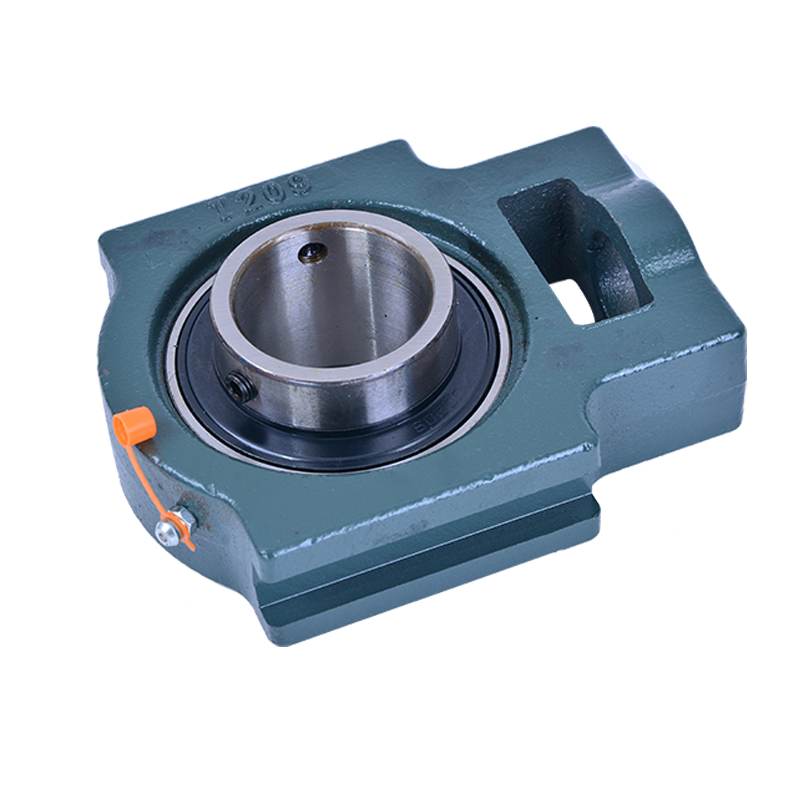
"Permissible" means the bearing can operate within this range without a drastic reduction in its calculated service life. Exceeding it causes rapid failure.
Aligning Expectations with Bearing Capabilities
You must match the bearing’s misalignment capacity to the expected conditions of your conveyor system.
Two Levels of Misalignment Compensation
Pillow block bearings can accommodate misalignment through two main features:
- Bearing Internal Self-Alignment: This is the most effective method. A spherical roller bearing or a ball bearing with a spherical outer ring can pivot inside its housing seat. This is where the 1.5°-2.5° range comes from. The bearing itself tilts to match the shaft angle.
- Housing Seat Flexibility: Some pillow blocks have a spherical seat between the bearing outer ring and the housing. This allows the entire bearing to tilt slightly. This offers less range than a true spherical roller bearing but helps with minor mounting errors.
Impact of Exceeding the Limit
If misalignment exceeds the bearing’s capacity, the following happens:
- Edge Loading: The rollers or balls contact the raceway only at their very ends, creating extreme localized stress.
- Increased Friction and Heat: The sliding motion at the edges generates significant heat.
- Cage Damage: The cage, which separates the rolling elements, gets stressed and can deform or break.
- Premature Fatigue: The high stress concentration leads to early spalling (pitting) on the raceways.
Choosing the Right Bearing for Your Conveyor’s Reality
| Conveyor Type / Location | Expected Misalignment Source | Recommended Pillow Block Bearing | Permissible Misalignment |
|---|---|---|---|
| Long Overland Conveyor (Drive/Tail) | Foundation settlement, thermal expansion, long spans. | Pillow Block with Spherical Roller Bearing Insert. (e.g., SAF series) | High (≈ 2°). Essential for this application. |
| Heavy-Duty In-Plant Conveyor | Load-induced frame flex, installation tolerances. | Pillow Block with Spherical Roller Bearing Insert. | High (≈ 2°). The safe, standard choice. |
| Light-Duty Package Conveyor | Minor installation error, stable environment. | Pillow Block with Deep Groove Ball Bearing Insert & Spherical Seat. (e.g., UCP series) | Low to Moderate (≈ 0.5° – 1°). Often sufficient. |
| Precision Roller Conveyor | Very rigid frame, precision installation. | Pillow Block with Deep Groove Ball Bearing (rigid seat). | Very Low (< 0.3°). Requires precise alignment. |
Installation is Key: Even Self-Aligning Bearings Have Limits
A common mistake is assuming a spherical roller bearing pillow block needs no alignment. This is wrong. You should still align the pillow blocks as closely as possible during installation. The self-alignment feature is for accommodating operational misalignment (from load and heat), not for correcting gross installation errors. Good initial alignment ensures the bearing uses only a small part of its misalignment capacity, leaving a safety margin for future frame movement.
Advice for Buyers and Maintainers
For someone like Rajesh, when a customer complains about short bearing life on a conveyor, misalignment is a prime suspect. Rajesh can ask: "Are you using spherical roller bearing pillow blocks?" If the answer is no, and the conveyor is heavy-duty, that’s the first recommendation. If they are already using them, the next question is: "When were the pillow blocks last laser-aligned?" Often, the solution is a combination of the correct bearing type and proper installation practice. Sourcing bearings with adequate misalignment capacity is the first, critical step in building a reliable system.
How to set preload on bearing?
Preload is a critical concept for precision machinery, but for most conveyor pillow block applications, it is something you generally want to avoid.
For most conveyor pillow block bearings, you do NOT set preload. These bearings require a small internal clearance (like C3) to operate correctly. "Setting" them usually means securing the bearing in the housing and locking it to the shaft without creating axial or radial preload that would cause overheating and failure.
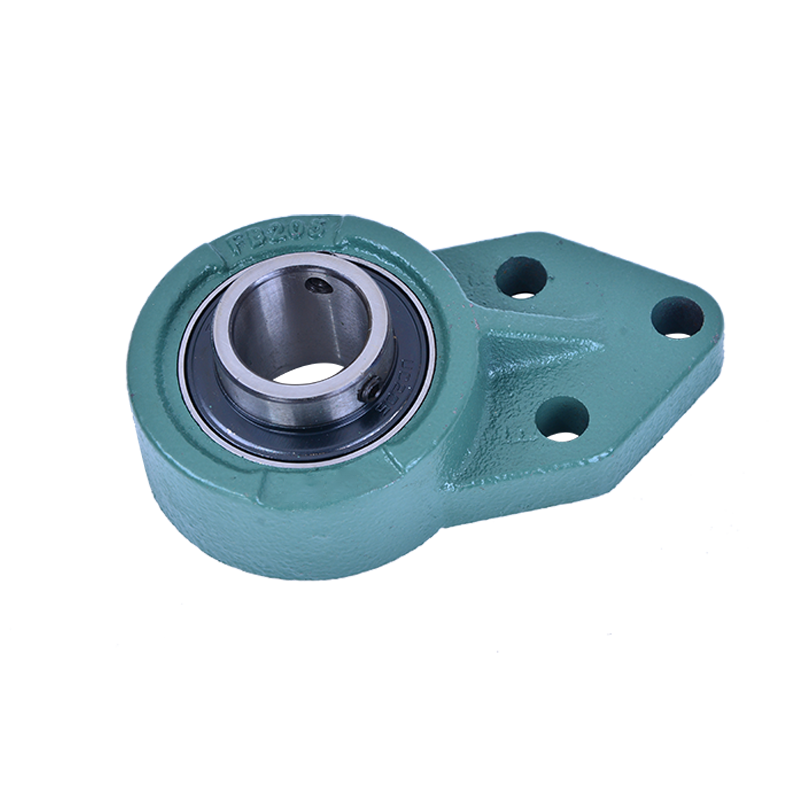
Preload is an intentional axial load applied to eliminate internal clearance. It is used in machine tool spindles and gearboxes for high rigidity. In conveyor bearings, preload is a destructive condition.
Understanding Clearance vs. Preload in Conveyor Contexts
It’s vital to distinguish between proper installation and accidental preload, which is a common installation error.
What is Preload (And Why It’s Bad Here)?
Preload means the bearing rolling elements are under constant compression, even with no external load. This is achieved by physically pushing the bearing components together axially.
- Purpose in Precision Apps: Increases stiffness, reduces runout, improves motion accuracy.
- Effect in Conveyor Bearings: Creates constant high friction, generates excessive heat, drastically reduces lubrication film thickness, and leads to rapid seizure.
How "Accidental Preload" Happens in Pillow Blocks
- Incorrect Locking Method: Overtightening an eccentric locking collar on a pillow block can drive the bearing sideways in the housing, creating axial preload.
- Incorrect Fits: Using a shaft that is too large for the bearing bore (excessive interference fit) can cause radial preload by expanding the inner ring too much, eliminating all internal clearance.
- Misalignment: Severe misalignment can cause the bearing to bind, simulating a preloaded condition.
- Thermal Effects: If the bearing inner ring gets much hotter than the outer ring (common), it expands more. If the initial clearance (C3) was not sufficient, this thermal expansion can use up all clearance and create preload.
The Correct "Setting" Procedure for a Conveyor Pillow Block
The goal is to secure the bearing without inducing preload. Here is the correct sequence:
- Mount the Housing: Bolt the pillow block to the frame. Ensure it is aligned with its partner (see previous section).
- Slide onto Shaft: Slide the pillow block (with bearing) onto the shaft until it reaches its axial position.
- Lock the Bearing to the Shaft: This is the critical step. Use the provided locking device.
- For Eccentric Locking Collar: Rotate the collar until it is snug against the shaft. Then, using the locking screw(s), tighten it to the manufacturer’s specified torque. Do not use excessive force. The eccentric action provides a firm, positive lock.
- For Setscrew Lock: The setscrew must bear against a ground flat spot on the shaft. Tighten the setscrew to the specified torque. Using a setscrew on a round shaft is not reliable and damages the shaft.
- Verify Free Rotation: After locking, the shaft should still rotate freely by hand. Any stiffness or binding indicates a problem—likely misalignment, dirt, or accidental preload.
Special Case: Paired Bearing Arrangements
On some conveyor drive pulleys, two bearings might be mounted close together on a shaft. Even here, they are typically set up with a small axial clearance between them, not preload. One bearing is often axially located ("fixed"), and the other is allowed to float axially to accommodate thermal expansion.
Sourcing Tip: Look for User-Friendly Locking Designs
When sourcing pillow blocks, consider the locking mechanism’s reliability and ease of use.
- Eccentric Collars: Very common and effective if torqued correctly.
- Adapter Sleeves (SN series): Used with spherical roller bearings on larger shafts. They provide a precise interference fit and are locked with a nut. Proper nut torque is essential to avoid preload.
- Withdrawal Sleeves: For easier disassembly.
A good supplier will provide clear installation instructions with torque values. At FYTZ, we include these guides with our shipments to help distributors and end-users avoid installation-related failures.
For Rajesh’s customers, improper "setting" or preload is a frequent cause of newborn bearing failure. A maintenance mechanic might hammer a bearing on or over-tighten the collar, causing it to run hot and fail in a week. Rajesh can add value by providing simple installation instructions or tips with his bearing deliveries. Educating his customers that "tight is not right" and that bearings need a little internal space to live can prevent these frustrating and costly failures, making his products look more reliable.
Conclusion
Designing and sourcing pillow block bearings for conveyors requires a balance of mechanical principles and practical supply chain wisdom. Focus on proper support spacing, understand key specs like CBR, select bearings with adequate misalignment tolerance, and ensure correct installation without preload. Partnering with a knowledgeable, quality-focused supplier is the final, critical step for long-term system reliability.
-
Understanding CBR 80% is crucial for evaluating bearing quality and performance in heavy-duty applications. ↩ ↩ ↩ ↩ ↩ ↩ ↩ ↩
-
Explore the versatility and advantages of spherical roller bearings in various industrial applications. ↩ ↩ ↩
-
Learn how load capacity impacts the reliability and longevity of bearings in demanding environments. ↩ ↩
-
Gain insights into key factors that determine bearing quality and how to choose the right supplier. ↩
-
Discover the importance of misalignment tolerance for ensuring optimal performance in conveyor systems. ↩
-
Explore the benefits of different cage materials and their suitability for heavy-duty applications. ↩