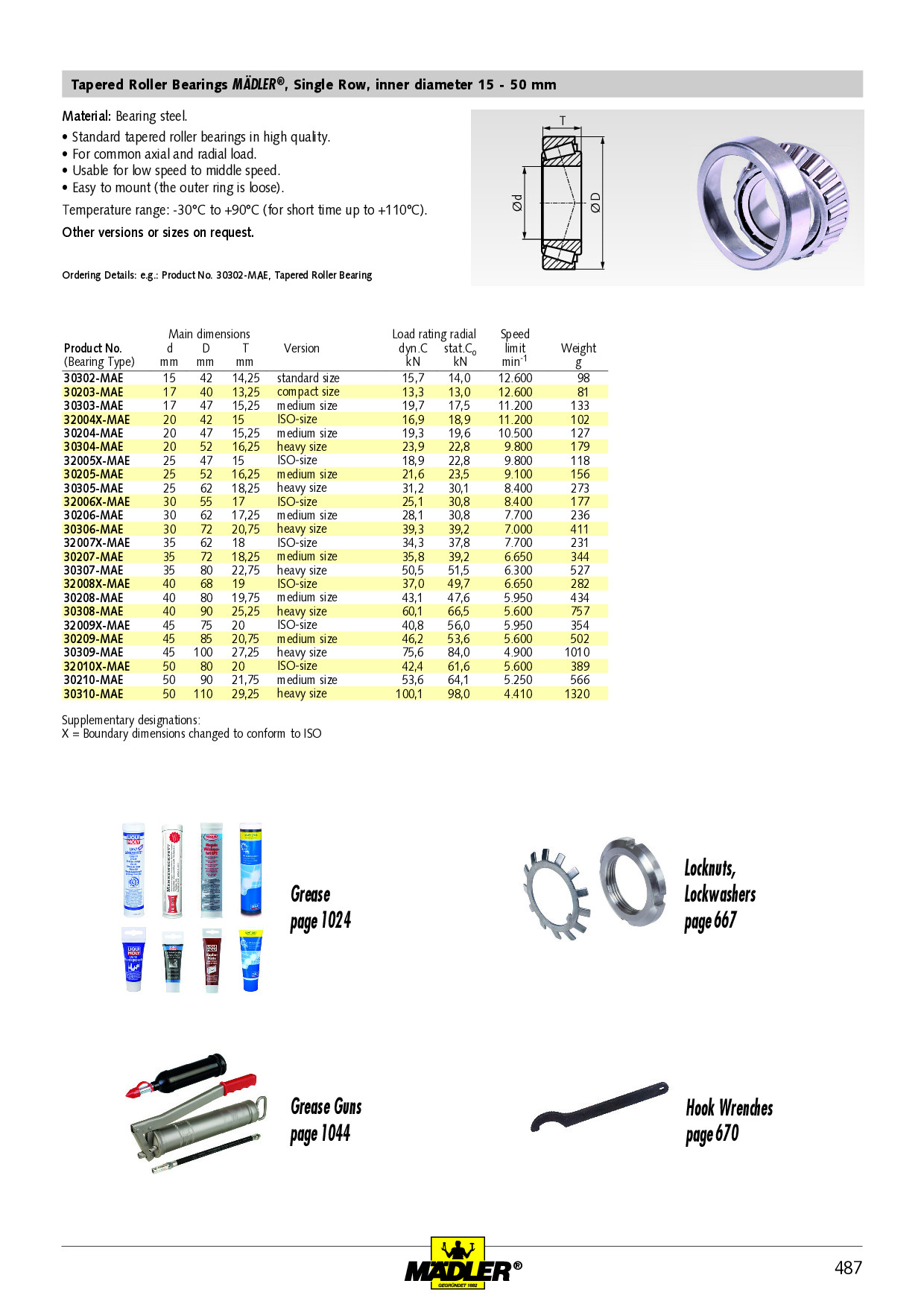
Your machines work hard. Every day they face heavy shocks and sudden impacts. Normal bearings crack or dent under that pressure.
Reinforced tapered roller bearings have thicker rings, larger rollers, and stronger cages. They take up to 30% more load than standard bearings of the same size. That extra strength keeps your equipment running when ordinary bearings fail.
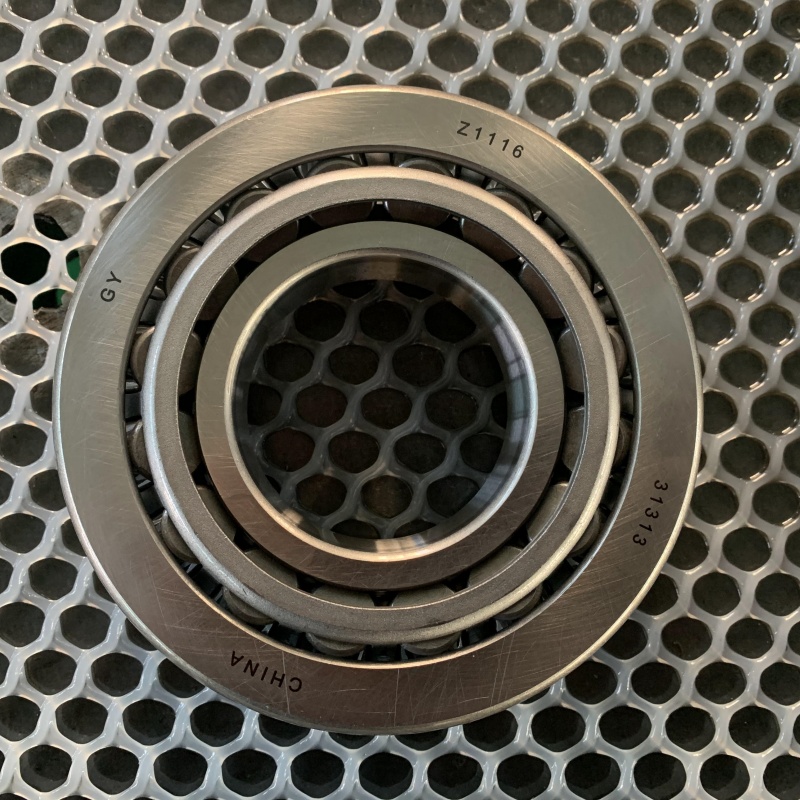
I have seen too many standard bearings fail in mining trucks and construction equipment. The operators blame the bearing quality. But the real problem is simple. They used a bearing that was not built for extreme loads. In this article, I will show you what makes a bearing reinforced. I will also share which industries need them most and how we build them at FYTZ.
What Makes a Tapered Roller Bearing “Reinforced” and How Is It Different from Standard?
You see two bearings. They look the same from the outside. But one costs more. One lasts three times longer. What is the difference inside?
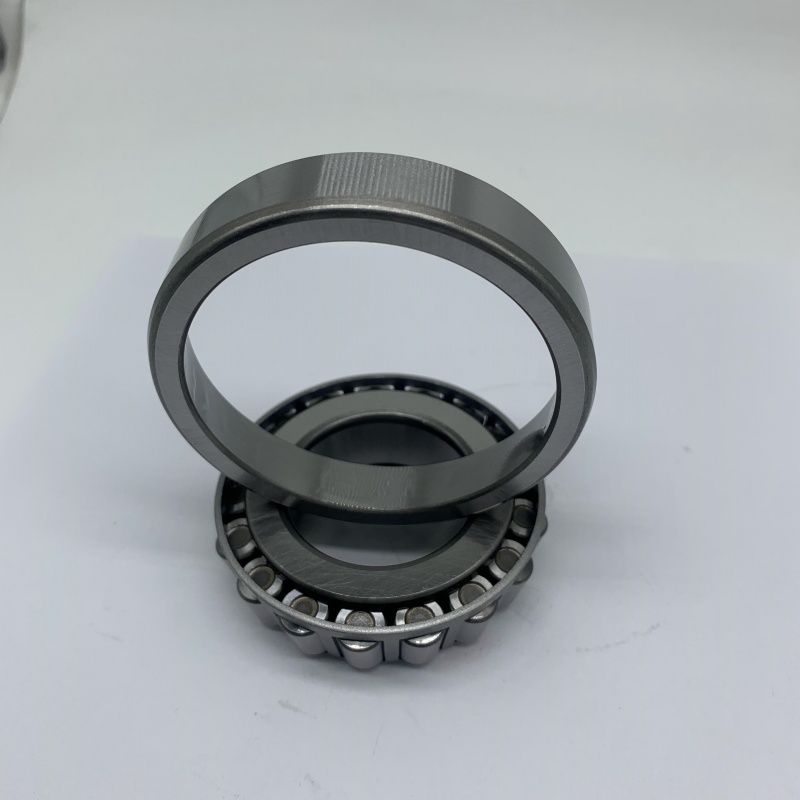
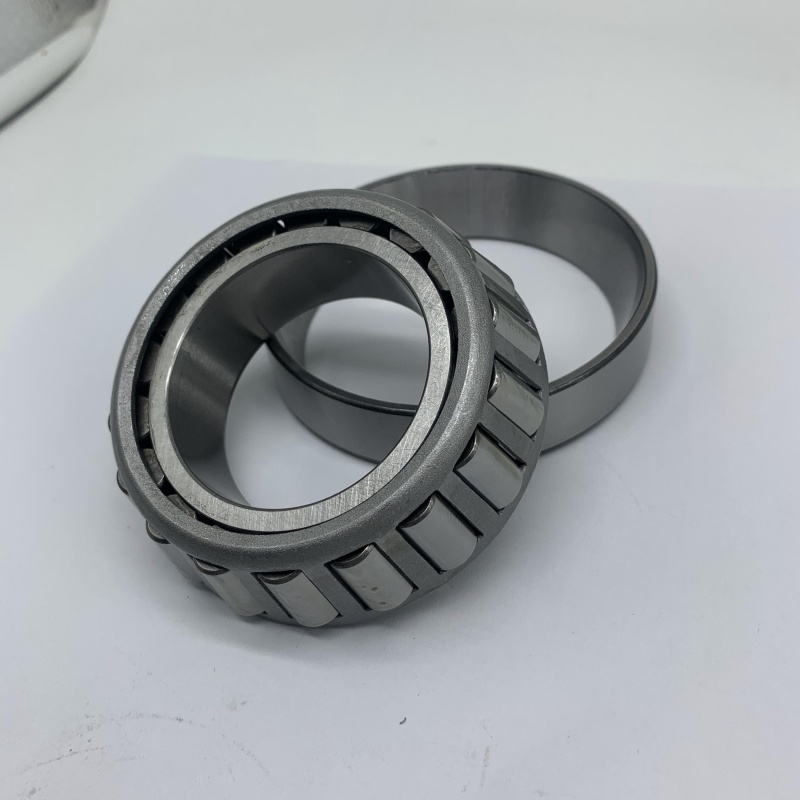
A reinforced tapered roller bearing has thicker inner and outer rings, larger and longer rollers, a stronger cage, and sometimes an extra row of rollers. The internal geometry also changes. The contact angle is steeper. The roller end design is stronger. All these changes add up to a bearing that simply does not break under shock.
Three Key Structural Differences
Let me open up both bearings and show you what changes. I will use simple words.
1. Thicker Rings and Bigger Rollers
A standard bearing follows a size series. For example, a 30210 has a certain ring thickness. A reinforced version uses the same outer diameter but a smaller inner diameter? No. That would not work. Instead, we keep the same bore and outer diameter. But we remove less material during machining. The ring walls get thicker. We also increase the roller diameter and length.
Here is an example from our factory. A standard 32212 bearing has rollers that are 15 mm long and 9 mm in diameter. Our reinforced version of the same size has rollers that are 17 mm long and 10 mm in diameter. That does not sound like a big change. But the contact area between roller and raceway increases by 25%. That extra area spreads the load better. No more denting under impact.
2. Steeper Contact Angle and Improved Roller End Design
Standard tapered bearings have a contact angle of 15 to 20 degrees. That works for normal loads. For extreme loads, we go steeper. Up to 30 or 35 degrees. A steeper angle means the bearing can take more axial thrust. But that is not the only change.
The big end of the roller touches a flange on the inner ring. Under extreme loads, that spot gets very high pressure. In a standard bearing, that flange is small. In our reinforced design, we make the flange wider and stronger. We also change the shape of the roller end. We use a spherical shape instead of a flat one. This spreads the contact pressure more evenly.
3. Stronger Cage (Ribbon or Machined Brass)
The cage holds the rollers apart. In extreme loads, the cage takes a beating. Standard cages are made of pressed steel. They are light and cheap. But under shock loads, they bend or break. A broken cage lets the rollers pile up. Then the bearing locks.
For reinforced bearings, we use either a one-piece machined brass cage or a heavy-duty steel riveted cage. Brass cages are stronger and have natural lubricity. They do not break easily. Some customers ask for a special surface treatment on the cage. We can add a manganese phosphate coating. That reduces friction even more.
Let me put the differences in a table:
| Feature | Standard Tapered Bearing | Reinforced Tapered Bearing |
|---|---|---|
| Ring thickness | Standard per series | Up to 20% thicker |
| Roller diameter | Standard | Up to 15% larger |
| Roller length | Standard | Up to 15% longer |
| Contact angle | 15–20° typical | Up to 35° |
| Cage material | Pressed steel | Machined brass or heavy steel |
| Static load rating (C0) | Baseline | +25% to +35% |
| Shock load resistance | Moderate | Excellent |
I remember a customer from South Africa. He runs rock crushing equipment. Standard bearings lasted two months. The cages broke and rollers fell out. We sent him reinforced bearings with machined brass cages and thicker rings. Those bearings ran for 14 months. The only reason he changed them was scheduled maintenance.
So when you see the word "reinforced" on a bearing, it means real changes inside. Not just a marketing word.
How Do Reinforced Tapered Bearings Handle Shock Loads and Heavy-Duty Conditions?
Shock loads are sudden spikes of force. Think of a hammer hitting a bearing. Normal bearings dent. Reinforced bearings absorb and spread that force.
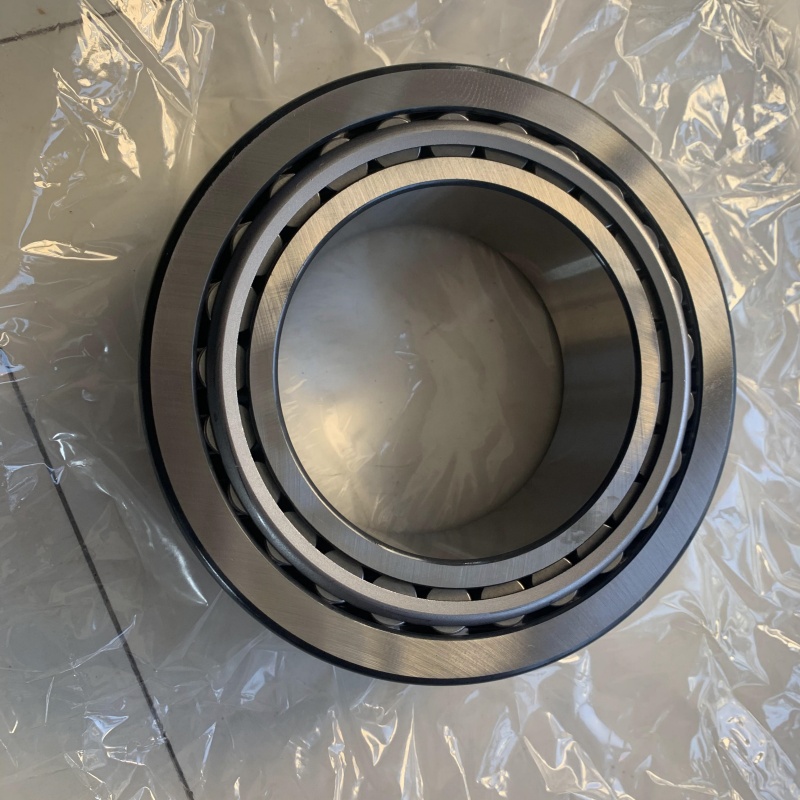
Reinforced tapered bearings handle shock loads through four mechanisms: larger contact area spreads the force, deeper case hardening resists surface indentation, stronger cage keeps rollers aligned, and higher internal clearance prevents binding during momentary deformation. Together, these features let the bearing survive sudden impacts that would destroy a standard bearing.
What Happens Inside During a Shock Load?
I want you to picture a wheel loader. It picks up a heavy bucket of rocks. Then it drops the bucket onto a truck. That drop sends a shock wave through the wheel bearings. The force can be three to five times higher than the normal rolling load.
1. Contact Area Spreads the Force
A standard bearing has a small contact area between each roller and the raceway. When a shock hits, the local pressure goes very high. The steel can exceed its yield strength. That creates a small dent. Once the dent is there, each roller hits that dent on every revolution. The dent grows into a pit. Then the bearing fails.
A reinforced bearing has larger rollers. The contact area is bigger. The same shock force creates lower pressure per square millimeter. The steel stays below the yield point. No dent. No pit. No failure.
2. Case Hardening Depth Matters
Shock loads do not just dent the surface. They also create stress below the surface. If the hardened layer is shallow, the stress reaches the soft core. Then the subsurface cracks and spalls.
For our reinforced bearings, we use a deeper case hardening. The heat treatment gives us a hardened layer of 2 to 3 mm on large bearings. On standard bearings, the hardened layer might be only 1 to 1.5 mm. That extra depth is the difference between a dent that stays on the surface and a crack that goes through the whole ring.
3. Internal Clearance for Deformation
When a shock load hits, the bearing rings deform slightly. They become oval for a split second. If the internal clearance is too small, the rollers get squeezed. That creates a huge friction spike. The bearing can seize instantly.
Reinforced bearings use larger internal clearance. Usually C3 or C4 instead of normal (CN). The extra gap gives the rings room to deform without touching the rollers. After the shock passes, the bearing returns to its normal shape. No damage.
Here is a table showing how each feature protects against different types of extreme loads:
| Extreme Load Type | What Standard Bearing Does | How Reinforced Bearing Fights It |
|---|---|---|
| Sudden impact (hammering) | Dents on raceway | Larger rollers spread force |
| Heavy axial thrust | Flange breaks off | Wider, stronger flange |
| Vibration with heavy load | Cage cracks | Machined brass cage |
| Overload (static) | Ring cracks from bending | Thicker ring section |
| High-frequency shocks | Surface fatigue spalling | Deeper case hardening + C3/C4 clearance |
I have a story from a customer in Indonesia. He runs a palm oil screw press. The press squeezes fruit bunches. The load is not smooth. It pulses and hammers. Standard bearings lasted three months. The inner rings cracked. We recommended a reinforced bearing with C4 clearance and a brass cage. He installed it. After six months, he called me. The bearing was still perfect. He ordered a full container of reinforced bearings after that.
So for any machine that gets hit, dropped, or overloaded, reinforced bearings are not an option. They are a necessity.
Which Industries and Equipment Need Reinforced Tapered Roller Bearings the Most?
You sell bearings to many customers. Some need standard quality. Some need the toughest bearings you can make. How do you know which is which?
The industries that need reinforced tapered bearings are mining, construction, heavy earthmoving, steel mills, wind turbines, and railway freight. In these fields, machines face shock loads, dust, water, and continuous heavy pressure. Standard bearings fail in weeks. Reinforced bearings run for years.
Five High-Demand Applications
Let me walk you through the equipment that beats up bearings the most. I have supplied bearings to all these industries.
1. Mining Equipment (Excavators, Crushers, Conveyor Drums)
Mining is the toughest environment for bearings. Dust everywhere. Rocks falling. High vibration. Long running hours. The wheel bearings on a mining haul truck face shock loads every time the truck hits a pothole. The crusher bearings see extreme radial loads and dust.
For mining applications, we recommend reinforced tapered bearings with heavy-duty seals and C4 clearance. We also suggest special grease with extreme pressure (EP) additives. One of my customers in Russia uses our reinforced bearings on conveyor drums in a coal mine. Before, bearings lasted 3 months. Now they last 18 months.
2. Construction Equipment (Bulldozers, Wheel Loaders, Backhoes)
Construction machines start and stop a lot. They turn with heavy loads. The blade pushes against hard ground. The bucket lifts heavy material. All these actions create axial and radial loads at the same time.
The final drive bearings on a bulldozer are a good example. They take the torque from the engine and push it to the tracks. That torque is not smooth. It jerks. Standard bearings wear out fast. Reinforced bearings with steeper contact angles handle the jerking much better.
3. Steel Mills (Rolling Mill Bearings)
Steel mills have heat and heavy loads together. The rolls that flatten steel get very hot. The bearings must keep working at 150°C or more. Also, the loads are extreme. A rolling mill can put thousands of tons of force on a bearing.
For steel mills, we use reinforced tapered bearings with heat stabilization. The steel is specially treated to keep its hardness at high temperatures. We also use a special cage design that allows more grease flow. This keeps the bearing cooler under extreme loads.
4. Wind Turbine Main Shafts and Gearboxes
Wind turbines run for 20 years. They face changing loads as the wind shifts. The main shaft bearing must take both radial and axial loads from the rotor. A gearbox inside the turbine has planetary stages that use tapered bearings.
Wind turbine bearings need very high reliability. Changing a bearing on a 100-meter tower is expensive. So engineers prefer reinforced bearings with extra safety margin. We make reinforced tapered bearings for wind turbines with special surface coatings to prevent white etching cracks (WEC).
5. Railway Freight and Heavy Haul Trucks
Trains carry heavy loads for long distances. The axle bearings on a freight car take shocks every time the train goes over a rail joint. Also, the bearing must work for hundreds of thousands of kilometers.
For railways, reinforced tapered bearings have become the standard. They use special seals and improved roller profiles. I have supplied our reinforced bearings to a railway maintenance company in Brazil. They told me the bearing life doubled compared to the previous standard grade.
Here is a quick reference table:
| Industry | Specific Equipment | Most Critical Feature Needed |
|---|---|---|
| Mining | Haul truck wheel ends | C4 clearance, heavy seals |
| Mining | Cone crusher | Thicker rings, brass cage |
| Construction | Wheel loader axle | Steeper contact angle (30°+) |
| Construction | Bulldozer final drive | Large roller size |
| [Steel mill](https://en.wikipedia.org/wiki/Steel mill) | Rolling mill backup rolls | Heat stabilization, high C0 |
| Wind energy | Main shaft bearing | Surface coating, EP grease |
| Railway | Freight axle box | Long-life seals, deep case hardening |
If your customers work in any of these industries, you should recommend reinforced bearings. Do not let them use standard bearings in extreme conditions. It will cost them more in the long run.
What Materials and Heat Treatment Processes Boost Strength in Reinforced Designs?
Strong bearings start with strong steel. But the right steel is only half the story. The heat treatment turns good steel into a tough, hard bearing.
Reinforced designs use cleaner steel with lower oxygen content and larger carbide size. The heat treatment includes double tempering and sub-zero treatment. These steps remove residual stress and stabilize the microstructure. The final result is a bearing that resists cracking and denting under extreme loads.
Two Critical Areas: Material and Heat
Let me go deeper into how we make reinforced bearings at FYTZ. I will focus on material selection and heat treatment.
Material Upgrades for Reinforced Bearings
Standard bearings use GCr15 steel (similar to 52100). That is good steel. For reinforced bearings, we use the same base steel but with tighter specifications.
First, we specify lower oxygen content. Oxygen forms oxide inclusions. Those inclusions are hard and brittle. They become stress risers. For standard bearings, we accept oxygen below 15 ppm. For reinforced bearings, we go below 10 ppm. That difference reduces the number of inclusions by about 40%.
Second, we ask for a finer and more uniform carbide distribution. Carbides are hard particles of iron and carbon. They give the steel its wear resistance. But large carbides act like cracks. For reinforced bearings, we specify a maximum carbide size of 0.015 mm. Standard bearings might allow up to 0.025 mm.
Third, we sometimes use a different steel grade for very large reinforced bearings. Grade GCr15SiMn has more silicon and manganese. It gives deeper hardenability. That means the core of a thick ring still reaches the right hardness.
Heat Treatment Process Steps
Heat treatment has four steps for reinforced bearings. Each step matters.
Step 1: Austentizing. We heat the rings to 830–860°C. The temperature is controlled within ±3°C. This turns the steel into a uniform high-temperature phase called austenite. The time at temperature is longer for reinforced bearings. This ensures all carbides dissolve evenly.
Step 2: Quenching. We cool the rings fast in oil. This transforms the austenite into martensite. Martensite is very hard but also brittle. For reinforced bearings, we use a special quenching oil that cools fast enough to get full hardness but not so fast that the rings crack.
Step 3: Sub-zero treatment (cryogenic). This is an extra step we use for reinforced bearings. We cool the rings to -70°C or -80°C after quenching. This converts any remaining austenite into martensite. Less retained austenite means the bearing will not change dimension over time. It also improves the wear resistance.
Step 4: Double tempering. We heat the rings to 160–180°C and hold them for 2 hours. Then we cool. Then we do the same cycle again. Double tempering removes internal stress and improves toughness. The final hardness stays at 59–61 HRC. But the impact resistance is much higher than single-tempered steel.
Here is a comparison of material and heat treatment specs:
| Property | Standard Bearing | Reinforced Bearing (FYTZ) |
|---|---|---|
| Steel grade | GCr15 | GCr15 or GCr15SiMn |
| Oxygen content | ≤15 ppm | ≤10 ppm |
| Max carbide size | 0.025 mm | 0.015 mm |
| Retained austenite after heat treat | 8–12% | 3–5% (after sub-zero) |
| Number of tempering cycles | 1 | 2 |
| Case depth (for large bearings) | 1–1.5 mm | 2–3 mm |
| Impact toughness (relative) | 1x | 1.5x to 2x |
I remember a customer from Turkey. He makes construction equipment. His bearings kept cracking on the inner ring. We analyzed the failed bearings. The steel had large carbides and high retained austenite. We sent him reinforced bearings with sub-zero treatment and double tempering. The cracking stopped completely.
So when you choose a reinforced bearing, ask your supplier about steel cleanliness and heat treatment details. At FYTZ, we provide full material certificates and heat treatment charts for every batch. That is the level of transparency we believe in.
Conclusion
Reinforced tapered roller bearings are built for the toughest jobs. Thicker parts, better steel, and smarter heat treatment keep your machines running.