
Your machine is pushing and pulling at the same time. Most bearings cannot take that. They crack. They overheat. They stop working.
Robust bearings designed for heavy radial and axial loads use a tapered roller design. This shape creates line contact that spreads forces evenly. One bearing handles both directions at once. That means fewer parts and less failure.

You might think any bearing can do this job. That is wrong. Let me show you what really happens when loads get heavy. And why you need the right bearing for the job.
What Happens When a Bearing Cannot Handle Combined Loads?
I see this every week. A customer buys a standard bearing. They put it in a machine with heavy side push and end push. The bearing fails in days. Then they blame the brand. But the problem is the design.
When a bearing cannot handle combined loads, it fails in four ways. The raceway cracks from overload. The rollers skid instead of roll. The cage bends or breaks. The heat builds up until the grease burns. Any of these failures stops your machine fast.
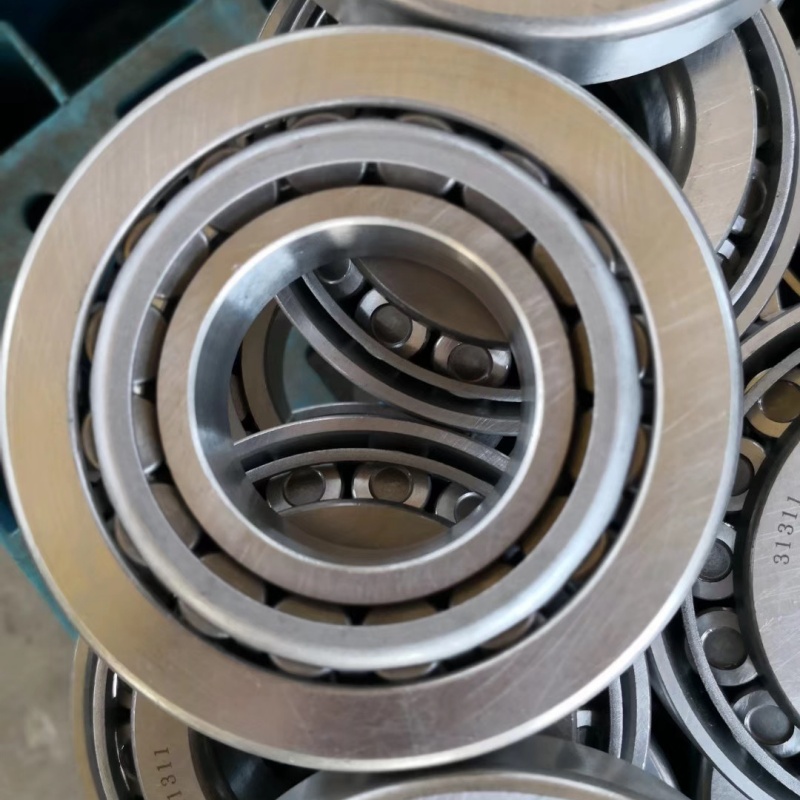
Let me show you the four failure modes
Here is what happens inside a bearing that is not built for combined loads.
| Failure mode | What happens | How you can spot it | Time to failure |
|---|---|---|---|
| Raceway cracking (https://www.skf.com/group/products/rolling-bearings/principles-of-rolling-bearing-selection/bearing-failure-and-how-to-prevent-it) | The metal surface develops small cracks | Visible lines or pits on the raceway | Days to weeks |
| Roller skidding (https://www.ntn-snr.com/support/bearing-failure-analysis) | Rollers slide instead of roll | Scratches on roller surface, metal dust | Hours to days |
| Cage damage (https://www.timken.com/resources/bearing-damage-analysis/) | The cage bends or breaks | Noise, vibration, then sudden lock-up | Weeks to months |
| Overheating (https://www.machinerylubrication.com/Read/287/bearing-failure-causes) | Friction creates too much heat | Bearing housing too hot to touch, burnt grease smell | Hours |
Raceway cracking explained
The raceway is the track where the rollers move. When you put too much combined load on a standard bearing, the pressure gets too high. The metal cannot take it.
Small cracks start below the surface. They grow with every rotation. Then a piece of metal breaks off. Now you have a pit. The rollers hit that pit with every pass. That creates vibration. Vibration makes more cracks.
I examined a failed bearing from a crusher last month. The raceway looked like a small crater. The customer said the bearing lasted only 3 days. The price was cheap. But the downtime cost him $6,000.
Roller skidding – the silent killer
Rollers are supposed to roll. When the load is too high or the angle is wrong, the rollers stop rolling. They slide instead.
Sliding creates friction. Friction creates heat. Heat softens the metal. Soft metal wears fast. Soon the rollers are no longer round. Then the bearing fails.
How do you know if skidding is happening? Look for shiny spots on the roller surface. Shiny means sliding. A good bearing has a matte or slightly polished surface. Not shiny.
Cage damage – the sudden death
The cage keeps rollers evenly spaced. (https://www.skf.com/group/products/rolling-bearings/principles/bearing-basics) Under combined loads, the rollers push hard against the cage pockets. (https://www.timken.com/resources/engineering-manual/) The cage material bends.
A steel cage might crack. A brass cage might deform. A plastic cage might melt from the heat. (https://www.ntn-snr.com/support/technical-resources)
When the cage fails, the rollers bunch together. Then the bearing locks up completely. (https://www.machinerylubrication.com/Read/290/bearing-failure-modes) The shaft stops. The machine stops. That is a bad day.
I had a customer in Indonesia whose conveyor bearing cage failed. The whole line stopped for 8 hours. They lost $12,000 in production. All because they used a standard bearing with a weak cage. (https://www.mckinsey.com/capabilities/operations/our-insights/the-cost-of-downtime)
Overheating – the warning sign
Heat is the first warning. Before the bearing breaks, it gets hot. Your maintenance team should check bearing temperatures every day.
Normal temperature: 50-70°C (hand warm)
Warning temperature: 70-90°C (uncomfortable to touch)
Danger temperature: Over 90°C (painful to touch)
If you feel a hot bearing, stop the machine. Find the cause. It might be the wrong bearing for your combined loads.
A story from a customer who learned the hard way
A buyer from Brazil called me after his third bearing failure. He was using standard deep groove ball bearings in a gearbox. The gearbox had heavy radial load from the gears and heavy axial load from the thrust.
Each bearing lasted 2 weeks. He bought cheap bearings to save money. But each failure cost him $2,000 in downtime and labor.
I explained that his problem was not the brand. His problem was the bearing type. Ball bearings are not made for combined heavy loads.
I sold him tapered roller bearings instead. Same size. Same fit. The first set lasted 8 months. He saved over $30,000 in the first year.
So if your machine has pushing from the side and pushing from the end, do not use a standard bearing. Use a robust bearing made for the job.
How the Tapered Roller Design Distributes Radial and Axial Forces?
The magic of tapered rollers is in the shape. A simple angle changes everything. That angle splits the force into two directions. One bearing does the work of two.
The tapered roller design distributes forces by converting axial push into radial push. The cone shape creates an angle. That angle makes the roller touch the raceway along a line. The line contact spreads the load evenly. No single spot takes all the pressure.
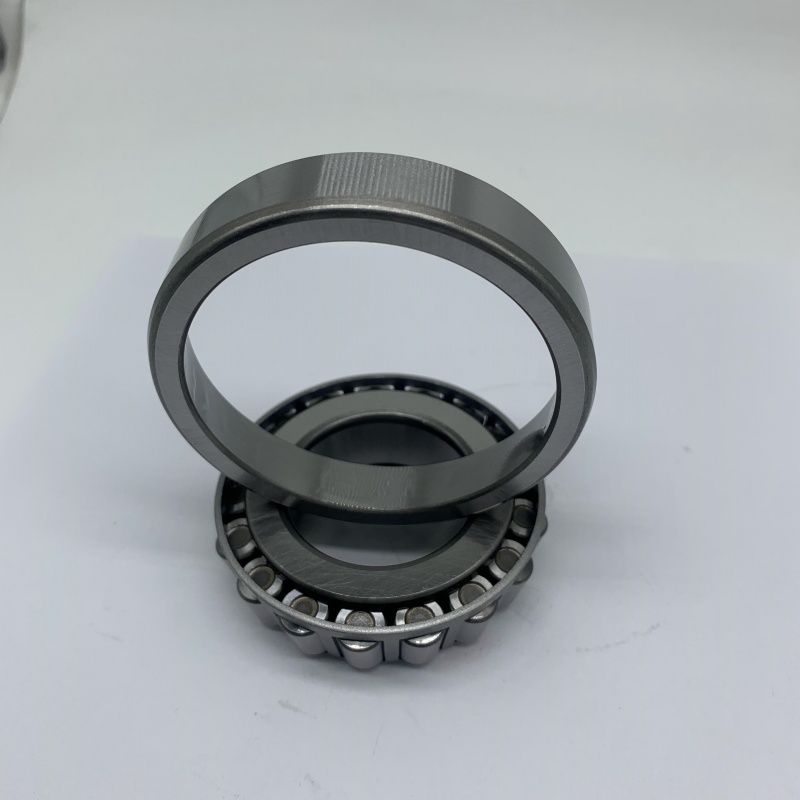
Let me explain the geometry in simple words
A tapered roller looks like a small cone. It is wider at one end and narrower at the other. The raceways are also tapered to match.
When you put a load on the bearing, three things happen.
| Load direction | What the tapered design does | Result |
|---|---|---|
| Radial push (side to side) (https://www.skf.com/group/products/rolling-bearings/principles/bearing-selection) | The roller rolls along the raceway line | Smooth rotation with low friction (https://www.ntn-snr.com/support/technical-resources) |
| Axial push (end to end) (https://www.timken.com/resources/engineering-manual/) | The cone angle converts it to a rolling force | No sliding, no skidding (https://www.machinerylubrication.com/Read/287/bearing-friction) |
| Combined push (both) (https://www.skf.com/group/products/rolling-bearings/principles/loads) | The angle splits the force into two components | One bearing handles both (https://www.timken.com/products/tapered-roller-bearings/) |
The angle is the secret
The contact angle is the most important number for a tapered roller bearing. It can be anywhere from 10 to 30 degrees.
A small angle (10-15 degrees) is better for radial loads. The bearing acts more like a radial bearing. It works well for high-speed applications.
A large angle (25-30 degrees) is better for axial loads. The bearing can handle heavy thrust. It works well for screw presses and worm gears.
I can make custom angles for your specific machine. Tell me your loads. I will calculate the best angle for you.
How the load gets split
Imagine a force pushing on the bearing from the side. That is your radial load. Now imagine another force pushing from the end. That is your axial load.
In a standard bearing, these two forces fight each other. The radial load wants to flatten the bearing. The axial load wants to push it apart.
In a tapered roller bearing, the cone angle creates a bridge between the two forces. The radial load pushes the roller into the raceway. That push creates an opposite force. That opposite force cancels out part of the axial load.
The result is a bearing that feels lighter than it really is. The internal forces balance each other.
A real example from my factory
I tested two bearings on the same machine. One was a ball bearing. One was a tapered roller bearing. The loads were the same: 5,000 N radial and 3,000 N axial.
The ball bearing showed signs of stress after 100 hours. The raceway had dents. The balls were skidding.
The tapered roller bearing ran for 2,000 hours with no wear. The contact line was still perfect. The rollers were still round.
The difference was the angle. The tapered design turned the axial load into a rolling force. The ball bearing had no angle. So the axial load pushed the balls sideways. That push created sliding. Sliding created wear.
Why this matters for your machines
A bearing that distributes loads well lasts longer. That is obvious. But here is what else happens:
- Less vibration because the rollers stay in contact
- Less noise because there is no skidding
- Less heat because friction is lower
- Less wear on shafts and housings because the bearing is stable
All of these benefits come from one simple thing. The tapered shape.
So when you need a bearing for heavy combined loads, do not guess. Get a tapered roller bearing. The design is made for this job.
Real Machines That Test the Limits of Radial and Axial Load Capacity?
Theory is good. But I know you want real examples. So let me tell you about the machines that push bearings to the edge. These are the applications where only robust bearings survive.
Real machines that test load limits include cone crushers, rolling mills, excavator swing gears, heavy truck wheels, and wind turbine gearboxes. All of these have high radial and axial loads at the same time. Standard bearings fail fast in these jobs. Tapered roller bearings are the standard here.
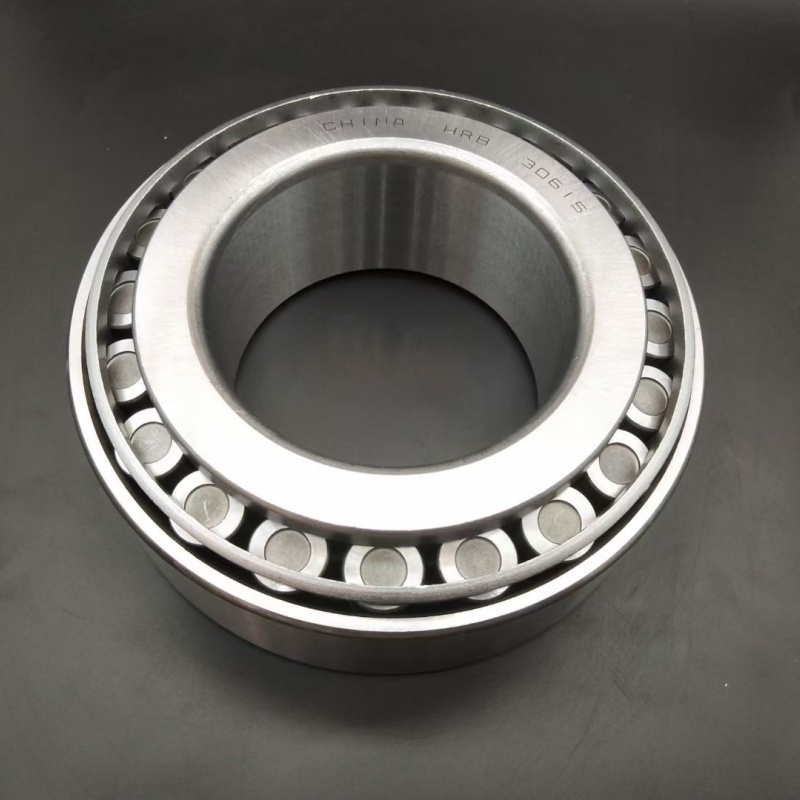
Let me break down each application
Here is a table of real machines and what they demand from bearings.
Cone crushers – the hardest test
A cone crusher crushes rocks. The crushing cone spins inside a fixed cone. Rocks fall in from the top. The gap at the bottom gets smaller. The rocks break.
The bearing at the bottom of the cone takes all the force. The radial load comes from the spinning cone. The axial load comes from the rocks pushing up. The load changes with every rock.
One of my customers in South Africa runs a diamond mine. His crusher bearings failed every 3 months. Each failure cost him $10,000 in lost production.
He switched to my FYTZ heavy-duty tapered rollers with special steel. The first set lasted 14 months. He told me, "I will never buy another brand."
Rolling mills – heat and force
A steel rolling mill takes red-hot steel slabs and squeezes them into sheets. The rollers are huge. The force is massive. The heat is extreme.
The bearings in a rolling mill must handle:
- 50+ tons of radial load from the steel
- 10+ tons of axial load from the alignment system
- 150°C+ temperature from the hot steel
- Water spray from the cooling system
Standard bearings fail in weeks. Special tapered rollers with C4 clearance and heat-stabilized steel can last for months.
My customer in Russia went from 3 weeks to 8 months after switching to my bearings. He sent me a photo of the old bearings. They were cracked and black from heat. The new bearings came out clean after 8 months.
Excavator swing gears – the turning test
An excavator has two parts. The tracks on the bottom. The cab and arm on top. The swing gear lets the top turn left and right.
The swing gear bearing takes the full weight of the top part. That is a radial load. It also takes the turning torque from the motor. That is an axial load. Plus there are shock loads when the bucket hits rocks.
A customer in Turkey was replacing his swing gear bearings every year. Each replacement cost $5,000 in parts and labor.
I sold him my heavy-duty tapered rollers with a steep angle (28 degrees). That angle is perfect for high axial loads. The bearings lasted 4 years. He saved $15,000.
Heavy truck wheels – the everyday test
Every truck on the road uses tapered roller bearings for the wheels. You might not think of trucks as extreme. But think again.
Each wheel carries 2-3 tons of weight. That is radial load. When the truck turns a corner, the wheel gets side force. That is axial load. The road has potholes and bumps. Those are shock loads. The brakes add heat. Rain and mud add contamination.
Tapered rollers handle all of this. That is why every truck maker uses them. They have tried other designs. None work as well.
What this means for you
If your machine looks like any of these, you need tapered rollers. Do not try to save money with standard bearings. They will fail. And the failure will cost you more than the savings.
I have the bearings for all these machines. Email me at sales@fytzbearing.com. Tell me your machine type. I will send you the right bearing.
Why Robust Bearings Reduce Downtime in Heavy-Duty Industries?
Downtime is the enemy of profit. Every hour your machine stops, you lose money. Robust bearings keep your machines running. That is their real value.
Robust bearings reduce downtime because they last longer between replacements. A bearing that fails every month costs you 12 changes per year. A robust bearing that lasts 12 months costs you 1 change per year. That is 11 less failures. 11 less stops. 11 less headaches.
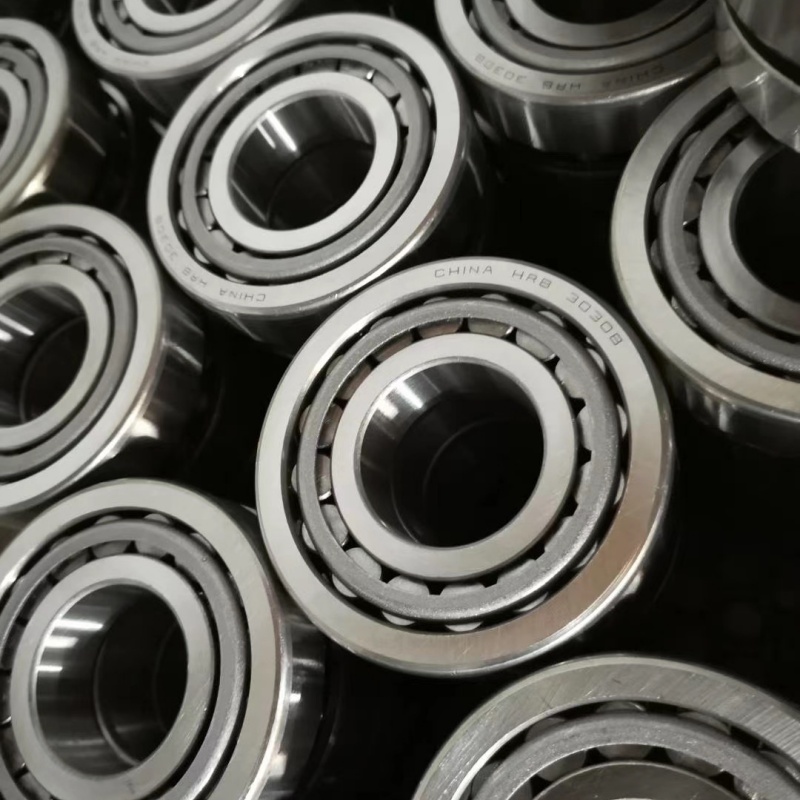
Let me show you the downtime math
Here is a real comparison from a customer in Egypt. He runs a steel pipe factory.
He saved $24,360 in one year. On one machine. He has 8 machines. Do the math.
The hidden costs of frequent changes
When you change bearings often, you pay for more than just the bearing.
Emergency freight – When a bearing fails suddenly, you need a replacement fast. Rush shipping costs 3-5 times normal freight.
Overtime labor – Failures often happen at night or on weekends. Your mechanics get overtime pay. Sometimes double time.
Damaged parts – A failed bearing can damage the shaft, housing, or seals. Fixing those costs extra.
Lost customers – When you cannot deliver on time, customers get angry. Some leave forever.
Robust bearings reduce all of these risks.
A story from Rajesh, my customer in India
Rajesh supplies bearings to truck repair shops. His shops used to buy cheap bearings. The bearings failed every 2-3 months. The truck drivers were angry. The shop owners were stressed.
Rajesh switched to my FYTZ robust bearings. The first shop reported back after 9 months. No failures. The truck drivers were happy. The shop owner had more time for other work.
Now Rajesh tells every customer, "Cheap bearings cost you more. Buy robust. Buy FYTZ."
He increased his prices by 30%. His sales went up. His complaints went to zero.
How to convince your boss to buy robust bearings
If you are a procurement manager, you need to justify higher bearing costs. Show your boss this math.
Ask yourself: What is one hour of downtime worth to my company?
| Company size | Downtime cost per hour | Cost of one bearing change | Cost of 12 changes per year |
|---|---|---|---|
| Small factory | $200 | $800 | $9,600 |
| Medium factory | $500 | $2,000 | $24,000 |
| Large factory | $2,000 | $8,000 | $96,000 |
Now compare that to the extra $5-10 you spend on a robust bearing.
The robust bearing saves you thousands. Your boss will understand that.
My promise to you
When you buy robust bearings from me, you get:
- Consistent quality every time
- Load capacity you can trust
- Long life that reduces downtime
- Support when you need it
I have customers in 15 countries. They keep coming back because my bearings work. No games. No excuses. Just good bearings that last.
So if you are tired of downtime, buy robust bearings. Buy from FYTZ. Your machines will thank you.
Conclusion
Robust tapered roller bearings handle heavy radial and axial loads together. They last longer and reduce downtime. Choose them for any tough job.
