
Heavy machines break standard parts fast. I see broken bearings from crushers and mills every week. The damage costs a fortune.
Tapered roller bearings are ideal for heavy applications because they handle high radial and axial loads together. Their line contact design spreads force over a larger area. This reduces stress and prevents early failure under heavy loads.
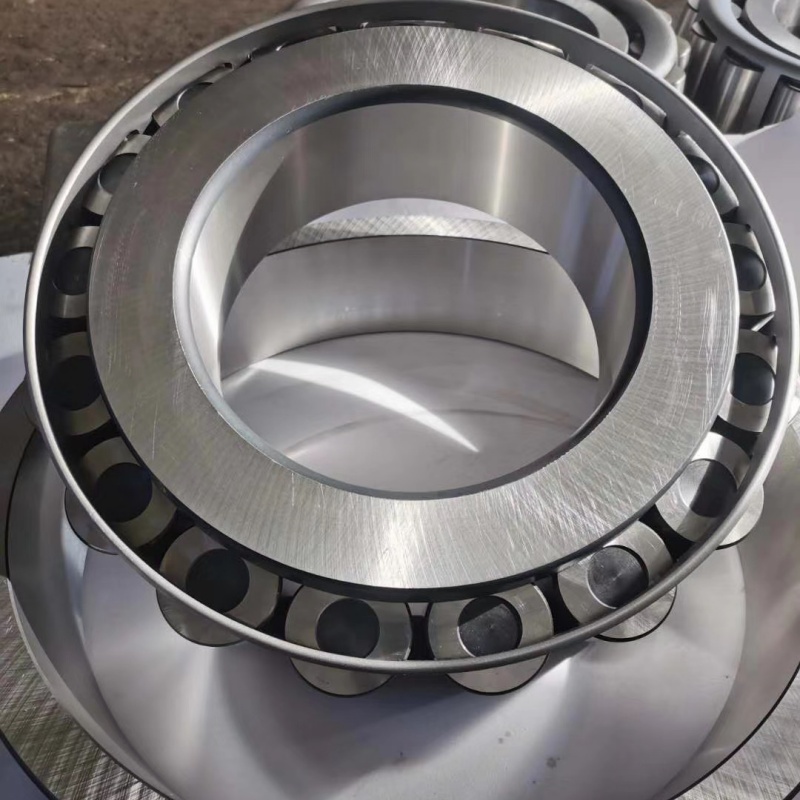
You might think all bearings can do heavy work. That is not true. Let me show you why tapered rollers are different. And why you need them for your tough jobs.
How Tapered Roller Bearings Handle Both Radial and Axial Loads at Once?
Most bearings can only handle one type of force. Radial force pushes from the side. Axial force pushes along the shaft. Heavy machines give you both at the same time. That kills normal bearings fast.
Tapered roller bearings handle both loads because of their angled design. The taper angle creates two contact lines. One line takes the radial push. The other line takes the axial push. This means one bearing does the work of two.
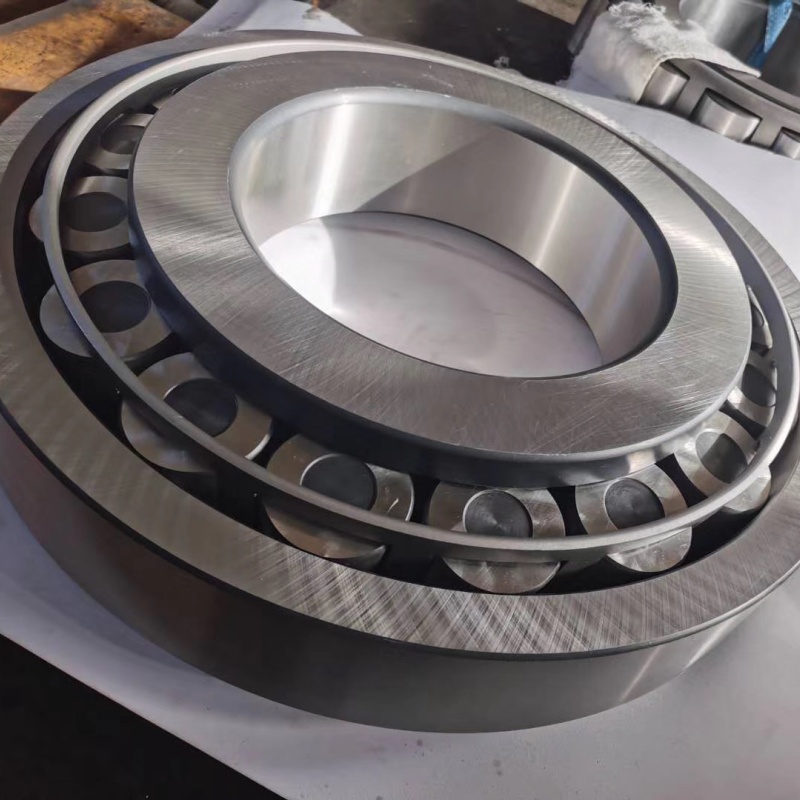
Let me explain the two forces in simple words
Every heavy machine pushes on its bearings in two ways. You need to understand both.
| Force Type | Direction | Example | What happens if bearing cannot handle it |
|---|---|---|---|
| Radial load | Perpendicular to shaft | A heavy wheel pressing down | The bearing gets squashed flat |
| Axial load | Parallel to shaft | A gear pushing sideways | The bearing gets pushed apart |
| Combined load | Both directions at once | A conveyor belt with tension and weight | The bearing fails quickly |
Most standard bearings handle only radial loads. Deep groove ball bearings can take a little axial load. But not much. When you push them hard from the side, they break.
Tapered roller bearings are different. Their cone shape creates an angle. That angle splits the force. Part of the force goes into the roller. Part goes into the raceway. The result is a bearing that stays strong from any direction.
A real story from a cement plant
I got a call from a customer in Egypt last year. He runs a cement plant. His conveyor rollers kept failing every three weeks. Each failure stopped the whole line for four hours.
He sent me photos of the broken bearings. The raceways were cracked. The balls were flattened. The cages were bent.
I asked him about the loads. He told me each roller carries 800 kg of radial weight. Plus the belt tension adds 300 kg of axial force. That is 1,100 kg total on a small bearing.
We replaced his bearings with FYTZ tapered rollers. The same size. The same fit. But now the bearings handle both loads. That was eight months ago. He has not replaced a single bearing since.
Why the angle matters so much
The taper angle is not random. You can choose different angles for different jobs.
A shallow angle (10-15 degrees) is better for radial loads. The bearing acts more like a radial bearing. It spins faster. It runs cooler.
A steep angle (25-30 degrees) is better for axial loads. The bearing can push sideways very hard. It works well for screw presses or thrust applications.
My factory makes custom angles too. If you have a special machine, tell me. We can design the perfect angle for your loads.
The math behind the magic
I will not give you a complex formula. But here is the simple version. A normal ball bearing has a contact area of about 2 square millimeters under heavy load. That is smaller than a pinhead.
A tapered roller bearing has a line contact of about 20 square millimeters. That is ten times larger. The same force spread over ten times more area means ten times less pressure. Less pressure means less wear. Less wear means longer life.
So if you have heavy machines with pushing and pulling at the same time, tapered rollers are your answer.
What Makes the Tapered Design Stronger Than Ball Bearings for Heavy Jobs?
Ball bearings are everywhere. They work fine for fans and small motors. But put them in a rock crusher or a steel mill, and they die fast. The design itself is the problem.
The tapered design is stronger because of line contact instead of point contact. A ball touches the raceway at one tiny point. A tapered roller touches along a full line. The line spreads the load. That simple change increases load capacity by 3 to 5 times.
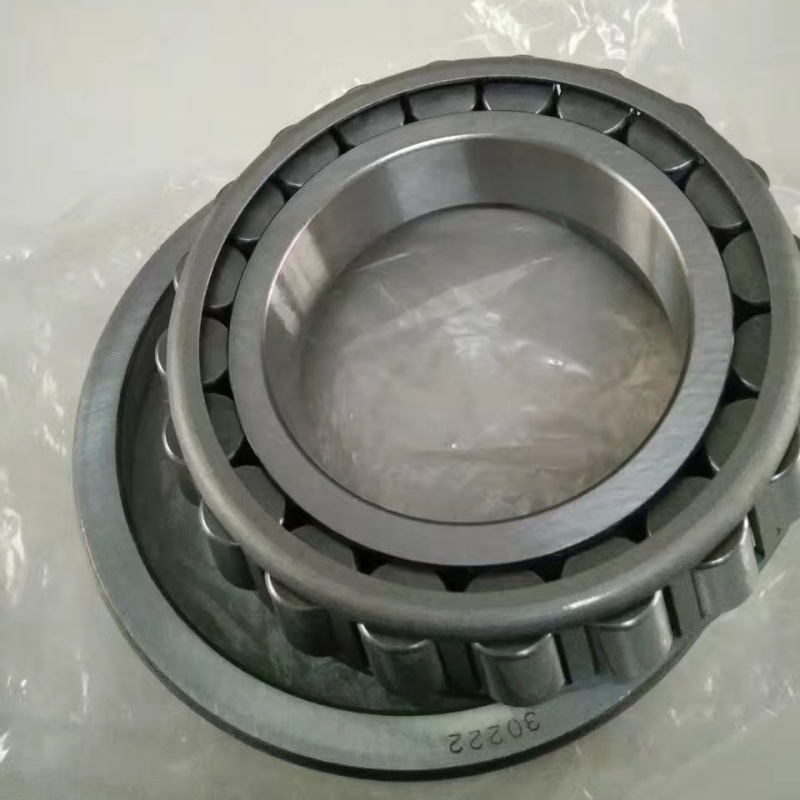
Let me break down the contact area difference
This is the most important thing to understand about bearings. Here is a simple comparison:
| Feature | Ball bearing | Tapered roller bearing |
|---|---|---|
| Contact type | Point contact | Line contact |
| Contact area at 10 kN load | ~2 mm² | ~20 mm² |
| Pressure under load | 5,000 MPa | 500 MPa |
| Maximum load before damage | 5-10 kN | 30-50 kN |
| Effect of shock load | Cracks or dents | Absorbs and recovers |
The numbers do not lie. A ball bearing puts all the force into a tiny spot. That spot gets hammered every time the bearing turns. Eventually, it cracks or pits.
A tapered roller spreads the same force along a line. The pressure is much lower. The bearing can take bigger hits without breaking.
What happened at a steel mill in Russia
I visited a steel mill in Russia two years ago. Their rolling mill had 24 bearings. Each one cost $500. They replaced them every two months. That was $6,000 per year per bearing. Plus downtime. Plus labor.
The bearings were high-quality ball bearings from a famous brand. The problem was not quality. The problem was the design. Ball bearings cannot take the shock loads from hot steel slabs.
I gave them a sample of FYTZ tapered rollers. The same outer size. The same inner size. But now with line contact.
The mill manager called me six months later. The taper bearings were still running. No noise. No heat. No problems. He ordered 200 pieces the next week.
Why ball bearings fail in heavy jobs
I have examined thousands of failed bearings. Here is what I see on ball bearings from heavy machines:
Brinelling – Small dents on the raceway from shock loads. Each dent makes noise. Each dent creates vibration. Then the vibration makes more dents.
Fatigue spalling – Small pieces of metal flake off the raceway. This happens after many load cycles. The point contact creates high stress below the surface. That stress grows into a crack. The crack spreads. Then a chunk falls out.
Cage damage – The cage holds the balls apart. Under heavy load, the balls push hard on the cage. The cage bends or breaks. Then the balls bunch together. Then the bearing locks up.
Tapered rollers have stronger cages. The rollers are bigger. The cage pockets are larger. The whole design is just tougher.
The material difference
Strength is not just about shape. The steel matters too. My factory uses high-carbon chromium steel for all heavy-duty tapered rollers. We heat treat it to 60-62 HRC hardness. That is hard enough to resist denting. But not so hard that the bearing cracks.
We also do 100% inspection on every bearing. Our inspection line checks for cracks, hardness, and size. Bad bearings do not leave my factory.
A competitor once told me, "Your bearings cost more than ours." I said, "Yes. Because ours work."
So if you are tired of replacing ball bearings in heavy machines, try tapered rollers. The design is simply stronger.
Real Examples: Heavy Applications That Depend on Tapered Roller Bearings?
Theory is nice. But you want proof. I get that. So let me give you real examples from my customers. These are actual machines that run every day on FYTZ tapered bearings.
Heavy applications that depend on tapered roller bearings include mining crushers, steel rolling mills, construction excavators, heavy truck wheels, and wind turbine gearboxes. All of these machines have high loads and shock forces. None of them can run on standard ball bearings.

Let me show you five real applications from my customers
Here is a table of actual FYTZ clients and their heavy applications:
| Industry | Application | Load type | Old bearing life | New tapered life | Customer location |
|---|---|---|---|---|---|
| Mining | Cone crusher | High shock, dust | 2 weeks | 4 months | Brazil |
| Steel | Rolling mill | High heat, heavy radial | 1 month | 6 months | Russia |
| Construction | Excavator swing gear | High axial, vibration | 3 months | 12 months | Turkey |
| Transport | Heavy truck wheel | Combined load, road shock | 40,000 km | 120,000 km | India |
| Energy | Wind turbine gearbox | Variable load, low speed | 8 months | 24 months | South Africa |
Mining crushers – the toughest test
A crusher is a bearing killer. Rocks fall from height. The machine shakes. Dust gets everywhere. The load goes up and down with every rock.
My customer in Brazil runs a granite quarry. His cone crusher uses four bearings. Each bearing costs $200. He was replacing them every two weeks. The labor cost was high. The downtime was worse.
We installed FYTZ tapered rollers with C4 clearance and special seals. The first set lasted four months. He was so happy that he sent me a video of the crusher running. You could hear the rocks breaking. But the bearing area was quiet.
Now he buys from me every quarter. He tells me, "Your bearings are the only ones that survive here."
Steel rolling mills – heat and heavy loads
Steel mills are another tough place. The bearings get hot. Really hot. Up to 150°C. Plus the loads are massive. A rolling mill can put 50 tons of force on a single bearing.
My Russian customer tried everything. German bearings. Japanese bearings. American bearings. All failed within one month.
I asked him for a trial order. We sent him 20 pieces of our heat-stabilized tapered rollers. We used special steel that holds its hardness at high temperatures. We also added more internal clearance for thermal expansion.
The bearings lasted six months. He placed a container-sized order after that.
Heavy truck wheels – on the road every day
You see tapered rollers in trucks every day. The wheel bearings on a heavy truck carry the whole vehicle weight. Plus the road pushes back. Plus the brakes add heat. Plus water and dirt get in.
Rajesh, my customer in India, supplies bearings to truck repair shops. He told me his shops were tired of cheap bearings that lasted only 40,000 km. Drivers were getting stuck on the highway. That is dangerous and expensive.
He switched to FYTZ tapered rollers for all his truck orders. Now his customers get 120,000 km from each set. The repair shops love him. The drivers love him. He calls me "the bearing man" now.
Wind turbine gearboxes – hard to reach
Wind turbines are special. They sit on top of tall towers. Changing a bearing costs $10,000 or more just for the crane. So the bearings must last.
A customer in South Africa had bearings failing every eight months. Each failure cost him $15,000 in crane rental plus lost power generation.
We sent him our highest-grade tapered rollers. They are P5 precision with special grease. The first set lasted two years. He told me, "I should have called you earlier."
What this means for you
If your machine looks like any of these, you need tapered rollers. Do not wait for a failure. Do not buy cheap bearings. Get the right tool for the job.
I have the bearings you need. Email me at sales@fytzbearing.com. Tell me your machine. I will tell you which bearing works.
How to Calculate If Your Heavy Application Needs Tapered Roller Bearings?
Not every heavy machine needs tapered rollers. Some machines do fine with ball bearings. You need a simple way to check. I will give you one.
Calculate if you need tapered rollers by comparing your actual load to the bearing’s dynamic rating. If your load is over 25% of the rating, or if you have both radial and axial forces, switch to tapered. Also check your shock load frequency. More than 10 shocks per hour means you need tapered.
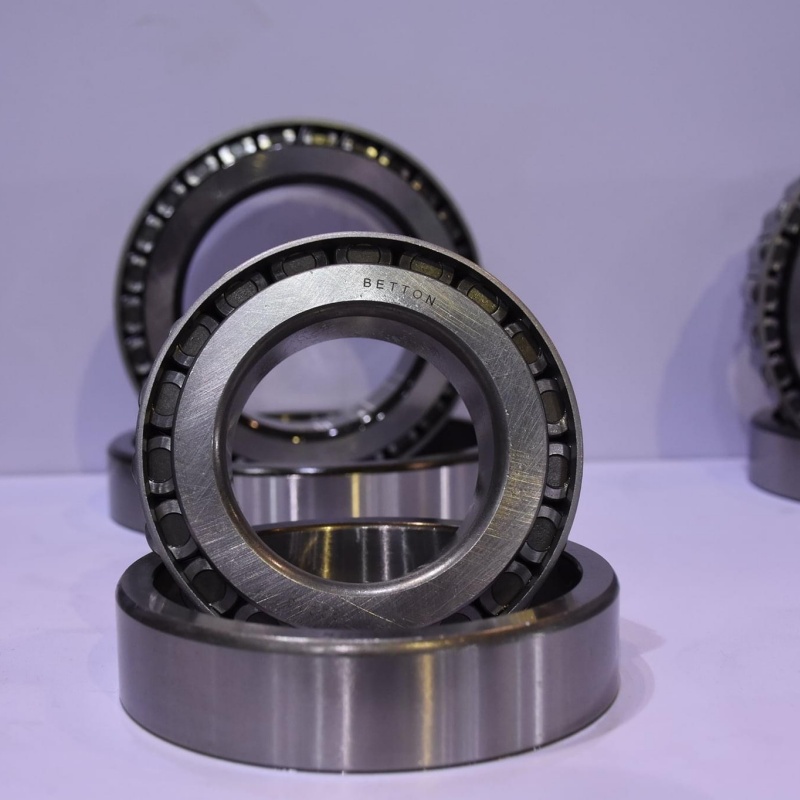
Let me give you a simple three-step calculation
You do not need an engineering degree. Just follow these steps.
| Step | What to do | Example value |
|---|---|---|
| Step 1 | Find your radial load in Newtons | 5,000 N |
| Step 2 | Find your axial load in Newtons | 2,000 N |
| Step 3 | Calculate ratio (axial ÷ radial) | 2,000 ÷ 5,000 = 0.4 |
Here is the rule:
- If the ratio is less than 0.2, a ball bearing might work
- If the ratio is between 0.2 and 0.5, you need a tapered roller
- If the ratio is over 0.5, you definitely need a tapered roller
For my example above, the ratio is 0.4. That means you need a tapered roller bearing.
The shock load test
Shock loads are sudden hits. A rock falling on a conveyor. A gear engaging hard. A wheel hitting a pothole.
Most bearings break from shock loads, not steady loads. Here is a simple test:
Count how many shocks your bearing gets per hour.
| Shocks per hour | Recommended bearing type |
|---|---|
| 0 to 5 | Ball bearing or tapered |
| 5 to 20 | Tapered roller required |
| 20 to 100 | Heavy-duty tapered roller with steel cage |
| Over 100 | Custom bearing with special heat treatment |
I had a customer in Pakistan with a vibrating screen. His bearings got 200 shocks per minute. That is 12,000 per hour. Normal bearings died in one day. We made him a special tapered roller with a brass cage and extra-hard steel. Those bearings lasted three months.
The temperature check
Heat changes everything. Hot bearings expand. Expansion changes the clearance. Wrong clearance kills the bearing.
Measure your bearing housing temperature after one hour of running.
| Temperature | What to do |
|---|---|
| Under 70°C | Normal clearance works |
| 70°C to 100°C | Use C3 (increased clearance) |
| 100°C to 150°C | Use C4 and heat-stabilized steel |
| Over 150°C | Call me for a custom solution |
A real calculation from my desk
Last week, a customer from Vietnam sent me a request. He has a stone crusher. He gave me these numbers:
- Radial load: 12,000 N
- Axial load: 8,000 N
- Shocks per hour: About 50
- Temperature: 85°C
I did the calculation. Ratio is 8,000 ÷ 12,000 = 0.66. That is over 0.5, so he needs tapered.
Shocks are 50 per hour, so he needs heavy-duty tapered with steel cage.
Temperature is 85°C, so he needs C3 clearance.
I recommended our FYTZ tapered roller series 32220 with C3 clearance and a steel cage. He ordered 50 pieces that same day.
When to call me
You do not have to do this alone. If you are not sure, just ask me. Send me an email at sales@fytzbearing.com. Tell me:
- Your machine type
- The rough load (in kg or tons)
- The speed (in RPM)
- The temperature
- Any shock loads
I will reply with the right bearing choice. No charge. No obligation. I just want your machines to run well.
Conclusion
Tapered roller bearings handle heavy radial and axial loads together. They last longer and fail less. Use them for any tough job.