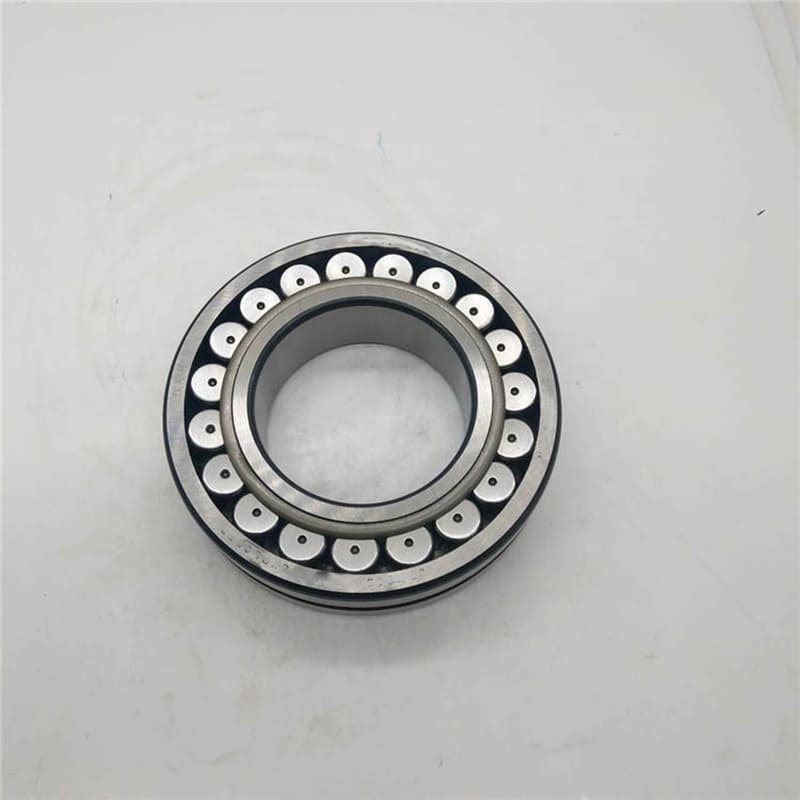
Dust gets into your bearings. Then they fail. You lose money and time.
Use sealed spherical roller bearings with high-grade grease. Pick the right cage design. And follow a strict maintenance schedule. That’s how you make them last.
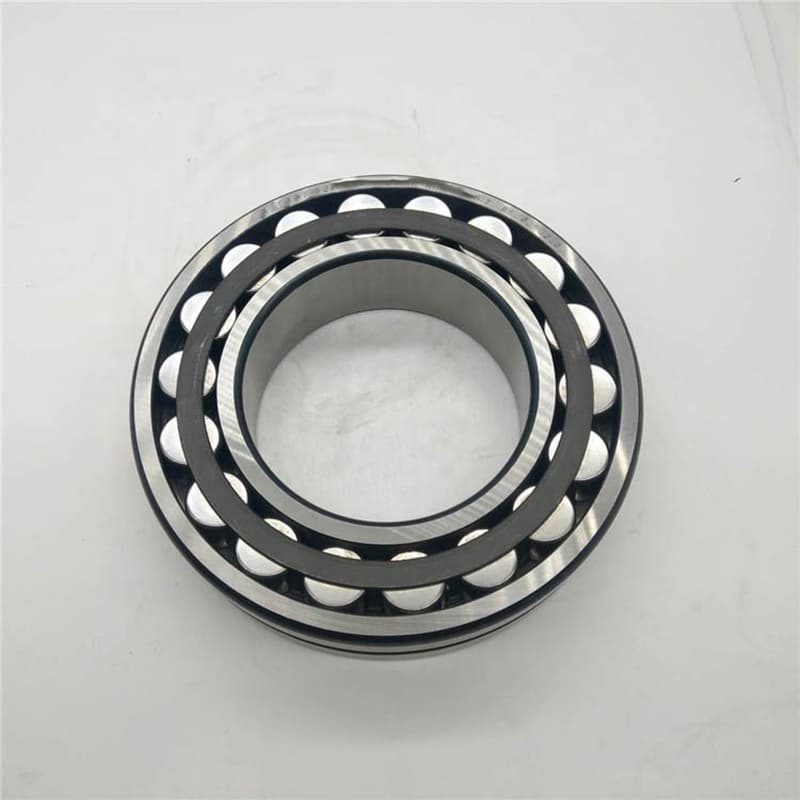
But let me be clear. Just picking a random bearing won’t solve your problem. The real answer starts with understanding the damage dust causes. Keep reading. I will share what I learned from helping customers like Rajesh, a procurement manager from India. His cement plant customers kept complaining about bearing failures. I will show you the exact steps we used to fix that.
What Are the Main Challenges and Failure Modes of Spherical Roller Bearings in Heavy Dust Environments?
Dust is everywhere in a cement transfer system. It gets past weak seals[web:1792]. Then it mixes with the grease[web:1796]. Your bearing starts to grind itself apart.
The main challenges are abrasive wear, lubricant contamination, and heat buildup. Hard cement particles act like sandpaper[web:1794]. They scratch the rolling elements and raceways. Once the damage starts, vibration and noise increase. Then the bearing fails completely due to abrasive wear and lubricant breakdown[web:1765].
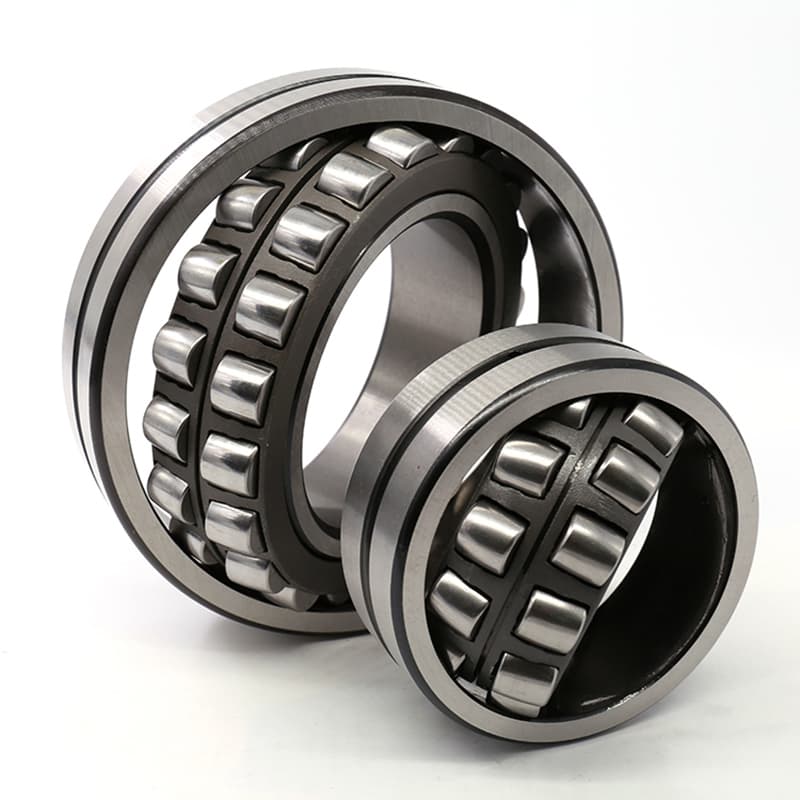
Let me break down the three most common failure modes.
From my work with cement plant customers, I see these failures again and again. Each one has a different root cause. But they all start with dust.
Abrasive wear is the most common one. I remember a customer in Egypt. He runs a cement storage facility. His spherical roller bearings lasted only three months. When we opened them, the raceways looked like sandpaper. The cause? His seals were too basic. Cement dust is finer than sand. It can pass through standard rubber seals.
Indentation damage happens when big particles get stuck. The roller rolls over them. This creates tiny dents. Each dent becomes a stress point. Over time, cracks start from those dents. Then the cage breaks.
Lubrication starvation is tricky. At first, the bearing feels fine. But the dust absorbs the oil from your grease. You are left with a dry soapy residue. No oil film means metal touches metal. That creates heat. Heat hardens the remaining grease. The bearing locks up.
You might think, “I will just add more grease.” That does not work. More grease attracts more dust. It becomes a sticky trap for cement particles. The real solution is to stop dust from getting in at the first place. But that is not always possible in a real cement plant. So you need bearings designed for this environment.
How to Select the Right Sealing and Lubrication for Cement Transfer & Storage Systems?
You see a bearing with rubber seals. You think it is safe. But not all seals are equal[web:1815]. Many standard seals let fine dust pass through in just a few weeks.
The right seal for cement dust has three features: a tight lip design, a flinger or slinger, and a metal shield on the outside[web:1786]. For lubrication, you need a thick lithium complex grease with solid additives like molybdenum disulfide (MoS2)[web:1815][web:1823].
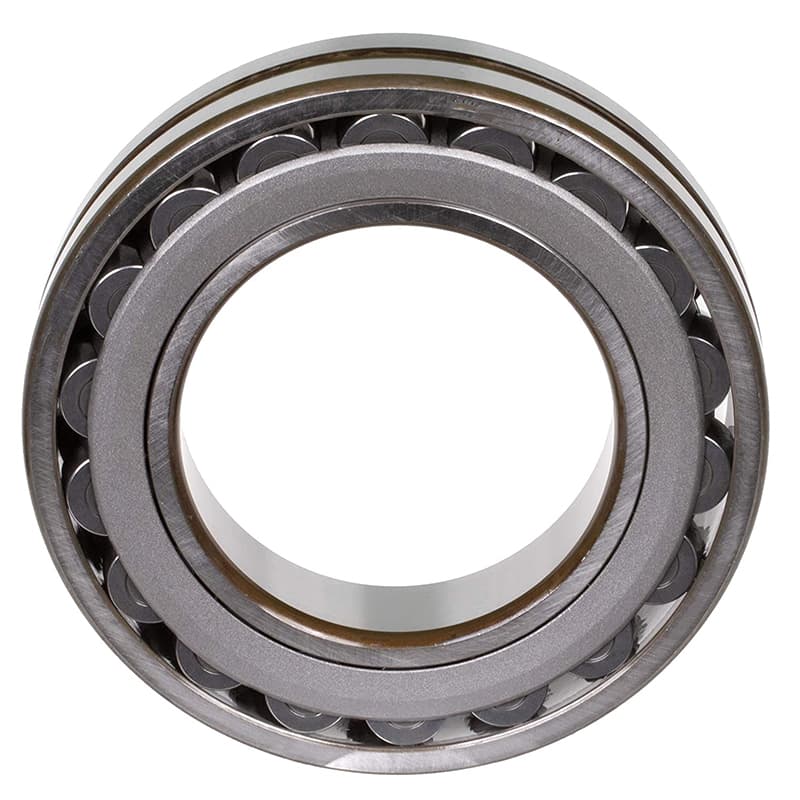
Sealing options compared from my factory experience
My team at FYTZ Bearing runs tests on different seal designs. I want to show you what works and what fails in heavy dust.
| Seal Type | Dust Resistance | Best For |
|---|---|---|
| Standard rubber (2RS) | Low[web:1829] | Clean indoor applications[web:1829] |
| Contact seal with steel insert | Medium[web:1836] | Occasional dust exposure[web:1836] |
| Triple lip seal + flinger | High[web:1832][web:1827] | Continuous cement dust[web:1832] |
| Labyrinth seal with grease filling | Very High[web:1833][web:1839] | Extreme dusty conveyors[web:1833] |
The triple lip seal plus flinger is my go-to choice for cement transfer systems. The flinger spins with the shaft. It throws dust away before it reaches the rubber lips. Then the three rubber lips create multiple barriers. Even if the first lip leaks, the second and third catch the rest.
For lubrication, do not use standard grease. [I made that mistake once for a customer in Indonesia. He used our bearings with standard lithium grease.] For lubrication in heavily contaminated areas, it is important to avoid standard greases that can easily be contaminated or washed out. [After one month, the grease turned into hard clay due to contamination and absorption of oil by dust.] In highly contaminated environments, dust‑laden environments often cause the oil in the grease to be absorbed, leaving the thickener as a hard, non‑lubricating residue. [Now I always recommend a high‑viscosity base oil with MoS2.] Greases formulated with high‑viscosity base oil and molybdenum disulfide, such as those designed for heavy‑duty and extreme‑load applications, maintain a protective film even when the oil is partially absorbed. [The molybdenum disulfide gives you a solid lubricant film. It stays even when the oil is absorbed by dust.] [Also look for NLGI grade 2 or 3. Thicker grease stays in place better.] Thicker, higher‑NLGI greases provide better sealing against contaminants and improved retention in dusty, high‑vibration environments.
One more thing – never overgrease. Overgreasing pushes old, dirty grease through the seal. That creates a path for new dust to enter. Use a controlled amount. For a 22218 spherical roller bearing, I tell my customers to give 10 to 15 shots of grease every two weeks. Not every day.
Think about this. A customer in Turkey tried to save money. He bought cheap bearings with basic seals. He changed them every two months. Then he tried our sealed bearings with the triple lip design. They ran for 14 months. He paid more upfront. But he saved money on downtime and labor. That is the math you need to do.
Why Does Cage Design Matter for Contamination Resistance in Cement Systems?
You look at two bearings. They look the same. But one fails fast. The other keeps working. The difference is often the cage.
The cage holds the rollers apart. In a dusty environment, a bad cage traps dust. Then it rubs against the rollers. The cage wears out and breaks. A good cage lets dust fall through. It also stays strong when the grease gets thick.
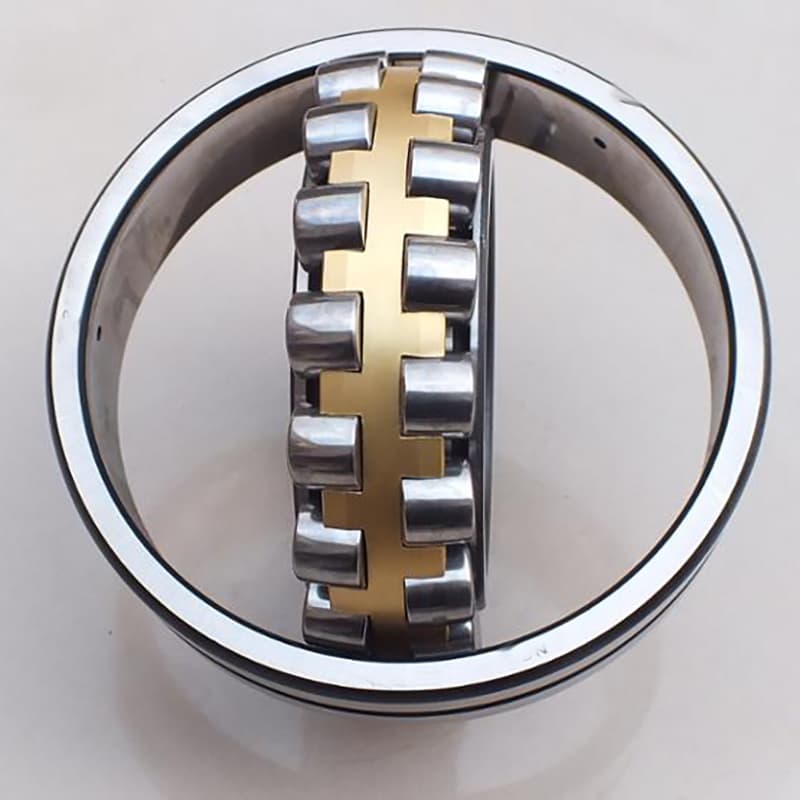
Let me compare three common cage materials for dusty cement work.
I have sold thousands of spherical roller bearings to cement plants. The cage choice is not obvious to many buyers. Here is my honest take.
| Cage Material | Dust Resistance | Strength | Wear Rate |
|---|---|---|---|
| Stamped steel (standard)[web:1858] | Low – traps dust in pockets[web:1858] | Medium[web:1859] | High in dust[web:1858] |
| Machined brass[web:1858] | High – dust falls through, better in contaminated/poor‑lubrication conditions[web:1856] | High[web:1858] | Very low[web:1856] |
| Polyamide (plastic)[web:1858] | Medium – but can harden or degrade in heat and aggressive environments | Low to medium[web:1855] | Medium |
Stamped steel cages are cheap, which is why many bearing makers use them. Stamped steel cages are cost‑effective and widely used in various bearings under moderate to high loads and speeds[web:1859]. But the pockets are relatively rough, so dust tends to stick to the edges and the rollers push that dust into the cage, accelerating wear[web:1858]. In cement‑dust environments, this mechanism can lead to premature cage failure. I saw a stamped steel cage fail in just six weeks in an Egyptian cement transfer screw.
Machined brass cages are my favorite for cement. They are heavier and cost more. But the surfaces are smooth. Dust does not stick. Also, brass is hard. It does not wear easily. The pockets are machined precisely. Rollers move freely even with some contamination. A customer in Pakistan switched to brass cages. His bearing life went from 4 months to 18 months. The extra cost paid back many times.
Polyamide cages are light and quiet. But they have a problem in cement plants – heat and chemicals. Cement dust is alkaline. It can attack some plastics. Also, if the bearing runs hot (over 100°C), the polyamide softens and deforms. I only recommend polyamide for low-speed, low-temperature, cleaner parts of the plant. Not for the main transfer systems.
Here is a critical point many engineers miss. The cage guidance also matters. Inner ring guided cages keep the cage centered. That reduces wear even more. Outer ring guided cages can wobble and grab dust. For cement dust, always ask for inner ring guidance on brass cages. It costs a bit more. But I promise you will spend less on replacements.
What Installation and Maintenance Tips Can Extend Bearing Service Life in Dusty Conditions?
You buy the best bearing. You get triple seals and a brass cage. Then you install it wrong. Or you forget to relubricate. The bearing fails anyway. Good installation and simple daily checks save your investment.
The single most important tip is to keep the housing clean. Wipe off the outside before you open a new bearing. Also, never use an air hose to blow dust off a bearing. That pushes dust inside. Use a soft brush or a vacuum.
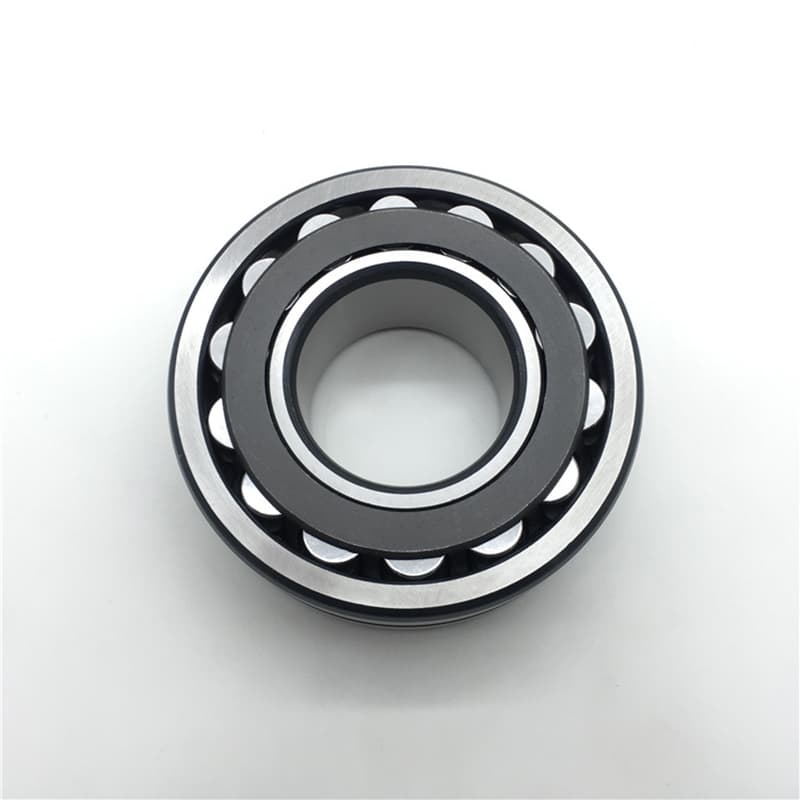
My step-by-step maintenance checklist that I give to every cement customer
I put this list together after visiting a customer’s plant in Brazil. They had 50 bearings failing too early. Most failures came from simple mistakes.
Before installation:
- Clean the shaft and housing – Use a clean rag. No sand or cement left.
- Check the housing seats – Any burrs or damage will misalign the bearing.
- Open the bearing package only at the last minute. Do not let it sit in the dust.
- Apply a thin layer of clean grease to the shaft. This helps the bearing slide on without force.
During installation:
- Use a proper mounting tool – Never hammer on the rings. Use a sleeve or a hydraulic nut.
- Do not mix bearing types – Spherical roller bearings need a specific fit. For cement transfer, I recommend a tight fit on the shaft (p6) and a loose fit in the housing (H7).
- Fill the housing with fresh grease before closing. About 30% to 50% of free space in the housing.
After installation – regular maintenance:
- Check temperature every week. Use an infrared thermometer. A sudden rise means trouble.
- Listen for noise – A grinding sound means dust is inside. Stop and clean.
- Regrease on a schedule – For dusty cement, every two weeks is not too often. But do not overdo it. Use a grease gun with a clean fitting.
- Inspect the seals – Look for hardened or cracked lips. Replace the seal before dust gets in.
I remember one mistake from Rajesh’s team in India. They installed a new bearing without cleaning the old housing. There was a layer of hardened cement inside. That cement acted like sandpaper. The bearing failed in three weeks. After I told them to always clean the housing with a wire brush and vacuum, the next bearing ran for 11 months.
Another tip: Use a grease relief valve on your housing. This lets out old, dirty grease without opening the bearing. Cement dust cannot get in because the valve is one-way. This small part costs almost nothing. But it doubles bearing life in many plants.
One last thing. Train your staff. One person who uses a dirty grease fitting can ruin ten bearings. I tell my customers to keep grease guns covered and wipe the fitting before each use. These small habits matter more than you think.
Conclusion
Choose the right seal, cage, grease, and follow a clean installation. That is how you beat cement dust.