You run a food plant or a chemical facility. Your bearings rust and seize after every washdown. You are tired of replacing them.
To choose pillow block bearings for corrosive and washdown environments, pick stainless steel housings, FKM contact seals, and 316 stainless bearing inserts. Add a food-grade or corrosion-resistant grease. This combination resists rust, chemicals, and high-pressure spray.
I have helped customers in seafood plants, fertilizer factories, and car washes pick the right bearings. Let me walk you through the choices. You will save money on replacements and downtime.
What Makes Corrosive and Washdown Environments So Hard on Pillow Block Bearings?
You might think water is the main problem. But it is not just water. It is the combination of water, chemicals, and pressure.
Corrosive and washdown environments destroy bearings because of three things: chemical attack that eats the housing and bearing steel, high-pressure water that pushes past seals, and detergents that wash away grease. Standard pillow blocks fail in weeks or months instead of years.
The Three Killers of Washdown Bearings
Let me break down each problem. You need to understand them to fight them.
Killer 1 – Chemical Corrosion. Many washdowns use chlorine, peracetic acid, or caustic soda. These chemicals attack standard cast iron and chrome steel. Cast iron rusts and flakes. Chrome steel pits. The bearing loses its smooth surface and fails.
I had a customer in a poultry plant in Brazil. They washed their conveyor every night with chlorine solution. Their cast iron pillow blocks turned into rusty chunks in 4 months. The bearing inserts were covered in red rust. They switched to stainless housings and inserts. The rust stopped.
Killer 2 – High-Pressure Spray. Washdown hoses operate at 500 to 2,000 psi. That pressure is strong enough to push water past standard rubber seals. Once water gets inside, it mixes with the grease. The grease turns into a milky emulsion. It loses its lubricating ability.
A customer in Vietnam with a fish processing line used standard 2RS bearings. The high-pressure spray pushed water past the seals in just 2 months. We replaced with bearings that have triple-lip seals and a flinger. The water stopped entering.
Killer 3 – Detergents and Heat. Washdown detergents are designed to remove grease. That is exactly what you do not want. They strip the lubricant from the bearing. Hot water (often 60-80°C) makes it worse. The heat thins the grease. The detergent breaks it down.
Here is a table showing how different washdown factors affect bearing life:
| Washdown Factor | Effect on Standard Bearing | Life Reduction |
|---|---|---|
| Fresh water only | Rust on housing and bearing | 50-70% |
| Salt water | Severe rust and pitting | 80-95% |
| Chlorine solution | Corrosion of steel, seal damage | 90-95% |
| Caustic soda (pH >10) | Attacks aluminum and steel | 95%+ |
| Acidic cleaner (pH <5) | Pits raceways, destroys seals | 95%+ |
| Hot water (>60°C) | Grease melts, seals harden | 70-80% |
| High pressure (>500 psi) | Seal failure, water ingress | 80-90% |
You see that a combination of factors multiplies the damage. That is why you need a complete solution.
The Cost of Ignoring Corrosion
I remember a food plant in India that used cheap pillow blocks on a bottle filler. The line got washed with hot caustic every night. The bearings failed every 6 weeks. Each failure cost 2 hours of downtime. The plant ran two shifts. The lost production was $1,000 per failure. Over a year, that was $8,000 in downtime plus bearing costs.
They switched to all-stainless pillow blocks with FKM seals. The cost was $200 per bearing instead of $50. But the bearings lasted 3 years. The payback period was 3 months. After that, they saved money every day.
So do not underestimate the harshness of washdown. It is one of the toughest environments for bearings.
Which Housing Material – Stainless Steel, Polymer, or Coated Cast Iron – Lasts Longest?
The housing is the outer shell. It protects the bearing insert. In a wet, corrosive environment, the housing material is your first decision.
Stainless steel (316) lasts the longest in corrosive and washdown environments. Polymer housings resist chemicals well but handle lower loads. Coated cast iron is a budget option but the coating will eventually wear off. For food and chemical washdown, choose 316 stainless.
Stainless Steel – The Gold Standard
Stainless steel, especially grade 316, has excellent corrosion resistance. It handles salt water, chlorine, acids, and caustics. It does not rust. It is strong and handles heavy loads.
The downsides are cost and weight. Stainless pillow blocks cost 3-5 times more than cast iron. They are also heavier. But for long-term use in washdown, they are worth it.
I have used 316 stainless pillow blocks in a seafood plant in Indonesia. The plant washed with chlorinated water every day. After 2 years, the housings looked like new. No rust, no pitting. The bearings inside were still good.
For less corrosive environments, 304 stainless is cheaper. But 304 can rust from salt water or strong chlorides. So I recommend 316 for food and chemical washdown.
Polymer (Plastic) Housings – Light and Chemical-Resistant
Polymer housings are made from materials like PBT, nylon, or PEEK with glass fiber reinforcement. They resist many chemicals. They are lightweight and do not rust. They also cost less than stainless.
But polymer has limits. It cannot handle high loads. The maximum load for a polymer housing is about half of cast iron. It also expands and contracts with temperature more than metal. At high temperatures (over 80°C), polymer can soften.
I have used polymer pillow blocks in a battery filling line where acid was present. The polymer resisted the acid well. The load was light – just a small conveyor. It worked fine.
Here is a comparison table:
| Property | Cast Iron (Grey) | Coated Cast Iron | Polymer (PBT/PA) | Stainless 304 | Stainless 316 |
|---|---|---|---|---|---|
| Corrosion resistance | Poor | Medium (until coating fails) | Very good | Good | Excellent |
| Load capacity | High | High | Medium | High | High |
| Temperature range | -40 to 300°C | -40 to 300°C | -20 to 100°C | -40 to 400°C | -40 to 400°C |
| Cost | Low | Low-Medium | Medium | High | Very high |
| Weight | Heavy | Heavy | Light | Heavy | Heavy |
| Best for | Dry indoor | Light washdown | Light chemical, low load | Mild corrosive | Food, marine, strong chemicals |
Coated Cast Iron – The Compromise
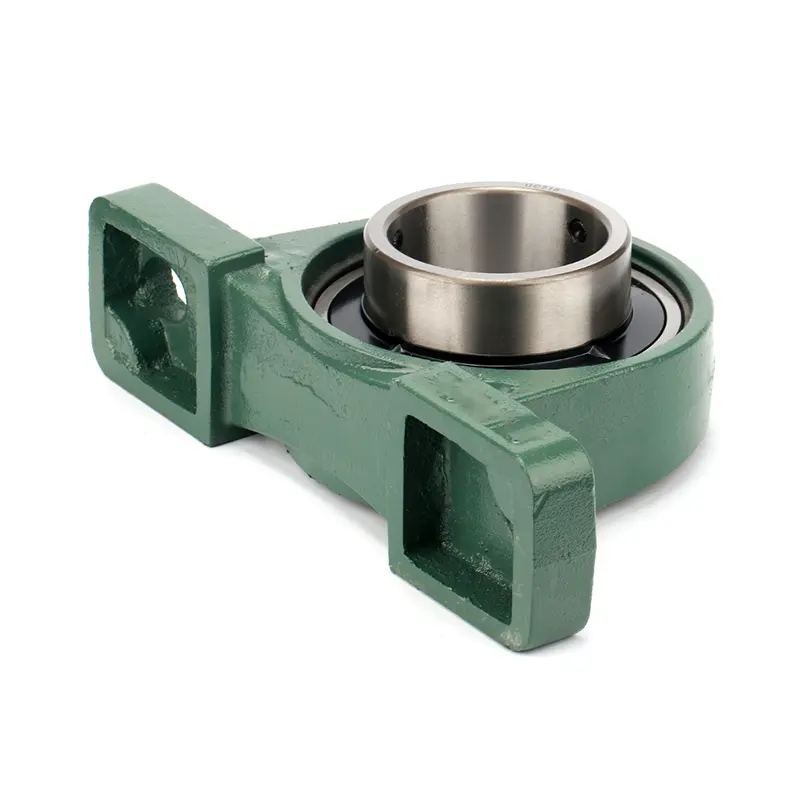
Some manufacturers offer cast iron housings with a coating. Epoxy, nickel, or zinc plating. The coating adds some corrosion resistance. But it scratches easily. Once scratched, rust starts under the coating. The coating can peel off.
I used coated housings in a beverage plant. The washdown was mild – just soap and water. The coated housings lasted 18 months before rust appeared. Uncoated would have rusted in 6 months. So coated was a good middle option. But for strong chemicals, it is not enough.
My Recommendation
For most corrosive and washdown environments, I recommend 316 stainless steel. It is expensive upfront but lasts many years. For light washdown with mild detergents, coated cast iron or polymer can work. For food, pharmaceutical, or marine applications, do not compromise – go with 316 stainless.
I had a customer in Russia who tried to save money by using coated cast iron in a meat processing plant. The washdown used hot water and chlorine. The coating failed in 8 months. He had to replace all bearings. The second time, he bought 316 stainless. He paid more but never had to replace them again.
What Seal Types Keep Water and Chemicals Out of Pillow Block Bearings?
The seal is your bearing’s armor. In washdown, water and chemicals attack from all sides. You need a seal system that can withstand pressure and chemicals.
To keep water and chemicals out, use pillow blocks with triple-lip FKM (Viton) contact seals and a flinger. The flinger throws water away from the seal. The multiple lips create a tortuous path. For high-pressure washdown, add an air purge or a labyrinth seal with grease fill.
The Problem with Standard Seals
Standard pillow block seals are usually single-lip NBR (nitrile) rubber. They work for dry dust. They fail in washdown. Water pressure pushes the lip open. Chemicals degrade the rubber. The seal hardens and cracks.
I saw a customer in a car wash use standard pillow blocks. The high-pressure spray (1,200 psi) pushed water past the seals in 2 weeks. The bearings rusted solid. He switched to bearings with special washdown seals. The problem stopped.
Triple-Lip FKM Seals – The Best Choice
Triple-lip seals have three rubber lips that contact the shaft. The lips face outward. They act like squeegees. Water pressure pushes the lips tighter against the shaft, not looser. This is key.
FKM (Viton) rubber resists high temperatures and chemicals. It does not harden from chlorine or caustics. It stays flexible for years.
I recommend triple-lip FKM seals for all washdown applications. They cost more than standard seals. But they last 5-10 times longer.
Flingers – Your First Line of Defense
A flinger is a rotating disc attached to the shaft outside the seal. It spins with the shaft. Centrifugal force throws water and debris away from the seal opening. It is simple and effective.
Many washdown-rated pillow blocks come with a flinger built into the housing. Look for this feature.
Labyrinth Seals – For Very Fine Spray
Labyrinth seals have no contact. They use a series of grooves and channels. Water has to travel through a maze to reach the bearing. Most of it falls out along the way.
Labyrinth seals work well for fine mist or splashing. They do not work as well for high-pressure direct spray because pressure can push water through the maze.
For high-pressure washdown, a combination works best: flinger + triple-lip contact seal.
Here is a seal comparison for washdown:
| Seal Type | Water Resistance (Low Pressure) | Water Resistance (High Pressure) | Chemical Resistance | Friction | Best Use |
|---|---|---|---|---|---|
| Single lip NBR | Poor | Very poor | Poor | Low | Dry dust |
| Single lip FKM | Fair | Poor | Good | Low | Light chemical |
| Triple lip NBR | Good | Fair | Poor | Medium | Low pressure wash |
| Triple lip FKM | Very good | Good | Very good | Medium | High pressure, chemicals |
| Labyrinth | Good | Poor (pressure pushes through) | Good (if no contact) | Very low | Splash, mist |
| Flinger + triple lip FKM | Excellent | Very good | Very good | Medium | High pressure washdown |
Air Purge – The Ultimate Solution
For the toughest washdown – think meat processing with daily high-pressure hot water and chemicals – consider an air purge system. You connect a small compressed air line to the bearing housing. A constant low flow of air (5-10 psi) exits through the seals. This pushes water and chemicals away. Nothing can enter.
I installed air purge on a poultry processing line in Brazil. The washdown was extremely aggressive. Bearings lasted 2 months before. With air purge, they lasted 3 years. The customer paid for the compressor line in 6 months of saved downtime.
Practical Advice
For most washdown environments (food, beverage, pharmaceutical), use:
- Triple-lip FKM contact seals
- Flinger on the shaft
- Stainless steel housing
This combination will survive daily washdown for years.
How to Select the Right Bearing Insert Material (440C, 316, or Hybrid) for Corrosion Resistance?
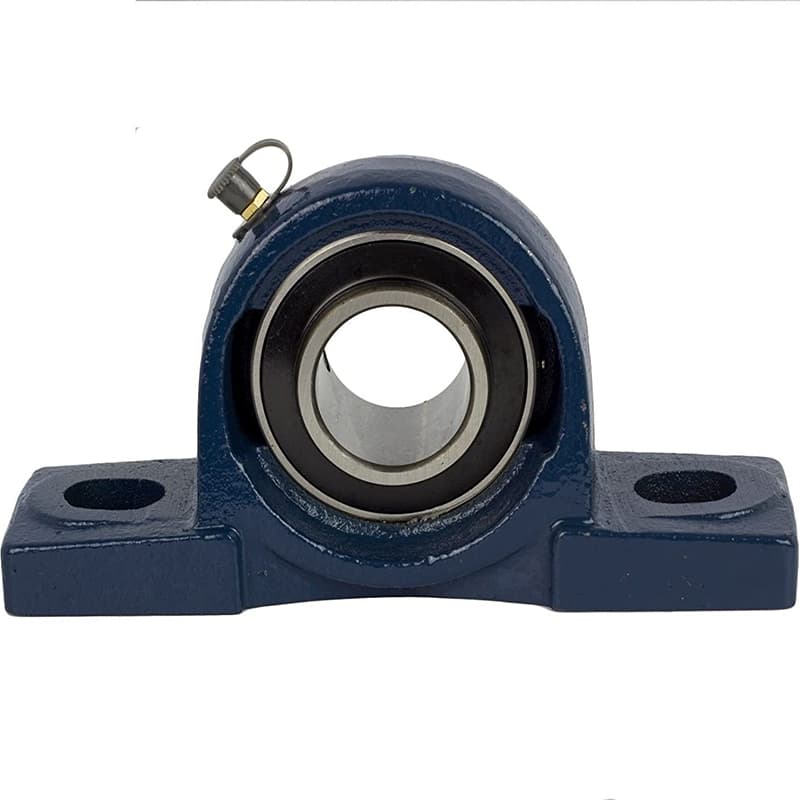
The bearing insert – the part with the balls and raceways – is the heart of the pillow block. It must resist corrosion while handling the load.
For corrosive and washdown environments, choose 316 stainless bearing inserts for maximum corrosion resistance. Choose 440C stainless for higher load capacity and moderate corrosion. Hybrid bearings (ceramic balls with stainless races) offer the best of both but cost the most.
440C Stainless – The Balanced Choice
440C stainless has high hardness (HRC 58-60). It is almost as hard as chrome steel. It resists rust much better than chrome steel. But it is not fully stainless – it can still rust in salt water or strong acids.
440C is a good choice for:
- Occasional washdown (not daily)
- Mild chemicals (pH 5-9)
- Applications with moderate loads (up to 80% of chrome steel rating)
I have used 440C inserts in a dairy plant. The washdown was daily with mild detergent. The 440C bearings lasted 18 months. Chrome steel lasted 4 months. 316 stainless would have lasted longer but cost more. 440C was the sweet spot.
316 Stainless – The Corrosion Champion
316 stainless has excellent corrosion resistance. It handles salt water, chlorine, and most acids. But it is soft (HRC 22-28). Its load capacity is about 70% lower than 440C or chrome steel.
316 is best for:
- Constant water exposure
- Salt water or marine environments
- Strong chemicals
- Light loads only
I had a customer in a seafood plant. Their bearings were under salt spray 24/7. 440C rusted after 6 months. 316 lasted 2 years. The load was light – just a small conveyor. So 316 worked perfectly.
Hybrid Bearings – Ceramic Balls with Stainless Races
Hybrid bearings have stainless steel races (usually 440C or 316) and silicon nitride (ceramic) balls. The ceramic balls do not rust. They are also harder than steel. Hybrid bearings offer:
- Very high corrosion resistance (balls never rust)
- High speed capability
- Long life in poor lubrication conditions
The downside is cost. Hybrid bearings cost 5-10 times more than standard.
I have used hybrid bearings in a pharmaceutical washdown line. The bearings were exposed to harsh sterilizing chemicals. Standard 440C lasted 8 months. Hybrids lasted 4 years. The customer was happy because downtime was extremely expensive.
How to Choose – A Decision Table
Here is a simple guide:
| Environment | Load Level | Recommended Insert Material |
|---|---|---|
| Occasional water splash, mild detergent | Light to medium | 440C stainless |
| Daily washdown with fresh water | Light to medium | 440C or 316 (if load light) |
| Daily washdown with chlorine or caustic | Light | 316 stainless |
| Daily washdown with chlorine or caustic | Medium to heavy | Hybrid (ceramic balls) |
| Salt water or marine | Light | 316 stainless |
| Salt water or marine | Medium | Hybrid (ceramic balls) |
| Strong acids (pH <4) | Any | 316 stainless or hybrid |
| Food plant with high-pressure hot water | Light to medium | 316 stainless with FKM seals |
The Hybrid Advantage for Heavy Loads
If you have a heavy conveyor in a washdown environment, you face a problem. 316 stainless is too weak. 440C will rust over time. The solution is a hybrid bearing – 440C races with ceramic balls. The races are hard and strong. The balls do not rust. The races may still rust eventually, but much slower than chrome steel.
I installed hybrid bearings on a heavy pallet conveyor in a beverage plant. The conveyor carried full pallets of bottles. The washdown was daily with hot caustic. The bearings lasted 2 years. Chrome steel bearings had lasted 4 months. The hybrid cost 5 times more but lasted 6 times longer. The customer saved money.
A Final Word on Grease for Washdown
Even with the best materials, you need the right grease. For washdown, use:
- Food-grade (NSF H1) if food contact possible
- Water-resistant thickener (calcium sulfonate or aluminum complex)
- High viscosity (ISO VG 220-460)
- Good corrosion inhibitors
Do not use standard lithium grease. It will wash away or emulsify.
Conclusion
For corrosive washdown, choose 316 stainless housings, triple-lip FKM seals, and 316 or hybrid bearing inserts. Use water-resistant grease. Your bearings will last.