
Old plummer blocks are failing too fast. I see it in many factories. You need a better way.
You can convert plummer blocks to pillow block units by matching shaft diameter, bolt hole spacing, and load rating. Most retrofits take half a day and save 40% on future replacements.
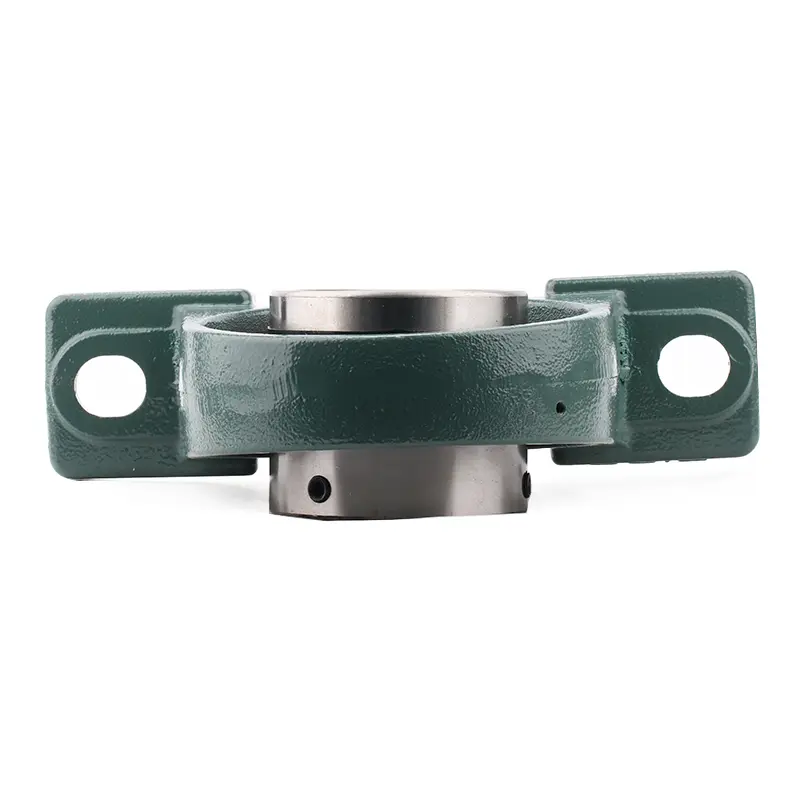
I have done this swap many times for my customers. Let me show you the exact steps. You will avoid common mistakes.
What is the difference between plummer block and pillow block?
Many buyers use these names the same way. But they are not the same. You need to know the difference before you buy.
A plummer block is a split housing. You open it from the top. A pillow block is a solid housing. You slide the shaft in from the end. Plummer block1s are bigger and handle more weight.
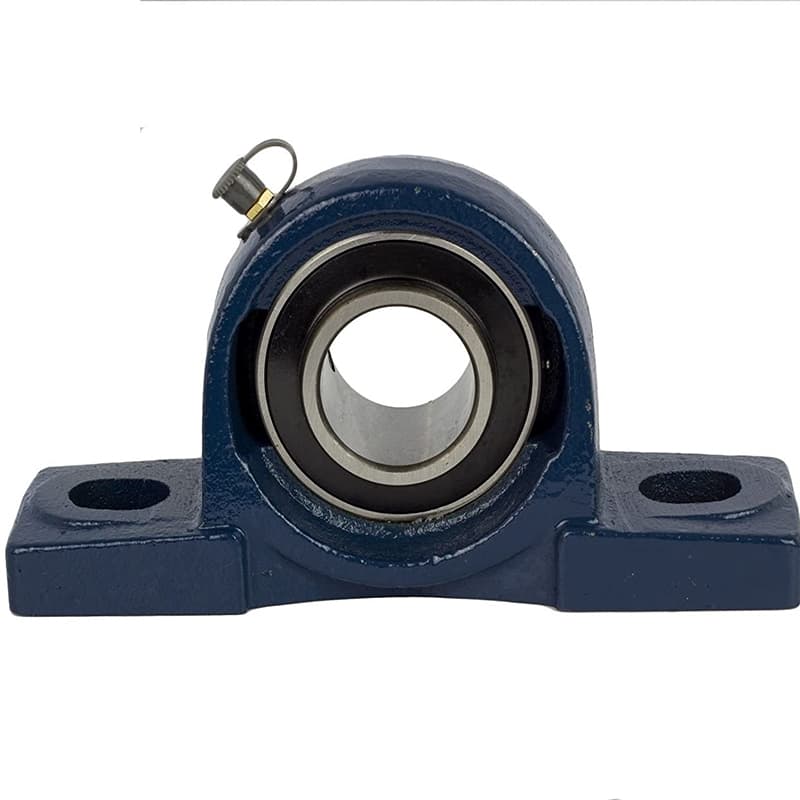
Let me break this down for you. I have sold both types for years. Many of my customers in India and Brazil ask me the same question. So here is the real difference.
1. Housing design
A plummer block has two halves. The top half and the bottom half. You bolt them together around the shaft. This makes it easy to replace the bearing without removing the shaft. But the housing is heavy and takes more space.
A pillow block is one solid piece. The bearing is pressed inside. You slide the shaft from the end. This design is smaller and lighter. It works well for conveyors and fans.
2. Installation method
Plummer blocks need more steps. You place the shaft in the lower half. Then you put the top half on. Then you tighten the bolts. You must be careful with alignment.
Pillow block2s are faster. You slide the shaft through. Then you tighten the set screws or eccentric lock. That is it.
3. Load capacity3
Plummer blocks are stronger for the same size. They use a spherical roller bearing inside. That bearing handles heavy radial loads and some axial loads.
Pillow blocks usually use a ball bearing or a tapered roller bearing. They are good for medium loads. For very heavy loads, you need a bigger pillow block.
4. Maintenance access4
Plummer blocks win here. You can open the top half and inspect the bearing without removing the shaft. You can also regrease easily.
Pillow blocks need you to pull the shaft out. That takes more time. But many modern pillow blocks have relubrication ports. That helps a lot.
5. Cost difference
A plummer block costs more. It has more parts. It needs more machining. A pillow block is cheaper. For a 50mm shaft, a plummer block might cost $80. A pillow block costs $30 to $40.
Here is a simple table to compare:
| Feature | Plummer Block | Pillow Block |
|---|---|---|
| Housing | Split (two halves) | Solid (one piece) |
| Installation | Wrap around shaft | Slide shaft through |
| Load capacity | Very high (spherical roller) | Medium to high (ball or taper) |
| Shaft removal needed for swap? | No | Yes |
| Price (50mm size) | $70–$120 | $25–$50 |
| Best for | Heavy industry, steel mills | Conveyors, fans, agriculture |
So which one should you use? If you have a big, slow machine with heavy loads, keep the plummer block. But if you want lower cost and easier stocking, switch to pillow blocks. I help my customers make this choice every week.
How to size a pillow block?
You cannot guess the size. One wrong number and the bearing will fail in one month. Let me show you the right way.
Measure the shaft diameter1 first. Then check the bolt hole spacing2 on your machine. Also look at the load and speed3. Use these three numbers to pick the right pillow block.
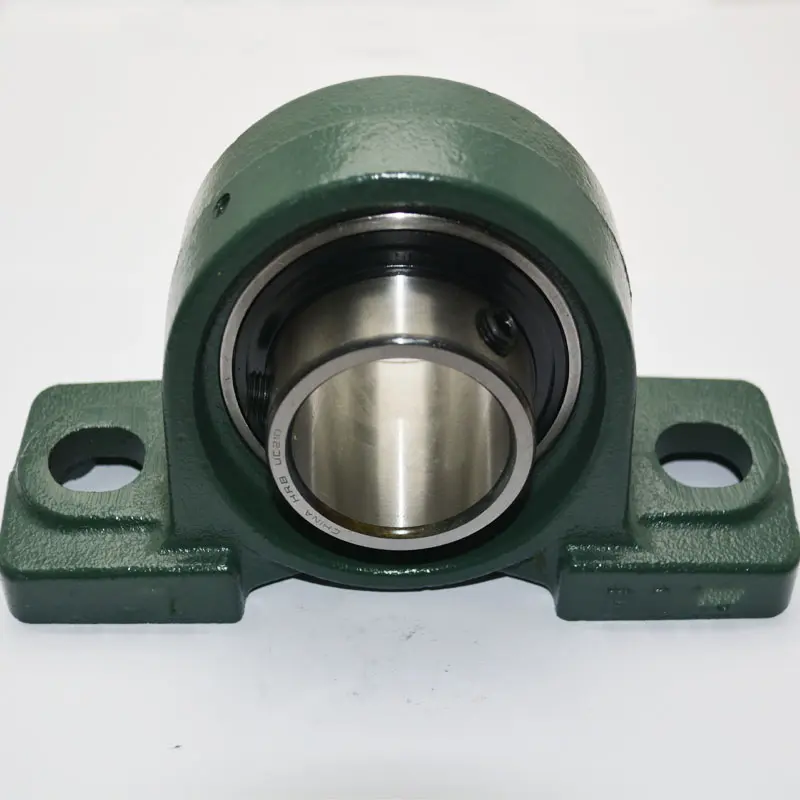
I have seen too many people buy the wrong size. Then they call me angry. But the problem is not the bearing. The problem is bad measuring. So let me give you a clear method.
Step 1: Measure the shaft diameter
This is the most important number. Use a digital caliper. Measure the shaft where the bearing will sit. Do not measure a worn or rusty spot. Clean the shaft first. Write down the number in millimeters. Common sizes are 20mm, 25mm, 30mm, 35mm, 40mm, 50mm.
Step 2: Check the housing bolt holes
Your machine has a base plate or a bracket. Measure the distance between the two bolt holes. This is called the bolt center distance. Also measure the bolt diameter. Common bolt sizes are M10, M12, M16.
If the bolt holes do not match, you need an adapter plate. Or you drill new holes. But that takes extra time.
Step 3: Find the load and speed
How heavy is your load? For a conveyor, the load is the weight of the material plus the belt. For a fan, the load is smaller. For a crusher, the load is very high.
You also need the speed. How fast does the shaft turn? Most pillow blocks work up to 3,000 RPM. But for high speed, you need a better precision grade.
Step 4: Choose the bearing series4
Pillow blocks come in series. The most common is UCP series5. That stands for unit bearing pillow block. UCP 205 fits a 25mm shaft. UCP 206 fits 30mm. UCP 207 fits 35mm. UCP 208 fits 40mm. UCP 210 fits 50mm.
Here is a quick sizing table:
| Shaft Diameter (mm) | UCP Series | Bolt Hole Spacing (mm) | Bolt Size | Dynamic Load (kN) |
|---|---|---|---|---|
| 20 | UCP 204 | 111 | M10 | 12.8 |
| 25 | UCP 205 | 130 | M10 | 14.0 |
| 30 | UCP 206 | 148 | M12 | 19.5 |
| 35 | UCP 207 | 157 | M12 | 25.7 |
| 40 | UCP 208 | 167 | M14 | 29.1 |
| 45 | UCP 209 | 175 | M14 | 33.0 |
| 50 | UCP 210 | 184 | M16 | 35.1 |
Step 5: Check the locking method6
Pillow blocks use three ways to lock onto the shaft. Set screws are the most common. They are cheap but can damage the shaft. Eccentric locking collars are stronger. Taper sleeves are the best but cost more.
For a retrofit from a plummer block, I suggest set screws or eccentric locks. They are easy to install.
A real example
Rajesh had a 35mm shaft on his conveyor. The old plummer block had bolt holes at 160mm apart. I checked my table. UCP 207 has 157mm spacing. That is close enough. He drilled new holes 3mm wider. The pillow block fit perfectly.
Do not skip the bolt hole check. I once sold 100 pillow blocks to a customer in Egypt. He did not measure first. None of them fit. I had to take them back. That cost me money and time. Learn from that mistake.
What is the plummer block1 equivalent to?
You need to know which pillow block replaces your old plummer block. The numbers look different. But I can show you the match.
A plummer block SN series matches a UCP pillow block2 for the same shaft size. For example, SN 506 uses a 30mm shaft. That is the same as UCP 206. The bolt holes are different, so you need an adapter.
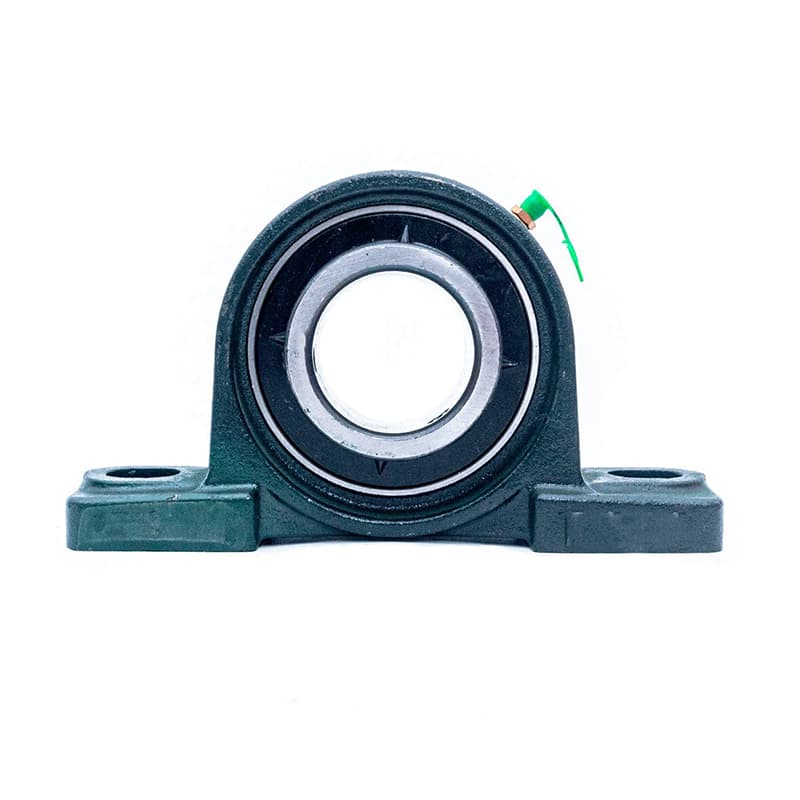
Let me give you a clear map. Plummer blocks follow old European standards. Pillow blocks follow ISO standards. They use different codes. But the bearing inside is often the same.
Common plummer block series
- SN series: Most common in Europe and Asia. Numbers like SN 505, SN 506, SN 507.
- SD series: Heavy duty. Used in steel mills.
- SAF series: American standard. Used in the USA.
How to find the equivalent
Step one: Look at the shaft diameter on your plummer block. That is your main number.
Step two: Check the bearing number inside the plummer block. It is often written on the side. For example, a plummer block with bearing 22210 uses a 50mm shaft.
Step three: Match that shaft diameter to a UCP pillow block.
Here is a conversion table:
| Plummer Block Model | Shaft Diameter (mm) | Equivalent Pillow Block | Bearing Inside |
|---|---|---|---|
| SN 505 | 25 | UCP 205 | 1205 or 2205 |
| SN 506 | 30 | UCP 206 | 1206 or 2206 |
| SN 507 | 35 | UCP 207 | 1207 or 2207 |
| SN 508 | 40 | UCP 208 | 1208 or 2208 |
| SN 509 | 45 | UCP 209 | 1209 or 2209 |
| SN 510 | 50 | UCP 210 | 1210 or 2210 |
| SN 511 | 55 | UCP 211 | 1211 or 2211 |
| SN 512 | 60 | UCP 212 | 1212 or 2212 |
What about the load?
Plummer blocks often use spherical roller bearings3. Those handle more load than the ball bearings in standard pillow blocks. So if your plummer block is on a very heavy machine, you cannot just swap to a cheap pillow block. You need a heavy-duty pillow block4 with a spherical roller insert.
FYTZ makes a special series for this. We call it UCP series with spherical roller insert. It fits the same housing but has the load capacity of a plummer block.
A story from my work
A customer in Turkey had an old stone crusher. The plummer blocks kept failing. He wanted to switch to pillow blocks. I asked him for the shaft size. It was 70mm. I gave him UCP 214. But that bearing failed in two weeks. Why? The load was too high.
So I sent him our UCP 214 with a spherical roller insert. That one lasted six months. Now he buys only that type from me.
The lesson is simple. Find out the load first. Do not just match the shaft size. Ask your supplier for help. I am always happy to check for you. Send me an email with a photo of your old plummer block.
What are the common problems with pillow blocks?
Pillow blocks are not perfect. I have seen them fail in many ways. You need to know the problems so you can avoid them.
The top five problems are seal failure1, loose set screws2, misalignment3, grease loss4, and housing cracks5. Most of these come from bad installation or wrong choice.
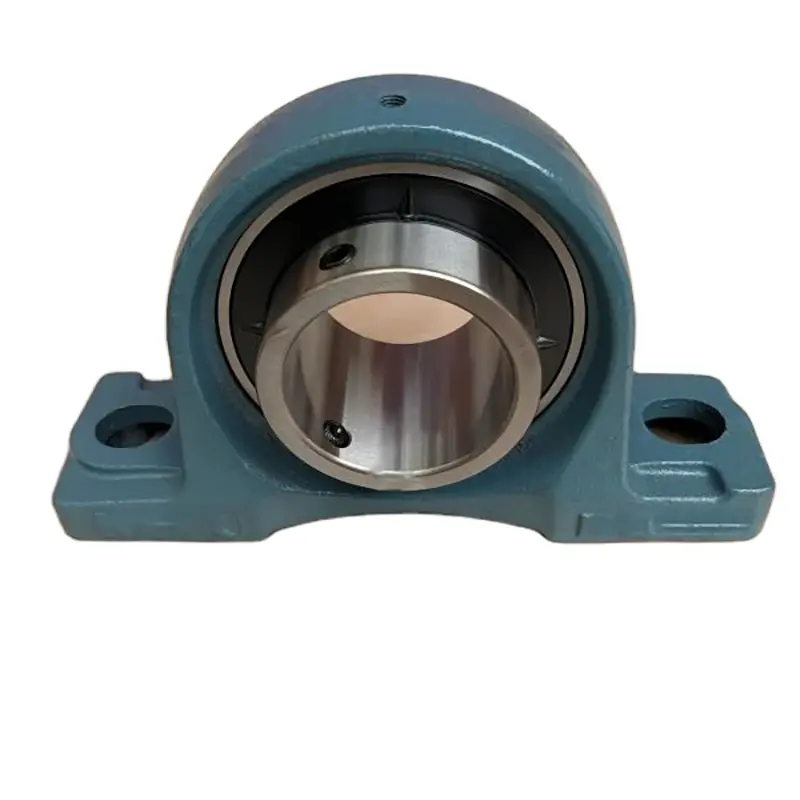
Let me walk you through each problem. I will tell you how to spot it and how to fix it.
Problem 1: Seal failure
The seal is a rubber lip that keeps dirt out and grease in. When the seal wears out, dust gets inside. The bearing grinds itself to death.
How to spot it: You see black dust around the bearing. The grease turns dark gray. The bearing gets hot.
Fix: Use a pillow block with triple-lip seals. Our FYTZ bearings have that. Also clean the area around the bearing every week.
Problem 2: Loose set screws
Set screws hold the bearing onto the shaft. They can come loose from vibration. Then the bearing spins on the shaft. That damages the shaft.
How to spot it: The shaft has a groove or a flat spot. The bearing housing moves when you push it.
Fix: Use a bearing with an eccentric locking collar. That locks tighter. Or use a taper sleeve. Also use thread locker on the set screws.
Problem 3: Misalignment
The shaft is not straight with the bearing. Or the two bearings on the same shaft are not in line. This creates extra force. The bearing heats up and fails fast.
How to spot it: The bearing housing is hot to touch. You hear a squeaking noise. The grease turns brown.
Fix: Use a self-aligning pillow block6. The spherical outer ring inside allows 2 to 3 degrees of misalignment. Check alignment with a laser tool or a straightedge.
Problem 4: Grease loss
Too little grease or the wrong grease. Some people never regrease. Others put too much. Both are bad.
How to spot it: The bearing runs dry and noisy. Or grease leaks out from the seals.
Fix: Use a pillow block with a grease fitting. Regrease every 500 hours or once a month. Use lithium-based grease. Do not mix different greases.
Problem 5: Housing cracks
The cast iron housing can crack from impact or over-tightening. A cracked housing loses alignment. Then the bearing fails.
How to spot it: You see a visible crack. The bearing makes a knocking sound.
Fix: Use ductile iron housing instead of cast iron. Ductile iron bends a little before it breaks. It costs more but lasts longer. Also use a torque wrench on the mounting bolts.
Here is a quick reference table:
| Problem | Main Cause | Best Prevention | Fix Cost |
|---|---|---|---|
| Seal failure | Dusty environment | Triple-lip seal | Low |
| Loose set screws | Vibration | Eccentric lock | Medium |
| Misalignment | Poor installation | Self-aligning bearing | Low |
| Grease loss | No maintenance | Grease fitting + schedule | Very low |
| Housing crack | Over-tightening | Ductile iron + torque wrench | High |
My personal advice
I have sold over 50,000 pillow blocks. The customers who have the fewest problems are the ones who do three things. First, they buy from a reliable factory like FYTZ. Second, they measure carefully before installation. Third, they train their team on basic maintenance.
Do not wait for the bearing to fail. Check it every month. Listen for noise. Feel for heat. Replace the seal if it looks hard or cracked. A $5 seal change can save a $50 bearing.
If you are doing a retrofit from plummer blocks to pillow blocks, pay extra attention to alignment and bolt hole fit. That is where most mistakes happen. Take your time. Measure twice. Buy once.
Conclusion
Convert plummer blocks to pillow blocks by matching shaft size and load. Use self-aligning units and check bolt holes first.
-
Understanding seal failure can help you prevent costly bearing damage and ensure longevity. ↩ ↩ ↩ ↩
-
Learn about the impact of loose set screws to maintain optimal performance and avoid shaft damage. ↩ ↩ ↩ ↩
-
Discover how misalignment can lead to premature bearing failure and how to correct it. ↩ ↩ ↩ ↩
-
Preventing grease loss is crucial for bearing health; explore effective maintenance strategies. ↩ ↩ ↩ ↩
-
Understanding how to prevent housing cracks can save you from expensive repairs and downtime. ↩ ↩
-
Self-aligning pillow blocks can significantly reduce maintenance needs and improve reliability. ↩ ↩