
I know how frustrating it is when a machine breaks down because a bearing failed under a sudden shock. You need a part that can take those unexpected hits without giving up.
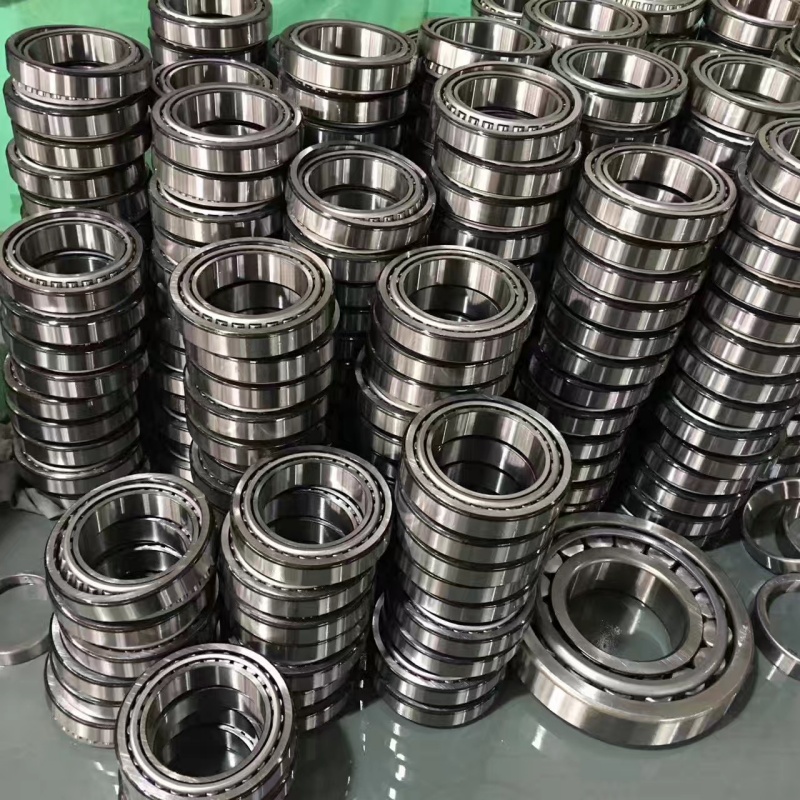
The answer is simple: tapered roller bearings. They are built to handle heavy impact loads and radial forces at the same time. Their unique cone shape gives them the strength you need for tough jobs.
Now, let me walk you through the details. I will answer your most common questions about these bearings. By the end, you will know exactly why they are the right choice for your equipment.
What loads can a tapered roller bearing handle?
You might be running a conveyor or a truck wheel. Suddenly, a big rock hits the belt or the vehicle drops into a pothole. That is an impact load1. Normal bearings can crack or wear out fast under these conditions.
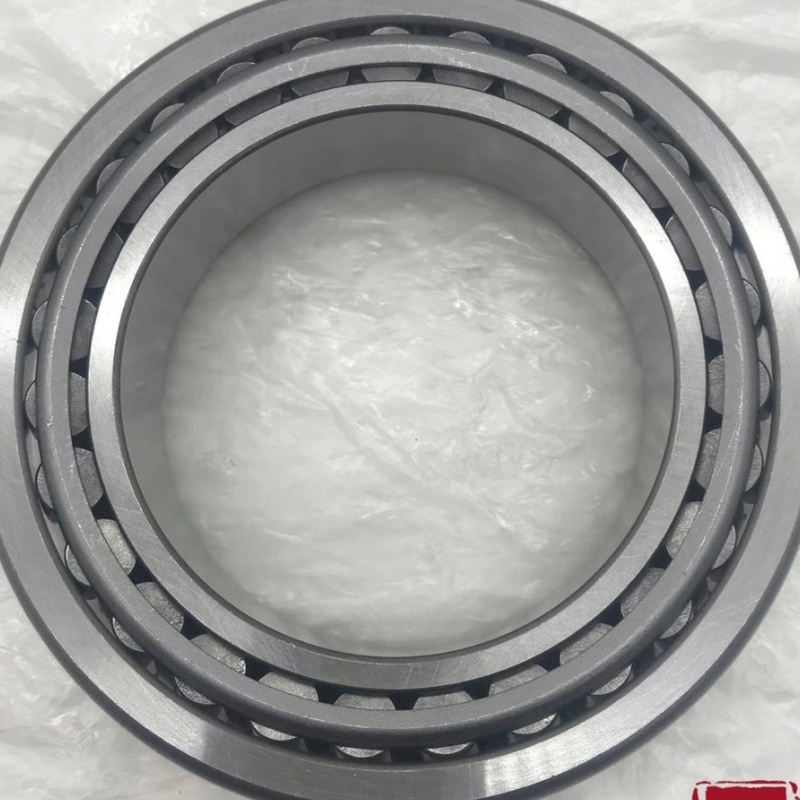
Tapered roller bearings handle three types of loads at the same time: radial loads2 (from the side), axial loads3 (from the end), and combined loads4 (both together). They also take sudden impact shocks better than most other bearings.
Let me break down the load types for you.
I often talk to procurement managers like Rajesh. He needs bearings for both industrial gearboxes and truck wheel hubs. The first thing I explain is that not all loads are the same. Here is a simple table to show you the differences:
| Load Type | Direction | Example in Real Life | Can Tapered Roller Bearings Handle It? |
|---|---|---|---|
| Radial load | Perpendicular to the shaft | Weight of a car pressing down on the wheel bearing | Yes, very well |
| Axial load (thrust) | Parallel to the shaft | Cornering force pushing the wheel sideways | Yes, but only in one direction per bearing |
| Combined load | Both radial and axial | A helical gear pushing both sideways and downward | Yes, this is their specialty |
| Impact load | Sudden shock | A hammer drill hitting concrete | Yes, better than ball bearings |
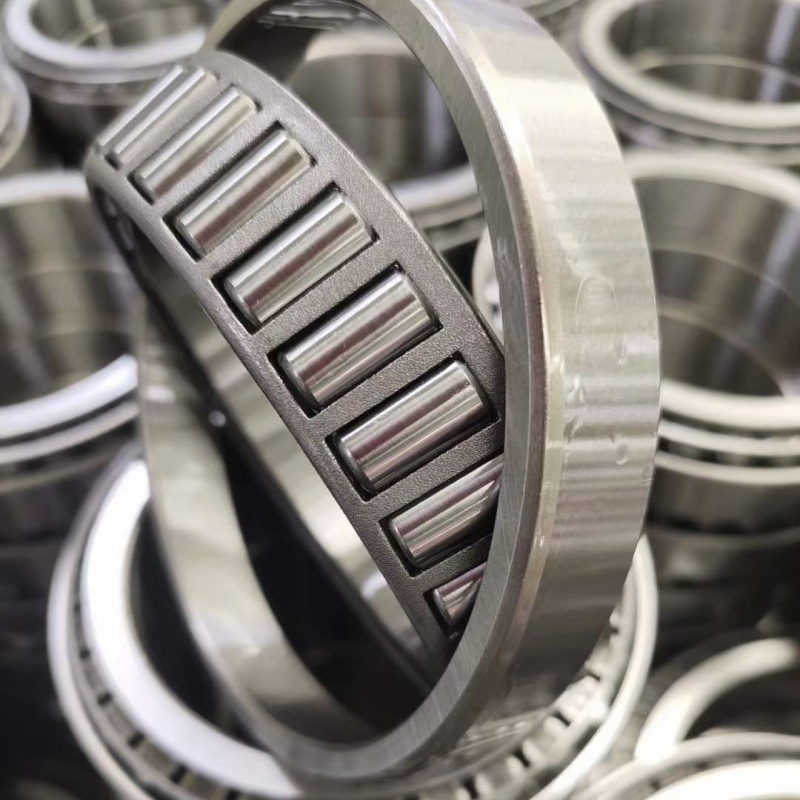
You see, the tapered shape does something smart. The rollers sit between the cone (inner ring) and the cup (outer ring). The angles of these parts create a line contact instead of a point contact. That line contact spreads the force over a bigger area. So when an impact happens, the bearing does not feel the full force in one tiny spot. It shares the load across the whole roller.
Why does this matter for you? Let me give you a real example. I once worked with a customer who made stone crushing machines. His old deep groove ball bearings failed every two weeks. The rocks kept sending shocks through the shaft. We switched him to tapered roller bearings5. His bearing life went up to six months. That is a huge saving in downtime and replacement costs.
Another thing many people miss is the load angle6. The contact angle in a tapered roller bearing can change from 10 to 30 degrees. A smaller angle gives you more radial capacity. A larger angle gives you more axial capacity. You can pick the right angle for your job. For example, a car wheel bearing uses a smaller angle because most of the load is radial from the car’s weight. A machine tool spindle might use a larger angle to handle the thrust from cutting forces.
One warning from my experience: Do not use a single tapered roller bearing alone for heavy axial loads in two directions. It only takes axial load one way. For two-way axial loads, you need two bearings mounted back-to-back or face-to-face. I have seen engineers make this mistake. They put one bearing in, and it fails quickly because the axial load pushes it apart. So always check your load direction before you choose.
To sum up this section: Tapered roller bearings are your go-to part when you have radial loads plus axial loads plus shocks. They give you strength and stability that ball bearings cannot match.
What is the adjustment procedure for a typical tapered roller wheel bearing1?
Have you ever tightened a wheel bearing too much? Then the wheel gets hot and drags. Or you left it too loose, and now the wheel wobbles. Getting it right is tricky. But do not worry. I will show you a simple way.
The adjustment procedure for a typical tapered roller wheel bearing has five steps: tighten to a set torque, spin the wheel, back off the nut, tighten again to a low torque, then lock it in place. This method gives you the correct end play2 or preload3.
Let me walk you through the process in detail.
I remember helping a truck fleet owner in India. His drivers kept complaining about wheel hub failures. The problem was always the same: wrong bearing adjustment. So I trained his mechanics on this procedure. Now let me teach you the same way.
Step 1: Clean and inspect everything first.
Before you even touch the nut, make sure the bearing, hub, and spindle are clean. Any dirt will give you a false reading. Also check for damage on the rollers and races. If you see pitting or spalling, replace the bearing. Do not adjust a bad bearing.
Step 2: Tighten the nut firmly.
Use a torque wrench. For most truck wheel bearings, the initial torque is around 200-250 Nm (150-185 ft-lb). While you tighten, spin the wheel by hand. This seats the rollers against the cone rib. You will feel the wheel get harder to turn. That is normal.
Step 3: Back off the nut.
Loosen the nut until it is completely free. Then tighten it again by hand until it just touches the washer. This step removes any preload you created in step 2. Now you have zero load on the bearing.
Step 4: Apply the final torque4.
For most tapered roller wheel bearings, the final torque is very low. Usually 50-70 Nm (35-50 ft-lb) for a new bearing. But check your vehicle manual. Some designs want a small end play (0.02-0.10 mm), not preload. A wheel end play means the hub can move slightly in and out. A preload means it cannot move at all. Which one is right? It depends on the application.
Here is a quick guide:
| Application | Desired Setting | Final Torque (typical) |
|---|---|---|
| Car front wheel (driven) | Slight preload | 1-2 Nm after spin |
| Truck trailer wheel | End play 0.05-0.15 mm | Finger tight + cotter pin |
| Heavy truck drive axle | End play 0.02-0.10 mm | 50-70 Nm |
| Agricultural equipment | Preload 0.01-0.05 mm | 100-120 Nm |
Step 5: Lock the nut in place.
Use the locking device that comes with your hub. It could be a cotter pin, a bent tab washer, or a prevailing torque nut. Make sure it cannot come loose. Then spin the wheel again. It should turn freely with no grinding sound. Also check the wheel for any play by pushing at the top and bottom. A tiny click is okay for end play designs. No movement means preload.
A common mistake: People often skip the "spin and back off" step. They just tighten the nut once and call it done. This is wrong. Why? Because the rollers need to settle into position. If you do not seat them first, you will get a false torque reading. Then after a few miles, the bearing loosens up and fails.
Another tip from my shop floor: Use a dial indicator to measure end play. Do not guess. Place the indicator tip against the hub face. Then push the hub in and out. The dial shows you the exact movement. This is the professional way. Many mechanics skip it, but I always recommend it for precision work.
Remember, over-tightening is worse than under-tightening. Too tight and the bearing will overheat and seize. Too loose and the wheel will wobble and damage the spindle. So take your time. Follow the steps. Your bearings will last much longer.
In which direction do taper roller bearings accept loads?
You might think a bearing can handle force from any side. But that is not true for tapered roller bearings. If you put the load in the wrong direction, the bearing will come apart. So you need to know the rule.
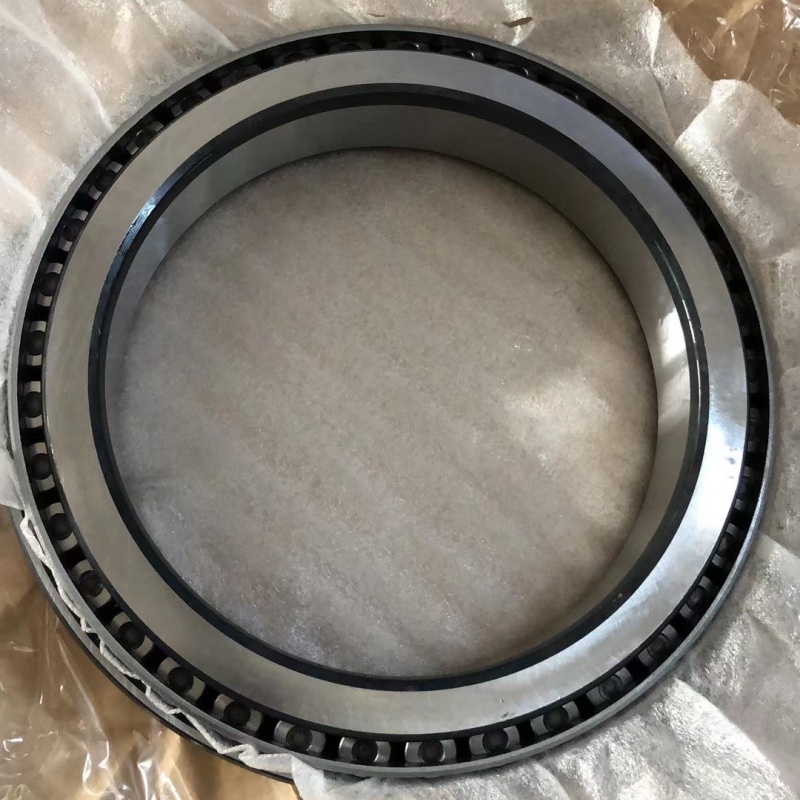
Tapered roller bearings1 accept axial loads2 in one direction only. The axial load must push the cone into the cup. If the load tries to pull the cone out of the cup, the bearing will separate. For radial loads3, they work in all directions.
Let me explain this clearly with some examples.
I have seen engineers mount a tapered roller bearing backwards. Then they wonder why the shaft falls out. So let me make this simple. Look at the bearing cross section. The rollers are like wedges. The big end of each roller touches the cone rib. That rib is what carries the axial load. When the load pushes the cone toward the cup, the rollers wedge tighter. That is good. When the load pulls the cone away from the cup, the rollers try to fall out. That is bad.
Visualize it this way: Imagine a doorstop wedge. You push it under a door. The more you push, the tighter it wedges. That is like a tapered roller bearing with the correct load direction. Now try to pull the wedge out by its tip. It slides out easily. That is the wrong direction. The bearing cannot hold that pull.
So how do you know which direction is correct?
The bearing’s cup (outer ring) has a shoulder on one side. The cone (inner ring) also has a shoulder. The axial load must push the cone’s shoulder against the rollers. And the rollers must push against the cup’s shoulder. Look at the bearing code4. Usually, the smaller end of the cone faces the direction of the axial load. But the easiest way is to remember this: The axial load must go from the large end of the cone toward the small end.
Here is a table for common applications:
| Application | Direction of Main Axial Load | How Bearings Are Arranged |
|---|---|---|
| Car front wheel (non-driven) | Both directions (corners) | Two bearings back-to-back |
| Truck drive axle pinion | Into the gear (toward crown) | One bearing each side of gear |
| Machine tool spindle | Toward the tool | Two bearings face-to-face |
| Conveyor idler roller | Alternating (belt tension) | Two bearings back-to-back |
| Worm gear reducer | Downward into worm | Two bearings on worm shaft |
What if you have axial loads in both directions?
Then you need two tapered roller bearings. You mount them in one of two arrangements:
- Back-to-back (DB): The large ends face outward. This arrangement handles heavy moment loads. It is stiff and good for precision.
- Face-to-face (DF): The small ends face outward. This arrangement allows some misalignment. It is less stiff but handles heat expansion better.
I always tell my customers: Do not try to save money by using one bearing for two-way axial loads. It will not work. You need a pair. The cost of a second bearing is small compared to a machine breakdown.
One more thing: The radial load direction does not matter. Tapered roller bearings handle radial loads from any angle. But the radial load and axial load work together. If you have a heavy radial load, the bearing can actually handle more axial load. This is because the radial load pushes the rollers into the cone rib, creating a better contact. Engineers call this the "induced thrust" effect.
So when you choose a bearing, always calculate both loads. Do not look at axial load alone. And remember the direction rule. It will save you from a lot of trouble.
What is the setting of a tapered roller bearing1?
You hear the word "setting" and you think of a dial or a number. But in bearings, setting means something else. It is the amount of internal clearance or tightness after you install the bearing. Get it wrong, and your machine will fail early.
The setting of a tapered roller bearing is the amount of end play2 or preload3 built into the assembly. End play means a tiny gap that lets the shaft move axially. Preload means a small squeeze that removes all gap. The right setting depends on your application.
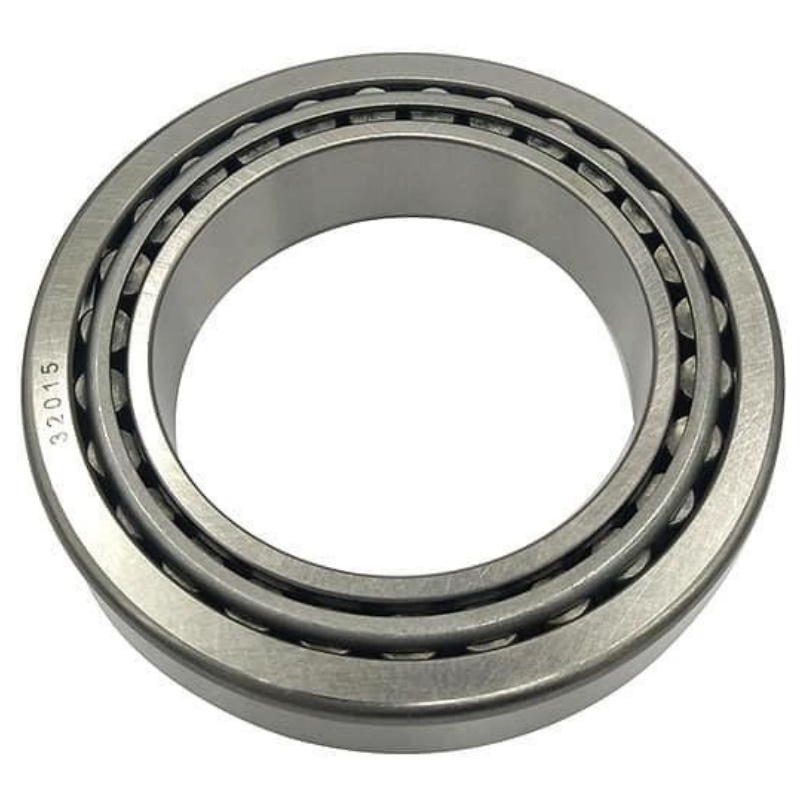
Let me help you understand setting with real numbers.
Many of my customers ask me: "How tight should I make it?" The answer is not a single number. It changes with the job. So let me break it down by what you need.
First, what is end play?
End play is the measured axial movement of the shaft inside the housing. For example, you push the shaft one way, and it moves 0.05 mm. That is end play. It is like a loose fit. End play allows for heat expansion and easy assembly. It also reduces friction. But too much end play causes vibration and noise.
Second, what is preload?
Preload is the opposite. You tighten the bearing so there is no movement. Instead, the bearing has a small internal force squeezing it. Preload makes the bearing very stiff. It improves precision and reduces noise. But too much preload creates heat and wears out the bearing fast.
So which one should you use?
Here is my rule of thumb from 15 years in this industry:
| Application | Recommended Setting | Typical Value |
|---|---|---|
| Car wheel hub | Slight preload (0-0.01 mm) | 1-2 Nm final torque |
| Truck trailer wheel | End play | 0.05-0.15 mm |
| Machine tool spindle | Heavy preload | 200-400 N preload force |
| Electric motor | End play | 0.02-0.08 mm |
| Gearbox | End play or light preload | Depends on housing |
| Conveyor roller | End play | 0.10-0.25 mm |
How do you measure setting?
You need a dial indicator for end play. Mount it on the housing. Touch the tip to the shaft end. Then push and pull the shaft. The dial shows you the movement. For preload, you cannot measure it directly. Instead, you measure the starting torque. That is the force needed to start the shaft turning. A special torque wrench tells you the preload amount.
A story from my factory:
One time, a customer from Brazil ordered bearings for his sugarcane crusher. He complained that our bearings failed in one month. I flew to his site. I watched his mechanics install the bearings. They tightened the nut until it would not move. Then they gave it another half turn. That was extreme preload. The bearings ran hot and seized. I showed them the correct setting. We used end play of 0.10 mm. After that, the bearings lasted two full harvest seasons. The problem was not the bearing. It was the setting.
What about heat?
Heat changes the setting. When a bearing gets hot, the shaft expands more than the housing (usually). That expansion reduces end play or increases preload. So if you set end play at room temperature, it might become preload at 80°C. You need to calculate the thermal expansion4. For steel, it is about 0.012 mm per meter per 10°C. A 500 mm long shaft with a 50°C rise expands 0.3 mm. That is huge. So always leave extra end play for hot machines.
My final advice:
Do not guess the setting. Look up the machine manual. Or ask the bearing supplier5. At FYTZ Bearing, we provide setting guidelines for every order. We also offer pre-set bearings for some applications. These come with the correct setting already built in. You just install them and go. That saves you time and mistakes.
Conclusion
Tapered roller bearings are the best choice for impact loads and combined forces. Just remember their one-way axial load limit and set them correctly for long life.
-
Understanding the mechanics of tapered roller bearings can enhance your knowledge of their applications and benefits. ↩ ↩ ↩ ↩
-
Exploring end play will help you grasp its significance in bearing performance and machine longevity. ↩ ↩ ↩ ↩
-
Learning about preload can improve your ability to set bearings correctly, ensuring optimal performance. ↩ ↩ ↩ ↩
-
Understanding thermal expansion is crucial for maintaining proper bearing settings in high-temperature applications. ↩ ↩ ↩ ↩
-
Finding a trustworthy bearing supplier can provide you with quality products and expert advice for your specific needs. ↩ ↩
-
Explore the importance of load angle in tapered roller bearings to optimize their performance for specific applications. ↩