You are building a machine that runs slow but pushes hard. Your bearings keep failing. Downtime kills your profit. I will show you how to pick the right spherical roller bearings and avoid these headaches.
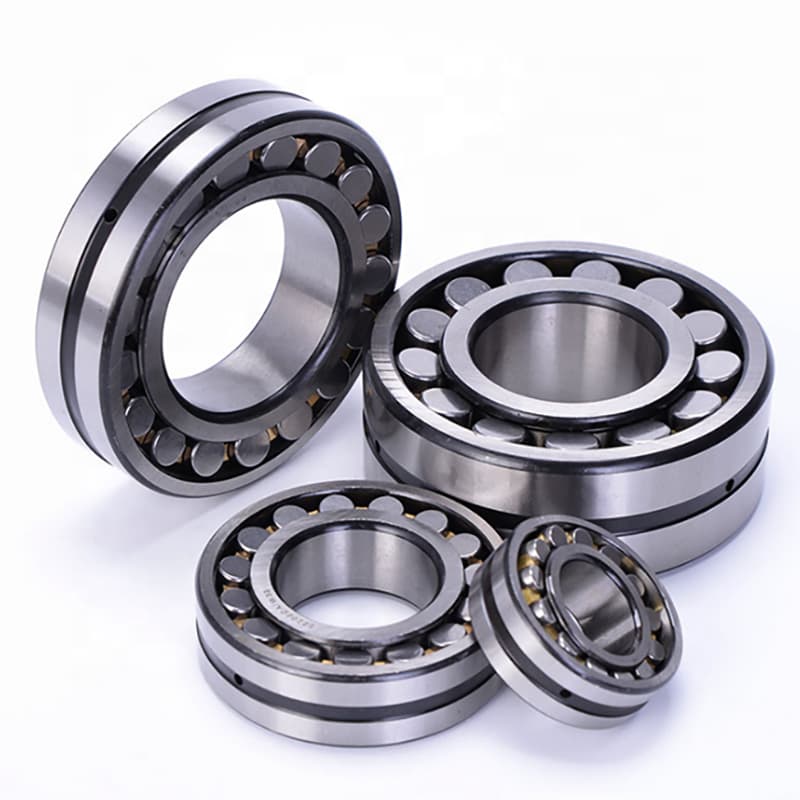
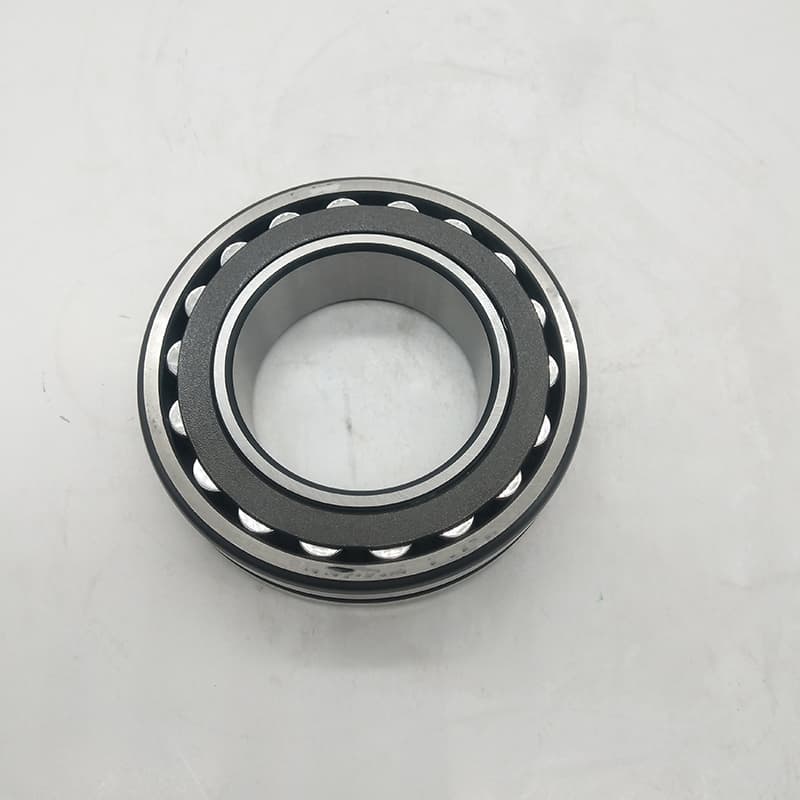
For low‑speed high‑torque applications, the best spherical roller bearings are those with large roller diameters, optimized internal geometry, and proper cage design. They must handle heavy radial loads and shock loads while accommodating misalignment. At FYTZ, we recommend our 223 series for such conditions because they offer high load capacity and durability.
You might think any heavy‑duty bearing works. But choosing one is trickier than it looks. Many people mix up high‑speed needs with low‑speed needs. To help you, I will answer the questions my customers ask most often. This way you can make a smart decision.
What type of bearing is best for high-speed?
Your spindle spins fast, but it gets hot. The noise is getting worse. You worry about a sudden breakdown. You need a bearing that can handle high revolutions without failing.
For high‑speed applications, the best bearings are deep groove ball bearings1, angular contact ball bearings2, and cylindrical roller bearings3. They generate less friction and run cooler. Spherical roller bearings are usually not the first choice because their roller design creates more heat at high speeds.
Understanding Speed Limits of Different Bearing Types
When we talk about high speed, we mean the bearing’s ability to operate at a certain rotational speed without overheating or wearing out quickly. The limiting speed factor depends on several things: bearing type4, lubrication, cage material, and precision grade.
Ball Bearings vs. Roller Bearings for Speed
Ball bearings have point contact between the balls and raceways. This means less friction. So they can run faster. Deep groove ball bearings are common in electric motors and small machines. Angular contact ball bearings are even better for combined loads and higher speeds because they can be arranged in sets.
Roller bearings have line contact. This gives them higher load capacity but also more friction. Cylindrical roller bearings with machined brass cages can still run at moderate to high speeds because the rollers are guided well. But spherical roller bearings5, with their barrel‑shaped rollers, have sliding friction in addition to rolling friction. That sliding generates heat. At high speeds, that heat can damage the lubricant and cause early failure.
Why Spherical Roller Bearings Are Not for High Speed
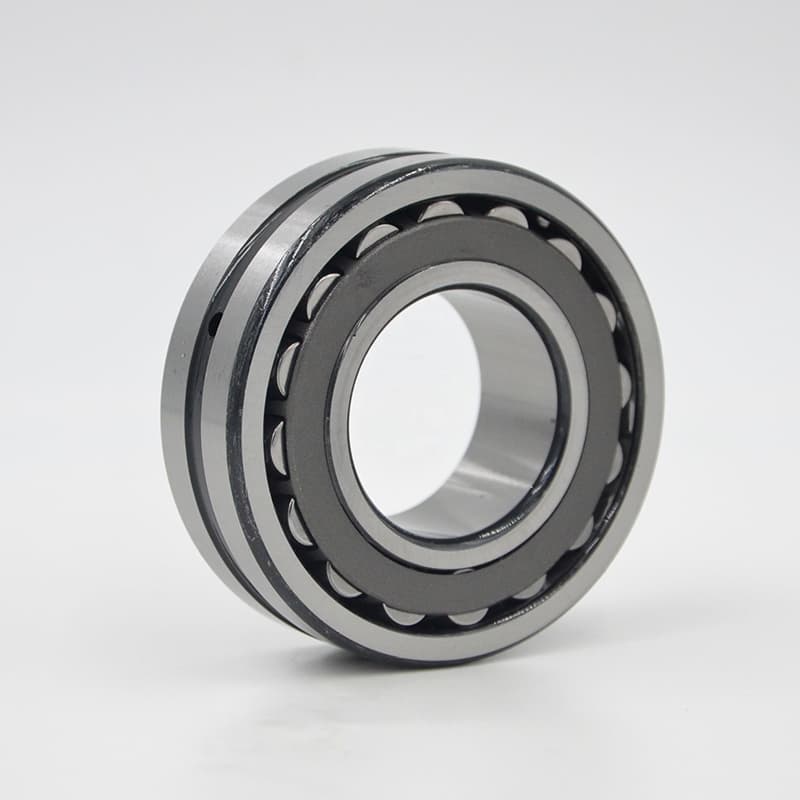
Spherical roller bearings are designed to take heavy radial loads and some axial loads while also handling misalignment. That makes them great for low‑speed, high‑torque jobs like in crushers, mills, and heavy gearboxes. But the internal geometry that gives them these abilities also limits their speed.
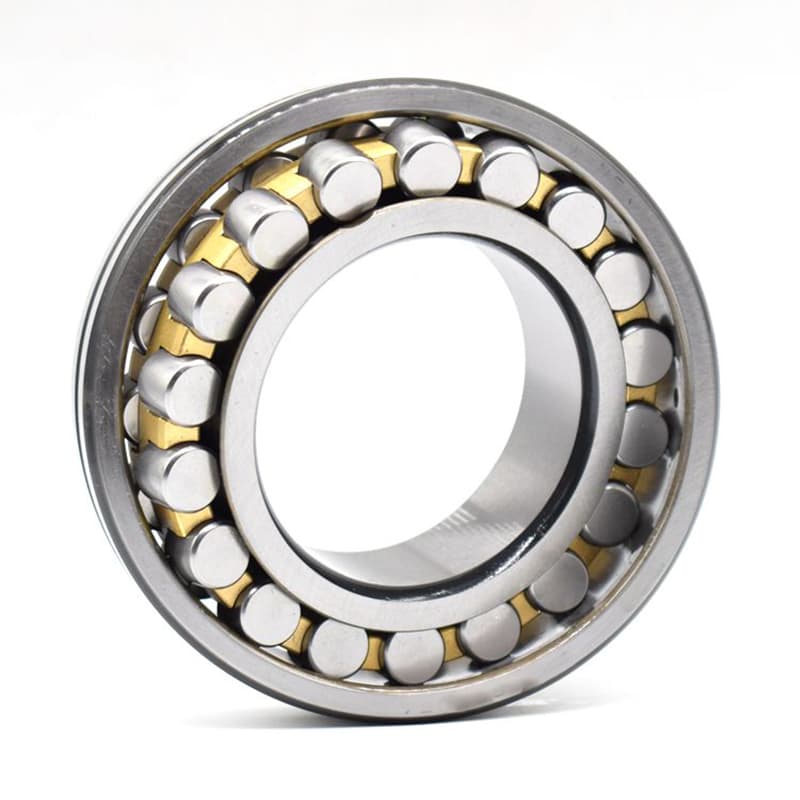
The rollers are guided by a center rib on the inner ring. This creates sliding contact. At high speeds, the sliding increases friction and temperature. Also, the centrifugal force on the rollers pushes them against the outer ring, raising stress and heat. So for high speed, we avoid spherical roller bearings unless the speed is very low.
Table: Typical Speed Limits for Common Bearing Types
| Bearing Type | Relative Speed Capability | Typical Applications |
|---|---|---|
| Deep Groove Ball Bearing | High | Electric motors, pumps, fans |
| Angular Contact Ball Bearing | Very High | Machine tool spindles, high‑speed motors |
| Cylindrical Roller Bearing | Moderate to High | Gearboxes, compressors, rolling mills |
| Spherical Roller Bearing | Low to Moderate | Heavy machinery, conveyors, wind turbines |
| Tapered Roller Bearing | Moderate | Automotive axles, gearboxes |
In my years at FYTZ, I have seen customers try to use spherical roller bearings in high‑speed applications because they liked the high load rating. Almost always they came back with burnt grease and seized bearings. We then switched them to cylindrical roller bearings or angular contact ball bearings, and the problem went away.
Which type of bearing is used for high-speed applications1?
You are looking at a machine tool or a compressor. The shaft spins fast, and you need reliability. Which bearing do you actually pick from the catalog?
High‑speed applications typically use precision angular contact ball bearings, hybrid ceramic ball bearings, or cylindrical roller bearings with light cages. The choice depends on load direction, stiffness needs, and lubrication method.
Matching Bearing Type to High‑Speed Application Requirements
Let me break down the options. I will explain what each bearing does best and where you should use it.
Angular Contact Ball Bearings2
These bearings have raceways that are offset relative to the bearing axis. This lets them support combined radial and axial loads. The contact angle can be 15°, 25°, or 40°. For high speed, a smaller angle (15°) gives higher speed capability but lower axial load capacity.
They are often used in pairs: back‑to‑back, face‑to‑face, or in tandem. This arrangement gives rigidity and allows the bearing to take loads from both directions. You see them in machine tool spindles3, where precision and high speed are critical.
Hybrid Ceramic Ball Bearings4
These are angular contact bearings with ceramic balls (usually silicon nitride) and steel rings. Ceramic balls are lighter than steel, so centrifugal force is lower. They also generate less heat and have better wear resistance. They can run even faster than all‑steel bearings. Plus, they are electrically insulating, which helps in motors where stray currents can damage bearings.
Cylindrical Roller Bearings for High Speed5
Some cylindrical roller bearings are designed for high speed. They have cages made of brass or polyamide that guide the rollers precisely. The rollers are usually shorter to reduce centrifugal force. These bearings are good when you need high radial load capacity but not much axial load. They are common in high‑speed gearboxes and compressors.
Table: High‑Speed Bearing Selection Guide
| Application | Recommended Bearing Type | Why It Works |
|---|---|---|
| Machine Tool Spindle | Angular contact ball bearings (hybrid) | High precision, high speed, rigidity |
| High‑Speed Motor | Deep groove ball bearings | Low friction, quiet operation |
| Turbine | Cylindrical roller bearings | High radial load, moderate speed |
| Aerospace Accessory | Angular contact with ceramic balls | Light weight, extreme speed |
I remember a customer from Russia who needed bearings for a high‑speed woodworking spindle. He first tried standard deep groove bearings but they failed quickly. We recommended hybrid angular contact bearings with 15° contact angle. The spindle now runs at 18,000 RPM without issues. That is the power of choosing the right type.
What type of bearings would you use in moderate pressure applications and at low speeds?
You have a conveyor running slow, or a lifting mechanism. The loads are not huge, but you want long life. What do you pick?
In moderate pressure and low‑speed conditions, you can use spherical roller bearings, cylindrical roller bearings, or even needle roller bearings. The best choice depends on whether you need misalignment capability and the exact load magnitude.
Detailed Comparison for Moderate Pressure Low‑Speed Use
Let’s explore this situation more deeply. Moderate pressure means the loads are not extreme, but they are still significant. Low speed means the shaft turns slowly, maybe under 100 RPM. In such cases, many bearing types can work, but each has pros and cons.
Spherical Roller Bearings1
Even at moderate pressure, spherical roller bearings are a solid choice if there is any risk of shaft deflection or misalignment. Their self‑aligning feature protects against mounting errors or bent shafts. They have high radial load capacity and can also take some axial load. The drawback is they are more expensive than simpler bearings.
Cylindrical Roller Bearings2
These are great for pure radial loads. They have high radial capacity and allow axial displacement (if not used as locating bearings). They are cheaper than spherical roller bearings and have lower friction. But they cannot accommodate misalignment. If your shaft is perfectly aligned, they are a good option.
Needle Roller Bearings3
Needle bearings have very small diameter rollers. They can handle high radial loads in a small radial space. They are often used in gearboxes and pumps. However, they are sensitive to misalignment and usually need hardened and ground shafts. For moderate pressure at low speed, they work well if space is tight.
Table: Bearings for Moderate Pressure, Low Speed
| Bearing Type | Radial Load Capacity4 | Misalignment Tolerance5 | Cost | Typical Use |
|---|---|---|---|---|
| Spherical Roller | Very High | Excellent | Medium | Conveyors, fans, gearboxes |
| Cylindrical Roller | High | Poor | Low | Electric motors, pumps |
| Needle Roller | High (compact) | Poor | Low | Automotive transmissions |
| Deep Groove Ball | Moderate | Poor | Low | Small machinery |
I once helped a customer in India who ran a small paper mill. They had a slow‑moving roller that carried moderate pressure. They were using deep groove ball bearings, but the bearings wore out every few months. The problem was slight shaft deflection. We switched them to spherical roller bearings from FYTZ. Now the bearings last over two years. That is the benefit of choosing a bearing that can handle misalignment.
Is SKF or timken better?
I hear this question all the time. A buyer in Brazil or Turkey asks, "Should I buy SKF or Timken?" They want a simple answer. But it is not that simple.
SKF and Timken are both excellent brands. SKF is strong in global availability and innovative designs like Explorer class bearings1. Timken is famous for tapered roller bearings2 and robust performance in heavy industries. Which is better depends on your specific application, availability, and budget.
[^3]](https://sdycbearing.com/wp-content/uploads/2025/12/Spherical-Roller-Bearings-31-1.jpg)
Unbiased Comparison and an Alternative You Should Consider
Let me give you a balanced view. I will compare SKF and Timken in several areas, then I will tell you why many of my customers now choose FYTZ bearings4 as a reliable alternative.
SKF Bearings5
SKF is a Swedish company with a long history. They have a huge product range and are known for innovation. Their Explorer bearings have improved load ratings and longer life. SKF also offers many tools and online resources for selection. In terms of quality, they are top‑notch.
However, SKF bearings often come with a premium price. Lead times can be long, especially for large sizes or special variants. And if you need customized bearings, SKF may not be as flexible.
Timken Bearings
Timken is an American company. They started with tapered roller bearings and are still the leader in that field. Their spherical roller bearings are also very good, especially in heavy industries like mining and steel. Timken bearings are known for durability and resistance to shock loads.
Like SKF, Timken commands a high price. Availability might be better in the Americas, but in other regions, you may face delays. Customization is possible but often expensive and slow.
Table: SKF vs Timken vs FYTZ
| Factor | SKF | Timken | FYTZ (Our Brand) |
|---|---|---|---|
| Quality | Excellent | Excellent | Very Good (ISO P5/P6 available) |
| Price | High | High | Competitive (20‑30% lower) |
| Availability | Global, but lead times vary | Strong in Americas, others vary | Fast from stock, custom quickly |
| Customization | Limited, expensive | Limited, expensive | OEM/ODM welcome, flexible |
| Innovation | Leading edge | Strong in tapered | Practical designs, reliable |
| Technical Support | Extensive | Good | Personal, direct access |
Why Some Customers Choose FYTZ
I run a factory in China. We produce bearings that meet international standards. Many of my customers were once SKF or Timken users. They switched for a few reasons:
- Cost savings: They get similar performance for less money.
- Faster delivery: We keep stock of popular sizes and can produce custom orders quickly.
- Personal service: They talk directly to engineers, not sales reps.
- Customization: We modify bearings to fit their exact needs.
For example, a distributor in Egypt used to buy Timken bearings for agricultural machinery. But delivery took months and cost was high. Now he buys FYTZ spherical roller bearings. He saves 25% and gets the bearings in three weeks. His customers are happy.
Of course, for critical applications where every bit of performance matters, SKF or Timken might still be the right call. But for most industrial uses, FYTZ offers a smart balance of quality and value.
Conclusion
Choosing spherical roller bearings for low‑speed high‑torque jobs means focusing on load capacity, misalignment tolerance, and lubrication. Do not overlook your own operating conditions. And remember, reliable alternatives like FYTZ can save you money without sacrificing performance.
-
Learn about Explorer class bearings and how they enhance load ratings and longevity. ↩ ↩ ↩ ↩
-
Understand the applications and advantages of tapered roller bearings, a Timken specialty. ↩ ↩ ↩ ↩
-
Discover why Timken Bearings are favored in heavy industries for their durability and performance. ↩ ↩ ↩
-
Find out why FYTZ bearings are becoming a popular alternative for cost-effective solutions. ↩ ↩ ↩ ↩
-
Explore the benefits of SKF Bearings, known for their innovation and quality, to make an informed decision. ↩ ↩ ↩ ↩