
Choosing the wrong bearing for a heavy conveyor can cause unexpected breakdowns and expensive downtime. It is frustrating when a small mistake stops your entire production line. Let me show you exactly how to pick the right spherical roller bearing for your system.
To choose spherical roller bearings for heavy conveyor drives, you need to look at load capacity, alignment tolerance, and operating conditions. Check the dynamic and static load ratings, the seal type, and the cage design. Also, consider the manufacturer’s reputation and after-sales support. These factors will help you avoid early failures.
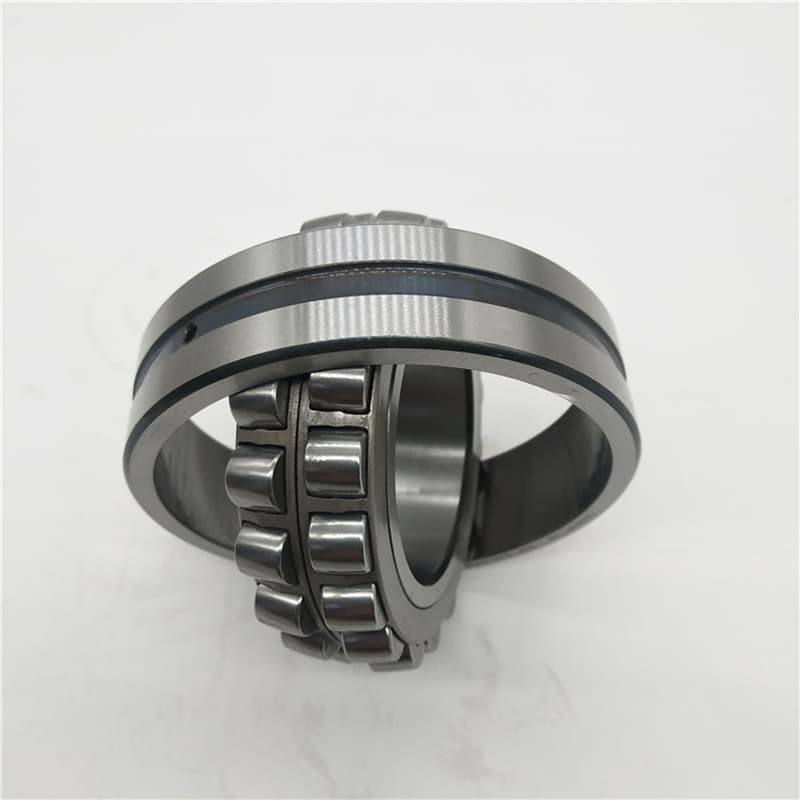
Now that we have covered the basics, I want to explain each part in more detail. Over the years at FYTZ Bearing, I have helped many customers like Rajesh from India solve their bearing problems. Let us go deeper into why spherical roller bearings are so good for heavy work and how you can select the right one for your conveyor rollers.
What makes spherical roller systems ideal for heavy duty applications?
Many engineers struggle with bearing failures under heavy loads and misalignment. It is annoying when bearings wear out fast even with good lubrication. Spherical roller bearings are built to handle these exact problems.
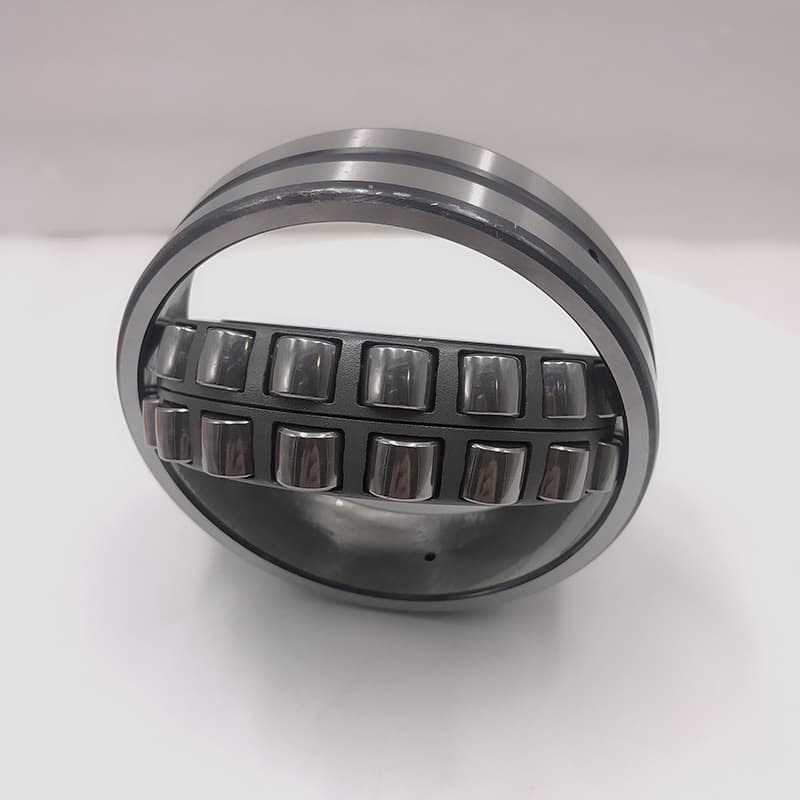
Spherical roller bearings are perfect for heavy duty applications because they can support high radial and axial loads in both directions. They also have a self-aligning feature1 that adjusts to shaft bending and mounting mistakes. This reduces stress on the bearing and makes it last longer.
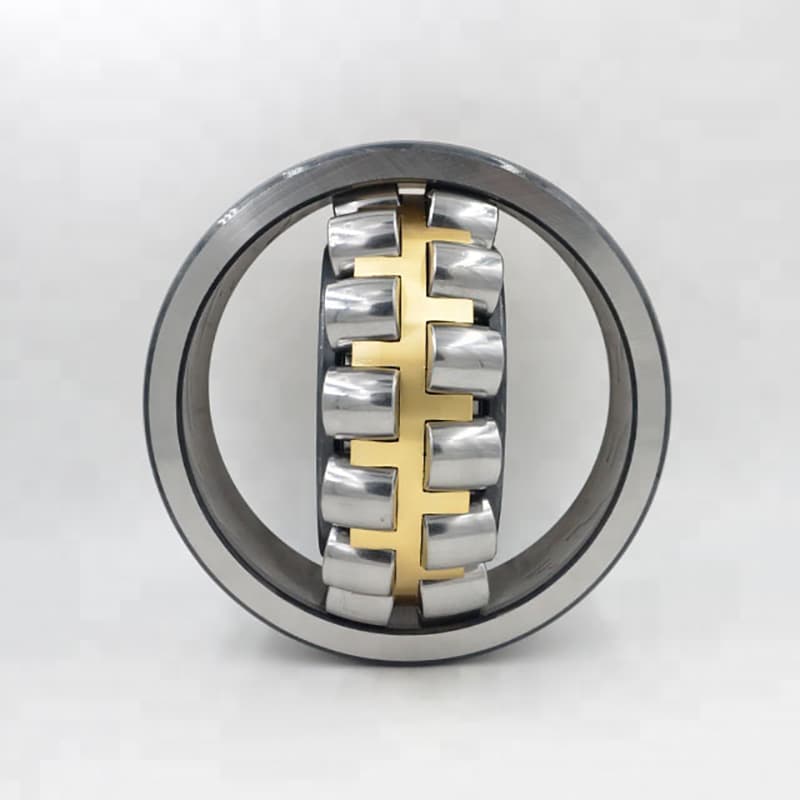
Load Capacity and Design
Spherical roller bearings have two rows of rollers that run on a common spherical raceway in the outer ring. This design lets them carry very heavy radial loads. They can also take axial loads in both directions. The rollers are barrel-shaped, which gives a large contact area with the raceways. This spreads the load over a bigger surface and lowers the stress on each point. In heavy conveyor drives, the main pulley often has to handle the weight of the belt and the material being moved. That weight can be many tons. A spherical roller bearing with a high dynamic load rating2 (C) is necessary here. For example, in our factory, we make bearings with special heat-treated steel to increase their load capacity3 even more. We also offer P5 and P6 precision classes for applications that need tighter running accuracy.
Self-Aligning Feature
One of the best things about spherical roller bearings4 is that they can align themselves. The outer ring’s raceway is spherical, so the inner ring and rollers can tilt a little inside the outer ring. This means the bearing can compensate for shaft deflection or misalignment between the bearing housing and the shaft. In a long conveyor system, the drive shaft can bend under load, or the mounting base might not be perfectly flat. Without self-alignment, a normal bearing would get extra stresses and fail quickly. With a spherical roller bearing, the bearing adjusts itself and keeps running smoothly. I remember a customer from Turkey who had problems with bearings seizing every few months. We suggested spherical roller bearings with a self-aligning feature, and now their conveyors run for years without trouble.
Durability in Harsh Environments
Conveyor systems often work in dirty, dusty, or wet places. Mines, ports, and cement plants are common examples. Spherical roller bearings can be ordered with special seals and shields to keep dirt out and grease in. Some versions have a nitrile rubber seal that touches the inner ring. Others have a metal shield for less friction. The cage material also matters. Steel cages are stronger and can handle shock loads. Brass cages are good for high speeds and corrosive environments. At FYTZ Bearing, we help customers choose the right seal and cage based on their specific conditions. We also offer custom coatings for extra corrosion resistance. All these features make spherical roller bearings very reliable in tough conditions.
What type of bearing will you recommend for use in the conveyor belt roller?
Conveyor rollers have to work under different loads and speeds in various parts of the system. A wrong bearing choice can make a roller stop turning or cause too much vibration. Based on my experience, I recommend different types for different positions.
For the drive pulley1 and tail pulley2, where heavy loads and misalignment happen, I always suggest spherical roller bearings3. For the idler rollers4 in the middle, deep groove ball bearings5 or tapered roller bearings6 can work, depending on the load and speed. You must also think about the roller diameter and the shaft size.
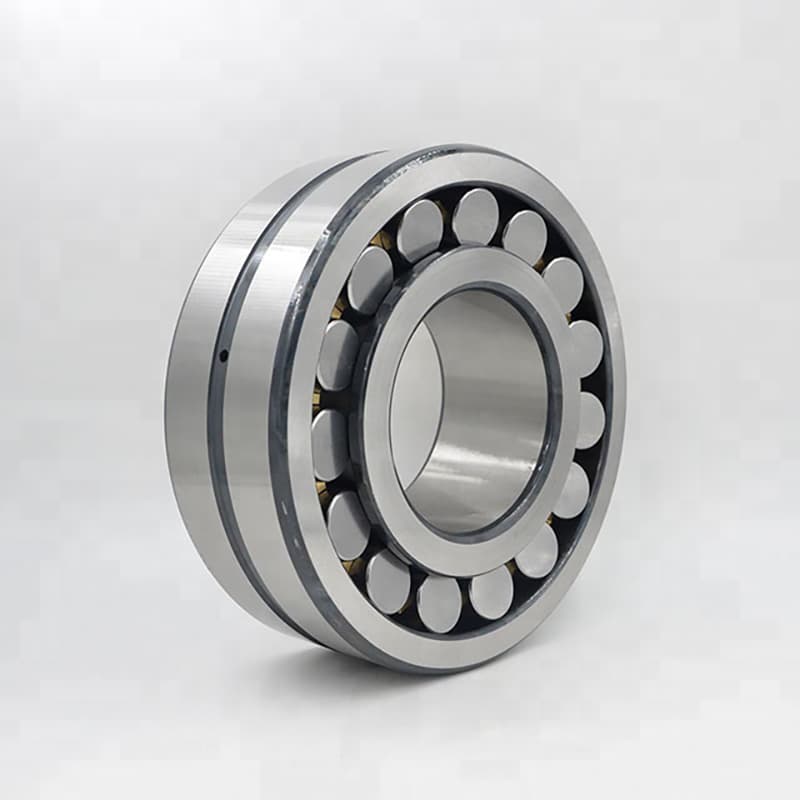
Drive Pulley Bearings
The drive pulley is the heart of the conveyor. It gets power from the motor and moves the belt. This pulley faces the highest radial load from the belt tension and the weight of the material. It also has to handle some axial load when the belt tries to track to one side. Spherical roller bearings are the best choice here because they can take both radial and axial loads together. They also deal with the shaft deflection caused by the heavy belt. In many conveyor designs, the drive pulley shaft is long and can bend. A spherical roller bearing’s self-aligning feature keeps everything running true. For a typical heavy conveyor, I recommend a bearing with a tapered bore so it can be mounted on an adapter sleeve. This makes installation and removal easier. We at FYTZ supply many drive pulley bearings to customers in Indonesia and Vietnam who run mining conveyors.
Tail Pulley Bearings
The tail pulley is at the opposite end of the conveyor. It returns the belt back to the drive. This pulley also experiences significant load from belt tension, though usually less than the drive pulley. Still, it needs a bearing that can handle misalignment because the tail pulley often has a take-up mechanism that moves to keep the belt tight. Spherical roller bearings are again a good choice here. The self-alignment helps when the pulley moves or when the frame is not perfectly square. Some engineers use two spherical roller bearings, one on each side, mounted in pillow blocks. This setup is simple and reliable. In our experience, using the same bearing type for both drive and tail pulleys simplifies spare parts inventory for our clients.
Idler Roller Bearings
The idler rollers support the belt along its length. There can be hundreds of them in a long conveyor. Each idler carries a small part of the load, but they all need to turn freely. For these rollers, the loads are lighter and speeds are moderate. Here, deep groove ball bearings are very common. They are inexpensive and have low friction. For example, a 6204 or 6305 deep groove ball bearing is often pressed into the ends of an idler roller. However, if the idler is in a high-impact area like a loading zone, tapered roller bearings might be better because they can handle shock loads. Sometimes, for very heavy-duty idlers, small spherical roller bearings are used. But that is rare. The key is to match the bearing to the load. I always tell my customers to calculate the equivalent dynamic load for each idler and then select the bearing size accordingly. We offer a range of deep groove and tapered bearings for these applications.
Which is better, SKF1 or nsk?
Clients often ask me about brand comparisons when they order bearings. They worry about getting good quality without spending too much money. They want to make the right choice for their investment. I share my honest opinion based on years of supplying bearings to many countries.
Both SKF and NSK2 are excellent brands with very good quality. SKF is famous for its new ideas and worldwide technical support3. NSK gives you reliable performance and often a better price. For heavy conveyor systems, either one will work well if you pick the right bearing specification for your job.
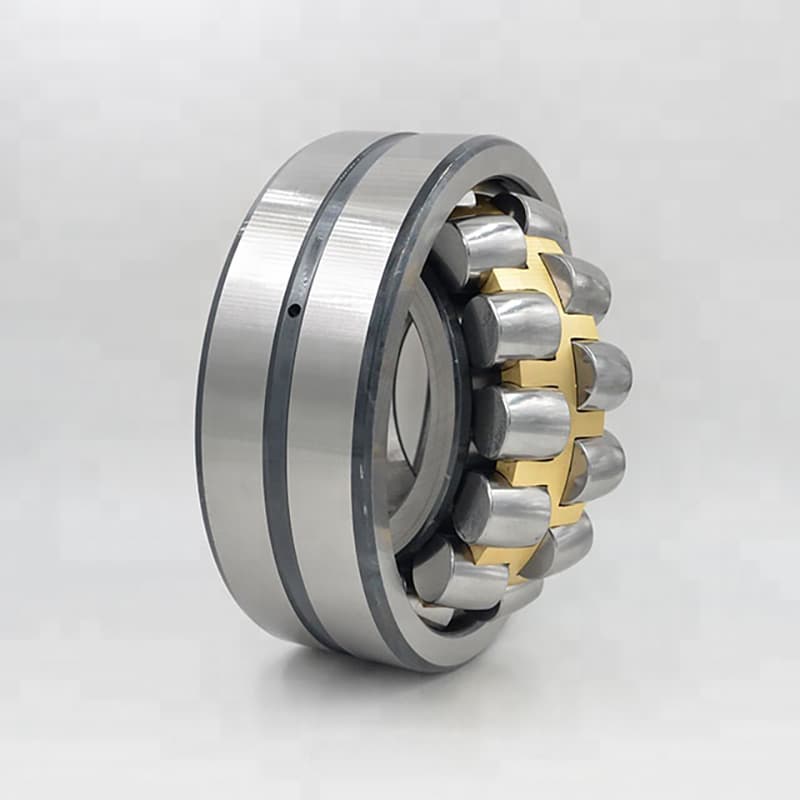
Brand Reputation and Innovation
SKF has been in the bearing business for over 100 years. They spend a lot on research and development. They often introduce new designs like the SKF Explorer class, which gives higher load ratings and longer life. Their bearings are known for very tight tolerances and consistent quality. If you need the absolute best performance and have the budget, SKF is a safe choice. NSK is also a top-tier brand from Japan. They are known for their precision manufacturing and rigorous testing. NSK bearings are very reliable and have a long service life. In many industrial applications, NSK performs just as well as SKF. The difference is often small. Both companies have strong reputations. I have seen both brands work well in heavy conveyors in countries like Brazil and Egypt.
Cost and Availability
Price is a big factor for most buyers. SKF bearings are usually priced higher because of the brand name and their extensive distribution network. NSK often comes in at a slightly lower cost, though it is still a premium product. Availability can also influence your decision. In some regions, SKF might have more local stock. In others, NSK might be easier to get. For example, in India, both brands are widely available, but prices vary depending on the distributor. As a factory in China, we at FYTZ offer an alternative. We produce spherical roller bearings that meet ISO standards and are comparable to these top brands in terms of dimensions and tolerances. Our prices are more competitive, and we can customize bearings for specific needs. Many of our customers in Pakistan and Bangladesh choose our bearings because they offer a good balance of quality and cost.
Customization and Support
When you buy from SKF or NSK, you get their standard product range. They do offer some customization4, but usually for large orders and with long lead times. They also provide excellent technical documentation and online tools. As a smaller, specialized factory, FYTZ Bearing can be more flexible. We can modify the internal clearance, change the cage material, or add special coatings based on your request. For a heavy conveyor running in a dusty environment, we might suggest a bearing with a triple lip seal and a high-temperature grease. We also work closely with our clients to understand their exact needs. Rajesh from India often appreciates this personal touch. He can call us directly and discuss his requirements. So, while SKF and NSK are great brands, do not overlook the value of a responsive partner who can tailor the product to your system.
What is a 6203 bearing1 used for?
Sometimes a small bearing can cause big confusion in a large system. A 6203 bearing might seem unimportant, but putting it in the wrong place can lead to a failure. Let me explain what this bearing is and where it belongs.
A 6203 bearing is a deep groove ball bearing2 with dimensions of 17 mm bore, 40 mm outside diameter, and 12 mm width. People use it in small electric motors, water pumps, fans, and light-duty conveyor rollers3. It is not made for heavy conveyor drive systems because its load capacity4 is too low.
6203 Bearing Specifications
The number 6203 follows a standard bearing identification system. The "6" means it is a single-row deep groove ball bearing. The "2" is the series, which indicates the width and diameter. The "03" tells you the bore size: 03 multiplied by 5 equals 17 mm. So, 6203 has a 17 mm bore. Its dynamic load rating5 (C) is typically around 9.5 to 10 kN, depending on the manufacturer. The static load rating (C0) is about 4.8 to 5 kN. The limiting speed with grease lubrication is around 15,000 to 20,000 RPM. These numbers show that the bearing is designed for light to moderate loads and moderate to high speeds. It is a compact, versatile bearing.
Common Applications
You will find 6203 bearings in many everyday machines. Small electric motors, like those in fans or power tools, often use them. They support the rotor shaft and handle the radial load from the belt or fan blades. Water pumps for domestic use also contain these bearings because they are cheap and can run at high speeds. In automotive alternators, a similar bearing might be used, though often with seals to keep out dirt. In a conveyor system, you might see 6203 bearings in small, light-duty rollers that move lightweight packages. For example, in a warehouse conveyor for boxes, a 6203 deep groove ball bearing can work well because the loads are low. The bearing’s low friction helps the roller turn easily.
Why Not for Heavy Conveyors?
Heavy conveyor drive systems have very different demands. The drive pulley alone might need a bearing with a bore size of 100 mm or more. The dynamic load rating could be over 500 kN. A 6203 bearing would be crushed instantly under that load. Even for idler rollers in a heavy mining conveyor, the loads are much higher. A typical idler roller might use a 6305 or 6306 deep groove ball bearing, which has a larger cross-section and higher load capacity. The 6203 is simply too small. Also, heavy conveyors often have misalignment issues, which deep groove ball bearings cannot handle well. So, if someone suggests using a 6203 in a heavy conveyor, it is a mistake. I always advise my clients to do a proper load calculation before choosing any bearing. At FYTZ, we provide technical support to help our customers select the correct size. We do not want them to have failures just because they picked a bearing that was too small.
Conclusion
Choosing the right spherical roller bearing for your heavy conveyor means looking at load, alignment, and environment. Think about where it goes and which brand fits your budget and support needs.
-
Explore this link to understand the various applications and specifications of the 6203 bearing, crucial for selecting the right component. ↩ ↩ ↩ ↩
-
Learn about deep groove ball bearings and their advantages, which can help in understanding their role in machinery. ↩ ↩ ↩ ↩
-
Discover the applications of light-duty conveyor rollers and how they benefit various industries, enhancing your knowledge of conveyor systems. ↩ ↩ ↩ ↩
-
This resource will guide you on how to calculate load capacity, ensuring you choose the right bearing for your needs. ↩ ↩ ↩ ↩
-
Understanding dynamic load ratings is essential for selecting the right bearing for your application; this link provides detailed insights. ↩ ↩
-
Discover when tapered roller bearings are ideal for high-impact areas in conveyor systems. ↩