
A wrong bearing choice in a pump can cause more than noise. It can lead to seal failure, shaft breakage, and catastrophic fluid leaks.
For pumps and compressors, select deep groove ball bearings based on shaft size, radial/axial load, operating speed, and environment. Key criteria include sufficient dynamic load rating (C), appropriate internal clearance (C3 often), correct seal type (2RS for wet, ZZ for high-speed dry), and precision grade (P6 or better) to handle vibration and ensure reliable, long-term operation.
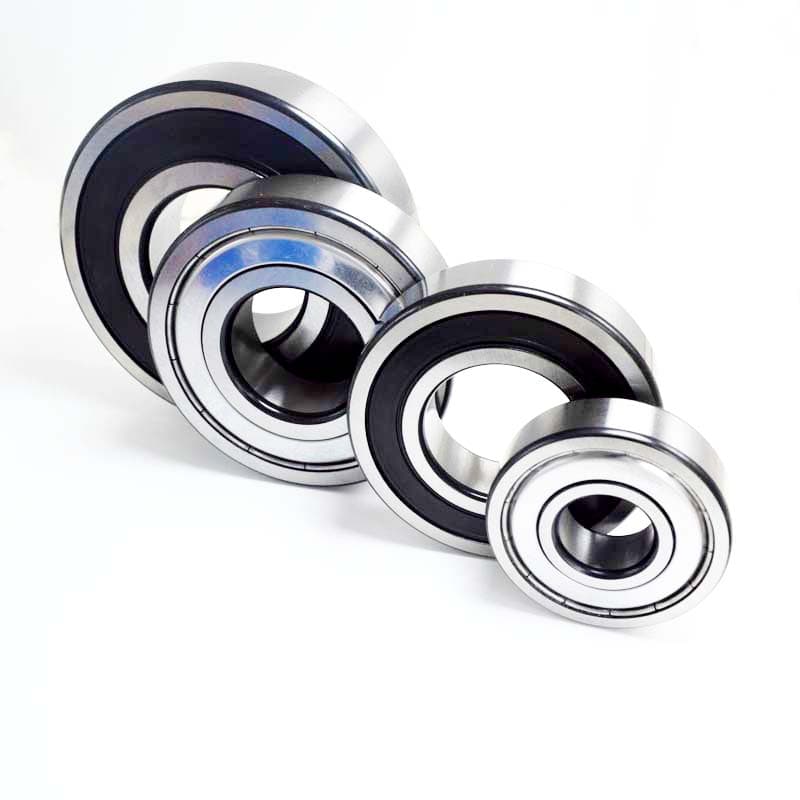
Pumps and compressors are the workhorses of industry, moving everything from water to chemicals. Their bearings operate at high speeds, often under combined radial and axial loads, and in challenging environments. While deep groove ball bearings are the standard choice for many of these applications, simply picking a bearing that fits the shaft is a recipe for premature failure. A systematic selection process is essential. Let’s explore the critical factors and characteristics that determine success.
What factors should be considered when selecting a bearing for a specific application?
Selecting a bearing is an exercise in matching component capabilities to application demands. It’s a checklist that prevents costly oversights.
Key factors include the type and magnitude of loads (radial and axial), the rotational speed, the required service life, operating temperature, environmental conditions (dust, moisture, chemicals), mounting and dismounting requirements, and cost constraints. For pumps/compressors, axial thrust and vibration are particularly critical considerations.
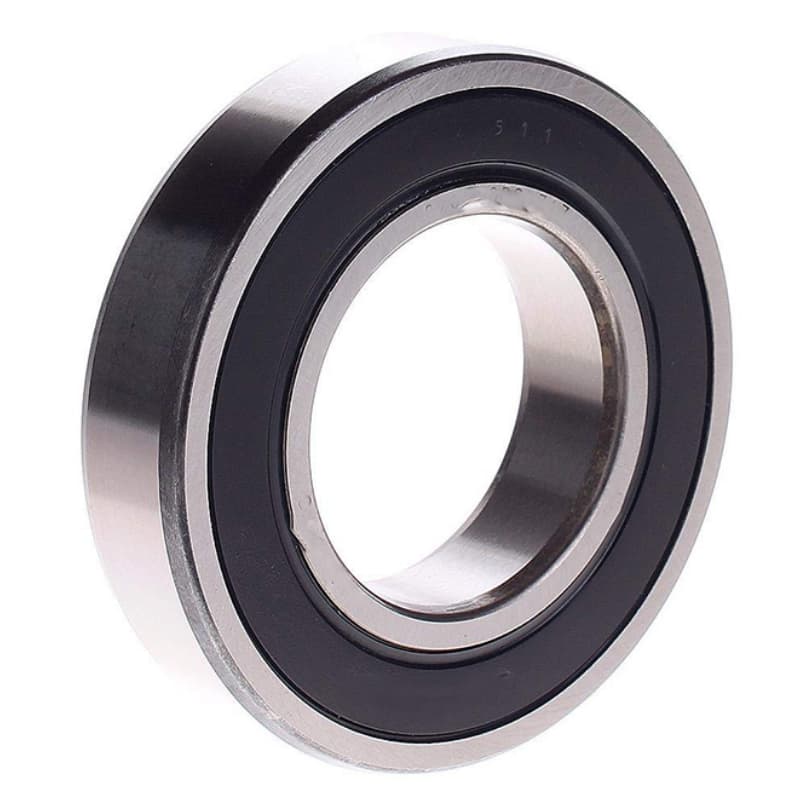
This isn’t just theory. Each factor translates directly into a specific bearing specification or feature. Missing one can compromise the entire system.
A Comprehensive Breakdown of Selection Factors
Let’s turn each factor into a practical question you must answer before choosing a bearing.
1. Load Conditions: The Primary Driver
- Radial Load (Fr): What is the weight of the rotor and the hydraulic/ pneumatic forces pushing radially on the shaft? This determines the basic size needed.
- Axial Load (Fa): Pumps and compressors often generate thrust along the shaft. What is its magnitude and direction (one-way or reversing)? Deep groove bearings can handle light to moderate axial loads, but heavy thrust may require a paired arrangement or a different bearing type.
- Load Nature: Is the load steady, variable, or shock? Shock loads from water hammer or valve slams require bearings with robust cages and potentially higher static load ratings.
2. Speed (RPM) and Operating Conditions
- Rotational Speed: High speeds generate centrifugal forces and heat. The bearing must have a sufficient
dm•nvalue rating. For very high speeds, internal design (cage type, lubrication) becomes critical. - Operating Temperature: Will the bearing run hot from process heat or friction? High temperatures require special steel (heat stabilized), high-temperature grease, and appropriate internal clearance (C3/C4) to prevent preload.
- Environment: Is the bearing exposed to water, steam, chemicals, or abrasive dust? This dictates the seal type (contact, non-contact, material) and possibly the need for stainless steel or coated bearings.
3. Performance and Reliability Requirements
- Required Service Life (L10): How many hours of operation are needed before a 10% probability of failure? This life target, combined with load and speed, calculates the minimum required Basic Dynamic Load Rating (C).
- Precision and Runout: For smooth, low-vibration operation in pumps, a higher precision grade (P6 or P5) is often specified to minimize vibration and shaft runout.
- Noise Level: In certain applications, low-noise bearings with polymer cages may be preferred.
4. Practical Installation and Maintenance
- Shaft and Housing Fits: What are the tolerances for the shaft diameter and housing bore? Standard fits for pump bearings are often shaft: k6 and housing: H7.
- Lubrication Method: Will the bearing be grease-lubricated for life, or is there a provision for re-lubrication? Sealed bearings (2RS) are common, but regreasable designs exist.
- Ease of Mounting/Dismounting: Consider using bearings with a tapered bore and adapter sleeve for easier installation on larger shafts.
A Pump/Compressor Specific Selection Matrix
| Application Characteristic | Bearing Selection Implication |
|---|---|
| High Speed Centrifugal Pump | High dm•n capable bearing. Possibly ZZ shields for low friction. Precision P6. C3 clearance. |
| Chemical Process Pump | Stainless Steel (440C or 316) bearings. FKM (Viton) seals for chemical resistance. |
| Heavy Axial Thrust (e.g., some multistage pumps) | May need angular contact ball bearings in tandem or a thrust bearing in addition to the radial bearing. |
| Dirty Environment (Mining, Wastewater) | Robust seals (2RS, triple-lip, labyrinth). Consider bearing with extra capacity to handle contamination-induced wear. |
| High-Temperature Pump/Compressor | C4 clearance. Heat-stabilized rings. High-temperature grease (e.g., polyurea). |
For a bearing distributor like Rajesh, this framework is a consultation tool. When a pump repair shop in Mumbai asks for a bearing, Rajesh should ask: "What pump is it for? Any high temperature or chemical exposure?" This allows him to recommend not just a 6208, but a 6208-2RS/C3 with a P6 rating or a special stainless version, ensuring the replacement lasts as long as the original.
What are the characteristics of deep groove ball bearings?
Their characteristics make them uniquely suitable—or sometimes unsuitable—for pump and compressor duty. Understanding these traits is fundamental to correct application.
Deep groove ball bearings are characterized by their ability to handle both radial and moderate axial loads in either direction, their suitability for high-speed operation, low friction and torque, simple design for easy mounting, and availability in a wide range of sizes and configurations (sealed, shielded, open).
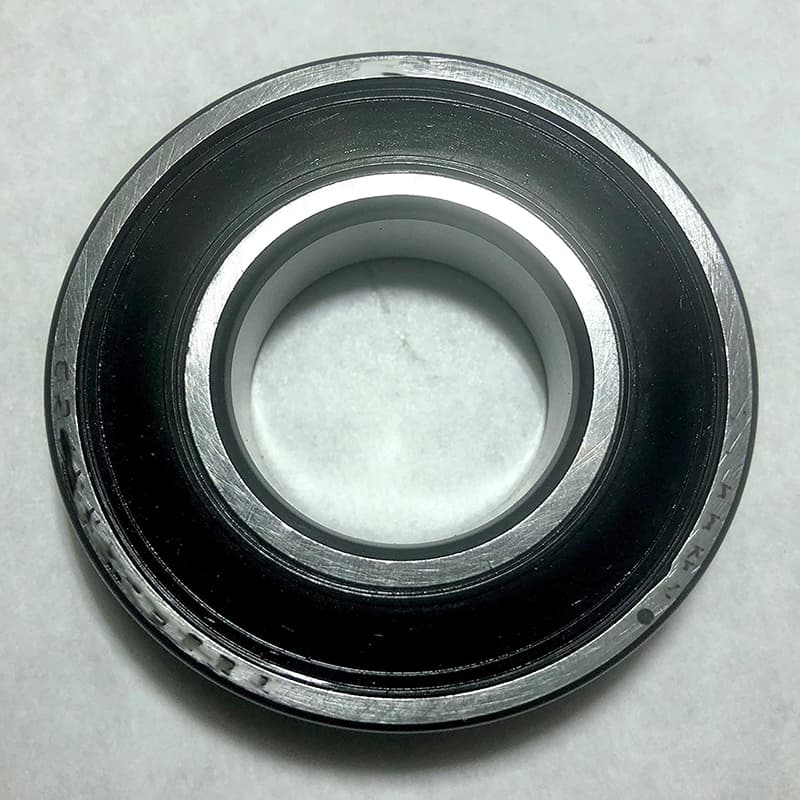
These characteristics are a direct result of their design. They explain why this bearing type is so prevalent, but also reveal its limitations.
Analyzing Design Features and Their Practical Impacts
Let’s connect each key characteristic to its root cause in the bearing’s geometry and construction.
1. Combined Load Capacity (Radial and Axial)
- Why? The deep, continuous raceway grooves in both rings allow the balls to transmit force at an angle. When an axial load is applied, the balls contact the raceways on a different part of the groove, transmitting the thrust.
- Practical Limit: They are not thrust bearings. A common rule is their axial load capacity is about 50% of their unused radial capacity. For pumps with significant thrust, this must be carefully calculated. Exceeding it leads to excessive stress and early failure.
2. High-Speed Capability
- Why? Ball bearings have point contact (which becomes an ellipse under load). This generates less friction than the line contact of roller bearings. They also typically have lightweight cages.
- Speed Limiter: The primary limit is the cage’s ability to withstand centrifugal forces. For very high speeds, special cage designs (machined brass, polymer) and lubrication methods (oil mist, jet) are used.
3. Low Friction and Torque
- Why? The rolling action of balls has inherently low friction. Sealed versions (2RS) have higher friction than open or shielded (ZZ) versions due to seal lip contact.
- Impact: Low friction means less heat generation and higher mechanical efficiency, which is important for energy consumption in continuously running pumps.
4. Simplicity and Versatility
- Why? They are single-row, non-separable (usually) bearings. This makes them easy to handle and install.
- Versatility: Available in open (no cover), shielded (ZZ), sealed (RS), and snap-ring grooved varieties. They can be made from various materials (chrome steel, stainless steel, ceramic).
5. Limitations to Acknowledge
- Lower Load Capacity than Roller Bearings: For the same outside dimensions, a cylindrical or spherical roller bearing has a much higher radial load capacity.
- Sensitivity to Misalignment: They can typically only tolerate very small angular misalignment (0.2-0.3 degrees). Misalignment causes noisy operation and reduced life. Pump shafts must be well-aligned.
Why These Characteristics Suit Many Pumps
Most centrifugal pumps have:
- Moderate radial loads from the impeller.
- Some axial thrust that varies with operation.
- High rotational speeds.
- A need for compact design and easy maintenance.
The deep groove ball bearing’s profile matches these needs well, making it the default choice. However, for pumps with very high thrust or severe misalignment, other types like angular contact pairs or spherical rollers may be necessary.
Procurement Insight
For Rajesh, stocking deep groove bearings for the pump market means focusing on the right variants. He should prioritize C3 clearance bearings (for thermal expansion), 2RS sealed bearings (for general purpose, some moisture protection), and P6 precision grades. Having a range of sizes in these specifications will cover the majority of pump repair needs. At FYTZ, we categorize our deep groove bearings by application, making it easy for distributors to select the pump-optimized series.
How to choose ball bearings?
Choosing is the practical application of the selection factors and an understanding of the bearing’s characteristics. It’s a decision flow.
To choose ball bearings, first determine the shaft size and load/speed requirements to select a size with adequate dynamic load rating. Then, choose the variant: open for high-speed clean, ZZ for high-speed with some protection, 2RS for general industrial, C3 clearance for heat, and a precision grade (P6) for smooth operation in pumps and compressors.
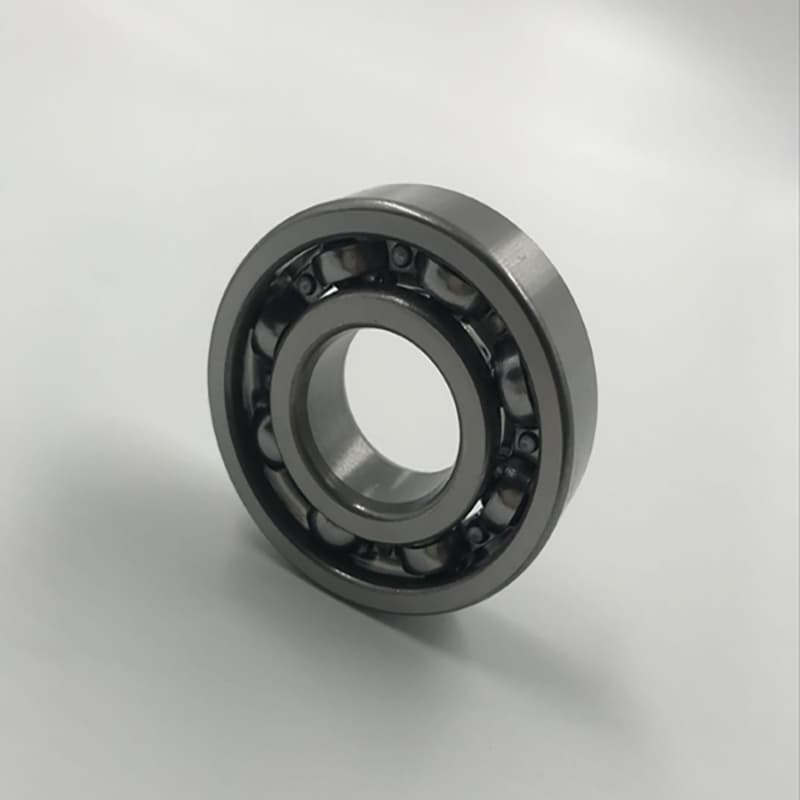
"Choosing" means navigating a catalog to arrive at a complete part number. It’s a step-by-step filtering process.
A Practical Step-by-Step Selection Guide
Follow this sequence to go from a problem to a specific bearing part number.
Step 1: Define the Basic Requirements (Non-Negotiables)
- Shaft Diameter (d): This sets the bore size. Measure the shaft or the old bearing’s inner ring.
- Radial Load (Fr): Estimate or calculate.
- Speed (n): Operating RPM.
- Desired Life (L10h): For a pump, 20,000 to 40,000 hours is common.
Step 2: Calculate and Select the Basic Size
- Calculate the required Basic Dynamic Load Rating (C) using the life formula:
C = P * ( (L10h * 60 * n) / 10^6 )^(0.3). (P is the equivalent dynamic load). - Open a bearing dimension table (like FYTZ’s catalog). Find the bearing series (e.g., 62 series, 63 series) with your bore size. Check that its catalog
Crating is greater than your calculatedC. The 63 series has a higher load capacity than the 62 series for the same bore.
Step 3: Choose the Configuration (Suffixes)
This is where you tailor the bearing to the environment. The basic number (e.g., 6208) gets suffixes.
- Internal Clearance: For pumps, especially if any heat is expected, choose C3. (Part number becomes 6208 C3).
- Seals/Shields:
- Clean, high-speed internal location: ZZ (or 2Z). -> 6208 ZZ C3
- General industrial, some dust/moisture: 2RS (contact rubber seals). -> 6208-2RS C3 (Note: Many standard 2RS bearings come with normal clearance; C3 must often be specified separately).
- Cage Type: For low noise or higher speeds, specify a polyamide (PA66) cage (suffix TN9). -> 6208-2RS TN9 C3
- Precision Class: For pumps, specify P6 for lower vibration. -> 6208-2RS TN9 C3 P6
Step 4: Verify Special Conditions
- Corrosive Environment: Specify Stainless Steel. The basic designation changes (e.g., to SS 6208 or a different series like 60 series in 440C steel).
- High Temperature: Ensure the cage and seals (if any) are rated for the temperature. An open bearing with a machined brass cage might be needed.
Example: Selecting a Bearing for a Coolant Pump
- Shaft: 40mm. Load: Moderate. Speed: 2900 RPM. Environment: Wet, occasional coolant splash.
- Selection Path:
- Bore 40mm -> 6208 series.
- Load/Speed/Life calculation confirms 6208 capacity is sufficient.
- Environment is wet -> 2RS seals.
- Motor generates some heat -> C3 clearance.
- For smooth operation -> P6 precision.
- Final Specification: 6208-2RS C3 P6.
The Distributor’s Role in Simplifying Choice
Rajesh can create a simplified selection table for his pump shop customers. The table would have pump horsepower or shaft size on one axis and the environment (dry, wet, chemical) on the other. The intersection would recommend a pre-specified FYTZ bearing code like "6208-2RS/C3/P6." This removes complexity for the customer and ensures they get the right part every time, building trust and repeat business.
What are the 4 major parts of a deep groove ball bearing?
Knowing the parts isn’t just academic. It helps you understand failure analysis, communicate with suppliers, and appreciate why certain design choices (like cage material) matter for pump applications.
The four major parts are the inner ring, outer ring, balls, and cage. The inner ring fits on the shaft, the outer ring fits in the housing, the balls carry the load by rolling, and the cage spaces the balls apart to prevent contact and guide them.
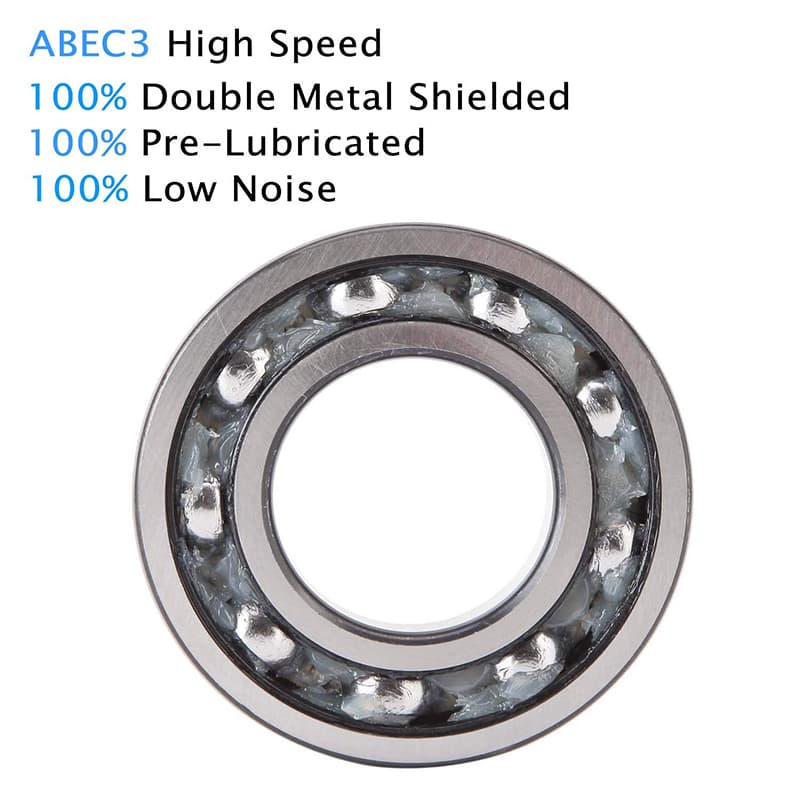
Each part’s quality and interaction directly influence the bearing’s performance in a pump—its noise, speed limit, temperature resistance, and ultimately, its life.
Component Deep Dive: Function, Material, and Pump-Specific Considerations
Let’s examine each part with a focus on what matters for reliable pump and compressor operation.
1. Inner Ring1
- Function & Fit: The rotating component. Its bore has a precise tolerance (usually h6 for motors/pumps) for a slight interference fit on the shaft, ensuring it rotates as one with the shaft.
- Pump Consideration: The raceway surface finish must be extremely smooth to minimize friction and heat generation at high speeds. Any imperfection here causes vibration.
2. Outer Ring2
- Function & Fit: The stationary component. Its OD has a tolerance (usually H7) for a slight clearance or light interference fit in the housing. It often has a rounded chamfer for easier installation.
- Pump Consideration: In some pump designs, the outer ring may be allowed to float axially in the housing to accommodate thermal expansion. The fit must be chosen correctly for this.
- The Critical Interface: They are the contact point between the rings. Their sphericity, size variation, and surface roughness are graded.
- Grades: Ball grades (G3, G5, G10, G16, etc.) define their precision. Lower number = higher precision.
- Pump Consideration: Higher precision balls (G10 or better) contribute to lower vibration and noise, which is important for smooth pump operation. The number and size of balls are optimized to balance load capacity and speed capability.
- The Unsung Hero: This part is crucial for high-speed performance. It must be strong, lightweight, and cause minimal friction.
- Common Types for Pumps:
- Stamped Steel Cage: Most common, cost-effective. Adequate for many general-purpose pumps.
- Machined Brass Cage: Used in higher-grade bearings. Better for high temperatures, higher speeds, and corrosive environments (compatible with some chemicals). It’s more robust.
- Polymer Cage (PA66, PEEK): Designated by suffixes like TN9 (glass fiber reinforced PA66). Excellent for high speeds, very low noise, and are self-lubricating to a degree. However, they have temperature limits (PA66 ~120°C continuous). Ideal for pumps where quiet operation is valued.
Interaction: Internal Clearance and Preload
The space between the balls and raceways when installed is the internal clearance5. In pumps, the inner ring heats up more than the outer ring. This thermal expansion reduces clearance. If you start with normal (CN) clearance, it can become zero or negative (preload), causing overheating. This is why C3 clearance6 is so often specified—it provides a safety margin against thermal preload.
Quality Implications for Procurement
When Rajesh evaluates deep groove bearings from different suppliers for his pump customers, he should ask about the components:
- Steel Quality7: Are the rings and balls made from clean, homogeneous bearing steel (e.g., SUJ2, 100Cr6)? At FYTZ, we use vacuum-degassed steel for longer fatigue life.
- Cage Option: Can he get bearings with polymer cages for noise-sensitive applications?
- Grinding Precision8: This affects the precision grade (P0, P6, P5). P6 is a good benchmark for pumps.
By sourcing bearings where all four parts are of controlled quality, Rajesh delivers reliability that his customers can depend on, reducing their downtime and his hassle with returns.
Conclusion
Selecting the right deep groove ball bearing for pumps and compressors requires a methodical review of load, speed, environment, and precision needs. By understanding the bearing’s characteristics and components, you can specify not just a bearing that fits, but one that is engineered for reliable, long-lasting, and efficient performance in demanding fluid-handling applications.
-
Understanding the Inner Ring’s role is crucial for ensuring optimal performance in pump applications. ↩
-
Learn about the Outer Ring’s specifications to ensure proper fit and function in various pump designs. ↩
-
Explore how the quality of rolling elements impacts vibration and noise in pump operations. ↩
-
Discover the different cage types and their benefits for high-speed and low-noise applications. ↩
-
Understanding internal clearance helps prevent overheating and ensures longevity in pump applications. ↩
-
Understanding C3 clearance is vital for managing thermal expansion and ensuring optimal bearing performance. ↩
-
Learn how steel quality affects bearing performance and fatigue life, crucial for reliable pump operation. ↩
-
Explore how grinding precision influences bearing performance and reliability in demanding applications. ↩