
I see bearings fail every day. Many times, the root cause is not a bad bearing, but a silent killer called misalignment. It shortens bearing life dramatically.
Spherical roller bearings compensate for misalignment through their unique design. The outer ring has a spherical raceway, and the rollers are barrel-shaped. This allows the inner ring, rollers, and cage to tilt or pivot inside the outer ring, accommodating angular shaft misalignment without creating destructive internal forces.
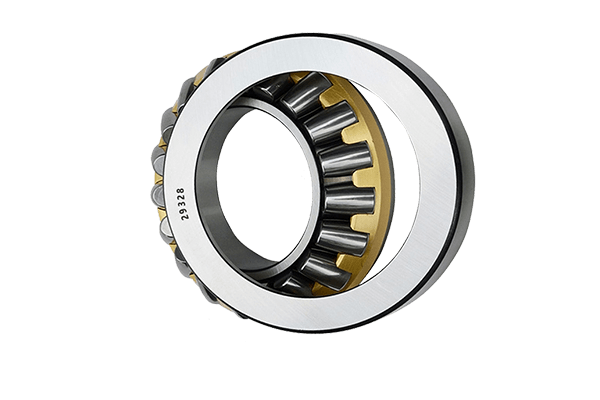
Misalignment is inevitable in the real world of machinery. Frames bend, shafts sag under load, and foundations settle. A rigid bearing cannot tolerate these shifts. It fights against them, leading to heat, noise, and premature failure. Understanding how spherical roller bearings solve this fundamental problem is key to selecting the right component for reliable operation. Let’s explore this critical feature in detail.
Can spherical bearings handle misalignment?
This is the first question many engineers and buyers like Rajesh ask. They have a noisy pump or a hot-running conveyor idler and suspect alignment issues.
Yes, spherical roller bearings are specifically designed to handle misalignment. They are known as "self-aligning" bearings because they can accommodate angular misalignment between the shaft and the housing, typically between 1.5 to 3 degrees, depending on the series and size.
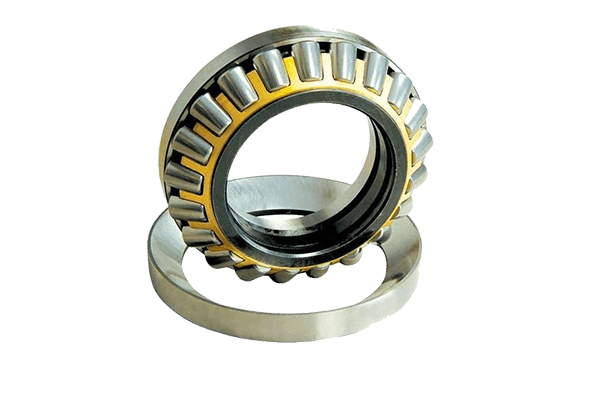
The simple answer is yes, but the "how" is what makes them special. They don’t just endure misalignment; they actively accommodate it.
The Mechanics of Self-Alignment: A Built-In Solution
Let’s break down exactly what happens inside the bearing when the shaft is not perfectly straight. This is not magic; it’s precise mechanical engineering.
The Core Design Elements
Two features work together:
- Spherical Outer Ring Raceway: The inside surface of the outer ring is ground into a smooth, continuous spherical shape (like the inside of a bowl). This is the guiding surface.
- Barrel-Shaped (Spherical) Rollers: The rollers are not cylindrical. Their profile is curved to match the spherical raceway of the outer ring. This ensures consistent contact even when tilted.
The Compensation Process in Action
Imagine mounting the bearing. The outer ring is fixed in the housing. The inner ring is pressed onto the shaft. If the shaft deflects under load or was installed at a slight angle, here is what occurs:
- The inner ring, along with the rollers and the cage (the roller assembly), is forced to tilt with the shaft.
- Because the outer ring’s raceway is a sphere, this entire inner assembly can pivot smoothly within it.
- The barrel-shaped rollers reorient themselves. They maintain proper rolling contact with both the inner ring raceway and the spherical outer ring raceway.
- The load path remains uniform. Stress is distributed correctly across the roller surfaces instead of concentrating on the edges.
Contrast with a Non-Self-Aligning Bearing
For comparison, think of a standard cylindrical roller bearing. Its outer ring raceway is a straight cylinder. If the shaft tries to tilt, the inner ring tilts, but the outer ring cannot. The rollers get pinched. Their ends dig into the raceway shoulders. This causes severe edge loading, rapid heat generation, high friction, and ultimately, spalling (surface fatigue) and failure. The bearing fights the misalignment until it loses.
A Real-World Example from Our Clients
A distributor in Egypt supplies bearings to large agricultural irrigation systems. The long pump shafts often deflect due to water pressure and uneven ground. They used to have constant failures with deep groove ball bearings on these pumps. The bearings would overheat and seize within months. We recommended switching to spherical roller bearings for the main pump support. The self-alignment feature absorbed the shaft deflection. The bearing failures stopped. The client’s maintenance costs dropped significantly. For Rajesh in India, this is a powerful story. When his customers in factories complain about frequent bearing changes on equipment with long shafts or flexible frames, suggesting a self-aligning spherical roller bearing isn’t just a sale—it’s providing a lasting solution.
What is the tolerance for bearing misalignment?
Knowing a bearing can handle misalignment is good. Knowing exactly how much is critical for engineering design and troubleshooting.
The typical angular misalignment tolerance for spherical roller bearings is between 0.5 and 3 degrees. For most standard series (like 21300, 22200, 22300), the practical allowance is about 1.5 to 2.5 degrees. This is significantly higher than the near-zero tolerance of bearings like cylindrical rollers.

Tolerance is not a single number. It depends on many factors. Pushing a bearing to its theoretical limit in daily operation is a recipe for reduced life.
Factors That Influence Practical Misalignment Limits
The catalog number is a starting point. In the field, other elements come into play. Let’s examine them.
Bearing Design and Series
Different spherical roller bearing series are optimized for different things. A bearing designed for extremely high load capacity might have a slightly lower misalignment allowance than one designed for general industry use. The curvature radius of the outer ring raceway determines the pivot point and range.
| Operating Conditions: The Big Variables | Factor | Effect on Misalignment Tolerance | Reason |
|---|---|---|---|
| Load | High load reduces effective tolerance. | Under heavy load, the rollers press deeply into the raceways. This makes it mechanically harder for the inner assembly to pivot smoothly. The bearing becomes "stiffer." | |
| Speed | High speed reduces effective tolerance. | At high RPMs, centrifugal force throws the rollers outward against the outer ring. This also restricts the free pivoting motion needed for alignment. | |
| Internal Clearance | Larger clearance allows for more alignment. | A bearing with a C3 or C4 radial internal clearance group has more space between the rollers and raceways. This extra space can be used to accommodate misalignment before the components bind. | |
| Lubrication | Inadequate lubrication reduces tolerance. | Proper lubrication forms a film that allows surfaces to slide slightly during the self-aligning action. Poor lubrication increases friction and can cause scuffing during alignment movement. |
The Cost of Exceeding the Limit
Even self-aligning bearings have a breaking point. If misalignment exceeds the design tolerance, several problems occur:
- Edge Loading: The rollers no longer make full contact. They ride on their very ends, creating enormous stress concentrations.
- Increased Friction and Heat: The sliding motion becomes severe instead of a gentle pivot.
- Cage Stress: The cage, which holds the rollers, experiences abnormal forces and can deform or fracture.
- Premature Fatigue: All the above factors drastically shorten the bearing’s L10 calculated life.
Guidance for Procurement and Application
For a buyer like Rajesh, this information is practical. When a customer asks for a spherical roller bearing, Rajesh should ask about the application. Is it for a slow-moving, heavily loaded mining cart? Or is it for a faster-running fan shaft? The expected misalignment might be similar, but the operating conditions change which bearing series or internal clearance is best. We often advise our distributors to recommend a bearing with a C3 clearance for most industrial applications where some misalignment and heat expansion are expected. This gives a better safety margin. The tolerance isn’t just a number on paper; it’s a living parameter that interacts with the machine’s entire environment.
What bearings are best for misalignment?
Spherical rollers are excellent, but they are not the only self-aligning option. The "best" choice depends on the specific mix of load, speed, and cost.
For handling significant misalignment under heavy radial loads, spherical roller bearings are the best. For lighter loads and higher speeds, self-aligning ball bearings are a good choice. For simple support with very high misalignment in low-load situations, spherical plain bearings or rod ends may be used.
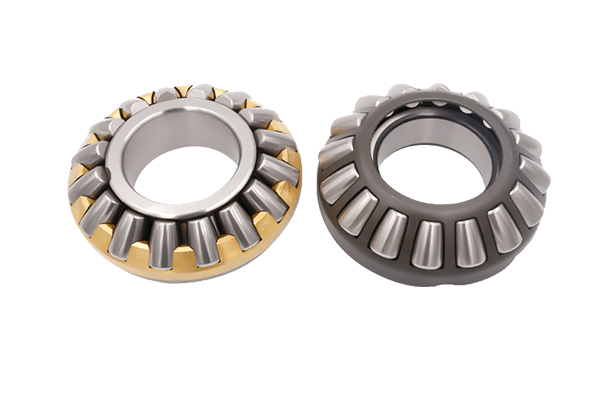
Choosing the right tool means looking at the whole toolbox. Let’s compare the main contenders in the "misalignment compensation" category.
A Comparative Analysis of Self-Aligning Solutions
We will look at four common bearing types that offer some form of misalignment accommodation. Each has its champion application area.
1. Spherical Roller Bearings (The Heavyweight Champion)
- Mechanism: Pivoting inner assembly with barrel rollers in a spherical outer raceway.
- Misalignment Capacity: High (typically 1.5° – 2.5°).
- Load Capacity: Excellent radial load capacity. Good bidirectional axial load capacity.
- Speed Limit: Moderate. Not suitable for very high speeds.
- Best For: Heavy-duty applications with combined radial and axial loads and expected misalignment. Think conveyors, vibrators, gearboxes, rolling mills.
- FYI from FYTZ: This is our core strength for industrial clients. We produce these in volume for export to markets like Russia and South Africa where mining and heavy industry are prevalent.
2. Self-Aligning Ball Bearings (The All-Rounder)
- Mechanism: Two rows of balls running in a spherical outer ring raceway.
- Misalignment Capacity: Good (typically up to 3° or more).
- Load Capacity: Moderate radial load capacity. Limited axial load capacity.
- Speed Limit: High. Can run at much higher speeds than spherical rollers.
- Best For: Applications with lighter loads, higher speeds, and need for misalignment compensation. Common in textile machinery, midsize fans, and some agricultural equipment.
- Comparison Point: For Rajesh’s customers in auto repair shops, a self-aligning ball bearing might be found in some vehicle components. It’s cheaper than a spherical roller but cannot handle the same crushing loads.
3. Spherical Plain Bearings / Rod Ends (The Articulation Specialist)
- Mechanism: A spherical inner ring (ball) sliding or rolling inside a spherical outer ring (socket). Often used with maintenance-free lubricant.
- Misalignment Capacity: Very High (can often exceed 10°). They can also handle shaft displacement, not just angular misalignment.
- Load Capacity: High static load capacity, but generally for slower, oscillating movements rather than continuous rotation.
- Speed Limit: Very low. Designed for sliding, not high-speed rotation.
- Best For: Linkages, hydraulic cylinder mounts, control rods, and suspension systems where movement is oscillating and alignment is poor.
- Key Difference: These are not "rolling element" bearings in the traditional sense. They are a different product category for different motion types.
4. CARB Toroidal Roller Bearings (The Niche Innovator)
- Mechanism: A single row of long, thin, barrel-shaped rollers in a toroidal (donut-shaped) raceway. They can align and also compensate for axial displacement.
- Misalignment Capacity: Good (around 2°).
- Load Capacity: Very high radial load capacity, similar to spherical rollers.
- Unique Feature: Can accommodate axial displacement (shaft growth/shrinkage) without additional guides, unlike spherical rollers which need axial clearance.
- Best For: Specific applications in paper machines, conveyor systems, and situations with both misalignment and significant thermal axial expansion.
Making the Choice for Your Business
For an importer/distributor, stocking decisions matter. If Rajesh’s main market is industrial maintenance (conveyors, crushers), focusing on spherical roller bearings is smart. If he also supplies lighter machinery workshops, having self-aligning ball bearings in stock completes his portfolio. The "best" bearing is the one that solves the customer’s specific problem most reliably and cost-effectively. I always tell our partners: "Don’t just sell a bearing. Sell the right bearing for the job." This builds long-term trust and reduces costly returns from failed applications.
What is bearing misalignment?
Before we can fix a problem, we must define it clearly. Misalignment is often invisible to the naked eye but devastating to bearings.
Bearing misalignment is the condition where the axes of the bearing’s inner ring (shaft) and outer ring (housing) are not perfectly parallel or collinear. This creates uneven load distribution inside the bearing, leading to increased stress, heat, vibration, and premature failure.
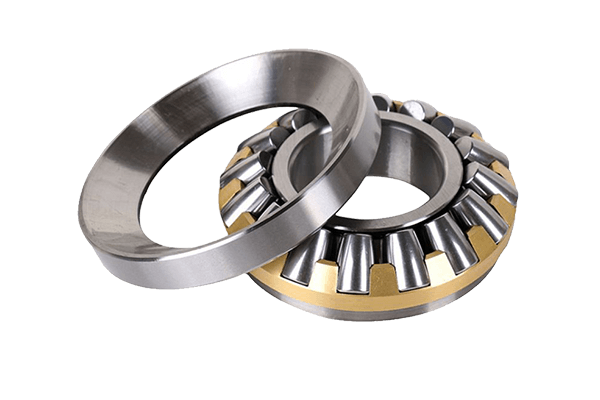
Misalignment is a silent enemy. A few thousandths of an inch or a fraction of a degree off can cut a bearing’s life by 80% or more. It’s crucial for anyone involved in machinery maintenance or parts supply to recognize its forms and causes.
Defining the Types and Root Causes of Misalignment
Misalignment isn’t just one thing. It manifests in different ways, each with its own challenges. Understanding these types helps in diagnosis and prevention.
The Three Main Types of Misalignment
- Angular Misalignment: This is the most common type discussed with spherical rollers. The shaft centerline intersects the housing centerline at an angle. It’s like a driveshaft connecting to a gearbox at a slight tilt.
- Parallel (Offset) Misalignment: The shaft and housing centerlines are parallel but do not coincide. They are offset from each other. Think of two pulleys where the belts are not perfectly in line.
- Combined Misalignment: This is the real-world scenario. Most machinery has a combination of both angular and parallel misalignment. This is the most challenging condition to correct fully.
Common Sources of Misalignment in Industrial Settings
Misalignment doesn’t always start during installation. It develops over time. Here are the usual suspects:
- Installation Errors: The number one cause. Hammering a bearing onto a shaft, dirty fits, or not using proper alignment tools during assembly.
- Shaft Deflection: Long shafts bend under their own weight or the load of attached components (like a large impeller or pulley).
- Housing Distortion: The bearing housing itself can warp due to uneven mounting forces, welding stresses, or thermal gradients.
- Foundation Settlement: Over years, the concrete or steel frame supporting a machine can settle unevenly, twisting the entire machine structure.
- Thermal Expansion: Different parts of a machine expand at different rates when heated. A hot shaft expands more than a cooler housing, potentially creating internal misalignment forces.
- Wear and Looseness: Over time, fits can become loose. A worn shaft or a housing bore that has become oval will introduce misalignment.
The Direct Consequences of Misalignment
Let’s trace the cause-and-effect chain inside a non-self-aligning bearing:
- Uneven Load Distribution: Instead of the load being shared evenly across all rollers or balls, it concentrates on just one or two elements at the edge.
- Increased Stress: The concentrated stress at the contact edges far exceeds the material’s design limits.
- Heat Generation: The uneven contact creates excessive friction. This friction generates localized heat.
- Lubrication Breakdown: The high heat can break down the lubricant, losing its protective film.
- Premature Fatigue: Metal-to-metal contact and high stress lead to early spalling (pitting) on the raceways and rollers.
- Vibration and Noise: The damaged surfaces cause vibration, which you can hear and feel. This is often the first sign a maintenance technician notices.
The Role of the Bearing Distributor
For someone like Rajesh, this knowledge is power. When a customer from a local cement plant brings in a failed bearing that shows clear signs of edge loading (wear marks only on one side), Rajesh can do more than just sell a replacement. He can ask intelligent questions: "Was the shaft checked for straightness?" "Could the foundation have shifted?" By educating his customers about the root causes of failure, he moves from being a parts vendor to a technical advisor. This is how strong, long-term business partnerships are built. At FYTZ, we train our distributors on these fundamentals so they can add value to their own customers.
Conclusion
Bearing misalignment is a major cause of premature failure, but it doesn’t have to be. By understanding its types, causes, and especially by selecting bearings designed to compensate for it—like spherical roller bearings—you can build more reliable and durable machinery.
