
I once watched a procurement manager flip through fifteen different supplier quotes on his desk. He had no system to compare them. He ended up choosing the cheapest option. That decision cost him two containers of rejected bearings and a very angry warehouse manager.
A technical comparison sheet is a structured document that lets you evaluate bearing suppliers side-by-side using the same criteria. It covers dimensions, load ratings, material grades, precision levels, certifications, and pricing – all in one place. This tool helps you spot the best value supplier, not just the cheapest one.
I run a bearing factory in China. I have seen the inside of many purchasing departments. I have also seen the mistakes they make when they do not use a proper comparison sheet. The good news is that creating one is not complicated. You just need to know what to look for and how to organize the information. In this article, I will walk you through the exact process I recommend to my own clients. By the end, you will have a clear method that will save you time, money, and frustration.
Why Should You Create a Standardized Comparison Sheet Before Sourcing Bearings?
A buyer from Pakistan once told me he kept his supplier information in his email inbox. When he needed to reorder, he would search for the last quote and use that. He never compared suppliers systematically. One day, his regular supplier raised prices by 20%. He had no idea if that was fair. He had no benchmark. He paid the increase because he did not have time to research alternatives.
A standardized comparison sheet gives you a clear benchmark for pricing, quality, and delivery terms. It removes guesswork and emotional decision-making. It also gives you leverage when negotiating – you can see exactly where each supplier stands on every important metric.
It Saves You from Memory-Based Decisions
Human memory is unreliable. You might remember that Supplier A had good quality, but you forget that their lead time was six weeks. You might remember that Supplier B was cheap, but you forget that their bearings had a higher rejection rate. A written sheet captures all these facts at the same time. You can look at the sheet and make a balanced decision.
I have seen this happen many times. A buyer will tell me, "We always buy from X because they are reliable." But when I ask for numbers – rejection rate, on-time delivery percentage, average response time – they do not have them. They are relying on a feeling. That is risky in a B2B business where margins are thin.
It Gives You Negotiation Power
When you have a comparison sheet, you know the market range. You know Supplier A charges $2.50 per bearing. You know Supplier B charges $2.80 but offers better precision. You know Supplier C charges $2.30 but has a longer lead time. With this information, you can go back to Supplier A and say, "Your price is higher than the market average for this specification. Can you match Supplier C?" That is a strong position to be in.
I once worked with a client in Turkey who used a comparison sheet to negotiate a 12% price reduction from his main supplier. He simply showed them the sheet and said, "I have other options. What can you do for me?" They adjusted their price within 24 hours.
It Helps You Spot Hidden Costs
Price per bearing is only one part of the total cost. You also need to consider shipping costs, payment terms, minimum order quantities, and packaging quality. A standardized sheet forces you to capture all these line items. You might find that Supplier A has a lower unit price but charges $500 more for shipping. Or Supplier B has a higher unit price but offers free samples and faster delivery. The sheet makes these trade-offs visible.
So the bottom line is this: do not source bearings without a comparison sheet. It is a small investment of time that pays back many times over. I have been telling this to my clients for years. The ones who listen are the ones who stay profitable.
What Are the Must-Have Technical Parameters to Compare Across Suppliers?
I remember a buyer from Indonesia who sent me a request for quotation. His email simply said, "Send me price for 6202 bearing." That was all. He did not specify the seal type, the clearance, or the precision grade. I asked him for more details. He said, "Just the standard one." But there is no single "standard" 6202. There are dozens of variations. He later received quotes from five suppliers – each one quoting a different specification. He could not compare them at all.
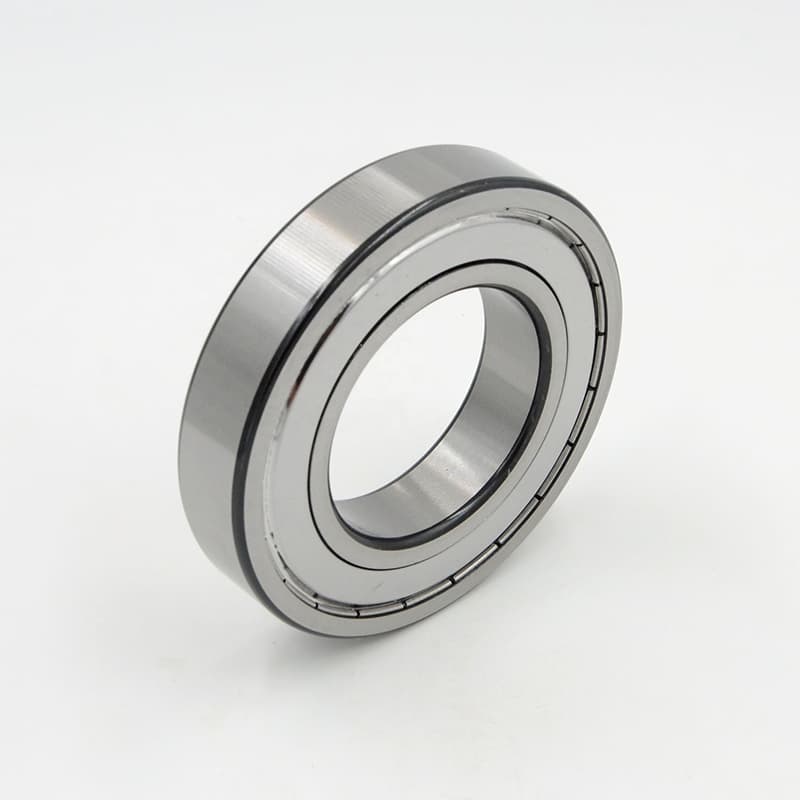
The must-have technical parameters are bearing designation, dimensions (d x D x B), basic load ratings (Cr and Cor), limiting speed, precision class (P0/P6/P5), internal clearance (CN/C3/C4), seal type (ZZ/2RS/RS), material grade, and lubrication type. You must collect these nine items from every supplier to make a fair comparison.
Dimensions and Designation – The Starting Point
Every bearing has a standard designation. For example, 6204-2RS-C3. That tells you the size (6204), the seal type (2RS), and the clearance (C3). But some suppliers use their own internal codes. You need to ask for the actual dimensions – inner diameter, outer diameter, and width – in millimeters. Also ask for the boundary dimensions that confirm the bearing fits your housing and shaft properly.
I always tell my clients: do not assume the designation means the same thing for every supplier. Some factories in China use slightly different internal geometries even for the same designation. That can affect the fit. So always confirm the actual measured dimensions from each supplier. Put those numbers in your comparison sheet.
Load Ratings – Dynamic and Static
The basic dynamic load rating (Cr) tells you how long the bearing will last under continuous rotation. The basic static load rating (Cor) tells you the maximum load the bearing can handle when it is not rotating. These numbers are calculated using ISO standards. But not all suppliers use the same calculation method. Some exaggerate these numbers to look better.
Here is what I do: I ask each supplier for the load ratings based on the ISO 281 standard. Then I check if the numbers are consistent with the bearing size. For a given size, there is a typical range. If one supplier claims a Cr that is 20% higher than the others, I get suspicious. That is a red flag. I note that in my sheet.
Precision Class and Internal Clearance
These two parameters affect the performance of your equipment. Precision class is usually P0 (normal), P6 (higher), or P5 (even higher). For most industrial applications, P6 is a good balance of cost and accuracy. But some suppliers offer P6 but deliver P0. You need to confirm this.
Internal clearance is CN (normal), C3 (larger), or C4 (extra larger). For door motors and automation accessories, I usually recommend C3. That gives room for thermal expansion. But again, you need to confirm what each supplier actually offers.
Here is a simple table to help you track these parameters:
| Parameter | Unit / Standard | Supplier A | Supplier B | Supplier C |
|---|---|---|---|---|
| Designation | – | 6204-2RS-C3 | 6204-2RS-C3 | 6204-ZZ-CN |
| Inner diameter (d) | mm | 20 | 20 | 20 |
| Outer diameter (D) | mm | 47 | 47 | 47 |
| Width (B) | mm | 14 | 14 | 14 |
| Dynamic load (Cr) | kN | 13.5 | 12.8 | 13.2 |
| Static load (Cor) | kN | 6.6 | 6.2 | 6.5 |
| Precision class | – | P6 | P0 | P6 |
| Internal clearance | – | C3 | C3 | CN |
| Seal type | – | 2RS (contact) | 2RS (contact) | ZZ (non-contact) |
| Material | – | GCr15 | GCr15 | GCr15 |
Material and Lubrication – Often Overlooked
Most suppliers use GCr15 steel (equivalent to AISI 52100). But some use lower-grade steel from smaller mills. That affects hardness and wear resistance. Ask each supplier for the steel grade and the heat treatment process they use. Good suppliers will tell you the hardness range (usually HRC 60-64) and the case depth.
For lubrication, ask for the grease type and the base oil viscosity. Door motors need a grease that works across a wide temperature range. If a supplier cannot tell you these details, that is a red flag. Put all these in your sheet. You will quickly see which suppliers know their products and which ones are just pushing boxes.
How Can You Verify That a Supplier’s Spec Sheet Matches Real-World Performance?
A customer from Brazil once showed me a beautiful spec sheet from a Chinese supplier. It had all the right numbers – load ratings, precision grades, and material certificates. But when he received the first sample order, the bearings were noisy and rough. He tested them on his own equipment. The vibration levels were twice the spec. The supplier had sent him a lower-grade product and hoped he would not notice.
You verify a supplier’s spec sheet by requesting sample testing, asking for third-party inspection reports, checking their production line certifications (ISO 9001, IATF 16949), and performing your own dimensional and vibration tests on received samples. Do not trust a sheet alone – trust data you collect yourself.
Ask for Third-Party Test Reports
A good supplier will have test reports from an independent lab. These reports confirm the material composition, hardness, and dimensional accuracy. Look for reports from labs like SGS, TÜV, or Bureau Veritas. These are trusted names.
When you receive the report, check the date. A report from three years ago does not mean much. Ask for a recent report that matches your batch. I send my clients fresh test reports for every production batch. That is the standard practice in our factory. If a supplier hesitates to share these reports, that is a warning sign.
Run Your Own Sample Tests
Order samples from the top three suppliers on your comparison sheet. Then test them in your own workshop. Measure the bore, outer diameter, and width. Check the radial runout. Listen to the noise during rotation. Feel for roughness.
You do not need expensive equipment. A simple dial indicator can measure runout. A stethoscope or a noise meter can check for abnormal sounds. I have seen buyers do these simple tests with basic tools. They often catch mismatches that would have caused problems later.
Here is a simple checklist for sample testing:
| Test | What It Checks | How to Do It | Pass/Fail Criteria |
|---|---|---|---|
| Dimensional check | Bore, OD, width | Use calipers or micrometer | Within ISO tolerance |
| Radial runout | Eccentricity | Mount on mandrel, use dial gauge | Below supplier spec |
| Noise test | Bearing smoothness | Spin by hand, listen | No grinding or irregular sound |
| Grease examination | Lubricant quality | Check color and consistency | Clean, uniform grease |
| Visual inspection | Rust, nicks, dents | Look under good light | No visible defects |
Check Their Production Line and Certifications
A supplier can have a beautiful website and a polished spec sheet. But what does their factory actually look like? Ask for a video tour or, better yet, arrange a visit. Look for ISO 9001 certification. That shows they have a basic quality management system. If they supply automotive customers, look for IATF 16949. That is a stricter standard.
Also ask about their inspection equipment. Do they have a CMM (coordinate measuring machine)? Do they have a roughness tester? Do they have a hardness tester? A supplier with good inspection equipment will catch defects before shipping. A supplier without them is flying blind.
Track Batch Consistency
One good batch does not mean every batch will be good. I always advise buyers to test samples from at least two different production batches. Compare the results. If the dimensional variation is large between batches, that supplier has inconsistent process control.
I once had a client who tested three consecutive batches from a competitor. The bore variation was 15 microns between batches. That was acceptable on paper but caused fit issues in his assembly line. He switched to us because our batch-to-batch variation was only 5 microns. Consistency matters more than a single perfect sample.
So here is my rule: verify with third-party reports, run your own sample tests, inspect the factory, and track batch consistency. A spec sheet is a promise. Real-world performance is the proof.
How Do You Score and Weigh Each Parameter for a Fair Supplier Ranking?
A client from Egypt once told me he had a spreadsheet with 20 different suppliers. Each row had numbers for price, quality, and delivery. But he did not know how to combine them into a single score. He kept switching between suppliers based on his mood of the day. He was frustrated because he felt like he was never making the best decision.
You score and weigh each parameter by first assigning a priority weight to each category – for example, quality (40%), price (30%), delivery (20%), and service (10%). Then you rate each supplier on a 1-5 scale for each category, multiply by the weight, and sum the results. This gives you a single, objective score for each supplier.
Step 1 – Define Your Priority Weights
Different buyers care about different things. Rajesh, my typical customer in India, cares most about consistent quality because his customers are repair shops that blame him for failures. For him, quality might be 50% of the score. Price is important, but not at the cost of returns and reputation.
For another buyer who serves price-sensitive markets, price might be 50% and quality 30%. There is no single right answer. You need to decide what matters most to your business.
Here is a sample weight allocation for a typical industrial buyer:
| Category | Weight | Why It Matters |
|---|---|---|
| Quality (technical specifications and consistency) | 40% | Prevents failures and returns |
| Price (unit cost plus shipping) | 30% | Affects your margin |
| Delivery (lead time and on-time rate) | 20% | Keeps your warehouse stocked |
| Service (communication, customization, after-sales) | 10% | Makes your life easier |
Step 2 – Rate Each Supplier on Each Category
For each category, give each supplier a score from 1 (poor) to 5 (excellent). Be specific. Do not give a 4 just because you like the salesperson. Base your score on the actual data from your comparison sheet.
For example:
- For quality: check the sample test results. A supplier with passing samples and good batch consistency gets a 5. A supplier with borderline dimensions gets a 3. A supplier with failed samples gets a 1.
- For price: check the total landed cost. The lowest price gets a 5. The highest gets a 1. Others get a proportionate score.
- For delivery: a supplier with a 4-week lead time and 95% on-time delivery gets a 5. A supplier with a 8-week lead time and 70% on-time delivery gets a 2.
- For service: a supplier that responds in 24 hours and offers customization gets a 5. A supplier that takes a week to reply gets a 2.
Step 3 – Calculate the Weighted Total Score
Multiply each rating by its weight, then add all the numbers together.
Let me show you a real example:
| Supplier | Quality (40%) | Price (30%) | Delivery (20%) | Service (10%) | Weighted Total |
|---|---|---|---|---|---|
| Supplier A | 5 (2.0) | 3 (0.9) | 4 (0.8) | 4 (0.4) | 4.1 |
| Supplier B | 3 (1.2) | 5 (1.5) | 3 (0.6) | 3 (0.3) | 3.6 |
| Supplier C | 4 (1.6) | 4 (1.2) | 5 (1.0) | 5 (0.5) | 4.3 |
In this example, Supplier C is the winner. He has good quality, fair price, excellent delivery, and great service. Supplier A has better quality but higher price and slower delivery. Supplier B is cheap but weak on quality and service.
Step 4 – Do a Sensitivity Check
One trick I use is to adjust the weights slightly and see if the ranking changes. If Supplier A is better on quality but worse on price, try a weight of 45% for quality and 25% for price. Does Supplier A become the winner? If yes, that means your decision is sensitive to the weight choice. That is okay – it just means you need to think carefully about your priorities.
I also recommend doing a risk check for the top-ranked supplier. Ask yourself: if this supplier has a production problem, do you have a backup? If the answer is no, consider ranking a second supplier as a qualified backup.
Step 5 – Use the Score to Negotiate
Once you have the scores, use them in your negotiations. Tell Supplier B: “You scored well on price, but your quality rating is low because your sample did not meet our tolerances. If you can improve the quality, you could become our main supplier.” That gives them a clear path to earn your business.
This scoring system is simple but powerful. It removes emotions from the buying process. It gives you a repeatable method that you can use for every sourcing decision. I have seen procurement teams reduce their supplier evaluation time from weeks to days using this method.
Conclusion
A technical comparison sheet is your best tool for finding the right deep groove ball bearing supplier. Focus on key parameters, verify them with samples, and score each supplier using a weighted system that reflects your real priorities.