
Your grain dryer fan stops in the middle of harvest. The bearing failed. You lose money every hour the fan is down.
Standard deep groove ball bearings fail fast in agricultural ventilation because of dust, moisture, and high heat. You need sealed bearings, high-temperature grease, and the right clearance.
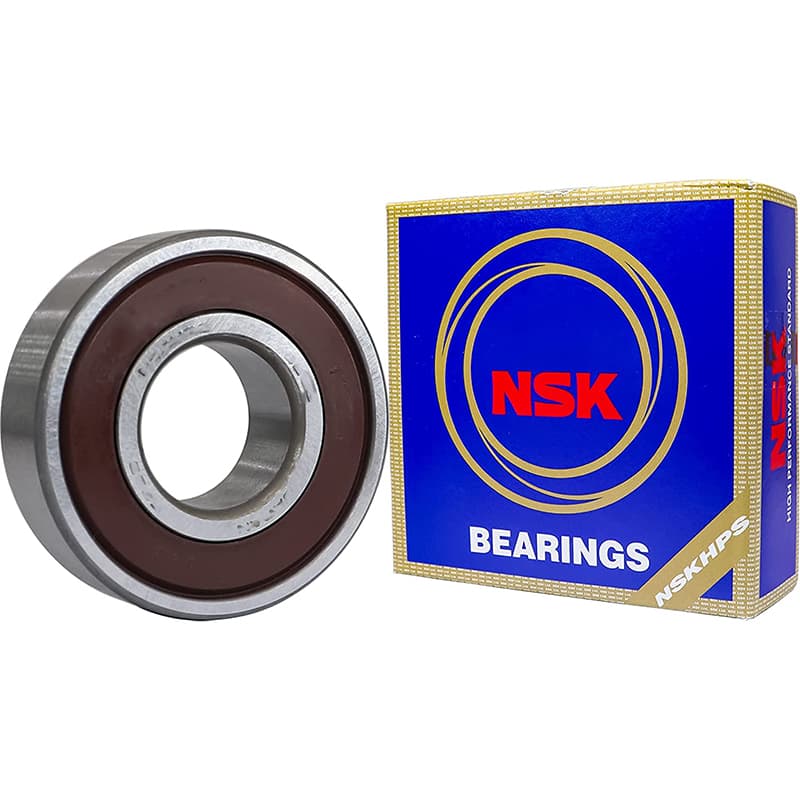
I have helped farmers and equipment makers across India, Brazil, and Egypt. They all have the same problem. The bearings in their grain dryers and ventilation fans die too quickly. The cause is not bad luck. It is bad selection. In this article, I will show you four common mistakes and how to fix them. Let me start with the first one.
Why Do Standard Bearings Fail Fast in Grain Dryers and Ventilation Fans?
You buy a standard bearing from a local shop. It works for a month in your grain dryer fan. Then it makes noise. Then it locks up. You think it is a bad brand. But the real problem is the wrong bearing for the job.
Standard bearings fail in grain dryers because of three killers: fine grain dust, high humidity, and temperature swings.
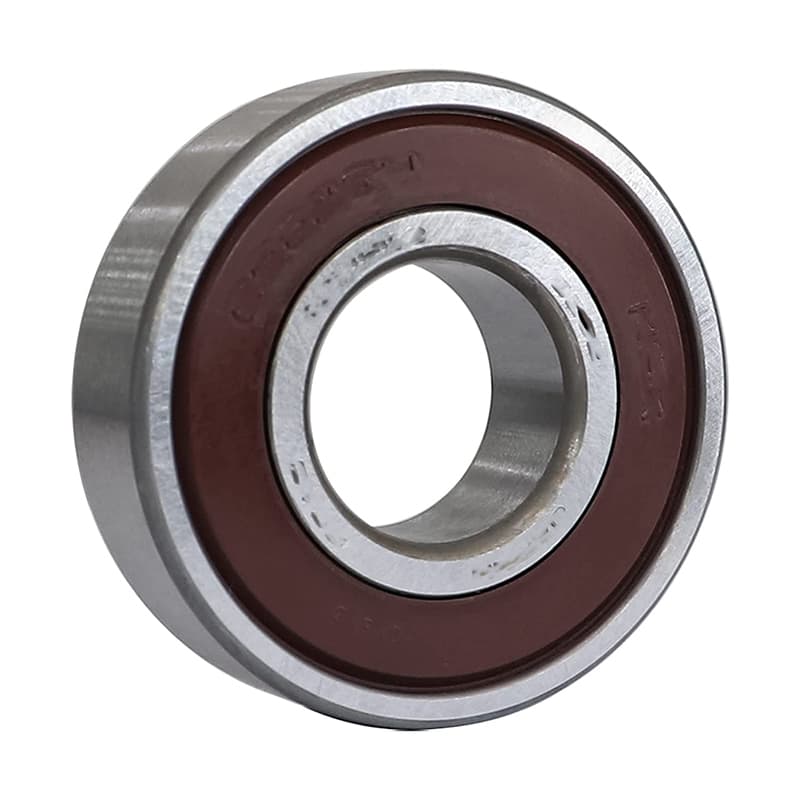
Let me explain each killer.
Killer 1: Fine grain dust. Grain dust is not like normal dust. It is very fine. The particles are smaller than 10 microns. They float in the air like smoke. Metal shields (ZZ) have a gap of 50 to 100 microns. That gap is huge compared to grain dust. The dust goes right through the gap. Once inside the bearing, the dust mixes with the grease. It turns into a grinding paste. The bearing wears out in days or weeks.
Killer 2: High humidity. Grain dryers use hot air to remove moisture from the grain. That hot air carries a lot of water vapor. When the fan stops at night, the system cools down. Water condenses on the metal parts. If your bearing has any opening, water gets inside. Rust forms overnight. The next morning, you start the fan. The rust grinds the raceways. The bearing fails soon after.
Killer 3: Temperature swings. A grain dryer runs hot during the day (60-80°C inside the fan housing). At night, it cools down to ambient temperature (maybe 20°C). This cycle happens every day. Standard bearings with normal clearance (CN) may bind when hot. Then they loosen when cold. This back and forth causes internal damage. The balls and raceways develop wear patterns that lead to early failure.
How fast do standard bearings fail in this environment?
| Environment | Standard Bearing (CN, ZZ) | Expected Life |
|---|---|---|
| Clean indoor fan | 2-3 years | Normal |
| Grain dryer fan with no dust protection | 2-4 weeks | Very short |
| Grain dryer fan with ZZ shields | 1-3 months | Short |
| Ventilation fan near grain storage (dusty) | 1-2 months | Short |
A real story from a customer in India. He makes mobile grain dryers for farmers. His first design used standard 6204 ZZ bearings with normal grease. The dryers worked well in tests. Then his customers started reporting failures after one month of use. He was confused. I visited his factory. We looked at the failed bearings. They were full of red dust (rust) and brown powder (grain dust). The ZZ shields did nothing. I told him to switch to 2RS rubber seals and high-temperature grease. He did. The next batch of dryers ran for the whole harvest season without a single bearing failure. He now uses that spec for all his machines.
What you need to learn. Do not use standard bearings in agricultural ventilation. The environment is too harsh. You need bearings designed for dust, moisture, and heat. The next sections will show you exactly what to look for.
How to Choose Between 2RS Rubber Seals and ZZ Metal Shields for Dusty Farms?
You see two versions of the same bearing: one with a rubber seal (2RS) and one with a metal shield (ZZ). Which one stops grain dust? The answer is clear.
Rubber seals (2RS) keep grain dust out much better than metal shields (ZZ). The rubber lip touches the inner ring. There is no gap. Dust cannot enter. Metal shields have a large gap that lets fine dust pour in.
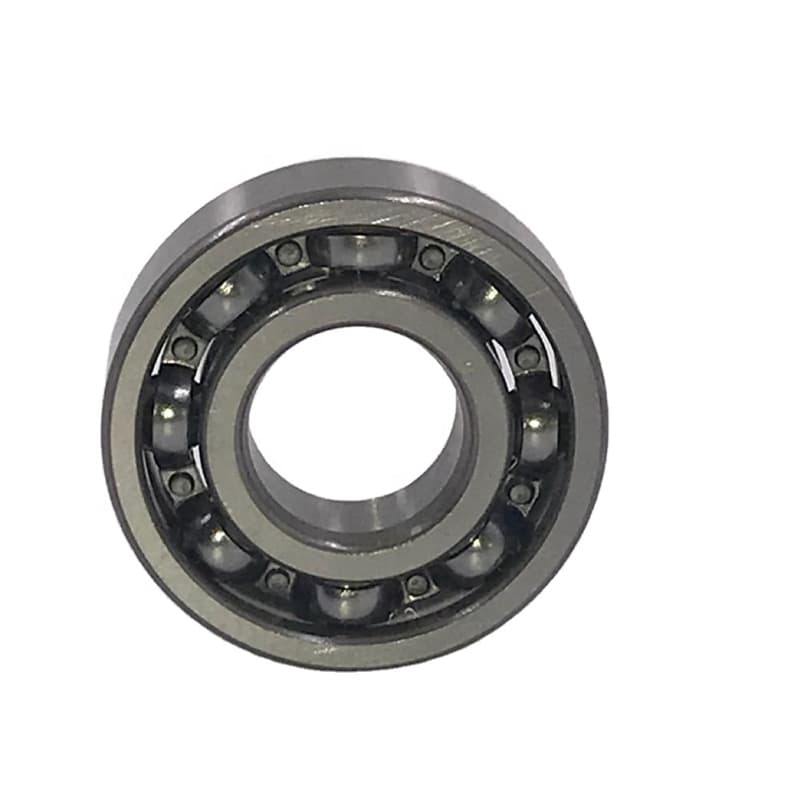
Let me show you the difference with real numbers.
How metal shields (ZZ) work. A metal shield is a thin steel disc. It is pressed into the outer ring. The inner ring spins. There is a small gap (0.05 to 0.2mm) between the shield and the inner ring. This gap stops large particles like sand. But it does not stop fine dust. Grain dust particles are 1 to 10 microns. That is 10 to 100 times smaller than the gap. So the dust flows right through.
How rubber seals (2RS) work. A rubber seal has two parts: a metal insert for strength and a rubber lip. The rubber lip touches the inner ring directly. There is no gap. The lip rides on the surface of the inner ring. It forms a physical barrier. Even micron-sized dust cannot get past the lip. The only way dust can enter is if the lip wears out or if the rubber hardens.
Comparison of sealing effectiveness.
| Feature | Metal Shield (ZZ) | Rubber Seal (2RS) |
|---|---|---|
| Gap to inner ring | 0.05-0.2mm | 0 (contact) |
| Grain dust protection | Poor (dust enters) | Excellent (stays out) |
| Moisture protection | Poor | Good to excellent |
| Friction (drag torque) | Low | Medium (2-3x higher) |
| Maximum speed | Very high (10,000+ RPM) | Medium (limited by seal heat) |
| Cost difference | Base | +10-20% |
| Best for | Clean, dry, high speed | Dusty, wet, agricultural |
But there is a catch. Rubber seals have a temperature limit. Standard nitrile rubber seals work up to 100-120°C. In a grain dryer, the air temperature can reach 80-100°C. The bearing itself may be cooler because of the fan’s cooling effect. But if your dryer runs very hot (over 100°C air), you need silicone rubber seals. Those work up to 200°C. Always check the seal material.
A real test from a customer in Brazil. He runs a grain storage facility with 50 ventilation fans. He used ZZ shielded bearings for years. He changed bearings every 2 months during the harvest season. He was tired of the cost and downtime. I suggested switching to 2RS sealed bearings on 10 fans as a test. After 6 months, the sealed bearings were still running. The shielded bearings had failed twice in that time. He switched all 50 fans to 2RS. His annual bearing cost dropped by 70%.
What about the higher friction of rubber seals? For agricultural fans, speed is usually low to medium (1,000 to 3,000 RPM). The extra friction of a rubber seal is tiny. It adds maybe 0.5% to the motor power. That is nothing compared to the cost of a bearing failure. So do not worry about friction. Worry about dust.
My recommendation. For any agricultural fan or grain dryer that handles dusty air, always choose 2RS rubber seals. Never use ZZ shields. The small extra cost pays for itself in longer bearing life.
High-Temperature Grease vs. Standard Grease: A Life-or-Death Choice?
You buy sealed bearings. They have grease inside. But the grease is standard lithium grease. It melts at 80°C. Your grain dryer runs at 90°C. The grease fails. The bearing fails.
For grain drying systems, you must use high-temperature grease (lithium complex or polyurea) with a dropping point above 200°C. Standard grease will melt, leak out, and leave the bearing dry.
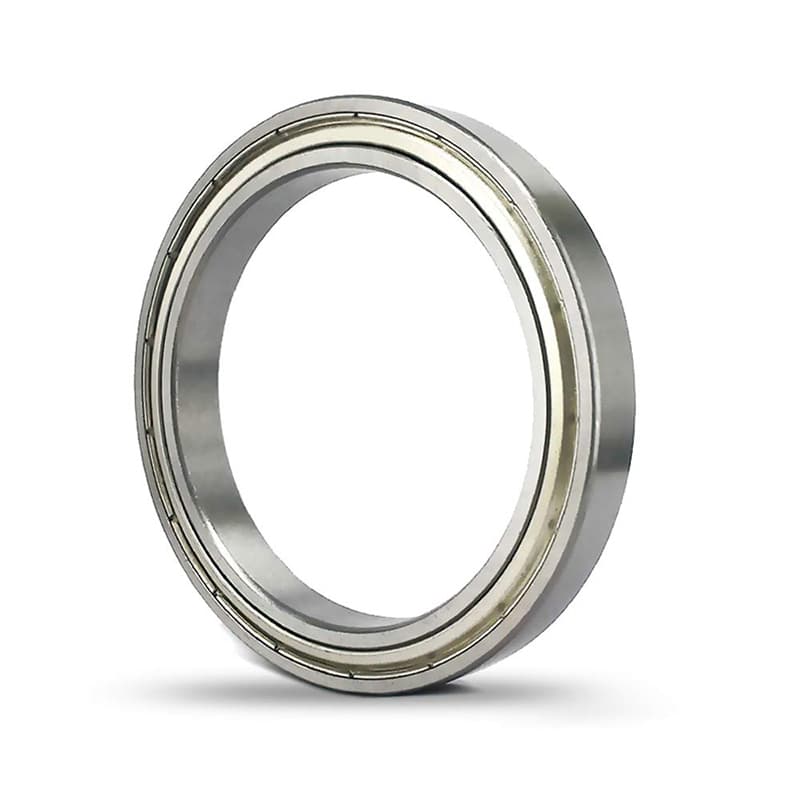
Let me explain why grease is so important.
What happens to standard grease in heat. Standard lithium grease is made for normal temperatures (up to 80°C). When it gets hotter, three things happen. First, the oil separates from the thickener. The oil runs out of the bearing. The thickener stays behind but has no lubrication value. Second, the thickener hardens into a crust. That crust blocks the balls and raceways. Third, the grease melts and leaks past the seals. The bearing runs dry. Metal rubs on metal. The bearing seizes.
What high-temperature grease does differently. High-temperature greases use special thickeners like lithium complex or polyurea. These thickeners do not melt until 200-250°C. They also have better oil retention. The oil stays mixed even at high heat. The grease stays soft and lubricating.
Comparison of greases for grain dryer applications.
| Grease Type | Dropping Point | Max Continuous Temp | Oil Separation | Best For |
|---|---|---|---|---|
| Standard lithium | 180°C | 80°C | High | Normal fans (under 70°C) |
| Lithium complex | 250°C | 120-140°C | Medium | Grain dryers (80-100°C) |
| Polyurea | 240°C | 130-150°C | Low | High-temperature dryers |
| Calcium sulfonate | 300°C | 150-170°C | Very low | Very hot, wet conditions |
How to know what grease your bearing has. Most bearing factories use standard lithium grease unless you ask for something else. The bearing code usually does not tell you the grease type. You must ask the supplier. For agricultural ventilation, I recommend lithium complex grease with a base oil viscosity of 100-150 cSt at 40°C. This gives good protection up to 120°C.
A real story from a customer in Egypt. He makes grain dryers that run at 100°C air temperature. He bought bearings with standard lithium grease. The bearings failed after 3 weeks. The grease had melted and leaked out. He thought the seals were bad. He switched to a different bearing brand. Same problem. Then he asked me. I told him to keep the same bearing but request lithium complex grease. The first batch with the new grease ran for 6 months. He now orders all his bearings with high-temperature grease.
What about relubrication? Some agricultural fans have grease fittings. You can add grease periodically. But many sealed bearings are "lubricated for life." For grain dryers, even sealed bearings may need regreasing if they run 24/7 for months. I recommend using bearings with a grease fitting if possible. Then use a high-temperature grease gun. Add 1-2 shots of grease every week during harvest season. This pushes out old, contaminated grease and adds fresh lubrication.
My recommendation for grease selection.
| Dryer Type | Operating Temp | Recommended Grease | Relubrication Interval |
|---|---|---|---|
| Low-temp grain dryer | Below 70°C | Lithium complex | Every 2 months |
| Medium-temp dryer | 70-90°C | Lithium complex | Every month |
| High-temp dryer | 90-110°C | Polyurea or calcium sulfonate | Every 2 weeks |
| Very hot dryer | Above 110°C | Calcium sulfonate + external cooling | Weekly |
One more tip: do not over-grease. Too much grease creates heat from churning. For a 6204 bearing, 1-2 grams of grease is enough. If you use a grease gun, pump slowly. Stop when you see a small amount of clean grease coming out of the seal. That means the old grease has been pushed out.
How to Handle Shaft Expansion in Continuous-Duty Dryer Systems?
Your dryer runs all day. The shaft gets hot. It expands. The bearing gets tighter. If the clearance is too small, the bearing locks up.
For continuous-duty grain dryers, use C3 internal clearance (or C4 for very high heat). Also use a floating bearing arrangement so the shaft can expand without pushing against the housing.
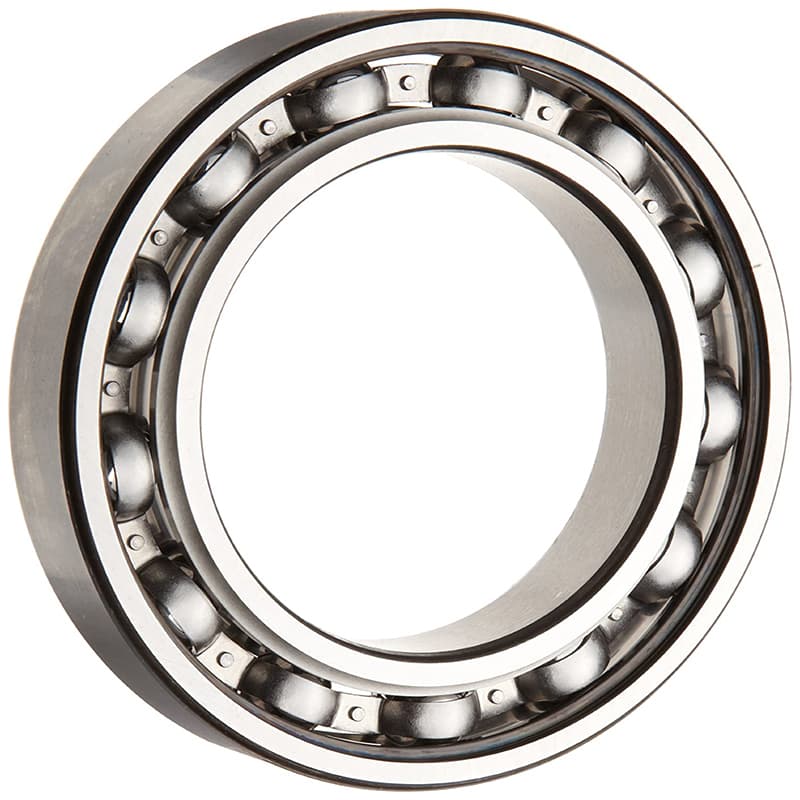
Let me explain the problem and the solution.
How much does a shaft expand? Steel expands by 0.012mm per meter of length per 10°C temperature rise. A 1-meter long shaft that heats from 20°C to 90°C (70°C rise) expands by 0.012 x 7 x 1000 = 0.84mm. That is almost 1mm. Your bearing cannot handle that much expansion. Something has to give. Either the bearing gets crushed, or the housing cracks, or the shaft buckles.
How bearings handle expansion. In a typical fan, you have two bearings on the same shaft. One bearing is fixed (it holds the shaft in position). The other bearing is floating (it can slide axially). The floating bearing has a loose fit in the housing. When the shaft expands, the floating bearing slides in the housing. This releases the stress. But if both bearings are fixed, the expansion has nowhere to go. The bearing takes all the force. It fails.
What clearance you need for hot operation. Normal clearance (CN) may become zero or negative when the inner ring expands from heat. That causes the bearing to bind. C3 clearance gives an extra 0.005 to 0.015mm of internal space. That is enough for moderate heat. For very hot dryers (over 100°C), use C4 clearance.
Selection guide for bearing arrangement.
| Shaft Length | Temperature Rise | Recommended Arrangement | Clearance |
|---|---|---|---|
| Under 500mm | 30-50°C | One fixed, one floating | C3 |
| 500-1500mm | 50-80°C | One fixed, one floating | C3 or C4 |
| Over 1500mm | 80-100°C | One fixed, one floating + expansion joint | C4 |
| Any length with extreme heat | Over 100°C | Floating both ends or special design | C4 |
How to create a floating bearing. For the floating bearing, use a housing fit that is loose. Instead of a press fit (P7 or N7), use a slide fit like H7. The outer ring of the bearing can move axially in the housing. The housing should have a circlip or shoulder on only one side. The other side is open. The bearing can slide up to 1-2mm. That is enough for most thermal expansion.
A real story from a customer in Turkey. He makes large grain dryers with 2-meter long fan shafts. He used CN bearings with both ends fixed. The dryers worked for a few hours. Then the bearings got hot and seized. He thought the bearings were bad. He tried different brands. Same problem. Then I asked him about thermal expansion. He measured the shaft temperature. It was 80°C at the bearing location. A 2-meter shaft expands by almost 2mm. His bearings had no room to move. I told him to change his design. One bearing should be floating with H7 housing fit. Also switch to C3 clearance. He made the change. The dryers ran perfectly. No more seizures.
What about bearing life calculation? For continuous-duty dryers, use the standard L10 life formula. But add a correction factor for high temperature. At 100°C, the bearing life is about 50% of the catalog rating. So if you need 10,000 hours of life, design for 20,000 hours at room temperature. Use a larger bearing or a higher load rating to compensate.
My checklist for shaft expansion handling.
- Measure the expected shaft temperature at the bearing location.
- Calculate thermal expansion: expansion (mm) = shaft length (mm) x 0.000012 x (temp rise in °C).
- If expansion is more than 0.1mm, use a floating bearing arrangement.
- For expansion over 0.5mm, use C3 or C4 clearance.
- Ensure the housing of the floating bearing has axial clearance of at least 2mm.
- For very long shafts (over 3m), consider a coupling or expansion joint between the fan and the motor.
Conclusion
For agricultural fans and grain dryers, use rubber seals (2RS), high-temperature grease, C3 or C4 clearance, and a floating bearing arrangement. That stops dust, heat, and expansion failures.
