
You buy a precision bearing. But your spindle still vibrates. The noise is too loud. You thought the bearing was good. The problem is the surface finish.
Surface finish controls how smooth a bearing runs. Rough surfaces create friction, heat, and vibration. Smooth surfaces give high accuracy and long life. The difference is measured in millionths of a meter.
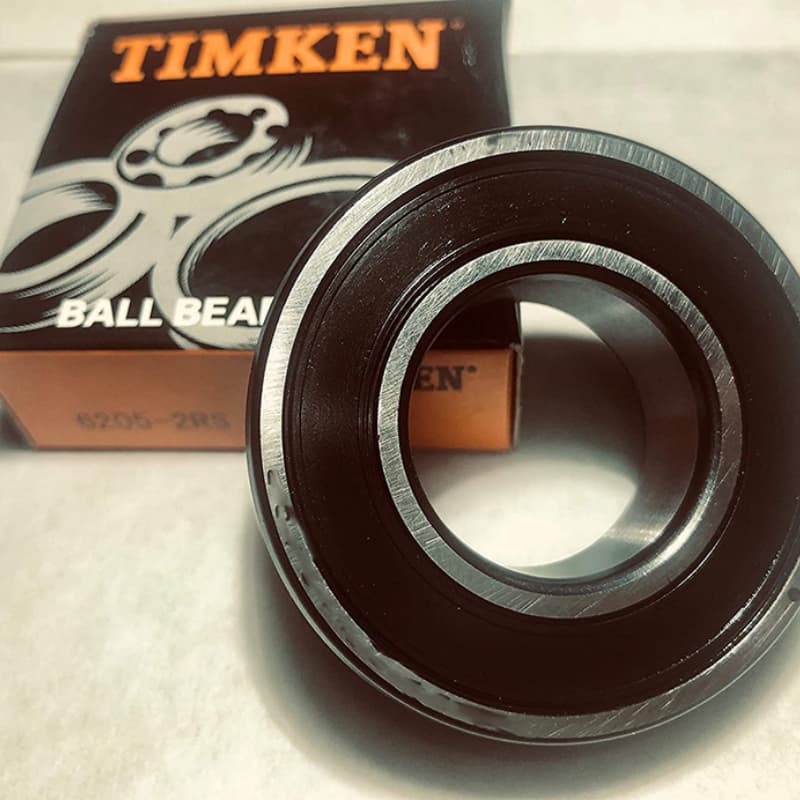
I have seen this problem many times. A customer in Turkey bought our bearings. He put them in a high-speed spindle. The spindle vibrated. He thought the bearing was defective. I asked him to send it back. We measured the surface finish. It was within standard spec. But his application needed even smoother raceways. That is when I realized many engineers do not understand surface finish. In this article, I will explain four key things you need to know. Let me start with the basic language of surface finish.
From Micro-Inches to Microns: What Do Surface Finish Parameters Really Mean?
You see numbers like Ra 0.1 μm on a bearing spec sheet. But what does that number mean? Is a lower number always better?
Ra (average roughness) measures the average height of peaks and valleys on a surface. For deep groove ball bearings, lower Ra means smoother surfaces. Standard bearings have Ra 0.2-0.4 μm on raceways. Precision bearings go down to Ra 0.025-0.05 μm.
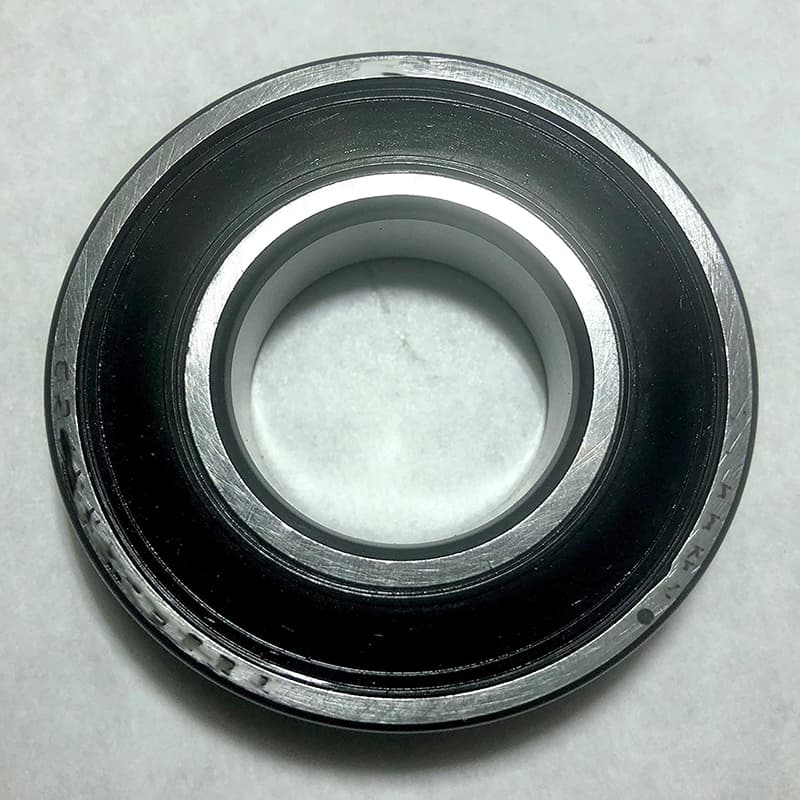
Let me explain the most common surface finish terms.
Ra (Average Roughness). This is the most common parameter. It measures the average distance between the highest peak and the lowest valley across a surface. Think of it like the average bumpiness. A lower Ra number means a smoother surface. For a deep groove ball bearing raceway, a typical Ra value is 0.1 to 0.2 micrometers. That is 100 to 200 nanometers. For comparison, a human hair is about 50,000 nanometers thick.
Rz (Average Maximum Height). This measures the average height of the five highest peaks plus the five deepest valleys. Rz is usually larger than Ra. It tells you about the worst-case bumps. Even if the average (Ra) is low, a few big bumps (high Rz) can cause problems. For bearing raceways, the ratio Rz/Ra is usually 4 to 6.
What numbers mean for bearing performance.
| Ra Value (μm) | Surface Feel | Bearing Grade | Typical Use |
|---|---|---|---|
| 0.4-0.8 | Rough, visible scratches | Low quality | Cheap toys, basic wheels |
| 0.2-0.4 | Smooth to touch | Standard (P0) | General industrial |
| 0.1-0.2 | Very smooth, shiny | Precision (P6) | Electric motors, fans |
| 0.05-0.1 | Mirror-like | High precision (P5) | Machine tool spindles |
| 0.025-0.05 | Super mirror | Ultra precision (P4) | Aerospace, medical |
But lower is not always better. A super-smooth raceway (Ra 0.025 μm) costs much more to make. And for a slow, heavy-load bearing, that smoothness is wasted. The oil film is thick enough to cover small bumps. So you pay extra for no benefit. The key is to match the surface finish to your speed and load.
How to read a surface finish spec from a bearing factory. Most factories will give you Ra and Rz values for the raceway and the balls. They may also give the bearing raceway roundness and waviness. For a standard deep groove ball bearing, ask for:
- Raceway Ra ≤ 0.15 μm
- Ball surface Ra ≤ 0.02 μm
- Rz ≤ 0.8 μm
If a supplier cannot provide these numbers, be careful. They may not have proper measuring equipment.
A real story from a customer in Russia. He bought deep groove ball bearings for a high-speed printer. The bearings vibrated at 10,000 RPM. He checked the Ra. It was 0.25 μm. That is normal for standard bearings. But his printer needed Ra below 0.1 μm. He switched to our P5 bearings with Ra 0.08 μm. The vibration stopped. He learned that standard numbers are not enough for high speed.
My advice. Always ask for the actual surface finish data from your supplier. Do not assume that “precision grade” means a specific Ra. Different factories have different standards. At FYTZ, we measure every batch. We can give you the Ra and Rz numbers for each order.
How Do Grinding and Superfinishing Change Bearing Performance?
You see two bearings from the same factory. One runs quiet. One runs noisy. The difference is not the steel. It is the finishing process.
Grinding creates the basic shape. Superfinishing removes the last tiny peaks. Bearings with superfinished raceways run smoother, cooler, and longer than ground-only bearings.
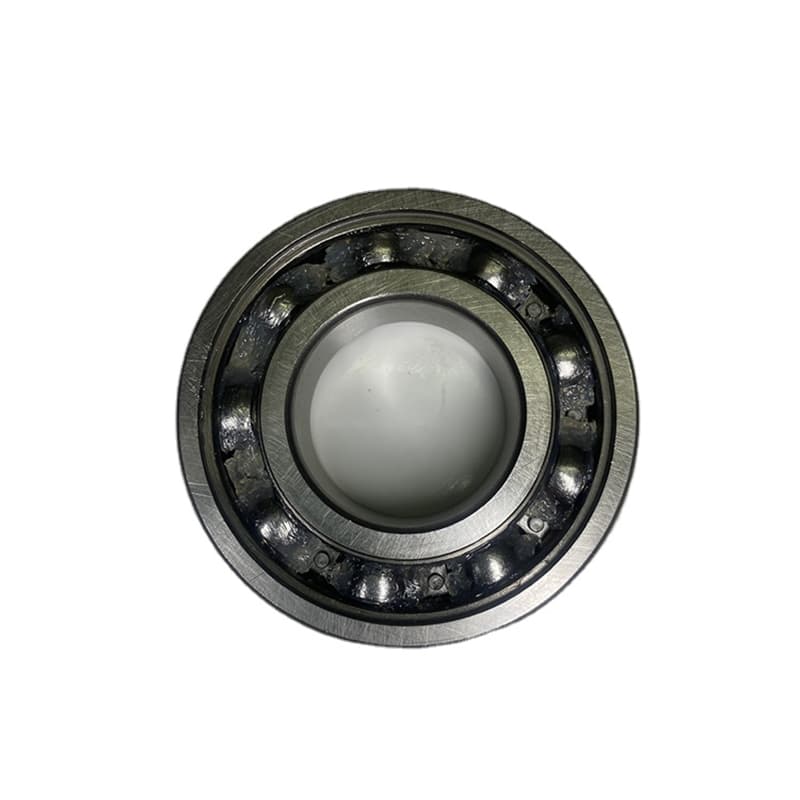
Let me explain these two processes.
What is grinding for bearings? Grinding uses a rotating abrasive wheel. It cuts the raceway to the correct shape and size. A good grinding process leaves a surface with Ra 0.2-0.4 μm. The surface has a directional pattern (lay) from the grinding wheel. That pattern can be parallel or cross-hatched. Grinding is fast and cheap. But it leaves microscopic peaks and valleys.
What is superfinishing? Superfinishing uses a fine abrasive stone. The stone vibrates or oscillates while the bearing rotates. This removes the remaining peaks. The surface becomes much smoother (Ra 0.025-0.05 μm). The process also removes the grinding lay pattern. The surface becomes random and isotropic. Superfinishing takes extra time. It adds cost. But the benefits are large.
Comparison of ground vs. superfinished surfaces.
| Property | Grinding Only | Grinding + Superfinishing |
|---|---|---|
| Typical Ra | 0.2-0.4 μm | 0.025-0.05 μm |
| Surface peaks | Many sharp peaks | Almost no peaks |
| Oil film formation | Moderate | Excellent |
| Running-in time | Long (hours) | Short (minutes) |
| Friction at start | Higher | Lower |
| Noise level | Higher | Lower |
| Fatigue life | Standard | 2-3x longer |
| Cost | Base | +20-50% |
When do you need superfinished bearings? For most general applications (conveyors, fans, pumps), standard ground bearings are fine. The extra cost of superfinishing does not pay back. But for high-speed spindles (over 10,000 RPM), precision instruments, or low-noise applications (medical devices, audio equipment), superfinishing is worth it.
How to tell if a bearing is superfinished. Look at the raceway under bright light. A ground-only bearing has visible grind lines. They look like tiny parallel scratches. A superfinished bearing looks like a mirror. You cannot see any pattern. Also, run your fingernail across the raceway. On a ground bearing, you may feel very slight ridges. On a superfinished bearing, it feels like glass.
A real story from a customer in Brazil. He makes dental handpieces. The handpieces spin at 400,000 RPM. He used standard precision bearings. The noise was too high. The handpieces vibrated in the dentist’s hand. He tried several brands. Then he found a supplier that offered superfinished raceways. The bearings cost 40% more. But the noise dropped by 50%. The handpieces felt smooth. His customers loved them. He now only buys superfinished bearings.
What about the balls? Balls also need good surface finish. Standard bearing balls have Ra 0.02-0.04 μm after lapping. For high precision, balls are polished to Ra 0.005-0.01 μm. Polished balls cost more but reduce friction and noise.
My recommendation. For most industrial bearings, standard grinding is enough. For high speed (over 8,000 RPM) or low noise, ask for superfinished raceways. At FYTZ, we offer superfinishing as an option. We can also provide polished balls for the highest precision applications.
How Are Surface Finish, Lubrication, and Running-in Connected?
You install a new bearing. It runs rough for the first hour. Then it gets smoother. That is running-in. But why does it happen?
Running-in wears down the microscopic peaks on the raceway and balls. A rougher surface needs longer running-in. Good lubrication speeds up running-in. After running-in, the effective surface finish is much smoother than the original.
Let me explain the science in simple terms.
What happens during running-in. When you first run a bearing, the highest peaks on the raceway and balls touch each other. These peaks deform or wear off. The surface becomes smoother. The contact area increases. The pressure decreases. After a few hours, the bearing reaches a steady state. This is called the “run-in” surface.
How surface finish affects running-in time.
| Original Ra (μm) | Running-in Time | Final Effective Ra (μm) |
|---|---|---|
| 0.4 (rough) | 10-20 hours | 0.15-0.2 |
| 0.2 (standard) | 2-4 hours | 0.08-0.12 |
| 0.1 (precision) | 0.5-1 hour | 0.05-0.08 |
| 0.05 (superfinished) | 15-30 minutes | 0.03-0.05 |
The role of lubrication. The oil or grease film separates the two surfaces. If the oil film is thicker than the surface peaks, the peaks never touch. That is called "full film lubrication". In that case, running-in does not happen. The surface finish does not change. The bearing runs smoothly from the start.
But most bearings run in "mixed lubrication" at low speeds. The peaks touch. Running-in happens. The roughness decreases.
How to calculate if you need running-in. The oil film thickness depends on speed, load, and oil viscosity. A rough rule: if your speed is below 1,000 RPM and load is high, you will have mixed lubrication. Running-in is necessary. If your speed is above 5,000 RPM with light load, you may have full film. Running-in is minimal.
A real story from a customer in India. He makes electric motors for ceiling fans. The fans run at 300 RPM. Very slow. He used standard bearings. The fans made a grinding noise for the first day. Customers complained. He asked me for help. I explained that at low speed, the oil film is very thin. The surface peaks touch. Running-in takes time. But customers do not want to wait. So I suggested using bearings with superfinished raceways. The initial roughness was much lower. The running-in noise disappeared after 10 minutes. The customer was happy.
What about grease? Grease affects running-in more than oil. Thick grease can block the peaks from touching. That slows down running-in. Thin grease allows faster running-in. For applications where you need quiet operation immediately, use a thin, low-viscosity grease. But be careful. Thin grease may not last as long as thick grease.
My advice for running-in new bearings. For the first hour of operation, run the bearing at 30-50% of normal speed with no load. Then increase to full speed gradually. This allows the peaks to wear down gently. Do not apply full load immediately. That can cause local overheating and damage.
How to know when running-in is complete. Measure the bearing housing temperature. At the start, the temperature rises quickly. After 1-2 hours, the temperature stabilizes. That means running-in is done. Also listen to the noise. When the noise becomes constant and smooth, running-in is complete.
Why Does Waviness (Not Just Roughness) Cause High-Frequency Vibration?
You measure the roughness. It is perfect. But the bearing still vibrates at high frequency. You are confused. The problem is waviness.
Waviness is a long-wave undulation on the raceway. It is different from roughness. Waviness causes the balls to move up and down many times per revolution. That creates high-frequency vibration that roughness alone cannot explain.
Let me explain the difference.
Roughness vs. Waviness vs. Form. Surface texture has three levels. The smallest is roughness (micro peaks). The middle is waviness (regular undulations). The largest is form (overall shape like roundness). Roughness affects friction and noise. Waviness affects vibration, especially at high frequencies. Form affects running accuracy and load distribution.
What causes waviness? Waviness comes from the grinding process. The grinding wheel may have a slight imbalance. The machine may have vibrations. The result is a wavy pattern on the raceway. The waves have a certain number of lobes (2 lobes, 3 lobes, 5 lobes, etc.). Each lobe causes the ball to move up and down as it rolls.
How waviness creates vibration. Imagine a raceway with 5 waviness lobes. For each rotation of the inner ring, a ball goes up and down 5 times. If the bearing spins at 3,000 RPM (50 revolutions per second), the ball vibrates at 5 x 50 = 250 Hz. That is a high-pitched sound. Your ear hears it as a whine. If the number of lobes matches a natural frequency of the machine, the vibration gets amplified.
Comparison of roughness vs. waviness effects.
| Parameter | Wavelength | Effect on Bearing | Measured By |
|---|---|---|---|
| Roughness | < 0.1 mm | Friction, heat, running-in | Profilometer (Ra) |
| Waviness | 0.1 – 5 mm | High-frequency vibration | Waviness tester (ISO 4287) |
| Form | > 5 mm | Running accuracy, load distribution | Roundness tester |
How to specify waviness for bearings. Most bearing standards do not give waviness limits. Only high-precision bearings (P4 and above) have waviness requirements. For deep groove ball bearings, waviness is usually not controlled. But for low-vibration applications (like spindles), you need to ask your supplier for waviness data. Look for the number of waves (lobes) and the amplitude (height). Lower amplitude and fewer lobes are better.
A real story from a customer in Egypt. He builds precision grinding machines. The spindle bearings vibrated at 800 Hz. He tried different brands. Same problem. He measured the roughness. It was good. Then he tested the waviness. The raceway had 7 lobes with an amplitude of 0.5 μm. That was the cause. He found a supplier that controlled waviness to under 0.1 μm. The vibration disappeared.
How to test for waviness without special equipment. This is hard. But you can do a simple check. Spin the bearing slowly by hand while listening through a screwdriver (put the tip on the outer ring, the handle on your ear). A rough bearing makes a raspy sound. A wavy bearing makes a regular, rhythmic "woom-woom-woom" sound. The faster you spin, the higher the pitch. If you hear that rhythm, waviness is present.
My recommendation. For most applications, standard waviness is fine. But for high-speed spindles (over 10,000 RPM), precision rotary tables, or any application where low vibration is critical, ask your supplier for waviness control. At FYTZ, we can measure waviness for P5 and P4 grade bearings. We provide the number of lobes and the amplitude.
Conclusion
Surface finish controls running accuracy. Understand Ra and Rz. Choose grinding or superfinishing. Manage running-in. And watch out for waviness.