
You design machinery. You pick bearings from a catalog. Then the bearings fail in the field. That makes you look bad.
OEM builders must confirm four key data points: load ratings, internal clearance, cage materials, and precision grades. Skip any one, and your machine will have bearing problems.
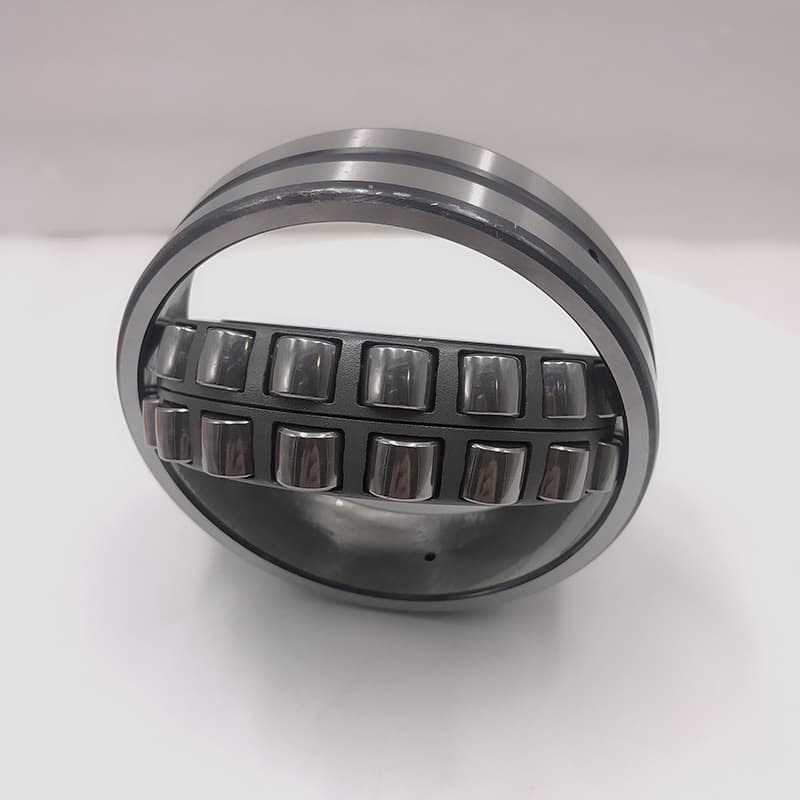
I have worked with many OEM builders from Turkey, India, and Brazil. They all ask the same question: “How do I make sure the bearings I pick will last?” The answer is not simple. But I will break it down for you. In this article, I will walk you through four technical areas. These are the areas I check for every OEM customer. Let us start with the most basic one: load ratings.
What Load Ratings Must You Confirm for Your OEM Machine Design?
You see a load rating number on a bearing datasheet. But do you know what it really means? Many engineers get this wrong. Then their machines break down early.
You must confirm the dynamic load rating (C) and the static load rating (C0). The dynamic rating tells you how long the bearing will last under normal loads. The static rating tells you how much shock load the bearing can take without damage.
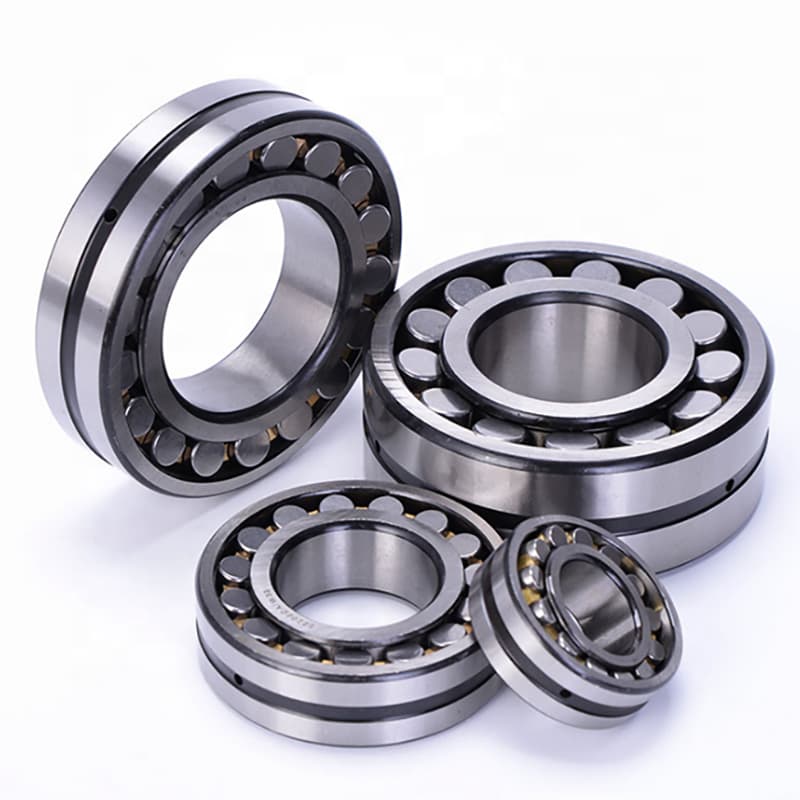
Let me explain these two numbers in plain language.
Dynamic load rating (C) is the most important number for a moving machine. This number tells you the load that will give the bearing a life of one million rotations. For example, if a bearing has a C rating of 100 kN, it means at 100 kN load, the bearing will run for one million cycles. If your actual load is lower, the life gets longer. If your actual load is higher, the life gets shorter.
Here is a simple rule. The life changes by the third power of the load. That means a small increase in load cuts the life a lot. If you double the load, the life drops to one-eighth. So do not guess your loads. Measure them or calculate them carefully.
Static load rating (C0) matters when your machine stops or starts. It also matters when your machine gets shock loads. The static rating is the load that causes a permanent dent of 0.0001 times the roller diameter. If you exceed this rating, the bearing gets dents. Those dents make noise and vibration later.
For OEM builders, I recommend this process:
| Step | Action | Why It Matters |
|---|---|---|
| 1 | Calculate your actual radial load | Most OEM engineers overestimate by 20-30% |
| 2 | Calculate your actual axial load | Spherical roller bearings can take 20-30% of radial load as axial |
| 3 | Compare to C rating | Multiply your load by 1.2 for safety margin |
| 4 | Check shock loads against C0 | For cranes or crushers, use 1.5 to 2.0 safety factor |
| 5 | Calculate expected life in hours | Use the standard L10 formula |
I have a story from a customer in Russia. He was building a new conveyor system. He picked a spherical roller bearing with a C rating of 150 kN. His calculated load was 120 kN. That looked fine on paper. But his machine had frequent start-stop cycles. Each start gave a shock load of 180 kN. That was above the C0 rating. The bearings failed in three months. We replaced them with a larger bearing that had a C0 of 250 kN. That machine has been running for two years now.
One more tip: ask your supplier for the actual test data. Some suppliers copy numbers from other brands. At FYTZ, we test every batch. We can give you the real C and C0 numbers from our own test rig. That is the only way to be sure.
How to Choose the Right Internal Clearance (C3, C4, or C5) for Different Working Conditions?
You pick a bearing. You install it. The machine runs for an hour. Then the bearing locks up. You think the bearing is bad. But the real problem is the wrong clearance.
Internal clearance is the tiny gap between the rollers and the raceways. If the gap is too small, the bearing gets tight when it heats up. If the gap is too big, the rollers slam around and cause dents.
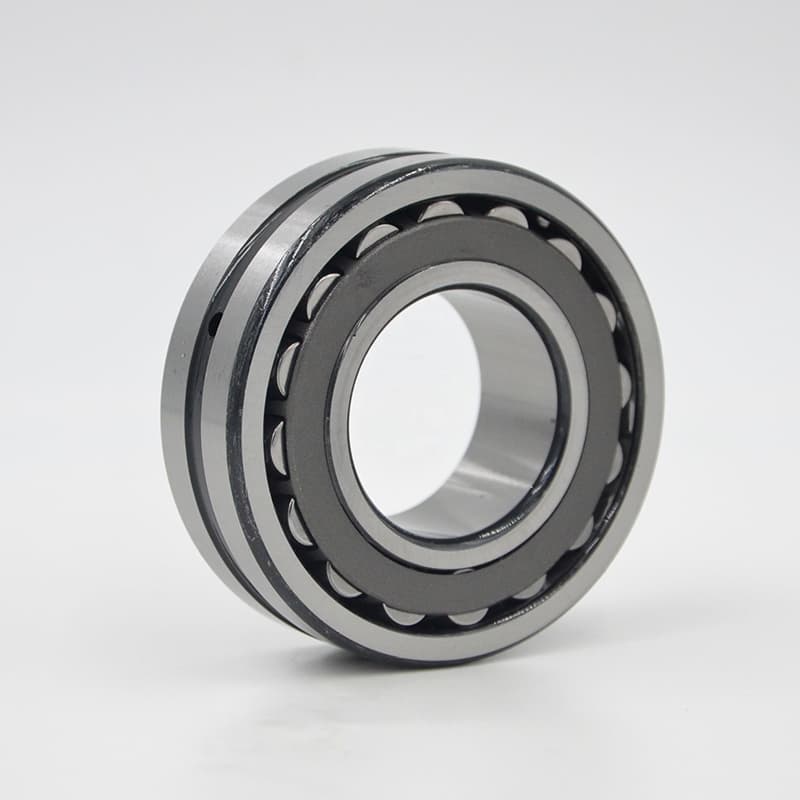
Most OEM builders do not think about clearance. They just take whatever the catalog shows. That is a mistake. Let me show you how to pick the right one.
Normal clearance (CN) is for low temperature machines. If your bearing runs below 60°C, CN is fine. Examples: conveyor rollers in a warehouse, fans, pumps.
C3 clearance is for medium heat. Use C3 when your bearing runs at 60°C to 100°C. This is the most common choice for general industrial machines.
C4 clearance is for high heat or tight fits. Use C4 when your bearing runs above 100°C. Also use C4 when you have a heavy press fit on the inner ring. The press fit reduces the clearance. So you need more to start with.
C5 clearance is for extreme heat. Use C5 for bearings near furnaces, ovens, or continuous casters. This clearance is rare. You may need to order it specially.
Here is a decision table for OEM builders:
| Operating Condition | Recommended Clearance | Example Machine |
|---|---|---|
| Room temperature, light load | CN | Packaging machine |
| Warm, normal press fit | C3 | Gearbox, electric motor |
| Hot (100-150°C) | C4 | Steel mill roll |
| Very hot (150-200°C) | C5 | Continuous caster mold section |
| Heavy interference fit | C4 or C5 | Press-fit wheel hub |
| High vibration environment | C3 or C4 | Vibrating screen |
How to check if you picked the wrong clearance. After your machine runs for one hour at full load, measure the bearing housing temperature. Then stop the machine. Measure again. If the temperature drops more than 15°C in the first minute, your clearance is too small. The bearing was binding when hot. If you hear a slapping or rattling sound when the machine runs, your clearance is too big.
I remember an OEM customer in Brazil. He made agricultural equipment. He used CN bearings for a disc harrow. The bearings got hot and failed every season. I asked him to switch to C3. He said, "But the catalog says CN." I explained that his machine runs in hot fields under heavy dust. The extra heat needed more clearance. He tried C3. The bearings lasted three seasons. Now he uses C3 for all his farm machines.
One more thing: tell your supplier the exact clearance you need. Do not assume they will send the right one. At FYTZ, we ask every OEM customer for operating temperature and fit type. Then we recommend C3, C4, or C5. We can also supply bearings with custom clearance if your design needs something special.
What Cage Materials and Designs Work Best for High Temperature or Heavy Shock Loads?
The cage holds the rollers apart. If the cage fails, the rollers crash into each other. The bearing dies fast. Most OEM engineers ignore the cage. That is a big risk.
The best cage material depends on your temperature and shock load. Brass cages handle high heat. Steel cages handle high shock. Polyamide cages are cheap but weak.
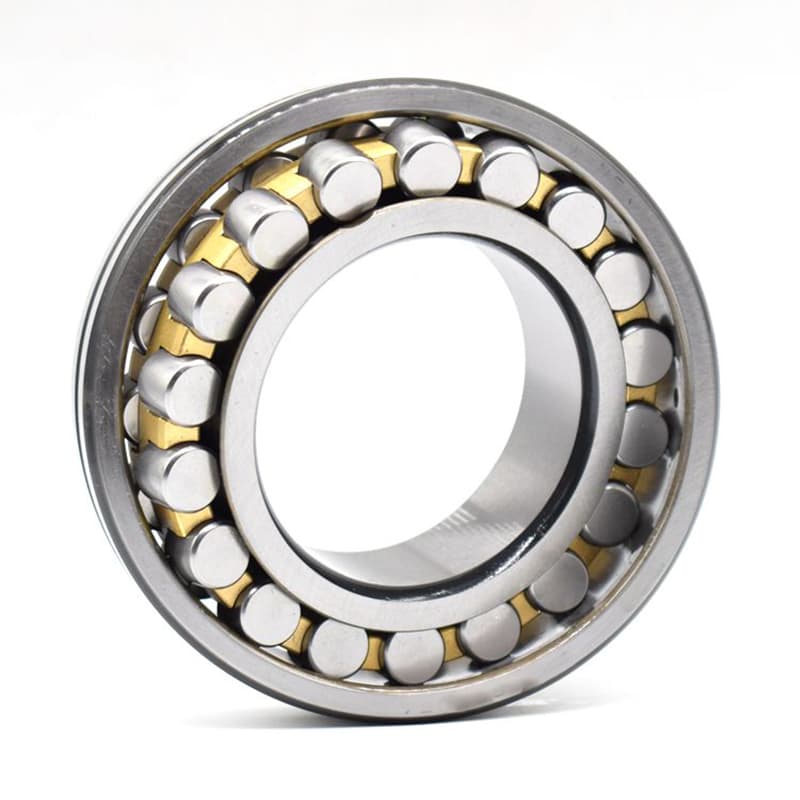
Let me compare the three main options.
Brass cages (machined) are the most common choice for tough conditions. Brass is strong. It does not warp at high temperature. It has natural lubricating properties. The downside is cost. Brass cages cost more than steel or plastic. Use brass cages when your temperature goes above 120°C or when your machine runs 24/7.
Steel cages (pressed or machined) are the strongest option. Steel takes heavy shock loads without breaking. It also works at very high temperatures, up to 300°C. The downside is weight. Steel cages are heavy. They also need good lubrication. If your grease runs dry, a steel cage will rub against the rollers and wear out fast. Use steel cages for crushers, vibrating screens, and steel mill equipment.
Polyamide cages (plastic) are cheap and light. They work well for clean, cool, low-speed machines. But they melt above 105°C. They also crack under shock loads. I do not recommend polyamide for any heavy OEM machine. I have seen too many failures. One customer in India used polyamide cages on a conveyor. The conveyor worked fine. Then the summer came. The temperature in the plant reached 50°C. The bearings got hotter. The cages melted. The whole line stopped.
Here is a quick comparison table:
| Cage Material | Max Temp | Shock Load Resistance | Cost | Best For |
|---|---|---|---|---|
| Machined brass | 250°C | Good | High | Steel mills, casters, gearboxes |
| Pressed steel | 300°C | Excellent | Medium | Crushers, vibrators, heavy equipment |
| Polyamide | 105°C | Poor | Low | Light duty, clean, cool machines |
But there is one more choice: the cage design. Most spherical roller bearings have a window-type cage. That is fine for normal use. For high vibration, ask for a pin-type cage. In a pin-type cage, each roller rides on its own steel pin. That design is much stronger. It is also more expensive. Use it only for extreme conditions like vibrating screens or hammer crushers.
I have a customer in South Africa. He makes crushers for mines. He used brass window-type cages. The bearings lasted six months. The vibration broke the cage windows. He switched to steel cages with pin-type design. Now the bearings last two years. The extra cost was 30% more. But the longer life saved him 70% in maintenance costs.
My advice for OEM builders: Start with brass cages for most industrial machines. Use steel cages for high shock. Avoid polyamide unless your machine runs cool and clean. And always ask your supplier for a cage material certificate. Some cheap bearings use fake brass that is actually coated steel.
Which Tolerances and Precision Grades (P0, P5, P6) Match Your OEM Assembly Requirements?
You have a shaft. You have a housing. The bearing goes in between. But if the bearing is not round enough, or if the size is off by a hair, your assembly will fail.
Precision grades tell you how accurately the bearing is made. P0 is normal. P6 is better. P5 is even better. Most OEM machines need P0. But some need higher.
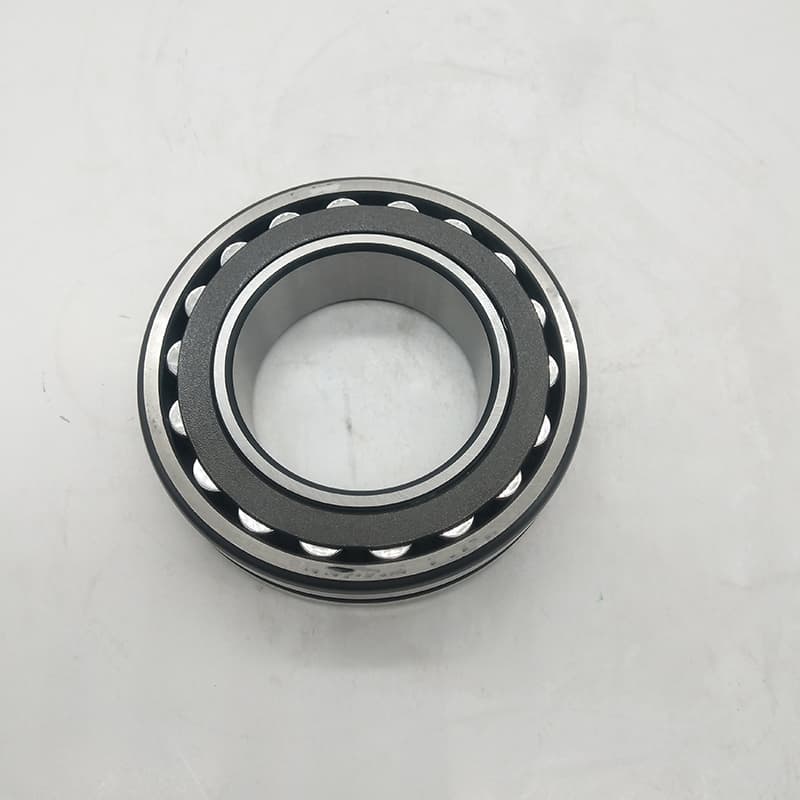
Let me explain each grade in simple terms.
P0 (Normal precision) is the standard for 90% of machines. The inner ring bore has a tolerance of 0 to -0.025mm for a 100mm shaft. The outer ring has a tolerance of 0 to -0.030mm. That is good enough for conveyors, fans, pumps, and most gearboxes. P0 is cheap and available everywhere.
P6 (Precision class 6) is tighter. The bore tolerance is 0 to -0.015mm. The outer ring is 0 to -0.018mm. Use P6 when your machine runs at high speed, or when you need low vibration. Examples: electric motors, machine tool spindles, high-speed fans.
P5 (Precision class 5) is even tighter. The bore tolerance is 0 to -0.012mm. The outer ring is 0 to -0.013mm. Use P5 for precision applications like printing presses, CNC machines, or high-speed compressors.
How to choose the right grade for your OEM machine:
| Machine Type | Recommended Grade | Why |
|---|---|---|
| Conveyor, crusher, steel mill | P0 | Low speed, heavy load. Vibration is fine. |
| Electric motor, pump, fan | P6 | Medium speed. Needs low noise. |
| CNC spindle, precision roll | P5 | High speed or tight assembly. |
| Automotive wheel hub | P6 or P5 | Safety critical. Must run smooth. |
But here is what most OEM builders miss. The precision grade of the bearing must match the precision of your shaft and housing. If you buy a P6 bearing but your shaft is cut to P0 tolerance, you waste money. The bearing will not run any better. The fit is what matters.
For example, a P6 bearing on a P0 shaft gives you a loose fit. The bearing will spin on the shaft. That ruins the shaft. So always match your machining tolerance to the bearing grade.
I saw this problem in Turkey. An OEM builder made textile machines. He bought P5 bearings for his spindles. But his machine shop cut shafts to P0 tolerances. The bearings wobbled. The spindles vibrated. The customer complained. He asked me for help. I told him to either buy P0 bearings or upgrade his shaft machining. He chose P0 bearings. The problem went away. He saved 40% on bearing cost.
One more tip: ask for roundness and roughness data. Precision grade tells you the size tolerance. But it does not tell you how round the bearing is. For high-speed machines, ask your supplier for the roundness measurement. At FYTZ, we provide this data for every P6 and P5 bearing. We also give you the surface roughness of the raceways. That helps you predict noise and life.
Conclusion
Confirm load ratings, clearance, cage material, and precision grade. That is all you need to build reliable OEM machines with spherical roller bearings.