
Your maintenance team works overtime every week. But the caster still stops unexpectedly. That is not just tiring. That is expensive.
Better spherical roller bearing planning cuts unplanned downtime by up to 70%. You just need a simple system for inventory, monitoring, training, and data tracking.
I have worked with procurement managers all over the world. Most of them hate bearing failures because they never see them coming. But the truth is, most failures are easy to predict. You just need to plan. In this article, I will show you four simple steps. These steps have helped my customers in India, Turkey, and Brazil save thousands of dollars. Let me walk you through them.
Why Unplanned Bearing Failures Kill Your Maintenance Budget?
You wait for a bearing to break. Then you fix it. That sounds normal. But it is the most expensive way to run a caster.
Unplanned bearing failures cost three to five times more than planned replacements. They also cause production losses, rush shipping fees, and overtime labor costs.
Let me show you the real numbers. I helped a customer in Egypt last year. He runs a medium-sized steel plant. His team used to wait for bearings to fail. Then they would stop the line. Then they would order a new bearing overnight. Then they would pay express shipping. Then they would pay overtime for the night shift to install it.
That plant had 12 bearing failures per year. Each failure stopped production for six hours on average. Their production line makes $5,000 per hour. So each failure cost $30,000 in lost production. Add $500 for the rush bearing. Add $1,000 for overtime labor. Add $1,000 for express shipping. That is $32,500 per failure. Multiply by 12 failures. That is $390,000 per year.
Now look at a planned replacement. You pick a slow day. You schedule a four-hour stop. You already have the bearing in your store. No rush shipping. No overtime because you use the regular day shift. The production loss is still there: four hours times $5,000 equals $20,000. But you save the express fees and overtime. More importantly, you only replace bearings that are near the end of their life. You do not replace bearings that still have months left.
Here is a table to compare the two approaches:
| Cost Item | Unplanned Failure | Planned Replacement |
|---|---|---|
| Production loss (hours) | 6 hours | 4 hours |
| Production loss cost | $30,000 | $20,000 |
| Rush bearing shipping | $1,000 | $0 |
| Overtime labor | $1,000 | $0 |
| Regular labor | included | $500 |
| Bearing cost | $500 | $500 (already in stock) |
| Total per event | $32,500 | $21,000 |
That is a saving of $11,500 per event. For 12 events per year, you save $138,000. And that is just one plant. I have seen bigger savings in larger facilities.
But here is the hidden cost most people miss. When a bearing fails without warning, it often damages other parts. The shaft gets scored. The housing cracks. The roll needs resurfacing. Those repairs add another $5,000 to $10,000 per failure. Planned replacements avoid that damage because you take the bearing out before it fails completely.
So why do so many plants still run unplanned? Because they think planning takes too much time. But the math is clear. Planning saves time and money. You just need a simple system. I will give you that system in the next section.
How to Create a Simple Step-by-Step Plan for Spherical Roller Bearing Inventory Management?
You have a store room full of bearings. But when a bearing fails, you never have the right one. That is frustrating. That is also common.
A good inventory plan means you stock the right bearings in the right quantities. You also know exactly when to reorder. That stops rush shipping and long downtime.
Let me give you a simple step-by-step plan. I have used this plan with dozens of customers. It works for small plants and big ones.
Step 1: Make a list of every bearing in your caster. Walk through the entire line. Write down the bearing number for each support roll and guide roll. Also write down the position. The bearing near the mold is different from the bearing at the cooling bed. You need to know the exact specifications for each position. Do not guess. Look at the bearing housing or check your machine manual.
Step 2: Group bearings by type. You will probably see the same bearing number in many positions. For example, a 22220 bearing might be used on 20 different rolls. That is good news. You only need to stock one type for all those positions. Make a list of unique bearing numbers. Most casters use between 5 and 10 different spherical roller bearing sizes.
Step 3: Calculate how many spare bearings you need. Use this simple formula. First, find the average life of each bearing type. If you do not have data, start with 6 months for hot section bearings and 12 months for cold section bearings. Then multiply by your reorder lead time. For example, if you import bearings from China, the lead time might be 60 days. You need enough spares to cover those 60 days plus a safety margin.
Here is the formula:
Spare quantity = (Number of bearings in use) x (Expected failures per year) x (Lead time in years) x 1.5 (safety factor)
Let me give you an example. You have 20 bearings of type 22220 in the hot section. Each bearing lasts 6 months on average. That means you have 40 failures per year (20 bearings x 2 failures per year). Your lead time from order to delivery is 2 months (0.167 years). So you need 40 x 0.167 x 1.5 = 10 spare bearings on hand at all times.
Step 4: Set up a reorder point. Do not wait until you run out. Set a minimum stock level. In the example above, when your stock drops to 5 bearings, place a new order. That gives you time to receive the new bearings before you hit zero.
Step 5: Label and organize your store room. This sounds simple, but I have seen messy stores everywhere. Keep each bearing type in a separate bin. Write the bearing number, quantity, and reorder point on the bin. Also note the position where that bearing is used. That way, your team can grab the right bearing fast.
Here is a quick reference table for your inventory planning:
| Caster Section | Typical Bearing Size | Average Life (months) | Spare Quantity per 10 Rolls | Reorder Point |
|---|---|---|---|---|
| Mold section | 22224 or larger | 4-6 | 4-6 | 2-3 |
| Strand guide | 22220 | 6-9 | 3-5 | 2 |
| Straightening | 22218 | 9-12 | 2-3 | 1-2 |
| Cooling bed | 22216 | 12-18 | 1-2 | 1 |
Step 6: Review your plan every 3 months. Bearing life changes when production speeds up or slows down. Keep a simple log of every bearing change. Write down the date, position, bearing number, and reason for change. After a few months, you will see patterns. Then you can adjust your stock levels.
I have one more tip for you. Work with a reliable supplier. A good supplier (like me) can help you set up a consignment stock. That means we keep the bearings in your store, but you only pay when you use them. That cuts your upfront cost. We do this for many customers in Indonesia and South Africa. It works well.
How to Use Condition Monitoring to Replace Bearings at the Right Time?
You change a bearing too early. You waste money. You change it too late. The line breaks down. So how do you find the perfect time?
Condition monitoring uses temperature, vibration, and noise to tell you when a bearing is getting sick. Then you can replace it just before it fails. Not too early. Not too late.
Let me explain the three main tools. You do not need expensive equipment to start. A simple handheld thermometer and a basic vibration pen cost less than $500. That small investment can save you tens of thousands of dollars.
Temperature monitoring is the easiest place to start. Every bearing runs at a normal temperature. For a spherical roller bearing in a caster, the normal temperature might be 80°C to 120°C, depending on the zone. When the bearing starts to fail, friction increases. That makes the temperature rise. If you see a sudden jump of 15°C to 20°C above normal, something is wrong.
I tell my customers to measure temperature once per shift. Use an infrared thermometer. Point it at the bearing housing. Write down the reading. After a few weeks, you will know the normal range for each roll. Then you can set an alarm. When temperature goes above 120°C or 130°C, schedule an inspection.
Vibration monitoring is more powerful but still simple. A healthy bearing produces low, steady vibration. A failing bearing produces high spikes. You can buy a basic vibration pen for about $200. It gives you a number from 0 to 10. For most casters, a reading below 3 is good. Above 5 means check the bearing. Above 8 means replace it soon.
I saw a great example in Russia. A customer used only temperature monitoring. He thought his bearings were fine. Then he bought a vibration pen. He found three bearings with vibration readings of 7. The temperature on those bearings was still normal. He replaced them anyway. When he opened the bearings, the rollers had small cracks. Those bearings would have failed within a week. He saved a major breakdown.
Noise monitoring is the oldest method. Your operators can hear a bad bearing. But you need to train them. A healthy bearing makes a smooth, rolling sound. A failing bearing makes a grinding, clicking, or squealing sound. I recommend a simple rule: if you hear something unusual, check the temperature and vibration. Do not ignore the sound.
Here is a decision table for condition monitoring:
| Measurement | Green (Good) | Yellow (Check) | Red (Replace Soon) |
|---|---|---|---|
| Temperature rise above normal | 0-5°C | 6-15°C | 16°C+ |
| Vibration (0-10 scale) | 0-3 | 4-6 | 7-10 |
| Noise | Smooth rolling | Intermittent grinding | Loud clicking or squealing |
| Action | Continue monitoring | Inspect weekly | Schedule replacement within 2 weeks |
But here is the most important thing. Condition monitoring only works if you write down the data. I have seen many plants buy thermometers and vibration pens. They take measurements for one week. Then they stop. The data is useless if you do not track it over time.
Create a simple paper form or a spreadsheet. For each roll, write down the date, temperature, vibration, and noise level. Review the data every week. Look for trends. A bearing that slowly gets hotter over three months is telling you something. Replace it on your next scheduled stop.
One more tool: lubricant analysis. This is more advanced but very useful. Every time you add grease to a bearing, take a small sample. Send it to a lab. They will check for metal particles. If you see iron or chromium in the grease, the bearing is wearing out. This method can predict failure two to three months in advance. It costs about $50 per sample. For a large caster, it pays for itself quickly.
I recommend starting with temperature and vibration. Those two tools will catch 80% of bearing failures before they happen. Then add lubricant analysis for your most critical rolls, like the ones in the mold section.
What Is the Fastest Way to Train Your Team on Proper Bearing Installation?
You buy the best bearings. You monitor them carefully. But then your team installs them wrong. The bearing fails in two weeks. Whose fault is that?
Proper installation doubles bearing life. The fastest way to train your team is to give them a simple, visual checklist. No long manuals. No complicated theory. Just the steps they need to follow every time.
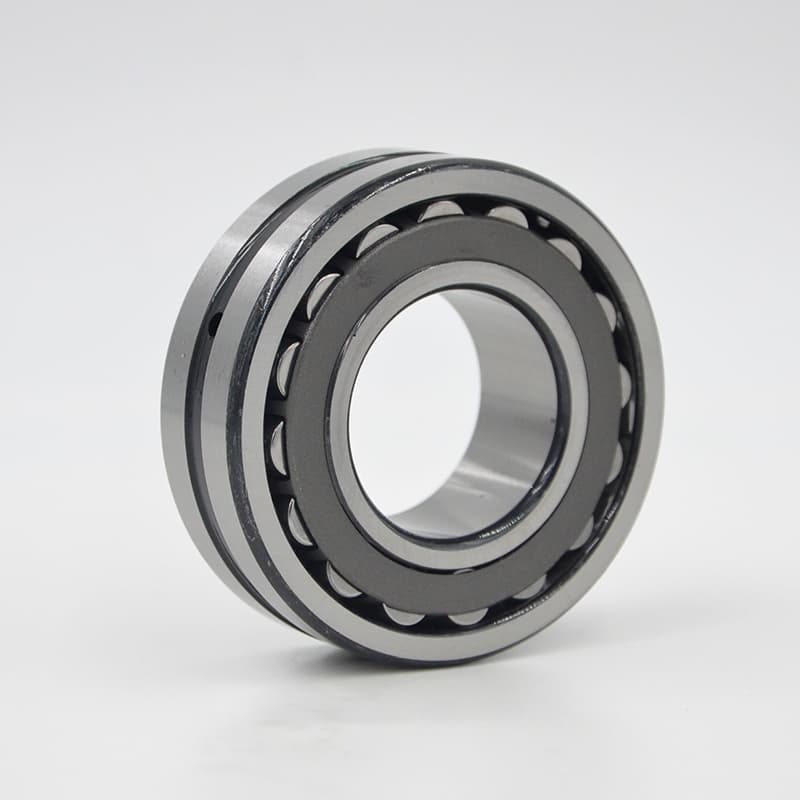
I have visited many plants. I have seen the same mistakes everywhere. Let me tell you the most common ones. Then I will give you a training plan that works.
Mistake 1: Hammering the bearing onto the shaft. This is the number one killer. When you hit the bearing with a hammer, you dent the raceways. Those dents turn into cracks. I once saw a mechanic in Brazil using a steel pipe and a sledgehammer. He was proud of how fast he worked. But every bearing he installed lasted only one month. The correct way is to use a hydraulic press or a bearing heater. Heat the bearing to 110°C. The inner ring expands. Then it slides onto the shaft easily. No hammer needed.
Mistake 2: Forgetting to check the shaft and housing. A dirty or scratched shaft ruins a new bearing. Before you install, clean the shaft with a rag and solvent. Check for burrs or scratches. If you feel any bump, sand it smooth. Also check the housing bore. It should be clean and round. A housing that is out of round by 0.05mm will pinch the bearing. That causes overheating.
Mistake 3: Using the wrong amount of grease. Too little grease causes smearing. Too much grease causes overheating. The right amount is 30% to 50% of the free space inside the bearing. For a typical spherical roller bearing, that is about one to two handfuls of grease. Do not pack it full. Leave room for the grease to move around.
Mistake 4: Tightening the lock nut wrong. Most spherical roller bearings use a lock nut to hold them on the shaft. You need to tighten it to the right torque. Too loose, and the bearing spins on the shaft. Too tight, and you crush the bearing. Use a torque wrench. Check your bearing manual for the right number. If you do not have a manual, a good rule is to tighten until snug, then back off a quarter turn, then tighten again to 50 Newton-meters for small bearings or 200 for large ones.
Here is a simple training checklist you can print and hang on the wall:
| Step | Action | Tool Needed | Time |
|---|---|---|---|
| 1 | Clean the shaft and housing | Rag, solvent | 2 min |
| 2 | Measure shaft diameter and housing bore | Caliper | 1 min |
| 3 | Heat the bearing to 110°C (if interference fit) | Induction heater or oven | 10 min |
| 4 | Slide bearing onto shaft – never hammer | Gloves, press | 1 min |
| 5 | Add grease – 30-50% fill | Grease gun | 2 min |
| 6 | Tighten lock nut to correct torque | Torque wrench | 2 min |
| 7 | Install housing and seals | Wrenches | 5 min |
| 8 | Spin the roll by hand – it should feel smooth | Hands | 1 min |
The fastest way to train your team is to do it together. Do not just hand them a manual. Take one hour during a shift change. Gather your team around a workbench. Have a bearing, a shaft, and a housing ready. Walk through each step. Let each person try it. Answer their questions. Then watch them do it on the next real job. Correct any mistakes right away.
I did this training for a customer in Vietnam. His team used to install bearings in 15 minutes, but the bearings failed every 2 months. After the training, they took 25 minutes per installation. But the bearings started lasting 6 to 8 months. That extra 10 minutes saved them thousands of dollars.
One more tip: take photos of bad installations. When you find a failed bearing, take a picture. Show your team what happens when you hammer a bearing or use too much grease. People remember pictures. I keep a folder of failure photos on my phone. I show them to every maintenance manager I meet.
Conclusion
Plan your inventory, monitor your bearings, and train your team. That is how you stop unplanned failures and cut maintenance costs.
