
Your continuous casting line keeps breaking down. The support rolls fail too often. That hurts your production and your profit.
Spherical roller bearings handle the heavy loads, high heat, and misalignment in continuous casting equipment. They keep support and guide rolls running longer, so you get less downtime and lower maintenance costs.
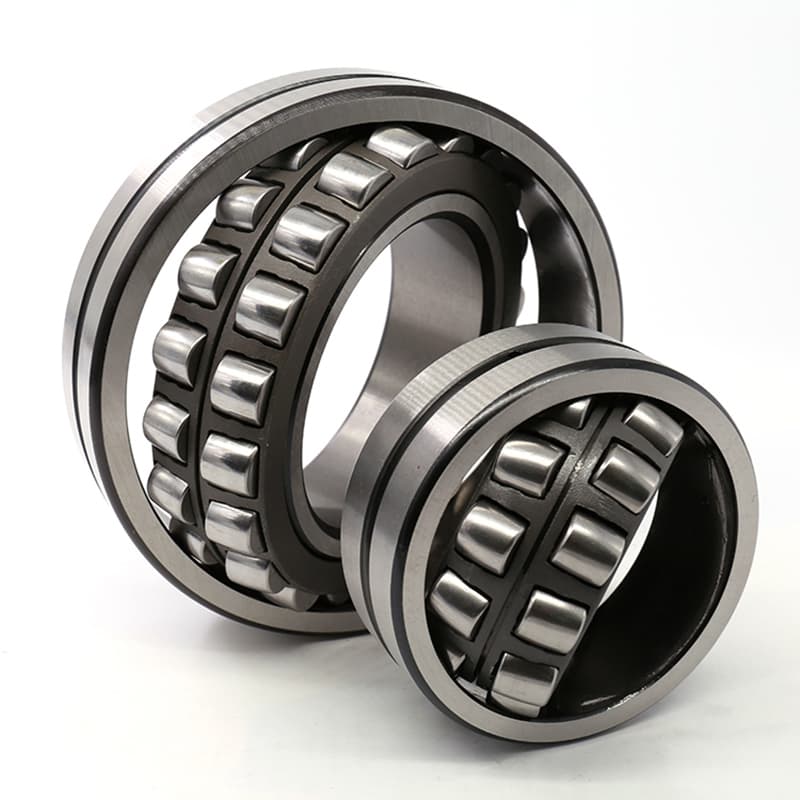
You might think any bearing could work in a caster. But that is not true. Let me explain why spherical roller bearings are so important. I will also share some real problems I have seen in the field.
What is the Critical Role of Spherical Roller Bearings in Continuous Casting Systems?
A caster runs 24/7. The heat is extreme. The loads are huge. Standard bearings die fast in that environment.
Spherical roller bearings take on radial and axial loads at the same time. They also self-align when the shaft bends or shifts. That makes them perfect for the rough conditions inside a continuous casting machine.
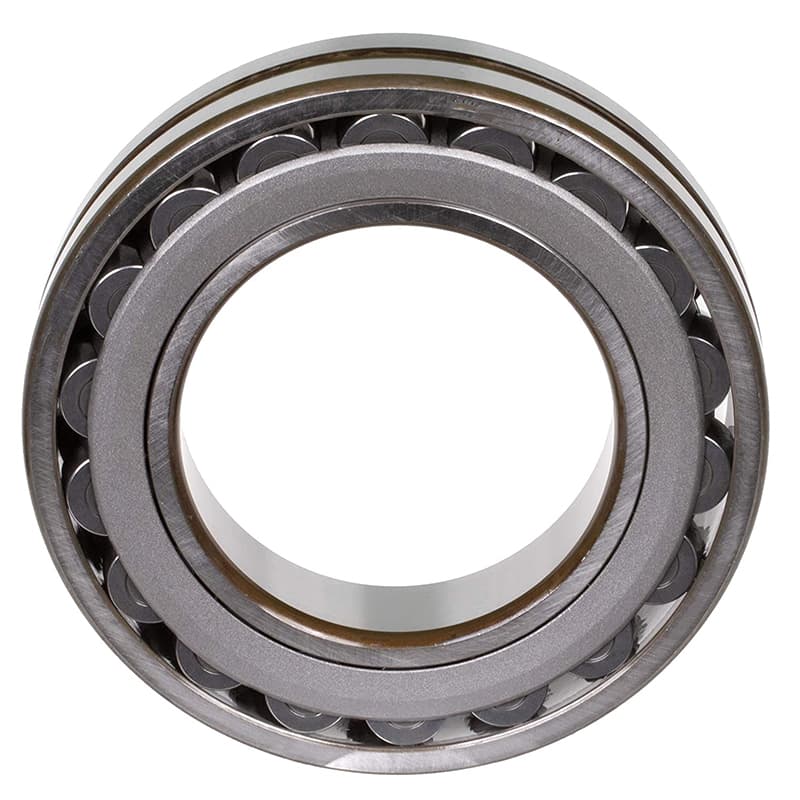
Let me break down what actually happens inside a continuous casting system. The support and guide equipment has a tough job. It holds the newly formed steel slab. It also guides the slab as it moves along the line. This equipment uses many rolls. Those rolls have bearings inside them.
Most people think any bearing with enough strength will work. But that is wrong. I have seen factories try to use cylindrical roller bearings or deep groove ball bearings. Those bearings fail quickly. Why? Because they cannot handle misalignment.
In a continuous caster, the rolls do not stay perfectly straight. The heat causes the steel frame to expand unevenly. The rolls bend a little. The shafts tilt. If your bearing cannot tilt along with the shaft, you get edge loading. That means all the force pushes on one side of the bearing. That side overheats and cracks.
Spherical roller bearings solve this problem. Here is how they work:
| Feature | What It Does | Why It Matters for Casters |
|---|---|---|
| Spherical outer ring raceway | Lets the inner ring tilt | Compensates for roll bending and frame expansion |
| Two rows of barrel-shaped rollers | Spreads load across a wide area | Handles high radial forces without breaking |
| Floating guide ring | Keeps rollers in place | Works even when the bearing tilts |
| Symmetrical design | Allows axial movement in both directions | Takes thrust loads from the slab movement |
I remember one customer in India. He had a billet caster that kept stopping every two weeks. He thought his lubricant was bad. He changed oil three times. Nothing helped. Then I visited his plant. I saw that his guide rolls were using old-style double-row ball bearings. Those bearings had no self-alignment ability. The shaft misalignment was only 0.3 degrees. But that was enough to destroy the bearings.
We replaced them with spherical roller bearings. The same caster ran for six months without a single bearing failure. That is the real role of this bearing type. It keeps you running.
What Key Design Features Matter for High-Temperature and Heavy-Load Conditions?
Heat makes metal expand. It also kills lubricant. And heavy loads crush soft materials. So standard bearings just melt or crack.
Spherical roller bearings for continuous casting use special heat-stabilized steel, larger rollers, and cage designs that keep working even when the temperature hits 200°C or more.
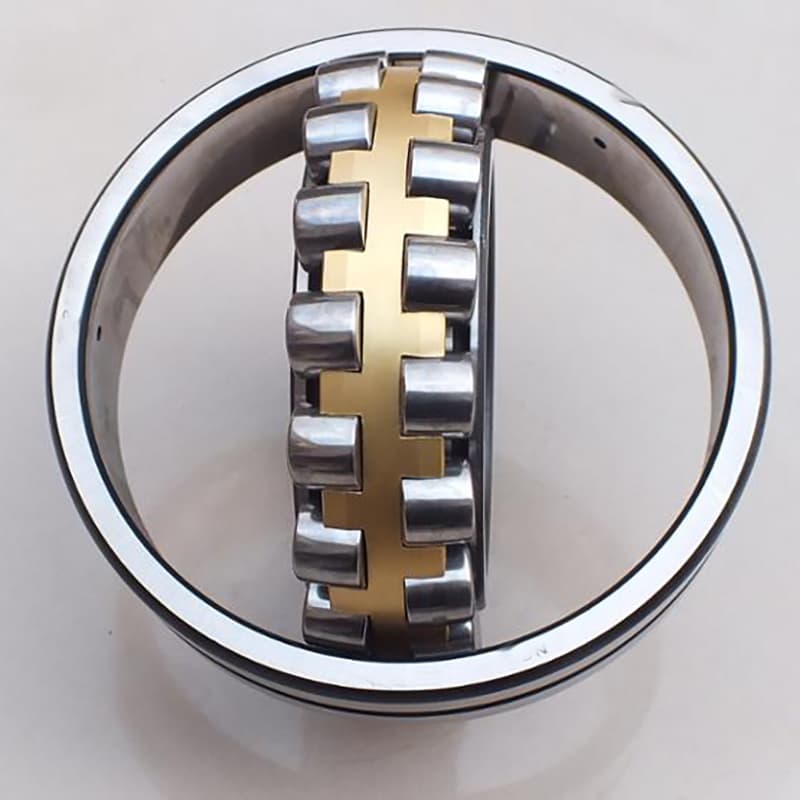
Not every spherical roller bearing is the same. You cannot grab any bearing from a catalog and put it into a caster. You need specific design features. Let me walk you through the most important ones.
Heat stabilization is the first thing I check. Normal bearing steel gets soft above 120°C. In a continuous caster, the bearing can see 150°C to 200°C. Sometimes even higher near the mold. The manufacturer must use a heat stabilization process. This process changes the steel’s structure. The bearing gets a code like S1, S2, or S3. For casters, you want at least S2. That means it can run at 200°C without losing hardness.
Internal clearance is another big deal. When the bearing heats up, the inner ring expands faster than the outer ring. Why? Because the inner ring is closer to the hot shaft. If you use standard clearance (CN), the bearing will lock up when hot. I have seen this happen. The operator hears a grinding noise. Then the roll stops. Then the slab scratches. That scratch ruins the whole product.
For casters, you need C3 or C4 clearance. C3 gives you extra space for expansion. C4 gives even more. Most of my customers in Turkey and Egypt use C4 for the first section of the caster, near the mold. That is the hottest part. For the later sections, C3 is enough.
Cage material also matters a lot. Standard cages are made of pressed steel or brass. In high heat, brass works better. It does not warp. It also has natural lubricating properties. Some modern bearings use polyamide cages. Do not use those in a caster. The heat will melt them. Stick with machined brass cages or steel cages with special heat treatment.
Roller size and number affect load capacity. For heavy loads, you want more rollers and bigger rollers. Some spherical roller bearings have an extra large roller design. The manufacturer removes the guide ring and adds larger rollers in the space. This increases the load rating by 15 to 20 percent. That can make a big difference when your caster runs thick slabs.
Here is a quick comparison table for design choices:
| Component | Standard Bearing | Caster-Suitable Bearing |
|---|---|---|
| Steel heat stabilization | None or S0 | S2 or S3 |
| Internal clearance | CN or C2 | C3 or C4 |
| Cage material | Pressed steel or plastic | Machined brass |
| Roller size | Standard | Enlarged (if available) |
| Coating | None | Zinc phosphate or black oxide |
I always tell my buyers this: pay a little more for the right design. It will save you a lot in downtime.
What Are the Common Failure Modes and Root Causes in Guide Equipment?
Your bearing fails. You replace it. Then it fails again. Same way every time. That is frustrating and expensive.
The most common failures in continuous casting guide bearings are smearing, cracking from heat, and brinelling from shock loads. Each failure has a clear root cause that you can fix.

I have looked at hundreds of failed bearings from casters around the world. The failures look different, but they fall into a few clear patterns. Let me describe each one. I will also tell you what causes it and how to stop it.
Smearing is the first failure mode. You see smearing when the bearing runs without enough lubricant. The metal surfaces touch each other. They weld together for a split second. Then they tear apart. This leaves a rough, smeared surface on the rollers and raceways. The bearing gets noisy. Then it gets hot. Then it seizes.
Root cause: poor lubrication. Maybe the grease dried out from the heat. Maybe the automatic lubrication system is blocked. Maybe someone used the wrong grease that melts at high temperature. I saw one plant in Russia using standard lithium grease. That grease melted and ran out of the bearing at 120°C. The bearing failed in two weeks.
Fix: use high-temperature grease with a base oil that stays thick at 200°C. Synthetic oils work best. Also check your lubrication intervals. In the hot zone, you may need to grease every hour instead of every shift.
Cracking from heat looks different. You see small cracks around the inner ring. Sometimes the whole inner ring breaks into pieces. This happens when the bearing gets too hot, then cools down, then gets hot again. That cycle repeats. The metal gets tired. It cracks.
Root cause: the heat stabilization grade is too low. Or the bearing is running above its design temperature. I also see this when water sprays from the cooling system hit the bearing. That causes sudden cooling. That is even worse than slow cooling.
Fix: use S3 heat stabilized bearings for the first two sections of the caster. Also add heat shields to protect bearings from direct water spray.
Brinelling is the third common failure. Brinelling looks like little dents in the raceway. These dents match the spacing of the rollers. They happen when a shock load hits the bearing. In a caster, shock loads come from the slab moving suddenly. Or from the guide roll hitting a bump on the slab.
Root cause: the bearing clearance is too big. Or the fit between the bearing and the shaft is too loose. When there is a gap, the rollers slam against the raceway. That makes dents. Once you have dents, the bearing vibrates. Then the vibration makes more dents. It gets worse fast.
Fix: use the right fit. For casters, I recommend an interference fit on the inner ring. The shaft should be ground to a tolerance of k5 or m6. The housing should have a loose fit, like H7. That lets the outer ring move a little to handle misalignment.
Wear from contamination is the fourth problem. The casting line has lots of dust, scale, and water. If these get inside the bearing, they act like sandpaper. The bearing wears down. The clearance increases. Then the bearing fails.
Root cause: bad sealing. Standard rubber seals cannot take the heat. They get hard and crack. Then dirt gets in.
Fix: use bearings with special high-temperature seals. Or use labyrinth seals in the housing. Some of my customers in Brazil use double seals with an air purge. They push clean air into the space between the seals. That keeps dust out completely.
Let me give you a quick checklist. If you see a failed bearing, look at the damage. Then match it to this table:
| Failure Look | Most Likely Root Cause | What To Check First |
|---|---|---|
| Smearing, rough surface | Bad lubrication | Grease type and amount |
| Cracks on inner ring | Heat cycling | Heat stabilization grade |
| Dents on raceway | Shock loads | Bearing fit and clearance |
| Worn, loose surfaces | Dirt contamination | Seals and housing design |
I always tell my customers: do not just change the bearing. Find out why it failed. Fix that problem. Then put in a new bearing. Otherwise you will change it again next month.
How to Choose the Right Spherical Roller Bearings for Longer Life in Support Rolls?
You have many bearing brands to pick from. The prices vary a lot. So which one gives you the best value for your caster?
To optimize bearing life, you need to match the bearing size, internal design, steel grade, and lubrication to your specific casting machine conditions. A one-size-fits-all bearing will fail early.
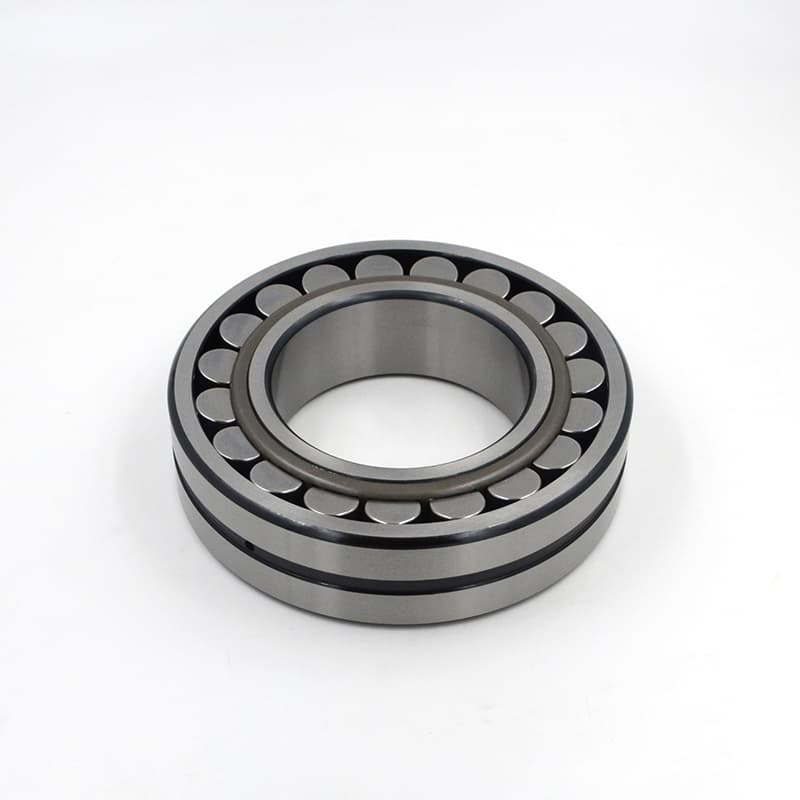
Choosing the right bearing is not hard. But you need to follow a clear process. I have helped procurement managers from Indonesia to South Africa pick the best bearings for their casters. Here is the step-by-step method I use.
Step one: measure your loads. You need to know the radial load and the axial load on each support roll. Most caster manufacturers give this data. If not, you can calculate it. The radial load comes from the weight of the slab. The axial load comes from the slab moving sideways. For most casters, the axial load is 10 to 20 percent of the radial load.
Step two: check your operating temperature. Take a temperature reading at the bearing housing. Do this when the caster is running normally. Measure it at different positions along the line. The first section near the mold might be 200°C. The last section might be only 80°C. You can use different bearings for different sections. That saves money.
Step three: decide on the size. Spherical roller bearings come in many sizes. The size code tells you the bore diameter. For example, a 22220 bearing has a 100mm bore. A 22224 has a 120mm bore. Bigger bearings handle more load. But they also cost more. So pick the smallest bearing that still gives you a long enough life. I usually aim for a calculated life of at least 50,000 hours for caster support rolls.
Step four: choose the clearance. Use my rule of thumb. For bearing housing temperatures below 100°C, use C3. For 100°C to 150°C, use C4. For above 150°C, use C5 if available. Most spherical roller bearings come in C3 and C4. C5 is harder to find. But you can get it from factories like mine that do custom orders.
Step five: pick the cage and steel. For temperatures up to 150°C, a machined brass cage is fine. For higher temperatures, ask for a full steel cage. For steel, always request S2 heat stabilization if your temperature goes above 150°C. For very hot sections near the mold, use S3.
Step six: plan the lubrication. This is the step most people skip. But good lubrication doubles or triples bearing life. For continuous casters, use a synthetic grease with a base oil viscosity of ISO VG 220 or higher. The thickener should be polyurea or calcium sulfonate. Those stay stable at high temperatures. Do not use lithium soap greases. They melt.
Here is a selection table for different caster zones:
| Caster Zone | Typical Temp | Recommended Clearance | Heat Stabilization | Grease Type |
|---|---|---|---|---|
| Caster Zone | Typical Temp | Recommended Clearance | Heat Stabilization | Grease Type |
| ————- | ————– | ———————- | ——————– | ————– |
| Mold section (first 2m) | 180-220°C | C4 or C5 | S3 [web:201] | Synthetic, polyurea [web:196] |
| Strand guide (middle) | 120-180°C | C4 [web:195] | S2 or S3 [web:201] | Synthetic, polyurea [web:196] |
| Straightening section | 80-120°C | C3 or C4 | S2 [web:201] | Synthetic or mineral |
| Cooling bed (end) | Below 80°C | C3 [web:198] | S1 or none | Standard high-temp |
I have a story to share. A distributor in Pakistan called me last year. He had a customer with a billet caster. The customer kept buying cheap bearings from a local trader. Those bearings lasted only three weeks. The customer was angry. The distributor asked me for help. I sent him a sample of our FYTZ spherical roller bearings with C4 clearance and S2 steel [web:201]. The customer tested one set on the hottest roll. It ran for four months. Then he replaced all his bearings with our products. Now he buys two containers from us every year.
The lesson is simple: do not just look at the price. Look at the specifications. If you are not sure what you need, ask your supplier. A good supplier (like me) will ask you questions about your caster. We will help you pick the right bearing [web:200]. That saves you money in the long run.
Conclusion
Spherical roller bearings keep your continuous caster running. Pick the right design, clearance, and lubrication. Then change bearings less often.
