
You buy a bearing from one brand. Then you need a replacement. Nothing fits. That is a nightmare for any professional.
Global-standard tapered roller bearings follow the same dimensions and tolerances worldwide. So you can swap them between brands and machines. That means less downtime and easier sourcing.
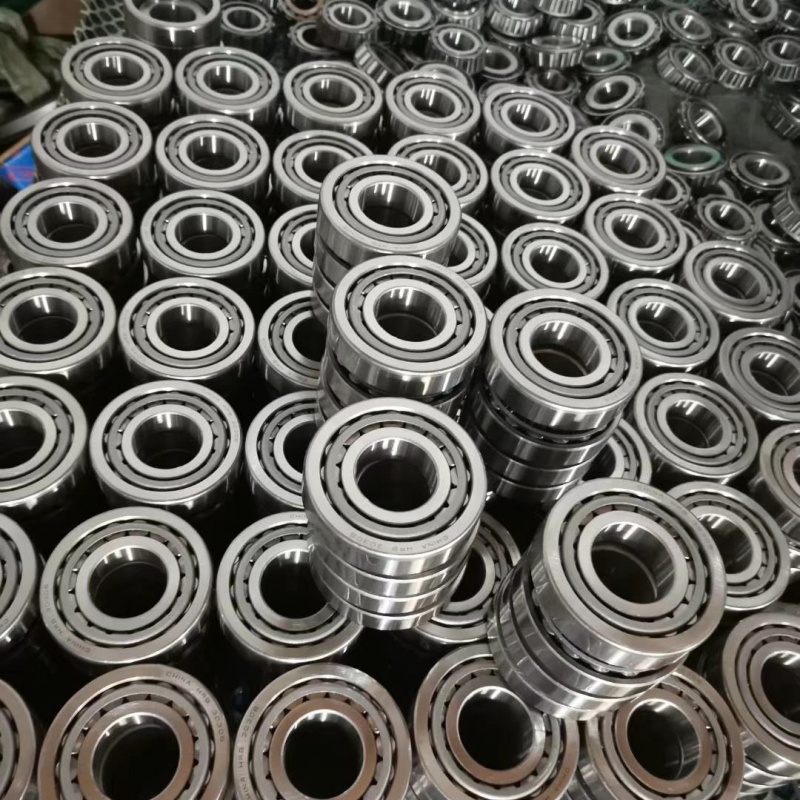
I run FYTZ Bearing, a factory in China. We make taper roller bearings, deep groove ball bearings, pillow block bearings, and more. I sell to distributors like Rajesh in India. He needs bearings that fit his customers’ machines without trouble. That is why I focus on global standards. In this post, I will explain what “global standard” really means. I will compare ISO, JIS, and DIN standards. I will show how standards improve reliability and interchangeability. And I will break down the manufacturing requirements for material and tolerance. Keep reading.
What Are “Global‑Standard” Tapered Roller Bearings and Why Do They Matter for Professional Users?
Not all bearings are the same. Some factories make bearings that only fit their own products. That locks you in. A global standard bearing breaks that lock.
A global-standard tapered roller bearing meets international specifications for dimensions, tolerances, and performance. It is made to fit any machine that follows the same standard. So you can buy from different suppliers without worrying about fit.
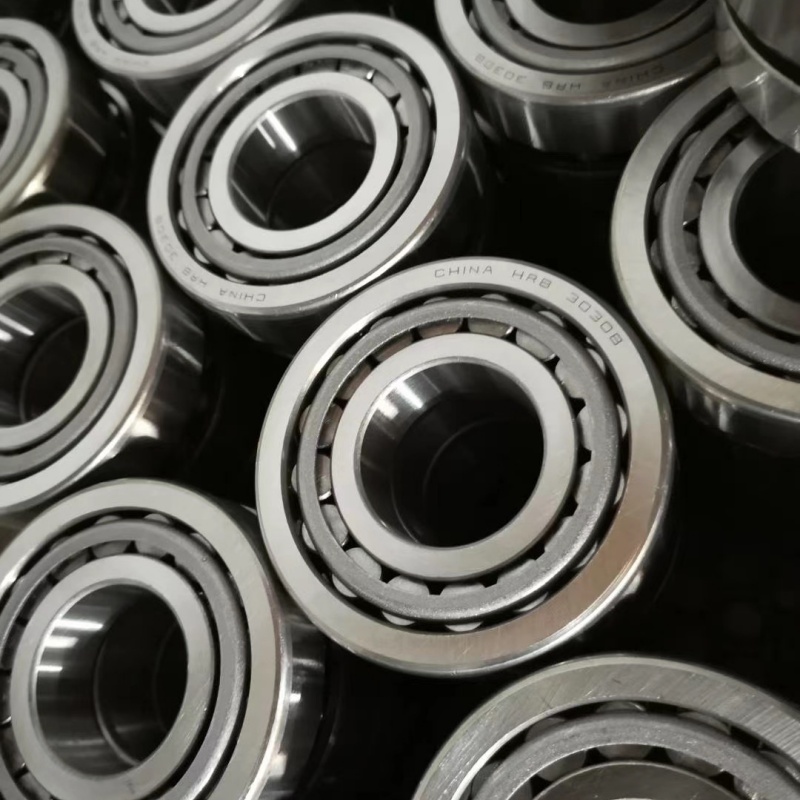
Let me break down what “global standard” means in three parts.
First, dimensions. Every bearing has a basic size: the bore diameter, the outer diameter, and the width. Global standards like ISO 355 set these sizes. For example, a bearing with the code 30206 has a 30mm bore, 62mm outer diameter, and 17.25mm width. That same code means the same size from any ISO-compliant factory in China, Germany, or Japan. So when a customer needs a replacement, he just reads the code on the old bearing. He does not need to measure anything.
Second, tolerances. Size is not enough. The allowable error also matters. A global standard sets the tolerance class. Class 0 (or P0) is normal. Class 6 (P6) is tighter. Class 5 (P5) is even tighter. These classes are the same everywhere. A P6 bearing from FYTZ has the same running accuracy as a P6 bearing from a European brand. That means the shaft will spin just as smoothly.
Third, performance. Global standards also cover things like load ratings and speed limits. ISO 281 gives formulas for calculating bearing life. So a buyer can compare numbers from different suppliers. He can trust that a 30kN rating from one factory means the same thing as a 30kN rating from another.
Why does this matter for professional users? Professionals run machines that must work every day. They cannot wait two weeks for a special bearing. They need to walk to a local distributor or order online and get a bearing that fits right away. Global standards make that possible. I have a customer in South Africa who services mining trucks. He keeps a small stock of global standard taper roller bearings. Those bearings fit multiple brands of trucks. He does not need to stock ten different part numbers.
Here is a table to summarize:
| Aspect | Non‑Standard Bearing | Global‑Standard Bearing |
|---|---|---|
| Dimensions | Custom, no code match | ISO 355 standard codes |
| Tolerances | Inconsistent | P0, P6, P5 (universal) |
| Load ratings | No reference | ISO 281 compliant |
| Interchangeability | Only from one source | Multiple global sources |
| Downtime risk | High | Low |
So when you buy from me at FYTZ, you get global-standard bearings. You can replace them with any other brand that follows the same standards. That is peace of mind for any professional.
International Standard Comparison: How Do Tapered Roller Bearings Differ Under ISO, JIS, and DIN Standards?
You may see three names: ISO, JIS, and DIN. They sound different. But today, they mostly agree with each other. Let me explain.
ISO is the international standard. JIS is the Japanese standard. DIN is the German standard. For most tapered roller bearings, these three standards are now the same. ISO 355 matches JIS B 1512 and DIN 720. So a bearing from any of these systems will fit the same machine.
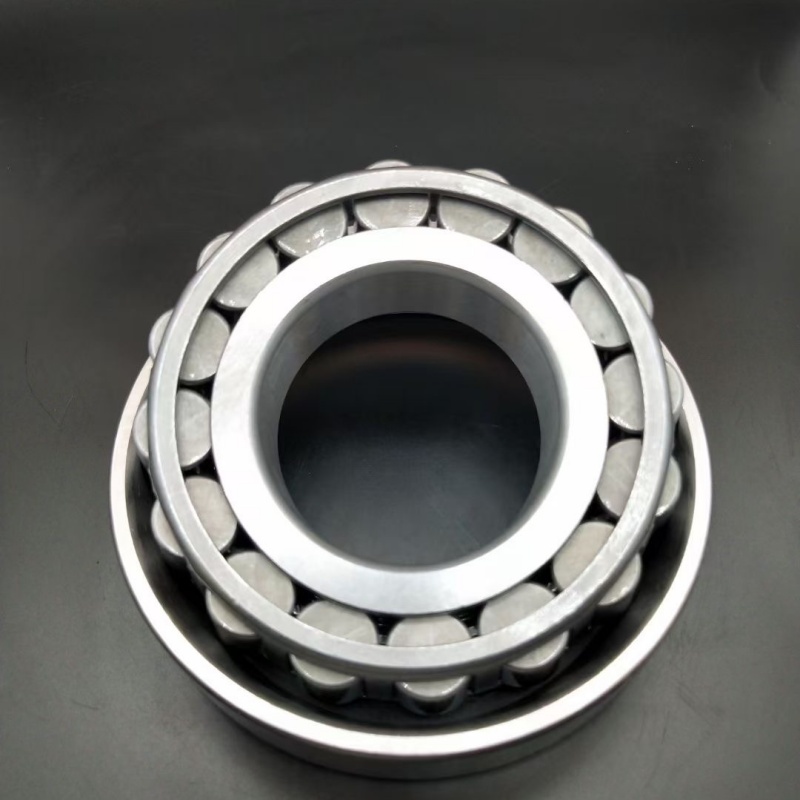
Let me give you a short history and a practical guide.
Decades ago, each country had its own bearing standards. Germany had DIN. Japan had JIS. America had AFBMA (now ABMA). China had GB. The sizes and codes were different. A bearing from Germany might not fit a Japanese machine. That was a big problem for global trade.
Then ISO came along. The International Organization for Standardization created ISO 355 for tapered roller bearings. Over time, most countries adopted ISO as their national standard. Japan updated JIS to match ISO. Germany did the same with DIN. China’s GB standard is also based on ISO. So today, a bearing made to ISO 355 is also compliant with JIS and DIN.
But there is one small difference. The bearing codes can look different. For example, an ISO bearing might be called 30206. Under the old DIN system, the same bearing was called 7206B. Under JIS, it is also 30206 (because JIS now follows ISO). So you need to know the cross-reference. I keep a chart in my office.
Some old machines still use pre-ISO bearings. A few manufacturers still make DIN or JIS only bearings for legacy equipment. But for new equipment and for most replacements, ISO is the global standard. At FYTZ, we produce all our bearings to ISO 355. We also mark the old DIN numbers on the box for customers who are used to them.
Here is a table of common cross-references:
| ISO Code | Old DIN Code | Old JIS Code | Bore (mm) | OD (mm) | Width (mm) |
|---|---|---|---|---|---|
| 30202 | 7202B | 30202 | 15 | 35 | 11 |
| 30206 | 7206B | 30206 | 30 | 62 | 17.25 |
| 30210 | 7210B | 30210 | 50 | 90 | 21.75 |
| 32212 | 7512B | 32212 | 60 | 110 | 29.75 |
So when a customer asks me for a DIN 7206B, I know it is the same as ISO 30206. I send him our bearing. It fits perfectly. I have done this hundreds of times for clients in Russia and Turkey who still use old drawings.
The bottom line is simple. If you see ISO, JIS, or DIN on a modern bearing, they are mostly the same. Buy with confidence.
How Do Global Standard Bearings Improve Equipment Reliability and Interchangeability in Professional Applications?
A professional cannot guess. He needs parts that work the first time. Global standard bearings give you that certainty.
Global standard bearings improve reliability because they follow strict, published tolerances. They improve interchangeability because any standard-compliant bearing fits any standard-compliant housing. That means you can switch suppliers without redesigning your machine.
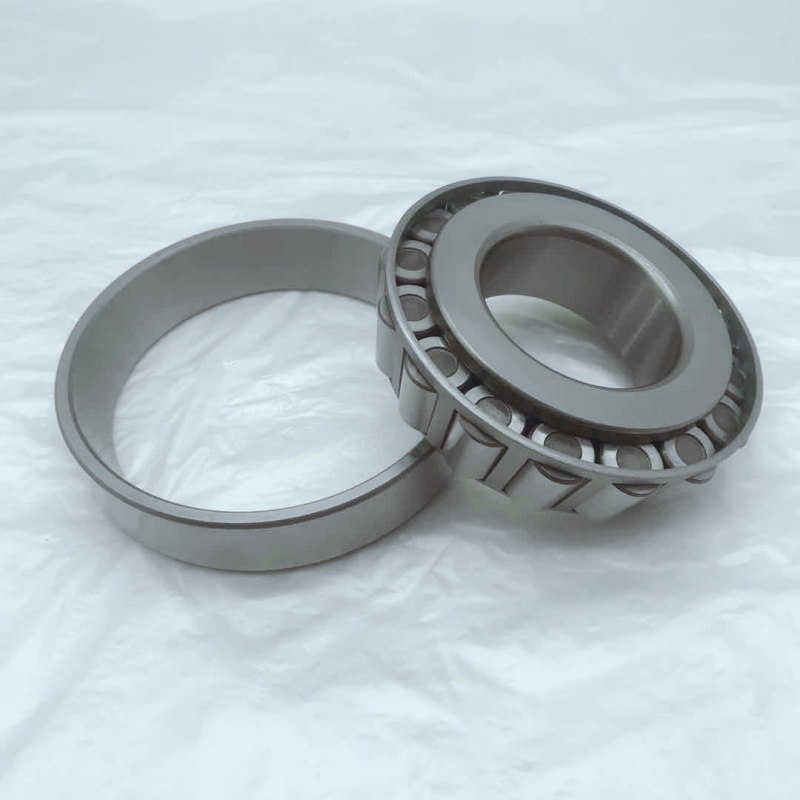
Let me explain reliability first, then interchangeability.
Reliability comes from consistent quality. A global standard does not just set dimensions. It sets the whole manufacturing process. For example, ISO 492 specifies the running accuracy of a tapered roller bearing. It says how much the inner ring can wobble (runout). It says how thick the rings must be. It says how smooth the surface must be. A factory that claims to meet ISO 492 has to measure these things. They cannot just guess. So when you buy a global standard bearing, you know what you get.
At FYTZ, we follow ISO 9001 for our quality system. We test every batch of bearings on our inspection lines. We check the bore size, the outer diameter, the radial runout, and the noise level. If a bearing does not pass, it does not leave the factory. That is how we build reliability.
Interchangeability is the second big benefit. Imagine you have a gearbox from Italy. The original bearings cost a lot. You want to buy from a different source. If the Italian machine uses ISO standard bearings, you can buy from me in China. The bearing will fit because the dimensions are the same. The housing bore is 62mm. The shaft diameter is 30mm. Those numbers do not change. So you save money without changing your design.
I have a customer in Indonesia. He imports bearings from three different countries. He told me that before he switched to global standard parts, he had to keep separate stock for each machine. Now he buys all ISO 302 series bearings from us. One part number fits many machines. That cuts his inventory cost by 40%.
Here is a table showing the benefits:
| Feature | Without Global Standard | With Global Standard |
|---|---|---|
| Replacement sourcing | Only original brand | Any ISO-compliant brand |
| Inventory size | Many unique parts | Fewer common parts |
| Housing design | Custom for each bearing | Standard for all |
| Supplier switching | Risky, may not fit | Safe, guaranteed fit |
| Downtime for wrong part | Days or weeks | Zero if you have stock |
So for a professional user like Rajesh, global standard bearings mean less risk. He can buy from me or from another supplier. The bearings will work the same. That is real value.
From Material to Tolerance: What Strict Manufacturing Requirements Do Global Standard Tapered Roller Bearings Meet?
Making a global standard bearing is not easy. You cannot just cut steel and call it done. There are strict rules from the raw material to the final tolerance.
Global standard bearings require vacuum-degassed chrome steel, precise heat treatment to 60-64 HRC, grinding to micron-level tolerances, and 100% inspection for running accuracy. Every step must be controlled.

Let me walk you through the four key requirements.
First, material. The standard bearing steel is GCr15 (similar to AISI 52100). But not any GCr15 works. A global standard bearing needs vacuum degassing. That process removes gases and impurities from the molten steel. Without vacuum degassing, the steel has tiny oxide inclusions. These inclusions act as cracks under load. The bearing fails early. At FYTZ, we buy vacuum-degassed steel from certified mills. We also check the material certificate for each batch.
Second, heat treatment. The steel rings and rollers must be hardened. The target hardness is 60 to 64 HRC on the Rockwell scale. If it is too soft, the bearing dents. If it is too hard, it cracks. The heat treatment also creates a "case" of hardness that goes 1-2mm deep. That case resists wear. But the core stays tougher to absorb shocks. We test hardness on every batch. We keep records for five years.
Third, grinding and tolerances. After heat treatment, the parts are hard. Now they need grinding to the final size. A global standard bearing has tolerances measured in microns. One micron is 0.001mm. For a P5 precision bearing, the bore tolerance is plus or minus 5 microns. The surface finish must be below 0.1 microns Ra. That is smoother than a mirror. We use CNC grinding machines from Germany and Japan. We measure every bearing with electronic gauges.
Fourth, assembly and inspection. The rollers are sorted by size. The inner and outer rings are measured. Then the bearing is assembled with the correct number of rollers. Finally, we test the running noise and vibration. A global standard bearing should run quiet. If it makes noise, we reject it. We also check the radial runout. The inner ring should not wobble more than 8 microns for P6 class.
Here is a table of requirements:
| Requirement | Standard Level | FYTZ Capability | Test Method |
|---|---|---|---|
| Steel | Vacuum degassed, GCr15 | Yes, with certificate | Spectrometer |
| Hardness | 60-64 HRC | 61-63 HRC typical | Rockwell tester |
| Surface finish | <0.1 µm Ra | 0.08 µm Ra | Profilometer |
| Bore tolerance (P5) | ±5 µm | ±4 µm | Air gauge |
| Radial runout (P6) | <10 µm | <8 µm | Runout tester |
I am proud of our factory. We meet all these requirements for every global standard bearing we ship. That is why customers from Brazil to Bangladesh trust us. And if you want to see our test reports, just ask. I will send them to you.
Conclusion
Global-standard tapered roller bearings give you reliable fit, easy replacement, and consistent quality. They are the professional’s choice.