
Do your small assembly machines keep breaking down because of cheap, failing bearings?
Simple assembly machines and semi-automatic equipment work best with lightweight, cost-effective pillow block bearings. Look for units with good alignment tolerance, basic sealing, and easy mounting. You do not need heavy-duty bearings. You need reliable bearings that match your machine’s light load and slower speed.
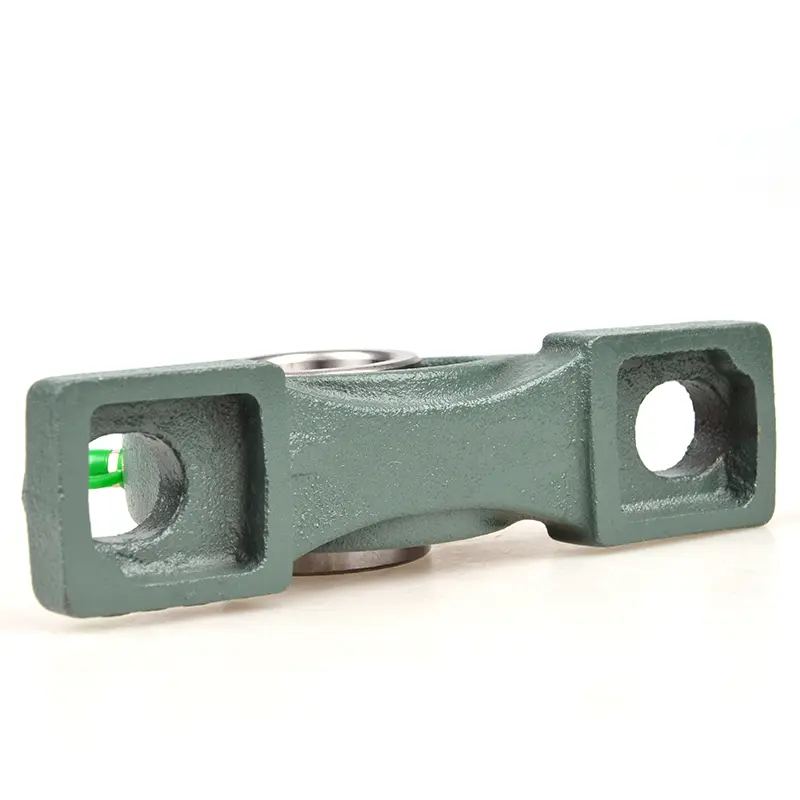
I run a bearing factory in China called FYTZ Bearing. I talk to people like Rajesh from India every week. He buys bearings for resale to small workshops and repair shops. His customers do not run huge automated lines. They run simple machines. Semi-automatic presses. Small conveyors. Assembly tables. Those machines need bearings too. But they do not need the same bearings as a steel mill. Let me show you what actually works for light-duty equipment. Keep reading. I promise you will save money and stop replacing bearings too soon.
Why Simple Assembly Machines Need the Right Pillow Block Bearings?
Have you ever put a heavy-duty bearing on a small machine and watched it fail for no clear reason?
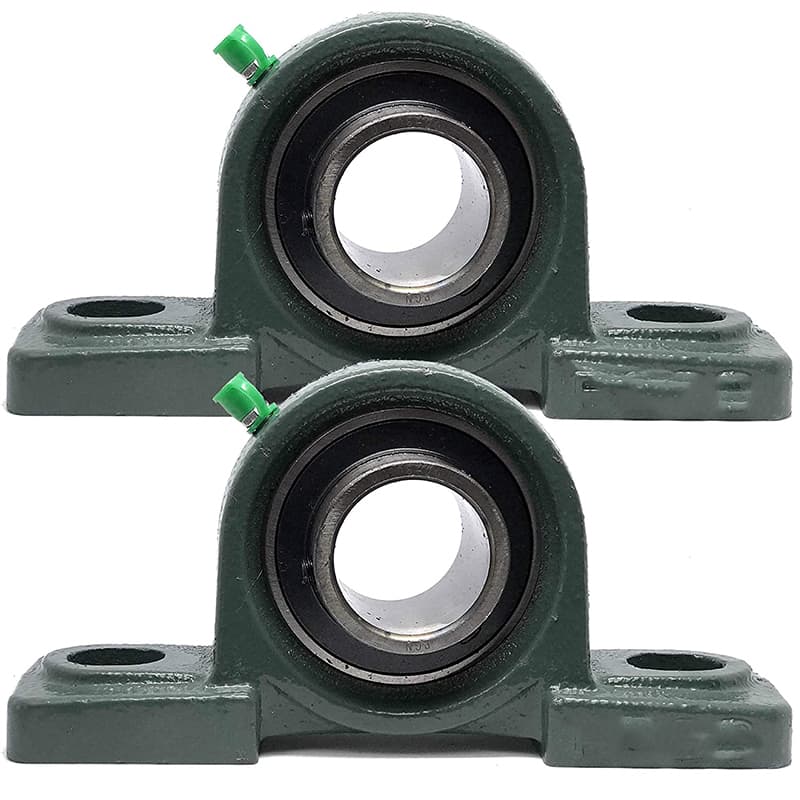
Simple assembly machines need the right pillow block bearings because oversized bearings create too much resistance. Too-small bearings wear out fast. The right bearing matches the load, speed, and alignment of your specific machine. A mismatched bearing causes noise, heat, and early failure.
Let me explain why this matters more than you think.
The problem with oversized bearings
I see this mistake all the time. A buyer thinks bigger is better. So they put a UCP212 bearing on a machine that only needs a UCP205. The bigger bearing has more rolling resistance. The small motor on the assembly machine now works harder. It draws more current. It runs hotter. The belt slips. The bearing itself might last forever. But the motor dies in six months. That is not a good trade.
The problem with undersized bearings
The other mistake is worse. A buyer tries to save five dollars. They put a tiny bearing on a machine that needs something stronger. The bearing overheats. The grease leaks out. The balls get flat spots. Then the shaft wobbles. The product coming off the assembly line is no longer straight or accurate. That small bearing just ruined a whole batch of parts.
How to pick the right size for simple machines
| Machine Type | Recommended Bearing Series | Why |
|---|---|---|
| Hand-fed assembly table | UCP204 to UCP205 | Low load, low speed. Small size saves space. |
| Small conveyor (less than 3 meters) | UCP205 to UCP206 | Steady load. Needs good alignment tolerance. |
| Semi-automatic press | UCP206 to UCP207 | Shock loads from pressing. Needs stronger housing. |
| Packaging machine | UCP204 to UCP205 | Clean environment. Basic sealing is enough. |
| Labeling machine | UCP204 | Very low load. Quiet operation matters. |
A real example from my customer in Vietnam
A small factory made wooden furniture. They used semi-automatic sanding machines. They kept buying UCP208 bearings because that was what their old supplier sold them. The bearings worked fine. But the machines vibrated too much. I asked them to try UCP206 instead. The vibration dropped by half. The sanding finish got better. And they saved money on each bearing. The bigger bearing was not better. It was just heavier.
My advice from the factory floor
You need to match the bearing to the machine’s real job. Do not guess. Look at the shaft size first. Then look at the space inside the machine. Then think about the load. For simple assembly machines, the load is almost always light. So focus on shaft fit and alignment. Most failures in these machines come from bad alignment, not broken bearings. I will talk more about alignment in the next section.
Key Features to Look for in Pillow Block Bearings for Semi-Automatic Equipment?
Do you know which features actually matter for a machine that runs only a few hours each day?
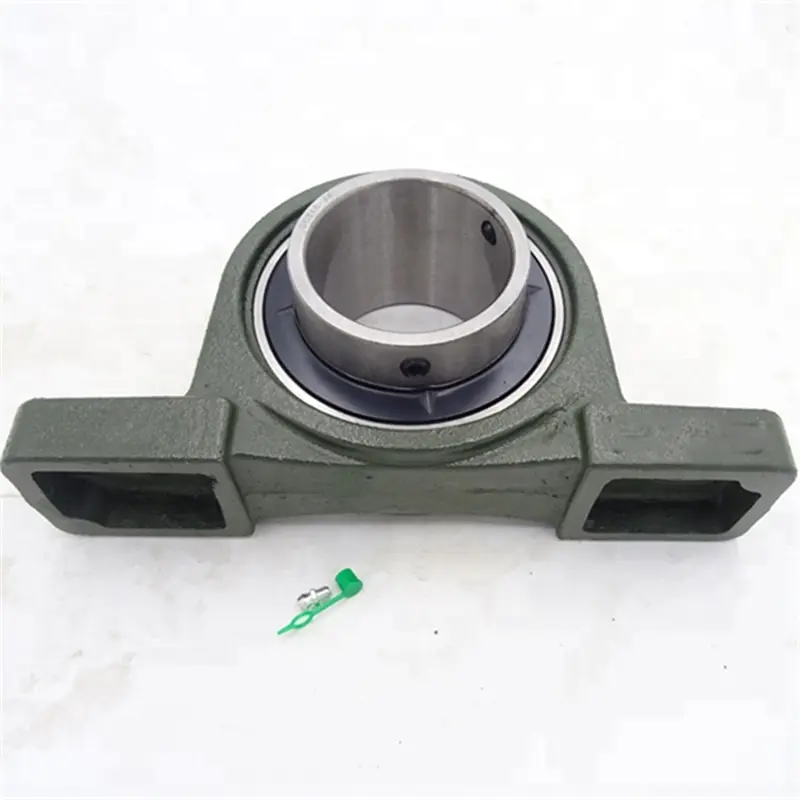
For semi-automatic equipment, focus on three key features: easy mounting, good dirt sealing, and replaceable bearing inserts. You do not need high precision grades like P5 or P6. Standard class P0 bearings work fine. But you do need good seals to keep dust out of the bearing.
Let me break down each feature so you know exactly what to ask your supplier.
Easy mounting saves time and money
Semi-automatic equipment is often moved around a workshop. One day it is here. Next week it is over there. That means you need bearings that are easy to install and remove. Look for pillow block units with set screws instead of adapter sleeves. Set screws are faster. A mechanic with a simple hex key can mount a bearing in two minutes. Adapter sleeves take longer and need more tools.
Good sealing keeps dirt out
Most small workshops are not clean rooms. There is dust. There is sawdust. There are tiny metal shavings. All of that kills bearings fast. You need bearings with good contact seals. Look for the code “2RS” or “LLU” on the bearing insert. That means two rubber seals. One on each side. Those seals keep the dirt out and the grease in. A bearing with metal shields (ZZ or 2Z) is not good enough for a dirty workshop. Dust gets past the metal shield.
Replaceable inserts extend the life of your housing
This is a feature that many buyers ignore. Some cheap pillow block units are made as one piece. When the bearing inside fails, you throw away the whole housing. That is wasteful. Better units have a separate housing and a separate bearing insert. You can replace just the insert. The cast iron housing stays on the machine. This saves you money over time. It also saves you time because you do not need to unbolt the whole housing.
Here is a simple checklist for semi-automatic equipment:
| Feature | What to Look For | What to Avoid |
|---|---|---|
| Mounting type | Set screw locking | Adapter sleeve (too slow) |
| Seal type | Contact rubber seals (2RS/LLU) | Metal shields (ZZ/2Z) |
| Housing construction | Separate insert and housing | One-piece cheap units |
| Housing material | Cast iron for dry areas | Plastic or cheap zinc alloy |
| Grease fitting | Standard grease nipple included | No fitting (can’t re-lube) |
A story from a packaging line in Brazil
A customer packed food products into boxes. Their semi-automatic tape machine used cheap pillow blocks with metal shields. Dust from the cardboard got inside the bearings every two weeks. The bearings made a grinding noise. The machine stopped. They called me frustrated. I sent them the exact same size bearing but with rubber seals instead. They installed them. Six months later, they emailed me to say the bearings were still quiet. That was three years ago. They still buy the same rubber-sealed bearings from me.
My honest opinion
Do not overcomplicate your purchase. For semi-automatic equipment, you do not need expensive precision bearings. You do not need stainless steel if the machine is indoors. You do not need special high-temperature grease. But you do need good seals. That is the one feature I never compromise on. Bad seals will kill any bearing, no matter how expensive or high quality it is.
Load, Speed, and Alignment: What Matters Most for Light-Duty Machines?
Do you check alignment before you tighten the bolts, or do you just guess and hope for the best?
For light-duty machines, alignment matters more than load or speed. Most light-duty applications run well below the bearing’s maximum load and speed ratings. But bad alignment creates extra stress. That stress causes heat, noise, and early failure. Get the alignment right first. Then worry about everything else.

Let me explain the real limits of these three factors.
Load is rarely the problem
A UCP204 bearing can handle a static load of about 6,500 Newtons. That is roughly 660 kilograms of force. Most simple assembly machines never get close to that limit. The product on the conveyor is light. The pressing force is small. The rotating part is balanced. So when a bearing fails on a light-duty machine, it is almost never because the load was too high. Something else caused the failure.
Speed is also rarely the problem
The same UCP204 bearing can handle speeds up to 8,000 or 10,000 RPM with grease lubrication. Most simple machines run at 1,500 RPM or less. That is well within the safe range. So speed is not killing your bearings either. Even a cheap bearing can handle slow speeds for a long time.
Alignment is the real killer
Here is what actually happens. The two pillow block bearings on a shaft are not perfectly lined up. One is 2 millimeters higher than the other. Or they are twisted a little bit. When the shaft spins, the balls inside the bearing get pushed sideways. They do not roll straight anymore. They slide and scrape. That creates heat. That heat breaks down the grease. Then the balls grind against the raceway. Within a few hundred hours, the bearing is destroyed.
How much misalignment can each bearing type take?
| Bearing Type | Angular Misalignment Tolerance | What Happens When Exceeded |
|---|---|---|
| Standard pillow block (set screw) | 1 to 2 degrees | Heat builds up quickly. Grease fails. |
| Self-aligning pillow block | 3 to 4 degrees | Runs longer but still fails eventually. |
| Spherical bearing insert | 2 to 3 degrees | Better than standard. Not a cure for bad design. |
| Flanged bearing unit | 0.5 to 1 degree | Very sensitive. Needs perfect alignment. |
A simple way to check alignment
You do not need expensive laser tools for simple machines. A straight edge and a feeler gauge work fine. Put the straight edge across the two bearing housings. Look for gaps. If you see light under the straight edge, you have a problem. Also check the shaft itself. Spin it by hand. Does it turn freely with no tight spots? If it feels tight at some points and loose at others, your alignment is off.
My experience with a customer in Egypt
A workshop made metal doors. Their semi-automatic cutting machine kept breaking bearings every two months. I asked them to send me photos of the installation. The two bearings on the main shaft were clearly not lined up. One was bolted directly to a flat frame. The other was on a bracket that was welded slightly crooked. I told them to add thin metal shims under the lower bearing. They did that. The bearings lasted two years. The problem was never the bearing quality. The problem was the installation.
My clear advice for you
Buy self-aligning pillow block bearings for light-duty machines. They cost a little more. But they forgive small alignment mistakes. If your machine is built with basic welding and bolting, you will have alignment errors. That is just reality. A self-aligning bearing lets you get away with those errors. A standard bearing will punish you with early failures. I sell both types. But I always recommend self-aligning for simple assembly machines.
How Pillow Block Bearings Reduce Downtime in Semi-Automatic Production Lines?
Does a small bearing failure stop your whole production line for half a day?
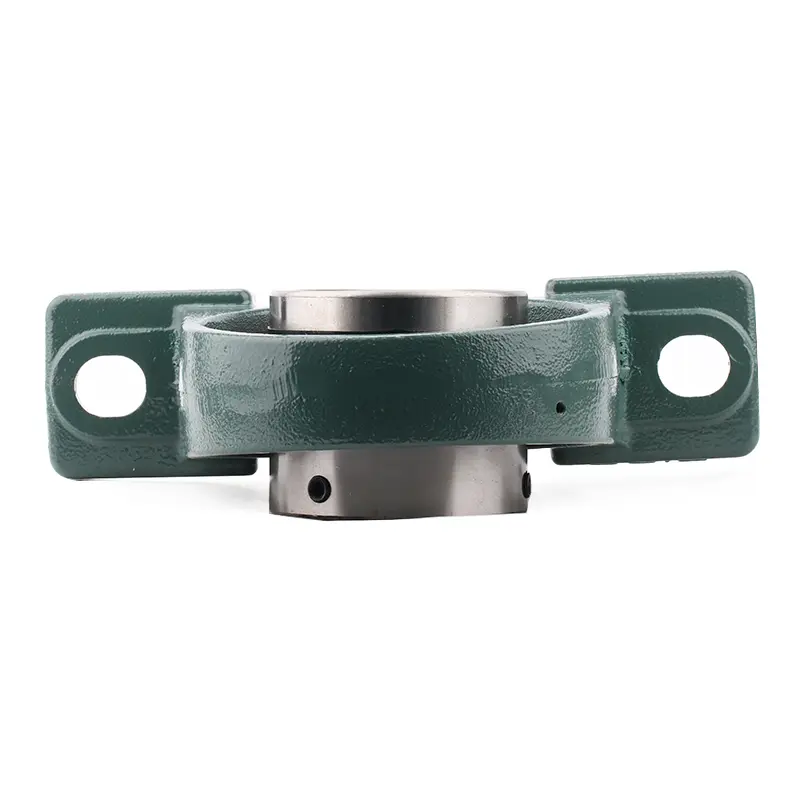
Pillow block bearings reduce downtime because you can replace just the bearing insert without removing the whole housing. The housing stays bolted to the machine. The shaft stays in place. You open the housing, swap the insert, and close it. Total downtime drops from two hours to twenty minutes.
Let me walk you through how this actually saves you money and time.
The old way takes too long
The old way to replace a bearing on a shaft is painful. First, you unbolt the housing. Then you slide the housing off the shaft end. But sometimes the shaft does not have a free end. You have to remove other parts first. That takes more time. You lose more production. Your workers stand around waiting. Your customer waits for their order. It is a mess.
The smart way using split pillow blocks or insert replacement
Many pillow block units have a split housing. You can open the top half. Take out the old bearing insert. Put in a new one. Close the top half. Tighten the bolts. That is it. The housing never moves. The shaft never moves. The alignment stays exactly the same. You do not need to realign anything. You just swap the part that wears out.
Downtime comparison for a typical semi-automatic machine
| Repair Method | Time Needed | Tools Needed | Production Lost |
|---|---|---|---|
| Remove whole housing (standard bearing) | 90 to 120 minutes | Wrenches, puller, hammer, alignment tools | High |
| Replace only the insert (split housing) | 15 to 25 minutes | Wrenches only | Low |
| Replace the whole pillow block unit (pre-aligned) | 30 to 45 minutes | Wrenches, basic alignment check | Medium |
What to stock in your spare parts cabinet
If you run a semi-automatic production line, here is what you need to keep on hand. First, buy extra bearing inserts. They are small and cheap. They take up almost no space. Second, buy one or two complete pillow block housings. Sometimes the housing itself gets damaged. A crack or a broken bolt hole. That is rare, but it happens. Third, keep a tube of the right grease. Do not use random grease from a different machine. Use what the bearing needs.
A real example from a packaging line in India
Rajesh, the procurement manager I told you about earlier, had a customer with a bottle labeling line. The line had twelve pillow block bearings. One bearing would fail every few months. But because the line was continuous, any failure stopped the whole line. They lost half a day each time. I showed them how to use split housing pillow blocks. Now when a bearing fails, they swap the insert in fifteen minutes. The line restarts before the glue dries on the bottles. That customer now orders all their bearings from Rajesh. And Rajesh orders from me.
My practical tips to reduce downtime more
First, train one person on each shift to do the bearing swap. Do not wait for a specialist to come from another building. Second, keep a pre-assembled spare unit ready. Mount the new insert into a spare housing ahead of time. Then a swap takes five minutes. Third, mark the housing and the machine frame with a paint mark. That way you always put the housing back in the exact same spot. Alignment stays perfect every time.
My honest bottom line
Simple machines and semi-automatic equipment do not need expensive bearings. But they do need smart bearing designs. Split housings and replaceable inserts are not fancy features. They are practical tools that save you real money. I sell bearings to factories all over the world. The ones who focus on easy maintenance always make more profit than the ones who focus on the lowest purchase price.
Conclusion
Pick pillow block bearings that are easy to mount, have good seals, forgive alignment errors, and let you swap inserts fast.