
You buy a new bearing for your washer. Three weeks later, it sounds like a broken drum. What went wrong?
Industrial washers destroy regular bearings because of water, heat, chemicals, and high pressure. Standard bearings rust fast. Their grease washes out. Their seals break down. You need specially designed deep groove ball bearings to survive these tough conditions.
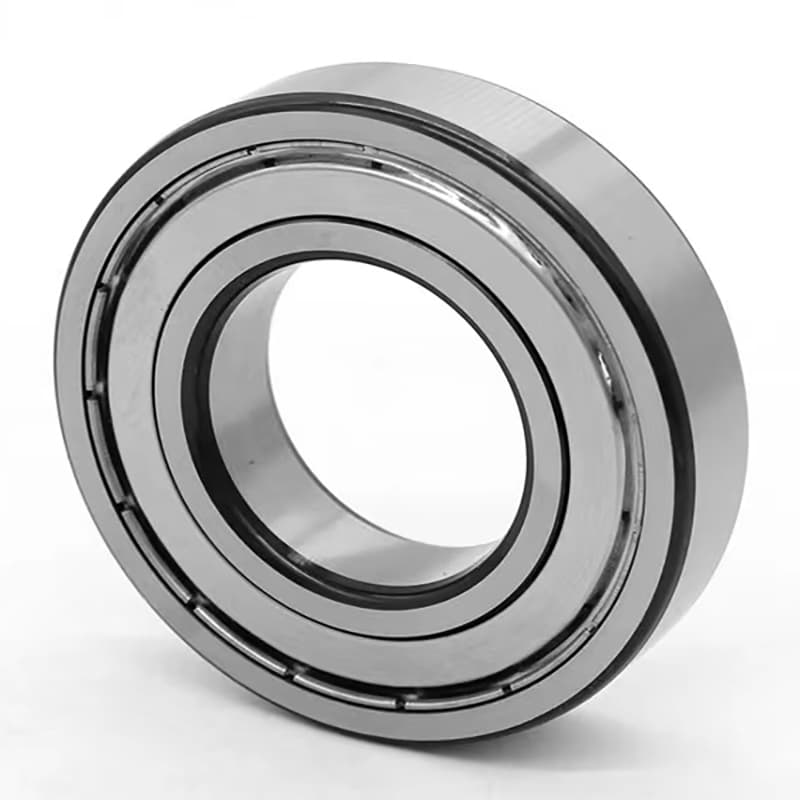
I run a bearing factory in China. Every month, I get calls from washer manufacturers and repair shops. They ask me the same question. “Why do our bearings keep failing?” The answer is simple. They use the wrong bearings for the job.
So let me walk you through this problem. I will show you exactly what kills bearings in washers. And more importantly, I will tell you which bearings actually work.
Why Industrial Washers Destroy Regular Bearings Fast?
You put a standard bearing in a washing machine. Two months later, it is seized. Why does this happen so fast?
Industrial washers combine water, high temperature, aggressive chemicals, and constant vibration. Regular bearings have no protection against these four attacks. The water causes rust. The heat thins the grease. The chemicals eat the seals. The vibration loosens everything. The bearing fails in weeks instead of years.
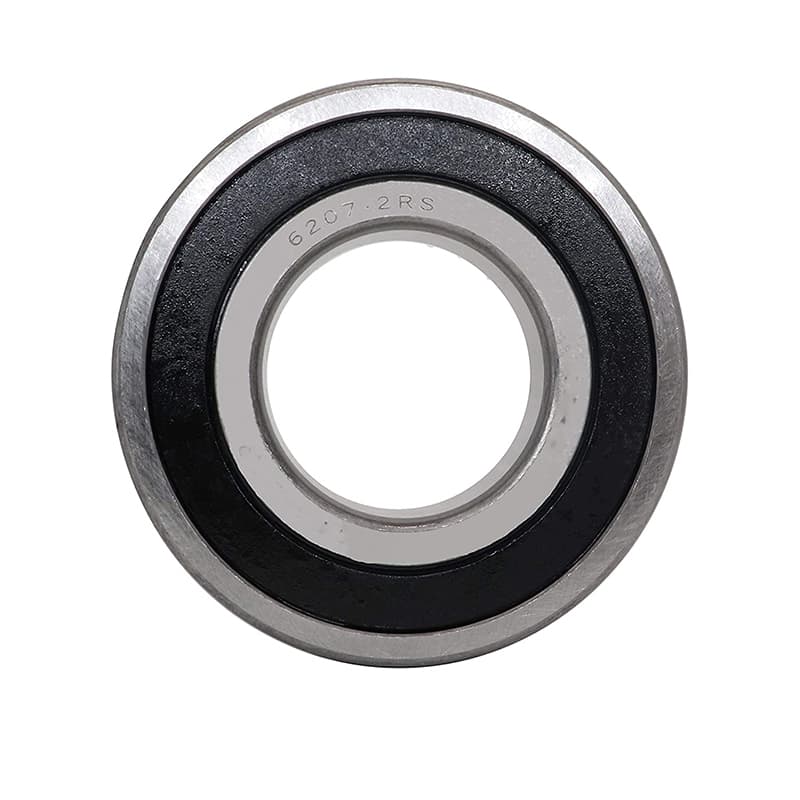
How each part of the washer attacks your bearings?
Let me break this down. A standard deep groove ball bearing is made for dry, clean conditions. It expects some moisture now and then. But an industrial washer is a completely different world.
First, there is water. Lots of water. Hot water under pressure. This water pushes into every tiny gap. Standard bearings have metal shields. These shields keep out big dirt particles. But they do not stop water. Water is too thin. It flows right through the shield gap. Once inside, it sits against the steel. Rust starts in hours, not days.
Second, there is heat. Industrial washers run at 60°C to 90°C. Some even go to 120°C on sanitize cycles. Standard bearing grease is not made for this. Most greases start leaking at 70°C. The oil separates from the thickener. The oil runs out. The thickener stays behind as hard chunks. Now you have a dry bearing with plastic-like blocks inside. That is a recipe for quick death.
Third, there are chemicals. Industrial cleaning uses strong detergents, alkalis, and acids. These chemicals are great for cleaning dirty parts. But they are terrible for bearings. They attack rubber seals. They break down grease additives. They even corrode stainless steel if the pH is wrong. Regular steel does not stand a chance.
Fourth, there is vibration. Washers spin fast. They stop. They start again. They reverse direction. This constant shaking loosens bearing fits. The outer ring starts moving inside the housing. The inner ring spins on the shaft. This movement creates wear. Soon the bearing fits loose. Then more water and dirt get inside.
Here is a table to help you see the damage pattern:
| Washer Condition | What Happens to Standard Bearing | Time to Failure |
|---|---|---|
| Cold water only (under 40°C) | Slow rust buildup on raceways | 3 to 6 months |
| Hot water (60°C to 80°C) | Grease separation + rust | 4 to 8 weeks |
| Hot water + detergent | Seal breakdown + chemical corrosion | 2 to 4 weeks |
| High pressure spray (over 50 bar) | Water forced past shields | 1 to 3 weeks |
| Steam cycle (over 90°C) | Complete grease loss + seal melt | Days or hours |
I remember a customer from Indonesia. He ran a laundry equipment repair business. He kept buying standard bearings for industrial washers (https://en.wikipedia.org/wiki/Bearing_(mechanical)). He replaced them every two months. His customers were angry. The machines kept breaking down.
He called me for help. I asked him one question. “What seals are on your bearings?” He said, “Metal shields” (https://www.skf.com/group/products/rolling-bearings/principles/sealing-shielding). That was the problem. Metal shields do not work in wet conditions. We switched him to rubber-sealed bearings with water-resistant grease (https://www.nsk.com/tools-resources/abc-bearings/seals-and-shields/). His replacement time went from two months to two years. That is a huge difference for his business.
So here is my point. You cannot use regular bearings in industrial washers. The conditions are too extreme. You need special features. Let me explain those features in the next sections.
Water and Chemical Exposure: How Seals and Shields Make the Difference?
You see two bearings that look the same. One has rubber seals. One has metal shields. Which one do you pick for a washer? (https://jiegongbearing.com/differences-between-steel-seals-and-rubber-seals/)
Rubber seals create a tight waterproof barrier. Metal shields leave open gaps. For water and chemical exposure, you need rubber seals on both sides. The best choice is double-lip rubber seals with contact pressure. This stops water from entering and keeps grease inside. (https://www.bearingworks.com/technical-data/seals-and-shields.php)
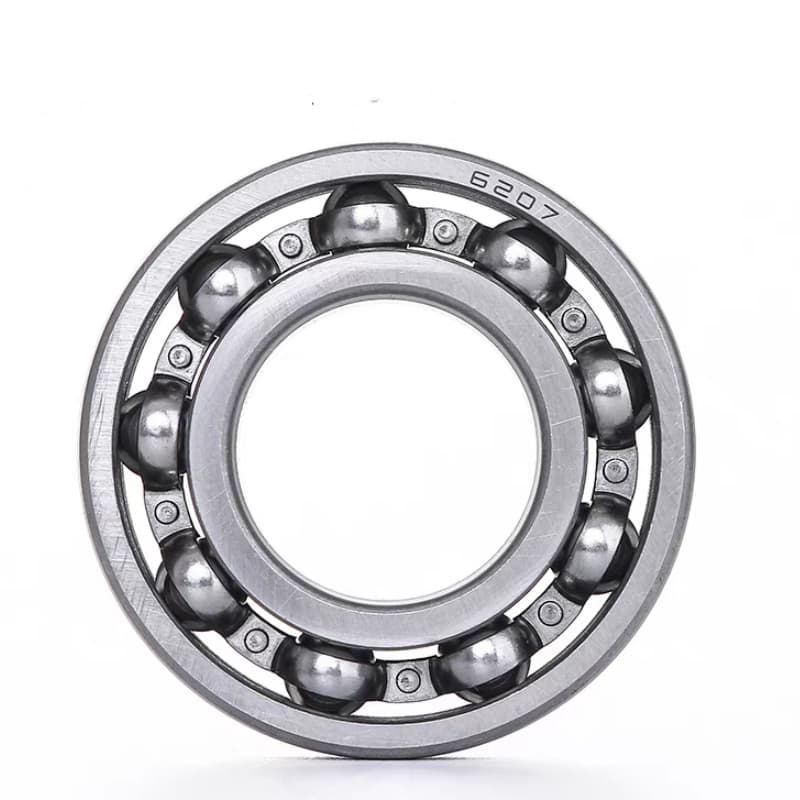
Why seal design matters more than bearing material?
Let me explain this clearly. Many buyers think stainless steel bearings are the answer for washers (https://www.timken.com/resources/productcatalogue/en/timken/content/resources/pdfs/bearingcorrosion.pdf). They are wrong. Seals are actually more important than the steel type (https://www.skf.com/us/products/rolling-bearings/principles/sealing-shielding). A stainless bearing with bad seals still fails. A chrome steel bearing with good seals can last for years.
Here is why. Water does not care what steel you use. Water finds gaps. If your seal has a tiny opening, water pushes through. Once water gets inside, even stainless steel will corrode over time. Not as fast as chrome steel. But it will still happen. The real solution is to keep water out completely (https://www.nsk.com/content/dam/nsk/common/technology/pdf/en/BearingCorrosion.pdf).
Let me walk you through the different seal types. Then you can decide what works for your washer.
Open bearings (no seals) – Never use these in washers. They have zero protection. Water goes straight in. Grease washes straight out. These are for dry, clean places like electric motors in air-conditioned rooms.
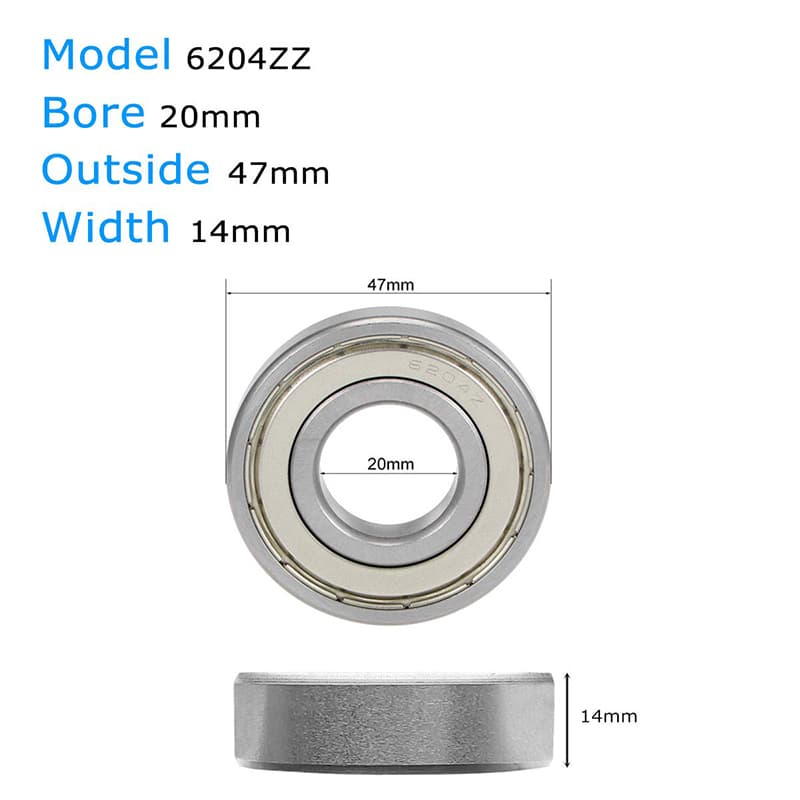
Metal shielded bearings (ZZ or 2Z) – These have a thin steel plate on one or both sides. There is a gap between the shield and the inner ring. That gap is about 0.1 to 0.3 millimeters. Water can easily go through that gap. These shields stop large dirt. They do not stop water. Not good for washers.
Rubber sealed bearings (2RS or LLU) – These have a rubber lip that touches the inner ring. The rubber presses against the steel. This creates a contact seal. Water cannot easily push past. Grease cannot leak out easily. These are your minimum standard for washers.
Double-lip rubber seals (2RS2 or DDU) – These have two rubber lips touching the inner ring. One lip stops water from outside. The other lip keeps grease inside. This is the best choice for high-pressure washers and steam conditions.
Check this comparison table:
| Seal Type | Water Resistance | Grease Retention | Best Use Case |
|---|---|---|---|
| Open (no seal) | None | None | Dry electric motors |
| Metal shield (ZZ) | Very low | Low | Clean, dry fans |
| Single rubber seal (RS) | Medium | Medium | Occasional moisture |
| Double rubber seal (2RS) | High | High | Industrial washers |
| Double-lip seal (2RS2) | Very high | Very high | High-pressure washers |
(https://www.bearingworks.com/technical-data/seals-and-shields.php)
I have a story from a customer in Egypt. He makes commercial dishwashers. His old supplier sent him metal-shielded bearings (https://jiegongbearing.com/differences-between-steel-seals-and-rubber-seals/). The dishwashers failed after three months. Customers returned the machines. He almost lost his business.
We switched him to double-lip rubber sealed bearings. The same bearings now last for three years. He calls me every six months for new orders. The funny part? The bearings cost him only 15% more. But his warranty costs dropped by 80%. That is real savings.
One more thing. Seal material matters too. Standard rubber seals work for detergents and mild chemicals. But if your washer uses strong acids or high-temperature alkalis, you need special seals. Viton rubber handles acids better (https://www.dupont.com/content/dam/dupont/amer/us/en/liveforms/products-and-services/liveforms-010/documents/Viton-Fluoroelastomer-Construction-Products-H91937-11-D.pdf). Silicone rubber handles extreme heat better (https://www.dow.com/en-us/pdp.dow-corning-732-multi-purpose-sealant-white.190891z.html). Tell me your washer chemicals. I can recommend the right seal material.
High Pressure and Speed: The Real Test of Bearing Precision and Heat Resistance?
Your washer sprays water at 100 bar. The drum spins at 3000 RPM. Can a standard bearing handle this double attack?
High pressure pushes water past seals. High speed creates friction heat. Together, they destroy bearings fast. You need high-precision bearings (P5 or P6) with special high-speed grease. Low precision bearings have more internal movement. That movement creates gaps. Water finds those gaps. Heat makes the grease melt and leak.
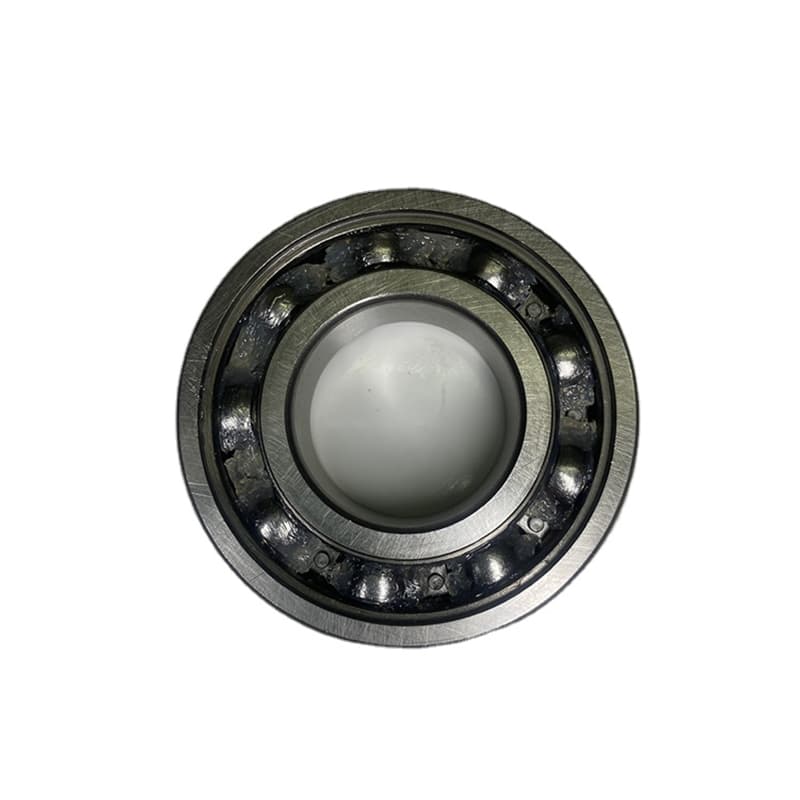
How precision grade affects washer bearing life?
Let me explain something most buyers do not know. Bearings come in different precision grades. The most common grades are P0 (normal), P6, and P5 (https://www.skf.com/us/products/rolling-bearings/principles/tolerances). P0 is fine for fans and conveyor rollers. But washers need better.
Here is why. A P0 bearing has more internal clearance. There is extra space between the balls and the raceways. This extra space is fine for low speed. But at high speed, the balls bounce around. They do not roll smoothly. They skid. Skidding creates heat. Heat makes the grease thin. Thin grease leaks past seals. Then water gets in (https://www.nsk.com/content/dam/nsk/common/technology/pdf/en/BearingDamage.pdf).
A P5 bearing has tighter internal clearance. The balls fit more precisely. They roll smoothly without bouncing. This creates less heat. Less heat means the grease stays thick. Thick grease blocks water better. The seals also last longer because there is less internal pressure.
Now let me talk about speed. Washer drums typically run at 800 to 3000 RPM. At the high end, the bearing balls spin very fast. The centrifugal force throws grease away from the raceways. The balls run almost dry for a moment. Then they cool down and pick up grease again. This on-and-off lubrication creates heat spikes.
High-speed bearings have special cage designs. The cage holds the balls apart. A good cage keeps the balls stable. A bad cage lets them collide. Collisions create noise and heat and wear.
Let me show you a quick guide:
| Precision Grade | Internal Clearance | Max Safe Speed | Heat Generation | Good for Washer? |
|---|---|---|---|---|
| P0 (normal) | Large (C3 or C4) | Up to 1500 RPM | High | No |
| P6 | Medium | Up to 2500 RPM | Medium | Yes (basic washers) |
| P5 | Small | Up to 4000 RPM | Low | Yes (high-speed washers) |
| P4 (very high) | Very small | Over 5000 RPM | Very low | Overkill for washers |
(https://www.skf.com/binaries/pub12/Images/0901d1968078cccc-TPI_13_EN_tcm_12-222608.pdf)
I worked with a customer in Turkey. He makes industrial parts washers. These machines spin at 2800 RPM with water spray at 80 bar. He was using P0 bearings with C3 clearance. The bearings got hot. The grease melted. The seals failed. He changed bearings every month.
I suggested he try P6 bearings with a smaller internal clearance. He was worried about the higher cost. But he tried one machine as a test. That machine ran for six months without any problem. Now he uses P5 bearings on all his machines. His customers are happy. His service calls dropped by 90%.
Here is my advice for you. Check your washer speed. Below 1500 RPM? P6 with good seals works fine. Above 2000 RPM? Go to P5. It costs more upfront. But you save money on replacements and downtime. Downtime is always more expensive than a better bearing.
Food-Grade and Corrosion-Resistant Bearings for Hygienic Environments?
You run a food processing plant. Your washers use hot water and strong sanitizers. But regular bearings can contaminate your product. What do you do?
Food-grade bearings use special grease that is safe for accidental contact with food. They also use stainless steel or coated rings to resist corrosion from sanitizers. Regular grease can drip into your product and cause health risks. You must use NSF H1 or FDA-approved bearings for food washers.
Why hygiene changes everything for washer bearings?
Let me be direct with you. Most bearing factories do not understand food safety. They sell regular bearings to food plants. Those bearings leak grease. The grease gets into the wash water. The wash water touches the food. That is illegal in most countries.
I learned this from a customer in Brazil. He makes industrial poultry washers. His machines clean thousands of chickens every hour. He used our standard bearings with rubber seals. The bearings worked fine. But one day, a food safety inspector found grease traces on the chicken.
My customer almost lost his license. He called me in a panic. I had to explain that standard grease is not food-safe. It contains heavy metals and toxic additives. Even a tiny amount is not allowed.
So we switched him to food-grade bearings. Here is what changed.
The grease changed first. Regular grease uses additives like zinc, sulfur, and molybdenum. These are great for anti-wear. But they are poisonous if eaten. Food-grade grease uses special ingredients that are safe. The most common standard is NSF H1. This means the grease is safe for incidental food contact. The grease is usually white or light blue. It has no smell. It also has less load capacity than regular grease. But that is the price of safety.
The material changed second. Regular chrome steel rusts in food plants (https://www.timken.com/resources/productcatalogue/en/timken/content/resources/pdfs/bearingcorrosion.pdf). Food plants use sanitizers like chlorine and peracetic acid. These chemicals eat chrome steel fast. You need stainless steel. The most common grades are AISI 440C and AISI 316 (https://www.skf.com/us/products/rolling-bearings/bearings-for-specific-requirements/food-grade-bearings). 440C is harder and handles load better. 316 is more corrosion resistant but softer. For most food washers, 440C with a special coating works best.
The seals changed third. Food safety inspectors do not just check grease. They check for hidden dirt. Standard rubber seals have tiny cavities where bacteria can grow. Food-grade seals have smooth surfaces. They use FDA-approved rubber compounds. These compounds resist the strong sanitizers used in food plants (https://www.fda.gov/food/food-ingredients-packaging/packaging-food-contact-substances-fcns).
Let me give you a comparison:
| Feature | Standard Bearing | Food-Grade Bearing |
|---|---|---|
| Grease type | Standard lithium or polyurea | NSF H1 certified |
| Grease color | Brown or amber | White or light blue |
| Steel type | Chrome steel (GCr15) | Stainless steel (440C or 316) |
| Seal material | Standard NBR | FDA-approved NBR or Viton |
| Surface bacteria risk | Medium (cavities possible) | Very low (smooth finish) |
| Corrosion resistance | Low | High |
| Cost difference | Base price | +30% to +60% |
I have another story from India. A customer made bottle washing machines for a soda factory. The factory required all parts to be food-safe. My customer used regular bearings to save money. Then the soda factory audited him. They found non-food-grade grease in his machines. They canceled his contract. He lost a $200,000 yearly order.
He switched to our food-grade bearings. But the damage was done. The client did not come back. He learned a hard lesson. Food safety is not optional. It is the law.
So here is my question for you. Do you sell to food plants, dairy farms, or beverage factories? If yes, you must use food-grade bearings. The extra cost is small compared to losing a contract or facing a lawsuit. Tell your customers this story. They will thank you.
Conclusion
Industrial washers need special deep groove ball bearings. Use rubber seals, high precision, and food-grade grease for long life.