Your screens shake all day. Your mills crush hard rock. And your bearings keep failing. I know the pain.
Spherical roller bearings handle heavy shock loads, misalignment, and contamination better than any other bearing type. That is why ore processing plants rely on them for crushers, screens, and separators.
I have supplied bearings to mines in South Africa and Russia for over ten years. Let me show you why spherical roller bearings win in this tough industry. Then I will help you avoid the common failures.
Why Spherical Roller Bearings Are the Top Choice for Ore Processing Equipment?
You put a bearing in a rock crusher. Two weeks later, it dies. So what makes spherical rollers different?
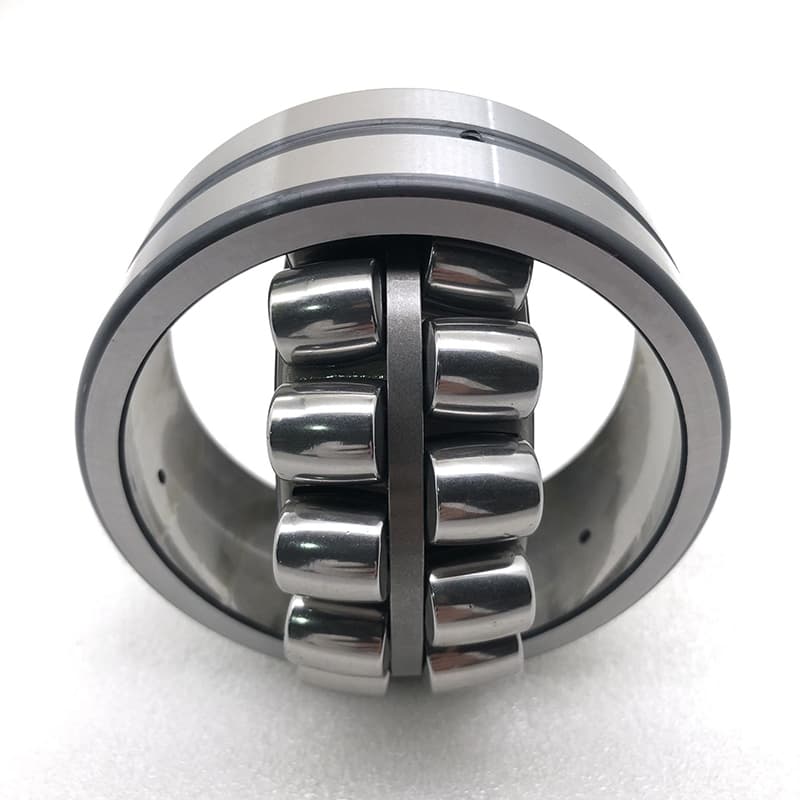
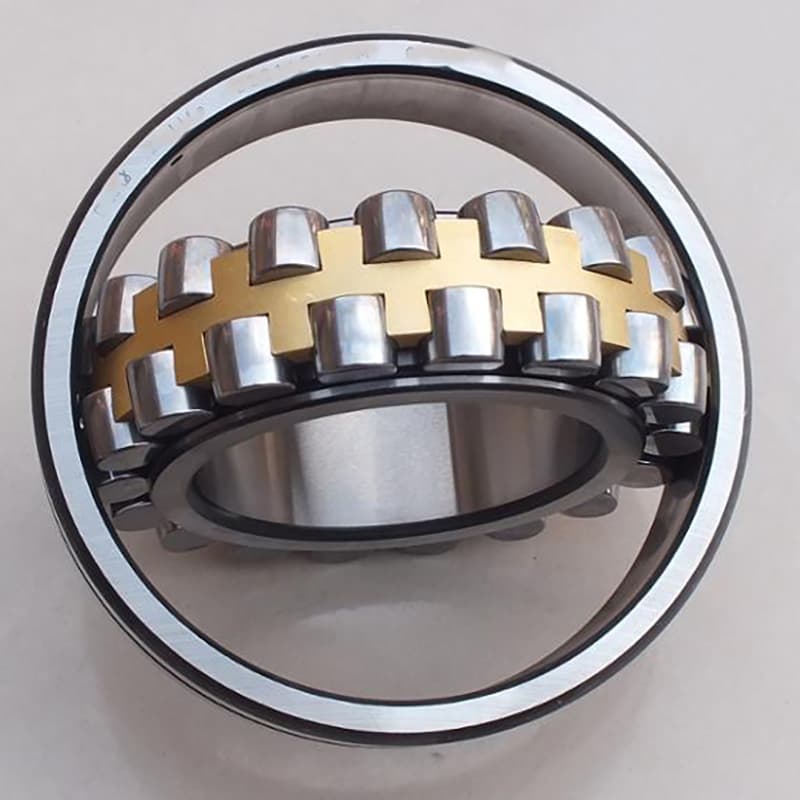
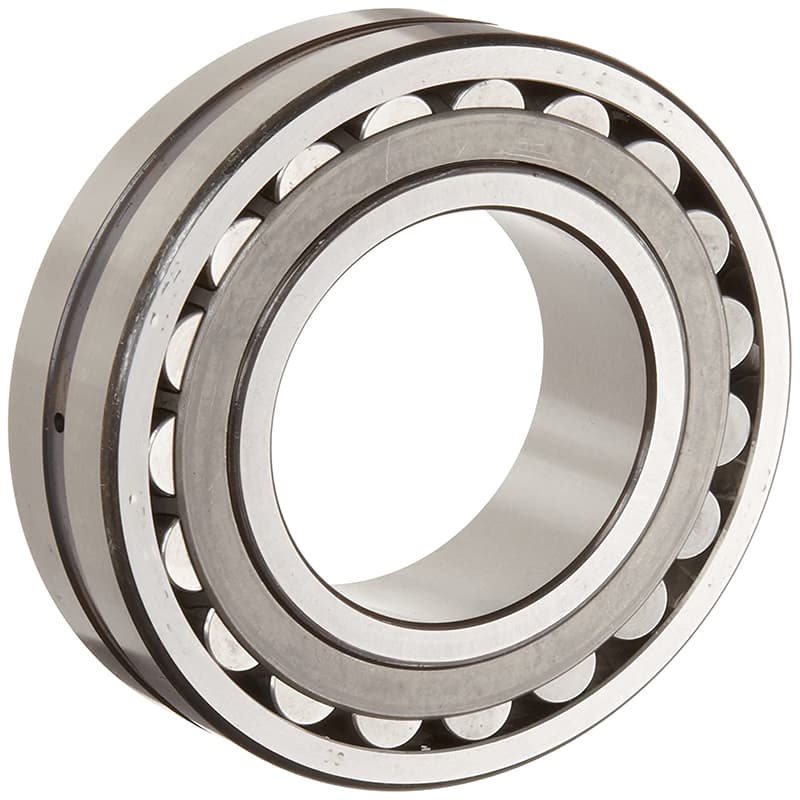
Spherical roller bearings have two rows of barrel‑shaped rollers and a common sphered outer ring raceway. This design lets the bearing self‑align even when the shaft bends or the housing shifts. Spherical roller bearings feature a continuous spherical raceway in the outer ring and two rows of barrel‑shaped rollers on an inner ring with two inclined raceways, which enables high load capacity and inherent self‑alignment. In rock‑crusher and crusher‑type applications, this self‑aligning ability compensates for misalignment and shaft deflection, greatly extending bearing life compared with standard ball bearings.
Let me break down why this bearing type is so good for ore processing. I learned this from a customer in Brazil. He runs an iron ore crushing line[web:1600]. Before using spherical rollers, he tried deep groove ball bearings and cylindrical roller bearings. Both failed within a month. The reason was simple: misalignment.
In an ore processing plant, nothing stays perfectly straight. The conveyor frames bend under heavy loads. The crusher shafts flex. The vibrating screens shake so hard that housings move a little. A normal bearing cannot handle that. It creates edge loading. That means the roller digs into the raceway on one side. The result? High heat, then spalling, then seizure. [Spherical roller bearings tolerate misalignment and shaft deflection that would cause uneven wear or early failure in conventional bearings, which is why they are preferred in heavy‑load applications such as crushers and conveyors](https://www.nsk.com/am-en/tools-resources/knowledge-center/blog/spherical-roller-bearings/benefits-spherical-roller-bearing-in-h … [TRUNCATED, (original length: 143 chars)]SPHERICAL-ROLLER-BEARING-IN-HEAVY-MACHINERY).
Here is what spherical roller bearings bring to the table:
-
Self-alignment capability – They can handle up to 1.5 degrees of misalignment. Some special designs go to 3 degrees. That is huge for a vibrating screen.
-
High radial load capacity – Two rows of rollers share the load. So you get almost twice the capacity of a single-row bearing of the same size.
-
Good axial load handling – They can take moderate thrust loads in both directions. That is important for inclined screens and vertical mills.
-
Robust cage designs – For ore processing, we use brass or steel cages. They survive shock loads better than plastic.
A quick comparison table for you:
| Bearing Type | Handles Misalignment? | Shock Load Resistance | Contamination Tolerance | Best for Ore Processing? |
|---|---|---|---|---|
| Deep groove ball bearing | Very poor (0.05°) | Low | Poor | No |
| Cylindrical roller bearing | Poor (0.1°) | Medium | Medium | Limited |
| Taper roller bearing | Poor (needs matched pairs) | Medium | Medium | No |
| Spherical roller bearing | Excellent (1.5°) | High | Good | Yes |
I remember a customer from Turkey. He runs a barite grinding plant. His old bearings failed every three months. The maintenance crew spent two days changing each bearing. That meant lost production and angry customers. We replaced his cylindrical roller bearings with spherical roller bearings of the same shaft size. The first set ran for 14 months. He sent me a photo of the old bearings. They still looked usable. That is the power of the right design.
So why do spherical roller bearings win? Because this industry is not clean, not precise, and not gentle. You need a bearing that forgives mistakes. You need a bearing that keeps working when the shaft is not perfectly aligned. You need a spherical roller bearing.
What Are the Most Common Bearing Failures in Mineral Separation Plants?
You open a bearing housing. You see rust, wear, or broken cages. But do you know what caused it?
The four most common failures are abrasive wear from dust, water contamination leading to corrosion, fatigue from vibration, and cage fracture from shock loads.
I talk to procurement managers like Rajesh Kumar from India all the time. They tell me, "My bearings keep failing. But I do not know why." So let me help you read the failure signs. I have seen thousands of failed bearings in my career. Each failure tells a story.
Failure 1: Abrasive wear from dust
Mineral separation plants are dusty. Really dusty. Fine silica or ore dust often gets past seals. Once inside, those hard particles act like sandpaper. The rollers and raceways lose their smooth surface. The bearing clearance increases. Then the vibration gets worse. Then more dust gets in. It is a downward spiral. Contamination‑induced abrasion is a leading cause of premature bearing failure in mineral‑processing environments.
How to spot it: The bearing surfaces look dull gray. You can feel a rough texture. Sometimes the rollers have flat spots.
Failure 2: Water corrosion
Many separation processes use water. Think of slurry separators, wash drums, and wet screens. Water finds its way into bearings. Then the steel rusts. Rust flakes off and becomes more abrasive particles. The bearing also loses its proper clearance because rust takes up space.
How to spot it: Red or brown stains on the raceways. Pitting on the rollers. Sometimes the bearing feels rough when you turn it by hand.
Failure 3: Fatigue from constant vibration
Vibrating screens and centrifuges run thousands of hours. The constant back-and-forth motion creates a special type of fatigue. Small cracks start below the surface. Then they grow. Eventually, pieces of the raceway flake off. We call this spalling.
How to spot it: Small craters or flakes on the raceway. Sometimes the flakes are shiny. The bearing makes a grinding noise before it fails.
Failure 4: Cage fracture from shock loads
Ore processing has shock loads. A big rock drops into a crusher. A screen starts up with a full deck. These shocks can break bearing cages. The cage holds the rollers apart. Without a cage, rollers bunch together. Then the bearing locks up fast.
How to spot it: Broken or bent cage pieces. Rollers piled up on one side. Severe heat damage.
Here is a table to help you diagnose by what you see:
I had a customer in Indonesia. His tin ore separation plant kept breaking cages. They used standard C3 clearance bearings. But his screen had a violent start-stop cycle. The shock was too much. We switched to a bearing with a one-piece steel cage and C4 clearance. The problem stopped. Sometimes a small change makes a big difference.
How to Select the Right Bearing Clearance and Lubrication for Dusty, High-Load Conditions?
You pick a bearing from a catalog. But you miss the clearance choice. Then the bearing runs hot and dies. Sound familiar?
For dusty, high‑load ore processing, choose C4 clearance and a high‑viscosity grease with EP additives. Relubricate often to push out contaminants. Never use CN clearance.
In heavy‑load, dusty environments like mining and mineral processing, manufacturers often specify C3–C4 radial internal clearance to accommodate thermal expansion and minor misalignment without excessive preload. CN (normal) clearance bearings are designed for standard conditions and can quickly overheat if installed in hot, heavily loaded or misaligned equipment, while C4 clearance and a high‑viscosity EP‑additive grease improve heat‑resistance and contaminant‑flushing during relubrication.
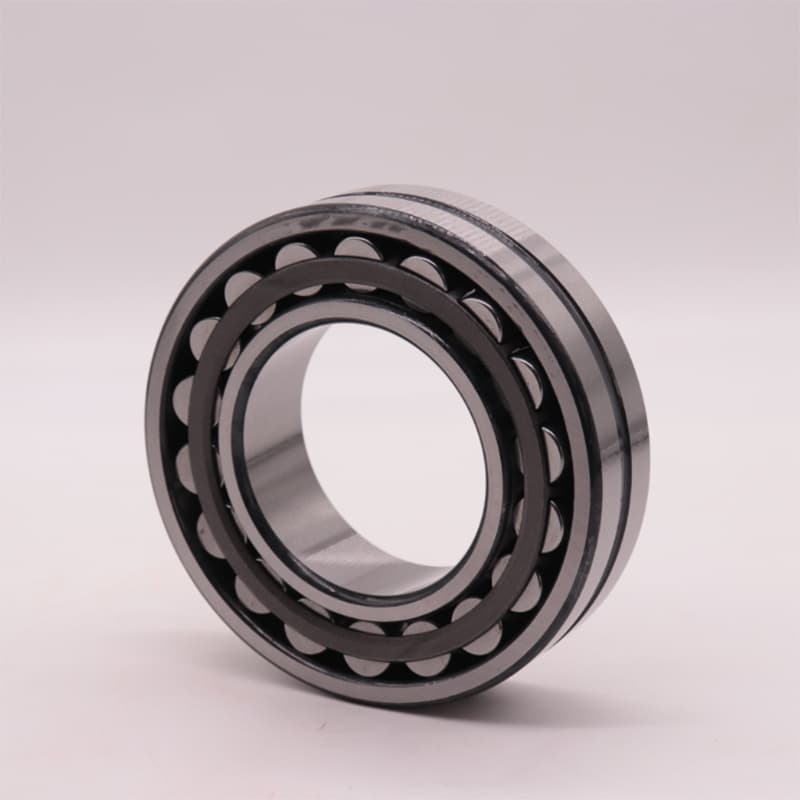
This is where many buyers get lost. They see three versions of the same bearing: CN, C3, and C4. They pick the middle one because it sounds safe. But in ore processing, safe is not CN or C3. Safe is C4.
Why C4 clearance?
Remember the heat and dust problem. Dust gets inside and takes up space. Heat makes the inner ring expand. Shock loads need some room for the rollers to move. CN clearance gives you about 60 to 100 microns of internal space (depending on size). C4 gives you 150 to 250 microns. That extra space allows for:
- Thermal expansion without metal-to-metal contact.
- Dust particles to pass through without jamming.
- A thicker lubricant film.
I learned this lesson in a coal preparation plant in Russia. The customer used C3 bearings on their heavy-duty screens. The bearings failed every 6 weeks. We measured the outer ring temperature at 95°C. The inner ring was probably 20°C hotter. That heat ate up all the clearance. We changed to C4. Bearing life went to 8 months.
Now let us talk about lubrication.
Dusty environments need a special approach. Grease is better than oil because grease stays in place. But not any grease. You need:
- Base oil viscosity – ISO VG 220 to 460. Thicker oil film resists dust penetration.
- Thickener – Lithium complex or polyurea. These handle water better than simple lithium.
- Additives – Extreme pressure (EP) and anti-wear (AW) are must-haves. Also look for rust inhibitors.
- NLGI grade – Grade 2 is standard. Grade 3 if the ambient temperature is over 40°C.
How often to relubricate?
This is critical. Many people over-grease. They pump until grease comes out of the seals. That creates pressure and heat. Instead, use small amounts often. For a dusty screen with 150 mm shaft size:
- Relubricate every 100 to 200 running hours.
- Add 10 to 20 grams of grease each time.
- Let the bearing run for 30 minutes before checking the seal for old grease purge.
A simple decision table for you:
| Condition | Recommended Clearance | Lubrication Type | Relubrication Interval |
|---|---|---|---|
| Dry dust, moderate load, 50°C | C3 or C4 | NLGI 2 grease with EP | 200 hours |
| Dry dust, heavy shock load, 80°C | C4 | NLGI 3 grease with EP | 100 hours |
| Wet dust (slurry), 60°C | C4 | Water-resistant grease, NLGI 2 | 150 hours |
| High speed (>2000 rpm on small bearing) | C3 | Oil circulation (ISO VG 220) | Continuous |
One more tip from my factory. Ask your bearing supplier for the actual installed clearance after fitting. We can measure this for you. Then we adjust the specification to match your housing fit and shaft fit. That is the kind of service I provide to my customers in Brazil and Egypt. Do not just buy off the shelf. Get the right clearance for your real conditions.
Can Spherical Roller Bearings Handle Wet and Abrasive Environments Like Slurry Separators?
Slurry is the worst enemy of any bearing. Water, sand, and chemicals mixed together. Can spherical rollers survive that?
Yes, but only with special seals, hard coatings, and the right grease. Standard spherical roller bearings will fail fast in slurry. You need a sealed or coated version.
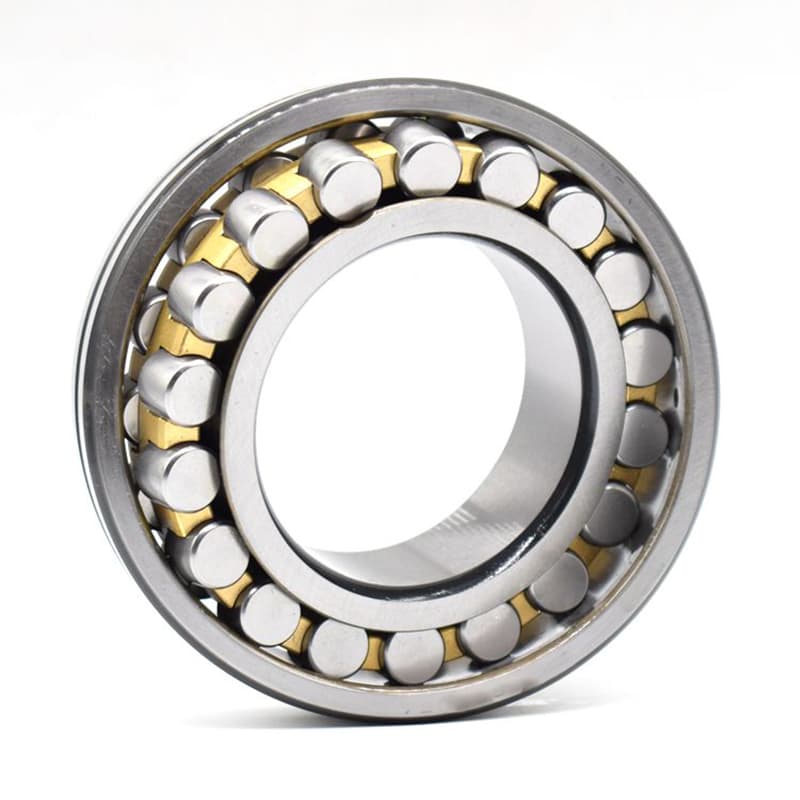
Let me be honest with you. A standard, open spherical roller bearing will die quickly in a slurry separator. In slurry‑separation environments, fine slurry can penetrate housing seals, mix with grease, and wash away lubricant while the solids grind raceways and chemicals cause corrosion. I have seen it happen too many times. The fine slurry gets past the housing seals. Then it mixes with the grease. The water washes away the lubricant. The sand grinds the raceways. And the chemicals cause corrosion.
But here is the good news. You can make spherical roller bearings work in slurry by adding robust seals, correct lubrication, and protection layers. You just need to add a few layers of protection.
Layer 1: Better seals on the bearing itself
Many spherical roller bearings come with an option for integral seals. These seals sit on the outer ring and rub against the inner ring. They keep out fine dust and water much better than housing seals alone. Some examples:
- 2RS type – Contact seals on both sides. Good for light slurry. But they add some friction.
- 2LS type – Light contact seal. Less friction. Still good for fine dust.
- 2CS type – Low torque seal for higher speeds.
Layer 2: Hard coatings
You can order spherical roller bearings with special raceway coatings. The most common is a black oxide coating. It reduces friction and resists corrosion. For really tough slurry, we use a DLC (diamond-like carbon) coating. This costs more. But it makes the bearing almost immune to abrasive wear.
Layer 3: Water-resistant grease
Normal grease breaks down in water. It absorbs moisture and turns into a soft paste. Then it leaks out. For slurry, you need:
- Grease with high water washout resistance. Test method ASTM D1264. Look for less than 10% washout.
- Lithium complex or calcium sulfonate thickener.
- Rust and corrosion inhibitors.
One of my best examples comes from a diamond mine in South Africa. Their dense media separators used spherical roller bearings in the paddle shafts. The bearings failed every two weeks. We supplied bearings with:
- C4 clearance
- Heavy-duty contact seals (2RS)
- Black oxide coated raceways
- Calcium sulfonate grease
The first set lasted 9 months. The customer was shocked. He ordered a full container of bearings after that trial.
Another option – change the housing design
If you cannot modify the bearing, modify the housing. Add a purge system. This uses a small amount of compressed air or grease to push contaminants away from the seal lips. The constant positive pressure keeps slurry out. I have used this method for thickener drives in copper mines. It works very well.
Here is a summary table for slurry applications:
So the answer is yes. Spherical roller bearings can handle slurry. But you cannot use the cheap standard version. You need to invest in seals, coatings, and the right grease. That extra cost pays back in fewer shutdowns and longer bearing life.
Conclusion
Spherical roller bearings are the backbone of ore processing plants. Choose C4 clearance, seal them well, and grease them often. Your bearings will survive the dust and slurry.