A lot of railway maintenance crews face unexpected breakdowns. That costs both time and money.
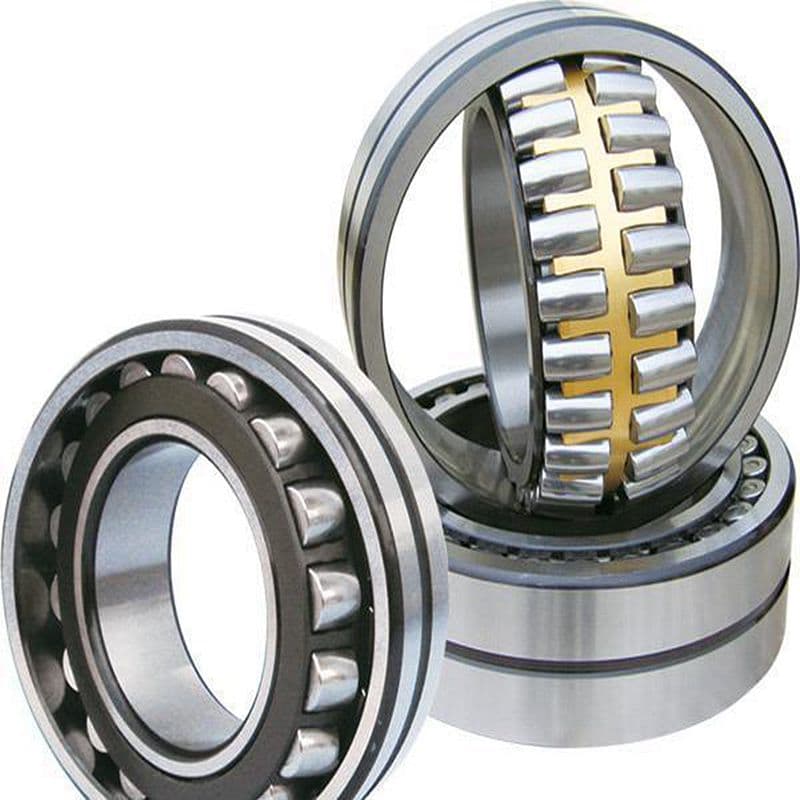
Spherical roller bearings handle heavy loads and misalignment better than most other bearing types. That makes them ideal for railway maintenance machines that work on uneven tracks.
Let me walk you through what I’ve learned from supplying bearings to customers like Rajesh in India. His company buys from us every year. He always asks about reliability. So here is the simple truth.
What Are the Key Advantages of Spherical Roller Bearings in Rail Maintenance Applications?
You might worry about bearings failing too fast. Railway maintenance equipment hits potholes and twists a lot.
Spherical roller bearings can take both heavy radial loads and some axial loads at the same time. They also have a self-aligning feature. Railway applications with vibration and shock loads are a known fit for spherical roller bearings, which also compensate misalignment and shaft deflection.
How does self-alignment actually help your machines?
Let me break this down. Normal bearings need perfect alignment. But railway tracks are never perfect. Your tamping machine or rail grinder will tilt and flex.
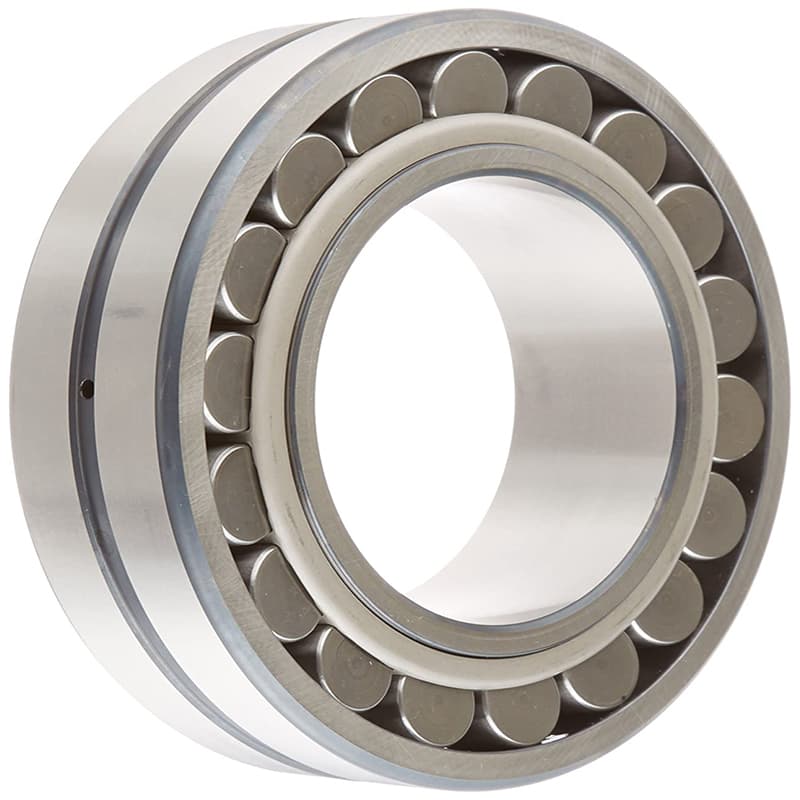
A spherical roller bearing has two rows of rollers. The outer ring has a spherical raceway. So the inner ring can tilt a few degrees. This is a big deal.
Here is a small table to show the difference:
| Problem on site | Standard bearing | Spherical roller bearing |
|---|---|---|
| Track unevenness (up to 2-3 degrees) | High edge stress → early failure | Works fine, no extra stress |
| Heavy vibration from hammering | Raceway damage possible | More tolerant, longer life |
| Shaft bending under load | Bearing locks up | Rolls smoothly |
| Sudden impact from track joints | Cracked rings | Absorbs shock better |
From my factory experience, we test these bearings under misalignment up to 3 degrees. They still run without heat build-up. That means you can keep your rail maintenance gear running for a full shift without stopping.
Another advantage is the high load rating. Railway maintenance machines are heavy. They carry steel wheels plus the operator. A spherical roller bearing uses long, large‑diameter rollers. So it supports more weight than a ball bearing of the same size.
And I must add – we at FYTZ Bearing make these with special heat treatment[web:1253]. That gives you better toughness. I have seen customers in Russia use our bearings in winter. The equipment worked fine at -30°C. So the advantage is clear: more uptime, fewer replacements.
Which Track Equipment Rely Most on Spherical Roller Bearings?
You may not know what machines inside a railway maintenance depot actually use these bearings. Let me name a few.
Common track equipment includes tampers, rail grinders, ballast regulators, and tie inserters. All of them use spherical roller bearings in their wheel hubs and vibration systems.
Let me give you a real example from a customer.
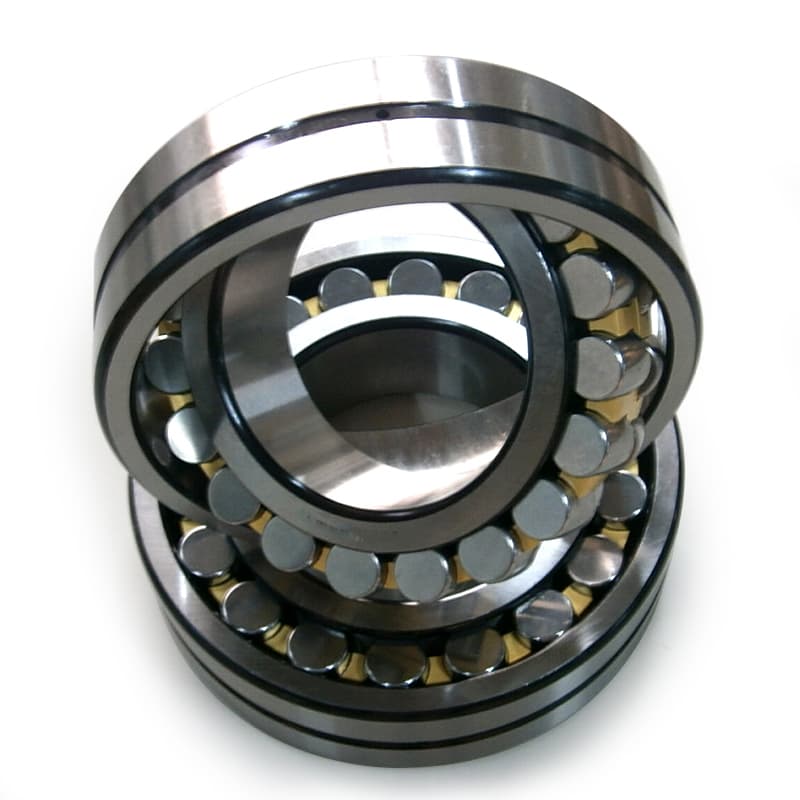
A few months ago, a buyer from Egypt[web:1228] asked me: “Which bearing for our ballast tamper’s vibrator shaft?” The vibrator shakes the stones under the rail. That is extreme[web:1260]. I recommended our spherical roller bearing with a brass cage[web:1267]. [Why? Because the brass cage can handle shock loads better than steel or nylon](https://www.ntnchina.com/image/catalog/products/english/Rolling%20bearings/3036E_Spherical%20Roller%20Bearings%20with%20high-str … [TRUNCATED, (original length: 156 chars)]BRASS%20CAGE%20SPHERICAL%20ROLLER%20BEARING%20with%20HIGH‑STRENGTH%20CAGE).
Here is what I tell all my B2B clients: Check the equipment manual first[web:1228]. But generally, these machines use [spherical roller bearings in three main spots](https://www.schaeffler.com/remotemedien/media/_shared_media/08_media_library/01_publications/schaeffler_2/tpi/downloads_8/tpi_15 … [TRUNCATED, (original length: 139 chars)]PRODUCTS%20FOR%20RAILWAY%20APPLICATIONS):
1. Wheel hubs of on‑track vehicles
[These machines travel on rails. The wheels see both the train weight and side forces when turning](https://www.schaeffler.com/remotemedien/media/_shared_media/08_media_library/01_publications/schaeffler_2/tpi/downloads_8/tpi_15 … [TRUNCATED, (original length: 139 chars)]PRODUCTS%20FOR%20RAILWAY%20APPLICATIONS). Spherical roller bearings keep the wheels rolling true even if the axle bends slightly.
2. Vibrator units of tamping machines
Tamping machines push steel bars into the ballast. The vibration comes from an eccentric shaft. That shaft sits on two spherical roller bearings. They must take unbalanced rotary forces all day long.
3. Articulated joints of rail grinders
Rail grinders have long frames with hinges. The hinge pins use spherical roller bearings. That allows the frame to twist over uneven tracks while grinding.
From my own shop floor, we produce a model called 22316. That size fits many tamping machines. We sell them to distributors in Brazil and South Africa. Those buyers keep coming back because our bearings run 8,000 hours without trouble.
So if you are a procurement manager like Rajesh, you should stock these sizes: 222, 223, and 230 series. They cover most railway maintenance equipment.
How Do You Pick the Right Bearing for High Impact and Misalignment?
You might feel confused by the many options. High impact plus misalignment sounds like a bearing killer.
Pick a bearing with a higher radial internal clearance (C4) and a strong cage material. Also check the steel type.
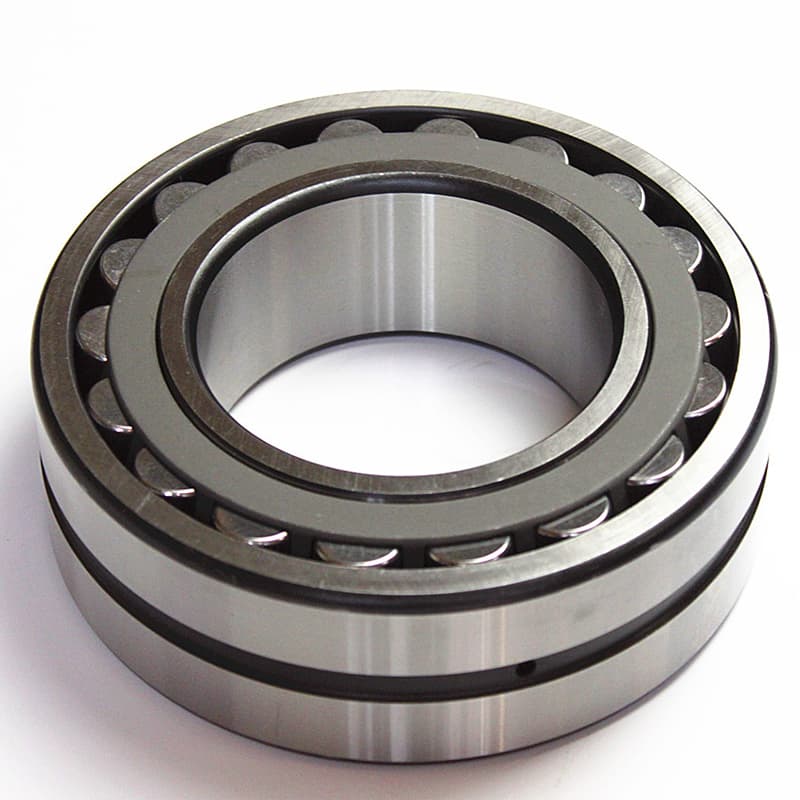
Let me break down your three choices step by step.
I will answer three common questions that my customers ask every week.
1. What clearance class do I need?
Standard bearings come with CN (normal) clearance. CN clearance is the standard internal radial clearance for general‑purpose bearings. For railway maintenance, use C4 (extra large) or sometimes C3. Why? The vibration and impact cause the bearing to heat up. Heat makes the inner ring expand. If you start with normal clearance, you get too much preload and then seizure[web:1273]. C4 gives you room to grow.
2. Which cage material lasts longer?
- Steel cage: Cheapest but can break under shock.
- Brass cage: More expensive but absorbs shock. Good for tampers.
- Nylon (PA66) cage: Light and runs quiet. But not for high heat (>120°C).
My opinion: For heavy impact, choose brass cage. For normal grinding trains, nylon is fine. I use brass for Egypt and India because their tracks are rougher.
3. What about the steel itself?
We use high-carbon chromium steel (GCr15). Then we do a special heat treatment called “controlled grain flow.” This makes the bearing tough, not just hard. I learned this from a failure analysis. A customer in Pakistan had cracked outer rings. We switched to our treated steel. The problem stopped.
Let me give you a simple checklist. Use this when you talk to your supplier:
| Condition | Choose this |
|---|---|
| Track has sharp curves (high side load) | Spherical roller bearing with wider inner ring (W33 design) |
| [Machine works in dust or sand](https://www.oreateai.com/blog/beyond-the-code-unpacking-the-realworld-differences-between-2z-and-2rs-bearings/9eb948463b3ea63562 … [TRUNCATED, (original length: 142 chars)]UNPACKING-THE-REALWORLD-DIFFERENCES-BETWEEN-2Z-AND-2RS-BEARINGS) | [Bearings with contact seals (2RS)](https://www.oreateai.com/blog/beyond-the-code-unpacking-the-realworld-differences-between-2z-and-2rs-bearings/9eb948463b3ea63562 … [TRUNCATED, (original length: 142 chars)]UNPACKING-THE-REALWORLD-DIFFERENCES-BETWEEN-2Z-AND-2RS-BEARINGS) |
| Heavy vibration for hours | Brass cage + C4 clearance |
| You need to re‑lubricate easily | Bearing with lubrication groove and hole (W33) |
At FYTZ Bearing, we mark all these options on the box. So you don’t guess. Just read the code.
What Are the Best Lubrication and Sealing Practices for Harsh Railway Environments?
Grease failure is the number one reason railway maintenance bearings die. Dust, water, and heat kill grease fast.
Use high-viscosity lithium complex grease with EP additives. And use a good seal – either a rubber contact seal or a heavy metal labyrinth seal.
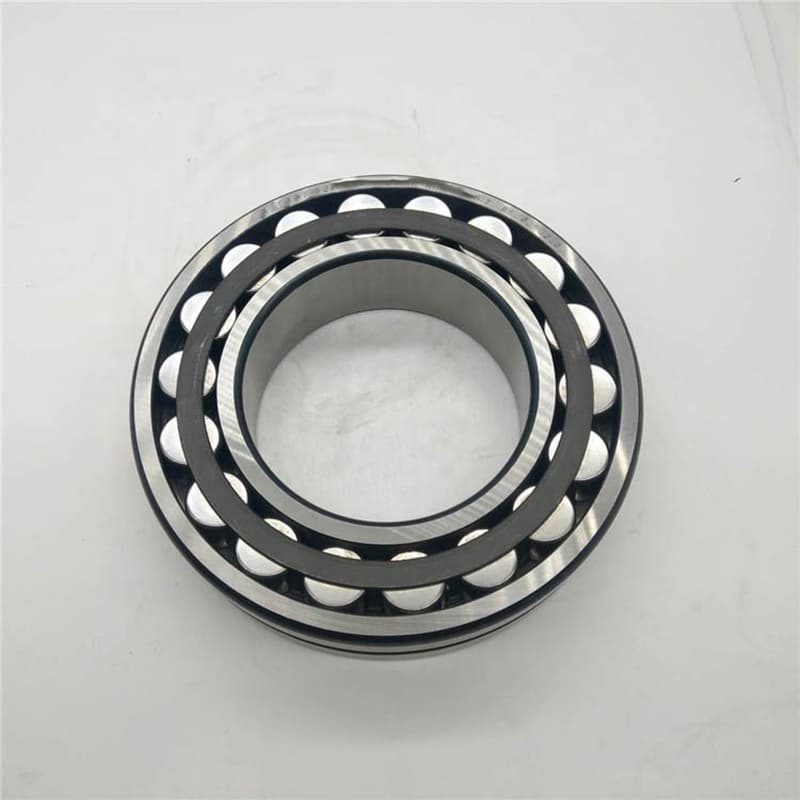
Here is how I learned this lesson.
Years ago, a customer in Indonesia complained. His rail grinder bearings lasted only three months. The machine worked near the coast. Salt air and fine metal dust got inside. The grease became a grinding paste.
We changed two things. First, we supplied bearings with two rubber seals (2RS type). Second, we gave him a grease with high dropping point (above 200°C). The next batch lasted 14 months.
So let me share three practical rules.
Rule 1 – Pick the right grease base oil viscosity
For railway maintenance, the ambient temperature goes from -10°C to +50°C. The bearing operating temperature can reach 90°C. Use ISO VG 150 to 220 base oil. That is thick enough to stay on the rollers. Don’t use general-purpose grease. It will melt and leak.
Rule 2 – Choose the seal type based on your dust level
- Open bearing (no seal): Only for clean workshops. Not for tracks.
- Shielded (ZZ): Keeps out big particles. But fine dust gets in. Good for ballast regulators in dry areas.
- Rubber sealed (2RS): Best for dust and water. But it adds a little friction. That is okay. A railway machine has big horsepower anyway.
- Labyrinth seals (on the housing): Use these if you cannot fit a sealed bearing. They need careful alignment.
Rule 3 – Relubrication intervals
I see many maintenance crews over-grease. That causes heat. Here is my simple schedule:
| Working condition | Relubricate every |
|---|---|
| Light duty (rail grinder, 8 hours/day) | 500 hours |
| [Heavy duty (tamper, 24/7 in construction)](https://www.schaeffler.com/remotemedien/media/_shared_media/08_media_library/01_publications/schaeffler_2/publication/downloads_ … [TRUNCATED, (original length: 151 chars)]ROLLING%20BEARING%20LUBRICATION)[web:1309] | 200 hours |
| Very dusty or wet (track under rain) | 100 hours |
Use a grease gun with a pressure gauge. Pump slowly until you feel light resistance. Do not force it.
At our factory, we also offer bearings with a W33 code. That means a lubrication groove in the outer ring. You can add fresh grease while the bearing rotates. That pushes out old dirty grease. This is very useful for track equipment that cannot stop for long.
I always tell my buyers: “A $30 grease change can save a $300 bearing change.” That is money and time.
Conclusion
Spherical roller bearings handle misalignment, impact, and heavy loads. That is exactly what railway maintenance machines need.