
You spend good money on spherical roller bearings. But dirty grease or oil can kill them in weeks, not years.
Lubricant contamination shortens spherical roller bearing life mainly by causing abrasive wear, surface fatigue, corrosion, and chemical breakdown. Solid particles scratch the rolling surfaces. Water rusts the steel and cracks the raceways. And degraded additives lose their ability to protect. These problems happen together and speed up failure much faster than normal use.
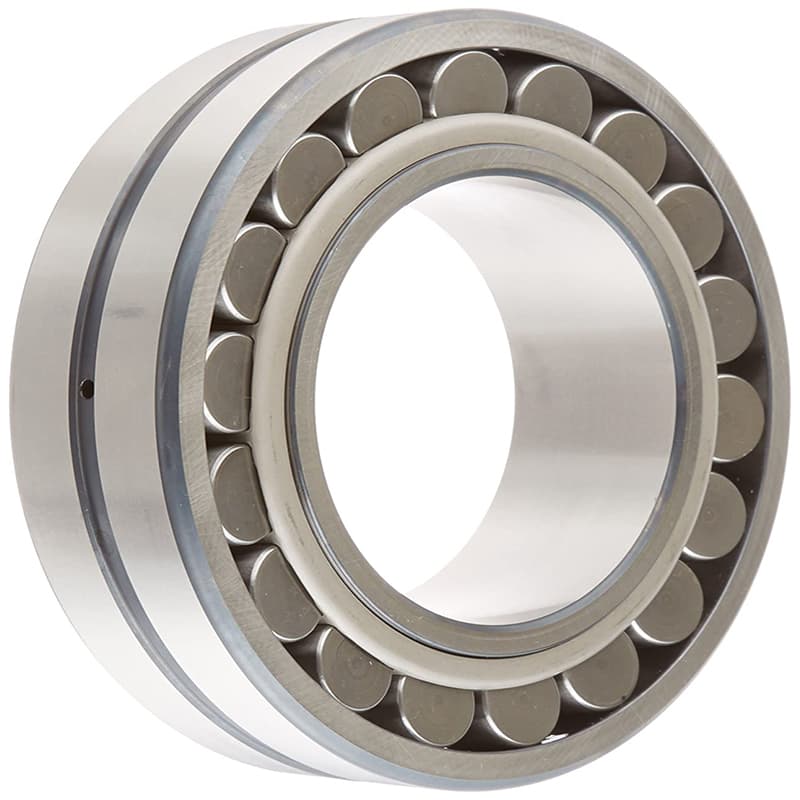
I run a bearing factory in China. We ship millions of bearings every year to clients like Rajesh in India. He buys pillow blocks and taper rollers for resale. One thing I keep telling him: clean lubricant is cheap insurance. But many machine owners ignore this. They wait until the bearing screams or seizes. Then they blame the bearing quality. Most times, the real killer is contamination. Let me walk you through the four main ways dirty lube destroys your spherical roller bearings. I will keep it simple and practical.
Common Types of Lubricant Contaminants and Their Hidden Dangers?
You open a gearbox and find black sludge. Or you see water droplets in the oil. What should you worry about first?
The most common lubricant contaminants1 are solid particles2 (dust, metal chips, sand), water (free, emulsified, or dissolved), air bubbles3, and chemical byproducts like acids or varnish. Each type attacks spherical roller bearings4 in a different way. But the hidden danger is that you often cannot see the early damage until it is too late.
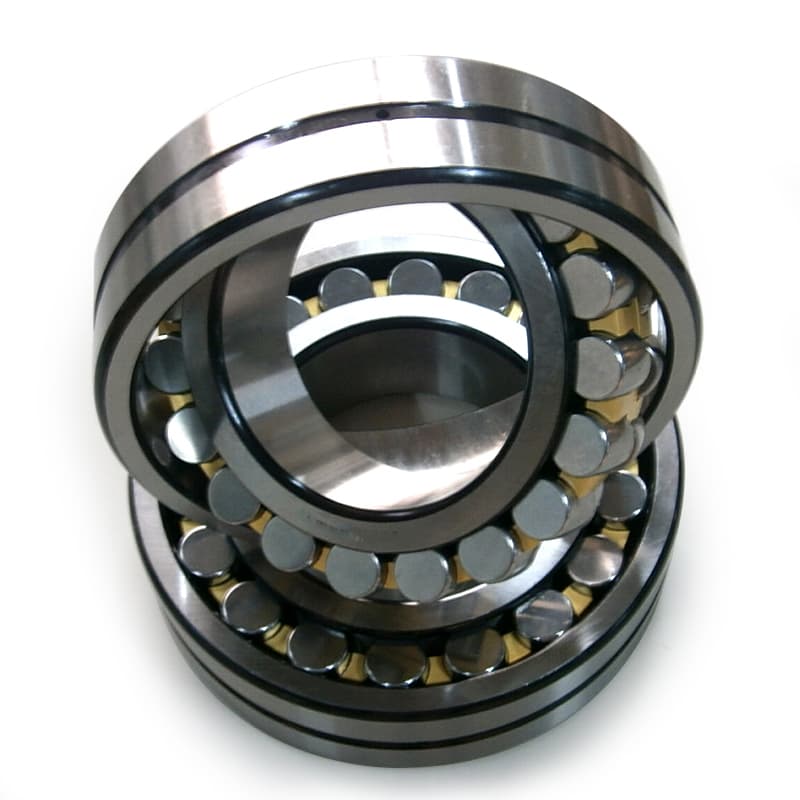
Why most people only check for big chunks
I have visited many workshops in Turkey and Indonesia. The maintenance guy often pulls a dipstick and says “looks clean.” But the real damage comes from tiny particles. Particles smaller than 10 microns are invisible to the naked eye. Yet they fit right into the oil film gap of a spherical roller bearing. That gap is usually between 0.1 to 1 micron under load. So these small invaders scratch the bearing surfaces continuously.
Three main contaminant categories and their effects
Let me break this down with a table. You can show this to your own customers or your maintenance team.
| Contaminant Type | Where It Comes From | How It Damages Spherical Roller Bearings | Early Warning Signs |
|---|---|---|---|
| Solid particles (dust, sand, metal wear debris) | Unsealed housings, dirty refill containers, grinding swarf from nearby operations | Abrasion, three-body wear, denting of raceways, increased vibration | Higher running temperature, rough noise, visible scoring on rollers |
| Water | Condensation, leaking seals, pressure washing, wet environment | Hydrogen embrittlement, rust pitting, loss of oil film strength | Milky or cloudy oil, white rust stains, premature fatigue spalling |
| Air (foam, entrained bubbles) | High agitation, low oil level, wrong lubricant viscosity | Reduced load-carrying capacity, localized overheating, cavitation erosion | Bubbles on dipstick, spongy feel in hydraulic systems, oil overflow from breathers |
A real example from my factory floor
Last year, a customer from Brazil returned a batch of spherical roller bearings. He claimed they failed after only 300 hours. We cut the bearings open. The raceways had tiny dents and a dull, matte finish. That is classic particle contamination. I asked him about his lubrication storage. He kept the grease buckets outside, next to a sandblasting machine. The lids were loose. That explained everything. We replaced the bearings under warranty but told him to change his storage habits. The next batch lasted over two years.
So when you think about contamination, do not just look for big metal chips. Look for the invisible dust. It is more dangerous because no one notices it until the bearing starts singing.
How Solid Particles Cause Abrasive Wear and Surface Fatigue?
Imagine rubbing sandpaper on a polished steel ball. That is what solid particles do inside your bearing.
Solid particles cause abrasive wear1 by scratching the rolling elements and raceways. These scratches create stress risers. Then surface fatigue2 starts. Small cracks form under repeated rolling pressure. The cracks grow and connect. Eventually, chunks of metal flake off. This is called spalling3. Once spalling begins, the bearing life drops by 80% or more within a short time.
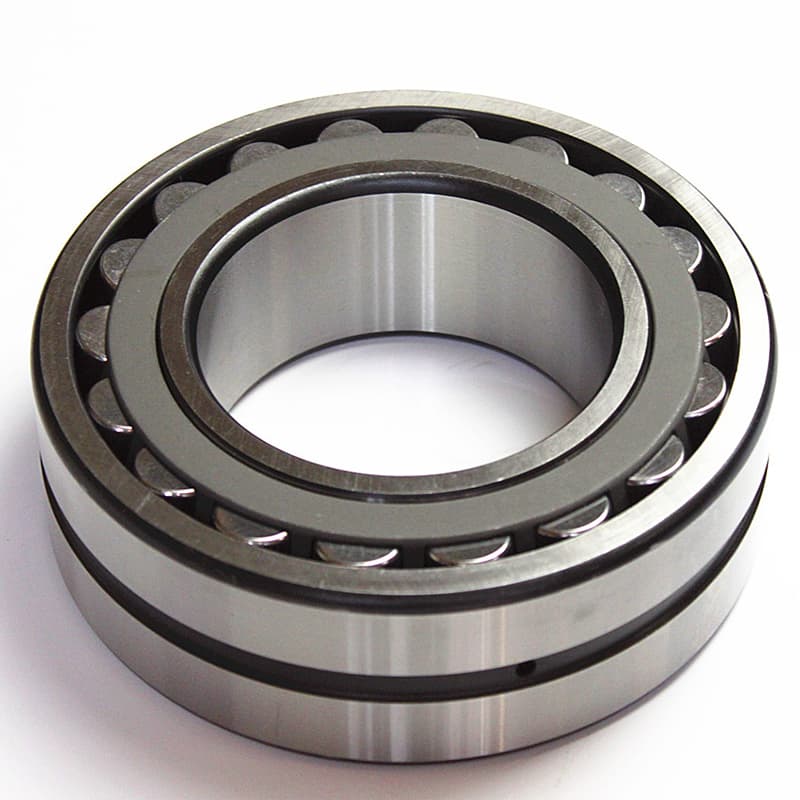
How the particle size4 changes the damage pattern
I have tested hundreds of failed bearings in our lab. The damage pattern changes with particle size. Let me explain in simple terms.
Particles larger than the oil film thickness – These are usually above 1 micron. They get squeezed between the roller and the raceway. They dent the softer surface. Each dent becomes a little crater. The roller hits that crater repeatedly. Soon the crater edges lift up and break off. That is early spalling.
Particles smaller than the oil film thickness – These float in the oil without direct contact. But they are not harmless. They accumulate in the inlet zone before the roller. They thicken the oil locally. This changes the pressure distribution. The result? Micro-pitting on the surface. It looks like a frosted glass finish.
Hard particles vs. soft particles – Hard particles like silica sand or grinding dust cut deep grooves. Soft particles like worn rubber seals or plastic debris deform and stick. Sticky particles block oil flow to the bearing. That causes starvation and heat.
Three stages of particle damage you can spot
I teach my customers to recognize these stages during routine inspection. You do not need a microscope.
-
Stage 1 – Polishing
The bearing surface becomes unusually shiny or matte. No visible scratches yet. But the original ground finish is gone. This is light abrasive wear. The bearing still works but loses precision. -
Stage 2 – Scoring
You see lines or grooves in the running direction. They feel rough when you run a fingernail across them. At this point, vibration increases. The bearing runs hotter by 5 to 10 degrees Celsius. -
Stage 3 – Spalling
Flakes of metal peel off the raceway or rollers. The bearing sounds like a coffee grinder. This is end-of-life. You must replace it immediately to avoid damaging the shaft or housing.
Why new bearings are not safe either
Here is a hard truth. Many brand new bearings fail from contamination5 that came inside the grease. I have seen it happen. Some grease manufacturers do not filter their products well enough. Or the grease sits on a dusty shelf for two years before you buy it. That is why I always recommend filtering new oil before adding it to a machine. For grease, use a clean, sealed cartridge. Never scoop grease from an open pail with a dirty finger.
In my factory, we assemble bearings in a clean room. We use filtered air and positive pressure. But even then, the final protection is your lubricant. Keep it clean. Your spherical roller bearings will thank you.
The Destructive Role of Water Contamination in Bearing Corrosion?
You think water just makes things rusty. But with spherical roller bearings1, water does much more than red stains.
Water contamination2 destroys bearings through corrosion, hydrogen embrittlement3, and oil film breakdown4. As little as 0.05% water in oil can cut bearing life5 by half. Water removes the protective oil film. Then metal touches metal. Rust pits form. Hydrogen atoms from water diffuse into the steel and make it brittle. Cracks start deep inside, not just on the surface.
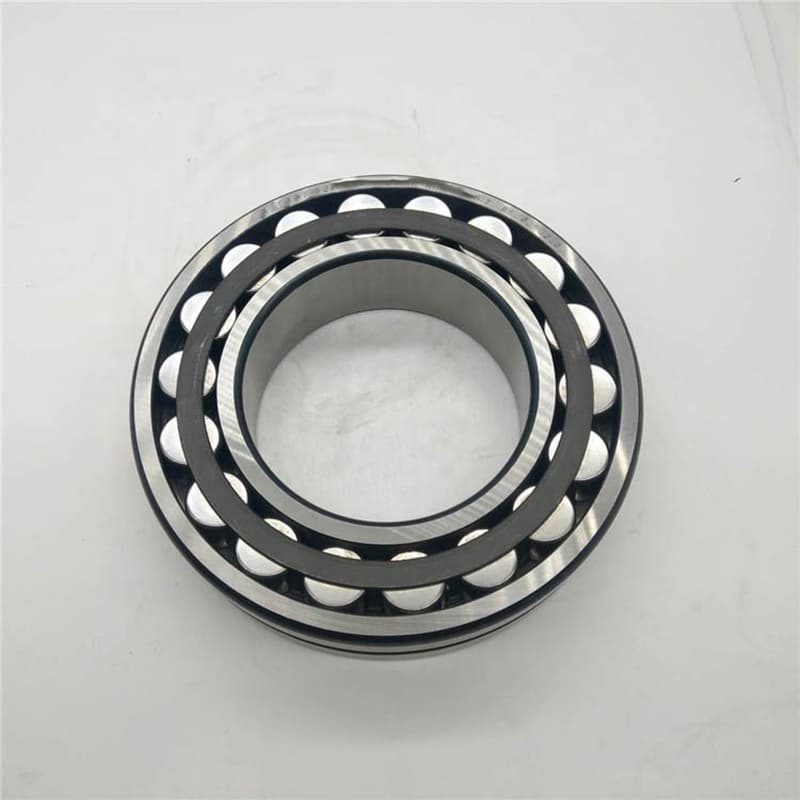
Three ways water gets into your bearing
I talk to procurement managers like Rajesh every week. They often ask me: “How did water get inside? The machine has seals!” Here are the real paths.
-
Breathing – When a bearing heats up during operation, it expands and pushes air out. When it cools down, it sucks air back in. If the surrounding air is humid, that moisture condenses inside. This happens daily in most factories.
-
Leaking seals – Rubber seals harden over time. They crack. Or the shaft has a groove worn into it. Water from washdown hoses or rain finds that tiny gap. One splash is all it takes.
-
Bad storage practices – I once saw a customer store his spare bearings under a leaking roof. Water pooled inside the cardboard boxes. The grease in those bearings was already contaminated before installation. We had to scrap the whole batch.
The hidden killer: hydrogen embrittlement
Most engineers know about rust. But few know about hydrogen embrittlement. Here is how it works.
Water reacts with the steel surface. This reaction releases hydrogen atoms. These atoms are so small that they diffuse into the bearing steel. They collect at grain boundaries and under stress points. Then the steel loses its ductility. It becomes like glass – hard but brittle. A tiny impact or normal rolling stress causes a crack to shoot through the material. The crack starts deep inside, so you cannot see it coming. Then one day, a whole roller cracks in half.
I have seen spherical roller bearings with no visible surface rust but with shattered rollers inside. The lab analysis found high hydrogen content. The only source was water in the lubricant.
How much water is too much?
Let me give you practical numbers. These come from bearing manufacturers like SKF and from our own tests.
| Water Content in Oil | Effect on Spherical Roller Bearing Life | Visible Signs |
|---|---|---|
| Below 0.02% (200 ppm) | No significant reduction | Oil clear, no rust |
| 0.05% (500 ppm) | Life reduced by 50% | Oil slightly hazy, occasional rust spots |
| 0.1% (1000 ppm) | Life reduced by 75% | Oil milky, visible rust on raceways |
| Above 0.2% | Life reduced by 90% or more | Free water at bottom of housing, heavy pitting |
You can measure water content with simple test kits. They cost less than one bearing. I keep a box of Karl Fischer titration kits6 in my office. Every time a customer complains about short bearing life, the first thing I check is water in the oil sample. Nine times out of ten, the level is above 0.1%.
A quick fix you can do today
If you suspect water in your lubricant, do not just add new oil. That does not remove the water. Instead, use one of these methods:
-
Gravity separation – Let the oil sit in a tank. Water settles to the bottom. Drain it off. This works for free water but not for dissolved water.
-
Vacuum dehydration – This is the best method. It pulls a vacuum on the oil and boils off the water at low temperature. It removes both free and dissolved water.
-
Absorbent filters – Some filter elements pull water out of oil. They work well for small systems.
For grease, you cannot remove water easily. You have to regrease more often. Push out the old, wet grease with fresh, clean grease until you see clean grease coming out of the relief port.
Remember this number: 0.05%. Keep water below that, and your spherical roller bearings will live a long life.
Chemical Degradation: When Lubricant Additives Break Down?
Lubricant is not just oil. It is a cocktail of additives. And like any cocktail, it goes bad over time.
Chemical degradation1 happens when heat, oxygen, and contaminants break down lubricant additives. The most critical additives are anti-wear (AW), extreme pressure (EP), and rust inhibitors. When they degrade, the oil loses its ability to protect the bearing. The base oil also oxidizes. It forms acids and varnish. Varnish sticks to bearing surfaces and blocks critical clearances.
The three main chemical killers
I have seen many factory owners try to save money by extending oil change intervals2. They think the oil looks fine, so it must be fine. But looks are deceiving. Here is what really happens inside.
1. Oxidation3
Heat and oxygen react with the base oil. This creates organic acids, peroxides, and sludge. The oil turns darker and thicker. The acids corrode the bearing surfaces. The sludge blocks oil passages. Oxidation doubles for every 10°C increase in temperature. So a bearing running at 90°C instead of 70°C oxidizes its oil four times faster.
2. Additive depletion4
Anti-wear additives like ZDDP (zinc dialkyldithiophosphate) get used up. They form a protective film on metal surfaces. But each time a particle scratches that film, the additive has to re-form it. Eventually, the additive runs out. Then you get metal-to-metal contact. The bearing welds itself to the shaft. I have pulled out bearings that looked like a solid lump of melted steel.
3. Varnish formation5
Varnish is a sticky, brown residue. It forms when oil oxidizes and polymerizes. Varnish is soft when hot and hard when cold. It builds up on bearing cages and raceways. It reduces the internal clearance. The bearing binds up. It also traps solid particles, making the problem worse.
How to spot chemical degradation before bearing failure6
You do not need a chemistry lab. Here are simple checks anyone can do.
| Check | What to Look For | What It Means |
|---|---|---|
| Smell the oil | Acrid, burnt odor | Severe oxidation, oil is cooked |
| Look at the color | Dark brown or black | Advanced degradation |
| Touch between fingers | Stringy or sticky feel | Varnish and polymer formation |
| Drop on a white paper | Dark center with light ring – OK. Dark center with no ring – bad | Loss of dispersant additives |
| Shake the oil sample | Foam that does not disappear quickly | Additive package failing |
My personal rule for oil change intervals
I learned this the hard way. Early in my career, I told a customer from Egypt that he could run his gear oil for 5000 hours. He did. His spherical roller bearings failed at 4800 hours. He was angry. I felt bad. Now I give different advice.
Do not follow the machine manufacturer’s maximum interval. That is the longest possible time under perfect conditions. Your factory is not perfect. Follow this simple rule instead:
- Change oil every 2000 hours or 6 months, whichever comes first. That is for normal conditions (40-60°C operating temperature).
- Change oil every 1000 hours or 3 months if you see any contamination, high temperature (above 70°C), or dusty environment.
- For grease, regrease at intervals recommended by the bearing maker. But cut that interval in half if the bearing runs hot or sees water.
One more thing. When you change oil, do not just drain and refill. Flush the system with a clean, low-viscosity oil first. This removes sludge and varnish. Otherwise, the new oil will quickly get contaminated by the old residue.
I tell all my clients: lubricant is cheap. Bearings are expensive. Downtime is even more expensive. Do not try to save a dollar on oil and lose a thousand dollars on production loss.
Conclusion
Keep lubricant clean and dry. Remove solid particles and water. Change oil before additives die. Your spherical roller bearings will last much longer.
-
Understanding chemical degradation helps in maintaining lubricant effectiveness and preventing costly machinery failures. ↩ ↩ ↩ ↩
-
Find out the best practices for oil change intervals to enhance equipment longevity and efficiency. ↩ ↩ ↩ ↩
-
Discover the oxidation process to better manage lubricant life and prevent equipment damage. ↩ ↩ ↩ ↩
-
Learn about additive depletion to ensure your lubricants provide optimal protection for your machinery. ↩ ↩ ↩ ↩
-
Explore varnish formation to understand its impact on machinery performance and maintenance. ↩ ↩ ↩
-
Identifying signs of bearing failure can save you from costly repairs and downtime. ↩ ↩
