
Your old bearings are costing you money. I see it every day. Downtime, early failure, and safety risks are just the start.
Upgrading to advanced tapered roller bearings gives you higher load capacity, longer life, and better thrust handling. They also run cooler and quieter. For heavy machines or fast axles, this upgrade pays for itself fast.
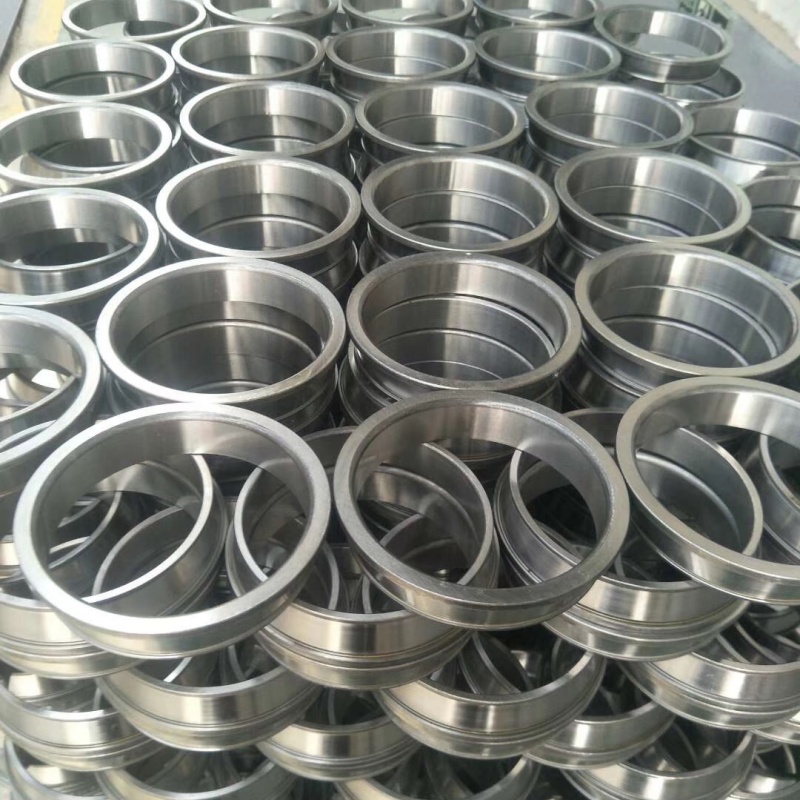
I am a bearing factory owner in China. My name is not important. But my customers call me when their old bearings fail. They ask me: “Why should I spend more on advanced bearings?” So let me show you the real reasons. No marketing talk. Just facts from my shop floor.
Can tapered roller bearings1 handle thrust loads2?
Many buyers think tapered roller bearings only take radial loads. That is wrong. And that mistake breaks machines.
Yes, tapered roller bearings can handle heavy thrust loads2. They are actually one of the best choices for combined radial and axial loads. The tapered shape spreads the force across the rollers.
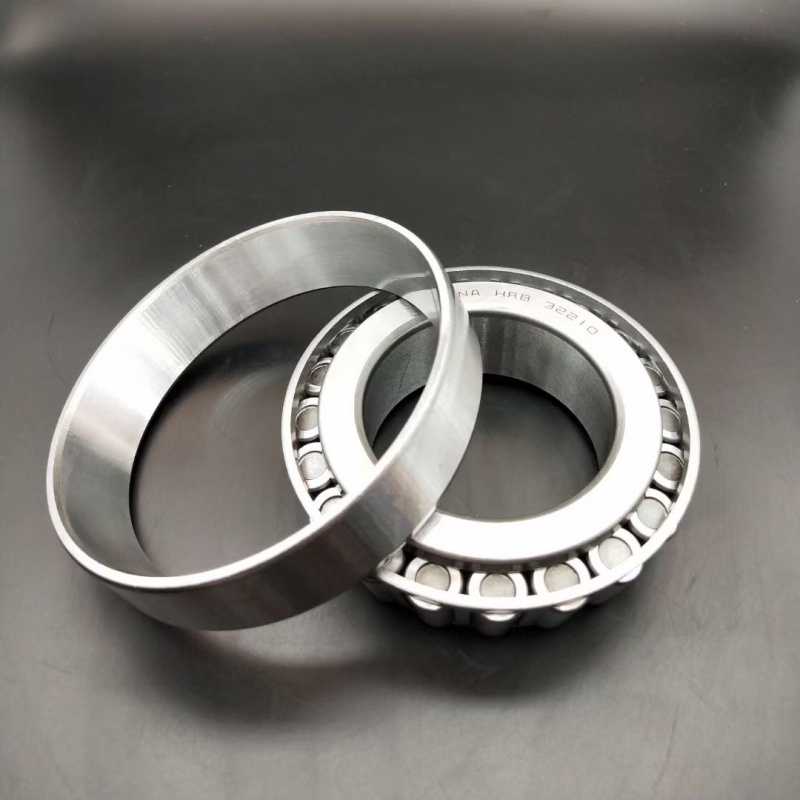
Let me explain how this works. I learned this when I first started selling to a truck axle factory in India. The buyer kept using deep groove ball bearings. Those bearings failed every three months. The thrust load from cornering was too high. So I showed him tapered roller bearings. Now his axles last two years.
How do tapered roller bearings handle thrust?
The secret is in the angle. Tapered rollers have a cone shape. The outer ring (cup) and inner ring (cone) are also angled. This angle creates a line contact between the roller and the raceway. That line contact can take both radial forces (downward) and axial forces (sideways). The bigger the angle, the more thrust it can handle.
In bearing language, we call this the contact angle3. A steep angle (over 25 degrees) is good for heavy thrust. A shallow angle (under 15 degrees) is better for high speed with lighter thrust.
What about pure thrust loads?
If you have only thrust and no radial load, tapered roller bearings are not the best choice. They need some radial load to keep the rollers in the right position. Without radial load, the rollers can skid. That causes wear. For pure thrust, use a thrust bearing.
Real-world example
I have a customer in Brazil who makes gearboxes. His gearboxes have heavy axial loads from helical gears. He used cylindrical roller bearings before. Those failed every six months. He switched to our tapered roller bearings with a 28-degree angle. Now he replaces them every two years. That is a 300% improvement.
Here is a quick comparison table:
| Bearing Type | Radial Load | Thrust Load | Combined Load | Best Use |
|---|---|---|---|---|
| Deep groove ball bearing | Good | Fair | Fair | Light duty, clean |
| Cylindrical roller bearing | Excellent | Poor | Poor | Heavy radial only |
| Tapered roller bearing | Good | Excellent | Excellent | Axles, gearboxes, hubs |
| Spherical roller bearing | Excellent | Good | Good | Misalignment, heavy |
So if you have thrust loads, do not guess. Use a tapered roller bearing. But remember to pick the right angle. For mostly thrust with some radial, choose a steep angle. For mostly radial with some thrust, choose a shallow angle.
What is the lifespan of a tapered bearing?
Nobody wants a bearing that dies too early. But many buyers do not know how to calculate life. They just hope for the best.
The lifespan of a tapered bearing is measured in hours. Under ideal conditions, it can run for 30,000 to 50,000 hours. But real-world conditions change everything. Load, speed, lubrication, and dirt all cut the life short.
[^1] vs load](https://sdycbearing.com/wp-content/uploads/2025/12/Tapered-Roller-Bearings-85.jpg)
I want to tell you a story. A customer in Pakistan bought a container of our tapered bearings. He installed them on textile machines. After one year, he called me angry. He said the bearings failed too soon. I flew to his factory. I found the problem in ten minutes. His machines ran at 50°C above the normal temperature. No one checked the grease. The bearings cooked. That was not my bearing’s fault. That was a maintenance problem.
So let me break down the real lifespan factors.
Basic rating life (L10)
Engineers use a formula called L10 life2. This is the number of hours that 90% of a bearing group will reach before failure. The formula uses dynamic load rating3 (C) and actual load (P). For tapered roller bearings, the formula is:
L10 = (C/P)^(10/3) for rollers (not balls)
The exponent 10/3 is important. It means that a small increase in load cuts life a lot. For example, if you double the load, the life drops to 1/10 of the original. That is huge.
Real life vs. calculated life
The L10 number assumes perfect conditions: clean oil, good alignment, no shock loads, and stable temperature. In real factories, you never get perfect conditions. So you need to add adjustment factors. There is a factor for reliability, material, lubrication, and contamination. Most real bearing lives are 20-50% of the L10 number.
How to make your tapered bearings last longer
I have three tips from my own experience:
-
Do not overload. I know it is tempting to push a machine harder. But every extra 10% of load cuts bearing life by half. Check your machine’s manual. Stay inside the limits.
-
Keep dirt out. I cannot say this enough. Over half of bearing failures come from dirt. Use good seals. Change them on schedule.
-
Use the right grease. And change it on time. For normal work, regrease every 3-6 months. For hot or dirty work, do it every month.
Here is a simple life table for a typical tapered bearing (based on my factory’s test data):
| Operating Condition | Load % of Rating | Expected Life (hours) |
|---|---|---|
| Clean, cool, light load | 30% | 100,000+ |
| Normal factory, proper lube | 50% | 50,000 |
| Heavy load, some dust | 70% | 20,000 |
| Overload, hot, dirty | 100% | 5,000 |
So do not just ask for a bearing. Ask for the right bearing for your real conditions. And plan for maintenance. A bearing that runs 24/7 will need replacement sooner than one that runs 8 hours a day.
When adjusting tapered roller bearings, t## What is the lifespan of a tapered bearing?
Nobody wants a bearing that dies too early. But many buyers do not know how to calculate life. They just hope for the best.
The lifespan of a tapered bearing is measured in hours. Under ideal conditions, it can run for 30,000 to 50,000 hours. But real-world conditions change everything. Load, speed, lubrication, and dirt all cut the life short.
[^1] vs load](https://sdycbearing.com/wp-content/uploads/2025/12/Tapered-Roller-Bearings-77.jpg)
I want to tell you a story. A customer in Pakistan bought a container of our tapered bearings. He installed them on textile machines. After one year, he called me angry. He said the bearings failed too soon. I flew to his factory. I found the problem in ten minutes. His machines ran at 50°C above the normal temperature. No one checked the grease. The bearings cooked. That was not my bearing’s fault. That was a maintenance problem.
So let me break down the real lifespan factors.
Basic rating life (L10)
Engineers use a formula called L10 life2. This is the number of hours that 90% of a bearing group will reach before failure. The formula uses dynamic load rating3 (C) and actual load (P). For tapered roller bearings, the formula is:
L10 = (C/P)^(10/3) for rollers (not balls)
The exponent 10/3 is important. It means that a small increase in load cuts life a lot. For example, if you double the load, the life drops to 1/10 of the original. That is huge.
Real life vs. calculated life
The L10 number assumes perfect conditions: clean oil, good alignment, no shock loads, and stable temperature. In real factories, you never get perfect conditions. So you need to add adjustment factors. There is a factor for reliability, material, lubrication, and contamination. Most real bearing lives are 20-50% of the L10 number.
How to make your tapered bearings last longer
I have three tips from my own experience:
-
Do not overload. I know it is tempting to push a machine harder. But every extra 10% of load cuts bearing life by half. Check your machine’s manual. Stay inside the limits.
-
Keep dirt out. I cannot say this enough. Over half of bearing failures come from dirt. Use good seals. Change them on schedule.
-
Use the right grease. And change it on time. For normal work, regrease every 3-6 months. For hot or dirty work, do it every month.
Here is a simple life table for a typical tapered bearing (based on my factory’s test data):
| Operating Condition | Load % of Rating | Expected Life (hours) |
|---|---|---|
| Clean, cool, light load | 30% | 100,000+ |
| Normal factory, proper lube | 50% | 50,000 |
| Heavy load, some dust | 70% | 20,000 |
| Overload, hot, dirty | 100% | 5,000 |
So do not just ask for a bearing. Ask for the right bearing for your real conditions. And plan for maintenance. A bearing that runs 24/7 will need replacement sooner than one that runs 8 hours a day.
Too many mechanics guess the end play. They tighten too much or leave it too loose. Both ways kill the bearing fast.
When adjusting tapered roller bearings, the correct end play is usually between 0.001 and 0.005 inches (0.025 to 0.13 mm). But the exact number depends on the bearing size, speed, and temperature. For high speed, use less end play. For high heat, use more.
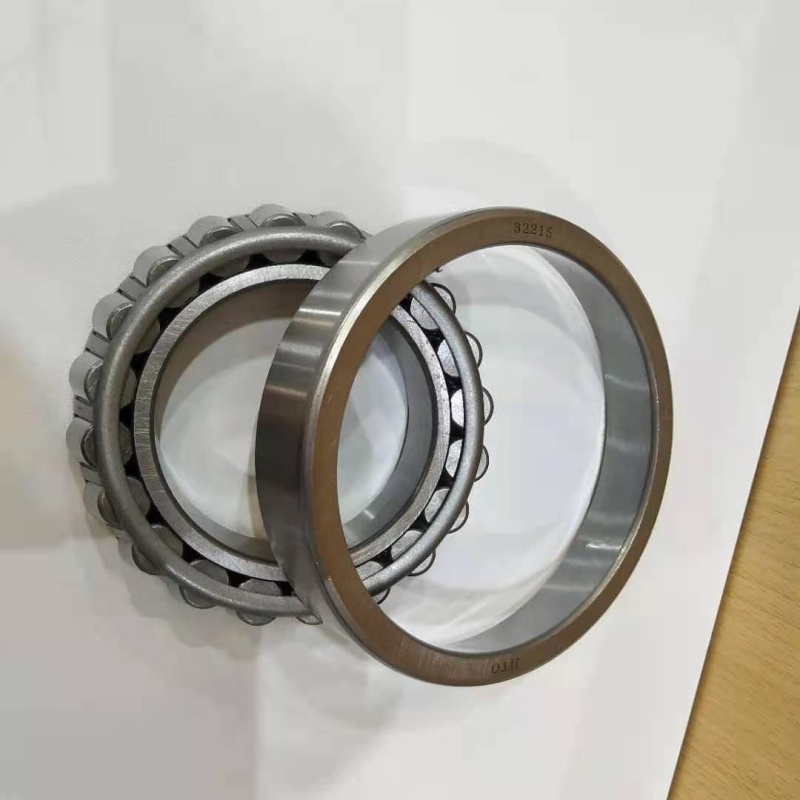
Let me clear up a common confusion. End play is the axial clearance. It is how much the shaft can move back and forth. Tapered roller bearings need a small amount of end play. They cannot run with zero clearance. Why? Because they heat up when they run. The inner ring expands. If you set zero clearance when cold, the bearing will have preload when hot. That preload creates extra friction and heat. Then the bearing seizes.
How to measure end play
You need a dial indicator. Mount it on the housing. Touch the tip to the shaft end. Then push the shaft back and forth by hand. Read the movement on the dial. That is your end play. For small bearings (under 2 inches shaft), aim for 0.001-0.002 inches. For large bearings (over 4 inches), aim for 0.003-0.005 inches.
What if you cannot find the spec?
Many old machines have lost their manuals. In that case, I use a rule of thumb. For normal speed and temperature, set end play at 0.002 inches per inch of shaft diameter. For example, a 2-inch shaft gets 0.004 inches. A 3-inch shaft gets 0.006 inches. But do not exceed 0.010 inches. Too much end play makes the shaft wobble. That damages seals and causes vibration.
Common mistakes
I have seen mechanics use a hammer to set end play. That is crazy. You need precision. Another mistake is using the wrong grease during adjustment. The grease thickness changes the reading. Always use the final operating grease when you check end play.
Also, remember that tapered roller bearings are often used in pairs. Two bearings facing each other (back-to-back or face-to-face) have a combined end play. You set the total clearance for the pair. For automotive wheel hubs, the end play is very small – sometimes just 0.0005 to 0.001 inches. That is almost zero but not fully tight.
A story from my shop
A customer in Russia called me last winter. His conveyor bearings kept overheating. I asked him about his end play. He said he set it to zero because he wanted no shaft movement. That was the problem. At -20°C, the bearing was too tight. When it warmed up, it seized. I told him to add 0.004 inches of end play. The problem went away.
So remember: a little end play is good. No end play is bad. Too much end play is also bad. Follow the spec or use my rule of thumb.
When to replace tapered roller bearings1?
Waiting too long to replace a bearing is dangerous. But changing too early wastes money. So how do you know the right time?
Replace tapered roller bearings when you see pitting2, spalling, noise, high temperature3, or excessive end play4. Also replace them if the seals are damaged or the grease is burnt. Do not wait for a complete failure.
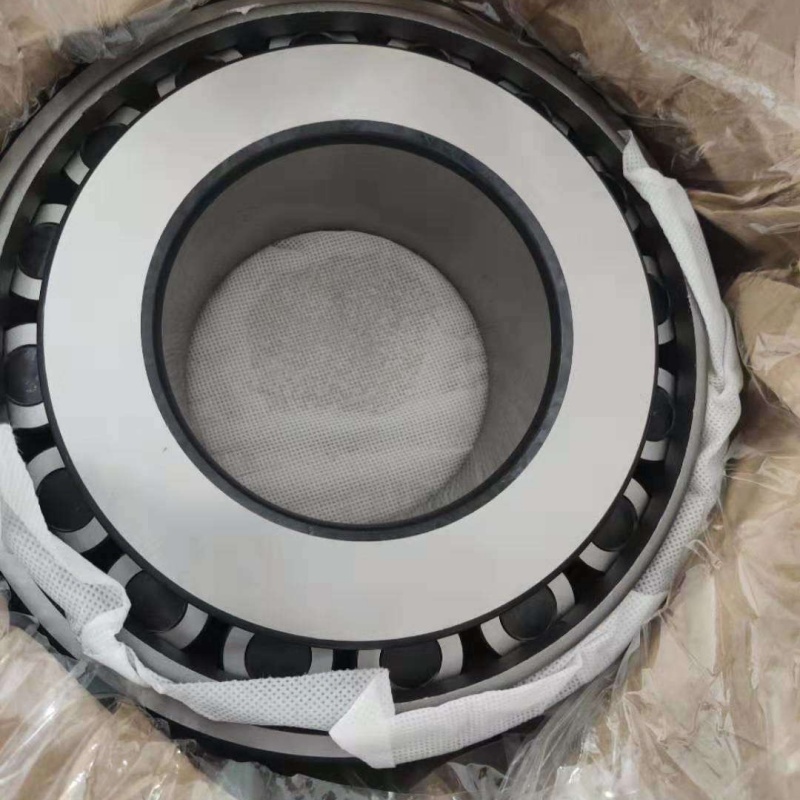
I learned this lesson with a customer in Egypt. He ran a rock crusher. His bearings made a grinding noise for two weeks. He did nothing. Then the bearing exploded. The shaft broke. The machine stopped for five days. He lost $50,000 in production. A $30 bearing replacement would have saved him.
So let me give you a simple checklist. I use this with all my distributors.
Signs that you need to replace now
-
Noise: A healthy tapered bearing runs smooth and quiet. If you hear grinding, clicking, or rumbling, stop the machine. Inspect immediately.
-
Heat: Touch the housing. If it is too hot to hold your hand on (over 70°C / 160°F), something is wrong. High heat means friction or lack of grease.
-
Vibration: Use a vibration meter5. Or just feel the housing. If it shakes more than before, the bearing races may have spalls.
-
End play increase: Check the end play with a dial indicator. If it has doubled from the original setting, the bearing is worn out.
-
Metal flakes in grease: Take a small grease sample. Rub it between your fingers. If you see shiny metal particles, the bearing is failing.
Scheduled replacement
For critical machines, do not wait for signs. Replace on a schedule. For a machine that runs 8 hours a day, 5 days a week, replace tapered bearings every 2-3 years. For 24/7 operation, replace every year. For heavy shock loads (like crushers or hammers), replace every 6 months.
How to inspect a used bearing
Take the bearing out. Clean it in diesel or solvent. Then look at the rollers and raceways. Good condition: smooth, shiny, no scratches. Minor wear: some dull marks but no pits. Replace soon. Spalling: small flakes of metal missing. Replace now. Pitting: small holes. Replace now. Cracks or broken cage: replace immediately.
Here is a quick guide:
| Condition | Action | Urgency |
|---|---|---|
| Smooth and shiny | Keep using | None |
| Slight discoloration | Monitor | Low |
| Visible wear marks | Plan replacement | Medium (3 months) |
| Spalling on <5% of surface | Replace soon | High (1 month) |
| Spalling on >5% or any crack | Replace now | Immediate |
| Cage broken | Replace now | Immediate |
My personal advice
Keep a spare bearing for every critical machine. When you see the first signs of trouble, change the bearing. Then take the old one apart and inspect it. That tells you what caused the failure. Then fix the root cause. Otherwise the new bearing will fail the same way.
And one more thing: do not mix old and new bearings on the same shaft. If one bearing fails, replace both. They have worn together. A new bearing with an old one creates uneven load.
Conclusion
Upgrading to advanced tapered roller bearings gives you better thrust handling, longer life, and safer operation. Just set the end play right and replace on time.
-
Understanding the right time to replace tapered roller bearings can save you from costly machine failures. ↩ ↩
-
Exploring the causes of pitting can help you prevent premature bearing failure and extend equipment life. ↩ ↩ ↩ ↩ ↩
-
Learn how high temperatures affect bearing performance and how to manage them effectively. ↩ ↩ ↩ ↩
-
Measuring end play is crucial for bearing health; find out how to do it accurately. ↩
-
Using a vibration meter can provide early warning signs of bearing issues, helping you maintain equipment reliability. ↩