
You run a large conveyor system. One bearing failure stops your whole production line. That costs money and time.
For large conveyor tail and head pulleys, you need spherical roller bearings. They handle heavy loads, shaft misalignment, and tough conditions. Their self-aligning feature makes them the best choice for this job.
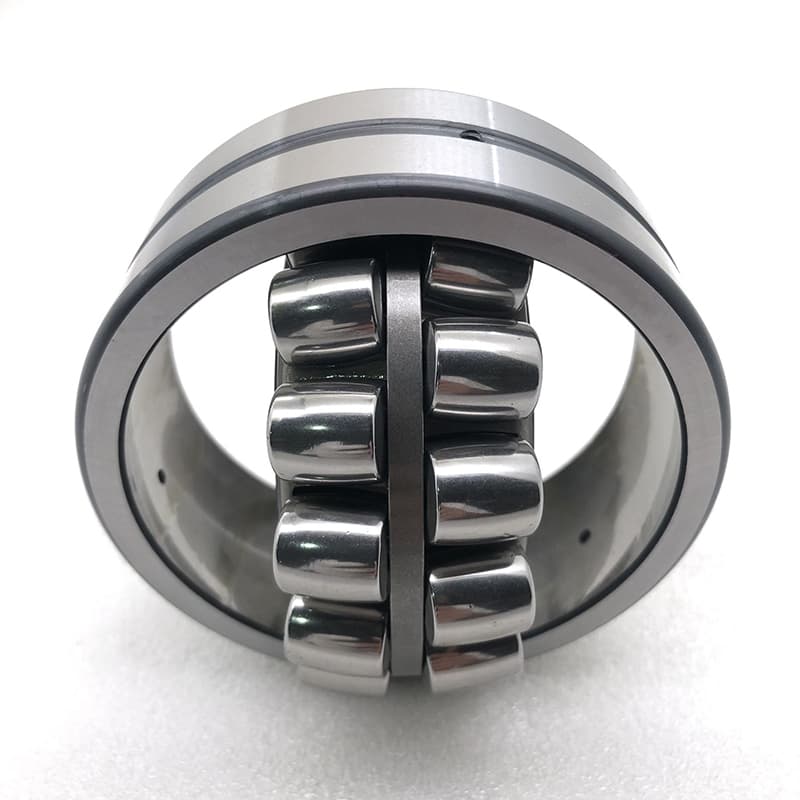
I have worked with many buyers like Rajesh from India. He often asks me the same question: “Which bearing should I use for my conveyor pulleys?” Let me share what I learned from my factory’s experience. You will see why spherical roller bearings are the right answer.
What type of bearing will you recommend for use in the conveyor belt roller?
You see a damaged bearing on a conveyor roller. The shaft is bent. The housing is worn. What do you pick next?
I recommend spherical roller bearings1 for conveyor belt rollers. They fix misalignment problems. They carry radial and axial loads at the same time. And they last longer in dusty or hot environments.
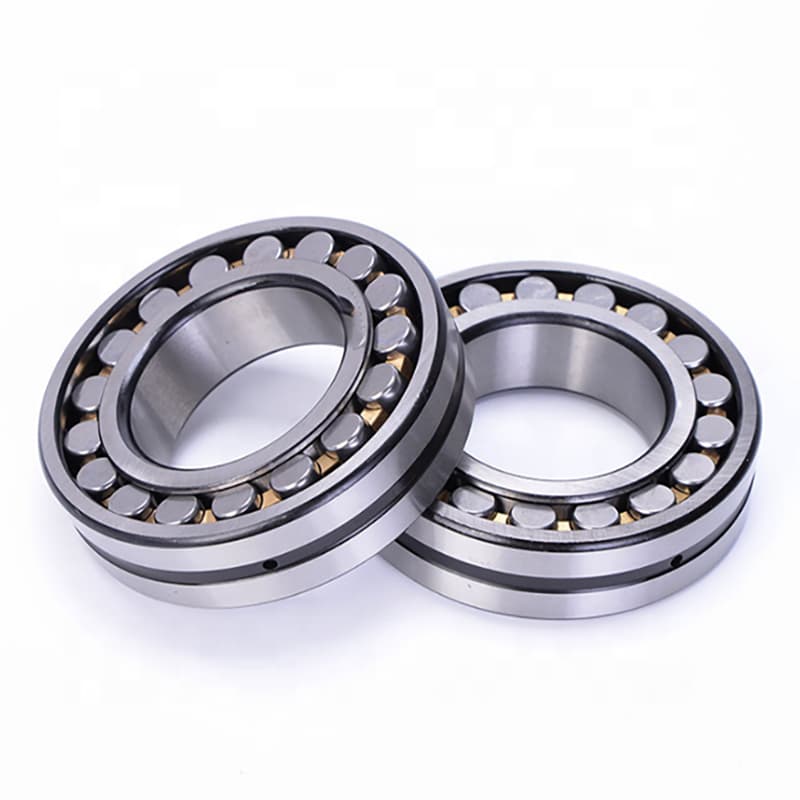
Let me break this down. A conveyor belt roller has two main positions: the head pulley and the tail pulley. The head pulley drives the belt. The tail pulley keeps tension. Both face heavy forces. But they also face a common enemy: shaft deflection2.
When you run a long conveyor, the shaft can bend. This happens because of belt tension, heavy material, or bad installation. A normal bearing, like a deep groove ball bearing, cannot handle this bend. It will create edge loading. That means the rolling elements press hard on the raceway edge. Soon you get heat, noise, and then failure.
So why spherical roller bearings? They have two rows of rollers. The outer ring has a spherical raceway. This design lets the bearing tilt a little. Usually up to 2 degrees. Some types go up to 3 degrees. This tilt absorbs the shaft bend. The rollers stay in full contact with the raceway. No edge loading. Less heat. Longer life.
I remember one customer from Brazil. He used taper roller bearings on his conveyor head pulley. The shaft had only 0.5 degrees of misalignment. The bearings failed every three months. We replaced them with spherical roller bearings. The same shaft. The same load. The bearings ran for two years. He saved money and downtime.
Let me show you a quick comparison:
| Feature | Spherical Roller Bearing | Taper Roller Bearing | Deep Groove Ball Bearing |
|---|---|---|---|
| Misalignment tolerance | Up to 2-3 degrees | Very low (0.1-0.2 degrees) | Low (0.1-0.3 degrees) |
| Radial load capacity | Very high | High | Medium |
| Axial load capacity | High (both directions) | High (one direction) | Low |
| Suitable for large pulleys | Yes | Yes, but with perfect alignment | No |
| Typical life in dusty conveyor | Long | Medium | Short |
So for a conveyor belt roller, especially on large systems, spherical roller bearings are my number one recommendation. They are not the cheapest. But they are the cheapest in the long run. Because they stop unplanned stops.
What makes spherical roller systems ideal for heavy duty applications1: a large in size2 b small in size c self-aligning3 d larger capacity4?
You see four options in a test. Which one matters most for heavy work? Guess wrong and your machine breaks.
The correct answer is c: self-aligning. Large size and larger capacity help, but self-aligning is the real hero. It allows the bearing to work even when the shaft bends or the housing shifts.
[^5]](https://sdycbearing.com/wp-content/uploads/2025/12/Spherical-Roller-Bearings-40-1.jpg)
Let me explain each choice. You might think large size is most important. But size alone does nothing if the bearing cannot handle misalignment. A big bearing with poor alignment will still fail. I have seen this many times.
a) Large in size – Yes, large bearings have bigger rollers and more contact area. They can carry more load. But in a conveyor, the shaft can bend under heavy load. A large non-self-aligning bearing will fight that bend. The result? High stress on a small area. That causes spalling (little pieces of metal breaking off). So size helps, but it is not the top feature.
b) Small in size – This is wrong for heavy duty. Small bearings overheat quickly. Their load rating is low. Do not use small bearings on large conveyor pulleys. You will change them every week.
c) Self-aligning – This is the key. Spherical roller bearings get their name from the spherical shape of the outer ring raceway. The inner ring with the rollers can tilt inside the outer ring. This tilting action is what we call self-alignment. In a real conveyor, the shaft is never perfectly straight. The housing is never perfectly aligned. The frame can twist when the belt pulls. Self-aligning bearings take all these problems and absorb them. They keep the load spread evenly across all rollers.
d) Larger capacity – Capacity means how much load the bearing can take. Spherical roller bearings do have high capacity. Their two rows of rollers give more contact surface. But many bearings have high capacity. Cylindrical roller bearings also have high radial capacity. However, they cannot self-align. So high capacity alone is not enough.
Let me give you a real example from my factory in China. We tested three bearings on a test rig that simulates a conveyor head pulley. The load was 50 tons. The misalignment was 1.5 degrees. We ran the test for 1000 hours.
- Spherical roller bearing (self-aligning): No damage. Low temperature.
- Cylindrical roller bearing (high capacity, no self-aligning): Edge loading after 200 hours. Raceway damaged.
- Taper roller bearing (medium capacity, low misalignment tolerance): Roller end heating. Failed at 350 hours.
So the self-aligning feature is what makes spherical roller systems ideal. The other features are nice to have. But without self-alignment, they are useless in real conveyor conditions.
That is why when a customer from Turkey asks me “What bearing for a heavy conveyor?” I always say spherical roller. Not because I sell them. Because I have seen them survive where others die.
What is a 6203 bearing1 used for?
You find a 6203 bearing in your spare parts box. Can you put it on a large conveyor pulley? Stop right there.
A 6203 bearing is a small deep groove ball bearing2. It is used for light-duty applications like small electric motors, fans, pumps, and conveyor rollers that are small and slow. Never use it on large conveyor head or tail pulleys.
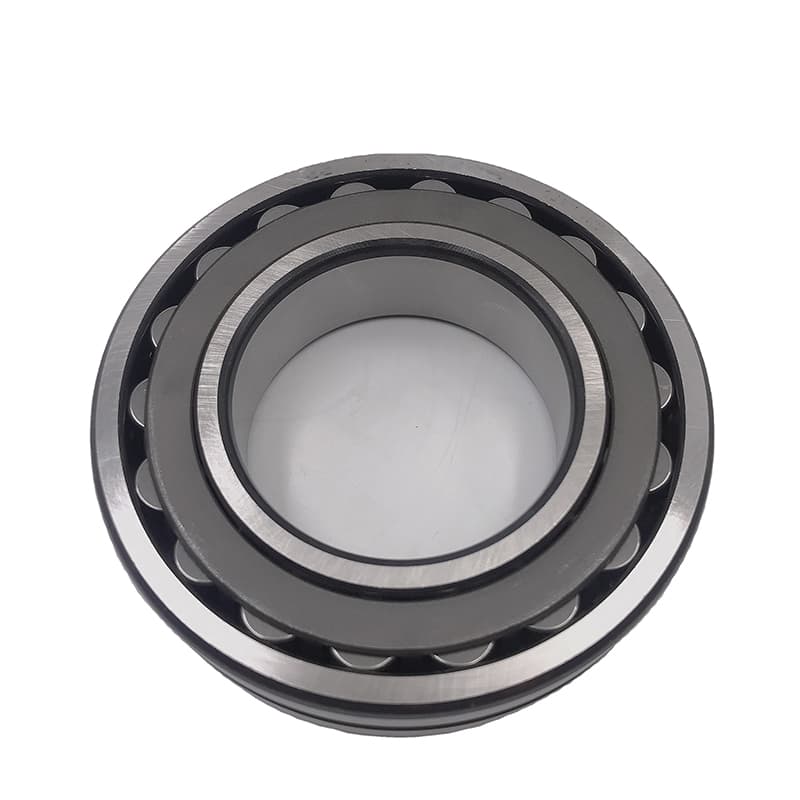
I get this question a lot. Buyers see the number 6203 and think it is a standard bearing. They want to use it everywhere. But that is a big mistake. Let me explain what a 6203 bearing really is.
The 6203 bearing belongs to the 62 series of deep groove ball bearings. Its dimensions are: 17 mm bore (inside diameter), 40 mm outside diameter, and 12 mm width. It is a small bearing. You can hold it between your thumb and finger. It has one row of steel balls. The balls are about 6 mm in diameter.
So what is it used for? Here are common applications:
- Small electric motors (under 1 HP)
- Ceiling fans
- Washing machines
- Water pumps (small ones)
- Power tools like drills
- Small conveyor rollers (light duty, short length)
- Bicycle hubs
- Alternators in cars
You see, the 6203 bearing is for light loads and high speeds. Its dynamic load rating3 (C) is about 9.5 kN. That is roughly 950 kg of radial load. That sounds like a lot. But on a large conveyor, the load on a tail pulley can be 10,000 kg or more. So a 6203 would crush instantly.
Also, the 6203 has no self-alignment. If your conveyor shaft bends even 0.2 degrees, the 6203 will create edge loading. It will run hot and noisy. Then it will seize.
I remember a customer from Pakistan. He tried to use 6203 bearings on his small conveyor. The conveyor was only 5 meters long and carried bags of cement. The bearings failed every two weeks. He called me angry. I asked him to measure the shaft. It was bent by 0.5 degrees. I sold him a spherical roller bearing (much larger, size 22210). That bearing had 50 mm bore. It was huge compared to 6203. But it solved his problem. The lesson is: use the right bearing for the job. A 6203 is a good bearing. Just not for large conveyors.
Here is a quick size comparison:
| Bearing Type | Bore (mm) | OD (mm) | Width (mm) | Dynamic Load (kN) | Self-aligning |
|---|---|---|---|---|---|
| 6203 | 17 | 40 | 12 | 9.5 | No |
| 22210 (spherical) | 50 | 90 | 23 | 120 | Yes |
| 23120 (spherical) | 100 | 165 | 52 | 350 | Yes |
So if you are buying bearings for large conveyor pulleys, ignore the 6203. Look for spherical roller bearings with bore sizes from 50 mm up to 300 mm. That is what heavy duty needs.
Which is better, 2RS1 or ZZ2 bearing?
You stand in front of two bearings. One has rubber seals (2RS). One has metal shields (ZZ). Which one do you pick for a dusty conveyor?
For large conveyor pulleys in dusty or wet conditions, 2RS (rubber seals) is better. For high-speed, clean, and hot environments, ZZ (metal shields) works. But for most conveyors, choose 2RS.
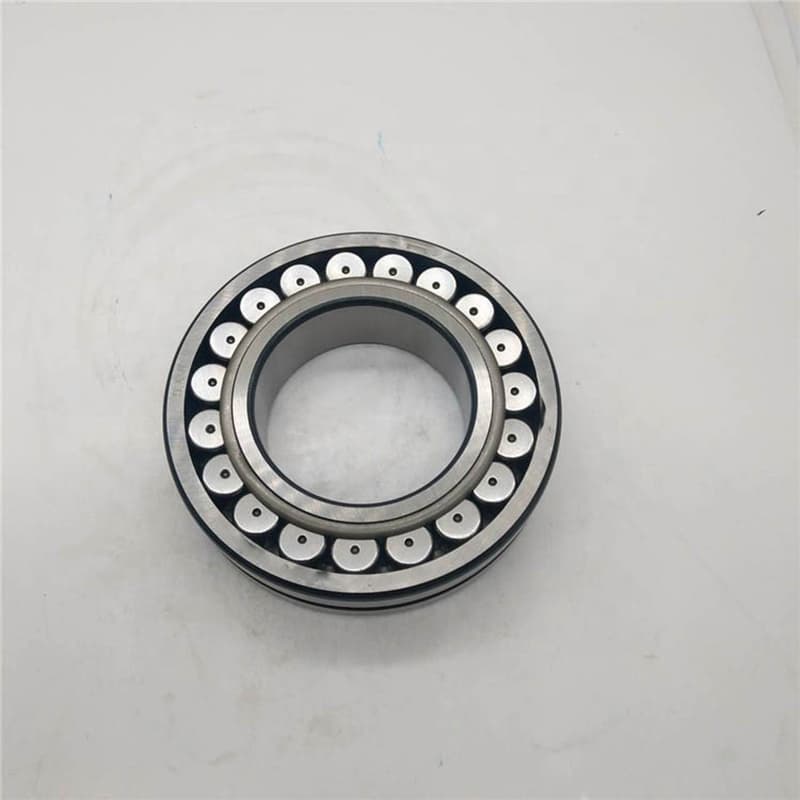
This is a common debate. I hear it from many buyers. They ask: “Should I get 2RS or ZZ?” The answer is not simple. It depends on your working conditions. Let me break it down for conveyor applications.
First, what do these codes mean?
- 2RS means two rubber seals. One on each side. The rubber touches the inner ring. This creates a tight seal. Dust, water, and dirt cannot get in. Grease cannot leak out easily.
- ZZ means two metal shields. One on each side. The metal shield has a small gap to the inner ring. It stops large particles. But fine dust can still enter. Grease can leak out slowly.
Now, for a large conveyor tail or head pulley, what are the conditions? Usually:
- Lots of dust (from coal, cement, grain, sand)
- Possible moisture (outside or washdown areas)
- Low to medium speed (conveyors run at 1-5 meters per second belt speed)
- High load (so bearing generates heat)
In these conditions, contamination is your biggest enemy. Dust gets into the bearing. It mixes with grease. It becomes a grinding paste. Then the rollers and raceways wear out fast. So you want the best seal. That is 2RS.
But wait. Some people say 2RS has higher friction. The rubber rubbing on the inner ring creates heat. At very high speeds, that heat can damage the grease. But conveyor pulleys do not run at high speeds. A typical conveyor head pulley rotates at 50 to 200 RPM. That is slow. The extra friction from 2RS is nothing compared to the load friction. So it is fine.
When should you use ZZ? Here are examples:
- High-speed applications (over 3000 RPM)
- Very hot environments (over 100°C, because rubber seals can melt)
- Clean environments like indoor assembly lines
- When you want to add fresh grease often (ZZ lets you flush grease through)
For most conveyor buyers I work with – like those from Russia, Egypt, or Indonesia – the environment is harsh. They have dust storms, rain, or sticky materials. I always recommend 2RS for their conveyor pulleys. One customer from South Africa used ZZ bearings on his coal conveyor. The bearings lasted only 4 months. He switched to 2RS. They lasted 18 months. Same bearing size. Same load. Only the seal changed.
Let me show you a comparison table:
| Feature | 2RS (Rubber Seal) | ZZ (Metal Shield) |
|---|---|---|
| Dust protection | Excellent | Poor to medium |
| Water protection | Good | Very poor |
| Grease retention | High | Low |
| Friction | Higher (rubber contact) | Lower (non-contact gap) |
| Max temperature | -30°C to 100°C | -30°C to 150°C |
| Max speed | Lower | Higher |
| Best for conveyors? | Yes, most cases | Only if very clean and dry |
So my advice: For large conveyor tail and head pulleys, choose 2RS. But make sure you buy from a good factory. Cheap 2RS seals can harden or crack. At FYTZ Bearing, we use high-quality nitrile rubber3 (NBR) or fluoro rubber (FKM) for high temperatures. That is my experience after supplying bearings to over 20 countries.
Conclusion
Choose spherical roller bearings with 2RS seals for large conveyor pulleys. They handle misalignment, heavy loads, and dirt. That keeps your line running.
-
Explore the benefits of 2RS bearings, especially in dusty environments, to understand why they are often preferred for conveyors. ↩ ↩ ↩ ↩
-
Learn about ZZ bearings and their applications in high-speed and clean environments to see if they fit your needs. ↩ ↩ ↩ ↩
-
Explore the properties of nitrile rubber and its advantages in bearing seals, especially in challenging environments. ↩ ↩ ↩
-
Discover why larger capacity is important for bearings and how it contributes to their performance. ↩