
I spent three weeks comparing bearing prices last month. I ended up with a container of bearings that failed in two days. That mistake cost me a major client.
To compare quotations for deep groove ball bearings from different suppliers, you must look beyond the unit price. You need to check the bearing precision class, the material grade, the packaging type, and the supplier’s quality control process. The cheapest quote often becomes the most expensive choice after you add shipping delays and product failures.
I understand you are a busy procurement manager. You get dozens of quotes. You need to make a decision fast. But I have learned that rushing this step creates problems that last for months. Let me walk you through how I evaluate quotes now. I will show you what to look for and what to avoid.
How to identify a deep groove ball bearing1?
I once had a client send me a photo of a broken bearing. He asked for a replacement. But the bearing had no markings. I could not tell if it was a deep groove or an angular contact type. Guessing wrong would have cost him a machine downtime of three days.
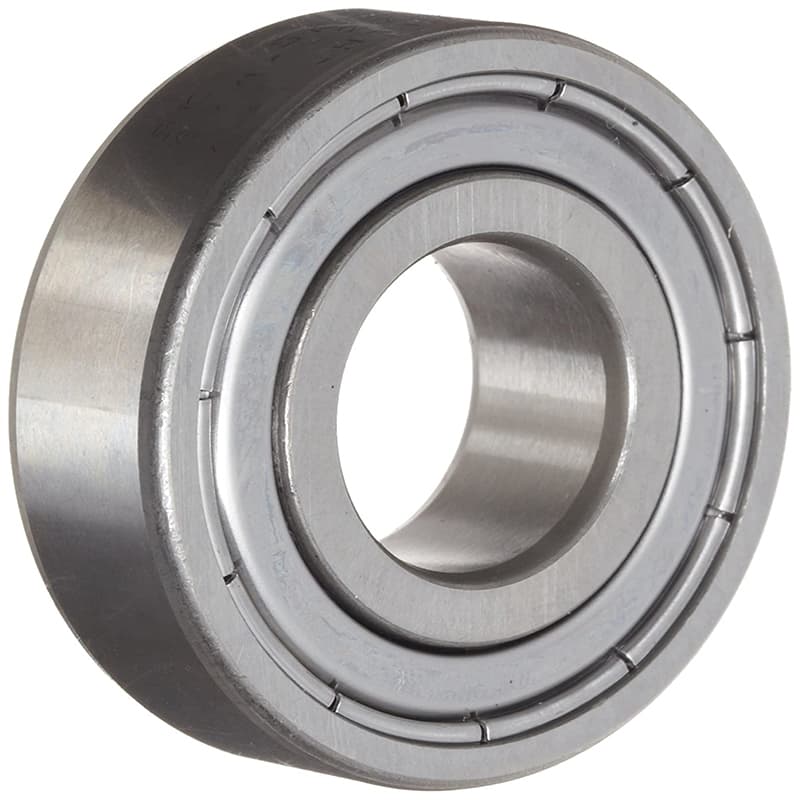
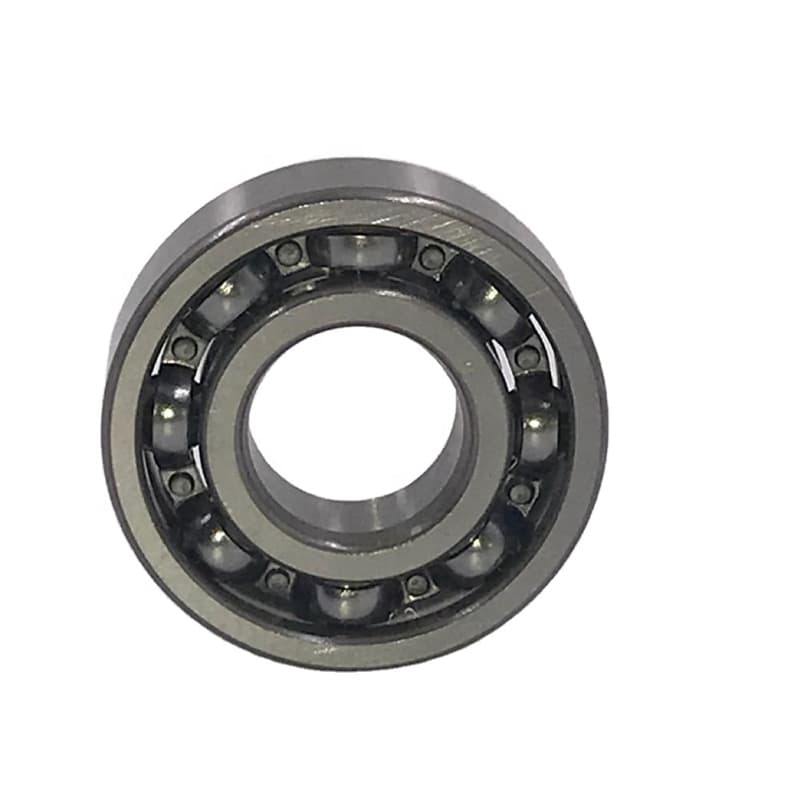
You can identify a deep groove ball bearing by looking for a single row of balls, a deep raceway that allows both radial and axial loads, and a design that is typically non-separable2. The deep raceway is the key feature. It has a continuous groove that holds the balls in place.
Let us break this down further. When you have a bearing in your hand, you need to check three main things.
The raceway depth3
This is the most defining feature. A deep groove ball bearing gets its name from the raceway. The raceway is the groove where the balls sit. In this type, the raceway is deep. It matches the curvature of the balls closely. This design lets the bearing handle loads from two directions.
The number of rows4
Deep groove ball bearings usually have one row of balls. That is the standard design. If you see two rows, you are likely looking at a double-row angular contact bearing. That is a different product.
The separability
Try to take the bearing apart. You cannot do it easily. Deep groove ball bearings are non-separable. The inner ring, outer ring, balls, and cage stay together. If the parts come apart, you might have a different bearing type.
Here is a simple table to help you compare:
| Feature | Deep Groove Ball Bearing | Angular Contact Ball Bearing |
|---|---|---|
| Raceway | Deep, continuous groove | Shallow, offset groove |
| Load Direction | Radial and axial (both directions) | Mainly axial (one direction) |
| Separability | Non-separable | Usually separable |
| Common Use | Electric motors, pumps, gearboxes | Machine tool spindles, pumps |
I suggest you train your team to check these features. It saves you from ordering the wrong part. At FYTZ Bearing, we stamp the type clearly on our products. But if the marking is gone, these physical checks are your best tool.
What is the price of 6205 deep groove ball bearing1?
A customer from Turkey asked me this question last week. He wanted a price for 10,000 pieces. He sent me a screenshot of a competitor’s quote. The price was very low. He asked me to match it. I said no. He was confused.
The price of a 6205 deep groove ball bearing ranges from $0.60 to $2.50 per piece for standard volume orders. This price depends heavily on the brand, the precision class (P0, P6, P5), the steel quality, the seal type (open, rubber shield, metal shield), and the purchase quantity.
I told my Turkish customer that I could not match the low price. But I asked him to check the competitor’s quote details. Here is what I explained to him. The price is not a single number. It is a combination of factors.
The bearing precision class2
This is the biggest cost driver. A standard P0 bearing costs the least. A P5 bearing, which has tighter tolerances and runs smoother, can cost 40% to 60% more. When I see a low price, I always check the precision class. Many low quotes are for P0 bearings. That is fine for some applications. But if your customer needs a P5 for a high-speed motor, the low price is a trap.
The seal type and steel material3
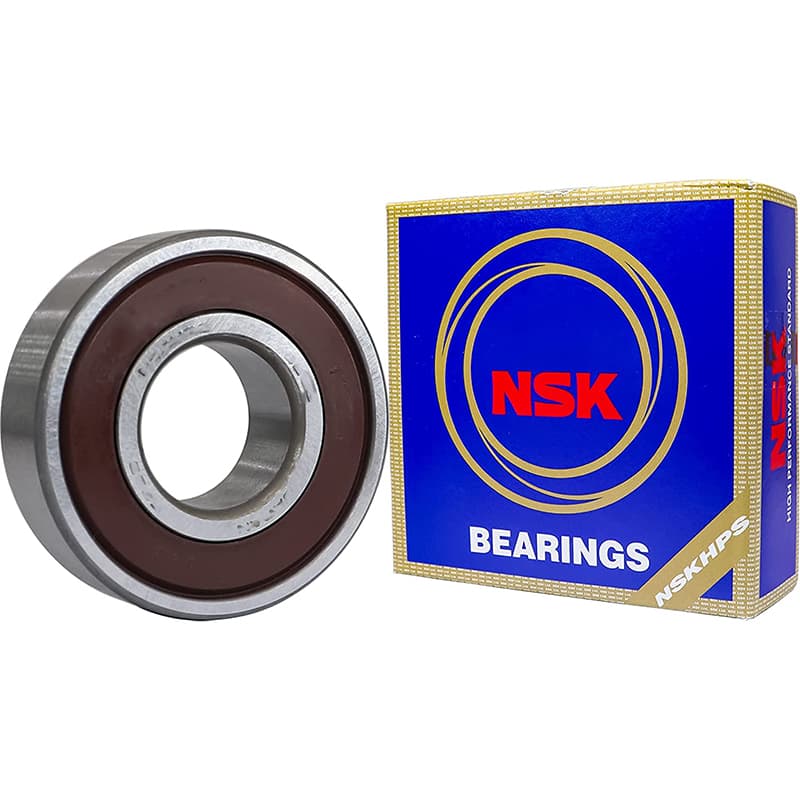
An open bearing (no seal) is cheaper. A rubber-sealed (2RS) bearing costs more because it adds manufacturing steps. The steel also matters. A bearing with GCr15 steel and proper heat treatment lasts longer. Cheap bearings often use lower-grade steel. You cannot see the difference. But you will see it in the failure rate.
Here is a price breakdown for a 6205 bearing4 (standard volume, from a Chinese factory like ours):
| Specification | Approximate Price Range (USD/piece) |
|---|---|
| P0, Open, Standard Steel | $0.60 – $0.90 |
| P0, Rubber Seal (2RS), Standard Steel | $0.80 – $1.20 |
| P6, Rubber Seal (2RS), Standard Steel | $1.20 – $1.80 |
| P5, Rubber Seal (2RS), High-Quality Steel | $1.80 – $2.50 |
My advice is simple. Do not look at the price alone. Look at what you get for that price. At FYTZ Bearing, we are a factory. We offer competitive prices because we control production. But we also tell our clients exactly which specification they are buying. That is the fair way to do business.
Is SKF or timken better?
I met an importer in India last year. He asked me this same question. He thought only these two brands were good. He was surprised when I told him that for many applications, his choice should depend on the application, not just the brand name.
Neither SKF nor Timken is universally better. SKF is often preferred for deep groove ball bearings1 and general industrial applications. Timken is historically stronger in tapered roller bearings2 and heavy-duty applications. The "better" choice depends on your specific machinery, your budget, and the availability in your market.
I have used both brands. They make excellent products. But the question is not that simple. I want to give you a more practical way to think about this.
Application is the real decider
If you are buying for a high-speed electric motor, SKF has a very strong history with deep groove ball bearings. Their research and development in this area is deep. If you are buying for a heavy truck or a construction machine, Timken’s expertise in tapered roller bearings is world-class. You would not use a deep groove ball bearing for a truck wheel end. You would use a tapered roller bearing. So the question is not just about the brand. It is about the product type within the brand.
The global and local factor
Availability matters. I have clients in Brazil who can get SKF easily. Their Timken distributor is far away. For my clients in Russia, the situation is different. A good bearing that you can get in three days is better than a slightly better bearing that takes six weeks.
The alternative option
This brings me to a point that many procurement managers do not consider. The top brands charge a premium. That premium pays for their marketing and global distribution network. For many standard applications, a high-quality bearing3 from a specialized factory like FYTZ Bearing4 offers the same performance for a much lower price. We produce bearings to the same precision classes (P0, P6, P5) and use similar steel grades. The difference is the name on the box.
My advice is to test. Take a high-quality non-brand bearing and run it in your application. Compare the performance and the cost. You might find that the "better" choice is not a global brand. It is a reliable factory partner who gives you consistent quality at a fair price.
Who makes the highest quality ball bearings1?
I get this question from almost every new client. They want the best. I understand that. But in my 15 years of working with bearings, I have learned that "highest quality" does not always mean "best for your business."
The highest quality ball bearings are typically made by established manufacturers in Japan, Germany, Sweden, and increasingly, specialized factories in China. Quality is defined by precision class, material consistency, heat treatment process2, and dimensional accuracy, not just the country of origin.
I have visited many bearing factories. I have seen the production lines. I want to give you a clear view of what quality really means.
The three pillars of bearing quality
Quality comes from three things. You cannot see them in a photo. But you can ask your supplier about them.
1. The steel: High-quality bearings use vacuum-degassed bearing steel3, like GCr15 or its equivalent. This steel has a uniform structure and few impurities. Cheap bearings use standard steel. The difference is in fatigue life. A bearing with good steel runs for 10,000 hours. A bearing with poor steel might fail in 500 hours.
2. The heat treatment: This is a hidden factor. The bearing rings and balls need to be heat-treated to the right hardness. Too soft, and they wear out fast. Too hard, and they become brittle and crack. Good factories control the temperature and the time precisely. They test the hardness of each batch.
3. The grinding and assembly: The final dimensions matter. A high-quality bearing meets the tolerances for its precision class. The surface finish is smooth. The assembly is clean. I have seen cheap bearings that have rust on them fresh out of the box. That is not quality.
The country of origin myth
Many people think only Japan or Germany makes high-quality bearings. That is not true today. China now has many factories that produce very high-quality bearings. The difference is that China also has factories that produce low-quality bearings. You need to choose the right partner.
At FYTZ Bearing, we focus on quality. We have integrated production and inspection lines. We test our products. We know that our reputation depends on the bearings we ship. For a client in Indonesia who uses our bearings in industrial fans, our P6 bearings perform as well as the global brands. They cost less. That is the value we offer.
How to verify quality
Do not trust the label. Trust the process. Ask your supplier for three things. First, ask for the precision class certification4. Second, ask about their heat treatment process. Third, ask for a sample order. Test the sample in your application. If it works, then you have found your quality supplier.
Conclusion
Comparing quotations is about understanding what you buy. Look at the precision class, the material, and the supplier’s process. The cheapest quote often costs more in the end.
-
Explore this link to understand the key features that define the highest quality ball bearings and how they impact performance. ↩ ↩ ↩ ↩
-
Discover how the heat treatment process influences the durability and performance of ball bearings, ensuring they meet industry standards. ↩ ↩ ↩ ↩
-
Learn about vacuum-degassed bearing steel and its significance in ensuring the longevity and reliability of ball bearings. ↩ ↩ ↩ ↩
-
Find out what precision class certification entails and why it’s crucial for selecting high-quality ball bearings. ↩ ↩ ↩ ↩