
Imagine your overhead crane stops in the middle of a shift. Production halts. Deadlines slip. The culprit often hides inside the motor: a failed bearing.
Deep groove ball bearings are the workhorses inside crane and hoist motors. They support the rotor, handle heavy radial and axial loads, and keep everything spinning smoothly, even under tough conditions.
I have spent years in the bearing industry, working with clients like Rajesh in India who import bearings for industrial users. I have seen what works and what fails. Now, let us break down how to choose, apply, and maintain these bearings so your motors keep lifting without trouble.
The Critical Role of Deep Groove Ball Bearings in Overhead Crane and Hoist Operations?
Think about a crane motor running all day, lifting tons of material. The bearings inside face constant stress. If they fail, the motor fails.
Deep groove ball bearings1 are the main support for the motor rotor. They take the weight of the rotor and handle the side forces from belts or gears. They also allow the motor to start and stop smoothly, which is vital for safe lifting.
How They Support the Rotor
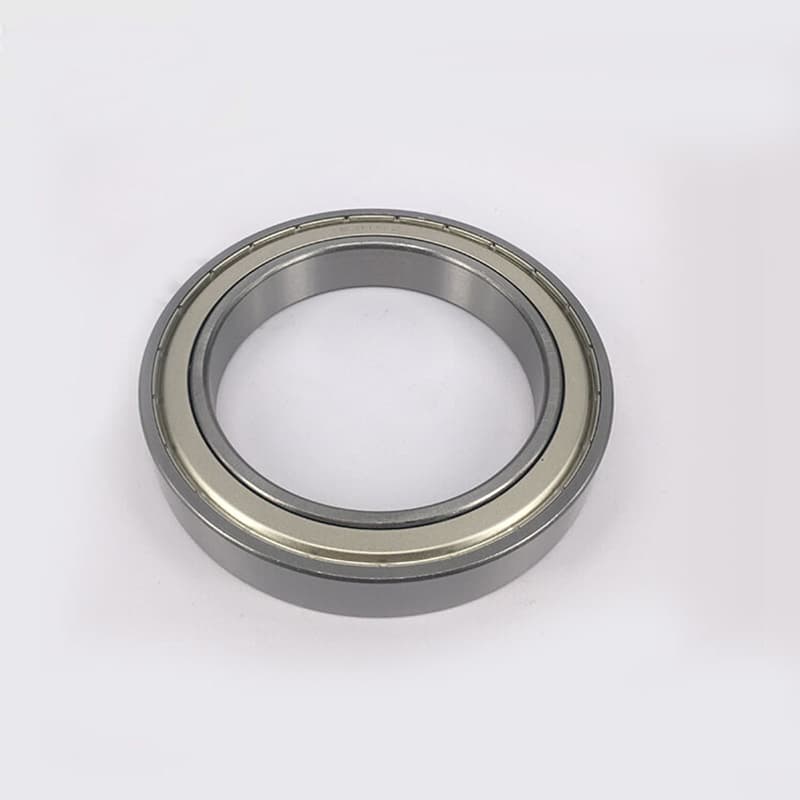
In a typical electric motor, the rotor sits on two bearings. The deep groove ball bearing at the drive end handles most of the radial load from the pulley or coupling. The bearing at the non-drive end usually sees lighter loads but must allow for thermal expansion.
Handling Combined Loads
Cranes and hoists do not just spin. They lift, lower, and swing. This creates axial forces along the motor shaft. Deep groove ball bearings are unique because they can take both radial and axial loads at the same time. The deep raceway grooves keep the balls in place and transfer forces efficiently.
Safety Implications
A seized bearing can overheat and even cause a fire. In lifting equipment, a sudden motor failure can drop a load. That is why using the right bearing is not just about performance; it is about safety. I always tell my customers: never compromise on bearing quality2 for crane motors.
| Load Type | How Deep Groove Ball Bearings Handle It |
|---|---|
| Radial | The balls run in deep grooves, distributing weight evenly. |
| Axial | Shoulders on the rings guide the balls, allowing thrust in both directions. |
| Combined | Groove curvature lets bearings handle both forces without extra parts. |
In my experience, many crane motor failures trace back to bearings that were not designed for combined loads3. A standard bearing might work for a while, but under heavy hoisting, it wears out fast. That is why we at FYTZ often recommend bearings with enhanced internal geometry for these applications.
Key Specifications: Selecting the Right Bore Size1, Clearance, and Cage Material2 for High-Duty Cycles?
You have the motor specs. You know the shaft diameter. But picking a bearing is more than matching numbers. Wrong choices here lead to early failure.
The right bore size, internal clearance, and cage material keep the bearing running true under heat and load. Get them wrong, and you get noise, vibration, and short life.
Bore Size: It Is Not Just Diameter
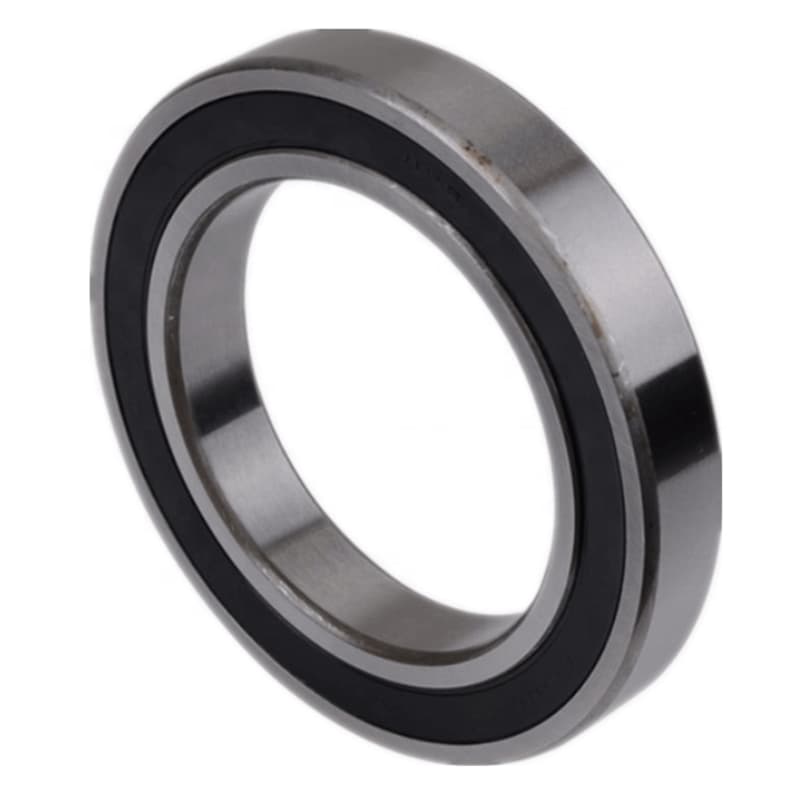
The bore must fit the shaft snugly. Too loose, and the inner ring spins, wearing the shaft. Too tight, and you cannot install it without damage. For crane motors, shafts often have tolerances like j6 or k6. I always advise customers to check the shaft finish and roundness. A rough shaft tears up the bearing seat.
Internal Clearance3: C3 or C4?
Motors heat up during operation. The shaft expands. If the bearing has no room to expand internally, it preloads and fails. For most crane motors, C3 clearance is standard. For very hot environments or long shafts, C4 may be needed.
Cage Material: Steel, Brass, or Polymer?
The cage holds the balls apart. In high-duty cycles, it matters a lot.
| Cage Material | Pros | Cons | Best For |
|---|---|---|---|
| Steel (stamped) | Strong, cheap, handles high temps | Can be noisy, heavy | General use, moderate speeds |
| Brass (machined) | Very strong, runs quiet, dissipates heat | Expensive | Heavy loads, high speeds, shock loads |
| Polyamide (plastic) | Light, quiet, runs without extra lubrication | Temperature limit (~120°C) | Clean environments, moderate loads |
I remember a case where a customer in Brazil kept breaking bearings every three months. We switched from a steel cage to a machined brass cage. The bearings started lasting over a year. The extra cost paid off many times.
For crane motors, I lean toward brass cages if the budget allows. They handle the starts and stops better. But for smaller hoists, a good steel cage works fine.
Enhancing Motor Longevity: How Bearing Design Minimizes Vibration and Handles Axial Loads?
Vibration is a killer. It shakes wires loose, wears out insulation, and makes the whole crane wobble. Axial loads1 come from lifting and can push the rotor out of alignment.
Bearing design2 directly controls vibration and axial stability. Tighter tolerances and optimized internal shapes make the motor run smoother and last longer.
Vibration Sources in Crane Motors
Vibration comes from imbalance in the rotor, misalignment, and bearing imperfections. When a bearing has rough surfaces or inconsistent ball size, it creates tiny impacts each time a ball passes a spot. Over time, this wears the raceway and increases vibration.
How Precision Grades Help
Bearings come in precision classes like P0 (standard), P6, and P5. For crane motors, P6 or P5 makes a difference. These bearings have tighter tolerances on bore, outer diameter, and runout. They keep the shaft centered and reduce vibration.
| Precision Class | Dimensional Tolerance | Running Accuracy | Typical Vibration Level |
|---|---|---|---|
| P0 (ABEC 1) | Normal | Normal | Standard |
| P6 (ABEC 3) | Tighter | Better | Low |
| P5 (ABEC 5) | Very tight | High | Very low |
I often recommend P6 for most crane motors. It gives a good balance of cost and performance. For high-speed hoists or precision applications, P5 is worth it.
Handling Axial Loads with Design
Deep groove ball bearings3 handle axial loads through the contact angle. When an axial force pushes the shaft, the balls roll up the shoulder of the raceway. The deeper the groove, the more axial load it can take. Some manufacturers modify the internal geometry for even higher capacity.
Another trick is to use two bearings together. On the drive end, a deep groove bearing handles radial and some axial load. On the non-drive end, another deep groove bearing handles the opposite axial direction if needed, but often a lighter bearing is used there.
In my work with clients in Turkey and Russia, I have seen motors where the non-drive bearing was too small. The axial load from lifting pushed the rotor and overloaded that bearing. We solved it by upgrading both bearings to the same size and using a preload spring.
Essential Maintenance Practices: Lubrication, Re-greasing Intervals1, and Bearing Failure Analysis2?
You picked the right bearing. It is installed. But maintenance decides how long it lives. Many good bearings die young because of poor lubrication or neglect.
Regular greasing, correct intervals, and knowing why bearings fail keep your motors running and save you money.
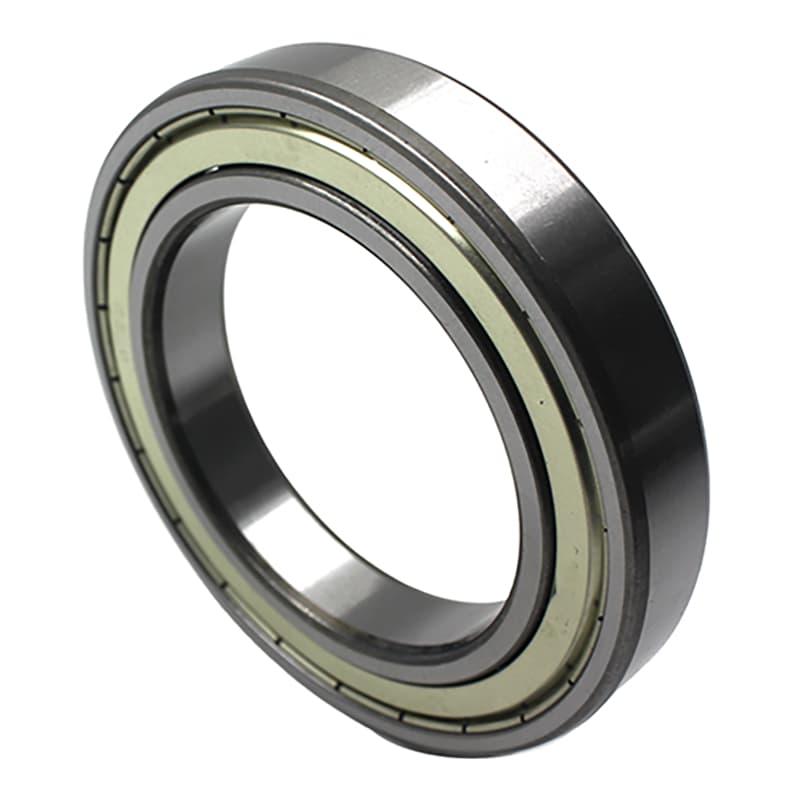
Lubrication Choices3
Grease is the lifeblood of a bearing. For crane motors, we need grease that stays put, resists water, and handles high temperatures. Lithium complex greases are common. For hot environments, polyurea greases work well.
I tell my customers: never mix greases. Different thickeners can react and turn into liquid. Stick to one brand and type.
Re-greasing Intervals
How often to grease depends on running hours, temperature, and environment. A rule of thumb: every 3 to 6 months for continuous duty. But use a formula to be precise.
One simple method: For a 50mm bore bearing running at 1800 rpm, re-grease every 2000 hours. Adjust for temperature: over 70°C, cut interval in half. For dirty or wet areas, cut it again.
| Condition | Re-greasing Interval Factor |
|---|---|
| Clean, cool, continuous | 1.0 (base) |
| Dusty or humid | 0.5 |
| High temp (>70°C) | 0.5 |
| Shock loads or vibration | 0.7 |
I once visited a factory in Indonesia where they greased every bearing every week. They thought more grease was better. But they over-greased, causing overheating. We set a proper schedule, and bearing life4 doubled.
Failure Analysis: Reading the Clues
When a bearing fails, look at it. The damage pattern tells the story.
| Failure Mode | What You See | Likely Cause |
|---|---|---|
| Fatigue spalling | Flakes of metal missing from raceway | Normal wear after long life, or overload |
| Smearing | Metal transfer, rough spots | Slippage during starting/stopping, poor lubrication |
| Overheating | Discoloration (blue/brown) | Too much grease, high temp, loss of clearance |
| Brinelling | Dents in raceway spaced at ball intervals | Vibration while stationary, impact during installation |
| Contamination | Grit embedded in raceway | Dirty grease, poor seals |
When a client in Egypt sent me photos of a failed bearing, I saw rust trails. They were using the crane outdoors in a humid coastal area. We recommended better seals and a rust-inhibiting grease. Problem solved.
My Advice on Maintenance
Keep records. Log each re-greasing. Note any unusual noise or vibration. Train your maintenance team. A simple checklist goes a long way.
Conclusion
Deep groove ball bearings are the heart of crane and hoist motors. Choose the right size, clearance, and cage. Understand how they handle loads and vibration. Maintain them with care. Your motors will lift reliably for years.
-
Understanding re-greasing intervals is crucial for extending bearing life and optimizing performance. ↩ ↩ ↩ ↩
-
Learning failure analysis techniques can help identify issues early and prevent costly downtime. ↩ ↩ ↩ ↩
-
Choosing the right lubrication can significantly enhance bearing performance and longevity. ↩ ↩ ↩ ↩
-
Exploring strategies to increase bearing life can lead to significant cost savings and improved machinery reliability. ↩