
Your production line stops without warning. Every minute of downtime costs you money. The culprit is often a failed bearing.
To select spherical roller bearings for continuous high-load lines, you must evaluate load ratings, fatigue life, cage design, internal clearance, sealing, and lubrication. These factors together decide if the bearing will survive the long run.

But how exactly do you evaluate each factor? I will share what we have learned at FYTZ Bearing after supplying bearings to factories in Turkey, India, Brazil and many other countries. Let me walk you through the key points one by one.
What Are the Key Factors to Consider When Choosing Bearings for Continuous Operation?
Many buyers only look at dimensions and price. They ignore the real working conditions. That mistake leads to early failures and repeated downtime.
The key factors for continuous operation bearings include dynamic and static load ratings1, fatigue life (L10)2, cage type3, internal clearance class (C3/C4)4, seal type5, and lubrication method6. Every one of these factors directly impacts reliability.
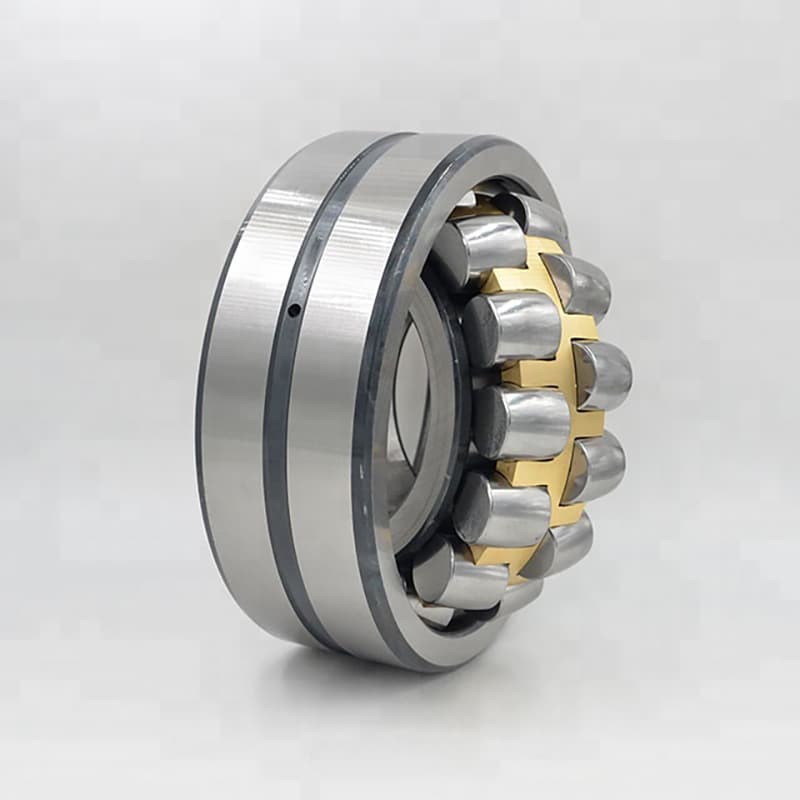
Load Ratings – Not Just Numbers on a Catalogue
The basic dynamic load rating (Cr) tells you the load the bearing can handle for one million revolutions. But in real life, loads are rarely constant. You need to calculate the equivalent dynamic load (P) using the formula P = XFr + YFa. X and Y are radial and axial factors from the bearing table. If you ignore axial loads, you will undersize the bearing.
Static load rating (C0) matters for shock loads or when the machine starts and stops. If the static load exceeds C0, the rolling elements will dent the raceways. Those dents become vibration sources later.
Fatigue Life – Beyond the Simple L10 Formula
Manufacturers publish L10 life based on ideal conditions. Your environment is not ideal. Contamination, misalignment, and poor lubrication cut the actual life by a huge margin. We use the modified life calculation Lnm = a1 a2 a3 * L10. Here a1 is reliability factor, a2 is material factor, a3 is operating condition factor.
For high-load lines, we often recommend a minimum L10h of 100,000 hours. But that number must come from realistic load assumptions, not catalogue values.
Cage Design – The Silent Hero
Cages keep rollers apart and guide them through the load zone. In continuous operation, cage stress is high. stamped steel cages are economical and strong. Machined brass cages handle higher temperatures and offer better lubrication. Polymer cages are light and run quietly but may not survive high heat.
| Cage Material | Advantages | Disadvantages | Best Application |
|---|---|---|---|
| Stamped Steel | Low cost, high strength | Can wear in poor lubrication | General industrial, moderate speed |
| Machined Brass | High temp resistance, low friction | Expensive, heavy | High speed, high temp, vibration |
| Polyamide (Nylon) | Light, quiet, self-lubricating | Temperature limit ~120°C | Clean, moderate load, food industry |
Internal Clearance – Fit for Heat
Bearings need room to expand when they get hot. If the internal clearance is too small, the bearing will preload itself and overheat. For continuous operation, C3 or even C4 clearance is common. The rule is: for every 10°C temperature difference between inner and outer rings, add 10% to the required clearance.
We always ask customers about operating temperature and shaft fit before suggesting a clearance class.
Sealing and Lubrication – The First Line of Defense
Without proper seals, dust and moisture enter the bearing. Without proper grease, metal rubs on metal. Contact seals (like 2RS) keep contaminants out but add friction. Non-contact seals (like ZZ) have less friction but let fine dust pass. In dirty environments, we recommend contact seals with high-quality lithium complex grease.
Grease selection depends on speed factor (n*dm). For high loads, use grease with extreme pressure (EP) additives. And remember, even sealed bearings need re-lubrication in continuous duty.
How Do Load Ratings and Fatigue Life Affect Performance in High-Demand Environments?
In high-load environments, bearings face stresses far beyond normal. If you only trust the catalogue data, you will make wrong choices.
Load ratings and fatigue life are the core numbers. Dynamic load rating (Cr)1 tells you the bearing’s capacity under rotation. Fatigue life (L10)2 predicts how many millions of revolutions 90% of bearings will survive under a given load. In real applications, you must account for peak loads and lubrication conditions.
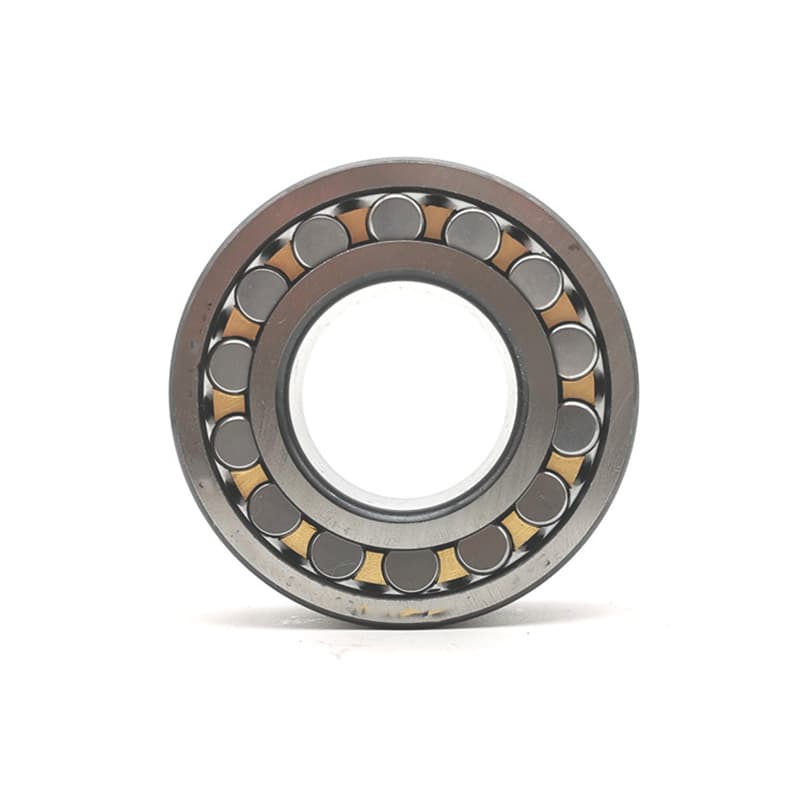
Calculating Equivalent Dynamic Load3 Correctly
Most spherical roller bearings take both radial and axial loads. The formula P = XFr + YFa looks simple, but finding X and Y requires knowing the ratio Fa/Fr and the bearing’s contact angle. Many buyers use the worst-case X and Y values and oversize the bearing unnecessarily. That adds cost.
At FYTZ, we use software to calculate the exact P for each application. For example, in a vibrating screen, the load fluctuates. We calculate an equivalent load that represents the real fatigue damage.
Understanding L10h in Hours – What It Really Means
Manufacturers state L10 in millions of revolutions. But you think in hours. Convert by L10h = (1,000,000 / (60 n)) L10, where n is RPM. But that simple L10h assumes perfect alignment, clean oil, and ideal temperature. In reality, we use adjustment factors.
| Condition Factor | Description | Typical Range |
|---|---|---|
| a1 (Reliability) | For 90% reliability = 1; for 95% = 0.62; for 99% = 0.21 | 0.21 – 1 |
| a2 (Material) | Standard steel = 1; vacuum-degassed = 1.2 – 1.5 | 1 – 1.5 |
| a3 (Operating) | Clean, cool, good viscosity = 1; contaminated = 0.2 – 0.6 | 0.2 – 1 |
Multiply them together, and you see why some bearings fail in months instead of years.
Safety Factors for High-Load Applications
For continuous high-load lines, I recommend a safety factor S0 = C0 / P0 of at least 2 for static loads. For dynamic loads, use a factor of 1.5 on the calculated life. These factors protect against unexpected overloads and lubrication interruptions.
Why Are Cage Design and Internal Clearance1 Critical to Preventing Downtime?
A broken cage can lock up a bearing instantly. Overheating from wrong clearance can cause seizure. These failures often come from overlooked design details.
The cage separates and guides the rollers, preventing them from rubbing each other. Internal clearance compensates for thermal expansion2 and prevents preload. Choosing the wrong cage material or clearance class directly leads to failure at high temperature or speed.
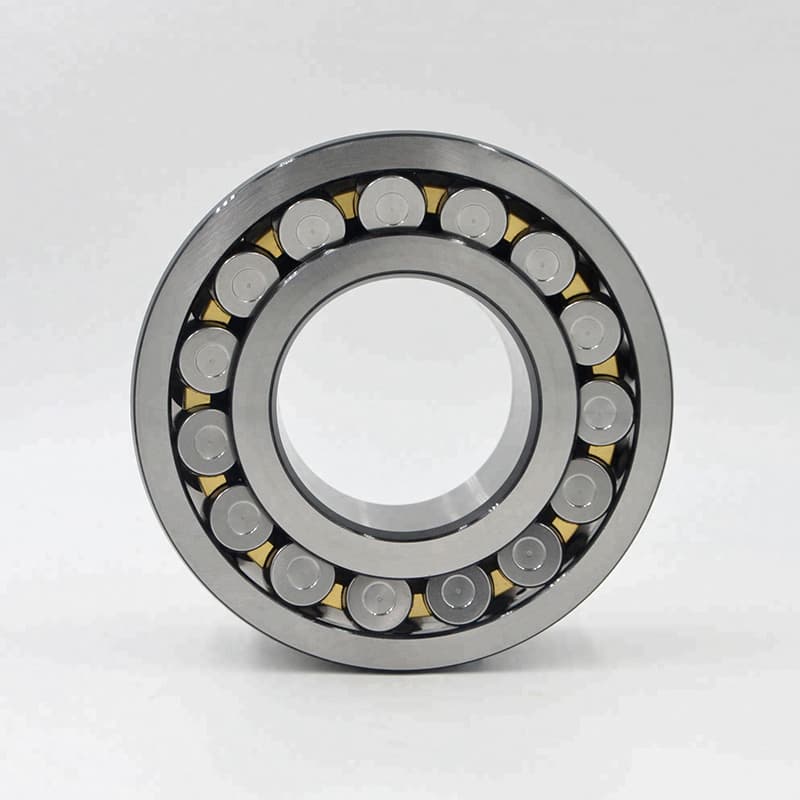
Cage Materials3 – Matching the Application
I once visited a steel mill in Brazil where bearings kept failing every three months. The problem was stamped steel cages that couldn’t handle the high temperature. Switching to machined brass cages extended life to over two years.
| Application | Recommended Cage | Why |
|---|---|---|
| High speed, continuous | Machined brass | Low friction, heat dissipation |
| Moderate speed, dirty | Stamped steel | Robust, cost-effective |
| Clean, food grade | Polyamide | No rust, quiet |
| Vibration, shock | Machined brass or special steel | Strength |
Internal Clearance1 – The Temperature Effect
When a bearing runs, the inner ring gets hotter than the outer ring. It expands more, reducing internal clearance. If you start with C0 (normal) clearance, the bearing may become preloaded and overheat. For continuous operation above 80°C, C3 is the minimum. Above 120°C, go to C4.
But clearance also depends on fit. If you press the inner ring onto a solid shaft, it expands. That expansion takes away some of the internal clearance. We always calculate: Operating clearance = Initial clearance – Interference loss – Thermal loss.
Real Example of Clearance Failure
A cement plant in Egypt used C3 bearings4 in a kiln. The bearings ran hot and seized after six months. We measured and found the shaft temperature was 150°C, and the housing was 80°C. The differential expansion ate up all C3 clearance. We supplied C4 bearings, and the problem disappeared.
What Sealing Solutions and Lubrication Strategies Ensure Long-Term Reliability?
Dust and moisture are the number one killers of bearings. Without reliable seals and lubrication1, even the best bearing will fail quickly.
Seals keep contaminants out. Lubrication reduces friction and carries away heat. Choosing the right seal type (contact, non-contact, labyrinth) and lubricant (grease or oil) depends on the environment, speed, and temperature.
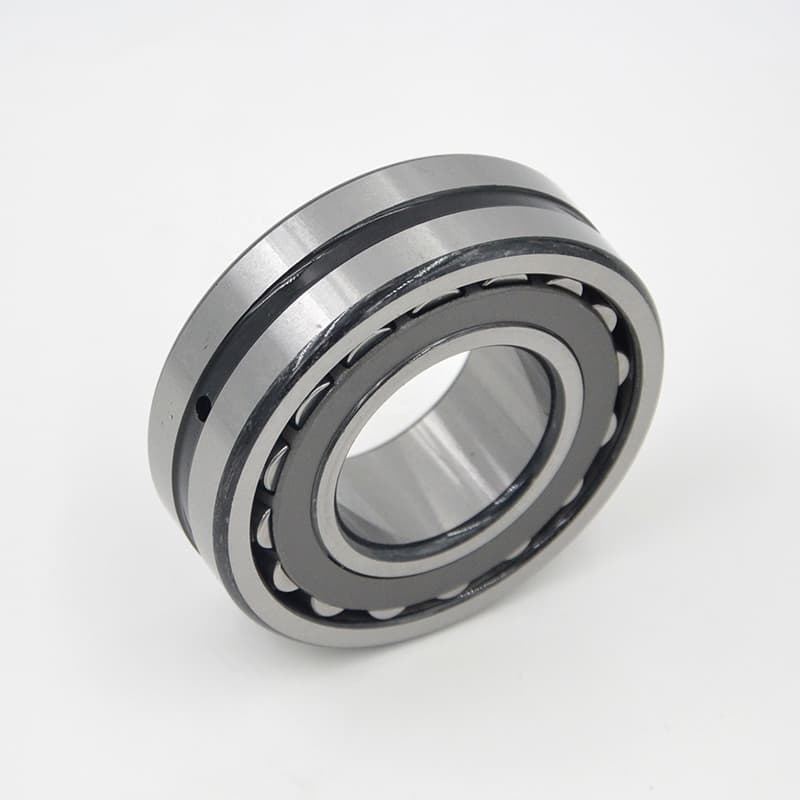
Seal Types – Balancing Protection and Friction
Contact seals2 (like rubber lip) touch the inner ring. They keep out fine dust and moisture very well. But they create friction, which generates heat and limits speed. Non-contact seals (like metal shields) have a tiny gap. They let some contaminants pass but run cooler.
| Seal Type | Protection Level | Speed Limit | Best Use |
|---|---|---|---|
| Contact (2RS) | Excellent | Moderate | Dirty, moist, moderate speed |
| Non-contact (ZZ) | Good | High | Clean, high speed |
| Labyrinth | Very good | High | Heavy contamination, large bearings |
In continuous high-load lines, we often suggest contact seals if speed is low to moderate. For high speed, we use non-contact seals plus external bearing housing seals.
Grease Selection – Viscosity and Additives
The base oil viscosity must be high enough to form an oil film under load. For most industrial applications, we recommend ISO VG 150 or 220. The thickener (lithium, calcium, polyurea) affects operating temperature and water resistance.
Lithium complex grease is our standard for continuous duty. It works from -20°C to +130°C and resists water washout. For higher temperatures, we use polyurea or special high-temp greases.
Relubrication Intervals and Quantities
Even sealed bearings need fresh grease after a certain time. The interval depends on the speed factor (n*dm). A rule of thumb: relubricate every 500 to 2000 hours for continuous operation. Use about 30% of the bearing’s free space each time. Over-greasing causes heat buildup.
Oil Lubrication for Extreme Conditions
When speeds are very high or temperatures exceed 150°C, grease breaks down. Oil lubrication (oil bath, circulating oil, or oil mist) becomes necessary. Oil carries heat away better. But it requires a more complex system and constant monitoring.
Conclusion
Choosing the right spherical roller bearing for continuous high-load lines means looking at load, fatigue, cage, clearance, seals, and lubrication as a complete system. Get any one wrong, and you face downtime. When in doubt, ask a specialist like us at FYTZ.
-
Explore this link to understand how proper sealing and lubrication can enhance bearing longevity and performance. ↩ ↩ ↩ ↩ ↩
-
Learn about Contact seals and their benefits in protecting bearings from contaminants while managing friction. ↩ ↩ ↩ ↩
-
Explore this link to understand how different cage materials can significantly impact bearing performance and longevity. ↩ ↩ ↩
-
Find out when to use C3 bearings and how they compare to other clearance classes for various applications. ↩ ↩
-
Discover how different seal types can protect bearings from contaminants and enhance their lifespan. ↩
-
Proper lubrication is key to bearing longevity; learn about effective methods to maintain performance. ↩