
You’ve found a new supplier for spherical roller bearings. The price is attractive. The samples have arrived. Now comes the critical part: determining if they’re worth ordering in bulk. A quick visual check isn’t enough.
To evaluate sample spherical roller bearings from new suppliers: 1) Inspect dimensions (bore, OD, width) against specifications using calibrated tools. 2) Measure internal clearance (C3, C4) with feeler gauges or a dial indicator. 3) Check rotational smoothness by hand—any roughness indicates problems. 4) Examine raceways and rollers for surface finish, rust, or damage. 5) Verify cage type and quality (pressed steel, machined brass). 6) Review material certificates and test reports. 7) Perform a hardness test if possible. 8) Compare to known good samples from trusted sources.
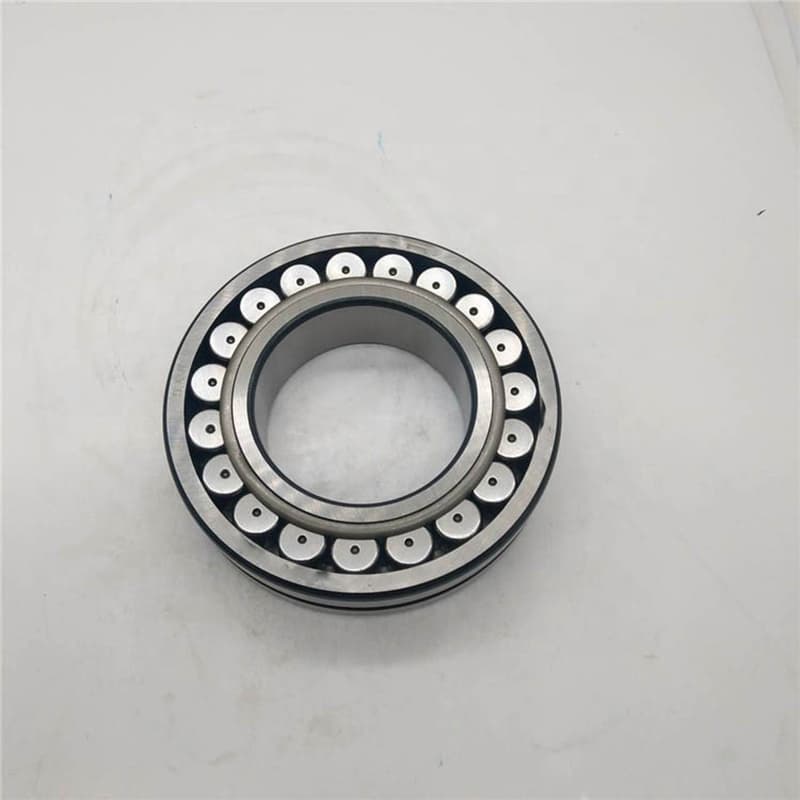
In my years of manufacturing bearings, I’ve seen both excellent and poor samples cross my desk. For a distributor like Rajesh in India, knowing how to evaluate samples protects his reputation and his customers. Let’s explore what spherical rollers are, their benefits, how they differ from cylindrical rollers, and how they work—all essential knowledge for sample evaluation.
What is a spherical roller1?
You’re evaluating a spherical roller1 bearing sample. The roller itself has a unique shape. Understanding that shape helps you assess quality.
A spherical roller1 is a barrel-shaped rolling element used in spherical roller1 bearings. It has a larger diameter in the middle and smaller diameters at the ends, creating a spherical (curved) profile. This shape allows the roller to align itself within the spherical raceway of the outer ring, accommodating misalignment. The rollers are typically symmetric or asymmetric, with the asymmetric design allowing for more and longer rollers, increasing load capacity. High-quality rollers have precise geometry, excellent surface finish, and consistent size within the bearing.
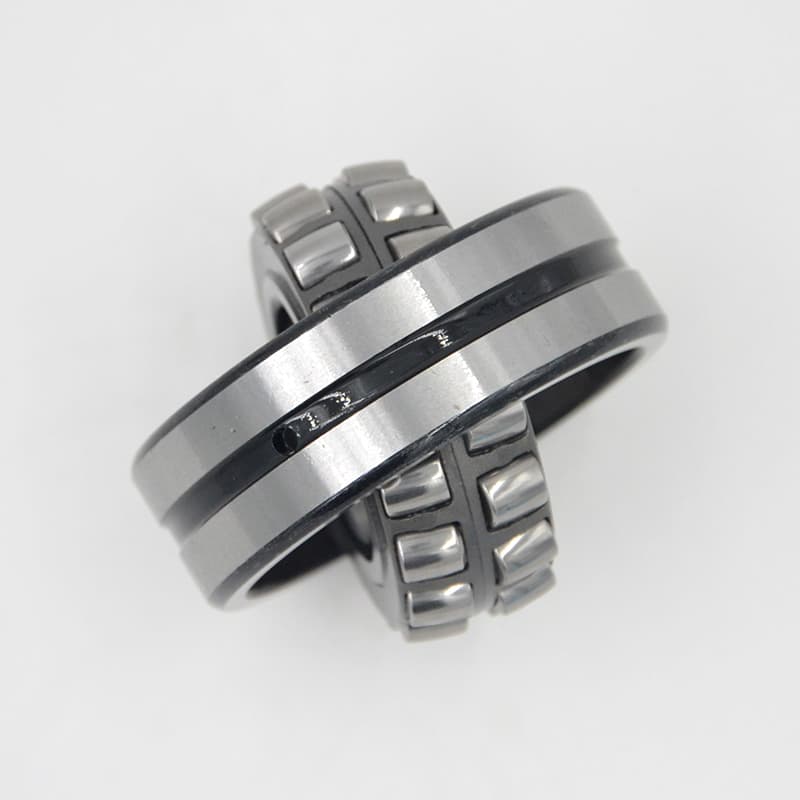
The roller is the heart of the bearing. Let’s examine it in detail.
The Anatomy and Quality Indicators of Spherical Rollers
| 1. Roller Geometry: | Feature | Description | Quality Indicator |
|---|---|---|---|
| Barrel shape | Larger diameter in middle, tapered ends | Profile should be smooth and consistent | |
| Spherical profile | Matches outer ring raceway curvature | Precision ground to exact radius | |
| End shape | Flat or slightly crowned ends | Smooth, no sharp edges | |
| Length | Determines load capacity | Consistent across all rollers |
| 2. Roller Types: | Type | Characteristics | Application |
|---|---|---|---|
| Symmetric | Both ends identical | Standard designs, good all-around | |
| Asymmetric | One end different profile | Higher load capacity, better guidance | |
| Crowned | Slight curve along length | Prevents edge loading under misalignment |
| 3. Critical Quality Parameters: | Parameter | What to Check | Acceptable Quality |
|---|---|---|---|
| Diameter variation | All rollers should be same size | Within microns | |
| Surface finish | Smooth, mirror-like | No visible grinding marks | |
| Roundness | Perfectly round cross-section | No flats or out-of-round | |
| Edge condition | Roller ends | Smooth, no burrs or cracks | |
| Material | High-carbon chromium steel | Consistent color, no inclusions |
| 4. Manufacturing Process Impact: | Process Step | Effect on Quality | What Sample Shows |
|---|---|---|---|
| Cold heading | Forms rough shape | N/A (not visible) | |
| Heat treatment | Achieves hardness | Consistent color, no soft spots | |
| Grinding | Achieves final geometry | Smooth surface, precise dimensions | |
| Honing | Superfine finish | Mirror-like appearance | |
| Inspection | Sorts by size | Consistent rollers in bearing |
| 5. What to Look For in Samples: | Visual Check | Good | Bad |
|---|---|---|---|
| Color | Uniform silver-gray | Discoloration (overheating) | |
| Surface | Smooth, reflective | Dull, rough, grinding marks | |
| Edges | Clean, slightly rounded | Sharp, burred, chipped | |
| Consistency | All rollers identical | Visible size differences |
| 6. Functional Check: | Test | What It Reveals |
|---|---|---|
| Roll by hand on flat surface | Should roll smoothly, no wobble | |
| Compare to known good roller | Visual and tactile comparison | |
| Check within bearing | Should move freely, no binding |
My Insight on Roller Quality:
In our factory, we inspect rollers before assembly. A single bad roller can ruin an entire bearing. When evaluating samples, I always look at the rollers first. Their quality tells me about the manufacturer’s attention to detail. If the rollers have inconsistent size or poor finish, the rest of the bearing won’t matter—it will fail early. For a distributor like Rajesh, checking rollers in a sample is a quick way to assess overall quality. Good rollers mean good bearings.
What are the benefits of spherical roller bearings?
Why choose spherical roller bearings for demanding applications? Understanding their benefits helps you evaluate whether a sample meets expectations.
The main benefits of spherical roller bearings are: high radial load capacity1 (line contact distributes load), ability to accommodate misalignment2 (self-aligning feature3), moderate axial load capacity4 in both directions, robust construction5 for heavy-duty applications, shock load resistance6 (especially with brass cages), long service life7 in harsh conditions, and versatility8 across many industries. These benefits make them ideal for applications where loads are heavy, shafts may deflect, and reliability is critical.
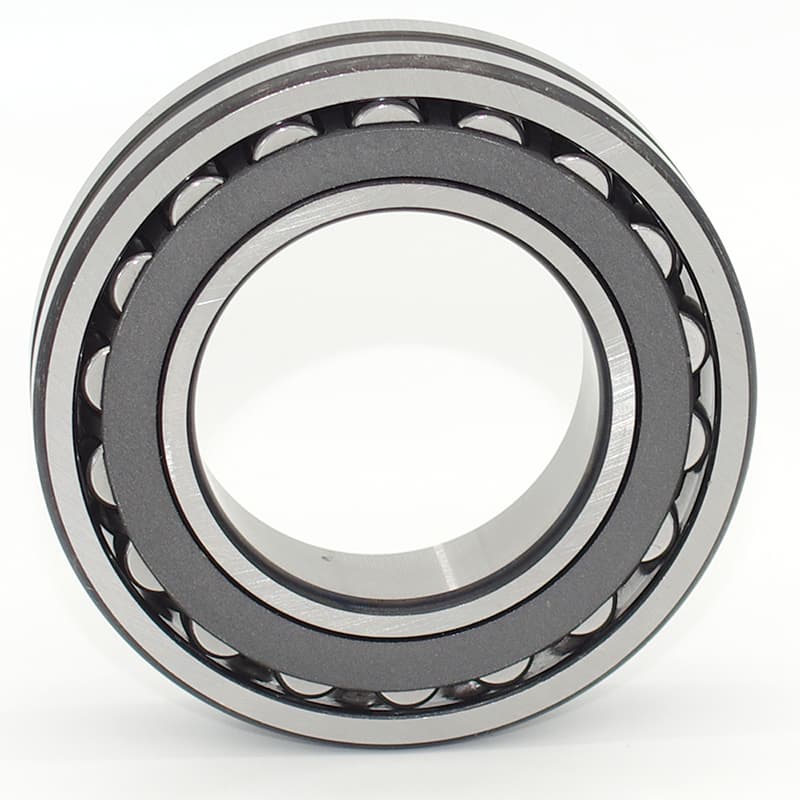
Let’s examine each benefit in detail.
How Each Benefit Translates to Performance
| 1. High Radial Load Capacity: | Feature | How It Works | Benefit |
|---|---|---|---|
| Line contact | Rollers contact raceways along a line, not a point | Distributes load over larger area | |
| Large rollers | More material to carry load | Higher capacity than ball bearings | |
| Multiple rows | Double-row design standard | Even higher capacity |
| 2. Misalignment Accommodation: | Feature | How It Works | Benefit |
|---|---|---|---|
| Spherical outer ring raceway | Raceway is part of a sphere | Bearing can tilt relative to housing | |
| Barrel-shaped rollers | Match the spherical raceway | Maintain contact even when misaligned | |
| Typical tolerance | Up to 2-3 degrees | Compensates for shaft deflection, mounting errors |
| 3. Axial Load Capacity: | Feature | How It Works | Benefit |
|---|---|---|---|
| Guided rollers | Rollers contact raceway shoulders | Can carry axial loads in both directions | |
| Load sharing | Some rollers carry axial, some radial | Handles combined loads | |
| Capacity | Moderate (less than tapered roller) | Adequate for most applications |
| 4. Robust Construction: | Feature | How It Works | Benefit |
|---|---|---|---|
| Heavy-duty cages | Pressed steel or machined brass | Withstand shock, vibration | |
| Case-hardened steel | Hard surface, tough core | Resists wear, absorbs impact | |
| Thick sections | More material in rings | Higher strength |
| 5. Shock Load Resistance: | Feature | How It Works | Benefit |
|---|---|---|---|
| Line contact | Spreads impact force | Less denting than ball bearings | |
| Brass cages | Ductile, absorb energy | Cage survives impacts | |
| Internal clearance | C3, C4 provide space | Accommodates momentary deformation |
| 6. Long Service Life: | Feature | How It Works | Benefit |
|---|---|---|---|
| Optimized internal geometry | Even load distribution | Prevents premature fatigue | |
| Quality materials | Clean steel, proper heat treatment | Longer fatigue life | |
| Effective sealing | Keeps contaminants out | Reduces wear |
| 7. Versatility: | Feature | How It Works | Benefit |
|---|---|---|---|
| Wide size range | 20mm to over 1000mm bore | One type for many applications | |
| Multiple series | 222, 223, 230, 231, 232 | Match capacity to need | |
| Variants available | C3, C4 clearance, brass cages, special seals | Customize for application |
Benefit Summary Table:
| Benefit | Application Example | Why It Matters |
|---|---|---|
| High radial load | Conveyor pulleys | Handles belt tension |
| Misalignment | Long shafts, vibrating screens | Prevents edge loading |
| Axial capacity | Helical gearboxes | Handles thrust |
| Robustness | Crushers, mills | Survives harsh conditions |
| Shock resistance | Mining equipment | Withstands impacts |
| Long life | Continuous process plants | Minimizes downtime |
| Versatility | Multiple industries | Reduces inventory complexity |
My Insight on Benefits:
When evaluating a sample, I check if it delivers these benefits. Does it rotate smoothly when misaligned? Does it feel solid? Is the cage robust? A good spherical roller bearing should excel in all these areas. For a distributor like Rajesh, understanding these benefits helps him explain to customers why spherical roller bearings are worth the investment—especially in demanding applications where other bearings fail.
What is the difference between spherical and cylindrical roller bearings?
You’re evaluating samples. Both spherical and cylindrical roller bearings are in your catalog. How do they differ? Understanding this helps you select the right type for each application.
The main difference between spherical and cylindrical roller bearings is load capability and misalignment tolerance1e](https://sdycbearing.com/2026/01/29/can-engineered-tapered-roller-bearings-conquer-your-most-challenging-environments/)[^2]. Cylindrical roller bearings3 have very high radial load capacity4 but cannot handle axial loads (except special designs) and cannot accommodate misalignment. Spherical roller bearings5 have high radial load capacity4, can handle moderate axial loads in both directions, and can accommodate significant misalignment (up to 2-3 degrees). Cylindrical bearings are simpler and have lower friction, while spherical bearings are more versatile and forgiving.
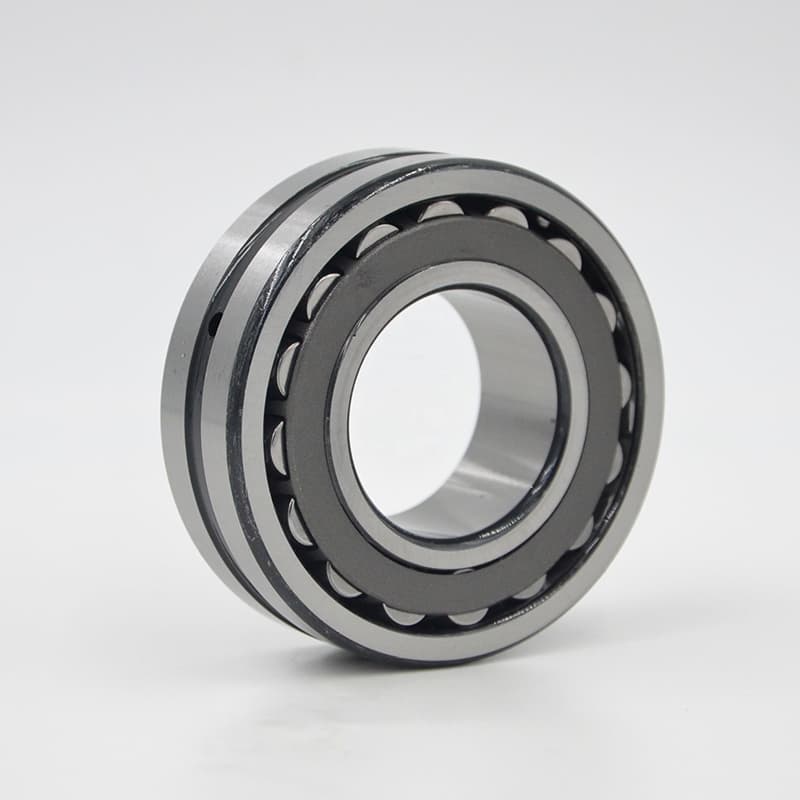
Let’s compare them in detail.
Detailed Comparison: Spherical vs. Cylindrical Roller Bearings
| 1. Load Capability: | Load Type | Spherical Roller | Cylindrical Roller |
|---|---|---|---|
| Radial loads | Excellent | Excellent (highest per size) | |
| Axial loads | Moderate (both directions) | None (or very limited with flanged designs) | |
| Combined loads | Good | Not suitable |
| 2. Misalignment Tolerance: | Aspect | Spherical Roller | Cylindrical Roller |
|---|---|---|---|
| Self-aligning | Yes (up to 2-3°) | No | |
| Effect of misalignment | Accommodated, load distributed | Edge loading, premature failure | |
| Shaft deflection | Can tolerate | Cannot tolerate |
| 3. Speed Capability: | Aspect | Spherical Roller | Cylindrical Roller |
|---|---|---|---|
| Friction | Moderate (rolling + sliding) | Low (pure rolling) | |
| Speed limit | Moderate | Higher | |
| Heat generation | Moderate | Lower |
| 4. Internal Design: | Feature | Spherical Roller | Cylindrical Roller |
|---|---|---|---|
| Roller shape | Barrel-shaped (spherical) | Straight cylinder | |
| Raceway shape | Spherical on outer ring | Flat or slightly profiled | |
| Cage | Pressed steel or machined brass | Pressed steel or machined brass | |
| Rows | Usually double-row | Single or double-row |
| 5. Applications: | Application | Spherical Roller | Cylindrical Roller |
|---|---|---|---|
| Conveyor pulleys | Yes (handles misalignment) | Yes (if alignment good) | |
| Gearboxes | Yes (handles axial loads) | For radial-only positions | |
| Electric motors | Large motors only | Common for medium/large motors | |
| Vibrating screens | Yes (C4 clearance, brass cage) | No | |
| Paper machines | Yes (high temp, misalignment) | Limited | |
| Machine tools | Limited | Yes (high speed, radial) |
| 6. Selection Guide: | If your application requires… | Choose… |
|---|---|---|
| High radial load, no axial, good alignment | Cylindrical roller | |
| High radial load, some axial, possible misalignment | Spherical roller | |
| Pure radial, high speed | Cylindrical roller | |
| Combined loads, shaft deflection | Spherical roller | |
| Lowest friction, energy efficiency | Cylindrical roller | |
| Forgiveness of mounting errors | Spherical roller |
| 7. Sample Evaluation Differences: | What to Check | Spherical Roller Sample | Cylindrical Roller Sample |
|---|---|---|---|
| Roller shape | Barrel-shaped | Straight cylinder | |
| Outer ring raceway | Spherical (curved) | Flat or slightly profiled | |
| Axial movement | Some axial play normal | Minimal axial movement | |
| Misalignment test | Should rotate smoothly when tilted | Will bind if tilted |
My Insight on the Difference:
When a customer asks for a bearing recommendation, the first question is often: "Is there any axial load or misalignment?" If yes, spherical is usually the answer. If no, cylindrical may be better. For a distributor like Rajesh, understanding this difference helps him guide customers to the right product. When evaluating samples, checking for misalignment tolerance2 is a quick way to confirm the bearing type. A spherical bearing should rotate smoothly even when you tilt it slightly. A cylindrical bearing will bind.
How do spherical roller bearings work?
You have a sample in your hand. How does it actually function? Understanding the working principle helps you evaluate whether the sample will perform as expected.
Spherical roller bearings work by using barrel-shaped rollers1 that roll between a spherical raceway on the outer ring2 and a profiled raceway on the inner ring3. The spherical outer raceway allows the bearing to self-align4, accommodating shaft deflection or housing misalignment. The rollers are guided by a cage that maintains even spacing. Under load, the rollers make line contact with the raceways, distributing forces over a larger area than ball bearings. This design enables high radial load capacity, moderate axial load capacity, and misalignment tolerance.
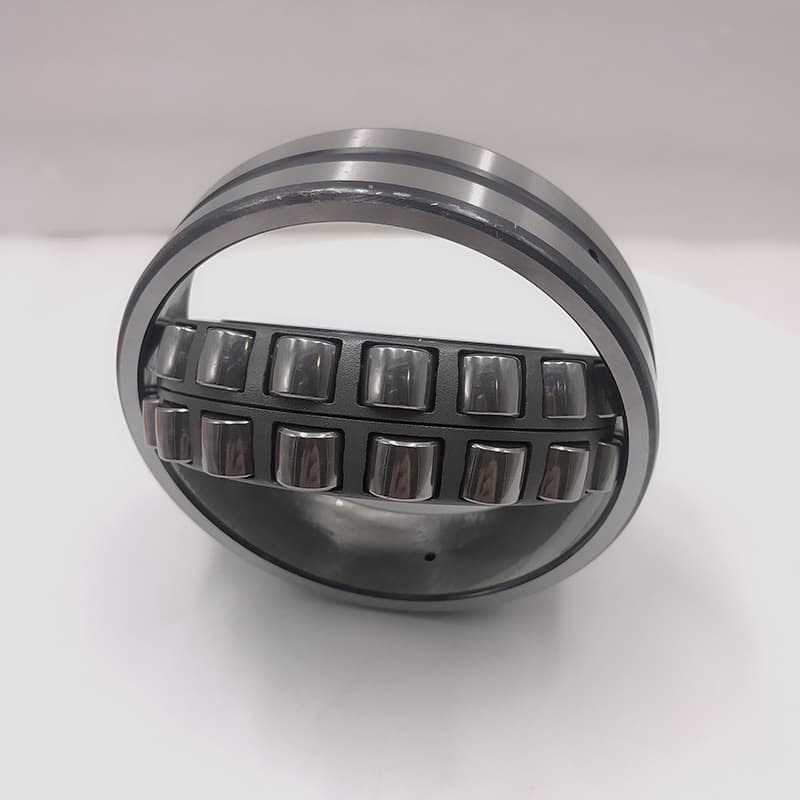
Let’s break down the working principle step by step.
The Working Principle Explained
| 1. Basic Components: | Component | Role | How It Works |
|---|---|---|---|
| Inner ring | Mounts on shaft | Has two raceways (double-row design) | |
| Outer ring | Mounts in housing | Has one spherical raceway | |
| Rollers | Carry load | Barrel-shaped, roll between rings | |
| Cage | Guides rollers | Maintains spacing, prevents contact |
| 2. Load Transmission: | Load Type | Path Through Bearing |
|---|---|---|
| Radial load | Inner ring → rollers → outer ring → housing | |
| Axial load | Inner ring shoulder → roller ends → outer ring shoulder → housing | |
| Combined load | Distributed through rollers to both rings |
| 3. Self-Alignment Mechanism: | Step | What Happens |
|---|---|---|
| 1. Misalignment occurs | Shaft tilts relative to housing | |
| 2. Inner ring tilts | Follows shaft angle | |
| 3. Rollers adjust | Barrel shape maintains contact with spherical outer raceway | |
| 4. Outer ring stays fixed | Spherical raceway accommodates angle | |
| 5. Load distributes evenly | No edge loading |
| 4. Roller Motion: | Motion Type | Description |
|---|---|---|
| Rolling | Rollers rotate between raceways | |
| Sliding (minimal) | Roller ends may contact guide flanges | |
| Spinning | Rollers may rotate slightly about their own axis |
| 5. Internal Clearance Function: | Clearance | Purpose |
|---|---|---|
| Radial internal clearance | Space between rollers and raceways | |
| Allows for thermal expansion | Prevents preload when hot | |
| Accommodates interference fits | Inner ring stretched on shaft | |
| Provides lubricant space | Oil or grease film |
| 6. Lubrication Flow: | Lubrication Path | Function |
|---|---|---|
| Between rollers and raceways | Separates surfaces, reduces friction | |
| Between roller ends and flanges | Lubricates sliding contact | |
| Through cage pockets | Distributes lubricant | |
| W33 feature | Groove and holes for oil flow |
| 7. What Good Operation Looks Like: | Operating Condition | Indication |
|---|---|---|
| Smooth rotation | No catching, grinding, or roughness | |
| Quiet operation | Low noise, no clicking | |
| Normal temperature | Warm but not hot | |
| Minimal vibration | Smooth running |
| 8. What Sample Testing Reveals: | Test | What It Should Show |
|---|---|---|
| Hand rotation | Smooth, even resistance | |
| Axial movement | Small, consistent end play | |
| Tilt test | Rotates smoothly when misaligned | |
| Visual inspection | Clean, well-finished surfaces |
My Insight on How They Work:
When I explain spherical roller bearings to customers, I use a simple analogy: imagine a ball in a socket joint. That’s the outer ring’s spherical raceway. Now imagine that ball has rollers inside. That’s the bearing. The spherical outer ring lets the whole assembly tilt, while the rollers carry the load. In a good sample, this should feel smooth and precise. Any roughness when tilting suggests poor geometry. Understanding how they work helps you evaluate whether a sample will perform in real applications.
Conclusion
Evaluating sample spherical roller bearings from new suppliers requires a systematic approach: check dimensions, clearance, rotational smoothness, surface finish, cage quality, and documentation. Understanding what spherical rollers are, their benefits, how they differ from cylindrical bearings, and how they work enables you to assess quality effectively. A thorough evaluation now prevents costly problems later.
-
Explore this link to understand the unique design of barrel-shaped rollers and their role in enhancing bearing performance. ↩ ↩ ↩ ↩ ↩ ↩ ↩
-
Learn about the spherical raceway’s function and how it contributes to self-alignment in bearings. ↩ ↩ ↩
-
Discover the significance of the profiled raceway in load distribution and bearing efficiency. ↩ ↩ ↩
-
Find out how self-alignment works in spherical roller bearings and its importance in various applications. ↩ ↩ ↩ ↩
-
Discover how spherical roller bearings can enhance performance in various applications. ↩ ↩
-
Discover how this resistance improves performance in demanding environments. ↩
-
Find out how to maximize bearing lifespan and reduce maintenance costs. ↩
-
Understand the wide range of applications and benefits of versatility. ↩