A power plant runs 24/7. Fans move massive volumes of air. Blowers maintain pressure. Coal pulverizers grind fuel into fine dust. When a bearing fails in any of these applications, the consequences ripple through the entire plant. Reliability is not optional—it’s essential.
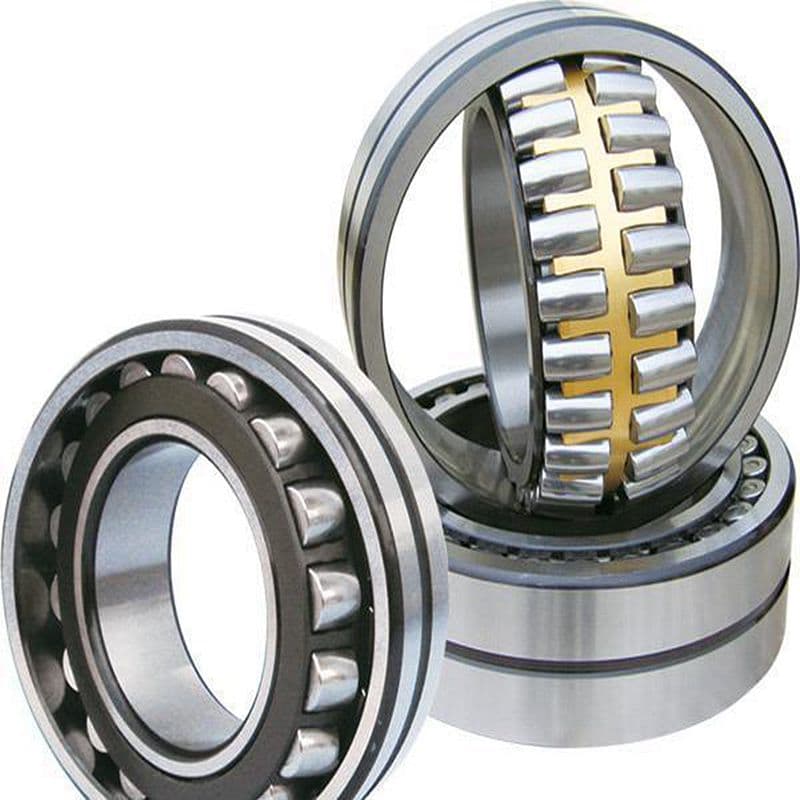
Spherical roller bearings are ideal for power plant fans, blowers, and coal pulverizers because they handle heavy radial loads, accommodate misalignment (common in large rotating equipment), and resist shock loads from uneven operation. They are used in induced draft fans, forced draft fans, primary air fans, and pulverizer journals. Key considerations include: high load ratings for continuous operation, C3 or C4 clearance for thermal expansion, brass cages for shock resistance, and effective seals to keep coal dust out.
In my years of supplying bearings to power plants worldwide, I’ve seen how the right bearing choice extends maintenance intervals and prevents unplanned outages. For a distributor like Rajesh in India, serving the power sector means understanding these specialized applications. Let’s explore which bearings are used in fans, what a 6203 bearing is, the difference between C3 and C4 clearance, and which bearings are common in electric motors and fans.
Which bearing is used in fans?
Fans are everywhere in power plants. But different fans have different bearing requirements. Which bearings do you need for each application?
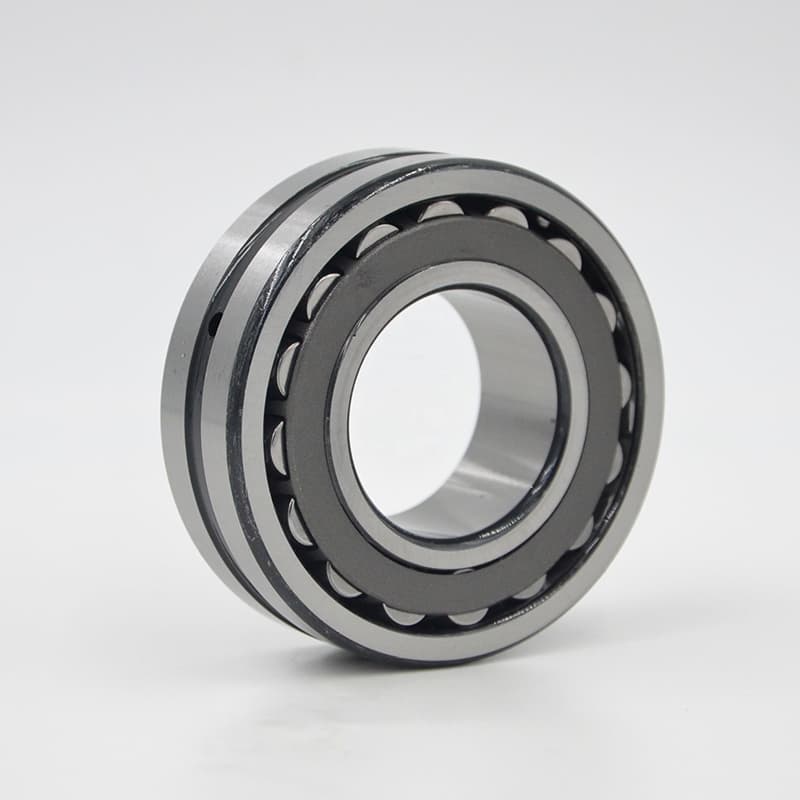
In power plant fans, the bearing type depends on the fan size and duty. Spherical roller bearings1 are commonly used in large industrial fans (induced draft, forced draft, primary air) due to their high load capacity and ability to accommodate misalignment. Deep groove ball bearings2 are used in smaller fans and blowers with moderate loads. Cylindrical roller bearings3 may be used where radial loads are very high and axial loads are minimal. For high-temperature applications4, bearings with C3 or C4 clearance and special greases are specified.
Let’s break down fan types and their bearing needs.
Fan Types and Bearing Requirements in Power Plants
| 1. Induced Draft (ID) Fans: | Characteristic | Requirement | Bearing Solution |
|---|---|---|---|
| Function | Pull hot flue gas through boiler | Must handle high temperatures | |
| Load | Heavy radial from large rotor | Spherical roller bearings1 | |
| Temperature | High (up to 200°C) | C4 clearance, high-temperature grease | |
| Contamination | Fly ash present | Effective seals, possibly purging systems | |
| Recommended bearing | Spherical roller, 223 series, brass cage, C4 clearance |
| 2. Forced Draft (FD) Fans: | Characteristic | Requirement | Bearing Solution |
|---|---|---|---|
| Function | Push air into boiler | Cleaner air than ID fans | |
| Load | Heavy radial | Spherical roller or cylindrical roller | |
| Temperature | Moderate (ambient to 80°C) | C3 clearance5 | |
| Speed | Moderate to high | Precision grades for balance | |
| Recommended bearing | Spherical roller or cylindrical roller, C3 clearance5 |
| 3. Primary Air (PA) Fans: | Characteristic | Requirement | Bearing Solution |
|---|---|---|---|
| Function | Transport coal to pulverizers | Air may contain coal dust | |
| Load | Moderate to heavy | Spherical roller bearings1 | |
| Contamination | Coal dust hazard | Effective seals, purging | |
| Recommended bearing | Spherical roller with contact seals, C3 clearance5 |
| 4. Cooling Tower Fans: | Characteristic | Requirement | Bearing Solution |
|---|---|---|---|
| Function | Cool circulating water | Humid, wet environment | |
| Load | Moderate | Deep groove ball or spherical roller | |
| Environment | Wet, potential for corrosion | Stainless steel or coated housings | |
| Recommended bearing | Deep groove ball or spherical roller with corrosion protection6 |
| 5. Small Fans and Blowers: | Characteristic | Requirement | Bearing Solution |
|---|---|---|---|
| Function | Auxiliary cooling, ventilation | Light duty | |
| Load | Light to moderate | Deep groove ball bearings2 | |
| Speed | High | Standard ball bearings | |
| Recommended bearing | Deep groove ball, 62xx or 63xx series, C3 for high temp |
6. Bearing Selection Summary for Power Plant Fans:
| Fan Type | Primary Bearing | Secondary Option | Key Considerations |
|---|---|---|---|
| ID Fans | Spherical roller, C4, brass cage | Spherical roller with special clearance | High temperature, fly ash |
| FD Fans | Spherical roller, C3 | Cylindrical roller | Clean air, heavy loads |
| PA Fans | Spherical roller, C3 | Spherical with contact seals | Coal dust protection |
| Cooling Tower | Spherical or deep groove | Stainless steel options | Wet environment |
| Small Blowers | Deep groove ball | – | Standard industrial |
My Insight on Fan Bearings:
When a power plant customer asks for fan bearings, the first question is: "What kind of fan?" ID fans are the most demanding—high temperature, fly ash contamination, heavy loads. For these, we always recommend spherical roller bearings with C4 clearance and brass cages. For FD fans, standard spherical roller with C3 is usually sufficient. Understanding the fan type ensures the bearing matches the application. For a distributor like Rajesh, asking this one question positions him as a knowledgeable partner, not just a parts seller.
What is a 6203 bearing used for?
You see "6203" in bearing catalogs. It’s a common size. But where is it used in power plants? Understanding this helps you stock the right bearings for maintenance needs.
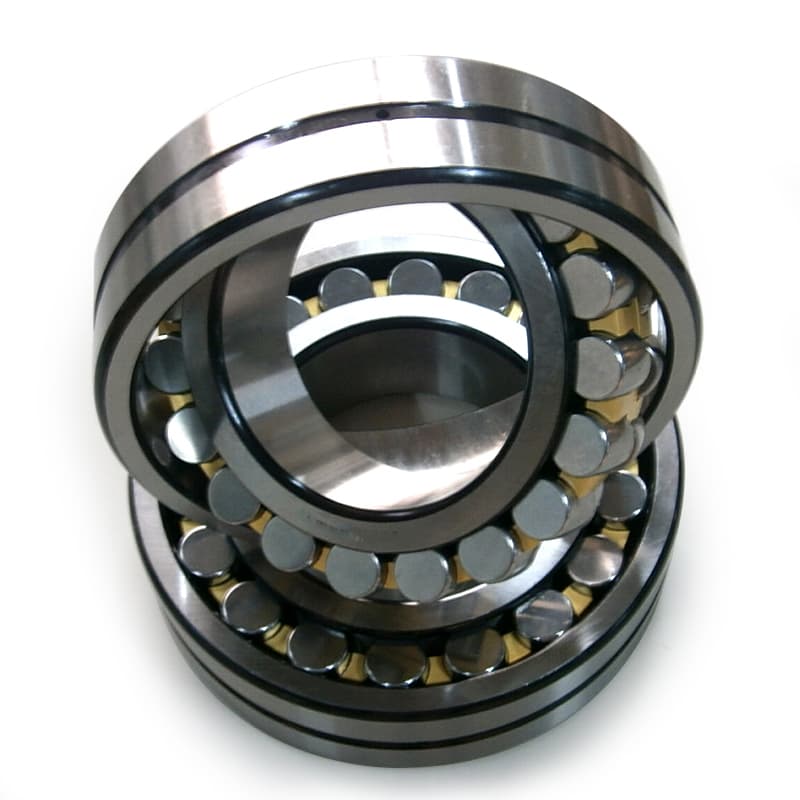
A 6203 bearing is a deep groove ball bearing with a 17mm bore, 40mm outside diameter, and 12mm width. In power plants, it is commonly used in small auxiliary equipment1: cooling fans, instrument air blowers2, small pumps, motorized valves3, actuator drives, and control mechanisms. It is also used in workshop equipment and maintenance tools4. While not used in main power generation equipment, 6203 bearings are essential for the countless small rotating machines that keep a plant running.
Let’s explore where you’ll find them.
6203 Bearing Applications in Power Plants
| 1. Auxiliary Cooling Fans: | Application | Details |
|---|---|---|
| Location | Small fans cooling electronics, motors, control panels | |
| Why 6203 | Compact size, high speed capability | |
| Typical variant | 6203 2RS (sealed) for protection |
| 2. Instrument Air Blowers: | Application | Details |
|---|---|---|
| Location | Small compressors for instrument air systems | |
| Why 6203 | Handles moderate loads at high speed | |
| Typical variant | 6203 C3 for temperature rise |
| 3. Small Pumps: | Application | Details |
|---|---|---|
| Location | Lubrication pumps, cooling water circulation | |
| Why 6203 | Reliable, readily available | |
| Typical variant | 6203 2RS for fluid protection |
| 4. Motorized Valves and Actuators: | Application | Details |
|---|---|---|
| Location | Valve operators throughout plant | |
| Why 6203 | Compact, handles intermittent duty | |
| Typical variant | 6203 ZZ for low friction |
| 5. Control Mechanisms: | Application | Details |
|---|---|---|
| Location | Dampers, linkages, positioners | |
| Why 6203 | Smooth operation, low friction | |
| Typical variant | 6203 with special grease for application |
| 6. Workshop and Maintenance Equipment: | Application | Details |
|---|---|---|
| Location | Grinders, drills, small machine tools | |
| Why 6203 | Standard size for many tools | |
| Typical variant | Varies by application |
| 7. 6203 Variants for Power Plant Use: | Variant | Application | Why |
|---|---|---|---|
| 6203 2RS | Wet or dusty areas | Rubber seals protect bearing | |
| 6203 2Z | Clean, dry areas | Metal shields, lower friction | |
| 6203 C3 | Motors with temperature rise | Extra clearance prevents preload | |
| 6203 P6 | Precision applications | Tighter tolerances for smoother running |
| 8. Why Stock 6203 Bearings: | Reason | Benefit |
|---|---|---|
| High volume | Many small machines use this size | |
| Common failures | Small bearings fail more often | |
| Quick turnover | Maintenance teams need them fast | |
| Good margin | Small bearings have good profit potential |
My Insight on 6203 Bearings:
When I visit power plants, I see 6203 bearings everywhere—in control panels, small pumps, cooling fans. They’re not glamorous, but they’re essential. For a distributor like Rajesh, stocking 6203 bearings in various configurations (2RS, C3, etc.) means he can supply maintenance teams with exactly what they need. A plant might order 50 pieces at a time for preventive maintenance. It’s steady, predictable business. Never underestimate the humble 6203—it’s the workhorse of auxiliary equipment.
Which bearing is better, C31 or C42?
You’re selecting spherical roller bearings3 for power plant fans. The specification calls for C31 or C42 clearance. Which is better? The answer depends on operating conditions.
There is no universal "better" between C31 and C42. C31 is better for most general applications with moderate temperature rises (up to 100-120°C operating temperature4). C42 is better for high-temperature applications (above 120°C), severe interference fits5, or where significant thermal expansion6 is expected. In power plants, ID fans handling hot flue gas typically require C42, while FD fans with ambient air can use C31. Using C42 when C31 is needed can cause excessive internal movement. Using C31 when C42 is needed can cause thermal seizure.
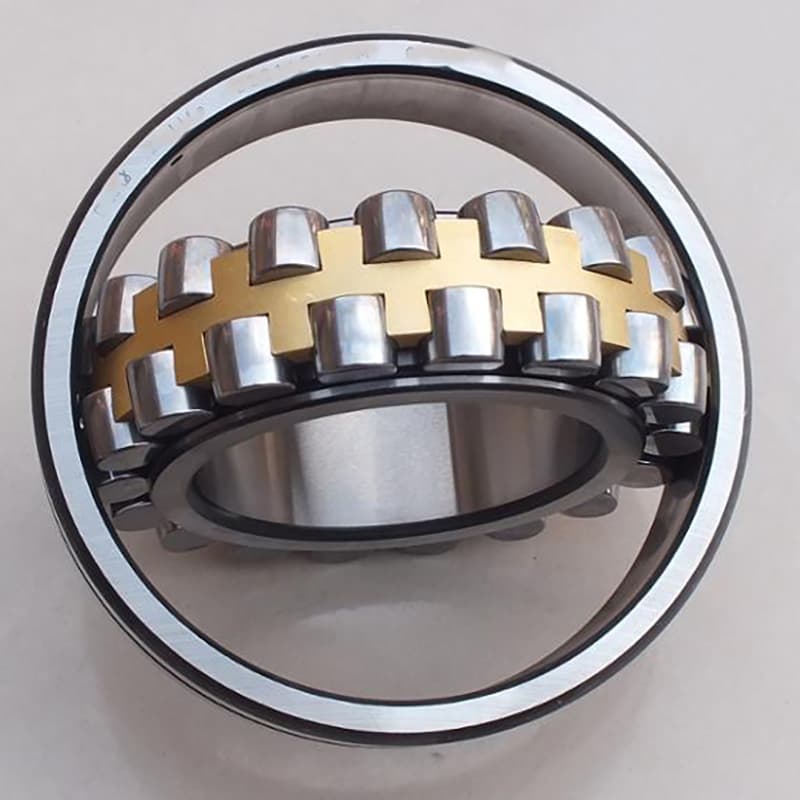
The choice is dictated by the application, not by one being inherently superior.
Detailed Comparison: C31 vs. C42 for Power Plant Applications
| 1. Quantitative Difference: For a typical 120mm bore spherical roller bearing: |
Clearance | Radial Internal Clearance Range |
|---|---|---|
| C31 | 0.100mm to 0.160mm | |
| C42 | 0.160mm to 0.220mm |
C42 provides about 50-60% more internal space than C31.
| 2. When to Choose C31 in Power Plants: | Application | Why C31 is Suitable |
|---|---|---|
| FD Fans (ambient air) | Normal operating temperature4 (50-80°C) | |
| Forced Draft Fans | Moderate thermal expansion6 | |
| PA Fans (moderate temp) | Coal dust present but temperature moderate | |
| Cooling Tower Fans | Ambient temperatures | |
| Motor bearings (general) | Standard temperature rise |
| 3. When to Choose C42 in Power Plants: | Application | Why C42 is Necessary |
|---|---|---|
| ID Fans (hot flue gas) | Operating temperature up to 200°C | |
| Boiler feed pumps | High temperature, thermal expansion6 | |
| Pulverizer journals | Heat from grinding, potential for high temps | |
| Applications with heavy interference fits5 | Inner ring stretched significantly | |
| High ambient temperature locations | Plants in hot climates |
4. The Risks of Getting It Wrong:
| Wrong Choice | Consequence in Power Plant |
|---|---|
| Using C31 where C42 is needed | Clearance becomes zero at operating temperature4 → preload, overheating, seizure → unplanned outage |
| Using C42 where C31 is needed | Excessive internal clearance → rollers skid, causing smearing, noise, vibration → reduced life, potential failure |
5. Decision Guide for Power Plant Engineers:
| If your application has… | Choose… |
|---|---|
| Operating temperature < 100°C | C31 |
| Operating temperature 100-150°C | C31 or C42 depending on other factors |
| Operating temperature > 150°C | C42 |
| Heavy interference fit (p6, r6) | C42 |
| Large temperature differential (inner hotter) | C42 |
| Standard conditions, moderate temp | C31 |
| 6. Special Considerations for Power Plants: | Factor | Impact on Clearance Choice |
|---|---|---|
| Continuous operation | Bearings reach steady-state temperature; choose clearance for that temp | |
| Startup conditions | Cold clearance must be adequate until warm-up | |
| Shock loads | Larger clearance (C42) can help prevent brinelling | |
| Lubrication type | Oil vs. grease affects heat generation |
My Insight on Clearance Selection:
In power plants, the cost of getting clearance wrong is enormous. A seized ID fan can shut down a boiler, costing hundreds of thousands per day. When a customer asks for bearings for hot applications, we always confirm the operating temperature4. If they say "ID fan," we know it’s C42. If they say "FD fan," it’s C31. This simple rule of thumb works for most cases. For a distributor like Rajesh, understanding this distinction helps him advise customers correctly and avoid costly mistakes. When a customer orders bearings for a fan, asking "Is it an ID or FD fan?" ensures the right clearance is specified.
Which type of bearing is commonly used in electric motors and fans?
Electric motors and fans are everywhere in power plants. They come in all sizes. Which bearings are most common? Understanding this helps you stock the right products for motor repair and maintenance.
The most common bearing types used in electric motors and fans are deep groove ball bearings1 for small to medium motors and fans, and cylindrical roller bearings2 or spherical roller bearings3 for larger motors. Deep groove ball bearings (62xx and 63xx series) are preferred for their low friction, high-speed capability, and ability to handle moderate axial loads. For larger motors (above 100 kW), cylindrical roller bearings2 may be used on the drive end for higher radial capacity, with deep groove on the non-drive end. For vertical motors, angular contact bearings4 may be used.
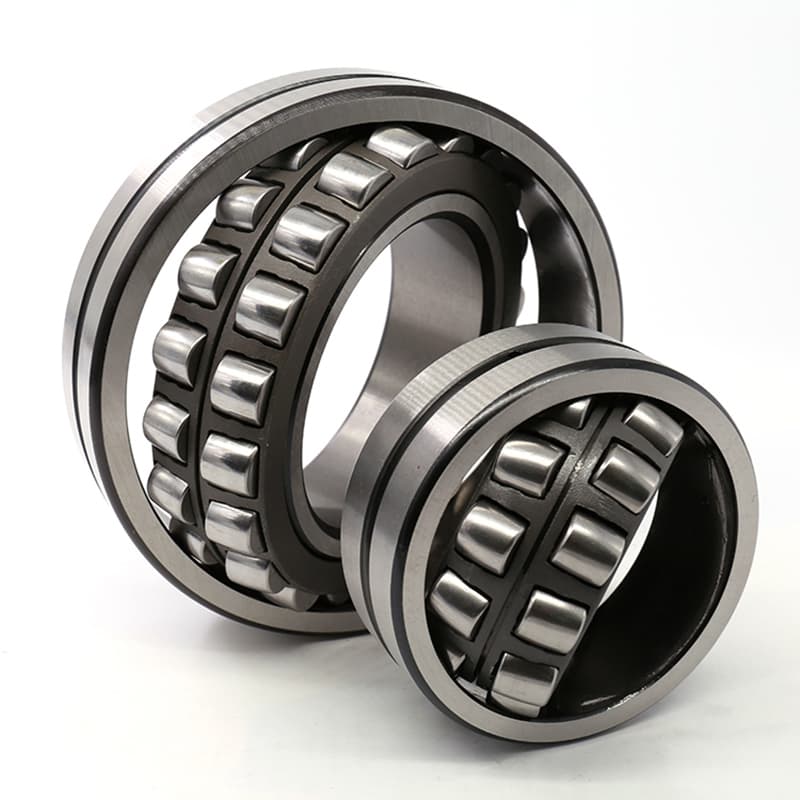
Let’s break it down by motor size and type.
Bearing Selection for Motors and Fans
| 1. Small Motors and Fans (Fractional to 10 HP): | Motor Size | Typical Bearing | Common Sizes |
|---|---|---|---|
| Fractional HP (under 1 HP) | Deep groove ball, shielded | 6200, 6201, 6202, 6203 | |
| 1-5 HP | Deep groove ball, sealed or shielded | 6204, 6205, 6206 | |
| 5-10 HP | Deep groove ball | 6206, 6207, 6305, 6306 | |
| Small fans | Deep groove ball, often sealed | Same as motor sizes |
| 2. Medium Motors (10-100 HP): | Motor Size | Drive End Bearing | Non-Drive End Bearing |
|---|---|---|---|
| 10-30 HP | Deep groove ball (e.g., 6208) | Deep groove ball (e.g., 6207) | |
| 30-50 HP | Deep groove ball (e.g., 6309) | Deep groove ball (e.g., 6209) | |
| 50-100 HP | Deep groove ball (e.g., 6312) or cylindrical roller | Deep groove ball (e.g., 6212) |
| 3. Large Motors (Above 100 HP): | Motor Size | Drive End Bearing | Non-Drive End Bearing |
|---|---|---|---|
| 100-200 HP | Cylindrical roller (high radial) | Deep groove ball (axial location) | |
| 200-500 HP | Cylindrical roller | Deep groove ball or cylindrical | |
| 500+ HP | Spherical roller or cylindrical | Deep groove or spherical |
| 4. Fan-Specific Considerations: | Fan Type | Bearing Type | Why |
|---|---|---|---|
| Small fans | Deep groove ball | Low friction, quiet operation | |
| Medium fans | Deep groove or spherical | Load and speed determine choice | |
| Large industrial fans | Spherical roller | Handles misalignment, heavy loads | |
| High-temperature fans | Spherical with C4 clearance | Thermal expansion |
| 5. Motor Bearing Variants: | Variant | Application | Why |
|---|---|---|---|
| C3 clearance5 | Most motors | Accommodates thermal expansion | |
| 2Z shields6 | Clean environments | Low friction, moderate protection | |
| 2RS seals7 | Dirty environments | Better protection, slightly higher friction | |
| P6 precision | High-quality motors | Smoother, quieter operation | |
| High-temperature grease | Hot applications | Maintains lubrication |
| 6. Common Motor Bearing Sizes: | Motor Frame Size | Shaft Diameter | Typical Bearing |
|---|---|---|---|
| 56 frame | 15 mm | 6202 | |
| 63 frame | 20 mm | 6204 | |
| 71 frame | 25 mm | 6205 | |
| 80 frame | 30 mm | 6206 | |
| 90 frame | 35 mm | 6207 | |
| 100 frame | 40 mm | 6208 | |
| 112 frame | 45 mm | 6209 | |
| 132 frame | 50 mm | 6210 or 6310 |
| 7. Why Deep Groove Ball Bearings Dominate: | Advantage | Benefit for Motors |
|---|---|---|
| Low friction | Energy efficiency | |
| High speed | Matches motor speeds | |
| Quiet operation | Acceptable noise levels | |
| Axial load capacity | Handles thrust from fans | |
| Cost-effective | Economical for volume production | |
| Availability | Easy to source for maintenance |
My Insight on Motor Bearings:
When a power plant maintenance team needs motor bearings, they usually know the size. But sometimes they don’t. They might bring in a failed bearing or give us the motor frame size. Understanding the relationship between frame size and bearing size allows us to help them. For a distributor like Rajesh, having a cross-reference chart from motor frame sizes to bearing numbers is a valuable tool. It turns a customer’s vague request into a precise order. And when they need a 6208 C3 2Z for a 100-frame motor, he has it in stock.
Conclusion
Spherical roller bearings are essential for power plant fans, blowers, and coal pulverizers, handling heavy loads, misalignment, and harsh conditions. Understanding which bearings go where—spherical for large fans, deep groove for small motors, 6203 for auxiliary equipment—ensures reliable operation. Choosing between C3 and C4 clearance based on operating temperature prevents thermal seizures. With the right bearings, power plants can maximize uptime and minimize unplanned outages.
-
Explore how deep groove ball bearings enhance efficiency and performance in electric motors. ↩ ↩ ↩ ↩ ↩ ↩ ↩ ↩ ↩ ↩ ↩ ↩ ↩ ↩ ↩ ↩ ↩ ↩ ↩ ↩ ↩ ↩ ↩
-
Learn about cylindrical roller bearings and their crucial role in high-capacity motors. ↩ ↩ ↩ ↩ ↩ ↩ ↩ ↩ ↩ ↩ ↩ ↩ ↩ ↩ ↩ ↩ ↩ ↩ ↩ ↩ ↩ ↩ ↩ ↩ ↩
-
Discover the advantages of spherical roller bearings in handling heavy loads and misalignment. ↩ ↩ ↩ ↩
-
Find out how angular contact bearings improve performance in vertical motors. ↩ ↩ ↩ ↩ ↩ ↩ ↩
-
Understand the significance of C3 clearance in accommodating thermal expansion in motors. ↩ ↩ ↩ ↩ ↩ ↩
-
Explore the benefits of 2Z shields for low friction and protection in clean environments. ↩ ↩ ↩ ↩ ↩
-
Learn how 2RS seals provide better protection in dirty environments for motor bearings. ↩