
You’ve built a successful bearing distribution business. Your customers trust your judgment. Now you want to sell products under your own brand. Private labeling pillow block bearings can elevate your business from distributor to brand owner.
Private label and OEM branding options for pillow block bearings allow you to sell bearings under your own company name. As a manufacturer, we can customize pillow blocks with your logo, brand colors, and packaging. Options include: custom housing painting (your brand colors), laser engraving or casting your logo on housings, custom boxes with your branding, sticker labels on bearing inserts, customized packaging (poly bags, cartons), and product data sheets with your company information. MOQs typically range from 500-1000 pieces for custom branding.
In my years of manufacturing bearings for distributors worldwide, I’ve helped many clients like Rajesh launch their own brands. It’s a powerful way to build equity and differentiate from competitors. Let’s explore what pillow block bearings are, why they’re called that, the meaning of Z and ZZ, and the difference between pillow block and flange bearings.
What is a pillow block bearing1?
You’re considering private labeling pillow block bearing1s. First, you need to understand exactly what they are. A clear definition helps you explain their value to your customers.
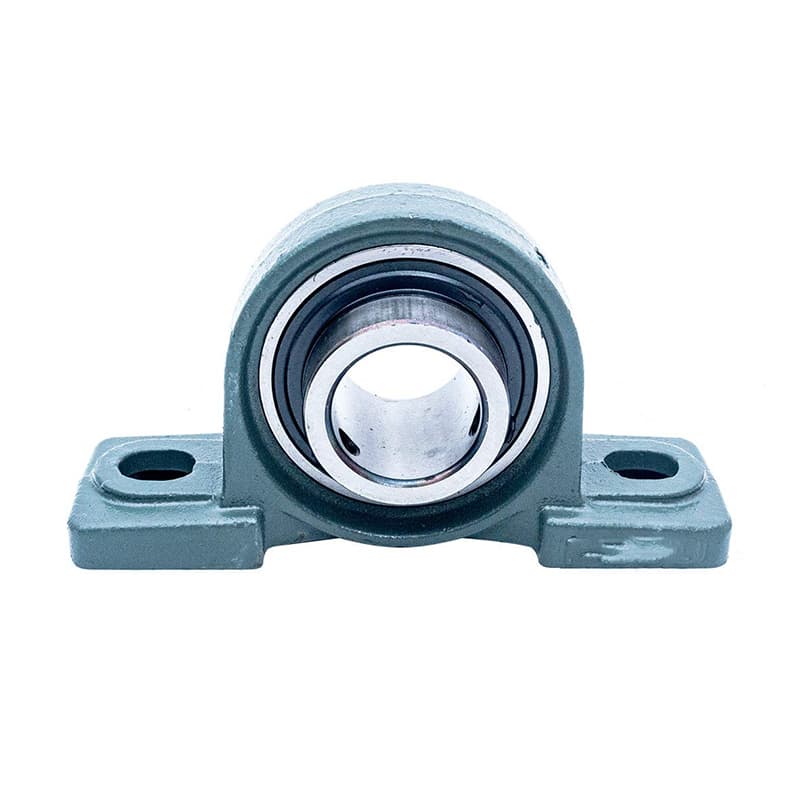
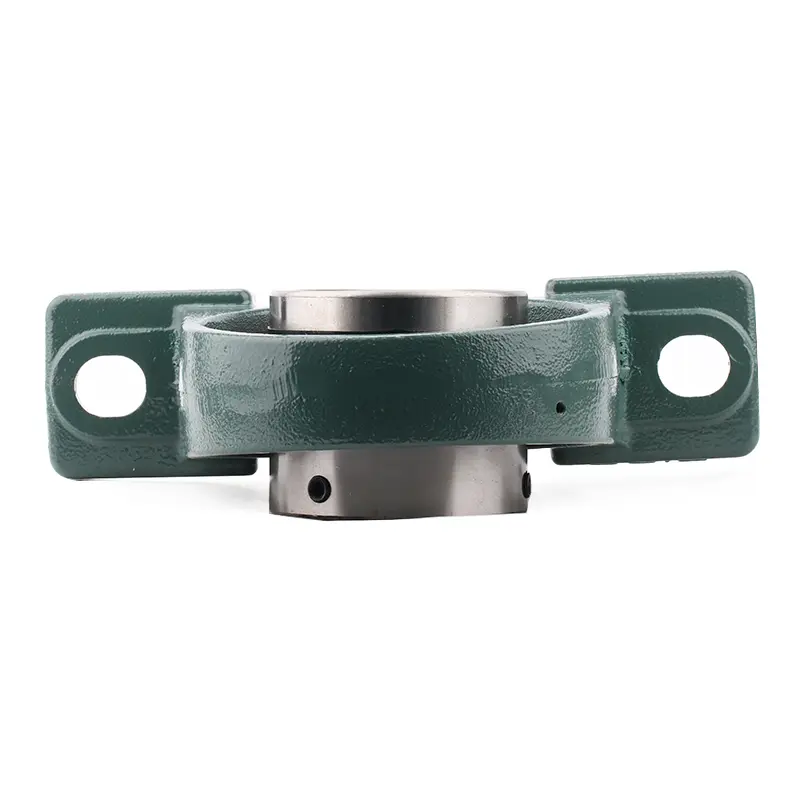
A pillow block bearing1 is a mounted bearing unit2 consisting of a bearing insert (usually a deep groove ball bearing with a spherical outer diameter3) housed in a block with a base for mounting. The "pillow" refers to the shape of the housing, which resembles a pillow. The unit provides ready-to-install support for a rotating shaft, with features for lubrication and sealing, simplifying design and maintenance. Common series include UCP (2-bolt pillow block), UCF (4-bolt flange), and UCFL (4-bolt oval flange).
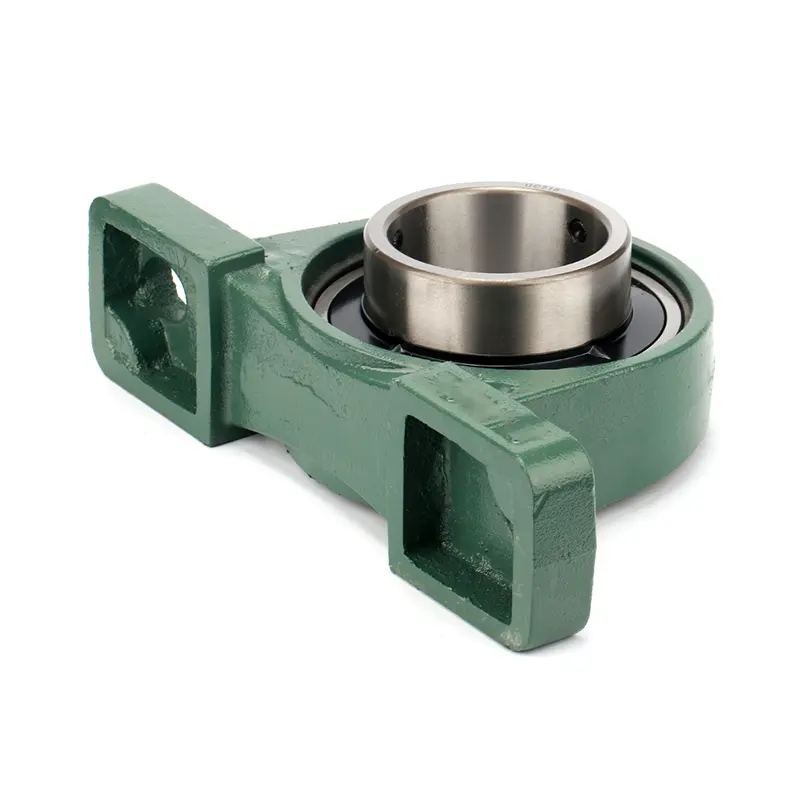
Understanding the components helps you specify exactly what you want for your private label product.
The Anatomy of a Pillow Block Bearing
| 1. Core Components: | Component | Description | Function |
|---|---|---|---|
| Bearing insert | A ball bearing with a spherical outer diameter3 | Provides the rolling element support | |
| Housing | Cast iron or stamped steel block with mounting holes | Supports the bearing, mounts to structure | |
| Seals | Rubber or felt seals on both sides | Keep lubricant in, contaminants out | |
| Locking mechanism | Set screws or eccentric collar | Secures bearing to shaft | |
| Grease fitting | Zerk fitting for lubrication | Allows relubrication without disassembly |
| 2. Key Features: | Feature | Benefit |
|---|---|---|
| Spherical OD of insert | Allows self-alignment within housing | |
| Sealed design | No external seals needed | |
| Pre-lubricated | Ready to install | |
| Interchangeable | Standard sizes fit across brands | |
| Easy mounting | Bolt directly to frame |
| 3. Common Series for Private Label: | Series | Type | Typical Applications |
|---|---|---|---|
| UCP 200 | 2-bolt pillow block | Conveyors, fans, general machinery | |
| UCF 200 | 4-bolt square flange | Mounting against vertical surfaces | |
| UCFL 200 | 4-bolt oval flange | Where space is limited | |
| UCT 200 | Take-up unit | Conveyor tensioning |
| 4. Size Designation: | Code | Meaning | Example |
|---|---|---|---|
| UCP 208 | U = Unit, C = Insert type, P = Pillow block, 208 = 40mm bore (08 x 5) | 40mm shaft pillow block |
My Insight on Pillow Blocks:
For a distributor like Rajesh, pillow blocks are an ideal product for private labeling. They are used across many industries, have standardized dimensions, and customers often need replacements. By putting his own brand on a quality product, he builds recognition and loyalty. The key is partnering with a manufacturer who can deliver consistent quality and reliable branding.
Why are they called pillow blocks1?
The name "pillow block" is unusual. It doesn’t sound technical. But there’s a reason for it. Understanding the origin helps you tell a story to your customers.
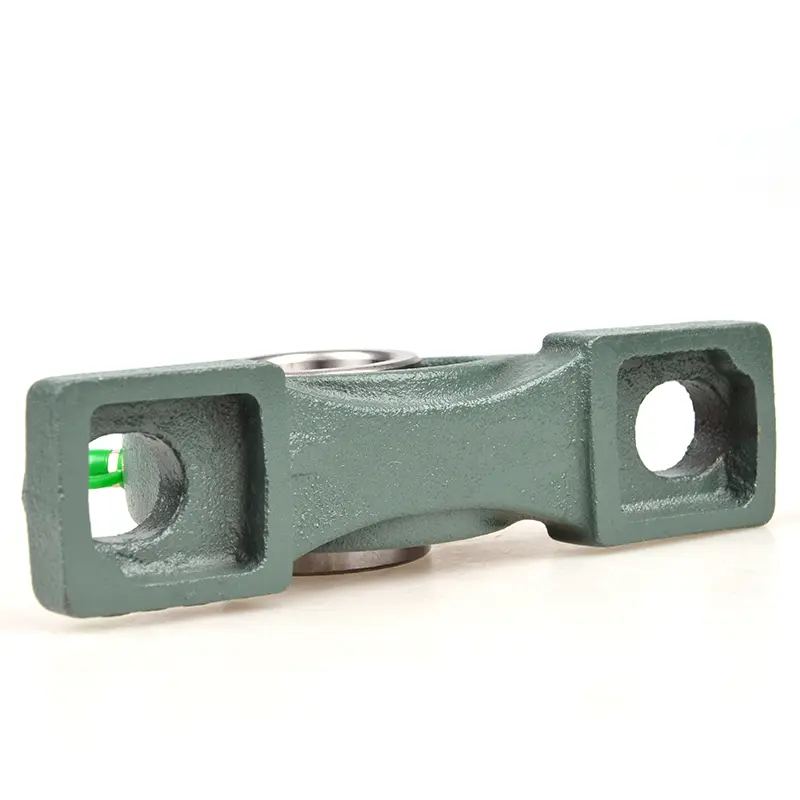
They are called pillow blocks1 because the housing shape resembles a pillow—a rectangular block with a curved top and a flat base, similar to a bed pillow. The bearing sits in the "pillow" (the housing), providing comfortable support for the shaft. The term dates back to early industrial machinery2 when these units were first used. In some regions, they are also called "plummer blocks3," which is an older term from British engineering.
The name is both descriptive and memorable.
The Story Behind the Name
| 1. Visual Similarity: | Feature | Resembles | Why |
|---|---|---|---|
| Rectangular base | Flat part of a pillow | Provides stable mounting | |
| Curved top | Pillow’s rounded shape | Houses the bearing | |
| Central hole | Where shaft passes through | Like a pillow’s indentation |
| 2. Historical Context: | Era | Development |
|---|---|---|
| Early 19th century | Simple wooden blocks supported shafts in mills | |
| Industrial Revolution | Cast iron housings developed | |
| Term "pillow block" | Entered common usage due to shape similarity | |
| Standardization | Became industry standard term |
| 3. Regional Variations: | Term | Region | Notes |
|---|---|---|---|
| Pillow block | North America, global trade | Most common today | |
| Plummer block | UK, India, Australia | Older British term | |
| Mounted bearing | Technical literature | Generic term | |
| Bearing unit | Catalogs | Alternative name |
| 4. Why the Name Matters for Branding: | Aspect | Benefit |
|---|---|---|
| Memorable | Easy for customers to remember | |
| Descriptive | Gives a mental image | |
| Conversation starter | Can explain the origin to customers | |
| Industry standard | Everyone knows what it means |
| 5. Telling the Story to Customers: When explaining pillow blocks1 to a new customer, you might say: |
Element | Example |
|---|---|---|
| The name | "They’re called pillow blocks1 because…" | |
| The function | "…they provide a comfortable ‘bed’ for your shaft." | |
| The benefit | "Just like a pillow supports your head, these support your rotating shaft." |
My Insight on the Name:
I’ve used the pillow analogy countless times when explaining these bearings to customers. It’s simple, visual, and memorable. For a distributor like Rajesh building his own brand, the story behind the name is a small but valuable part of his product knowledge. It shows customers that he understands not just the technical specs, but also the history and practical nature of the products he sells. It’s a touch of expertise that builds trust.
What is z and zz in bearing?
You’re specifying your private label pillow block bearings1. The bearing insert may be marked with "Z" or "ZZ." What does this mean? Understanding these codes ensures you order the right configuration.
Z and ZZ are codes for bearing shields2. Z indicates a metal shield3 on one side of the bearing. ZZ (or 2Z) indicates metal shield3s on both sides. Shields are non-contacting, meaning they don’t touch the inner ring, so they provide protection against large contaminants with very low friction. This is different from seals (RS or 2RS), which are contacting and provide better protection but have higher friction. For pillow block bearings1, the housing typically provides additional sealing, so ZZ inserts are common.
Let’s decode these and related suffixes.
Understanding Bearing Suffixes
| 1. Shields (Z, ZZ, 2Z): | Suffix | Meaning | Characteristics | Application |
|---|---|---|---|---|
| Z | Metal shield on one side | Low friction, moderate protection | One side exposed to contaminants | |
| ZZ or 2Z | Metal shields on both sides | Low friction, moderate protection | Most common for shielded bearings | |
| 2Z | Same as ZZ | Same | Same |
| 2. Seals (RS, 2RS): | Suffix | Meaning | Characteristics | Application |
|---|---|---|---|---|
| RS | Rubber seal on one side | Contact seal, higher friction, excellent protection | One side needs maximum protection | |
| 2RS | Rubber seals on both sides | Contact seals, higher friction, excellent protection | Dirty or wet environments | |
| RSH | Heavy-duty rubber seal4 | Even more robust | Extreme contamination |
| 3. Other Common Suffixes: | Suffix | Meaning | Application |
|---|---|---|---|
| C3 | Larger than normal internal clearance5 | High temperature, thermal expansion | |
| C4 | Even larger clearance | Very high temperature | |
| P5, P6 | Higher precision class | Precision applications | |
| M | Machined brass cage | Heavy duty | |
| TV | Polyamide cage | Light weight, quiet operation | |
| W33 | Lubrication groove and holes | Oil lubrication |
| 4. Shields vs. Seals for Pillow Block Bearings: | Aspect | ZZ (Shields) | 2RS (Seals) |
|---|---|---|---|
| Friction | Very low | Low to moderate | |
| Protection | Good against large particles | Excellent against fine dust and moisture | |
| Speed capability | Higher | Slightly lower | |
| Typical use | Clean environments, high speed | Dirty or wet environments | |
| In pillow blocks | Common (housing adds protection) | Used in harsh conditions |
| 5. Reading a Complete Bearing Designation: | Example | Meaning |
|---|---|---|
| 6208 ZZ C3 | Deep groove ball bearing, 40mm bore, metal shield3s both sides, C3 clearance | |
| 6208 2RS | Deep groove ball bearing, 40mm bore, rubber seal4s both sides | |
| UCP 208 | Complete pillow block unit (insert is typically open or ZZ, as housing provides protection) |
My Insight on Suffixes:
When ordering private label pillow blocks, you need to specify the insert bearing configuration. Most standard pillow blocks use an insert with ZZ shields because the housing itself provides additional protection. But if your customers operate in particularly dirty environments, you might want 2RS seals. Understanding these suffixes allows you to specify exactly what your market needs. For a distributor like Rajesh, this knowledge helps him advise customers and ensure his private label products meet their expectations.
What is the difference between a pillow block1 bearing and a flange bearing2?
You’re expanding your private label product line. You know pillow block1s are popular. But customers also ask for flange bearing2s. What’s the difference? And should you offer both?
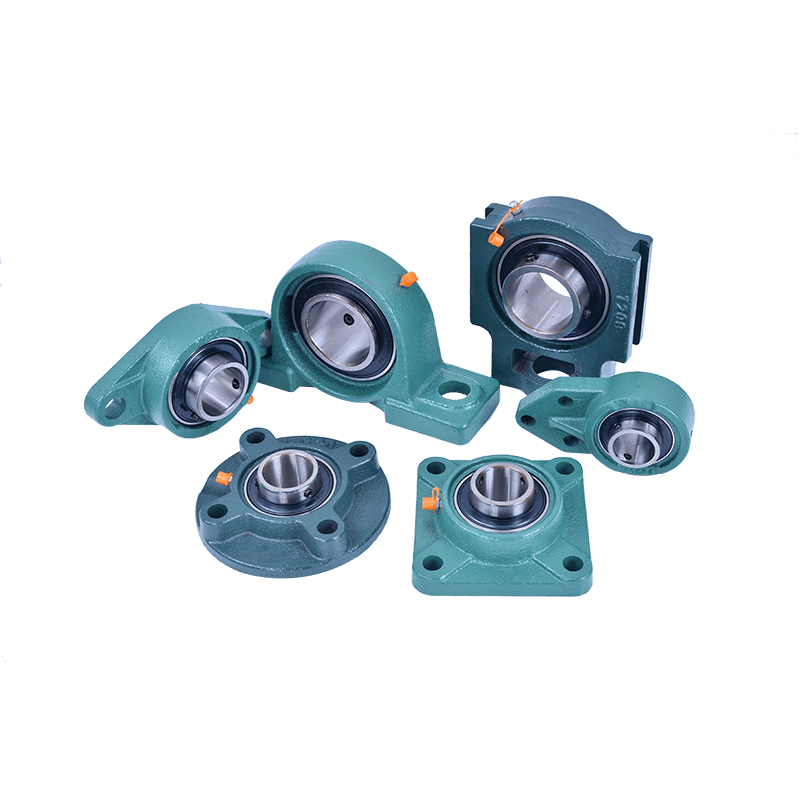
The main difference between a pillow block1 bearing and a flange bearing2 is the housing style3 and mounting orientation4. A pillow block1 has a base for mounting on a flat, horizontal surface (like a beam or frame). A flange bearing2 has a flanged housing with bolt holes for mounting against a vertical or perpendicular surface. Flange bearings come in various shapes: square (UCF), oval (UCFL), round (UCFC), and triangular (UCT). Both use the same bearing insert but different housings for different mounting needs.
Offering both types allows you to serve more applications.
Detailed Comparison: Pillow Block vs. Flange Bearing
| 1. Housing Style: | Type | Housing Shape | Mounting Surface |
|---|---|---|---|
| Pillow block (UCP) | Base with two bolt holes | Horizontal surface (beam, frame) | |
| Square flange (UCF) | Square plate with 4 bolt holes | Vertical surface, machine frames | |
| Oval flange (UCFL) | Oval plate with 4 bolt holes | Where space is limited | |
| Round flange (UCFC) | Round plate with 4 bolt holes | Through-hole mounting | |
| Triangular flange (UCT) | Triangular with 3 bolt holes | Light-duty applications |
| 2. Typical Applications: | Type | Common Applications |
|---|---|---|
| Pillow block | Conveyor frames, horizontal shafts, machine bases | |
| Square flange | Vertical shaft supports, fan housings, machine side plates | |
| Oval flange | Tight spaces, machinery with limited clearance | |
| Round flange | Through-hole mounting, some conveyor applications | |
| Triangular flange | Light machinery, agricultural equipment |
| 3. Advantages of Each: | Type | Advantages |
|---|---|---|
| Pillow block | Stable base mounting, easy alignment, widely available | |
| Flange bearing | Mounts directly to vertical surfaces, no need for separate brackets |
| 4. Bearing Insert Compatibility: Both types typically use the same bearing insert—a deep groove ball bearing with a spherical outer diameter. This means: |
Aspect | Benefit |
|---|---|---|
| Same insert | Interchangeable across housing types | |
| Self-aligning | Spherical OD allows for misalignment | |
| Same locking | Set screw or eccentric collar options | |
| Same seals | ZZ or 2RS as needed |
| **5. Selection Guide for Your Private Label Line: | If your customer needs… | Recommend… | |
|---|---|---|---|
| Horizontal shaft on a frame | Pillow block (UCP) | ||
| Shaft supported from vertical surface | Square flange (UCF) | ||
| Mounting in tight space | Oval flange (UCFL) | ||
| Through-hole mounting | Round flange (UCFC) | ||
| Light-duty, 3-bolt pattern | Triangular flange (UCT) |
| 6. Stocking Considerations for Distributors: | Type | Popular Sizes | Notes |
|---|---|---|---|
| Pillow block (UCP) | 204, 205, 206, 207, 208 | Highest volume | |
| Square flange (UCF) | 204, 205, 206 | Next most popular | |
| Oval flange (UCFL) | 204, 205, 206 | Good for specific applications |
My Insight on Product Line Expansion:
For a distributor like Rajesh building a private label brand, starting with pillow block1s is smart—they’re the highest volume. But adding flange bearing2s to his line allows him to serve customers who need vertical mounting. The good news is that both use the same bearing inserts, so inventory complexity doesn’t double. He can stock inserts and housings separately or offer complete units. Understanding the difference helps him advise customers and grow his brand into new applications.
Conclusion
Private labeling pillow block bearings offers distributors a powerful way to build brand equity and differentiate from competitors. Understanding what pillow blocks are, the origin of their name, bearing suffixes like Z and ZZ, and the difference between pillow block and flange bearings enables you to specify products that meet your customers’ needs. With a reliable manufacturing partner, you can create a branded product line that builds loyalty and grows your business.
-
Explore this link to understand the versatility and applications of pillow block bearings in various industries. ↩ ↩ ↩ ↩ ↩ ↩ ↩ ↩ ↩ ↩ ↩ ↩ ↩ ↩
-
Learn about flange bearings and how they can be beneficial for specific mounting needs in machinery. ↩ ↩ ↩ ↩ ↩ ↩ ↩ ↩
-
Discover the various housing styles for bearings and how they affect performance and application. ↩ ↩ ↩ ↩ ↩ ↩ ↩
-
Understand how mounting orientation impacts the functionality and installation of bearings in machinery. ↩ ↩ ↩
-
Understanding internal clearance is crucial for selecting the right bearing for specific applications. ↩
