
Your customer has an old machine. The original bearing number is no longer available. They need a replacement, but the manufacturer is out of business. You have deep groove ball bearings in stock. Can they work? Often, yes—with the right approach.
To use deep groove ball bearings as replacements for obsolete models: 1) Identify the original bearing’s dimensions (bore, OD, width). 2) Find a standard deep groove bearing with matching dimensions. 3) Consider load ratings—ensure the replacement meets or exceeds the original’s capacity. 4) Check speed ratings—deep groove bearings generally have good speed capability. 5) Select appropriate seals/shields based on the application. 6) Verify clearance (C3 for high-temperature applications). 7) Consider mounting arrangements—deep groove bearings may require different housing fits than specialty bearings.
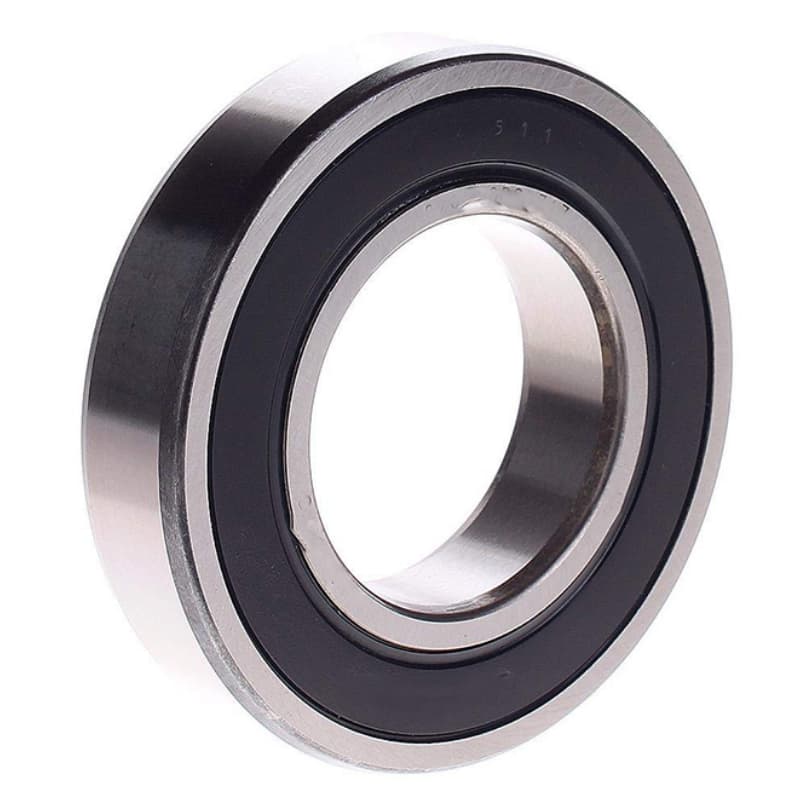
In my years of helping distributors find replacements for hard-to-find bearings, I’ve learned that deep groove ball bearings are surprisingly versatile substitutes. For a client like Rajesh in India, being able to offer a replacement when the original is obsolete is a valuable service. Let’s explore the applications of deep groove bearings, their disadvantages, the use of UCF bearings, and their axial load capacity—all knowledge that helps you make smart replacement decisions.
What are the applications of deep groove ball bearings?
You’re considering using a deep groove ball bearing as a replacement. The first question is: Was the original bearing in an application suitable for deep groove? Understanding their typical applications helps you answer this.
Deep groove ball bearings are used in a vast range of applications due to their versatility. Common applications include: electric motors1 (fractional to large industrial), pumps2 (centrifugal, circulation), fans and blowers, gearboxes3 (where loads are moderate), conveyors (idler rollers, pulleys), automotive components4 (alternators, water pumps2), household appliances5 (washing machines, dryers), power tools, agricultural machinery6, textile machinery, and office equipment. Their combination of low friction, high-speed capability, and moderate load capacity makes them suitable for countless rotating shaft applications.
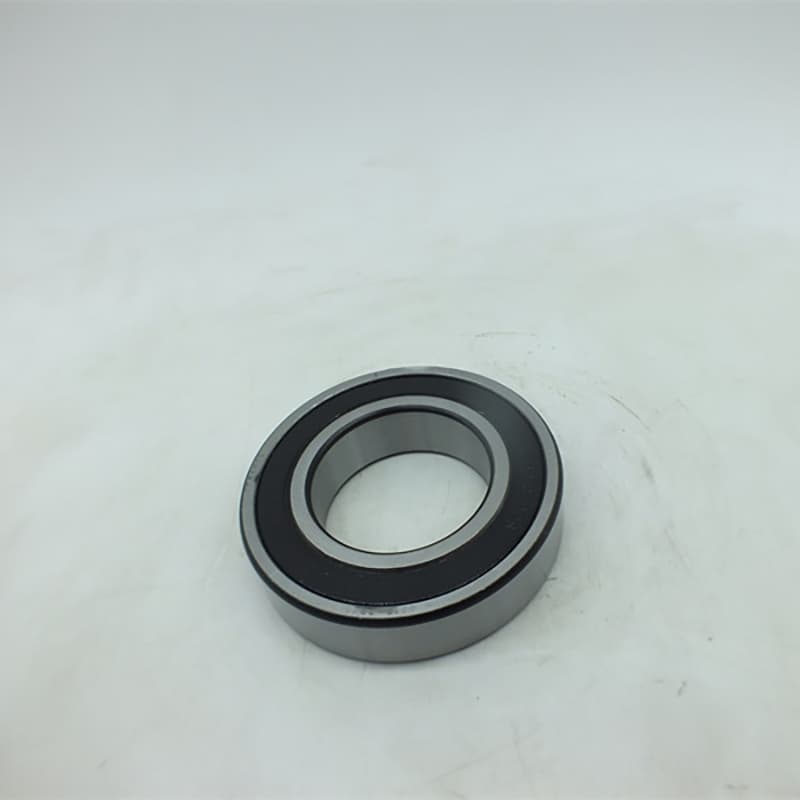
If the original bearing was in any of these applications, a deep groove replacement is likely suitable.
Matching Applications to Deep Groove Capabilities
| 1. Electric Motors: | Requirement | How Deep Groove Meets It |
|---|---|---|
| High speed | Excellent speed capability. | |
| Radial load | Handles rotor weight and magnetic pull. | |
| Moderate axial load | Can handle thrust from fans or slight misalignment. | |
| Long life | Properly selected bearings last for years. |
| 2. Pumps: | Requirement | How Deep Groove Meets It |
|---|---|---|
| Radial load | Supports impeller weight. | |
| Axial load | Handles hydraulic thrust (within limits). | |
| Sealed options | 2RS versions protect against fluid ingress. | |
| C3 clearance | Available for pumps2 with temperature rise. |
| 3. Fans and Blowers: | Requirement | How Deep Groove Meets It |
|---|---|---|
| High speed | Suitable for fan speeds. | |
| Low noise | Precision grades available for quiet operation. | |
| Light loads | Well within capacity. |
| 4. Gearboxes (Moderate Duty): | Requirement | How Deep Groove Meets It |
|---|---|---|
| Radial load | Good capacity. | |
| Axial load | Can handle thrust from helical gears (if moderate). | |
| Speed | Matches typical gearbox speeds. |
| 5. Conveyors: | Requirement | How Deep Groove Meets It |
|---|---|---|
| Radial load | Handles belt tension and material weight. | |
| Dirt protection | Sealed versions keep contaminants out. | |
| Cost-effectiveness | Economical for multiple bearings. |
| 6. Automotive (Accessory Drives): | Requirement | How Deep Groove Meets It |
|---|---|---|
| Speed | Handles alternator/water pump speeds. | |
| Temperature | Can operate under hood with proper grease. | |
| Size | Compact designs fit tight spaces. |
| 7. When Deep Groove May NOT Be Suitable: | Application | Why Deep Groove May Fail | Better Alternative |
|---|---|---|---|
| High axial loads | Exceeds axial capacity | Angular contact or tapered roller | |
| Heavy shock loads | Balls can dent raceways | Spherical roller bearing | |
| Misalignment | Cannot compensate | Self-aligning ball bearing | |
| Very high speed spindles | Precision limits | Precision angular contact |
My Insight on Applications:
When a customer asks for a replacement for an obsolete bearing, I first ask: "What machine is it in? What does it do?" If it’s a motor, pump, or fan, a deep groove ball bearing is likely a perfect replacement. If it’s in a gearbox with heavy thrust or a crusher with shock loads, I might need to look at other types. Understanding the application is the first step in finding the right replacement. For a distributor like Rajesh, asking these questions positions him as a problem-solver, not just an order-taker.
What are the disadvantages of deep groove ball bearings?
Before using a deep groove bearing as a replacement, you need to know its limitations. What can’t it do? Understanding disadvantages prevents mismatches.
The main disadvantages of deep groove ball bearings are: limited load capacity1 compared to roller bearings, limited axial load capacity2 (moderate only), sensitivity to misalignment3 (limited tolerance), poor shock load capacity4 (balls can dent raceways), higher noise at very high speeds5 without precision grades, and susceptibility to contamination6 without effective seals. They are also not suitable for applications requiring extremely high rigidity7 or pure axial loads8.
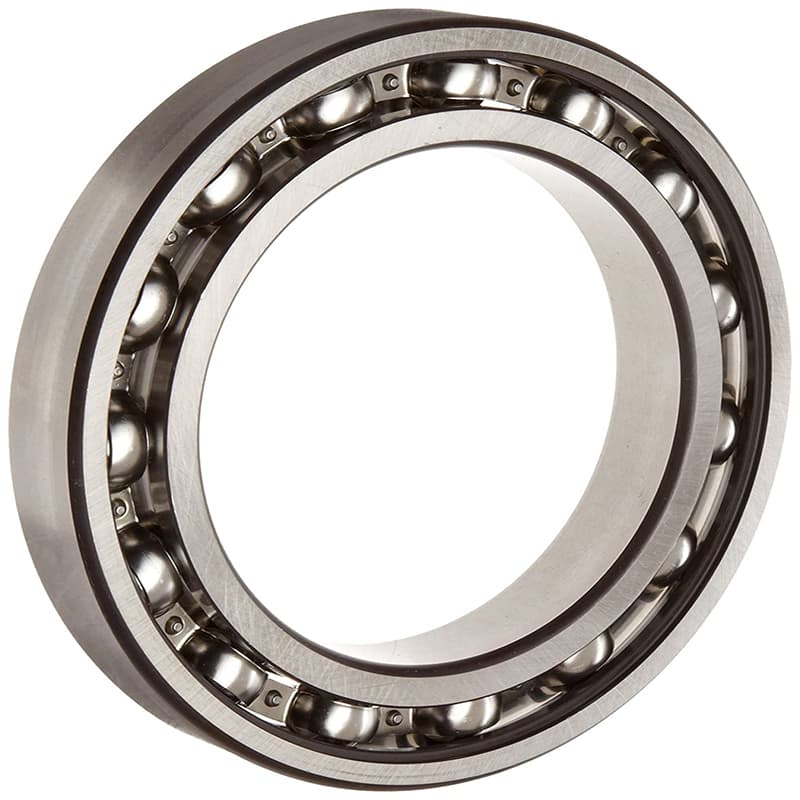
Knowing these limits helps you avoid using them where they don’t belong.
Detailed Look at Deep Groove Limitations
| 1. Load Capacity Limitations: | Limitation | Explanation | Replacement Consideration |
|---|---|---|---|
| Point contact | Balls contact raceways at points, limiting load area. | If original was a roller bearing, deep groove may have lower capacity. Check load ratings. | |
| Axial load | Can handle only moderate thrust. | If original had heavy axial load, deep groove may not suffice. | |
| Shock loads | Balls can dent (brinell) raceways under impact. | Not suitable for crushers, hammers, etc. |
| 2. Misalignment Sensitivity: | Limitation | Explanation | Replacement Consideration |
|---|---|---|---|
| Limited tolerance | Typically 2-4 arc-minutes maximum. | If the original bearing was self-aligning, deep groove may fail. | |
| Edge loading | Misalignment causes uneven contact, early failure. | Ensure precise mounting and alignment. |
| 3. Speed and Noise Limitations: | Limitation | Explanation | Replacement Consideration |
|---|---|---|---|
| Standard grades | May have higher vibration at very high speeds. | If original was high-precision, use P5/P6 grade. | |
| Noise | Standard bearings may generate audible noise. | If quiet operation needed, specify low-noise grades (Z1, Z2, Z3). |
| 4. Contamination Susceptibility: | Limitation | Explanation | Replacement Consideration |
|---|---|---|---|
| Without seals | Vulnerable to dirt and moisture. | Use sealed (2RS) or shielded (2Z) versions. | |
| Seal friction | Seals add friction. | Balance protection vs. friction needs. |
| 5. Rigidity Limitations: | Limitation | Explanation | Replacement Consideration |
|---|---|---|---|
| Point contact | Less rigid than roller bearings. | If original required high rigidity, consider preload or larger size. |
| 6. When Deep Groove May NOT Be a Suitable Replacement: | Original Bearing Type | Why Deep Groove May Not Work |
|---|---|---|
| Cylindrical roller bearing | Deep groove has much lower radial load capacity. | |
| Tapered roller bearing | Deep groove has much lower axial load capacity. | |
| Spherical roller bearing | Deep groove cannot accommodate misalignment. | |
| Angular contact bearing | Deep groove has lower axial capacity, different mounting requirements. | |
| Thrust bearing | Deep groove not designed for pure axial loads8. |
Disadvantage Summary Table:
| Disadvantage | Check Before Using as Replacement |
|---|---|
| Limited load capacity | Compare load ratings with original. |
| Limited axial capacity | Calculate axial load in application. |
| Misalignment sensitivity | Ensure alignment is precise. |
| Shock load sensitivity | Assess if shock loads present. |
| Speed/noise | Verify speed and noise requirements. |
| Contamination | Ensure adequate sealing. |
| Rigidity | Check if high rigidity needed. |
My Insight on Disadvantages:
A customer once asked me to replace a cylindrical roller bearing with a deep groove ball bearing because the deep groove was cheaper and in stock. I had to explain that the deep groove’s radial load capacity was only a fraction of the cylindrical roller’s. Using it would lead to rapid failure. Understanding disadvantages isn’t just academic—it prevents costly mistakes. For a distributor like Rajesh, knowing when NOT to recommend a deep groove replacement is as important as knowing when to recommend it. That expertise builds trust and prevents returns.
What is the use of UCF bearing?
In your search for replacements, you might encounter UCF bearings1. These are mounted unit2s, not bare bearings. Understanding them helps you serve customers who need complete assemblies.
A UCF bearing is a mounted unit2 consisting of a bearing insert (usually a deep groove ball bearing with a spherical outer diameter) housed in a 4-bolt square flange housing. The "U" stands for unit, "C" for the bearing insert type (with spherical OD), and "F" for flanged housing. UCF bearings1 are used in applications where the bearing must be mounted against a vertical or horizontal surface, such as in conveyor systems, fans, agricultural machinery, and material handling equipment. They simplify installation and provide self-alignment3 capability.
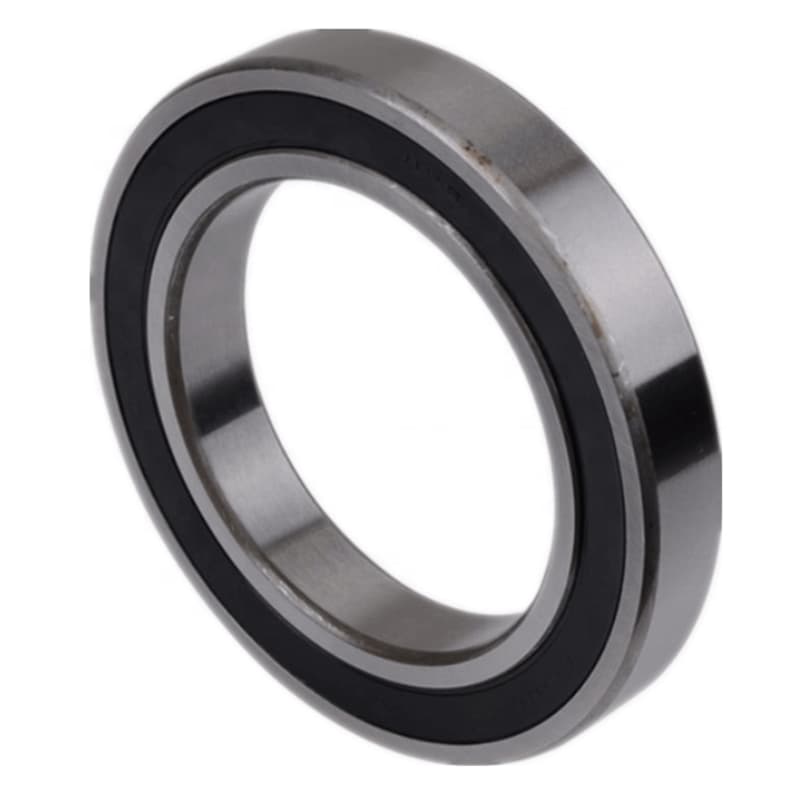
For replacement situations, UCF bearings1 can often replace obsolete mounted unit2s.
UCF Bearings as Replacements
| 1. When to Consider UCF Bearings: | Situation | Why UCF May Be the Answer |
|---|---|---|
| Obsolete mounted unit2 | A standard UCF bearing may match the mounting dimensions. | |
| Damaged housing | Replace the entire unit instead of just the bearing. | |
| Need for self-alignment3 | The spherical insert compensates for minor misalignment. | |
| Simplified maintenance | Bolt-on replacement is faster than pressing bearings. |
| 2. Key Features for Replacement: | Feature | Benefit for Replacement |
|---|---|---|
| Standardized dimensions | UCF sizes4 are interchangeable across manufacturers. | |
| Self-alignment | Accommodates slight mounting imperfections. | |
| Sealed design | Protects bearing in dirty environments. | |
| Relubrication option | Extends service life. | |
| Variety of sizes | Common shaft sizes from 12mm to 100mm+. |
| 3. Matching UCF to Obsolete Units: | Step | Action |
|---|---|---|
| 1. Measure shaft diameter | This determines the UCF size (e.g., 40mm shaft = UCF 208). | |
| 2. Measure bolt hole spacing | Ensure it matches the mounting pattern. | |
| 3. Check housing height | Confirm shaft centerline height matches original. | |
| 4. Consider load | Verify UCF load rating meets or exceeds original. | |
| 5. Select seal type | Match to environmental conditions. |
| 4. Common UCF Sizes for Replacement: | UCF Size | Shaft Diameter | Typical Applications |
|---|---|---|---|
| UCF 204 | 20 mm | Small conveyors, light machinery | |
| UCF 205 | 25 mm | Fans, light agricultural | |
| UCF 206 | 30 mm | General industrial | |
| UCF 207 | 35 mm | Conveyors, blowers | |
| UCF 208 | 40 mm | Material handling, fans | |
| UCF 209 | 45 mm | Heavy conveyors | |
| UCF 210 | 50 mm | Industrial machinery |
| 5. Advantages of UCF Over Custom Solutions: | Aspect | UCF Bearing | Custom Machined Housing |
|---|---|---|---|
| Cost | Lower, mass-produced | Higher, custom machining | |
| Availability | Readily available | Long lead time | |
| Interchangeability | Standard sizes | Unique to machine | |
| Installation | Bolt-on | Requires pressing | |
| Sealing | Integrated | Must be designed |
My Insight on UCF Replacements:
When a customer has an old machine with a damaged bearing housing, I often recommend replacing the entire unit with a UCF bearing. It’s faster, cheaper, and often more reliable than trying to repair the old housing. The spherical insert compensates for any slight misalignment in the old mounting surface. For a distributor like Rajesh, stocking common UCF sizes4 means he can solve problems that go beyond just bearing replacement. He becomes a source for complete solutions, not just parts.
Can deep groove ball bearings1 take axial load?
You’re considering a deep groove bearing as a replacement. The original bearing may have handled some thrust. Will a deep groove bearing work? Understanding its axial load capacity2 is essential.
Yes, deep groove ball bearings1 can take axial (thrust) loads, but their capacity is limited. Generally, the permissible axial load is about 25% to 50% of their static radial load rating3 (C0) for occasional loads, and about 10% of their dynamic radial load rating4 (C) for continuous operation. They can handle axial loads in both directions, unlike angular contact or tapered roller bearings which are directional. This bidirectional capability is an advantage in many replacement situations.
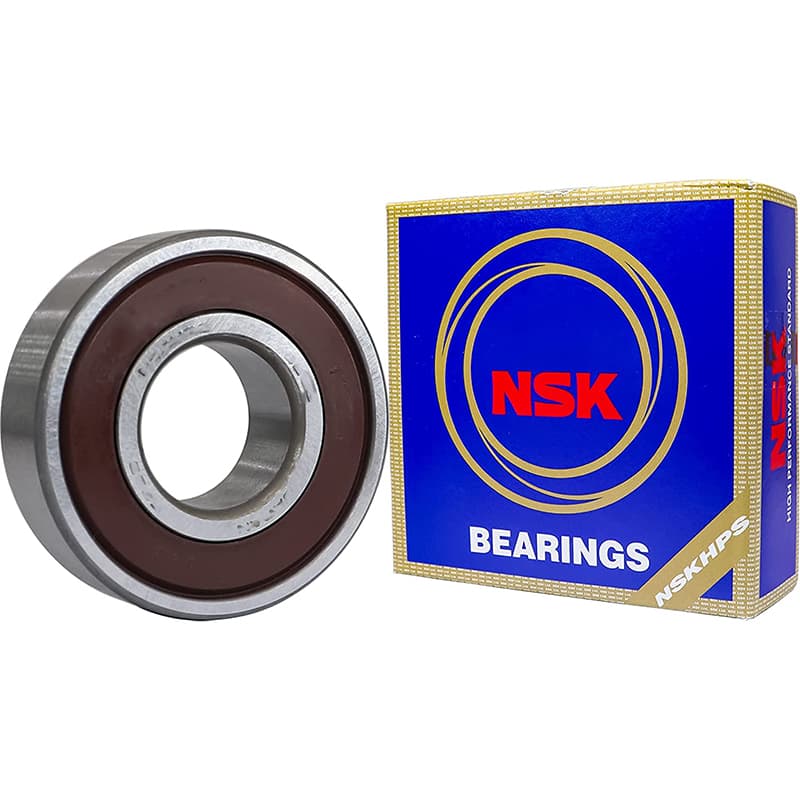
This capability makes them versatile replacements, but the limits must be respected.
Understanding Axial Load for Replacement Decisions
| 1. How Deep Groove Bearings Handle Axial Load: | Mechanism | Explanation |
|---|---|---|
| Contact angle develops | Under axial load, balls contact raceway shoulders, creating an effective contact angle. | |
| Load path | Force transfers through balls to opposite raceway shoulder. | |
| Bidirectional | Can handle thrust from either direction. |
| 2. Axial Load Capacity Guidelines: | Load Type | Maximum Recommended Axial Load |
|---|---|---|
| Occasional or light axial | Up to 50% of static radial load rating3 (C0) | |
| Continuous axial during operation | Up to 10% of dynamic radial load rating4 (C) | |
| Pure axial (no radial load) | Up to 25% of C0, but expect reduced life |
3. Example Calculation for Replacement:
For a 6208 bearing replacing an obsolete model:
- C0 (static) = 19 kN
- C (dynamic) = 36 kN
| Load Scenario | Maximum Axial Load |
|---|---|
| Occasional axial | 0.5 × 19 = 9.5 kN |
| Continuous axial (with radial) | 0.1 × 36 = 3.6 kN |
| Pure axial | 0.25 × 19 = 4.75 kN |
| 4. Checking if Axial Load is Within Limits: | Step | Action |
|---|---|---|
| 1. Estimate axial load | From machine specs or measurement. | |
| 2. Compare to limits | Is it within 10% of C for continuous operation? | |
| 3. Consider combined loads | If both radial and axial exist, calculate equivalent load. | |
| 4. Check original bearing type | If original was angular contact or tapered, axial load may exceed deep groove capacity. |
| 5. When Deep Groove Axial Capacity May Be Insufficient: | Original Bearing Type | Typical Axial Capacity | Deep Groove Suitability |
|---|---|---|---|
| Angular contact ball | High, one direction | May be insufficient for high thrust | |
| Tapered roller | High, one direction | Likely insufficient | |
| Thrust bearing | Very high, pure axial | Not suitable | |
| Another deep groove | Similar | Usually suitable |
| 6. Advantages of Deep Groove for Replacement: | Advantage | Benefit |
|---|---|---|
| Bidirectional | Can replace bearings that handled thrust from either direction. | |
| Simple mounting | No adjustment needed like tapered bearings. | |
| Wide availability | Easy to source. | |
| Cost-effective | Lower cost than specialty bearings. |
My Insight on Axial Load for Replacements:
When a customer brings in an obsolete bearing, I always ask about the application to estimate axial load. If it’s a motor or fan, the axial load is usually low enough for a deep groove replacement. If it’s from a gearbox with helical gears, I calculate more carefully. If it’s from a wheel hub, I know a deep groove won’t work—that needs a tapered roller. Understanding axial load limits helps me make the right recommendation. For a distributor like Rajesh, this knowledge turns a simple bearing sale into a valuable engineering service. His customers learn to trust his judgment, and they come back.
Conclusion
Using deep groove ball bearings as replacements for obsolete models is often possible when you understand their applications, limitations, and axial load capacity. By matching dimensions, verifying load ratings, and considering mounting requirements, you can provide cost-effective solutions for aging machinery. UCF bearings offer an alternative for complete mounted unit replacements. With careful analysis, deep groove bearings can keep old equipment running long after the original parts are gone.
-
Explore this link to understand the versatility and applications of deep groove ball bearings in various industries. ↩ ↩ ↩ ↩ ↩ ↩ ↩
-
This resource will help you learn how to accurately calculate axial load capacity for different types of bearings. ↩ ↩ ↩ ↩ ↩ ↩ ↩ ↩ ↩
-
Understanding static radial load rating is crucial for selecting the right bearing; this link provides detailed insights. ↩ ↩ ↩ ↩ ↩ ↩
-
Learn about dynamic radial load rating and why it’s essential for bearing performance in continuous operations. ↩ ↩ ↩ ↩ ↩ ↩
-
Investigating noise issues can help you select quieter bearings for applications requiring low noise levels. ↩ ↩
-
Knowing about contamination risks can help you choose the right seals and protect your bearings effectively. ↩ ↩
-
Understanding rigidity limitations ensures you select bearings that can handle the required load without failure. ↩
-
Exploring the limitations of deep groove bearings for axial loads can prevent costly mistakes in bearing selection. ↩ ↩