
Your machine vibrates. Precision work suffers. The cause isn’t the motor or the control system. It’s microscopic movement in the bearings that translates into visible instability. For smooth mechanical motion, bearing accuracy matters as much as load capacity.
High-accuracy tapered roller bearings deliver smooth mechanical motion through precision-ground rollers and raceways, optimized internal geometry, and tight tolerances on dimensions and runout. These features minimize vibration, reduce friction, and ensure consistent performance even under varying loads. For applications requiring precise shaft location and smooth rotation—such as machine tool spindles, gearboxes, and robotics—high-accuracy tapered bearings are essential.
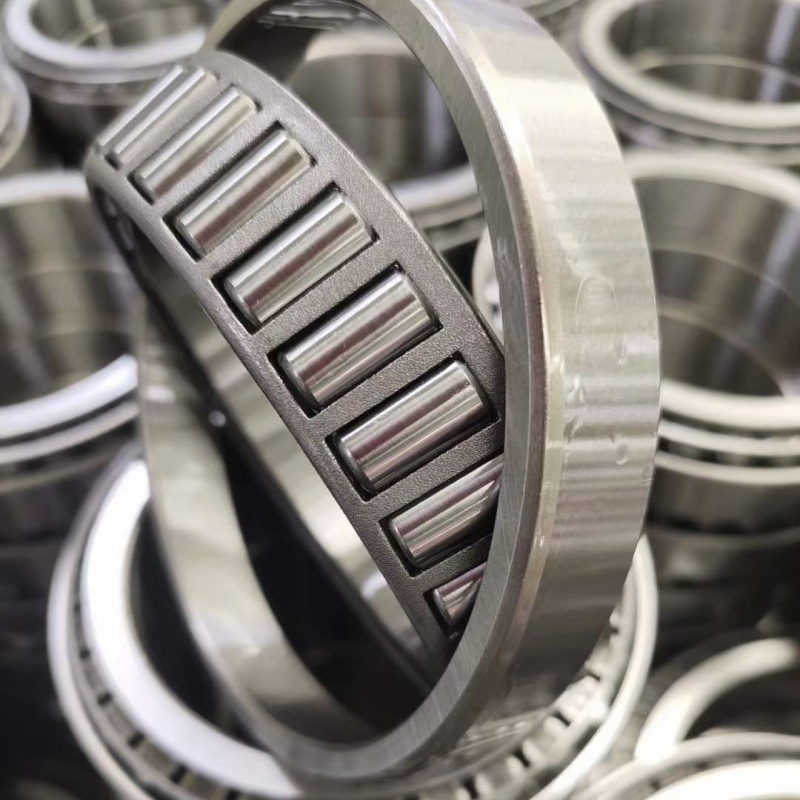
In my years of supplying bearings to precision machinery manufacturers, I’ve learned that "smooth" is not just a feeling—it’s a measurable requirement. For a distributor like Rajesh in India, understanding what makes a bearing accurate helps him serve customers who demand precision. Let’s explore what tapered roller bearings are used for, the purpose of roller bearings, the meaning of clearance codes C1-C3, and the difference between cylindrical and tapered types.
What are tapered roller bearings used for?
You need a bearing that can handle heavy loads from multiple directions. A ball bearing might work, but it won’t last. Tapered roller bearings1 are designed for exactly this challenge.
Tapered roller bearings1 are used in applications that must support heavy combined loads—both radial (from the side) and axial (from the end)—while maintaining precise alignment and durability. Their classic use is in vehicle wheel hubs, where they manage the vehicle’s weight and cornering forces. Other common applications include gearboxes, rolling mills, mining equipment, machine tool spindles, and any machinery where shafts experience thrust alongside radial loads.
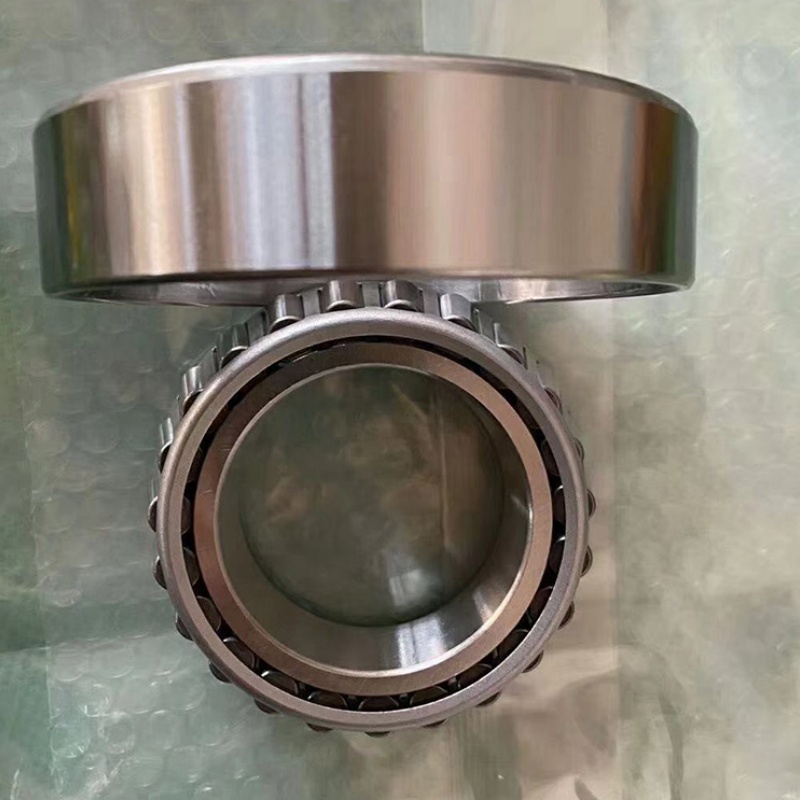
The unique value of tapered roller bearings lies in their geometry.
Key Applications and Why Tapered Bearings Are Essential
| 1. Automotive Wheel Hubs2: | Requirement | How Tapered Bearings Deliver |
|---|---|---|
| Radial load | Vehicle weight is supported by line contact between rollers and raceways. | |
| Axial load | Cornering forces are transmitted through roller ends to the guiding flange. | |
| Combined load | The tapered geometry handles both simultaneously. | |
| Adjustability | End play can be set for optimal bearing life. | |
| Smooth motion | Precision grades ensure smooth rotation, reducing vibration and noise. |
| 2. Industrial Gearboxes3: | Requirement | How Tapered Bearings Deliver |
|---|---|---|
| Gear support | Shafts with gears experience both radial and axial forces. | |
| Rigidity | Line contact provides stiffness, maintaining gear mesh alignment. | |
| Preload capability | Can be preloaded to eliminate play, ensuring precise gear contact. | |
| Long life | Robust design withstands continuous operation. |
| 3. Machine Tool Spindles4: | Requirement | How Tapered Bearings Deliver |
|---|---|---|
| Precision | High-accuracy grades (P5, P4) minimize runout. | |
| Rigidity | Preloaded bearings eliminate deflection under cutting forces. | |
| Smooth rotation | Optimized internal geometry reduces vibration. | |
| Speed capability | Special designs allow high-speed operation. |
| 4. Rolling Mills5: | Requirement | How Tapered Bearings Deliver |
|---|---|---|
| Extreme loads | Four-row configurations handle massive forces. | |
| Shock resistance | Robust rollers and cages withstand impacts. | |
| Separability | Eases maintenance on large mill rolls. | |
| Reliability | Long service life in harsh conditions. |
| 5. Construction and Mining Equipment6: | Requirement | How Tapered Bearings Deliver |
|---|---|---|
| Durability | Case-hardened steel resists wear from dirt and shock. | |
| Sealing | Can be equipped with effective seals for contaminated environments. | |
| Load capacity | Handles heavy, fluctuating loads. | |
| Uptime | Reliability reduces costly downtime. |
| 6. Robotics and Automation: | Requirement | How Tapered Bearings Deliver |
|---|---|---|
| Precision | High accuracy for repeatable motion. | |
| Rigidity | Maintains position under varying loads. | |
| Compact design | High capacity in relatively small package. | |
| Smooth motion | Low friction and vibration for precise control. |
My Insight on Applications:
When a customer in the automotive aftermarket asks for wheel bearings, they need tapered rollers. When a machine tool builder in Germany asks for spindle bearings, they need high-accuracy tapered rollers. The application dictates the precision required. For a distributor like Rajesh, understanding the full range of applications helps him serve diverse customers. He knows that a bearing for a truck wheel is different from a bearing for a CNC spindle, even though both are tapered. The use case determines the specification.
What are roller bearings used for?
Ball bearings are everywhere. But sometimes they aren’t enough. When loads get heavy, roller bearings are the answer. What makes them different, and why choose them?
Roller bearings are used for applications requiring high load capacity1, especially under radial loads2. Unlike ball bearings, which have point contact, roller bearings have line contact3 between the rolling elements and raceways. This distributes the load over a larger area, allowing them to carry significantly heavier loads. They are used in gearboxes, conveyors, rolling mills, mining equipment, and any machinery where high loads and durability are required.
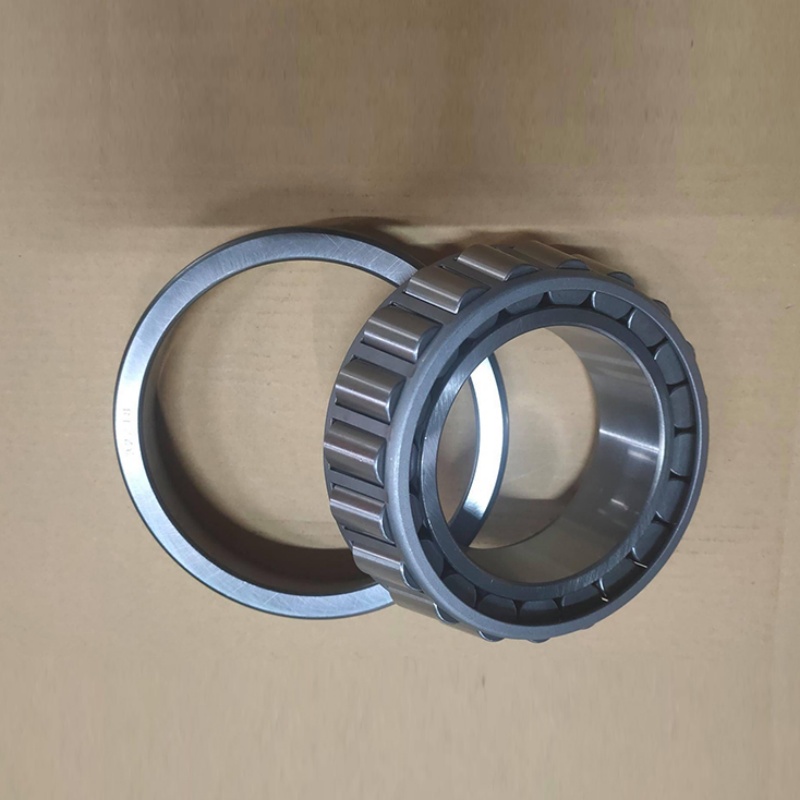
The line contact is the key difference.
Roller Bearings vs. Ball Bearings: A Comparison
| 1. Load Distribution: | Bearing Type | Contact Type | Load Distribution | Capacity |
|---|---|---|---|---|
| Ball bearing | Point contact | Load concentrated at points | Moderate | |
| Roller bearing | Line contact | Load spread along lines | High |
| 2. Types of Roller Bearings and Their Uses: | Type | Load Capability | Primary Applications |
|---|---|---|---|
| Cylindrical roller4 | High radial, minimal axial | Electric motors, gearboxes (radial positions) | |
| Tapered roller5 | Combined radial and axial | Wheel hubs, gearboxes (thrust positions) | |
| Spherical roller | Very high radial, moderate axial, misalignment | Crushers, conveyors, vibrating screens | |
| Needle roller6 | High radial, compact | Automotive transmissions, rocker arms |
| 3. When to Choose Roller Bearings Over Ball Bearings: | Condition | Ball Bearing | Roller Bearing |
|---|---|---|---|
| Light to moderate loads | Suitable | Overkill (higher cost, friction) | |
| Heavy radial loads2 | May be inadequate | Ideal | |
| Combined loads (radial + axial) | Limited | Tapered roller5 ideal | |
| High-speed operation | Excellent | Limited (cylindrical OK, others limited) | |
| Misalignment | Poor (use self-aligning ball) | Spherical roller excellent | |
| Compact radial space | Good | Needle roller6 best |
| 4. Roller Bearings for Smooth Motion: | Requirement | How Roller Bearings Contribute |
|---|---|---|
| Rigidity | Line contact provides stiffness, reducing deflection. | |
| Vibration damping | Larger contact area can damp vibrations. | |
| Consistency under load | Maintains geometry even under heavy forces. | |
| Long life | Distributes wear over larger area. |
| 5. Precision in Roller Bearings: High-accuracy roller bearings (P5, P4 grades) offer: |
Feature | Benefit for Smooth Motion |
|---|---|---|
| Tighter dimensional tolerances | Consistent fit, reduced runout. | |
| Improved geometry | Optimal load distribution, lower friction. | |
| Better surface finish | Reduced friction, quieter operation. | |
| Matched sets | Consistent preload, predictable performance. |
My Insight on Roller Bearings:
A common question is: "Why not use roller bearings everywhere if they have higher load capacity?" The answer is friction and cost. Roller bearings have higher friction than ball bearings, so they waste more energy. They also cost more. The key is matching the bearing to the load. For a heavy conveyor, roller bearings are essential. For a small fan, they’re overkill. For a distributor like Rajesh, understanding this trade-off helps him recommend the right bearing for the job, saving customers money while ensuring performance.
What is C11, C22, and C33 bearing clearance?
You order a tapered roller bearing. The number includes "C33". You wonder what it means. Is it a precision grade? A material code? It’s actually a critical specification that determines how the bearing behaves when it gets hot.
C11, C22, and C33 are standardized codes for the internal radial clearance4 of a bearing before it is installed. C11 is the smallest clearance, C22 is smaller than normal, CN (Normal) is the standard, C33 is larger than normal, and C4/C5 are even larger. This clearance is the intentional space between the rollers and raceways that allows for thermal expansion5, ensures proper lubricant film formation, and accommodates interference fits from mounting.
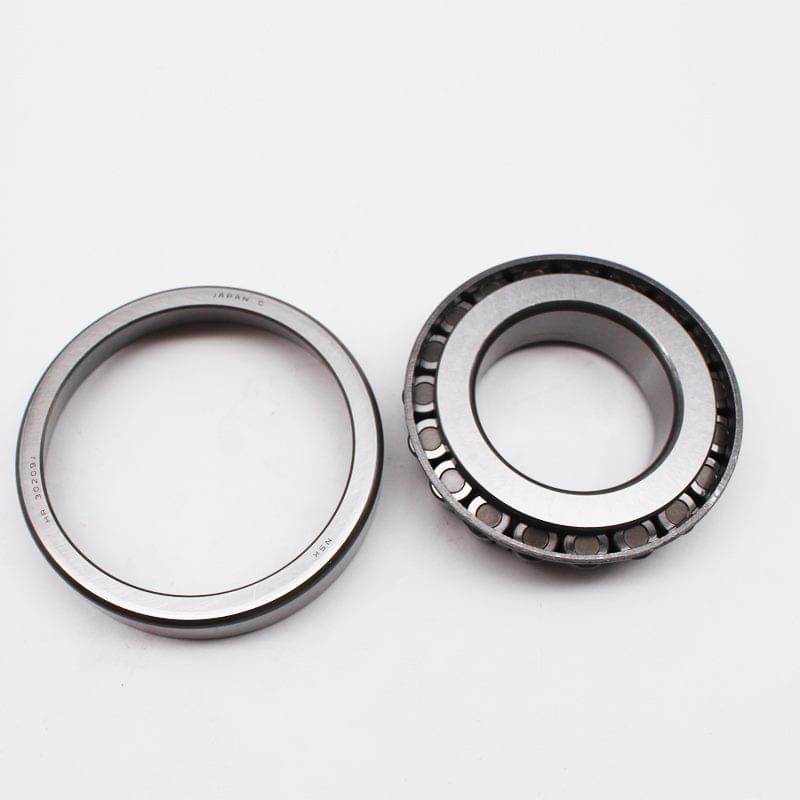
For smooth motion, the right clearance is essential.
Understanding Clearance for Tapered Roller Bearings
1. What Internal Clearance Means:
Internal clearance is the amount of internal free movement within a bearing before it is mounted. For tapered roller bearings, it’s typically expressed as axial clearance6 or "end play" after mounting, because radial clearance is directly related to axial position.
| Code | Meaning | Relative Size |
|---|---|---|
| C11 | Smaller than C22 | Very small |
| C22 | Smaller than Normal | Small |
| CN | Normal | Standard |
| C33 | Larger than Normal | Large |
| C4 | Larger than C33 | Very large |
| C5 | Larger than C4 | Extremely large |
| 2. Why Clearance Matters for Smooth Motion: | Clearance Condition | Effect on Smooth Motion |
|---|---|---|
| Too small (or preload7 too high) | Excessive friction, heat generation, potential seizure. Motion becomes rough, energy loss increases. | |
| Too large (excessive end play) | Shaft can move axially, causing vibration8, noise, and inconsistent positioning. Precision is lost. | |
| Optimal clearance | Smooth rotation, minimal vibration8, proper load distribution, long life. |
| 3. Factors That Affect Clearance: | Factor | Effect on Clearance |
|---|---|---|
| Interference fit on shaft | Stretches inner ring, reduces clearance. | |
| Temperature difference (inner hotter) | Inner ring expands more, reduces clearance. | |
| Overall temperature rise | All components expand, but differential matters most. | |
| Load | Heavy loads can temporarily reduce effective clearance. |
| 4. Selecting Clearance for Smooth Motion Applications: | Application | Recommended Clearance | Reason |
|---|---|---|---|
| General precision (gearboxes) | C33 (set to specific end play) | Allows for thermal expansion5, adjustable to optimal. | |
| High-speed spindles | C33 or special preload7 | Preload eliminates play, but clearance must allow for heat. | |
| Low-speed, stable temperature | CN | Simpler, adequate. | |
| High-temperature environments | C33 or C4 | Extra space prevents thermal preload7. | |
| Robotics, precision positioning | C33 with preload7 | Preload eliminates play for accuracy. |
| 5. Clearance and Smooth Motion: The Relationship: | Desired Outcome | Clearance Strategy |
|---|---|---|
| Minimize axial play | Set to zero clearance or light preload7. | |
| Minimize vibration8 | Optimal clearance prevents roller skidding. | |
| Allow for heat expansion | Start with C33 to ensure positive clearance hot. | |
| Maximize rigidity | Preload (requires careful adjustment). |
My Insight on Clearance:
For smooth motion, clearance is not just a number—it’s a tuning parameter. A machine tool spindle needs different clearance than a conveyor roller. In our factory, we produce bearings with various clearance groups to meet these diverse needs. For a distributor like Rajesh, understanding clearance helps him guide customers. When a customer complains of vibration8, he can ask, "What clearance did you use? How did you set it?" The answer often points to the solution. Clearance is the invisible factor that makes a visible difference in smoothness.
What is the difference between cylindrical and tapered roller bearings?
You have a shaft with heavy loads. You’re considering both cylindrical and tapered roller bearings. Which one is right for smooth motion? Understanding their differences is key to selecting the right bearing.
The main difference between cylindrical and tapered roller bearings is load capability1. Cylindrical roller bearings are designed for high radial loads only2 (with very limited or no axial capacity). Tapered roller bearings are designed for combined radial and axial loads3, handling both simultaneously. For smooth motion, cylindrical bearings offer lower friction and higher speed, while tapered bearings provide adjustability4 and can handle thrust loads that would destroy cylindrical bearings.
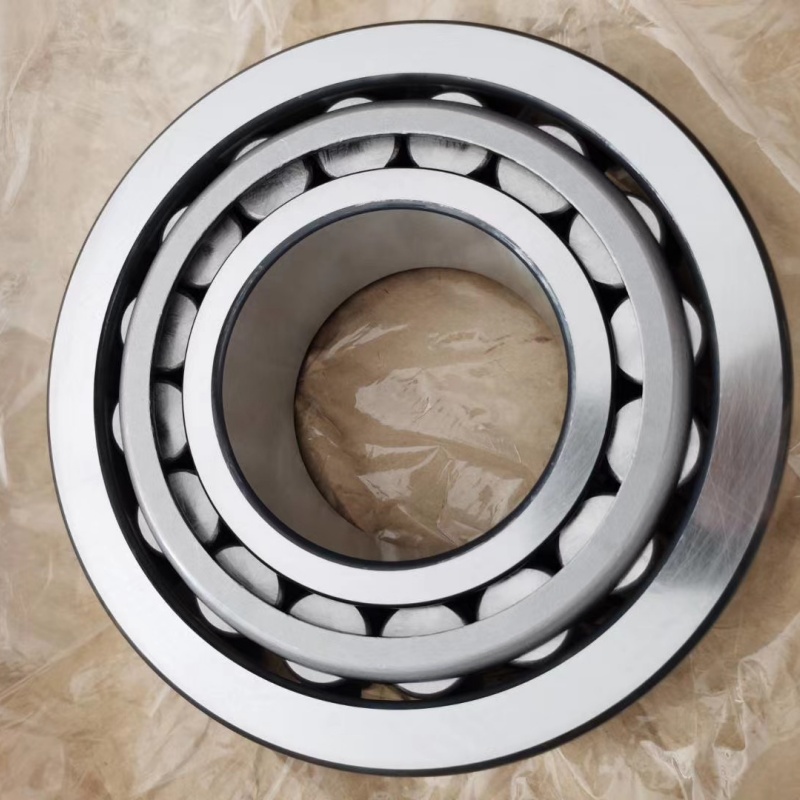
Each type excels in different applications.
Detailed Comparison for Smooth Motion Applications
| 1. Load Capability: | Load Type | Cylindrical Roller Bearing | Tapered Roller Bearing |
|---|---|---|---|
| Radial loads | Excellent (highest capacity per size) | Very good | |
| Axial loads | None (or very limited with flanged designs) | Excellent (in one direction per bearing) | |
| Combined loads | Not suitable | Ideal |
| 2. Smooth Motion Characteristics: | Aspect | Cylindrical Roller Bearing | Tapered Roller Bearing |
|---|---|---|---|
| Friction | Lower (pure rolling) | Higher (rolling + sliding at roller ends) | |
| Speed capability | Higher | Moderate | |
| Heat generation | Lower | Higher | |
| Vibration | Low with precision grades5 | Can be very low with proper adjustment | |
| Rigidity | Good radial, no axial | Excellent in both directions (when preloaded) |
| 3. Adjustability: | Feature | Cylindrical Roller Bearing | Tapered Roller Bearing |
|---|---|---|---|
| Internal clearance | Fixed by manufacturing | Adjustable during installation | |
| Preload capability1 | Not possible (with standard designs) | Yes, can be preloaded | |
| Field adjustment | No | Yes (by tightening nut) | |
| Benefit for smooth motion | Consistent, but not tunable | Can be optimized for specific application |
| 4. Precision Grades: | Grade | Cylindrical | Tapered |
|---|---|---|---|
| P0 (Normal) | Available | Available | |
| P6 | Available | Available | |
| P5 | Available | Available | |
| P4 | Available | Limited (special designs) |
| 5. Application Guide for Smooth Motion: | If your application requires… | Choose… |
|---|---|---|
| High radial load, no axial, high speed | Cylindrical roller bearing | |
| Combined loads, adjustable clearance | Tapered roller bearing | |
| Minimal friction, energy efficiency6 | Cylindrical roller bearing | |
| Zero axial play, high rigidity7 | Tapered roller bearing (preloaded) | |
| Easy mounting and dismounting | Either (tapered separable, cylindrical often separable) |
| 6. Examples in Precision Machinery: | Machine Element | Typical Bearing Choice | Why |
|---|---|---|---|
| Machine tool spindle (high speed) | Angular contact ball or cylindrical roller | Low friction, high speed | |
| Machine tool spindle (high rigidity7) | Tapered roller (preloaded) | Eliminates play, handles thrust | |
| Gearbox pinion shaft | Tapered roller (preloaded) | Maintains gear mesh | |
| Gearbox intermediate shaft (radial only) | Cylindrical roller | High radial capacity, no thrust | |
| Robot joint | Tapered roller (preloaded) | Precision, rigidity, compact |
My Insight on the Difference:
In precision machinery, the choice between cylindrical and tapered often comes down to whether axial loads exist. If the shaft experiences thrust, tapered is usually the answer. If the load is purely radial, cylindrical offers lower friction and higher speed. For a distributor like Rajesh, understanding this helps him ask the right questions. "Is there any axial load on the shaft?" If yes, tapered. If no, cylindrical might be better. This simple question leads to the right bearing for smooth, reliable motion.
Conclusion
High-accuracy tapered roller bearings are essential for smooth mechanical motion in applications with combined loads. Their precision manufacturing, adjustable clearance, and ability to handle both radial and axial forces make them ideal for machine tools, gearboxes, and robotics. Understanding clearance codes (C1-C3) and the difference from cylindrical bearings ensures you select the right bearing for your precision requirements.
-
Understanding load capability helps in selecting the right bearing for your application. ↩ ↩ ↩ ↩ ↩ ↩ ↩ ↩ ↩
-
Explore this to see if your application requires bearings that excel in radial load handling. ↩ ↩ ↩ ↩ ↩ ↩ ↩ ↩ ↩
-
Learn how tapered roller bearings can manage both load types effectively. ↩ ↩ ↩ ↩ ↩ ↩ ↩ ↩ ↩ ↩ ↩ ↩ ↩ ↩
-
Find out how adjustability can optimize performance in specific applications. ↩ ↩ ↩ ↩
-
Understanding precision grades can help you choose the right bearing for high-performance applications. ↩ ↩ ↩ ↩ ↩ ↩
-
Learn how choosing the right bearing can lead to energy savings in your operations. ↩ ↩ ↩ ↩ ↩
-
Explore the significance of rigidity in applications requiring precise motion. ↩ ↩ ↩ ↩ ↩ ↩ ↩
-
Understanding the relationship between clearance and vibration can help improve machine efficiency. ↩ ↩ ↩ ↩
