
Your mining conveyor carries tons of material daily. A bearing failure stops everything. The replacement cost is high, but the downtime cost is devastating. For tough industrial tasks, you need bearings built to survive.
Industrial-grade tapered roller bearings are engineered for the most demanding applications. They feature case-hardened steel for a tough, wear-resistant surface and a ductile core, precision-ground rollers and raceways for optimal load distribution, robust cages (often machined brass) to withstand shock, and advanced sealing to keep contaminants out. These bearings deliver reliable performance in mining, construction, steel mills, and heavy equipment where failure is not an option.
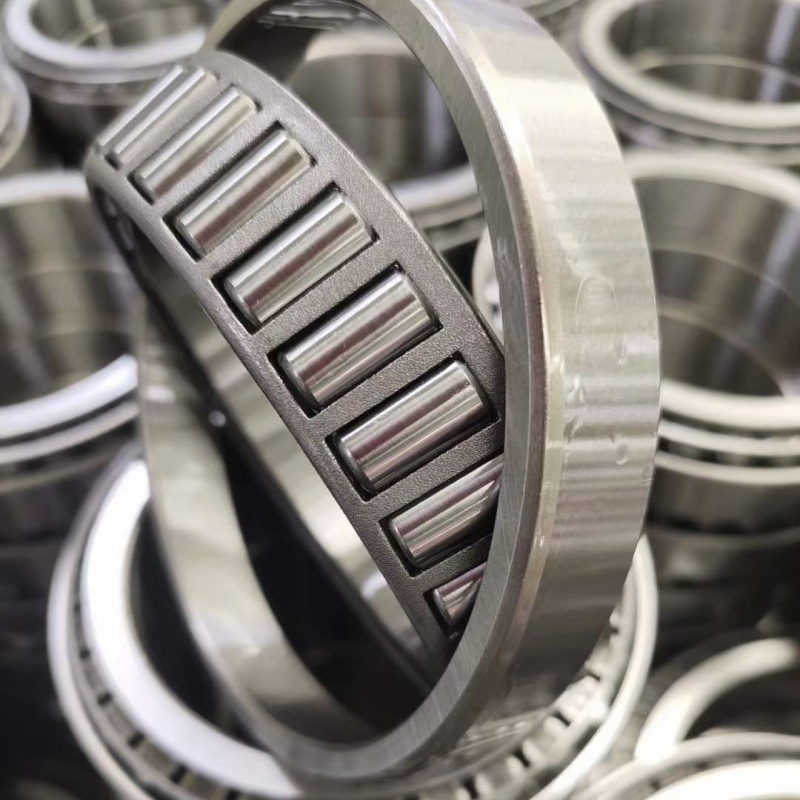
In my years of supplying bearings to heavy industries worldwide, I’ve learned that "industrial-grade" is not just a marketing term. It’s a specification. For a distributor like Rajesh in India, supplying bearings to mines and steel plants means understanding what makes a bearing tough enough for the job. Let’s explore what a tapered roller is, the advantages of these bearings, how they differ from cylindrical rollers, and how to use them correctly.
What is a tapered roller?
You look at a bearing and see rollers that are not straight cylinders. They are shaped like a traffic cone. This shape is not random. It’s the result of careful engineering to solve a specific problem: handling forces from multiple directions.
A tapered roller is a frustum of a cone—a cone-shaped rolling element used in tapered roller bearings1. Its tapered geometry, with a larger diameter at one end and smaller at the other, allows it to roll smoothly between tapered raceways on the inner and outer rings. This design ensures that all points on the roller surface travel at different speeds, matching the varying speeds of the raceways, which is essential for pure rolling motion2 and handling combined loads.
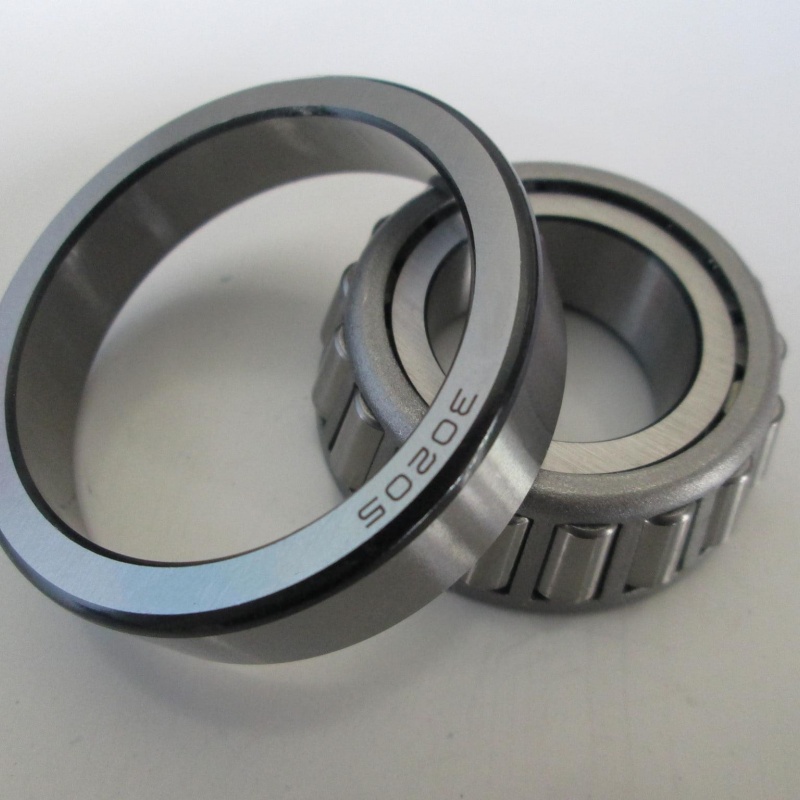
The tapered shape is not just for show. It’s a mathematical solution to a complex kinematic problem.
The Geometry and Function of a Tapered Roller
1. The Key Principle: Convergence
If you extend the lines of the tapered roller’s surface and the tapered raceways of the inner and outer rings, they all meet at a common point on the bearing’s centerline. This is the fundamental principle of tapered roller bearing design.
| 2. Why This Matters: | Aspect | Explanation |
|---|---|---|
| Pure Rolling Motion | Because the roller and raceways are all angled to meet at one point, the roller rolls without sliding. This minimizes friction and heat. | |
| Load Distribution | The line contact between roller and raceway spreads the load over a larger area than point contact in ball bearings, allowing for higher load capacity. | |
| Combined Load Handling | The angle of the roller means it can transmit both radial and axial forces simultaneously. The axial load is carried through the roller ends to the guiding flange. |
3. Roller Profile:
Modern tapered rollers are not perfect straight cones. They have a slight crowning3 (a very slight curve along their length). This prevents edge loading under misalignment or deflection, distributing stress more evenly and extending bearing life.
4. The Guiding Flange:
The inner ring (cone) has a large rib or flange. The large end of the tapered roller contacts this flange. This contact guides the roller and also transmits a significant portion of the axial load. The interface between the roller end and the flange is a critical area that must be properly lubricated.
5. Manufacturing Precision:
Tapered rollers are manufactured to extremely tight tolerances. Their diameter, angle, and surface finish are all controlled to microns. This ensures that every roller in a bearing shares the load equally.
| 6. Industrial-Grade Requirements: | Requirement | Why It Matters for Tough Tasks |
|---|---|---|
| High-quality steel | Must withstand heavy loads without deforming. | |
| Precise geometry | Ensures even load distribution4 across all rollers. | |
| Excellent surface finish | Reduces friction and wear, extends life. | |
| Proper heat treatment | Case-hardened for tough surface and ductile core. | |
| Consistent roller size | All rollers in a bearing must be identical to share load. |
My Insight on Tapered Rollers:
In our factory, we inspect tapered rollers rigorously. The angle must be perfect. If one roller has a slightly different angle, it will carry more load than its neighbors and fail early. For industrial applications like mining conveyors, this precision is not optional—it’s essential. A single bad roller can shut down a production line. When a client like Rajesh in India orders tapered roller bearings1 for a steel plant, he’s relying on the precision of millions of these tiny cones. They are simple in concept but complex in execution. The tapered roller is the heart of the bearing, and its quality determines the bearing’s performance and life.
What are the advantages of tapered roller bearings?
You need bearings for a tough industrial application. Why choose tapered? What do they offer that other bearing types don’t? The answer lies in their unique combination of capabilities.
The main advantages of tapered roller bearings are: high combined load capacity1 (handling both radial and axial forces simultaneously), adjustability2 (internal clearance can be set during installation), rigidity3 (providing stable shaft support under heavy loads), separability4 (easing mounting and inspection), durability5 (long service life in demanding conditions), and shock load resistance6 (robust design withstands impacts).
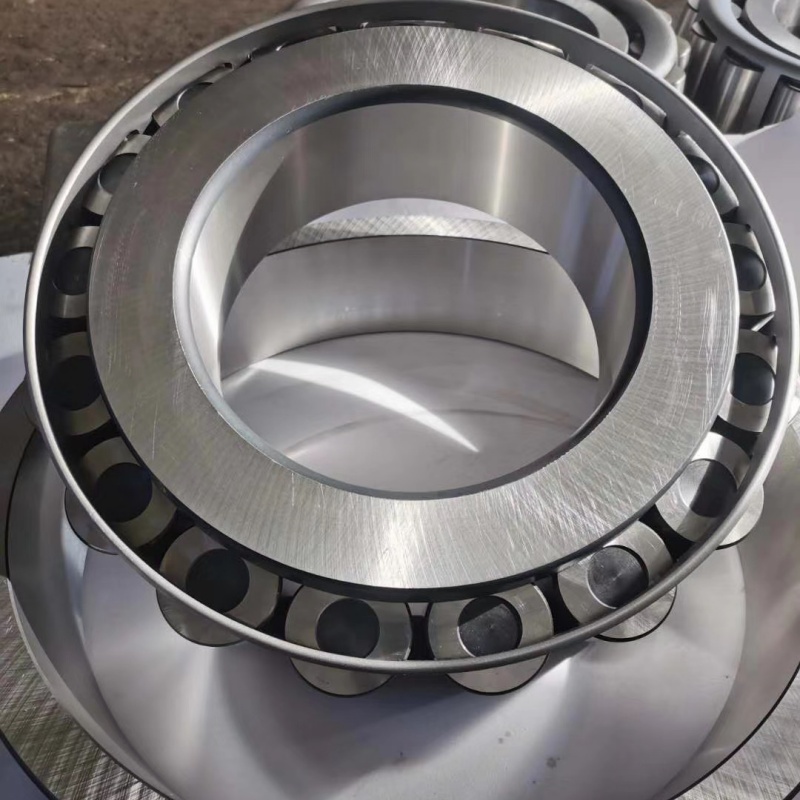
These advantages make them the bearing of choice for critical industrial applications.
Detailed Breakdown of Tapered Roller Bearing Advantages
1. High Combined Load Capacity:
This is their defining feature. Unlike cylindrical roller bearings (radial only) or thrust bearings (axial only), tapered rollers handle both.
| Load Type | How Tapered Bearings Handle It |
|---|---|
| Radial loads | Distributed along line contact between rollers and raceways. |
| Axial loads | Transmitted through roller ends to the guiding flange. |
| Combined loads | The angled rollers convert axial force into a radial component, distributing it along the line contact. |
2. Adjustability:
This is a unique and powerful advantage for industrial applications.
| Adjustment Type | How Achieved | Benefit |
|---|---|---|
| End play (positive clearance) | Loosen adjusting nut slightly | Allows thermal expansion without preload. |
| Zero clearance | Tighten nut until no detectable play | Provides precise shaft location. |
| Preload (negative clearance) | Tighten nut further to create slight compression | Maximizes rigidity3, essential for gearboxes and spindles. |
| 3. Rigidity and Stability: | Factor | Explanation | Industrial Benefit |
|---|---|---|---|
| Line contact | Rollers contact raceways along a line, not a point. | Higher stiffness than ball bearings. | |
| Preload capability | Can be set to eliminate all play. | Maintains precise gear meshes, reduces vibration. | |
| Multiple row designs | Available in double-row and four-row configurations. | Extreme rigidity3 for rolling mills, heavy equipment. |
| 4. Separability: | Feature | Benefit |
|---|---|---|
| Cone (inner ring + rollers + cage) separates from cup (outer ring) | Easier mounting, especially for large bearings. | |
| Can inspect rollers and raceways separately | Simplifies maintenance and condition monitoring. | |
| Interchangeable components (within matched sets) | Allows replacement of worn parts without discarding entire bearing. |
| 5. Durability and Shock Load Resistance: | Industrial Challenge | How Tapered Bearings Meet It |
|---|---|---|
| Heavy sustained loads | Case-hardened steel provides strength and wear resistance. | |
| Shock loads (impacts) | Robust rollers and cages (often brass) absorb impact. | |
| Contamination | Can be equipped with effective seals. | |
| Misalignment (minor) | Precision manufacturing allows some tolerance, but proper alignment is still required. |
| 6. Versatility in Design: | Configuration | Application |
|---|---|---|
| Single row | Most common, for moderate loads. | |
| Double row (TDO, TDI) | For higher loads, space savings. | |
| Four row | Rolling mills, extreme loads. | |
| Matched pairs | For applications requiring precise preload (pinion bearings). |
My Insight on Advantages for Tough Tasks:
When a steel mill client in Russia needed bearings for a new rolling mill, the choice was clear: four-row tapered roller bearings. Nothing else could handle the extreme radial and axial loads, provide the required rigidity3, and withstand the shock of steel passing through the rolls. The advantages of tapered rollers aren’t theoretical—they are practical solutions to real industrial challenges. For a distributor like Rajesh, understanding these advantages helps him recommend the right bearing for tough applications. When a customer describes a demanding job, he can say, "This is what tapered rollers are built for."
What is the difference between cylindrical and tapered roller bearings?
You have a shaft with heavy radial loads. You’re considering both cylindrical and tapered roller bearings. How do you choose? Understanding their differences is key to selecting the right bearing for the job.
The main difference between cylindrical and tapered roller bearings is load capability1. Cylindrical roller bearings are designed for high radial loads only2 (with very limited or no axial capacity). Tapered roller bearings are designed for combined radial and axial loads3, handling both simultaneously. Cylindrical bearings have higher speed capability4 and lower friction, while tapered bearings offer adjustability5 and can accommodate thrust.
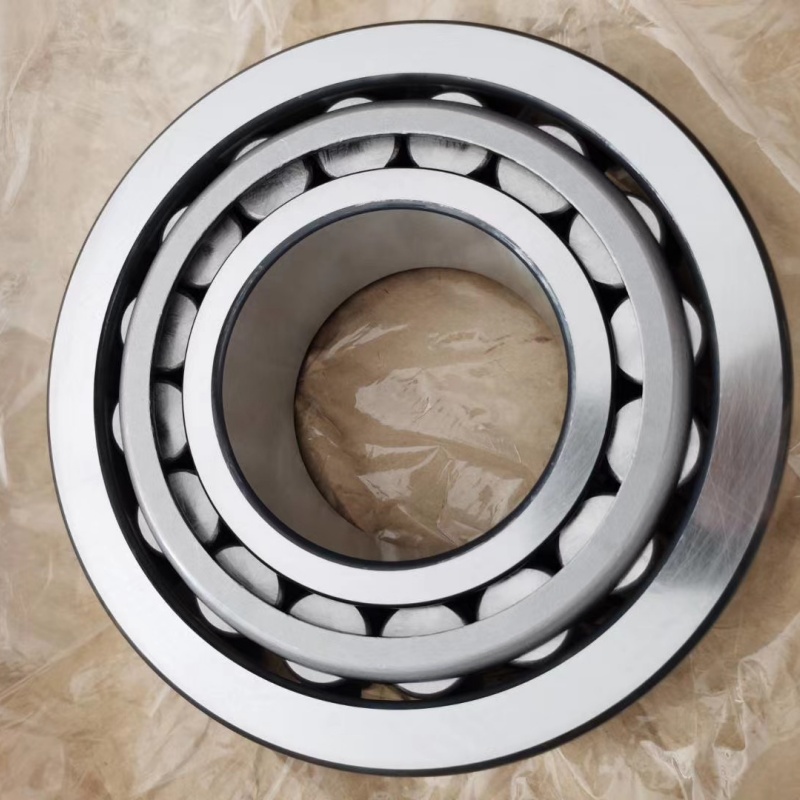
Each type excels in different applications.
Detailed Comparison: Cylindrical vs. Tapered Roller Bearings
| 1. Load Capability: | Load Type | Cylindrical Roller Bearing | Tapered Roller Bearing |
|---|---|---|---|
| Radial loads | Excellent (highest capacity per size) | Very good | |
| Axial loads | None (or very limited with flanged designs) | Excellent (in one direction per bearing) | |
| Combined loads | Not suitable | Ideal |
| 2. Speed Capability: | Aspect | Cylindrical Roller Bearing | Tapered Roller Bearing |
|---|---|---|---|
| Friction | Lower (pure rolling) | Higher (rolling + sliding at roller ends) | |
| Speed limit | Higher | Moderate | |
| Heat generation | Lower | Higher | |
| Best for | High-speed applications | Moderate-speed, high-load applications |
| 3. Adjustability: | Feature | Cylindrical Roller Bearing | Tapered Roller Bearing |
|---|---|---|---|
| Internal clearance | Fixed by manufacturing | Adjustable during installation | |
| Preload capability1 | Not possible (with standard designs) | Yes, can be preloaded | |
| Field adjustment | No | Yes (by tightening nut) |
| 4. Separability: | Feature | Cylindrical Roller Bearing | Tapered Roller Bearing |
|---|---|---|---|
| Separable components | Often separable (inner ring can be removed from outer) | Fully separable (cone and cup separate) | |
| Mounting ease | Good | Excellent for large bearings |
| 5. Misalignment Tolerance: | Aspect | Cylindrical Roller Bearing | Tapered Roller Bearing |
|---|---|---|---|
| Misalignment tolerance | Very low (can cause edge loading) | Low (requires precise alignment) | |
| Self-alignment | No | No (use spherical roller bearings for misalignment) |
| 6. Typical Applications: | Application | Cylindrical Roller Bearing | Tapered Roller Bearing |
|---|---|---|---|
| Electric motors | Yes (for pure radial loads) | No (axial load not needed) | |
| Gearboxes | Sometimes (for radial-only positions) | Yes (for positions with axial thrust) | |
| Wheel hubs | No (needs axial capacity) | Yes (ideal) | |
| Machine tool spindles | Yes (high speed, radial) | Yes (if axial loads present, with preload) | |
| Rolling mills | Yes (for radial-only positions) | Yes (for combined load positions) | |
| Pumps | Yes (if no thrust) | Yes (if thrust present) |
| 7. Selection Guide: | If your application requires… | Choose… |
|---|---|---|
| High radial load only, high speed | Cylindrical roller bearing | |
| High radial load + axial load | Tapered roller bearing | |
| Adjustable clearance/preload | Tapered roller bearing | |
| Low friction, energy efficiency | Cylindrical roller bearing | |
| Easy mounting for large bearings | Either (tapered has advantage of full separability6) | |
| Thrust in both directions | Paired tapered roller bearings |
My Insight on the Difference:
A common mistake is using a cylindrical roller bearing where axial loads exist. The bearing has no capacity for thrust, so it fails quickly. Conversely, using a tapered roller bearing where only radial loads exist adds unnecessary friction and cost. For a distributor like Rajesh, understanding this difference helps him guide customers. When a customer says, "My bearing failed, and it’s a cylindrical roller," he can ask, "Was there any axial load on the shaft?" If yes, the solution might be switching to a tapered roller bearing. This diagnostic skill turns a parts seller into a problem-solver.
How to use a taper roller bearing?
You have the right tapered roller bearing1. Now you need to install it correctly. Improper installation is the most common cause of premature failure. Using a tapered roller bearing1 correctly involves proper mounting2, adjustment3, and maintenance4.
To use a tapered roller bearing1 correctly: 1) Prepare the shaft and housing with correct dimensions and surface finish. 2) Mount the bearing using appropriate tools (bearing heater for interference fits). 3) Adjust the axial clearance5 or preload to the manufacturer’s specification. 4) Lubricate properly with the correct grease or oil. 5) Seal effectively to keep contaminants out. 6) Monitor operation for temperature, noise, and vibration. 7) Maintain regularly with relubrication6 and condition checks.
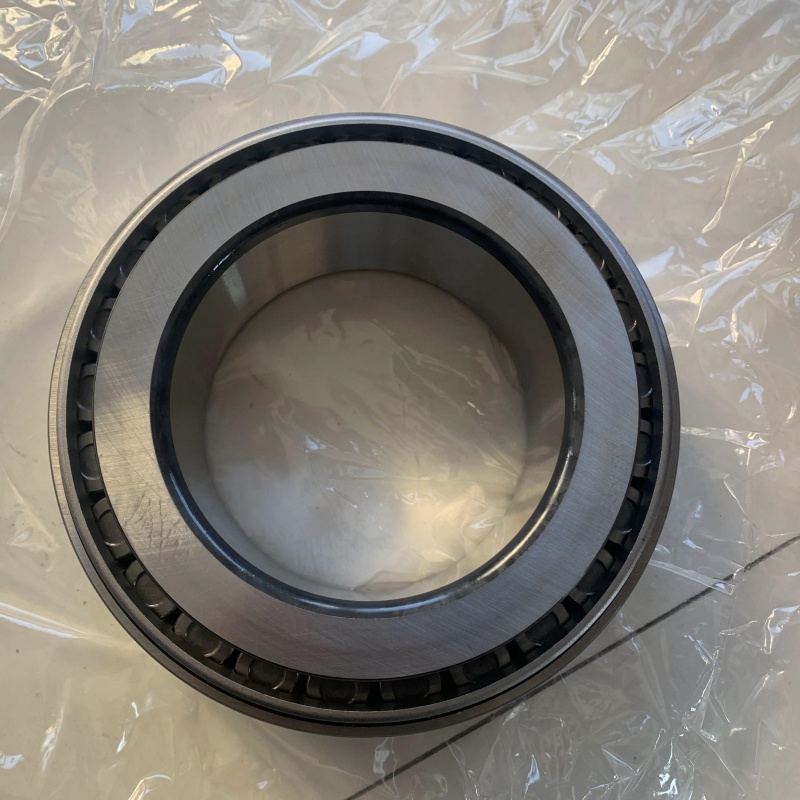
Correct usage is a process, not a single step.
A Step-by-Step Guide to Using Tapered Roller Bearings
| Step 1: Preparation | Task | Requirement | Why It Matters |
|---|---|---|---|
| Shaft inspection | Correct diameter, roundness, surface finish (Ra 0.8-1.6 μm). | Ensures proper fit, prevents creep. | |
| Housing inspection | Correct bore, roundness, surface finish. | Ensures proper fit for outer ring. | |
| Cleanliness | Thoroughly clean shaft, housing, and work area. | Prevents contamination that would destroy bearing. | |
| Tool preparation | Have bearing heater, press, torque wrench, dial indicator ready. | Enables correct mounting2 and adjustment3. |
| Step 2: Mounting | Component | Mounting Method | Notes |
|---|---|---|---|
| Cone (inner ring + rollers) | Heat to 80-100°C using induction heater or oil bath. Slide onto shaft. | Never hammer. Heat expands inner ring for easy fit. | |
| Cup (outer ring) | Press into housing using appropriate tool. | Apply force only to outer ring. | |
| Both rings | If bearing is mounted as a unit, use press on the ring being fitted. | Ensure alignment during pressing. |
Step 3: Adjustment (The Critical Step)
Tapered roller bearings require setting the correct axial clearance5 or preload.
| Desired Setting | Method | Application |
|---|---|---|
| End play (positive clearance) | Tighten adjusting nut until slight resistance, then back off to specified amount. Measure with dial indicator. | General applications, allows thermal expansion. |
| Zero clearance | Tighten until no detectable axial play. | Precise shaft location. |
| Preload (negative clearance) | Tighten to specified torque, creating slight internal compression. | High rigidity applications (pinion bearings, spindles). |
| Step 4: Lubrication | Lubricant Type | Selection Criteria | Application Method |
|---|---|---|---|
| Grease | Choose viscosity and type based on load, speed, temperature. | Fill bearing cavity 30-50%. Housing cavity 30-60%. | |
| Oil | For higher speeds or temperatures. | Oil bath, circulation, or mist. |
| Step 5: Sealing | Seal Type | Protection Level | Application |
|---|---|---|---|
| Contact seals | High | Dirty environments | |
| Labyrinth seals | Moderate, low friction | Cleaner environments, higher speeds | |
| V-rings | Good, simple | General industrial |
| Step 6: Operation Monitoring | Parameter | What to Watch For | Action if Abnormal |
|---|---|---|---|
| Temperature | Sudden rise, or consistently >80-90°C | Check lubrication6, clearance, alignment. | |
| Noise | Grinding, clicking, rumbling | Inspect for damage, contamination. | |
| Vibration | Increase from baseline | Check alignment, balance. |
| Step 7: Maintenance | Activity | Frequency | Purpose |
|---|---|---|---|
| Relubrication6 | Per manufacturer schedule | Maintain lubricant film, purge contaminants. | |
| Condition monitoring | Regular intervals | Detect problems early. | |
| Inspection during downtime | During scheduled maintenance4 | Check for wear, damage. |
My Insight on Correct Usage:
The most common mistake I see in industrial applications is incorrect adjustment3. A bearing set too loose will vibrate and wear quickly. A bearing set too tight will overheat and seize. The adjustment3 step is where experience matters. For a distributor like Rajesh, providing simple adjustment3 instructions with every bearing sale can prevent countless failures. A one-page guide showing how to set end play with a dial indicator turns a good product into a reliable solution. Using a tapered roller bearing1 correctly is not complicated, but it must be done deliberately. Skipping steps or guessing leads to failure. Following the process leads to long, reliable life.
Conclusion
Industrial-grade tapered roller bearings are built for tough tasks through precision manufacturing, robust materials, and thoughtful design. Their advantages—combined load capacity, adjustability, rigidity, and durability—make them essential for demanding applications. Understanding their geometry, how they differ from cylindrical bearings, and how to use them correctly ensures they deliver reliable performance in the harshest environments.
-
Explore this resource to understand the essential practices for ensuring the longevity and performance of tapered roller bearings. ↩ ↩ ↩ ↩ ↩ ↩ ↩ ↩ ↩
-
Learn the correct mounting techniques to avoid premature failure and ensure optimal performance of your bearings. ↩ ↩ ↩ ↩ ↩
-
Adjustment is critical for performance; this guide provides detailed instructions to ensure proper setup. ↩ ↩ ↩ ↩ ↩ ↩ ↩ ↩ ↩ ↩ ↩
-
Regular maintenance is essential for performance; find out the best practices to keep your bearings in top shape. ↩ ↩ ↩ ↩ ↩
-
Understanding axial clearance is crucial for proper bearing function; this link provides in-depth insights. ↩ ↩ ↩ ↩
-
Proper lubrication is key to bearing longevity; discover the best methods to keep your bearings running smoothly. ↩ ↩ ↩ ↩ ↩
