
Your production line runs 24/7. A single bearing failure stops everything. The cost of unplanned downtime dwarfs the price of the bearing. For continuous operation, you need bearings designed to last, not just to run.
Long-life tapered roller bearings for continuous operation achieve extended service through optimized internal geometry, high-quality case-hardened steel, precision heat treatment, and advanced surface finishes. When properly selected, mounted, lubricated, and maintained, these bearings can operate reliably for tens of thousands of hours, even under heavy combined loads and challenging conditions.
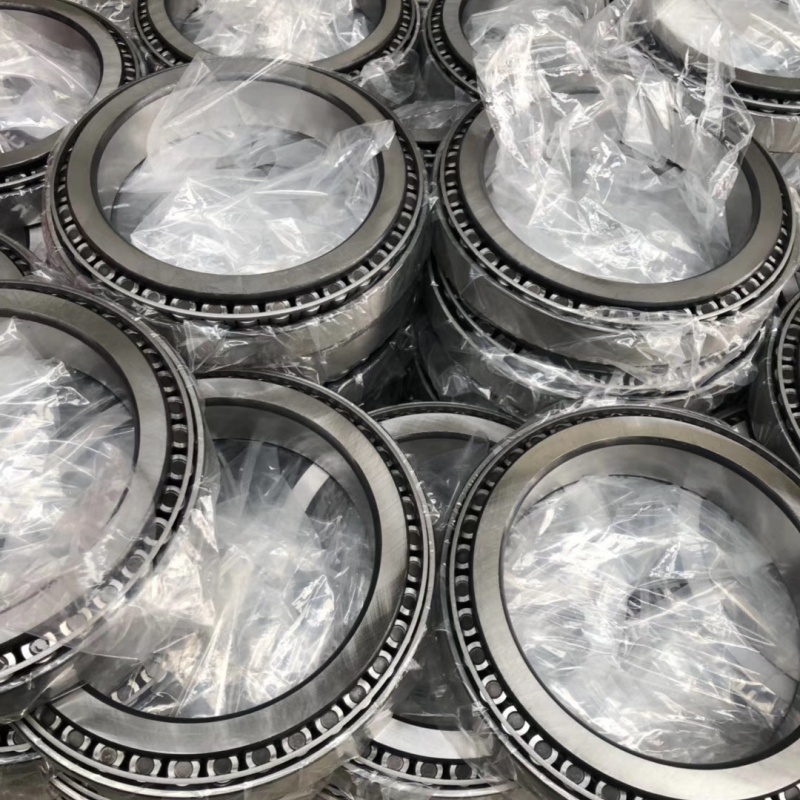
In my years of supplying bearings to industries that never sleep—steel mills, mines, power plants—I’ve learned that "long life" is not a guarantee. It’s the result of correct design, selection, and care. Let’s explore what determines bearing lifespan, understand the L10 life concept, compare C3 and C4 clearances, and examine the disadvantages of tapered roller bearings, all to help you achieve maximum service life in continuous operation.
What is the lifespan of a roller bearing?
A customer asks: "How long will this bearing last?" You can’t give a simple number. Lifespan depends on many variables. But you can give an estimate based on engineering principles.
The lifespan of a roller bearing is not a fixed number of hours. It is a statistical prediction based on the bearing’s basic dynamic load rating (C) , the applied equivalent dynamic load (P) , and the operating conditions. The calculated L10 life1 (or L10h in hours) is the life that 90% of a group of identical bearings will achieve or exceed under the same conditions. Actual lifespan can vary significantly due to lubrication, contamination, alignment, installation, and maintenance.
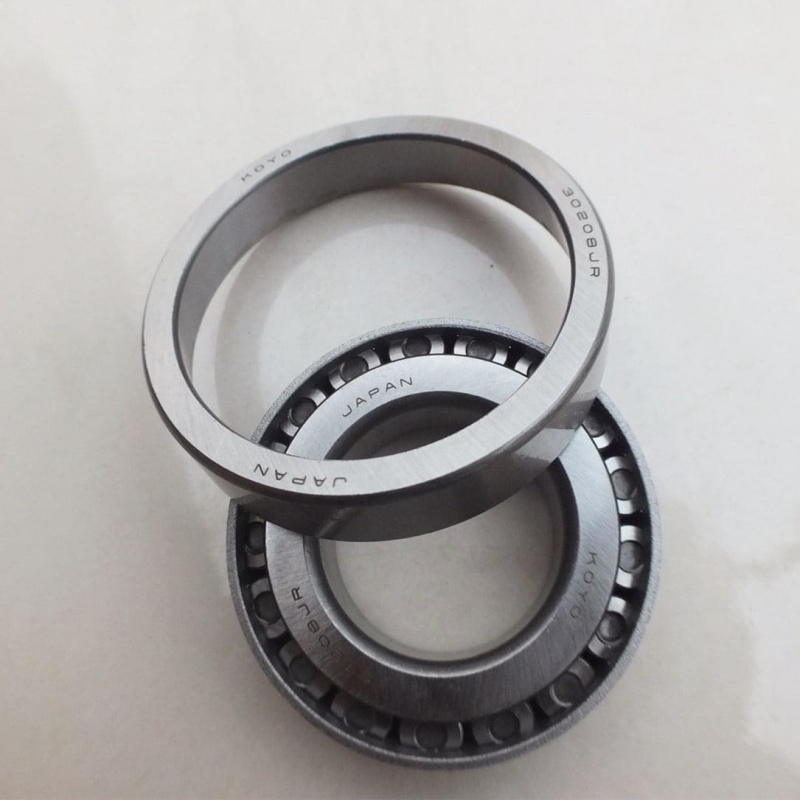
Lifespan is not a guarantee. It’s a probability.
Factors That Determine Roller Bearing Lifespan
1. Calculated Life (Theoretical):
This is the starting point, based on the bearing’s load ratings and the applied load.
- Basic Dynamic Load Rating (C)2: The load a bearing can theoretically carry for one million revolutions with 90% reliability.
- Equivalent Dynamic Load (P)3: A calculated single load that combines the actual radial and axial loads.
- Life Equation: L10 = (C / P)^3 for ball bearings, (C / P)^(10/3) for roller bearings. This gives life in millions of revolutions.
- Life in Hours: L10h = (1,000,000 / (60 × RPM)) × L10.
2. Real-World Factors That Extend or Reduce Life:
Theoretical life is rarely achieved in practice because of these factors.
| Factor | Impact on Life | How to Optimize |
|---|---|---|
| Lubrication4 | The most critical factor. Good lubrication can multiply life. Poor lubrication destroys bearings rapidly. | Use correct lubricant type, viscosity, and quantity. Maintain relubrication schedule. |
| Contamination5 | Hard particles act as abrasives, wearing surfaces and causing indentations. | Use effective seals. Keep work area clean during installation. |
| Alignment | Misalignment causes edge loading, drastically reducing life. | Ensure precise shaft and housing alignment. Use self-aligning bearings if necessary. |
| Installation | Incorrect mounting (hammer blows, wrong fits) introduces damage. | Use proper tools (heaters, presses). Follow mounting instructions. |
| Operating Conditions | Overload, shock, vibration, temperature extremes all reduce life. | Design with safety factors. Monitor conditions. |
| Maintenance6 | Neglect leads to premature failure. | Implement condition monitoring (temperature, vibration). Follow maintenance schedule. |
| 3. Typical Lifespan Ranges (For Guidance Only): | Application Type | Typical L10h Target | Real-World Experience |
|---|---|---|---|
| General industrial (gearboxes, conveyors) | 20,000 – 40,000 hours | 2-5 years of continuous operation | |
| Heavy industrial (crushers, mills) | 40,000 – 80,000 hours | 4-8 years with good maintenance | |
| Automotive (wheel bearings) | 100,000 – 200,000 km | 5-10 years of typical use | |
| Critical continuous operation (power plants) | 80,000 – 100,000+ hours | 10+ years with planned replacement |
My Insight on Lifespan:
I’ve seen bearings fail after 1,000 hours and others last 50,000 hours in the same application. The difference was not the bearing quality but the conditions. A bearing that is properly lubricated, perfectly aligned, and protected from contamination will dramatically outlast one that is neglected. For a distributor like Rajesh, the key message to customers is: "The bearing’s potential life is in your hands. We provide the quality; you provide the care." Helping customers understand this builds realistic expectations and encourages good maintenance practices. Lifespan is a partnership between the manufacturer, the installer, and the operator.
What is the L10 life1 of bearings?
You see "L10 life1" in bearing catalogs. It’s a standard term, but what does it actually mean? Is it the average life? The guaranteed life? Understanding this concept is essential for bearing selection.
The L10 life1 (also called B10 life) is the basic rating life defined by ISO 281. It is the number of revolutions (or hours at a given speed) that 90% of a group of apparently identical bearings will complete or exceed before the first evidence of fatigue develops. It is a statistical measure, not a guarantee for an individual bearing. The median life2 (average life) of a bearing group is approximately 5 times the L10 life.
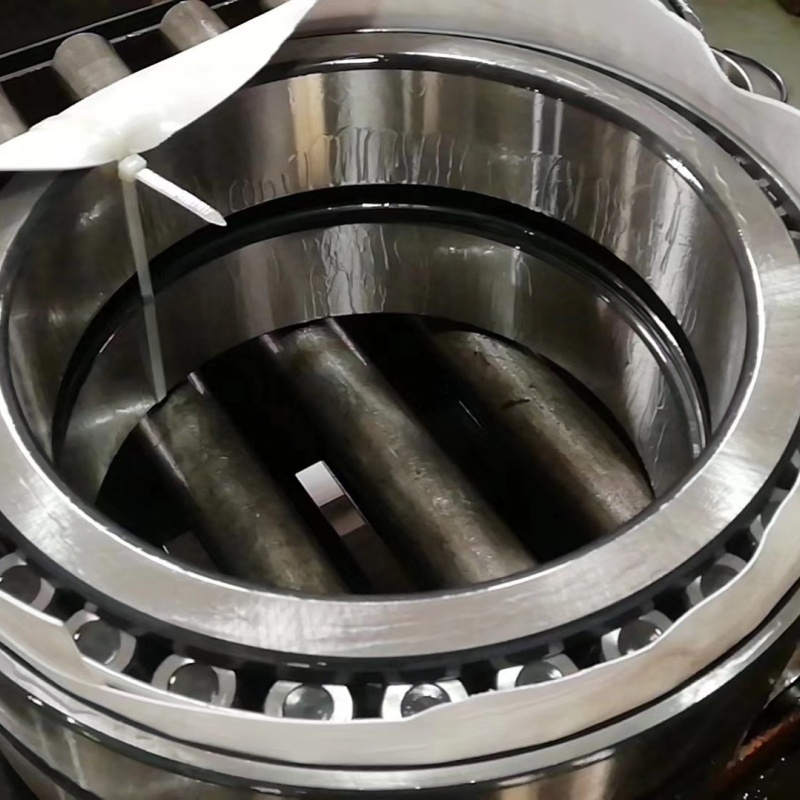
This concept is fundamental to bearing engineering.
Understanding and Using L10 Life
1. The Statistical Foundation:
Imagine testing 100 identical bearings under identical conditions.
- After L10 hours, 10 bearings have failed (due to material fatigue). 90 are still running.
- After 5 × L10 hours (the median life2), 50 bearings have failed. 50 are still running.
- The "life" of a bearing is a distribution, not a single number.
2. The Life Equation (Simplified):
For roller bearings (including tapered roller bearings), the basic L10 life1 is:
L10 = (C / P)^(10/3) (in millions of revolutions)
Where:
- C = Basic dynamic load rating3 (from catalog)
- P = Equivalent dynamic load (calculated from actual radial and axial loads)
| 3. Adjusting for Reliability: The L10 life1 is based on 90% reliability. For higher reliability, use adjustment factors: |
Reliability | Life Factor (relative to L10) |
|---|---|---|
| 90% (L10) | 1.0 | |
| 95% (L5) | 0.62 | |
| 96% (L4) | 0.53 | |
| 97% (L3) | 0.44 | |
| 98% (L2) | 0.33 | |
| 99% (L1) | 0.21 |
4. L10h4 (Life in Hours):
Most practical applications use hours.
L10h4 = (1,000,000 / (60 × RPM)) × L10
5. Example Calculation:
For a tapered roller bearing with:
- C = 150 kN
- P = 50 kN
- RPM = 1000
L10 (revolutions) = (150 / 50)^(10/3) = 3^(3.33) ≈ 3^3.33 ≈ 37.6 million revolutions
L10h4 = (1,000,000 / (60 × 1000)) × 37.6 = (16.67) × 37.6 ≈ 627 hours
This means 90% of bearings in this application would survive at least 627 hours. The average life would be about 5 × 627 = 3,135 hours.
| 6. Limitations of L10 Life: | Limitation | Explanation |
|---|---|---|
| Fatigue-Only | L10 life1 only considers material fatigue. It does not account for lubrication, contamination, misalignment, or installation errors. | |
| Ideal Conditions | The calculation assumes ideal mounting, alignment, and lubrication. | |
| Statistical Nature | It’s a prediction for a group, not a guarantee for an individual bearing. | |
| Modern Materials | With today’s clean steels, actual fatigue life often exceeds calculated L10 life1. |
My Insight on L10 Life:
When a customer asks, "How long will this bearing last?" I give them the L10h4 calculation based on their load and speed. But I always add: "This is under ideal conditions. Your real life depends on how well you protect and maintain the bearing." L10 life1 is a design tool, not a warranty. For a distributor like Rajesh, understanding L10 helps him have meaningful conversations with engineering customers. It shows that he speaks their language. It also helps set realistic expectations. If a bearing is calculated to last 10,000 hours but fails in 2,000, the problem is likely installation or contamination, not the bearing itself. L10 life1 is the bridge between bearing theory and field reality
Which bearing is better, C31 or C42?
You’re selecting a tapered roller bearing for a continuous operation application. The application runs hot. Should you choose C31 or C42 clearance? Is one "better" than the other? The answer depends on your specific conditions.
For tapered roller bearings3, there is no universal "better" between C31 and C42. C31 is better for most general industrial applications with moderate temperature rises (up to 80-100°C operating temperature4) and standard interference fits5. C42 is better for high-temperature applications (above 100°C), severe interference fits5, or where significant thermal expansion6 is expected. Using C42 when C31 is needed can cause excessive internal movement and reduced rigidity7. Using C31 when C42 is needed can cause thermal preload and seizure.
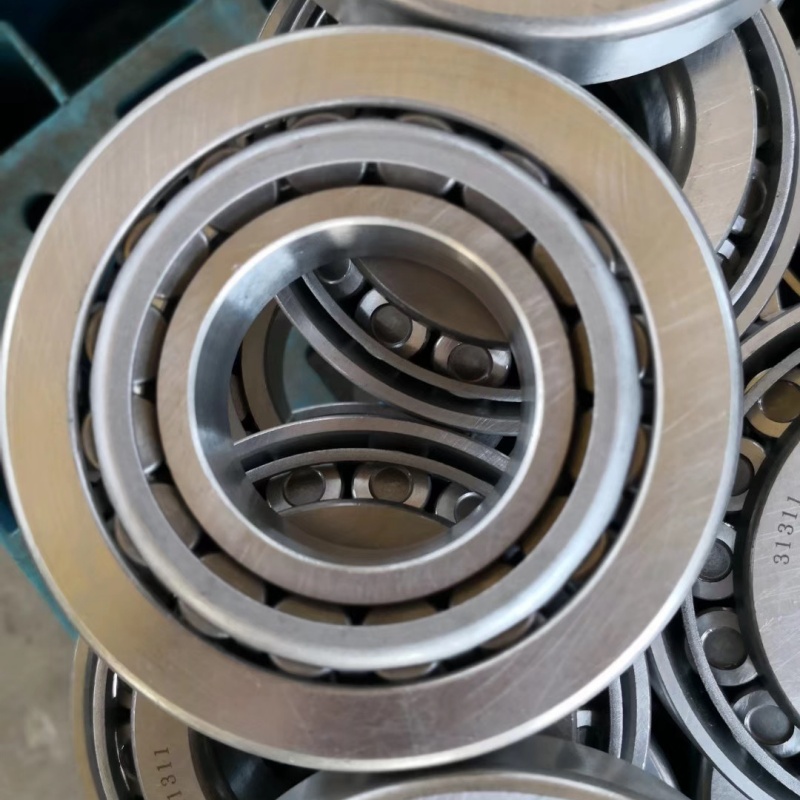
The choice is dictated by the application, not by one being inherently superior.
A Detailed Comparison: C31 vs. C42 for Tapered Roller Bearings
1. Quantitative Difference:
The actual clearance values depend on the bearing size. For a typical 100mm bore tapered roller bearing:
- C31 clearance range: Approximately 0.100mm to 0.160mm axial clearance8 (after mounting)
- C42 clearance range: Approximately 0.160mm to 0.220mm axial clearance8
C42 provides about 50-60% more internal space than C31.
| 2. When to Choose C31: | Condition | Why C31 is Suitable |
|---|---|---|
| Normal operating temperature4 (up to 80-100°C) | Standard thermal expansion6 is accommodated. | |
| Standard interference fits5 (k6, m6) | The clearance reduction from fit is within C31‘s capacity. | |
| General industrial applications (gearboxes, conveyors, wheel ends) | The default choice for most machinery. | |
| Applications requiring good rigidity7 | Less internal movement means stiffer shaft support. | |
| Cost-sensitive applications | C31 bearings are more common and often more readily available. |
| 3. When to Choose C42: | Condition | Why C42 is Necessary |
|---|---|---|
| High operating temperature4 (above 100°C, e.g., kilns, dryers) | Greater thermal expansion6 requires more initial clearance. | |
| Severe interference fits5 (p6, r6) | The inner ring stretches significantly, reducing clearance. C42 ensures residual clearance remains positive. | |
| High-speed applications | More clearance allows for better lubricant flow and reduced heat generation. | |
| Applications with large temperature differentials | Where inner ring gets much hotter than outer ring. |
4. The Risks of Getting It Wrong:
| Wrong Choice | Consequence |
|---|---|
| Using C31 where C42 is needed | Clearance may become zero or negative at operating temperature4 → preload, overheating, seizure. |
| Using C42 where C31 is needed | Excessive internal clearance → rollers skid instead of roll, causing smearing, noise, vibration, and premature failure. The shaft may also have excessive axial movement. |
5. Tapered Roller Bearing Specifics:
Tapered roller bearings are unique because their clearance is adjustable during installation. You set the final axial play by how you tighten the nut.
- With a C31 bearing, you have a certain range of adjustment available.
- With a C42 bearing, you have even more "room" to adjust.
- The goal is to achieve the desired operating clearance (which may be zero or even preload for some applications).
6. Decision Guide for Continuous Operation:
| Application Type | Operating Temperature | Recommended Clearance |
|---|---|---|
| General gearbox, conveyor | Normal (up to 80°C) | C31 |
| Electric motor, pump | Moderate (80-100°C) | C31 |
| Kiln, dryer, hot process | High (>100°C) | C42 |
| High-speed spindle | Moderate, but high speed | C31 or special |
| Heavy truck wheel end | Normal | C31 (set to specific end play) |
My Insight on Clearance Selection:
In continuous operation, the cost of failure is high. Getting clearance wrong can shut down a production line. For a distributor like Rajesh, the key is to know his customers’ applications. If a cement plant customer orders bearings for a kiln, C42 is essential. If a general engineering shop orders for a gearbox, C31 is the safe default. When in doubt, ask: "What is the operating temperature4? How tight is the shaft fit?" The answers guide the choice. One is not "better" than the other. They are both necessary for serving a diverse industrial customer base.
What are the disadvantages of tapered roller bearings?
You love tapered roller bearings for their combined load capacity and adjustability. But every bearing type has limitations. Knowing them helps you avoid using them where they don’t belong.
The main disadvantages of tapered roller bearings are: limited speed capability1 (due to sliding friction at the roller/flange interface), sensitivity to misalignment2 (they cannot accommodate shaft deflection), complexity of mounting3 (requiring precise adjustment), higher friction4 than ball bearings, need for paired mounting5 to handle bidirectional axial loads, and potential for roller skewing6 under certain conditions. They are also generally more expensive than ball bearings7.
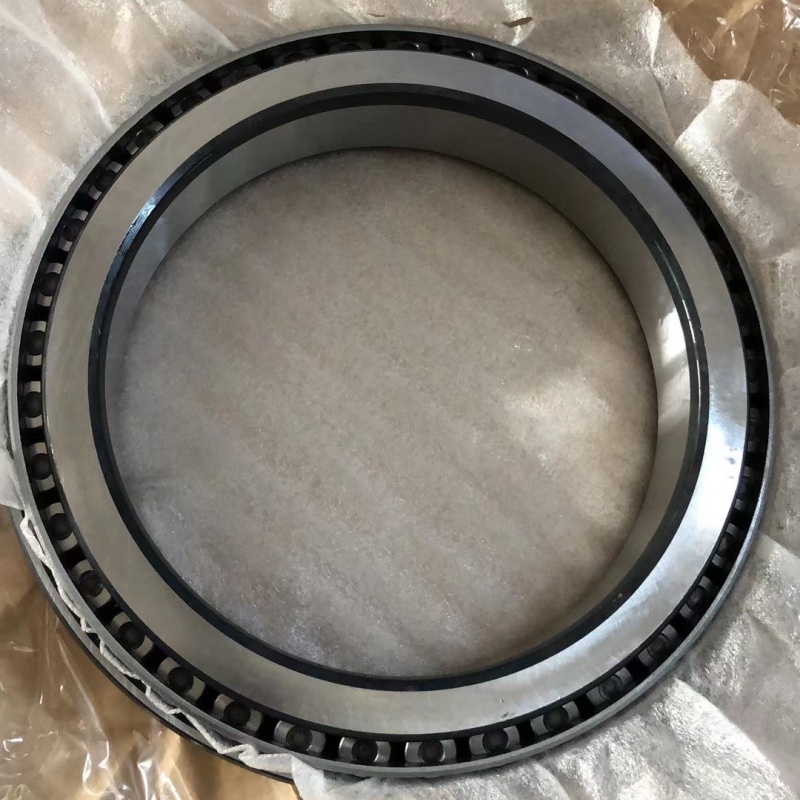
Understanding these limitations ensures you use tapered rollers where they excel and choose other types where they don’t.
Detailed Look at Tapered Roller Bearing Limitations
1. Speed Capability:
- Why: The sliding contact between the roller ends and the guide flange generates heat. At high speeds, this can lead to overheating and lubricant breakdown.
- Impact: Speed limits are lower than for ball bearings or cylindrical roller bearings. High-speed applications require special designs, precision grades, and advanced lubrication.
- Mitigation: Use oil lubrication, precision grades, and ensure adequate cooling.
2. Misalignment Sensitivity:
- Why: Tapered roller bearings are designed for precise alignment. Even small angular misalignment causes edge loading, where the roller contacts the raceway at its edge instead of along its full length. This drastically reduces life.
- Impact: They cannot tolerate shaft deflection or housing misalignment.
- Mitigation: Ensure precise machining and alignment. Use self-aligning bearings (spherical roller bearings) if misalignment is unavoidable.
3. Mounting Complexity:
- Why: Tapered roller bearings require adjustment during installation. You must set the correct axial clearance or preload by tightening a nut. This requires skill, tools (dial indicators, torque wrenches), and experience.
- Impact: Incorrect adjustment leads to premature failure. Too loose causes vibration and wear. Too tight causes overheating and seizure.
- Mitigation: Provide clear instructions. Use preset or pre-adjusted units where possible.
4. Higher Friction:
- Why: The combination of rolling and sliding friction (at roller ends) results in higher overall friction than ball bearings.
- Impact: Higher energy consumption, more heat generation. Not ideal for energy-efficient designs8.
- Mitigation: Use in applications where load capacity justifies the friction. Ensure proper lubrication.
5. Bidirectional Axial Load Requirement:
- Why: A single tapered roller bearing can only support axial load in one direction (towards the large end of the rollers).
- Impact: To handle axial loads in both directions or to locate a shaft, they must be used in pairs (face-to-face or back-to-back arrangement). This increases complexity and cost.
- Mitigation: Design shaft support systems with paired bearings.
6. Cost:
- Why: Complex geometry, precision manufacturing, and matched sets make them more expensive than ball bearings7.
- Impact: For applications where a ball bearing would suffice, tapered rollers are over-engineering.
Disadvantage Summary Table:
| Disadvantage | When It Matters Most | Alternative to Consider |
|---|---|---|
| Limited speed | High-speed spindles, turbines | Angular contact ball bearings, cylindrical roller bearings |
| Misalignment sensitivity | Applications with shaft deflection, poor alignment | Spherical roller bearings |
| Mounting complexity | Field repairs, unskilled labor | Pre-adjusted units, cartridge bearings |
| Higher friction | Energy-efficient designs, low-power applications | Ball bearings |
| Bidirectional load requirement | Simple shaft support with thrust in both directions | Paired tapered bearings (planned for) |
| Cost | Cost-sensitive applications | Deep groove ball bearings |
My Insight on Disadvantages:
I once had a client who used tapered roller bearings in a long, flexible shaft application. The shaft deflected under load, misaligning the bearings. They failed repeatedly. We suggested switching to spherical roller bearings, which accommodate misalignment. The problem was solved. The lesson: respect the disadvantages. Tapered roller bearings are superb in their intended applications—rigid shafts9, combined loads, adjustable settings. But they are not a universal solution. For a distributor like Rajesh, understanding these limitations helps him guide customers to the right product. When a customer describes an application with shaft deflection, he can say, "Tapered rollers might not be your best choice. Let me show you a better option." That’s expertise that builds trust.
Conclusion
Long life for tapered roller bearings in continuous operation depends on correct selection, proper mounting, and diligent maintenance. Understand L10 life as a statistical prediction. Choose C3 for general applications, C4 for high heat. Respect their disadvantages—speed limits, misalignment sensitivity, mounting complexity—to avoid misapplication. With the right approach, these bearings deliver reliable performance for tens of thousands of hours.
-
Understanding speed limitations helps in selecting the right bearing for high-speed applications. ↩ ↩ ↩ ↩ ↩ ↩ ↩ ↩ ↩ ↩ ↩ ↩ ↩ ↩ ↩ ↩ ↩ ↩ ↩ ↩ ↩ ↩ ↩ ↩ ↩ ↩ ↩ ↩ ↩ ↩ ↩ ↩
-
Learn how misalignment can lead to premature failure and how to mitigate it. ↩ ↩ ↩ ↩ ↩ ↩ ↩ ↩ ↩ ↩ ↩ ↩ ↩ ↩ ↩ ↩ ↩ ↩ ↩ ↩ ↩
-
Explore the intricacies of mounting to ensure proper installation and longevity. ↩ ↩ ↩ ↩
-
Discover the implications of friction on energy efficiency and performance. ↩ ↩ ↩ ↩ ↩ ↩ ↩ ↩ ↩ ↩ ↩
-
Understanding paired mounting is crucial for applications needing bidirectional support. ↩ ↩ ↩ ↩ ↩ ↩
-
Learn about roller skewing to prevent issues in bearing performance. ↩ ↩ ↩ ↩ ↩
-
Explore the factors contributing to the cost of tapered roller bearings. ↩ ↩ ↩ ↩
-
Find alternatives that offer better energy efficiency for your applications. ↩ ↩ ↩
-
Discover the ideal applications for tapered roller bearings to maximize their benefits. ↩