
Your container of spherical roller bearings arrives at the port in Mumbai after six weeks at sea. You open the boxes and find orange rust on the precision raceways. The bearings are ruined. A $50,000 shipment is now scrap. This disaster could have been prevented with proper packaging and rust protection.
For exported spherical roller bearings, proper packaging and rust protection require multiple layers: rust-preventive oil applied to all surfaces, VCI (Volatile Corrosion Inhibitor) paper wrapping, individual plastic film sealing, protective cardboard boxing, and pallettizing with stretch wrap for container loading. This system protects against humidity, temperature changes, and salt air during ocean freight, ensuring bearings arrive in perfect condition.
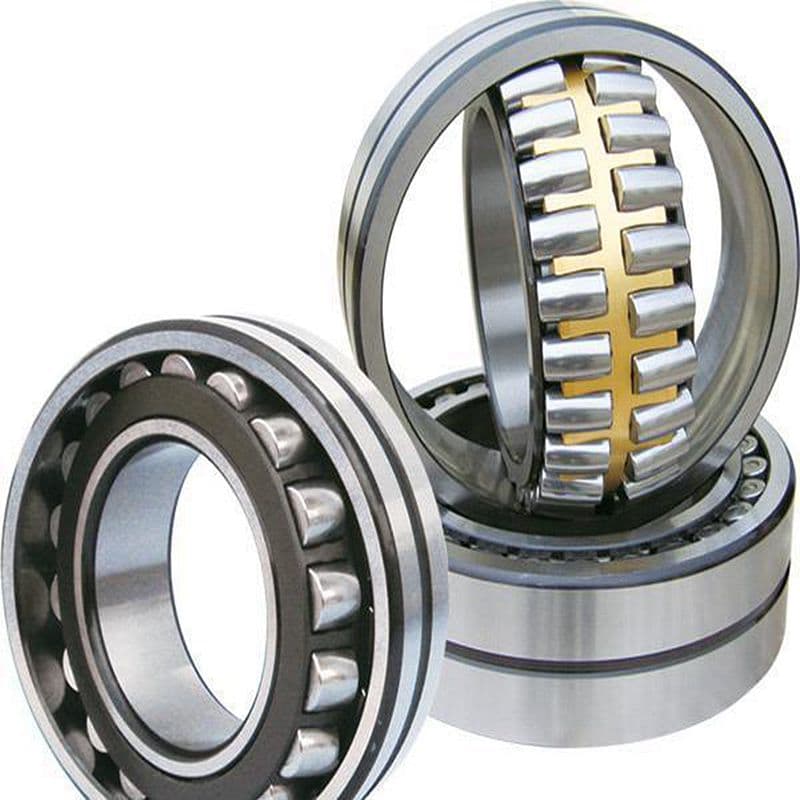
In my years of exporting bearings to over 20 countries, I’ve learned that ocean freight is the enemy of precision steel. Humidity, salt air, and temperature swings can destroy bearings that were perfect when they left the factory. Let’s explore the ISO standards that govern bearing quality, the HS code for customs, the disadvantages of spherical roller bearings, and how to check clearance—all essential knowledge for ensuring your bearings survive the journey and perform as expected.
What is the ISO standard for spherical roller bearings?
You order spherical roller bearings. The supplier says they meet "ISO standards." What does that mean? Which specific standard applies? Knowing this helps you verify quality and ensure consistency across suppliers.
The main ISO standard for spherical roller bearings is ISO 4921 (Radial bearings – Geometrical product specifications (GPS) and tolerance values). This standard defines the dimensional and geometrical tolerances for bearings, including bore diameter, outside diameter, width, and running accuracy. Additionally, ISO 57532 specifies internal clearance values, and ISO 2813 covers dynamic load ratings and life calculation. For spherical roller bearings specifically, ISO 205154 may apply.
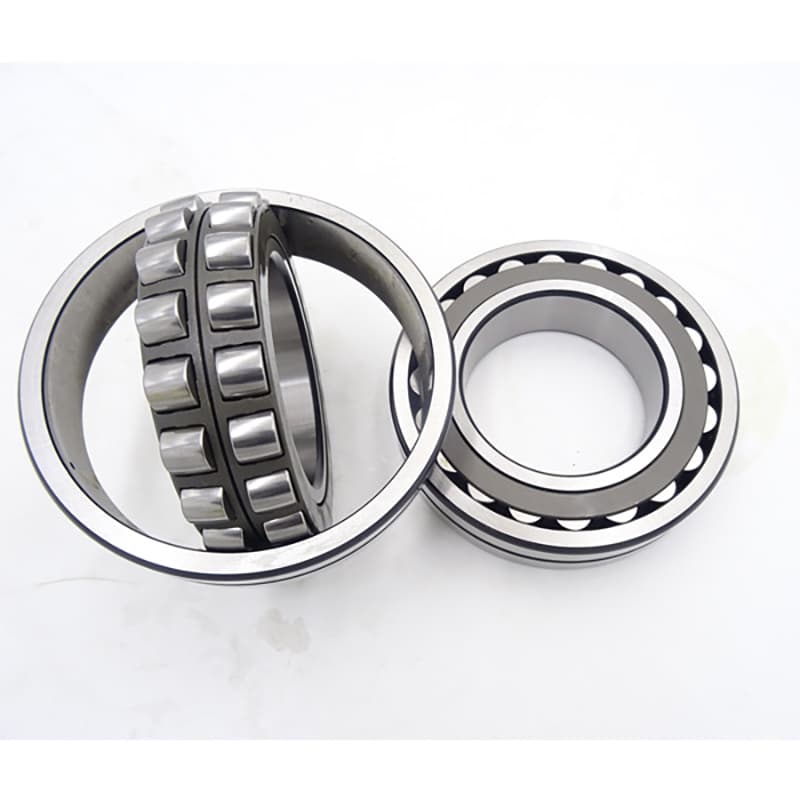
These standards ensure that a bearing from one manufacturer is interchangeable with a bearing from another.
Key ISO Standards for Spherical Roller Bearings
| 1. ISO 4921: Tolerances5 (The Basics): This is the most fundamental standard. It defines: |
Tolerance Aspect | What It Controls | Common Classes |
|---|---|---|---|
| Bore diameter (d) | How accurately the inner ring fits on the shaft. | Normal (P0), P6, P5 | |
| Outside diameter (D) | How accurately the outer ring fits in the housing. | Normal (P0), P6, P5 | |
| Width (B) | Overall bearing width. | Normal (P0) | |
| Radial runout | How much the outer ring wobbles as the bearing rotates. Indicates precision. | Normal, P6, P5 |
A bearing marked "P0" meets standard tolerances. "P6" or "P5" indicates tighter tolerances for higher precision applications.
| 2. ISO 57532: Internal Clearance: This standard defines the ranges for radial internal clearance. |
Clearance Group | Code | Relative Size |
|---|---|---|---|
| Group 1 | C1 | Smaller than C2 | |
| Group 2 | C2 | Smaller than Normal | |
| Group 0 (Normal) | CN | Standard | |
| Group 3 | C3 | Larger than Normal | |
| Group 4 | C4 | Larger than C3 | |
| Group 5 | C5 | Largest |
For each bearing size, the standard provides a table of minimum and maximum clearance values for each group. This ensures that a C3 bearing from any compliant manufacturer will have the same internal clearance range.
3. ISO 2813: Dynamic Load Ratings and Life:
This standard provides the method for calculating the basic dynamic load rating (C) and the basic rating life (L10) of bearings. It allows engineers to compare bearings from different manufacturers on a consistent basis.
4. ISO 205154: Spherical Roller Bearings (Specific):
This is a more specific standard that covers dimensions and specifications for spherical roller bearings, including boundary dimensions for common series (222, 223, 230, 231, 232, 239). It ensures interchangeability of bearings from different manufacturers.
5. Why Standards Matter for Exporters and Importers:
| Benefit | Explanation |
|---|---|
| Interchangeability6 | A bearing made to ISO standards in China will fit a housing designed in Germany. |
| Quality Assurance | Standards provide a benchmark. You can request certification that bearings meet specific ISO requirements. |
| Clear Communication | Specifying "ISO 4921 P6" tells the manufacturer exactly what precision you need. |
| Legal/Contractual Basis | If bearings fail to meet the specified standard, you have a basis for claim. |
My Insight on ISO Standards:
In our factory, we manufacture spherical roller bearings to ISO standards. Every batch is tested to ensure dimensions fall within the required tolerance ranges. When we ship to a client like Rajesh in India, we can provide an inspection report showing actual measured values and confirming they meet ISO 4921 and ISO 57532. This documentation builds trust. It proves that our bearings are not just "made in China" but are made to a globally recognized standard. For a buyer, always ask: "Do your bearings comply with ISO standards? Can you provide a test report?" The answer separates professional manufacturers from commodity traders.
What is the HS Code 848230001?
You are preparing shipping documents for spherical roller bearings. Customs asks for the HS code. 84823000 appears in some references. Is this the right code? Understanding this helps your shipment clear customs smoothly.
HS Code 84823000 is the Harmonized System code for "Spherical roller bearings2" under the broader heading 8482 (Ball or roller bearings). The code breaks down as: 84 (Machinery and mechanical appliances), 82 (Ball or roller bearings), 30 (Spherical roller bearings2). This 6-digit code is used internationally, though many countries add additional digits for further detail (e.g., 8482.30.00, 8482.30.10).
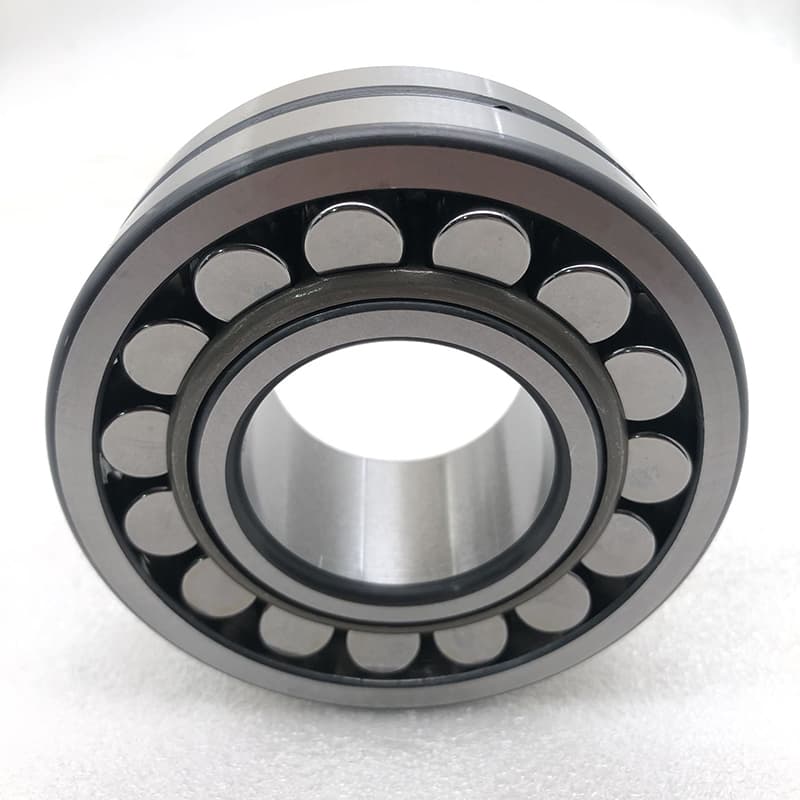
Getting this code right on your commercial invoice and packing list is essential for customs clearance.
Understanding and Using HS Code 84823000
| 1. The Structure of the Code: | Level | Code | Description |
|---|---|---|---|
| Chapter | 84 | Nuclear reactors, boilers, machinery and mechanical appliances; parts thereof | |
| Heading | 8482 | Ball or roller bearings | |
| Sub-heading | 8482 30 | Spherical roller bearings2 | |
| 6-digit code | 8482 30 00 | Spherical roller bearings2 (international) |
2. Country-Specific Extensions:
Different countries add digits for their own tariff schedules.
| Country | Extended HS Code | Notes |
|---|---|---|
| United States | 8482.30.00 | HTSUS code. May have further statistical suffixes. |
| India | 8482 30 00 | Often uses the 8-digit code 84823000. |
| China | 8482 30 00 | Export declarations use this code. |
| European Union | 8482 30 00 | Combined Nomenclature (CN) code. |
| Brazil | 8482.30.10 or 8482.30.90 | NCM code, may split by size or type. |
| 3. Related HS Codes for Bearings: | Bearing Type | HS Code |
|---|---|---|
| Ball bearings | 8482.10 | |
| Tapered roller bearings | 8482.20 | |
| Spherical roller bearings2 | 8482.30 | |
| Cylindrical roller bearings | 8482.40 | |
| Needle roller bearings | 8482.50 | |
| Other roller bearings | 8482.80 | |
| Parts of bearings | 8482.91 (balls, rollers) and 8482.99 (other parts) |
4. Why HS Codes Matter for Exporters and Importers:
| Aspect | Importance |
|---|---|
| Duty Calculation3 | The HS code determines the import duty rate. Using the wrong code can mean overpaying or underpaying duties. |
| Customs Clearance | Customs uses the HS code to classify goods. A mismatch can delay clearance. |
| Trade Statistics4 | Accurate codes ensure proper trade data. |
| Documentation | The HS code must match on commercial invoice, packing list, and bill of lading. |
5. Best Practices for Using HS Code5e 84823000](https://sdycbearing.com/2026/01/07/high-temperature-spherical-roller-bearings-for-dryers-ovens-and-kilns/)[^1]:
| Step | Action |
|---|---|
| 1. Verify with Supplier | Ensure your supplier uses the correct code on export documents. We always use 84823000 for spherical roller bearings. |
| 2. Confirm with Local Customs | Ask your customs broker to confirm the correct code for your country’s tariff schedule. |
| 3. Use Consistently | Use the same code on all documents for a shipment. |
| 4. Keep Records | Maintain records of HS codes used for future reference. |
My Insight on HS Codes:
In our daily export operations, we ensure that every commercial invoice and packing list for spherical roller bearings shows HS Code 848230001. This is standard practice. However, we always remind our clients: the final responsibility for correct classification rests with the importer. A buyer like Rajesh in India should verify with his customs agent that 84823000 is the correct code for import into India. Sometimes local interpretations differ slightly. By working together—supplier provides the standard code, buyer verifies locally—we ensure smooth customs clearance. A small line on a document can prevent big headaches at the port.
What are the disadvantages of spherical roller bearings?
You love spherical roller bearings for their load capacity and misalignment tolerance. But no bearing is perfect. Knowing their disadvantages helps you avoid using them in the wrong applications.
The main disadvantages of spherical roller bearings are: higher cost1 compared to other bearing types, limited speed capability2 (due to roller mass and sliding friction), sensitivity to poor lubrication3 (especially at roller ends), higher friction4 than ball bearings, complexity5 in manufacturing and design, and potential for roller skewing6 under certain conditions. They are also not suitable for pure axial loads without radial load present.
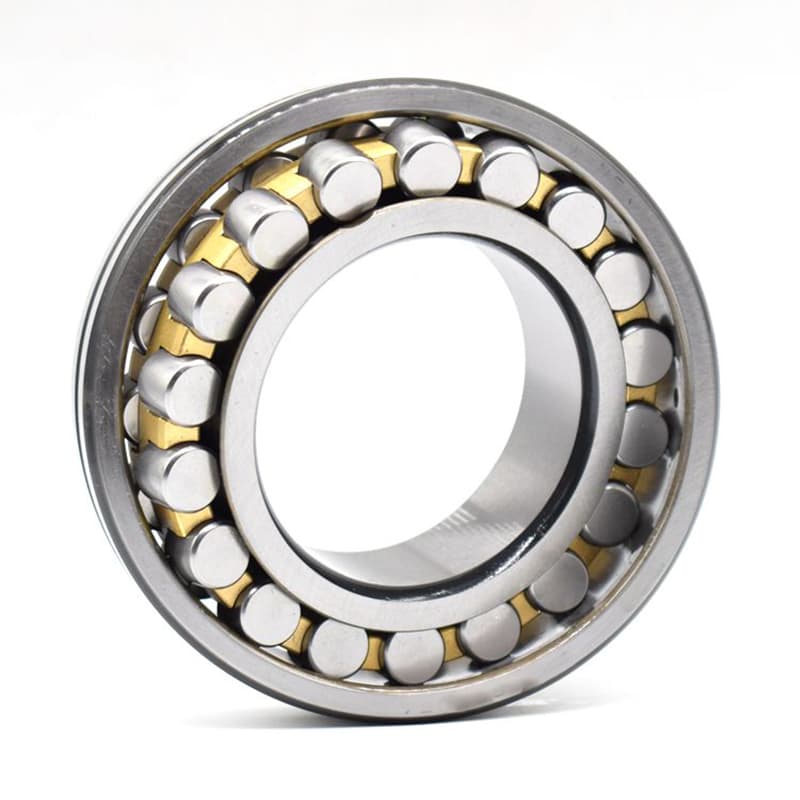
Understanding these limitations is as important as knowing their strengths.
Detailed Look at Spherical Roller Bearing Limitations
1. Cost:
- Why: Complex geometry, precision manufacturing, and robust materials make them more expensive than ball bearings or cylindrical roller bearings.
- Impact: For applications where a simpler bearing would suffice, spherical rollers are over-engineering.
2. Speed Capability:
- Why: The relatively large mass of the rollers creates high centrifugal forces at speed. The sliding contact between roller ends and the guide flange generates heat.
- Impact: Speed limits are lower than for ball bearings or cylindrical roller bearings. High-speed applications require special designs, precision grades, and advanced lubrication.
3. Lubrication Sensitivity:
- Why: The roller end/flange contact is a critical area that requires a reliable lubricant film. If lubrication fails, this area can overheat and gall.
- Impact: Spherical roller bearings demand proper lubrication. They are not forgiving of lubrication neglect.
4. Friction:
- Why: The combination of rolling and sliding friction (at roller ends) results in higher overall friction than ball bearings.
- Impact: Higher energy consumption, more heat generation. Not ideal for energy-efficient designs.
5. Axial Load Limitation:
- Why: While they can handle axial loads, they are not designed for pure axial loads. Under pure axial load without radial load, the rollers may skew and the bearing may overheat.
- Impact: For applications with significant axial load but minimal radial load, a thrust bearing or tapered roller bearing may be better.
| 6. Complexity: | Aspect | Challenge |
|---|---|---|
| Manufacturing | Requires precision grinding of spherical surfaces and complex roller profiles. | |
| Mounting | Proper mounting requires attention to fits and alignment. | |
| Inspection | Checking internal geometry requires specialized equipment. |
7. Space Requirements:
- Why: Spherical roller bearings have a relatively large cross-section for a given bore size compared to some other types.
- Impact: They require more radial space in the housing.
Disadvantage Summary Table:
| Disadvantage | When It Matters Most | Alternative to Consider |
|---|---|---|
| High cost | Cost-sensitive applications, non-critical machinery | Cylindrical roller bearings, deep groove ball bearings |
| Limited speed | High-speed spindles, turbines | Angular contact ball bearings, cylindrical roller bearings |
| Lubrication sensitivity | Applications with poor maintenance, inaccessible locations | Sealed bearings, self-lubricating options |
| High friction | Energy-efficient designs, low-power applications | Ball bearings |
| Pure axial load unsuitability | Thrust-only applications | Thrust bearings, tapered roller bearings (in pairs) |
| Space requirements | Compact designs | Needle roller bearings, thin-section bearings |
My Insight on Disadvantages:
I once had a client who wanted to use spherical roller bearings in a high-speed fan application. They were attracted by the high load capacity. We advised against it, explaining the speed limitations. They proceeded anyway. The bearings overheated and failed within months. The lesson: respect the disadvantages. Spherical roller bearings are superb in their intended applications—heavy loads, moderate speeds, misalignment. But they are not a universal solution. For a distributor like Rajesh, understanding these limitations helps him guide customers to the right product. When a customer asks for a spherical roller bearing for a high-speed application, he can say, "Let me show you a better option." That’s value-added service.
How do you check the clearance of a spherical roller bearing?
You receive a shipment of spherical roller bearings. The packaging says "C3". But how do you verify that the clearance is actually C3? You can’t just look at it. You need a method to measure this critical parameter.
To check the clearance of a spherical roller bearing, use a feeler gauge1 method for larger bearings, or a dial indicator2 method for more precise measurement. For radial internal clearance3, mount the bearing with the outer ring free and inner ring fixed, then apply a light radial load and measure the movement with a feeler gauge1 between a roller and the outer raceway at the unloaded zone. For axial clearance4, use a dial indicator2 to measure axial movement of the outer ring relative to the inner ring.
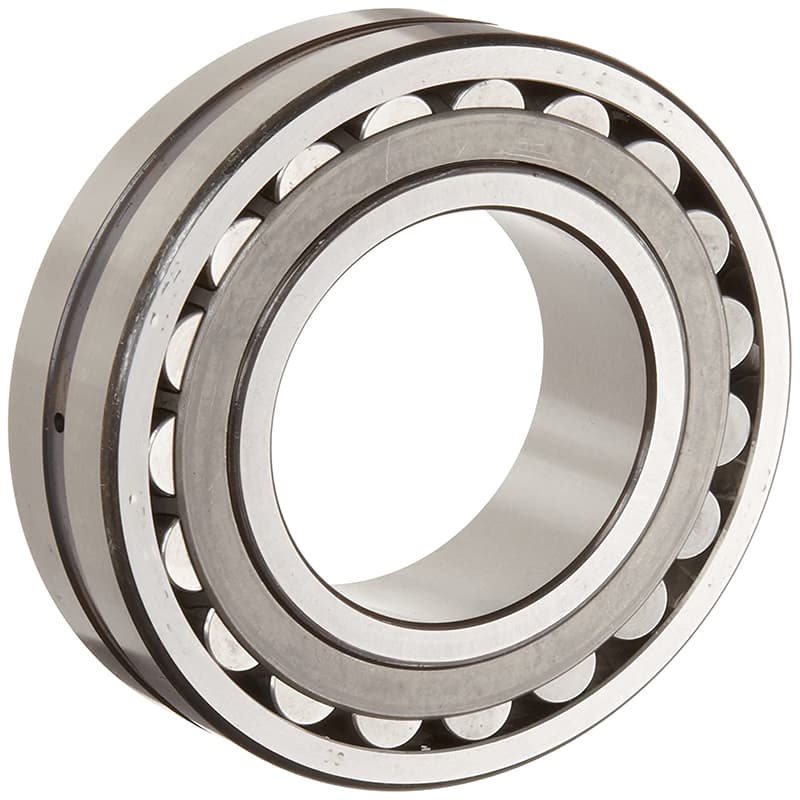
This is a quality check that every serious distributor should be able to perform.
Methods for Measuring Spherical Roller Bearing Clearance
1. The Feeler Gauge Method (For Larger Bearings):
This is the most common field method for larger spherical roller bearings.
- Tools Needed: Set of feeler gauge1s, clean workspace.
- Procedure:
- Clean the bearing thoroughly.
- Place the bearing on a clean surface with the outer ring free.
- Rotate the bearing several times to seat the rollers properly.
- Identify the unloaded zone. In a spherical roller bearing, some rollers will be in contact with both raceways, and some will have a slight gap.
- Insert a feeler gauge1 between a roller in the unloaded zone and the outer raceway.
- The thickness of the feeler gauge1 that just fits is the radial internal clearance3.
- Repeat at several positions around the bearing and average the readings.
2. The Dial Indicator Method (For Precision):
This is more accurate and suitable for smaller bearings or when precise documentation is needed.
- Tools Needed: Dial indicator with magnetic base, V-blocks or a fixture, clean workspace.
- Procedure:
- Mount the bearing on a precision mandrel or in a fixture that holds the inner ring fixed.
- Position the dial indicator2 tip on the outer ring’s outside diameter.
- Apply a light, alternating radial load to the outer ring in opposite directions.
- Record the total movement on the dial indicator2. This is the radial internal clearance3.
- For axial clearance4 measurement, set up the dial indicator2 to measure axial movement of the outer ring relative to the inner ring.
3. Using Manufacturer’s Data:
Once you have a measured value, compare it to the standard clearance tables (ISO 57535 or manufacturer’s catalog) for that bearing size and type.
| Clearance Group | Measured Value (for a 120mm bore bearing, example) | Conclusion |
|---|---|---|
| C2 | 0.040mm | Within C2 range? Check table. |
| CN | 0.070mm | Within Normal range? |
| C3 | 0.120mm | Within C3 range (typically 0.100-0.160mm for this size) |
| C4 | 0.180mm | Within C4 range (typically 0.160-0.220mm for this size) |
| 4. Important Considerations: | Factor | Note |
|---|---|---|
| Cleanliness | Any dirt or debris will affect the measurement. Clean the bearing thoroughly. | |
| Temperature | Measure at room temperature6 (20°C). Clearance changes with temperature6. | |
| Roller Positioning | Rotate the bearing to ensure rollers are properly seated before measuring. | |
| Multiple Measurements | Take several readings around the bearing and average them. | |
| Reference | Always refer to the manufacturer’s catalog for the exact clearance ranges for that specific bearing. |
My Insight on Clearance Checking:
In our factory, we measure clearance on a sample from every production batch as part of our quality control. We also offer this service to distributors who want to verify incoming shipments. For a client like Rajesh, having the ability to check clearance on a sample from each incoming lot is a powerful quality assurance tool. If a bearing is marked "C3" but measures in the "CN" range, he knows there’s a problem before the bearings reach his customers. A simple feeler gauge1 and a few minutes of time can prevent a costly failure and protect his reputation. We encourage all our distributors to learn this simple check. It’s a small investment that pays big dividends in customer trust.
Conclusion
Proper packaging and rust protection are essential for exported spherical roller bearings, combining rust-preventive oil, VCI paper, and robust outer packaging to survive ocean freight. Understanding ISO standards (492, 5753) ensures quality, HS Code 84823000 enables smooth customs clearance, knowing disadvantages prevents misapplication, and checking clearance verifies specifications. Master these elements to protect your investment and your reputation.
-
Explore this link to understand how the feeler gauge method works for accurate bearing clearance measurement. ↩ ↩ ↩ ↩ ↩ ↩ ↩ ↩ ↩ ↩ ↩ ↩ ↩
-
Learn about the dial indicator method for precise measurements, essential for quality control in bearings. ↩ ↩ ↩ ↩ ↩ ↩ ↩ ↩ ↩ ↩ ↩ ↩ ↩ ↩
-
Discover the importance of radial internal clearance and how it affects bearing performance. ↩ ↩ ↩ ↩ ↩ ↩ ↩
-
Find out the best practices for measuring axial clearance, crucial for bearing functionality. ↩ ↩ ↩ ↩ ↩ ↩
-
Explore ISO 5753 standards to ensure your bearing clearance measurements meet industry requirements. ↩ ↩ ↩ ↩
-
Discover the impact of temperature on bearing clearance and why it matters for accurate assessments. ↩ ↩ ↩ ↩
