
A machine designer chooses a bearing not just for fit, but for performance. Inaccurate bearings cause vibration, heat, and early failure. High-precision tapered rollers deliver the accuracy, rigidity, and longevity that demanding applications require.
Engineers prefer high-precision tapered roller bearings (P5/P6 class) for applications requiring exact shaft positioning, minimal runout, and high system rigidity, such as machine tool spindles, precision gearboxes, and high-performance automotive differentials. This precision ensures even load distribution, reduces vibration, and extends service life.
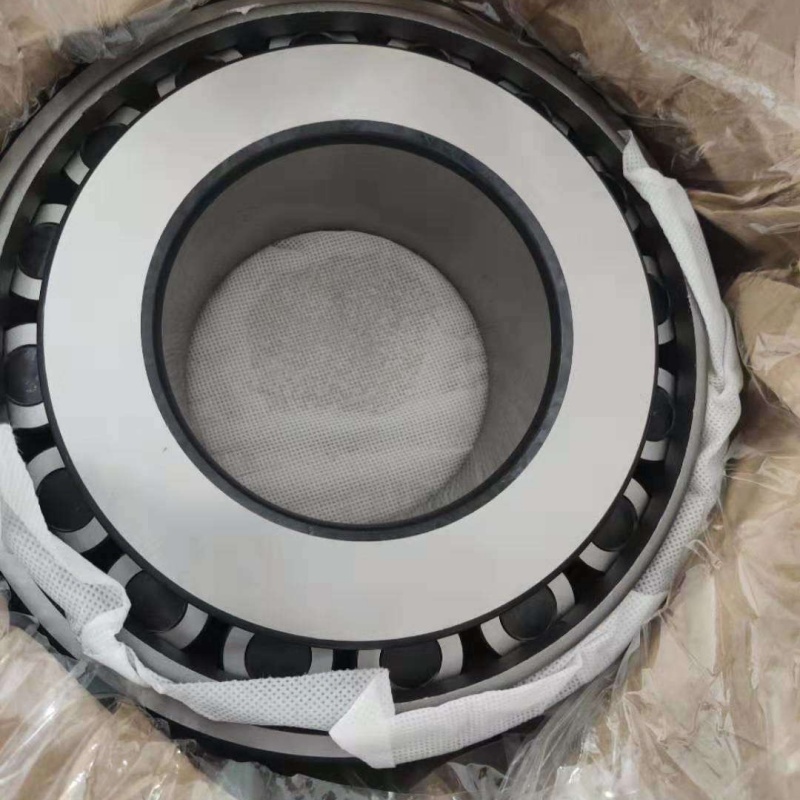
Precision is the bridge between a bearing that simply works and one that enables superior machine performance. To understand this preference, we must examine the bearing’s roles, the critical setting of clearance, how it differs from its closest cousin, and the broader family of roller bearings.
What are tapered roller bearings used for?
You see them in car wheels and giant steel mills. Their versatility comes from a unique design that solves a common engineering problem: managing both radial and axial forces simultaneously in a compact, robust package.
Tapered roller bearings1 are used to support high combined radial and axial loads2 in applications like vehicle wheel hubs, gearboxes3, rolling mill stands, construction machinery axles, and heavy-duty conveyor systems4. Their adjustable design5 allows precise control over internal clearance and preload.
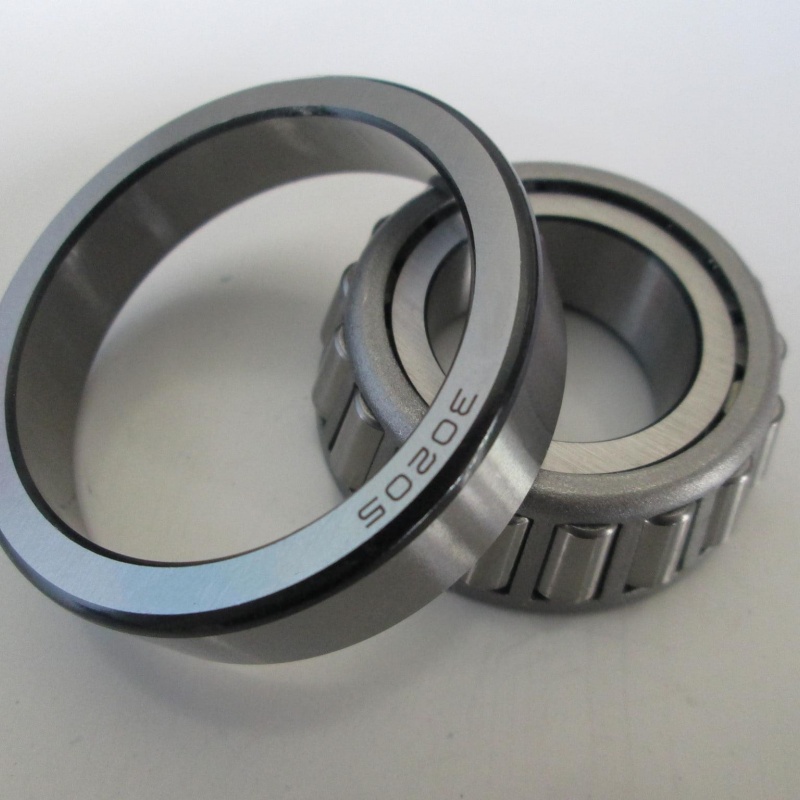
Their use is tied directly to their geometry. The conical shape of the rollers and raceways is the key to their capability.
The Versatility Driven by Design
The tapered design isn’t an accident. It efficiently resolves forces into components that the bearing can handle.
1. Load Management: The Core Function
- Radial Loads: The rollers support weight or force perpendicular to the shaft, like the weight of a vehicle on a wheel hub.
- Axial Loads: Because of the taper, any radial load creates an induced axial force component pushing the cone and cup apart. The bearing is designed to handle this, as well as external axial thrust. This makes them perfect for gearboxes3 where gears push against each other.
2. Adjustability: A Unique Advantage
Unlike most bearing types, tapered rollers are typically used in opposed pairs (X or O arrangement). By adjusting the axial position of one bearing relative to the other, the engineer can precisely set the internal clearance or even apply a specific preload. This allows for:
- Taking up wear over time (in some applications).
- Eliminating axial play for precise shaft positioning.
- Creating preload to increase system rigidity (critical in machine tools).
3. Common Application Categories:
| Industry/Sector | Specific Application | Why Tapered Rollers Are Used |
|---|---|---|
| Automotive | Wheel Hubs, Differentials, Transmissions | Handle vehicle weight (radial) and cornering/braking forces (axial). Durable and adjustable. |
| Industrial Machinery | Gear Reducers, Pumps, Conveyor Drives | Manage gear thrust loads and shaft loads in a compact space. |
| Heavy Industry | Rolling Mills, Mining Equipment, Crane Hooks | Withstand extreme combined loads and shock. |
| Aerospace & Precision | Machine Tool Spindles, Precision Axles | When used in high-precision (P5) grades, provide high rigidity and accuracy. |
My insight: I worked with a manufacturer of industrial printing presses in Germany. They needed bearings for the main impression cylinder. The cylinder had to rotate with near-zero axial movement under varying load. They tested several bearing types. High-precision angular contact ball bearings provided the accuracy but lacked the radial load capacity for the large cylinder. Standard tapered rollers had the load capacity but not the required runout accuracy. The solution was high-precision P5 class tapered roller bearings6 in a preloaded configuration. This gave them the massive radial stiffness to support the cylinder, the axial rigidity to prevent movement, and the running accuracy for perfect print registration. The use case demanded the unique combination of strengths that only precision tapered rollers could deliver.
What is C1, C2, and C3 bearing clearance?
Clearance is the controlled internal space inside a bearing. For tapered rollers, it’s not just about avoiding seizure; it’s the starting point for achieving the desired operational setting, whether that’s a slight looseness or a tight preload. C1, C2, C31 are the standard codes for this.
C1, C2, C31, C4, C5 are ISO standard radial internal clearance groups2. C2 is the tightest, CN (Normal) is standard, and C3, C4, C5 offer progressively larger clearance. For tapered roller bearings in most industrial applications, C3 clearance3 is the common choice to accommodate thermal expansion from operation and ensure proper roller guidance.
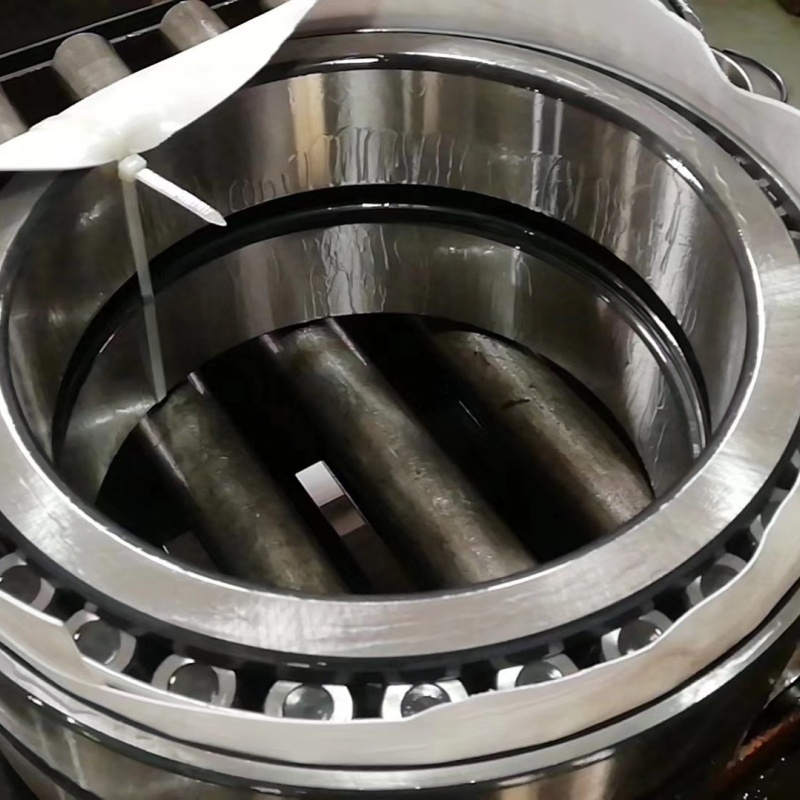
Choosing the correct clearance group is a foundational engineering decision. It directly influences bearing life, temperature, noise, and load distribution.
The Critical Role of Clearance in Tapered Roller Bearing Performance
The clearance you measure in the box is the initial clearance4. The operational clearance5 is what matters, and it is affected by installation and use.
1. Factors That Change Clearance:
- Interference Fit: Pressing the cone (inner ring) onto the shaft stretches it, reducing clearance.
- Thermal Expansion: The cone, mounted on the shaft and carrying load, gets hotter than the cup (outer ring). The cone expands more, further reducing clearance.
- Load-Induced Deformation: Under heavy load, the rings deform slightly, also affecting clearance.
2. Clearance Group Selection Guide:
| Clearance Group | Initial Clearance | Typical Application for Tapered Rollers | Result if Misapplied |
|---|---|---|---|
| C2 | Very Small | Special applications requiring minimal internal play, usually with light loads and stable, cool temperatures. Rare. | High risk of zero clearance or preload after mounting, causing overheating and rapid failure. |
| CN (Normal) | Standard | Light-duty applications with predictable, low heat generation. | May be acceptable, but offers little safety margin. |
| C3 | Larger than Normal | THE STANDARD for most industrial gearboxes, wheel hubs, and general machinery. Provides a safe margin for heat and fit. | Ideal balance. Ensures positive operational clearance5 under normal conditions. |
| C4 / C5 | Larger / Much Larger | Applications with high operating temperatures, heavy interference fits, or severe shock loads (e.g., mining crushers, vibrating screens). | Prevents seizure in extreme conditions. May feel loose when cold. |
3. The Link to Precision and Adjustment:
For high-precision applications, engineers don’t rely on the clearance group alone. They start with a C3 (or sometimes C2) bearing and then use adjustment during installation to set a specific axial clearance or preload. The initial clearance4 group provides the working range for this fine-tuning. A P5 precision tapered roller bearing with C3 clearance3 gives the engineer a high-quality, consistent starting component to build a precise, rigid system.
My insight: A customer in India manufactured agricultural tractor gearboxes. They bought tapered roller bearings specified as "C3". Yet, in field use, many gearboxes ran hot and failed early. We investigated their assembly process. They were pressing the bearings onto the shafts and torquing the lock nuts to a standard value without measuring the resulting axial end-play6. The C3 clearance3 was correct, but their uncontrolled assembly was creating inconsistent, often overly tight, settings. We provided simple dial indicators and trained them to measure and set the end-play to 0.05-0.10mm after assembly. The gearbox temperature and failure rate normalized. The clearance group is the raw material; the final setting is the crafted outcome. Engineers prefer tapered rollers because they offer this adjustability.
What is the difference between cylindrical and tapered roller bearings1?
Both are called "roller bearings," both handle high loads. But confusing them is a major engineering error. One is a specialist in radial force; the other is a combined load expert. The difference is in their geometry and, therefore, their function.
The fundamental difference is that cylindrical roller bearings2 are designed primarily for very high radial loads3 and allow free axial displacement of the shaft, while tapered roller bearings1 are designed to handle combined radial and axial loads4 and provide rigid axial location5 for the shaft.
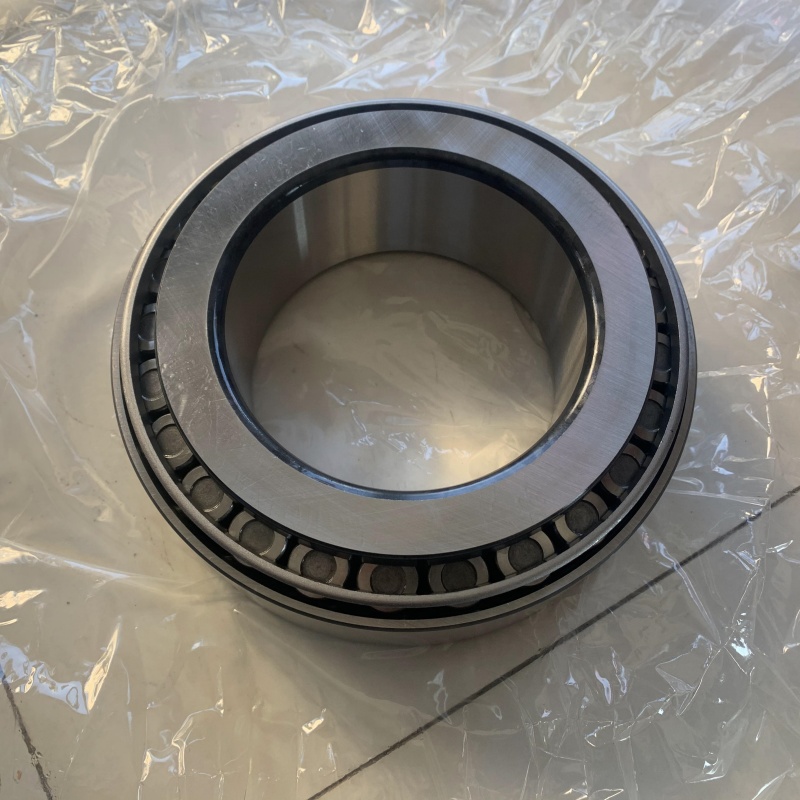
This distinction dictates where each type is used. Using one in place of the other will likely cause machine failure.
A Detailed Functional Comparison
Let’s break down the differences across several key engineering parameters.
| Design & Function Aspect | Cylindrical Roller Bearing | Tapered Roller Bearing |
|---|---|---|
| Roller & Raceway Shape | Cylindrical rollers and straight, parallel raceways. | Tapered (conical) rollers and raceways. |
| Primary Load Direction | Purely Radial. Highest radial load capacity of any rolling bearing type. | Combined Radial and Axial. Excellent capacity for both. |
| Axial Load Capability | Generally none (except for flanged types like NJ, NF which can handle limited one-direction axial load). | High capacity in one direction (for a single row). Used in pairs for bidirectional axial load. |
| Axial Positioning | Allows free axial float of the shaft (except for flanged types). Used in "locating/non-locating" bearing arrangement6s. | Provides rigid axial location5 for the shaft. |
| Friction | Lower rolling friction, suitable for higher speeds. | Higher friction due to roller end/rib contact, generally for lower to moderate speeds. |
| Adjustability | No internal adjustment. Clearance is set by manufacturing. | Adjustable. Internal clearance/preload can be set during installation via axial positioning. |
| Typical Applications | Machine tool spindles, large electric motors, printing rolls – where high radial load and precision are needed. | Automotive wheel bearings, gearboxes, rolling mills – where combined loads are present. |
Why Engineers Choose One Over the Other:
- Scenario: A large electric motor shaft. It has high radial load from magnetic forces and rotor weight, but minimal axial load. The shaft also needs to expand thermally.
- Engineer’s Choice: A cylindrical roller bearing at the drive end (handles radial load, allows axial float) and a deep groove ball bearing at the non-drive end (handles light residual axial load).
- Scenario: A helical gearbox shaft. The gears create both radial and significant axial thrust. The shaft needs to be held precisely in position.
- Engineer’s Choice: A pair of tapered roller bearings1 in an O arrangement. They handle the combined loads and provide rigid axial location5.
My insight: A compressor manufacturer in Italy redesigned their product. The old design used two cylindrical roller bearings2. It failed frequently because the helical compressor rotor created an unexpected high axial thrust that the cylindrical bearings could not handle. The fix wasn’t a bigger cylindrical bearing; it was a different bearing type. We helped them redesign the bearing arrangement6 to use a tapered roller bearing at the thrust side and a cylindrical roller bearing at the floating side. The failures stopped. The difference between the two types isn’t minor; it’s fundamental to the machine’s force management. Engineers prefer tapered rollers when the force diagram includes a significant axial component.
What are the three types of roller bearings?
"Roller bearing" is a family name. Within this family, there are three primary members, each with a distinct personality and specialty. Knowing them allows you to understand the full toolkit available to an engineer.
The three main types of roller bearings are cylindrical roller bearings1, tapered roller bearings2, and spherical roller bearings3. Each is optimized for different load and alignment conditions: cylindrical for pure radial loads, tapered for combined loads, and spherical for high radial loads with misalignment.

This classification is based on roller geometry and raceway design. It’s a logical way to categorize their core capabilities.
A Comparative Overview of the Roller Bearing Trio
Here is a structured comparison to clarify when an engineer would select each type. Think of it as a decision matrix.
| Type | Roller Shape | Signature Capability | Key Limitation | Classic Application |
|---|---|---|---|---|
| Cylindrical Roller | Straight Cylinders | Highest Pure Radial Load Capacity. Allows axial shaft float. | Cannot handle axial loads4 (except special flanged designs). | Machine tool spindles, large electric motors. |
| Tapered Roller | Truncated Cones | Handles Combined Radial & Axial Loads. Adjustable and provides rigid axial location. | Higher friction, lower speed limit than cylindrical. | Automotive wheel hubs, gearboxes, rolling mills. |
| Spherical Roller | Barrel-Shaped (Symmetrical) | Self-Aligning & High Radial Load. Tolerates shaft misalignment and deflection. | More complex, typically higher friction than cylindrical, not for very high axial loads4. | Vibrating screens, paper mill rolls, conveyor idlers in misaligned frames. |
1. Cylindrical Roller Bearings: The Precision Specialist
- Design: Rollers are guided between flanges on one ring (usually the inner ring). The other ring has no flanges, allowing axial movement.
- Engineer’s Mindset: "I need to support a very heavy load purely from the side, and my shaft needs to expand lengthwise without constraint."
2. Tapered Roller Bearings: The Combined Load Expert
- Design: The tapered rollers are guided by a large rib on the cone (inner ring). The angle of the taper allows it to resolve forces.
- Engineer’s Mindset: "My shaft is being pushed from the side and the end simultaneously. I need to lock its position and handle both forces efficiently."
3. Spherical Roller Bearings: The Tough, Forgiving Workhorse
- Design: Two rows of barrel-shaped rollers run on a spherical raceway in the outer ring. This allows the inner ring to pivot.
- Engineer’s Mindset: "My loads are huge and from the side, but I can’t guarantee perfect alignment because the frame will bend, or the shaft is long and will deflect."
The Place of High-Precision Tapered Rollers:
Among these three, high-precision (P5/P6) tapered rollers occupy a special niche. They combine the combined load handling5 of tapered rollers with the accuracy and rigidity often associated with precision cylindrical rollers. This makes them the preferred choice for engineers designing high-performance systems where load complexity meets the need for precision, such as in advanced machine tools or high-speed gearboxes.
My insight: In a steel mill project in South Korea, I saw all three types in action on one continuous processing line. The cylindrical rollers were on the uncoiler mandrel (huge radial load, shaft needs to float). The spherical rollers were on the guide rolls (high load, frequent misalignment from thermal warping). The tapered rollers were on the main drive gearbox and the pinch roll adjustments (combined loads, need for precise axial positioning). The engineer didn’t prefer one type over the others universally; he selected the right tool from the toolbox for each specific task. The preference for high-precision tapered rollers6 emerges when the task requires the unique combination of load handling and precision that only they can provide.
Conclusion
Engineers prefer high-precision tapered roller bearings for their unique ability to handle complex loads with accuracy and rigidity. Understanding their specific uses, correct clearance, distinct advantages over cylindrical types, and place within the roller bearing family is key to specifying them effectively.
-
Explore this link to understand the unique features and applications of cylindrical roller bearings in various industries. ↩ ↩ ↩ ↩ ↩ ↩ ↩
-
Learn about tapered roller bearings, their design, and how they efficiently handle combined loads. ↩ ↩ ↩ ↩ ↩
-
Discover the benefits of spherical roller bearings, especially in applications with misalignment. ↩ ↩ ↩ ↩ ↩ ↩ ↩
-
Explore this link to learn about axial loads and their impact on bearing performance. ↩ ↩ ↩ ↩ ↩ ↩
-
This resource will clarify the concept of combined load handling and its significance in bearing design. ↩ ↩ ↩ ↩ ↩ ↩ ↩
-
Find out why high-precision tapered rollers are essential for high-performance systems in engineering. ↩ ↩ ↩ ↩ ↩