
A bearing fails inside a massive mill drum. The cost isn’t just the bearing; it’s days of lost production and tons of spoiled product. Sugar and palm oil mills are some of the harshest environments for machinery. Standard bearings will not survive.
Spherical roller bearings for these mills must withstand extreme shock loads, continuous vibration, abrasive dust, high humidity, and heat. Key specifications include robust cage design (steel or brass), C4 or larger clearance, enhanced sealing (labyrinth or triple-lip), and high-grade, clean steel to prevent premature fatigue and contamination failure.
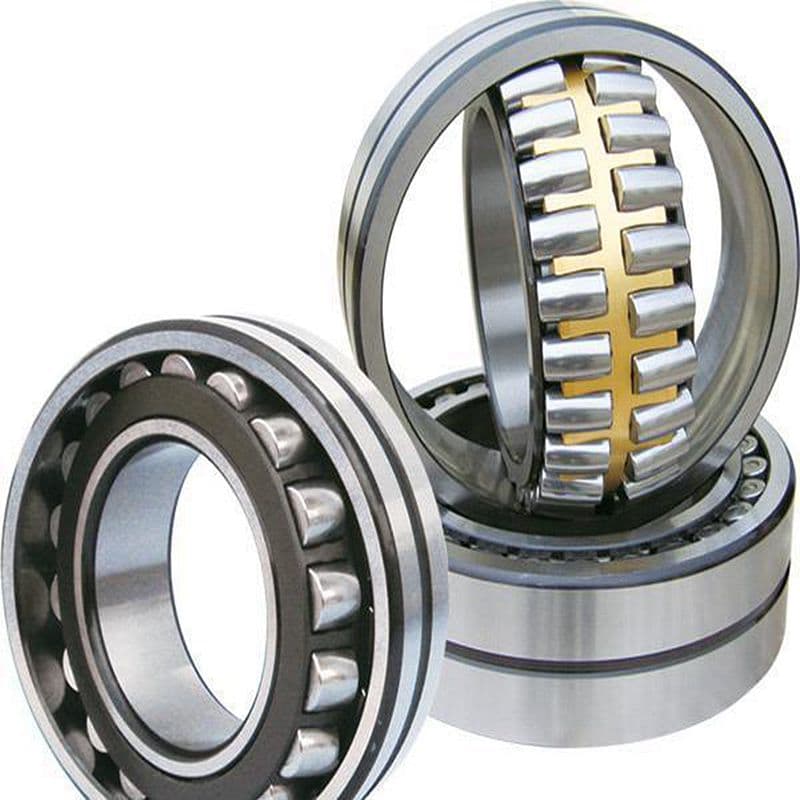
Surviving here requires more than a catalog part. It demands a bearing engineered for punishment. To source correctly, you need to understand the international standards, customs codes, critical setup parameters, and material science for these conditions.
What is the ISO standard for spherical roller bearings?
Your customer asks for a "standard" bearing. But "standard" has a precise meaning defined by ISO. This standard ensures interchangeability and defines the minimum performance benchmarks. It’s your baseline for quality.
The primary ISO standard for spherical roller bearings is ISO 15:20111, which defines boundary dimensions (bore, OD, width) and tolerances. ISO 12297-1 covers the prefix and suffix system for designations, and ISO 281 provides the rating life calculation method. These standards ensure dimensional interchangeability between manufacturers.
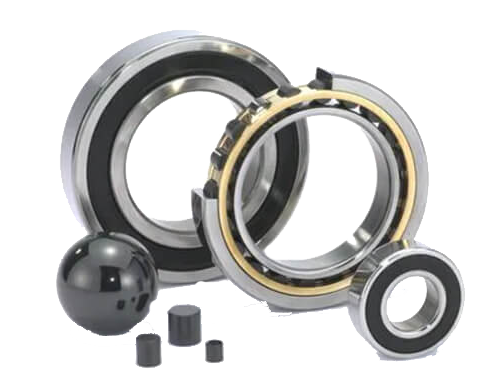
The ISO standard is the rulebook. But for harsh applications, you must often specify features beyond the standard minimums. Knowing the standard lets you know what you can demand.
Beyond Interchangeability: Using ISO as a Sourcing Tool
ISO standards cover the essentials, but they leave room for performance differentiation. A smart importer uses the standard as a foundation and then builds upon it.
1. Key Areas Defined by ISO:
- Dimensional Series2 (ISO 15): This is the "size code." A spherical roller bearing series like 22308 is defined here. The ‘2’ indicates the bearing type (spherical roller), ’23’ is the dimension series (width and OD relative to bore), and ’08’ is the bore code (8*5=40mm bore). This guarantees it will fit the same housing and shaft as another 22308.
- Tolerance Classes3 (ISO 12297-1 / ISO 199): Similar to ball bearings, spherical rollers have tolerance classes like Normal (P0), P6, P5. For most mill applications, Normal (P0) is acceptable because the machinery itself has looser tolerances. High precision is rarely needed for large crushers or drums.
- Internal Clearance4 (ISO 5753-1): This standard defines the clearance groups (C2, CN, C3, C4, C5). This is critically important for mills.
2. The Gap: Where You Must Specify Beyond ISO:
The ISO standard does not mandate:
- Cage Material and Design5: ISO does not specify cage type. For mills, you must specify a reinforced steel cage or brass cage. Standard pressed steel or polyamide cages will fail under shock loads.
- Internal Design: ISO defines dimensions, not internal geometry optimization. Leading manufacturers have proprietary internal designs (roller profile, guide flange) for higher load capacity.
- Sealing: Standard ISO drawings often show open bearings. Sealing is an add-on. You must specify robust sealing solutions.
- Material Quality6: ISO does not specify steel cleanliness or heat treatment processes. This is where factory capability makes a huge difference.
Your Sourcing Specification Template:
When ordering, your PO should state: "Spherical Roller Bearing 22308, per ISO 15 dimensions. To be manufactured with C4 clearance, brass cage, integrated labyrinth seals on both sides, and vacuum-degassed steel. Tolerance class: Normal (P0)." This uses ISO as the base and adds the critical survival features.
My insight: A sugar mill in Brazil was constantly replacing 22220 bearings on their shredder. They bought "ISO standard" bearings from multiple suppliers. The failures were consistent: cage breakage. We analyzed the bearings. They met ISO dimensional standards, but they used standard pressed steel cages. The shock loads from crushing cane shattered these cages. We supplied bearings with machined brass cages. The dimensional standard (ISO) was identical, but the internal component (cage) was upgraded. The bearing life increased by 300%. The lesson: ISO ensures it fits. Your specification ensures it works.
What is the HS Code 848200001?
You need to clear a container of bearings through customs. The HS Code is the universal language for this. Getting it right avoids delays, incorrect duties, and problems with customs authorities in your country.
HS Code 848200001 is the Harmonized System code for "Ball or roller bearings2." It is the primary code used for importing and exporting most types of bearings, including spherical roller bearings. It is essential for customs declaration3, duty calculation4, and trade statistics.
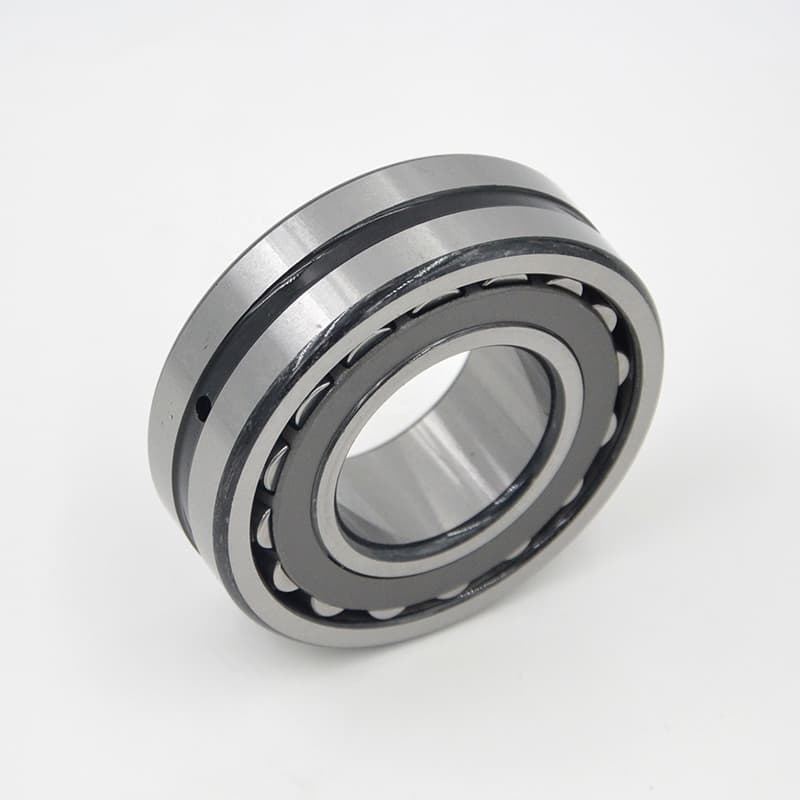
Understanding this code and its potential sub-classifications is part of professional importing. It’s not just paperwork; it’s part of your total landed cost.
Navigating HS Codes for Bearing Imports
The 8-digit code (84820000) is the core, but some countries use extended codes for more detail. Knowing this helps in logistics planning.
1. Breakdown of the Code:
- 84: Chapter – "Nuclear reactors, boilers, machinery and mechanical appliances; parts thereof."
- 8482: Heading – "Ball or roller bearings2."
- 848200: Sub-heading – "Ball or roller bearings2."
- 84820000: Tariff item – The full code for declaring ball or roller bearings.
2. Why Correct Classification Matters:
- Duty Rates: The duty rate applied by your country’s customs is based on this code. An incorrect code could lead to overpaying or underpaying duties (which can result in penalties).
- Import Restrictions: Some countries may have licensing requirements or restrictions tied to specific codes.
- Trade Compliance: Correct classification is a legal requirement. It ensures smooth clearance.
- Origin Rules: For claiming preferential duty rates under trade agreements (e.g., ASEAN, Mercosur), the product’s origin and correct HS code must align.
3. Practical Advice for Importers:
- Confirm with Your Customs Broker: Always provide the full bearing description (type, dimensions, material) to your broker. They will confirm the final HS code for your specific country, as interpretations can vary slightly.
- Documentation: The commercial invoice from your supplier (like us, FYTZ) must clearly state the HS Code 848200001. The packing list should also be consistent.
- Potential for Sub-codes: In some cases, customs might differentiate between "Tapered roller bearings" (which might be 84822000) and "Spherical roller bearings" (84823000) or "Needle roller bearings" (84824000). However, 84820000 is generally accepted as a catch-all for standard bearing imports. Clarify with your local customs.
My insight: An importer in Pakistan faced a customs hold on a container. The invoice only said "Bearing 22218." Customs demanded a more detailed description and correct code for assessment. The delay cost them demurrage charges. We now ensure all our proforma and commercial invoices explicitly state: "Spherical Roller Bearings, HS Code: 84820000" along with a detailed product description. This small detail in documentation prevents big headaches and costs for our partners. For you, ensuring your supplier provides accurate, detailed paperwork with the correct HS code is as important as the bearing quality itself.
What is C1, C2, and C3 bearing clearance?
In the violent world of sugar cane crushing or palm fruit pressing, heat and shock are constant. The bearing’s internal clearance setting (C1, C2, C3, C4, C5) is its first line of defense against seizing up under these conditions.
C1, C2, C3, C4, C5 are ISO standard radial internal clearance groups for spherical roller bearings, with C2 being the tightest and C5 the loosest. For sugar and palm oil mill applications, C4 clearance is typically the minimum requirement, with C5 often recommended to accommodate high heat and heavy shock loads that can close up the internal space.
Choosing the correct clearance is not optional; it’s critical. The wrong choice leads to rapid, catastrophic failure.
Why C4/C5 Clearance is Non-Negotiable for Mills
Let’s analyze the forces that change bearing clearance in a mill, and why standard clearance fails.
1. Forces That Reduce Clearance in Operation:
- Interference Fit: The bearing inner ring is mounted with a heavy press fit on a large, solid shaft. This stretching of the inner ring reduces clearance significantly.
- Thermal Expansion: The inner ring, connected to the massive shaft and directly承受 load, gets much hotter than the outer ring in the housing. The inner ring expands more, further reducing clearance.
- Load-Induced Deformation: Under extreme radial load, the rings deform slightly, which can also reduce the effective internal space.
2. The Consequence: From Clearance to Preload
If the initial clearance is too small (like C2 or CN), these factors can completely eliminate it. The bearing develops preload (negative clearance). This creates enormous internal friction, generates intense heat, and leads to seizure within hours or days.
3. Clearance Group Selection Guide for Harsh Mills:
| Clearance Group | Initial Clearance | Suitability for Sugar/Palm Oil Mills | Rationale |
|---|---|---|---|
| C2 / CN (Normal) | Small / Standard | Unsuitable. Will likely fail from seizure. | Insufficient margin for heat and fit. |
| C3 | Larger than normal | Marginal. May work in cooler, less severe auxiliary equipment. | Often the minimum for general heavy industry, but may be borderline for core crushing/pressing sections. |
| C4 | Larger than C3 | Standard Recommended Choice for most mill core equipment (crushers, presses). | Provides a safe margin to accommodate typical heat and load conditions. |
| C5 | Very Large | Recommended for extremely hot applications, very heavy shock loads, or where fit conditions are severe. | Ensures positive operational clearance even in the worst conditions. May feel loose when cold but is correct when running. |
Your Action: When sourcing for mill applications, default to specifying C4 clearance. If the mill operator has a history of seizure failures, or the bearing location is known to run very hot, specify C5. Do not let a supplier talk you into C3 to save cost; the cost of a mill shutdown is infinitely higher.
My insight: A palm oil mill in Indonesia had a chronic problem with bearings on their main fruit press. They failed every 3-4 months. They were using bearings supplied as "C3". We measured the housing and shaft temperatures after an hour of operation. The differential was huge. We calculated the thermal expansion and recommended a switch to C5 clearance bearings. The mill engineer was skeptical—the bearing felt "loose" when cold. But after installation, the bearings ran cooler and lasted over 18 months. The initial "looseness" was the necessary insurance policy against thermal seizure. In harsh conditions, more clearance is safer.
What bearings are suitable for high temperature?
The crushing and pressing process generates heat. Bearings near cookers or dryers face even higher ambient temperatures. High temperature softens steel, breaks down grease, and warps cages. Not all spherical roller bearings are built for this.
Spherical roller bearings suitable for high temperatures1 (above 150°C) feature heat-stabilized steel rings2 (e.g., special case-hardened steels), cages made of machined brass or special high-temperature steel, and either high-temperature synthetic grease3 (up to 200°C) or solid lubricants/coatings for higher temperatures.
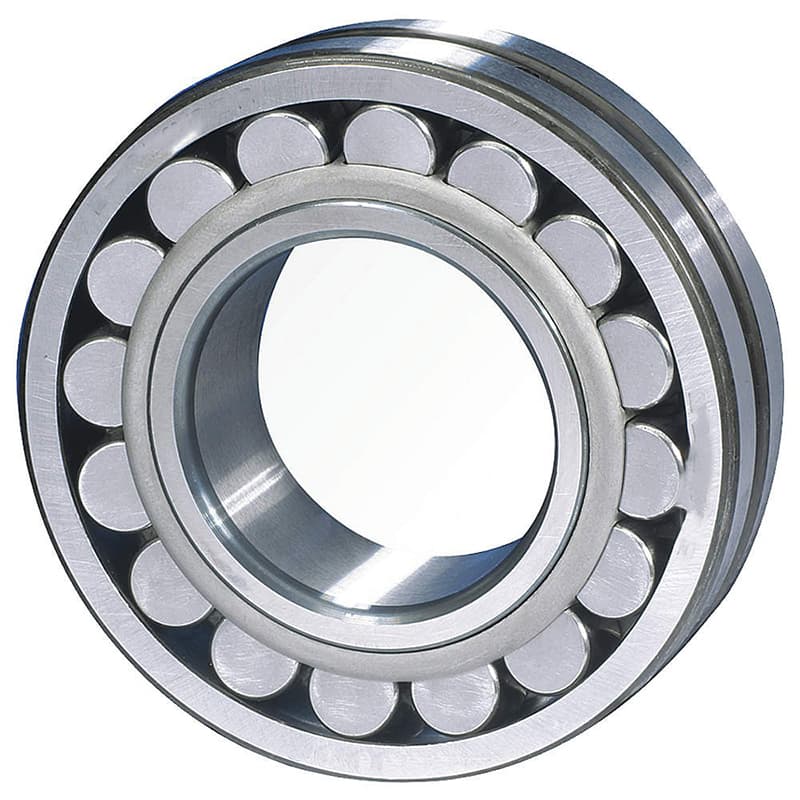
"Suitability" is a combination of material choices and design adaptations. A standard spherical roller bearing will quickly perish in a high-heat zone of a mill.
Engineering a Bearing for the Heat
We need to look at each component and see how it’s upgraded for high-temperature duty.
1. Component-by-Component Analysis:
| Component | Standard Bearing | High-Temperature Suited Bearing (for Mills) | Reason for Change |
|---|---|---|---|
| Rings & Rollers | Standard through-hardened steel (e.g., 100Cr6). | Heat-Stabilized Steel. Often a case-hardened steel (like 20Cr2Ni4A) that retains surface hardness at elevated temps (up to 200-250°C). Some use through-hardened special steels. | Prevents loss of hardness (tempering), which leads to rapid wear and deformation. |
| Cage | Pressed steel sheet or polyamide (nylon). | Machined Brass (CuZn) or Solid Steel Cage. Brass is excellent for high temps, provides some self-lubrication, and resists shock. Solid steel cages are also used. | Polyamide melts (~120°C). Pressed steel can lose strength or warp. Machined brass retains shape and strength. |
| Lubrication | Standard lithium-based grease. | High-Temperature Synthetic Grease (e.g., polyurea, complex sulfonate) rated for >150°C continuous. For very high temps (>200°C), solid lubricant coatings4 (graphite, MoS2) on raceways or oil-air mist systems. | Standard grease oxidizes, hardens, and carbonizes, losing all lubricating properties. |
| Internal Clearance | C3 or standard. | C4 or C5. As discussed, heat expansion requires larger initial clearance. | Prevents thermal seizure. |
| Seals | Standard contact seals (rubber). | High-Temp Rubber (FKM/Viton) seals, or non-contact labyrinth seals. Labyrinth seals are preferred for very high temperatures as they have no rubber parts. | Standard nitrile rubber seals harden, crack, and fail at high temperatures. |
2. Identifying a High-Temp Bearing for Sourcing:
These bearings often have special suffix codes5. For example, a supplier might designate a bearing as 22320 CA/C4W33A. Here, ‘A’ might indicate special heat treatment, and ‘W33’ indicates a specific lubrication groove and holes. You must ask the supplier directly:
- "What is the maximum continuous operating temperature for this bearing?"
- "What material is the cage?"
- "What type of grease is packed, and what is its temperature rating?"
- "Is the steel heat-stabilized for high-temperature applications?"
My insight: We supplied bearings to a sugar mill’s juice heater section in India. The ambient temperature around the bearing was 180°C. The customer initially installed a standard spherical roller bearing with a polyamide cage. The cage deformed within a week, causing the rollers to skew and jam. We provided a bearing with a machined brass cage6, C5 clearance, and high-temperature polyurea grease. The bearing ran successfully for two full crushing seasons. The "suitable" bearing was a completely different product internally, even though the outer dimensions (the ISO standard part) were identical. For high-temperature zones, you are not just buying a size; you are buying a material and design specification.
Conclusion
Specifying spherical roller bearings for harsh mill environments requires going beyond catalog standards: insist on C4/C5 clearance, brass or solid steel cages, enhanced sealing, and verify material suitability for heat and shock loads.
-
Explore this link to understand the specific features and benefits of high-temperature spherical roller bearings. ↩ ↩ ↩ ↩ ↩
-
Learn about heat-stabilized steel rings and their importance in high-temperature applications. ↩ ↩ ↩ ↩ ↩
-
Discover the advantages of high-temperature synthetic grease for enhancing bearing performance. ↩ ↩ ↩
-
Understand the role of solid lubricant coatings in maintaining bearing efficiency at high temperatures. ↩ ↩ ↩
-
Discover how special suffix codes can help identify the right high-temperature bearings for your needs. ↩ ↩
-
Find out why machined brass cages are preferred for high-temperature bearings and their benefits. ↩ ↩