
A squeaky, jammed conveyor bearing brings your customer’s warehouse to a standstill. Downtime costs thousands per hour. Pillow block bearings are the workhorses of these systems, but choosing the wrong one guarantees problems.
Pillow block bearings for warehouse conveyors provide easy mounting and support for rotating shafts. Key selection factors include load capacity (radial and axial), proper internal clearance (typically C3), robust sealing for dust, and durable construction to withstand continuous operation and impact loads in a logistics environment.
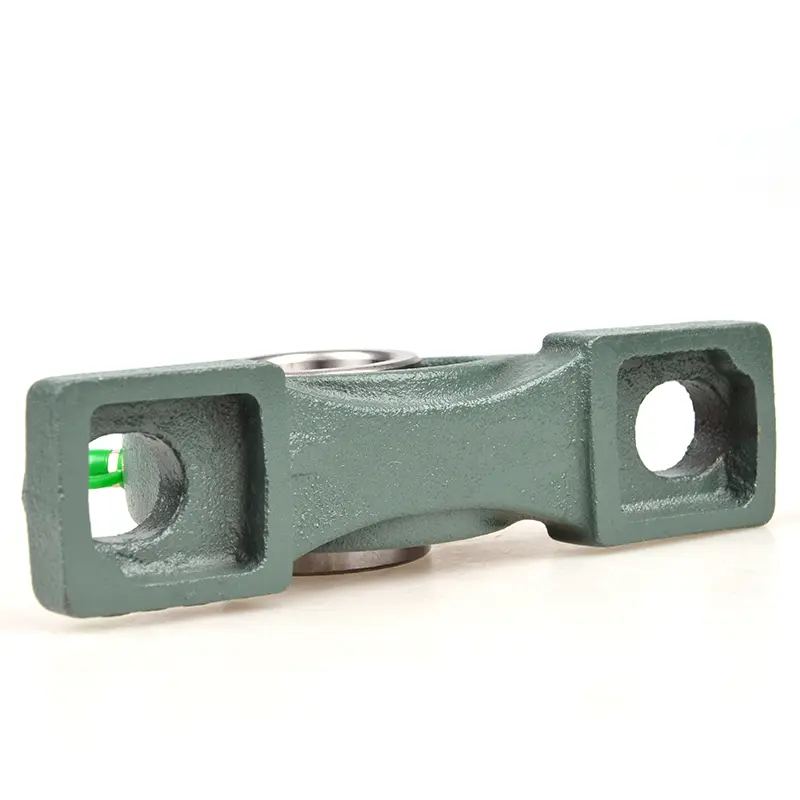
A conveyor system is only as reliable as its bearings. To specify the right pillow block, you need to understand its function, the common bearing inserts used, the critical role of clearance, and how to calculate real-world weight capacity. Let’s build that knowledge.
What is a pillow block bearing used for?
Imagine trying to hold a heavy, spinning shaft perfectly in place. A pillow block bearing solves this problem. It is a complete, ready-to-install unit that supports and aligns a shaft, transferring its load to the frame. In logistics, this is fundamental.
A pillow block bearing is used to provide stable, secure support for a rotating shaft. It houses a bearing insert (like a ball or roller bearing) within a rigid cast-iron or steel housing, allowing for easy bolt-down installation onto frames, conveyor structures, or machinery bases.

Its use seems simple, but the design addresses several complex challenges specific to industrial installations like conveyors.
Core Functions and Why They Matter for Conveyors
The pillow block isn’t just a box for a bearing. Each feature serves a purpose in the harsh environment of a warehouse or distribution center.
1. Key Functions in Conveyor Applications:
- Shaft Support and Alignment1: The primary job. It holds the shaft at the correct height and prevents it from sagging under the weight of rollers, belts, and cargo. Multiple pillow blocks along a long shaft ensure it stays straight.
- Load Transfer2: It takes the forces from the shaft—both the downward weight (radial load) and any side thrust from belt tension or misalignment (axial load)—and transfers them smoothly into the conveyor frame.
- Simplified Installation and Maintenance3: The housing comes with pre-drilled bolt holes. The bearing insert is often pre-lubricated and sealed. This makes replacement much faster than dealing with a bare bearing pressed directly into a custom-machined housing.
- Protection: The housing protects the bearing insert from direct impact, dirt, and moisture. Many designs include additional external seals or labyrinth covers.
2. Common Types and Their Conveyor Applications:
Warehouse conveyors use specific series. Knowing them helps in sourcing and replacement.
| Pillow Block Type (Common Series) | Key Feature | Typical Conveyor Use Case |
|---|---|---|
| UCP (2-Bolt)4 | Square base with two mounting bolts. Most common and economical. | Light to medium-duty belt conveyors, roller conveyor sections, sorting lines. |
| UCF (4-Bolt Flanged)5 | Round housing with a flange and four bolts. Provides more secure mounting. | Heavier belt conveyors, drum motors, drives where high axial stability is needed. |
| UCFL (4-Bolt with Long Base) | Extended base for better stability on uneven surfaces. | Long-span conveyor sections where frame flex is a concern. |
| UCT (Take-Up Unit) | Has a sliding base to adjust belt tension. | The tail or drive end of belt conveyors for tensioning. |
My insight: A logistics company in Brazil had constant issues with pillow blocks on their heavy parcel sorting line. The bearings were failing every few months. The problem wasn’t the brand; it was the type. They used standard UCP (2-bolt) units. The high start-stop impact and vibration from the sorting process were causing the two bolts to work loose over time. We recommended switching to UCF (4-bolt flanged) units for the high-impact zones. The added stability from the four-bolt pattern solved the loosening problem. The "use" of the pillow block must match the dynamic forces of the application, not just the static shaft weight.
What is a 6203 bearing1 used for?
This number is everywhere in the bearing world. A 6203 is not a pillow block; it’s a specific deep groove ball bearing size. But it is very often the insert bearing inside a pillow block housing2 for light to medium-duty conveyors.
A 6203 bearing1 is a standard deep groove ball bearing with a 17mm bore, 40mm OD, and 12mm width. It is commonly used as the insert in smaller pillow block units (like UCP 203) for light conveyor rollers, idler pulleys, and low-power motor applications in warehouse systems.
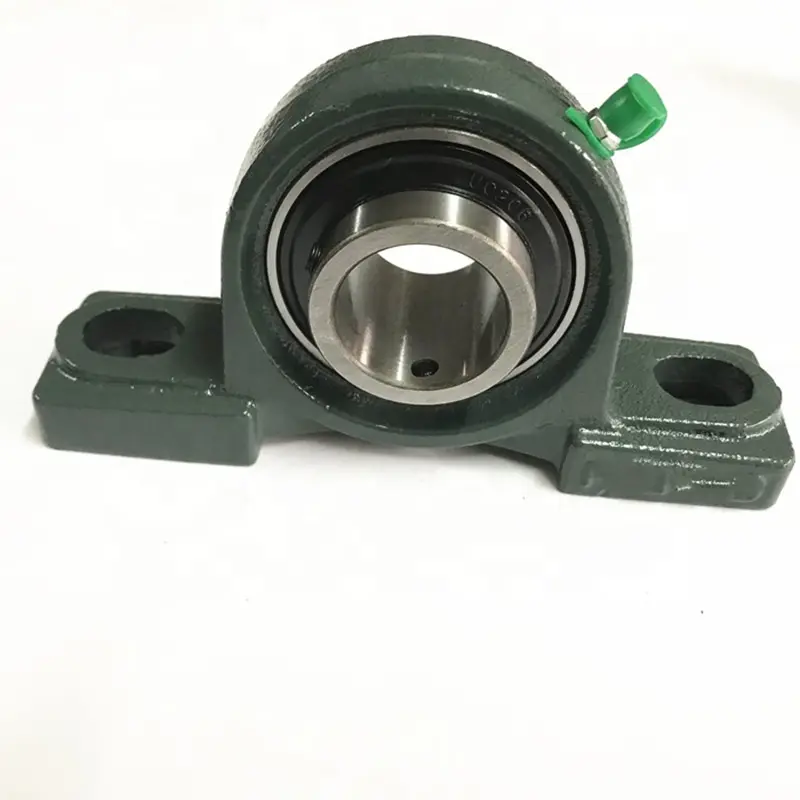
For importers, knowing common bearing numbers like 6203 is crucial. It allows you to cross-reference parts, understand what you’re buying, and identify opportunities for bulk purchasing of inserts.
The 6203 in Context: From Loose Bearing to Pillow Block Insert
The 6203 is a versatile component. Its use inside a pillow block is just one of its roles.
1. Specifications and Common Equivalents:
- Dimensions: Bore: 17mm, Outer Diameter: 40mm, Width: 12mm.
- Load Ratings: Its dynamic load rating3 (C) is around 9.5 kN, and its static load rating (C0) is around 4.75 kN. These numbers tell you its theoretical capacity.
- Common Pillow Block Housing: The housing designed to fit a 6203 insert is typically a UCP 203 or UCF 203.
- Variants: You will see 6203-2RS (rubber sealed), 6203-ZZ (metal shielded), 6203/C3 (C3 clearance). For conveyor pillow blocks, 6203-2RS/C34 is a very common specification.
2. Why the 6203 is So Prevalent in Light Conveyors:
- Size Range: It fits shafts in the very common 15-20mm range, which is standard for many light-duty conveyor rollers and pulleys.
- Cost-Effectiveness: As a mass-produced standard size, it offers the best balance of performance and cost.
- Adequate Capacity: For many warehouse applications moving boxes or light packages, the load rating of a 6203 is sufficient, especially when multiple bearings support a single shaft.
3. Your Sourcing and Quality Checklist for 6203 Inserts:
When you order pillow blocks with 6203 inserts, or when you buy 6203 bearing1s separately, verify these points:
| Checkpoint | Why It Matters for Conveyors | What to Ask Your Supplier |
|---|---|---|
| Seal Type | Dust from cardboard and packaging is abrasive. | Prefer 2RS (rubber contact seals) over ZZ shields for better dust protection. |
| Clearance | Conveyor environments have temperature swings. | Specify C3 clearance as standard. It accommodates heat build-up and prevents seizure. |
| Grease | Conveyors run for long hours. | Ensure the grease is a general-purpose lithium or synthetic grease suitable for moderate speeds and loads. |
| Material | Standard is fine, but check for consistency. | The bearing steel should be GCr15/521005. Ask for material certification for large orders. |
My insight: An importer in Egypt was buying UCP 203 pillow blocks from a supplier. The price was good, but failures were high. We took apart a failed unit. The insert was marked 6203, but it had no seal suffix (it was an open bearing) and standard CN clearance. Dust had destroyed it, and the tight clearance may have contributed to overheating. The lesson is that the housing part number (UCP 203) only tells you the size. You must explicitly specify the insert bearing’s full specification: "UCP 203 with 6203-2RS/C34 insert." Assuming the insert is correct is a costly mistake.
What is C1, C2, and C3 bearing clearance?
Clearance is the secret setting for bearing life. In conveyor systems, getting this wrong leads to two extremes: a noisy, wobbly bearing (too much clearance) or a hot, seized bearing (too little clearance). C1, C2, C31, etc., are standardized codes for this setting.
C1, C2, C31, C4, and C5 are ISO standard radial clearance groups2 for bearings, with C2 being the tightest, CN (Normal) being standard, and C3, C4, C5 progressively larger. For pillow block bearings3 in warehouse conveyors, C3 clearance4 is the most common and recommended choice to handle thermal expansion and moderate loads.
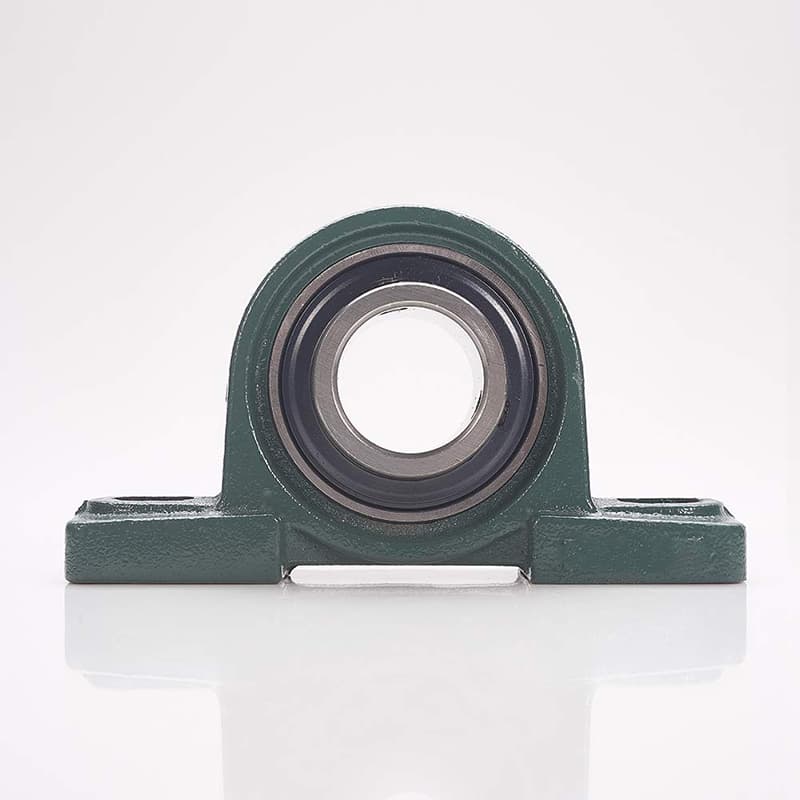
Clearance is not a manufacturing error. It is a deliberate design parameter. Choosing the right group is a critical purchasing decision.
Selecting the Correct Clearance Group for Conveyor Duty
The clearance inside the bearing changes when it’s installed and running. You need to think about the "operational clearance5," not just the number in the catalog.
1. How Clearance Groups Work:
Each group (C2, CN, C3, C4, C5) defines a range of allowable internal space between the rings and rolling elements. C2 is the smallest range (tightest), and C5 is the largest (loosest).
2. Why C3 is the Default for Conveyors:
Conveyor bearings operate under conditions that reduce initial clearance:
- Interference Fit: The bearing inner ring is usually pressed onto the shaft, which stretches the ring slightly, reducing clearance.
- Thermal Expansion: The inner ring, connected to the shaft, gets hotter than the outer ring in the housing. The inner ring expands more, further reducing clearance.
A C3 bearing starts with more internal space. After accounting for fit and heat, its operational clearance5 ends up in a safe, functional range. A CN bearing might end up with zero or even negative clearance (preload), causing heat, noise, and early failure.
3. A Guide to Clearance Group Selection:
| Clearance Group | Initial Clearance | Recommended Application in Logistics/Conveyors | What Happens if Misapplied |
|---|---|---|---|
| C2 | Very Small | Precision applications. Almost never used in conveyors. | High risk of seizure from thermal expansion6. |
| CN (Normal) | Standard | Very light-duty, low-speed applications in stable, cool temperatures. | May be okay for some light roller conveyors. Risk of issues under load or heat. |
| C3 | Slightly Larger | STANDARD CHOICE for most warehouse conveyors, motorized pulleys, and gearboxes. | Ideal. Accommodates normal heat and fit conditions. |
| C4 | Larger | Heavy-duty conveyors with high loads, or where significant heating is expected. | Good for harsh conditions. May feel slightly loose if underloaded in a cool environment. |
| C5 | Very Large | Special applications with extreme thermal gradients or very heavy interference fits. | Can cause excessive play and vibration if not needed. |
My insight: A large e-fulfillment center in India had a problem with pillow block bearings3 on their high-speed sorting conveyor. They specified CN clearance to reduce "play." During peak summer operations, the warehouse temperature rose, and the bearings ran hotter. Many bearings began to growl and then seize. We audited their specification and recommended a switch to C3 clearance4 for all replacement and new installations. The seizure problems disappeared. The extra few microns of space in a C3 bearing are not "sloppiness"; they are essential engineering tolerance for real-world heat. Always specify C3 as your baseline for conveyor pillow blocks.
How much weight can a pillow block bearing hold?
This is the most practical question from your customers. They have a box of a certain weight moving on a conveyor, and they need to know if the bearing will hold. The answer is not a simple "X kilograms." It requires calculation and understanding of ratings.
A pillow block bearing’s weight capacity depends on its insert bearing’s dynamic (C) and static (C0) load ratings, the speed, and the load type. For example, a common UCP 2041 pillow block with a 6204 insert can typically handle a static radial load of over 1,000 kg, but the safe dynamic load for long life is much lower and must be calculated.
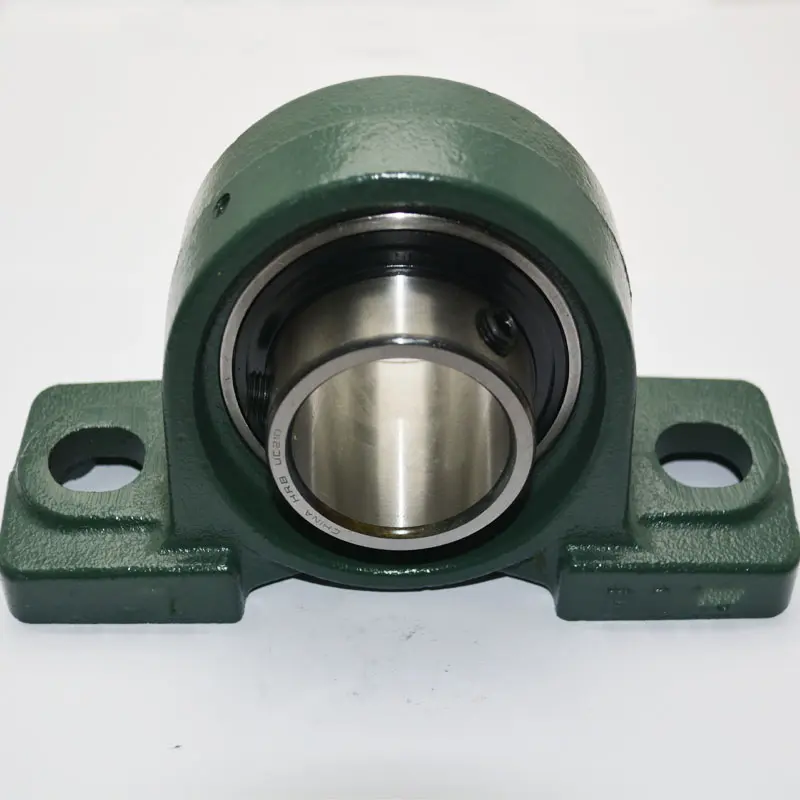
Giving a single weight number is dangerous. You need to teach your customers (and remind yourself) how to use the bearing’s catalog ratings to determine suitability.
From Catalog Ratings to Real-World Conveyor Capacity
The bearing industry uses standardized calculations. As an importer, you don’t need to be an engineer, but you must understand the logic and the key numbers.
1. Key Load Ratings Explained:
- Static Load Rating (C0)2: This is the load a bearing can hold without rotating without causing permanent deformation. This is relevant if a loaded conveyor stops for long periods with weight on a roller. Exceeding C0 can cause brinelling3 (dents in the raceway).
- Dynamic Load Rating (C)4: This is the theoretical load at which a bearing will achieve a life of 1 million revolutions. This is used to calculate the bearing’s life under moving loads—the core of conveyor operation.
2. The Basic Life Calculation (L10 Life5):
The formula is: L10 = (C / P)^p
- L10: The life in millions of revolutions at which 90% of bearings are expected to survive.
- C: Dynamic load rating from catalog (in Newtons or kN).
- P: The equivalent dynamic load6 applied to the bearing (in same units as C). This is the tricky part—it combines radial and axial loads into one number.
- p: Exponent. For ball bearings, p = 3.
3. A Practical Example for a Conveyor Roller:
Let’s take a UCP 2041 (insert 6204). Its 6204 bearing has C ≈ 12.7 kN (about 1,295 kg-force).
- Scenario: A roller supports a 200kg box. Assume the load is purely radial and shared equally between two pillow blocks. So, each bearing sees P = 100kg-force (≈ 1 kN).
- Calculated Life: L10 = (12.7 / 1)^3 = ~2,000 million revolutions. This is an extremely long life.
- If the load doubles to 200kg per bearing (P=2 kN), life becomes: (12.7 / 2)^3 = ~256 million revs. Still very long.
This shows that for typical warehouse loads, standard pillow blocks are often over-sized from a pure load perspective. This is good. It means failure is more likely from sealing, lubrication, installation, or environmental factors than from overloading.
4. Your Practical Guide for Customer Questions:
When asked "how much weight?", follow this process:
- Identify the Bearing: Get the pillow block type (e.g., UCP 2041) to find its insert’s C and C0 rating.
- Ask About the Application: Is the load constant while moving (use C) or static (use C0)? How many bearings support the weight?
- Give a Conservative, Simple Answer: For a UCP 2041/6204, you could say: "For long life on a moving conveyor, a safe continuous radial load per bearing is around 300-400 kg. For static holding, it can handle over 1,000 kg." Always refer to the catalog for exact numbers.
My insight: A conveyor OEM in Turkey was designing a system for pallet handling. They selected UCP 212 units. They were concerned about the 1,500 kg pallet weight. We showed them the calculation: the static load rating (C0) for the 6212 insert was over 4,000 kg per bearing. With two bearings per roller, the safety margin was huge. Their real concern shifted to ensuring the frame and shaft could handle the load, not the bearings. The lesson is that bearing capacity7 is usually adequate; the system’s weak link is often elsewhere. Your value is in providing the correct data and guiding the customer to a robust overall design.
Conclusion
Selecting the right pillow block bearing for conveyors requires matching the housing type to the forces, specifying the correct insert bearing (like 6203-2RS/C3), understanding the necessity of C3 clearance, and applying load ratings practically to ensure system reliability.
-
Explore UCP 204 specifications to determine if it’s suitable for your conveyor system. ↩ ↩ ↩ ↩ ↩ ↩ ↩ ↩ ↩ ↩
-
Learn about static load ratings to ensure your bearings can handle stationary loads without damage. ↩ ↩ ↩ ↩
-
Learn about brinelling to avoid permanent damage to your bearings under static loads. ↩ ↩ ↩ ↩ ↩
-
Discover how dynamic load ratings affect bearing life and performance under moving loads. ↩ ↩ ↩ ↩ ↩ ↩
-
Understanding L10 Life helps predict bearing longevity and reliability in your applications. ↩ ↩ ↩ ↩ ↩
-
Grasping equivalent dynamic load is essential for accurate bearing load assessments. ↩ ↩
-
Calculating bearing capacity ensures your conveyor system operates safely and efficiently. ↩
